



There is a certain feeling people often associate with a beautifully run hotel or an exceptional residential building. It is not only about polished surfaces or a stylish lobby. It is the quieter luxury of ease. Packages are handled, questions are answered, appointments are easier to coordinate, and everyday life seems to flow with less friction. That feeling is at the heart of concierge-style amenities, and the good news is that it is no longer limited to luxury towers or high budget households.
Table Of Content
- What Concierge-Style Amenities Really Mean at Home
- Why the Emotional Value Matters as Much as the Function
- Why This Trend Resonates in Canada Right Now
- The Three Layers of Concierge-Style Living
- Layer One: Organization That Feels Luxurious
- Layer Two: Outsourcing Everyday Friction
- Layer Three: Personalized Coordination and Care
- How to Bring Concierge-Style Amenities Into Any Budget
- Designing the Home to Support the Service
- Who Benefits Most From Concierge-Style Amenities
- What to Look for in a Building or Community
- The Role of Technology in the Future of Concierge-Style Living
- How to Build Your Own Concierge-Style Home in 30 Days
- Final Thoughts: Luxury That Feels Like Relief
Today, concierge-style living is best understood as a thoughtful blend of convenience, coordination, and care. It includes services and systems that help a home run more smoothly, from grocery delivery and package management to cleaning schedules, dog walking, maintenance support, and digital tools that reduce mental clutter. In a world where many traditional amenities have become expected, the real difference increasingly comes from how a home supports daily life on an emotional level as much as a practical one.
This matters because home is where stress accumulates or softens. A chaotic entryway, missed deliveries, too many errands, or a long list of household tasks can leave even a beautiful home feeling burdensome. By contrast, a space that helps you feel organized, supported, and cared for can change your routines in meaningful ways. Concierge-style amenities are really about giving people back time, lowering decision fatigue, and making ordinary days feel a little more gracious.
For homeowners, renters, condo residents, families with children, remote workers, and older adults hoping to remain comfortably at home, the appeal is broad. Canadian housing and aging research underscores why. Many older Canadians want to stay in their homes as long as possible, and federal reviews have found that aging well at home depends on a wide range of supports including home help, transportation, social services, and system navigation. At the same time, busy households of all ages are increasingly outsourcing errands and maintenance simply because modern life asks so much of them.
In this article, we will look at how to bring concierge-style amenities into your own living space in realistic, scalable ways. Some ideas cost very little and rely mostly on better systems. Others involve recurring services or smart subscriptions. The goal is not to recreate a five-star building in your home. It is to create a home that feels easier to live in and kinder to come back to at the end of the day.
What Concierge-Style Amenities Really Mean at Home
When people hear the word concierge, they often imagine a uniformed staff member in a grand lobby, ready to book dinner reservations or accept dry cleaning. That image is not wrong, but it is incomplete. In residential life, concierge-style amenities are less about formality and more about support. They can be provided by a person, a building team, a neighborhood provider, a subscription service, or a well-designed digital system that helps you manage your home more effortlessly.
Industry conversations around residential amenities increasingly distinguish between so-called hard amenities and soft amenities. Hard amenities are physical features such as pools, fitness rooms, lounges, or party spaces. Soft amenities are service-based and experience-driven. They include package handling, booking support, maintenance coordination, resident communication, cleaning, errands, wellness services, transportation help, and personalized assistance. The National Apartment Association has noted that many traditional amenities are now expected, which means properties often compete instead on resident experience and useful support services.
That shift is important for everyday households because it opens the door to a more democratic version of luxury. You do not need a rooftop pool to experience relief from repetitive chores. You do not need marble floors to appreciate a smoother package system, scheduled grocery delivery, or a trusted cleaner who comes twice a month. Concierge-style living is less about spectacle and more about reducing strain in the background of daily life.
It also reflects a wider convenience economy. Research on home services and grocery behavior shows that people are increasingly willing to outsource tasks when time, energy, mobility, or scheduling pressures are high. Grocery delivery, recurring maintenance services, and app-based home support are becoming normal parts of modern living. Seen in that light, concierge-style amenities are not a niche indulgence. They are part of a broader lifestyle design strategy centered on comfort, reliability, and peace of mind.
Why the Emotional Value Matters as Much as the Function
Some of the best home improvements are difficult to measure in square footage or resale value. They make life feel calmer, kinder, and more manageable. Concierge-style amenities fall into that category. Their true value often lies in what they remove from your day. They reduce the small interruptions that scatter your focus and drain your mood, from wondering when a package will arrive to remembering which maintenance task needs to be booked next.
There is also something deeply comforting about feeling supported in your own home. A house or apartment can be beautifully decorated and still feel stressful if it demands too much from the people living in it. On the other hand, even a modest home can feel luxurious if it anticipates your needs well. Fresh groceries appearing at the door after a long workday, a cleaner resetting the space before guests arrive, or a reliable dog walker covering a busy afternoon can create a genuine sense of care.
For families, this support often translates into better evenings and weekends. Less time spent coordinating chores can mean more room for meals, rest, and connection. For remote workers, it may protect focus and reduce household distractions. For older adults and caregivers, it can mean the difference between a home that feels overwhelming and one that remains sustainable and dignified. Canada’s federal review on caregiving has reported that unpaid caregivers provide a large share of care at home, which helps explain why systems that reduce strain are emotionally powerful, not merely convenient.
Concierge-style living is not about adding more to your home. It is about removing friction so your home can give more back to you.
That emotional shift should not be underestimated. A supportive home can encourage better routines, lower stress, and even improve how people feel about the spaces they already have. The result is a form of everyday luxury that is less performative and more personal.
Why This Trend Resonates in Canada Right Now
Concierge-style amenities make particular sense in Canada because they intersect with several real housing and lifestyle needs. Condo living is one of them. According to CMHC, close to one million households in Canada have chosen to purchase a condominium, which makes condo-based service and amenity strategies relevant to a large segment of homeowners. For many of these residents, the decision is not just about square footage or location. It is also about how a building or home setup supports a more manageable day-to-day lifestyle.
CMHC also notes that condo fees can cover amenities, which is a helpful reminder for buyers and renters evaluating value. A beautiful amenity package only matters if the services align with your routine. Someone who never uses a party room but constantly needs secure package handling, easy maintenance requests, and delivery support may get more practical benefit from a simpler building with stronger service systems. That is why concierge-style amenities deserve a closer look. They tend to be the features people feel in daily life, not just admire on a tour.
There is also a strong connection to aging in place. Federal Canadian sources emphasize that most older adults want to remain in their own homes as long as possible. Reports have also found that unmet home care needs remain significant, especially among older Canadians. That makes home support, transportation coordination, meal assistance, and service navigation feel especially relevant. Concierge-style living, in this context, is not a luxury fantasy. It can be part of a practical support ecosystem that helps people stay safer, more independent, and more comfortable at home.
Busy dual-income households, single professionals, and renters are another major audience for this way of living. Even without age-related concerns, many people are simply stretched thin. The more work, family logistics, commuting, and digital overload shape daily life, the more valuable a home becomes when it functions with a little more grace. Concierge-style amenities answer that need by making convenience feel intentional rather than chaotic.
The Three Layers of Concierge-Style Living
A helpful way to think about this concept is in layers. Not every household wants or needs the same level of support, and that is exactly why concierge-style amenities can work across different budgets. The first layer is organization. The second is outsourcing. The third is personalized coordination. Each layer builds on the one before it.
Layer One: Organization That Feels Luxurious
The most affordable version of concierge-style living starts with systems. You can create a surprising amount of ease with a smarter entryway, shared digital calendars, recurring shopping lists, clearly labeled household storage, and an easy way to track packages, chores, and appointments. These are small moves, but they reduce the friction that often makes a home feel more demanding than it needs to be.
An organized arrival zone is especially powerful. Think of a bench for bags, hooks for keys, a hidden place for shoes, a basket for outgoing returns, and a dedicated surface for incoming deliveries. If your building allows it, a smart lock or secure video doorbell can add another layer of convenience. This is one of the easiest ways to introduce hospitality-inspired living because the moment you enter your home sets the emotional tone for the rest of your evening.
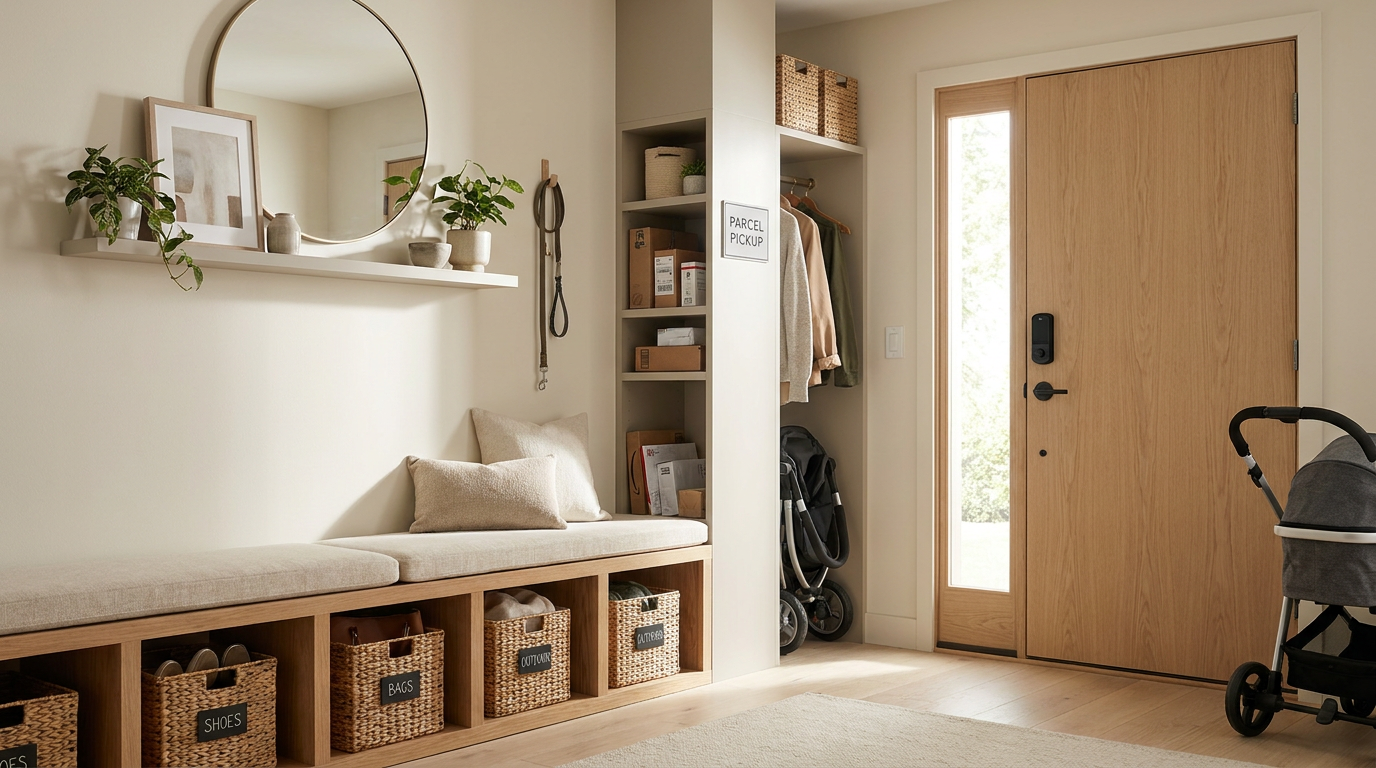
Digital systems matter just as much as physical ones. A shared family calendar, a maintenance reminder app, and automated grocery reorder lists can make home life feel substantially lighter. These are not glamorous tools, but they create the same quiet efficiency people love in well-run hospitality environments. They anticipate needs rather than forcing you to react to them at the last minute.
Layer Two: Outsourcing Everyday Friction
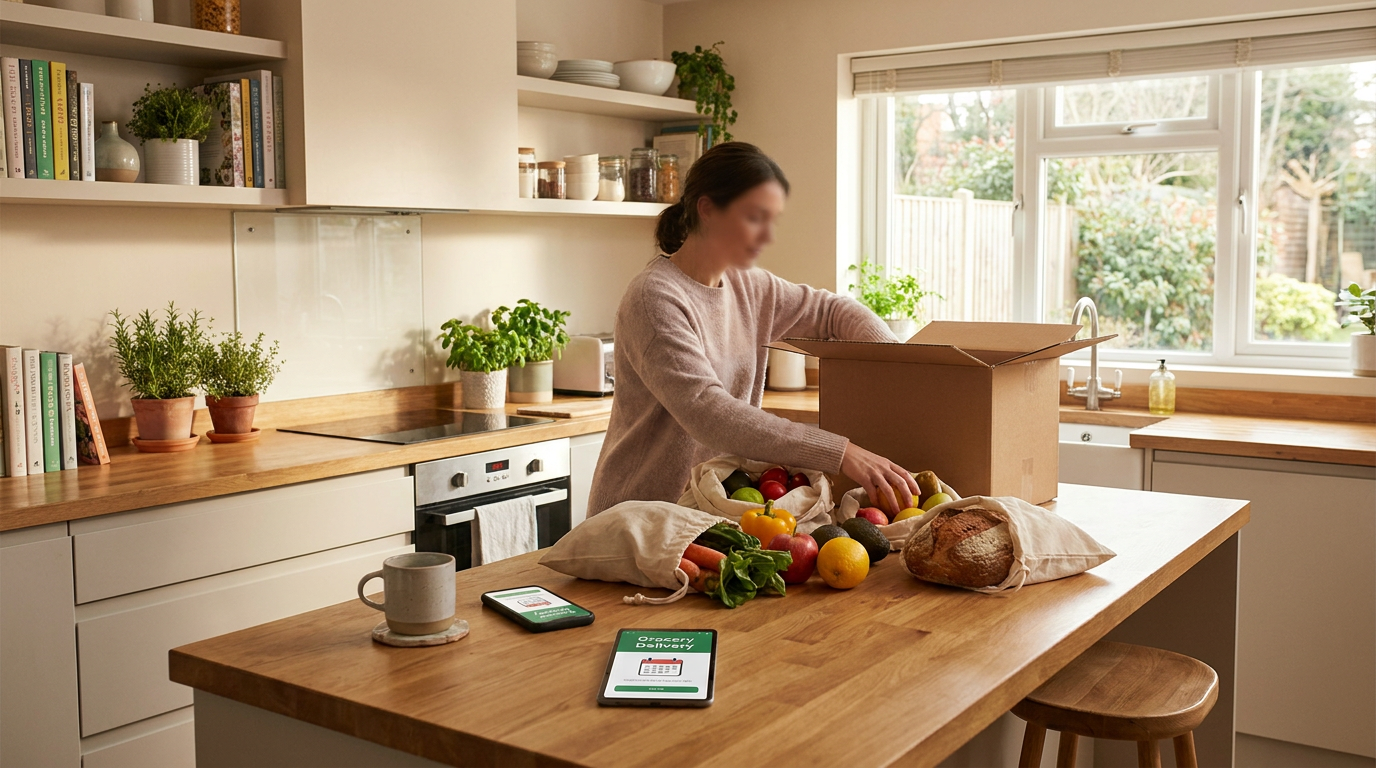
The second layer involves bringing in outside help for recurring tasks. This is where many households begin to feel the emotional payoff most clearly. Grocery delivery, scheduled cleaning, laundry pickup, lawn care, dog walking, and meal delivery are all examples of concierge-style support. They are not necessarily expensive if used selectively, and they can be tailored around your busiest seasons rather than locked into a permanent commitment.
McKinsey research has pointed to continued growth in home services and strong consumer interest in delivery models, which reflects how normal this kind of outsourcing has become. In practical terms, it means that concierge-style living is now accessible through apps, subscriptions, and local providers in ways that were much harder to arrange a decade ago. You no longer need formal staff to experience a more supported home.
One of the smartest ways to use this layer is to focus on your most draining tasks, not your idealized wish list. If grocery shopping consistently steals time and energy, start there. If clutter and laundry make your home feel mentally noisy, a weekly reset or pickup service may be more transformative than a rarely used premium amenity. Concierge-style living works best when it responds to your actual life rather than a generic image of luxury.
Layer Three: Personalized Coordination and Care
The third layer is the most elevated, but it is still more flexible than many people assume. This is where you move beyond single services into a coordinated support system. A human concierge, a virtual assistant, a trusted property manager, or even one highly organized household lead can curate providers, book recurring appointments, manage maintenance requests, coordinate wellness services, and keep the home operating smoothly.
For some households, this level includes in-home chefs, private drivers, wellness scheduling, or travel and event coordination. For others, it may simply mean one reliable person who handles repairs, vendor recommendations, key exchanges, and seasonal checklists. The point is not extravagance. It is reducing the cognitive load of coordinating multiple parts of life at once.
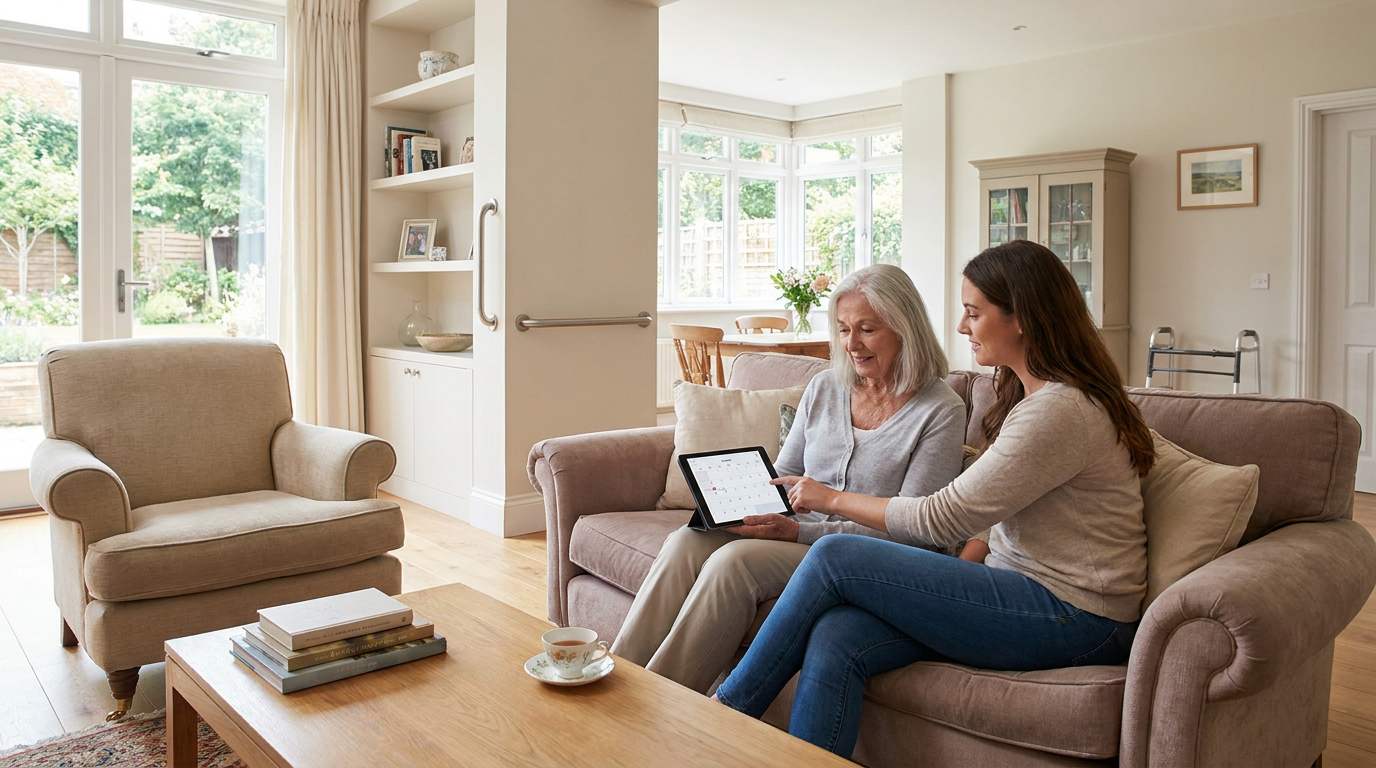
This layer is especially relevant for people balancing caregiving, demanding work schedules, or multiple properties. It also makes sense for aging adults who want support without leaving home. In that setting, coordination itself becomes a meaningful amenity. Help with transportation, appointment reminders, home support visits, and trustworthy service navigation can preserve independence while easing pressure on family members.
How to Bring Concierge-Style Amenities Into Any Budget
One of the most common misconceptions about this topic is that it belongs only to luxury high-rises. In reality, the concept scales beautifully. What matters most is not how expensive the service is, but whether it removes stress from your routine. The list below offers a practical way to think about concierge-style living across different spending levels.
- Low-cost approach: Build strong systems with smart locks, delivery instructions, package shelves, grocery subscriptions, maintenance reminders, and occasional help such as monthly cleaning or seasonal yard work.
- Mid-range approach: Add convenience services like dog walking, laundry pickup, meal prep delivery, mobile car wash, babysitting support, or a trusted handyman on call.
- Higher-end approach: Create a coordinated ecosystem with a personal assistant, private concierge, curated wellness providers, regular house management, and customized support based on your lifestyle.
The most successful version is often a hybrid. You may keep a modest home while investing in services that make your week significantly easier. Or you may live in a building with fees that include some amenities and choose to supplement with just one outside service that fills the gap. The goal is not to spend more for the sake of appearance. It is to spend thoughtfully on what restores your time and peace.
Renters can also embrace this model. You may not be able to renovate an entry hall or add built-ins, but you can still create a refined delivery setup, subscribe to practical services, and use digital tools that support your routines. Temporary living does not mean temporary comfort. In many cases, renters are actually well-positioned to experiment with concierge-style living because they can layer services around their needs without making permanent structural changes.
Designing the Home to Support the Service
Even the best services work better when the home itself is arranged to receive them gracefully. This is where design and convenience meet. A concierge-style lifestyle becomes more effective when your space includes smart storage, easy drop zones, clear labeling, and thoughtful circulation. These are not dramatic renovations. They are subtle design decisions that help daily support systems do their job.
Start with the entry. This area should be prepared for deliveries, guests, and transitions in and out of the home. Secure package storage, a dedicated returns basket, charging space for phones, and a visible household calendar can all make this zone more useful. In a condo or apartment, even a narrow wall can become a service station with hooks, concealed bins, and one tray for essentials.
The kitchen is another natural hub for hospitality-inspired living. Grocery delivery becomes much smoother when pantry zones are labeled and cold storage is easy to access quickly. A family command area with a tablet stand, meal plan, and household notes can also support meal services, recurring orders, and cleaner handoffs. These simple visual systems help the home feel composed rather than overwhelmed by help coming in and out.
Wellness and maintenance spaces matter too. If you are investing in home support services, make supplies easy to locate and routines easy to follow. Keep extra linens where a cleaner can reach them. Store dog walking gear near the door. Prepare a simple folder with appliance details, preferred vendors, and building instructions. This creates an experience that feels more seamless for you and for anyone assisting in the home.
Who Benefits Most From Concierge-Style Amenities
Although almost anyone can appreciate more ease at home, a few groups tend to benefit especially strongly from concierge-style amenities. The first is the busy family household. Parents often juggle school schedules, work obligations, meal planning, activity drop-offs, and home maintenance all at once. A little support around groceries, cleaning, transportation, or pet care can create more breathable evenings and weekends.
The second group is remote workers and professionals with demanding schedules. Working from home often blurs personal and professional boundaries, which makes household interruptions feel more disruptive. A package management plan, regular cleaning cadence, and maintenance coordination system can protect both focus and the atmosphere of the home itself. This is particularly helpful in smaller urban spaces where every disruption is more noticeable.
The third group includes older adults and caregivers. This is perhaps where concierge-style support feels most meaningful. Canada’s aging-at-home research emphasizes that quality of life at home depends on more than medical care alone. It also requires practical supports such as transportation, home help, social connection, and easy navigation of services. In this setting, concierge-style amenities can play a deeply human role in supporting comfort, independence, and continuity.
The fourth group is condo owners and renters who want hotel-like ease without leaving city life. In buildings where amenity fees are already part of the cost structure, it is worth looking beyond visual impressiveness and asking whether the service model supports your reality. Package security, responsive maintenance routing, resident communication, visitor coordination, and useful booking tools may offer more day-to-day value than larger showpiece features.
What to Look for in a Building or Community
If you are choosing a rental, condo, or managed community, the conversation around concierge-style amenities should go deeper than a glossy brochure. Ask how packages are handled, how maintenance requests are submitted, whether staff can coordinate deliveries or trusted vendors, and how resident communication works. A building with fewer but more functional amenities may ultimately feel more luxurious than one with dramatic spaces that rarely improve your day.
It is also wise to understand what is actually included in fees. CMHC notes that condo fees can cover amenities, which means residents should consider whether the service mix suits their routines before buying. Do not assume more amenities automatically equal better value. In many cases, a calm, responsive building operation with excellent communication and thoughtful support creates a stronger everyday experience than a longer list of physical features.
Community-level resources can also mimic concierge living in subtle ways. Shared parcel lockers, neighborhood provider lists, local seniors supports, dog care partnerships, and resident apps can all extend the feeling of coordinated ease. As technology evolves, this ecosystem may become even more common. Recent multifamily coverage suggests AI tools are increasingly being used for resident communication and service routing, which points toward a future where concierge-style support is less about formality and more about responsive systems.
The Role of Technology in the Future of Concierge-Style Living
Technology is quietly reshaping what concierge-style amenities look like. Instead of relying only on a front desk or full-time staff, many buildings and households now use apps, chat tools, smart devices, and automated communication to create faster, lighter support. A resident can submit a service request through an app, get package notifications instantly, coordinate recurring tasks digitally, and receive updates without needing multiple calls or follow-ups.
This is where the broader idea of living as a service becomes especially interesting. The future may be less about visibly luxurious spaces and more about homes that respond efficiently to the people inside them. AI-enabled chatbots, automated maintenance routing, and digital service dashboards can never replace warmth or trust entirely, but they can remove delays, confusion, and repetitive administration. That matters because convenience often feels most luxurious when it is nearly invisible.
For households, the same principle applies on a smaller scale. Smart home routines, shared family apps, recurring order systems, digital note boards, and neighborhood service platforms can all function as a personal concierge ecosystem. Used well, technology does not make home feel colder. It can actually make it feel more human by freeing up energy for what matters most.
How to Build Your Own Concierge-Style Home in 30 Days
If you are inspired by this idea but unsure where to begin, try approaching it as a one-month lifestyle reset. Start by observing where your home life feels most inconvenient. Notice which tasks repeat, which moments create clutter, and which responsibilities consistently interrupt your peace. The answer may be at the front door, in the kitchen, in scheduling, or in seasonal maintenance.
In the first week, focus only on physical systems. Improve your entryway, create a package and returns zone, streamline household supplies, and make keys, chargers, and documents easier to find. In the second week, set up digital support such as recurring reminders, shopping lists, and a shared household calendar. In the third week, test one outsourced service that relieves your biggest pressure point. In the fourth week, refine what worked and remove what did not.
This gradual approach is effective because it keeps the concept grounded in real life. It also helps you identify what kind of support actually changes your days. For one household, the answer may be weekly meal kits and a cleaner every other Friday. For another, it may be package handling, a dog walker, and a trusted list of home repair contacts. The luxury is not in copying someone else’s system. It is in creating a tailored one that makes your own home feel more generous and less demanding.
Final Thoughts: Luxury That Feels Like Relief
The most compelling thing about concierge-style amenities is that they redefine luxury in a more personal way. Instead of focusing only on prestige or appearance, they center the lived experience of home. They ask a different question: not just whether a space looks beautiful, but whether it cares for the people inside it. That perspective feels especially timely in an era when so many households are balancing work, caregiving, wellness, and the desire for a calmer daily rhythm.
Whether you live in a compact rental apartment, a suburban family house, or a condominium with shared amenities, there are practical ways to bring this feeling into your life. You can start with better systems, add one or two carefully chosen services, and build from there. In many cases, the most meaningful improvements are not dramatic at all. They are the quiet upgrades that make mornings smoother, evenings softer, and weekends less consumed by logistics.
Concierge-style living is not about trying to live like someone else. It is about designing a home that supports your actual routines, honors your time, and gives you a deeper sense of ease. When done well, it creates something more valuable than status. It creates relief, comfort, and the everyday pleasure of feeling well looked after in the place you call home.



No Comment! Be the first one.