



Modular furniture has quietly transformed the language of interiors. Once viewed primarily as a practical answer to tight floor plans or changing needs, it now occupies a far more sophisticated position in contemporary design. Today, the best modular pieces are not compromises made for convenience. They are thoughtful, beautifully composed systems that allow a room to evolve with grace, responding to how people live, work, gather, and rest. In an age shaped by urban living, hybrid routines, and a renewed appreciation for purposeful homes, modular furniture offers something deeply desirable: freedom without sacrificing beauty.
Table Of Content
- Why Modular Furniture Resonates So Strongly Today
- Modular Furniture as a Design Language, Not Just a Utility
- The Elegance of Personal Expression
- How Modular Furniture Elevates Different Rooms
- The Living Room
- The Home Office
- The Bedroom
- Entryways and Transitional Spaces
- Modular Furniture Beyond the Sofa
- The Sustainability Dimension: Beauty with a Longer Horizon
- What to Look for When Choosing Modular Furniture
- Questions Worth Asking Before You Buy
- Styling Modular Furniture with Sophistication
- Common Misconceptions About Modular Furniture
- The Future of Modular Living
- Conclusion: Designing a Home That Can Evolve Gracefully
Modular furniture refers to furniture systems built from individual units, or modules, that can be added, removed, rearranged, or replaced to reconfigure a room without buying an entirely new piece. A modular sofa can expand with extra sections for entertaining and contract for daily use; a modular shelving system can move from a living room to a home office while keeping its visual language intact; a modular storage wall can be resized as a household’s needs change. Unlike fixed furniture, which locks a room into one layout, modular furniture is designed around change itself, letting homeowners and renters adjust their spaces as families grow, work habits shift, or tastes evolve. This adaptability, paired with genuine craftsmanship and considered materials, is what separates modern modular furniture from its more utilitarian, flat-pack-adjacent reputation of the past.
The appeal of modular furniture lies in its remarkable balance between function and artistry. A sectional can expand for entertaining and contract for daily calm. A shelving system can move from living room to study without losing its visual coherence. A storage wall can feel architectural rather than merely utilitarian. This is where modular design becomes especially compelling. It allows interiors to feel personal and composed, not fixed or generic, offering homeowners and renters alike the opportunity to create spaces that reflect their habits, aspirations, and aesthetic instincts.
Across North America, this shift is being reinforced by the realities of contemporary life. Smaller homes, flexible work arrangements, and a stronger emphasis on online furniture discovery have all elevated the relevance of adaptable interiors. Major brands such as IKEA, West Elm, Article, CB2, and USM, along with Canadian makers including Bestar, Huppé, Halstead, and TEKKA, have embraced modular collections and planning tools that make customization more accessible. The result is a design category that feels increasingly refined, increasingly mainstream, and increasingly aligned with modern ideas of elegant living.
This evolution is not only aesthetic. Modular furniture also speaks to long-term value and sustainability. Circular-economy principles increasingly favor designs that can be repaired, disassembled, reconfigured, reused, and refurbished. When modular systems are well made, they can remain relevant through multiple moves, room updates, and lifestyle changes. That durability of purpose gives modular furniture a rare quality in today’s interiors market. It is not merely adaptable in form. It is adaptable in meaning, too.
To understand the true artistry of modular furniture, it helps to look beyond its mechanics and consider what it makes possible. It can soften the visual pressure of a compact apartment, bring order to an open-plan home, or create a layered and expressive atmosphere in a larger residence. It can support minimalism with clean precision or enrich maximalism through texture, color, and rhythm. Above all, it can turn a room into something more intimate and intelligent: a space designed not just to be seen, but to be lived in beautifully.
Why Modular Furniture Resonates So Strongly Today
The contemporary home is expected to do far more than it once did. A living room may now serve as a social space, a reading corner, a movie lounge, and occasionally a workplace. A guest room may also become a creative studio. Even the entry can function as storage, display, and transition zone all at once. In this context, fixed furniture can feel limiting, while modular furniture introduces a gentler, more responsive way of arranging life. It acknowledges that homes are no longer static compositions. They are living environments that need to shift with time.
In North America, the rise of modular furniture is closely connected to urban density and hybrid living. Smaller homes and apartments require pieces that perform efficiently while maintaining visual elegance. At the same time, digital retail behavior has made people more comfortable exploring custom configurations online. In Canada, retail trade reached $865.2 billion in 2024, including $73.7 billion in e-commerce revenue, a reminder that furniture buying increasingly begins on screens before it reaches the room. Modular systems are especially suited to this shift because they can be visualized, configured, and planned digitally with relative ease.
Brands have responded by creating immersive planning experiences. USM, for example, presents its furniture as an infinitely adaptable modular system and offers a 3D configurator that helps customers shape pieces around their exact needs. IKEA and other major retailers also provide planning tools that make modular layouts easier to understand before purchase. This digital clarity is significant because furniture is an emotional investment as much as a financial one. People want to imagine how a piece will sit in the architecture of their lives, not simply in the dimensions of a room.
There is also a cultural reason modular furniture feels especially relevant now. Interiors have become more expressive. People are less interested in rigid formulas and more interested in spaces that reveal identity. Modular design supports this beautifully because it offers a framework rather than a prescription. It gives enough structure to create harmony, yet enough freedom to allow individuality. In that sense, modular furniture feels almost architectural. It provides a system, and within that system, personality can unfold.
Modular Furniture as a Design Language, Not Just a Utility
One of the most important shifts in how we think about modular furniture is recognizing that it is not simply a category of practical products. It is a design language. Like good architecture, it relies on proportion, repetition, rhythm, material contrast, and spatial dialogue. Modules relate to one another in deliberate ways, and when those relationships are handled well, the result is visually calm, deeply functional, and quietly luxurious.
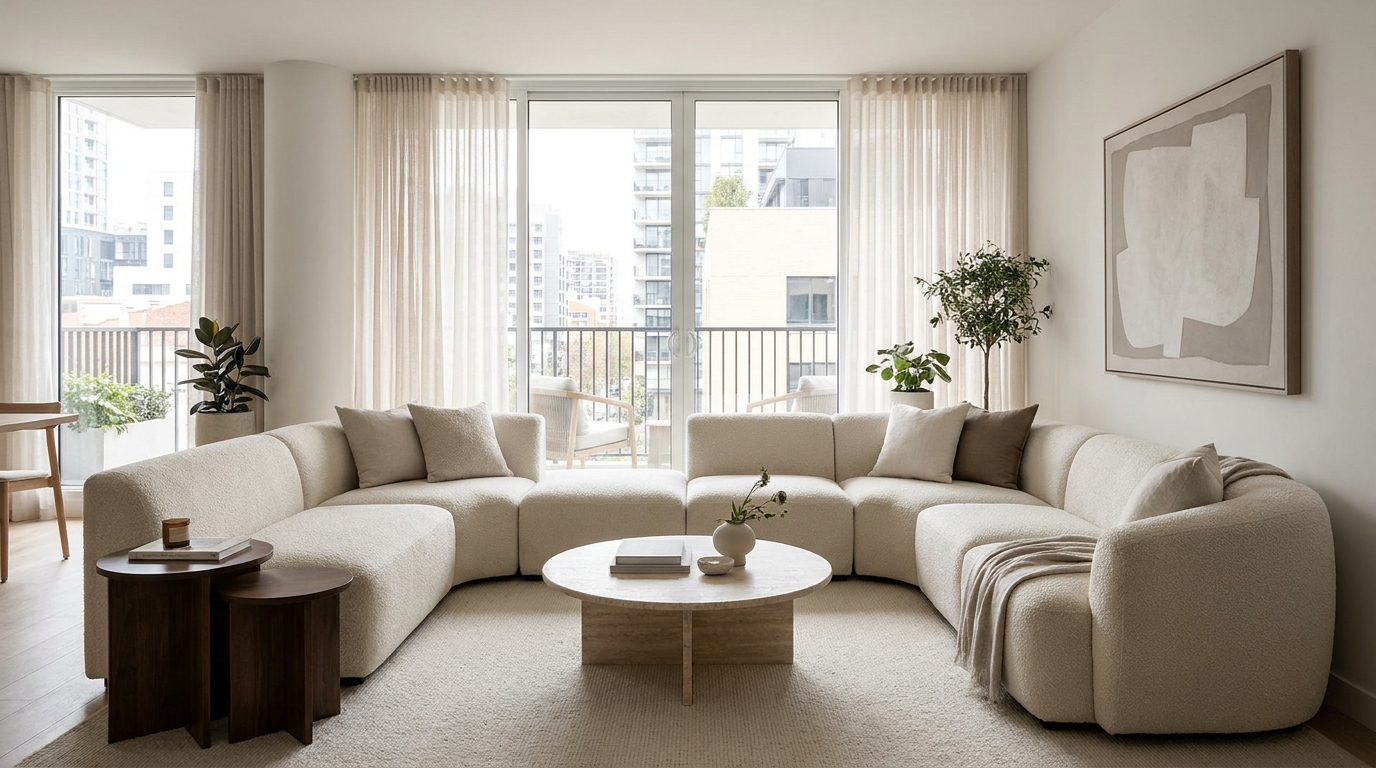
Consider the modular sofa, perhaps the most familiar example. Its beauty does not depend solely on softness or upholstery. It depends on composition. The arrangement of seat depths, corner units, open ends, ottomans, and chaise extensions can produce dramatically different moods. A low, linear configuration may feel serene and restrained. A generous, curved arrangement may feel welcoming and conversational. A fragmented layout with separated modules may feel airy and flexible. In each case, the same furniture family can express an entirely different emotional atmosphere.
Modular shelving and storage systems offer a similar richness. They can act as quiet backdrops or become architectural focal points in their own right. Open shelves bring rhythm and display. Closed cabinets introduce calm and concealment. Glass fronts add lightness, while rich lacquer or wood veneer adds density and depth. This interplay allows storage to become part of a room’s visual identity rather than an afterthought. The most successful systems do not merely hold belongings. They choreograph them.
Modular furniture is at its most beautiful when it disappears as a constraint and reappears as possibility.
That sense of possibility is what makes modular design so compelling for those who care about interiors. It lets homeowners think like curators. Each addition, adjustment, or rearrangement becomes part of a broader composition. The room is not locked into a single moment. It remains open to refinement.
The Elegance of Personal Expression
Personal expression in interiors is often discussed in terms of color, art, or accessories, yet furniture shape and arrangement may be even more influential. Modular furniture invites a particularly intimate kind of authorship because the user helps define the final form. Instead of selecting one pre-decided silhouette, you shape a composition that responds to your routines, habits, and aesthetic values. That process creates a room that feels authored rather than merely assembled.
For some, this may mean creating a deeply symmetrical living room with a disciplined palette of ivory, walnut, and brushed brass. For others, it may involve a relaxed arrangement of low modules in linen and boucle, softened by vintage rugs and sculptural lighting. Neither approach is more correct. The beauty of modular furniture lies in its receptiveness to diverse design languages. It can be crisp and minimal, lush and layered, gallery-like and restrained, or warm and family-centered.
This flexibility is especially valuable when tastes evolve. A modular seating system purchased during one life stage does not need to become irrelevant in the next. New covers, added units, reoriented sections, or complementary storage can help it grow with the home. Such responsiveness makes modular furniture feel less like a fixed product and more like a long-term design companion. It supports the elegant idea that interiors should mature, not simply reset.
Personalization also benefits from the expansion of available materials and finishes. Contemporary modular collections are increasingly offered in premium textiles, sophisticated color stories, sculptural forms, and elevated detailing. This matters because modular design once carried an unfair reputation for looking overly technical or plain. Today, the category includes richly upholstered silhouettes, beautifully finished cabinetry, warm woods, expressive hardware, and refined joinery. Modularity no longer asks for visual sacrifice. It invites aesthetic nuance.
How Modular Furniture Elevates Different Rooms
The Living Room
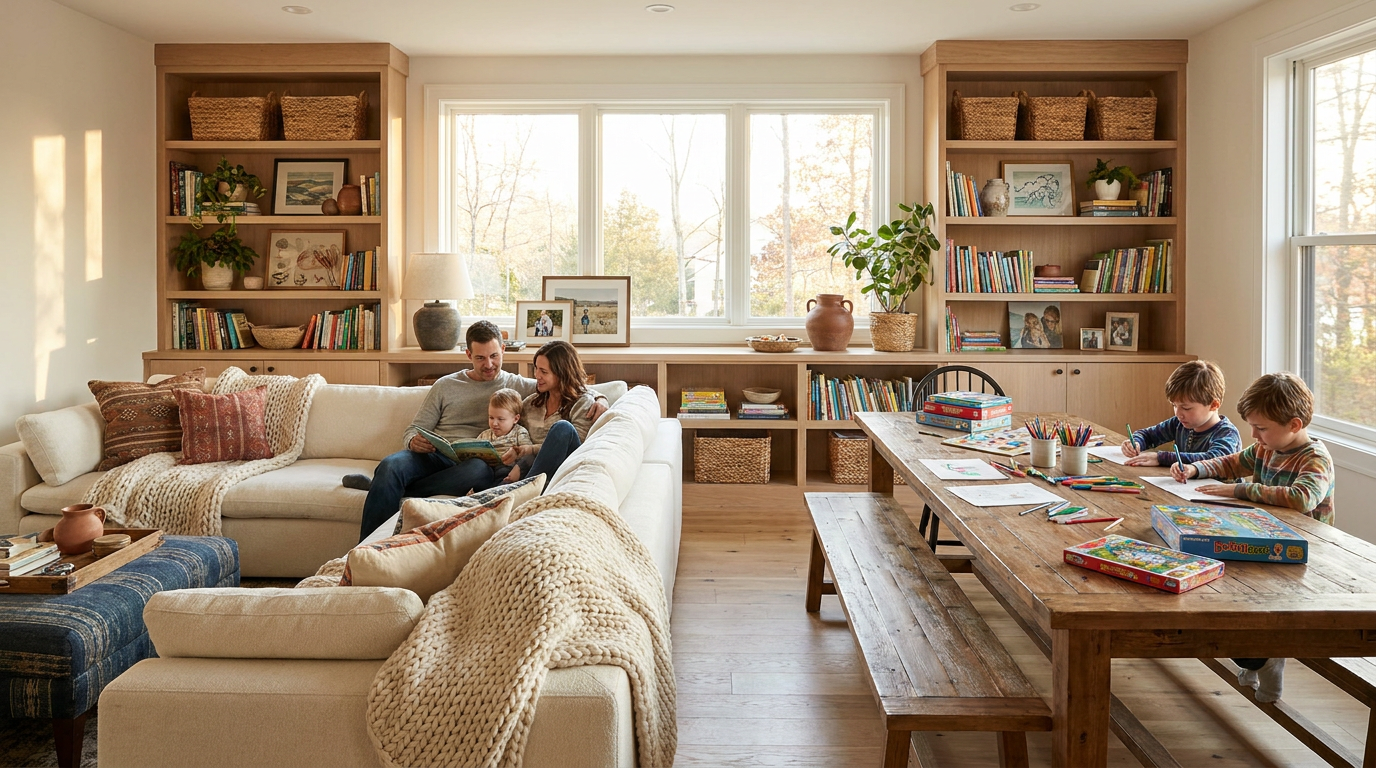
The living room remains the most natural setting for modular furniture because it is often the most socially fluid room in the home. A modular sofa can define conversation areas, adapt to entertaining, and create intimacy within open plans. It can also respond to changes in circulation, whether a family needs more floor space for children, an extra seat for guests, or a more lounge-like setup for film nights. This ease of adaptation makes the room feel more alive and less dictated by a single layout.
Elegance in a modular living room comes from restraint and proportion. The modules should relate thoughtfully to the architecture of the room, allowing pathways to remain clear and focal points to breathe. A beautiful sectional benefits from equally considered companions such as a nuanced rug, a low table with sculptural presence, and lighting that adds vertical balance. When these elements are composed carefully, modular seating feels less like a practical device and more like a tailored landscape for living.
The Home Office
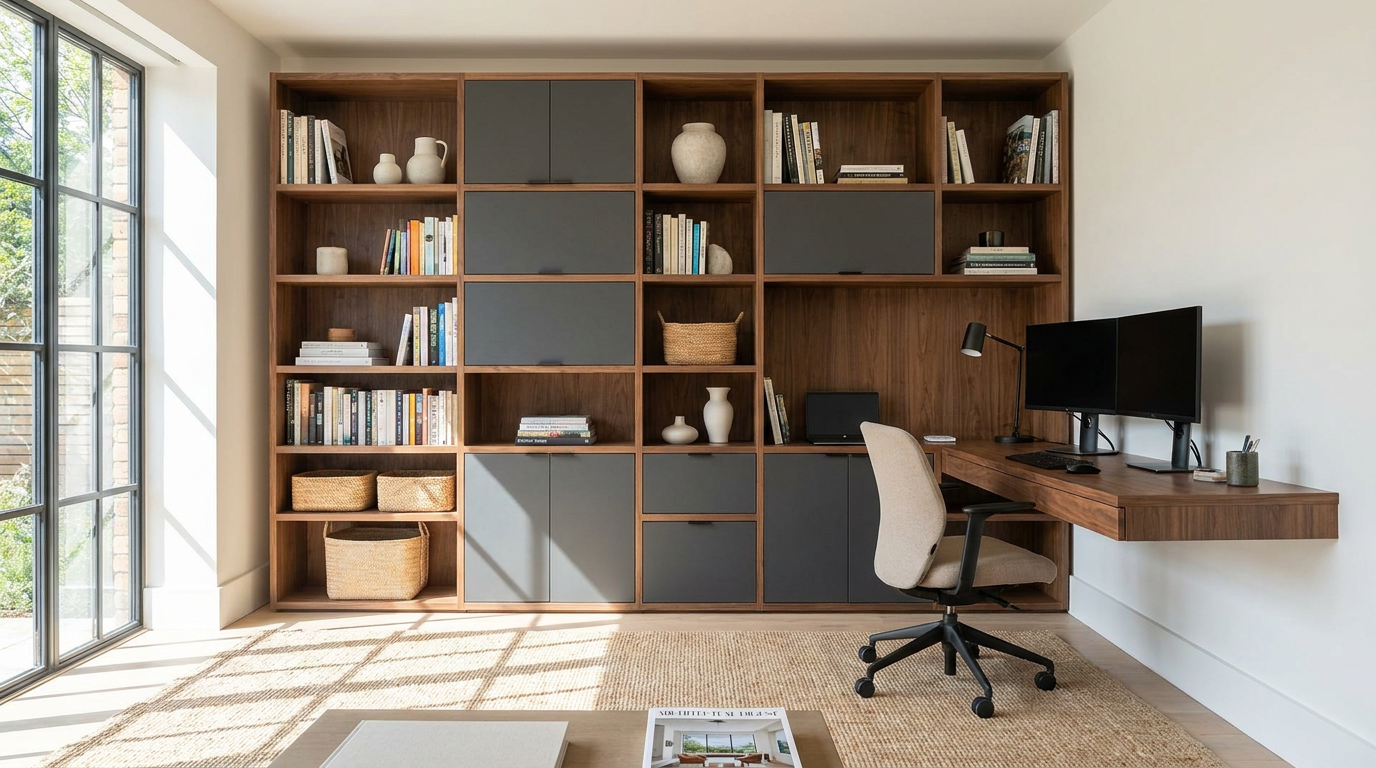
As work routines continue to shift, modular systems have become invaluable in home office design. Desks, shelving, cabinets, and mobile elements can be arranged to support concentration without overwhelming a room. In smaller homes, modular office furniture is especially elegant because it can integrate storage and work surfaces within a single coherent language. This avoids the fragmented look that often occurs when office pieces are added hastily to domestic settings.
A modular office also has the advantage of future flexibility. A shelving grid that supports files today may later display books and objects. A desk extension may be removed when no longer needed. This ability to transform function while preserving aesthetic continuity is one of modular design’s most powerful strengths. It allows a space to change purpose without losing its dignity.
The Bedroom
Bedrooms benefit from modularity in more subtle ways. Modular wardrobes, bedside systems, benches, and storage units can make the room feel custom planned, even when the architecture is modest. This is particularly effective in apartments where built-in storage may be limited. A carefully selected system can create visual order and support calm, which is essential in a space intended for rest.
Because the bedroom is deeply personal, modularity here should feel soft rather than mechanical. Warm finishes, upholstered details, and balanced proportions can help maintain serenity. The goal is not to make the room endlessly variable, but to make it quietly responsive. Even small adjustments in arrangement or capacity can have a meaningful impact on comfort and ease.
Entryways and Transitional Spaces
Entryways are often overlooked, yet they benefit enormously from modular thinking. A composition of bench seating, shoe storage, hooks, closed cabinets, and display shelving can be tailored precisely to the rhythm of daily life. In a narrow corridor, vertical modules may maximize storage elegantly. In a larger foyer, low units can preserve openness while anchoring the space visually. When designed well, modular entry furniture can create a first impression that is polished, welcoming, and highly efficient.
Modular Furniture Beyond the Sofa
A common misconception is that modular furniture begins and ends with sectional seating. In reality, modular principles extend across an impressive range of furniture categories. Shelving systems, wardrobes, media consoles, desks, dining storage, room dividers, children’s furniture, and even hospitality and commercial installations all benefit from modular logic. This broader application matters because it reveals modularity not as a trend confined to one room, but as a flexible design philosophy.
Commercial design has been especially influential in expanding this perspective. Industry events such as NeoCon 2025 emphasized adaptability, mobility, and user autonomy as central priorities in furniture design. These ideas increasingly move between workplace, hospitality, and residential contexts. A modular benching system in an office and a reconfigurable storage wall in a home may serve different purposes, yet they share the same underlying intelligence: a respect for change.
This cross-category relevance is also what makes modular furniture so appealing to those planning long-term interiors. A family might begin with a modular media unit, later add a desk from the same system, and eventually extend into storage for another room. The visual language remains coherent while the function expands. This creates the kind of layered continuity that makes a home feel intentional over time.
The Sustainability Dimension: Beauty with a Longer Horizon
In conversations about design, sustainability is often reduced to materials alone. While material choices are crucial, modular furniture adds another important layer: longevity through adaptability. Circular-economy guidance, including work from the OECD and furniture-sector circularity frameworks, emphasizes the value of products designed for disassembly, repair, refurbishment, reuse, and remanufacturing. Modular furniture can align elegantly with these principles when it is thoughtfully engineered.
If a sofa allows an individual section to be replaced rather than discarding the whole piece, its lifespan can expand significantly. If a shelving system can be disassembled during a move and reconfigured in a new home, it remains useful rather than becoming waste. If replacement parts, panels, covers, or hardware are available, maintenance becomes realistic rather than burdensome. These qualities make modular furniture especially relevant in a design culture increasingly aware of overconsumption.
Yet it is important to keep the conversation honest. Modular furniture is not automatically sustainable simply because it comes in parts. Some systems are designed for short-term convenience rather than long-term resilience. Sustainability depends on construction quality, repairability, material integrity, replacement-part availability, and whether the product truly supports years of reconfiguration. A beautifully marketed modular piece that cannot withstand ordinary use is not a sustainable one.
When modular furniture is done well, however, it offers something rare: emotional and environmental durability. It stays relevant because it can change. It stays desirable because it can be refreshed. It stays useful because it can be repaired. This is sustainability in a more elegant sense, not as a slogan, but as a quiet extension of good design thinking.
What to Look for When Choosing Modular Furniture
Because the modular category is broad, quality can vary dramatically. Some pieces are engineered with remarkable care, while others rely on the appeal of flexibility without delivering true durability. For buyers who want modular furniture to feel elegant and enduring, a more discerning eye is essential. Beauty should be supported by construction, not merely surface styling.
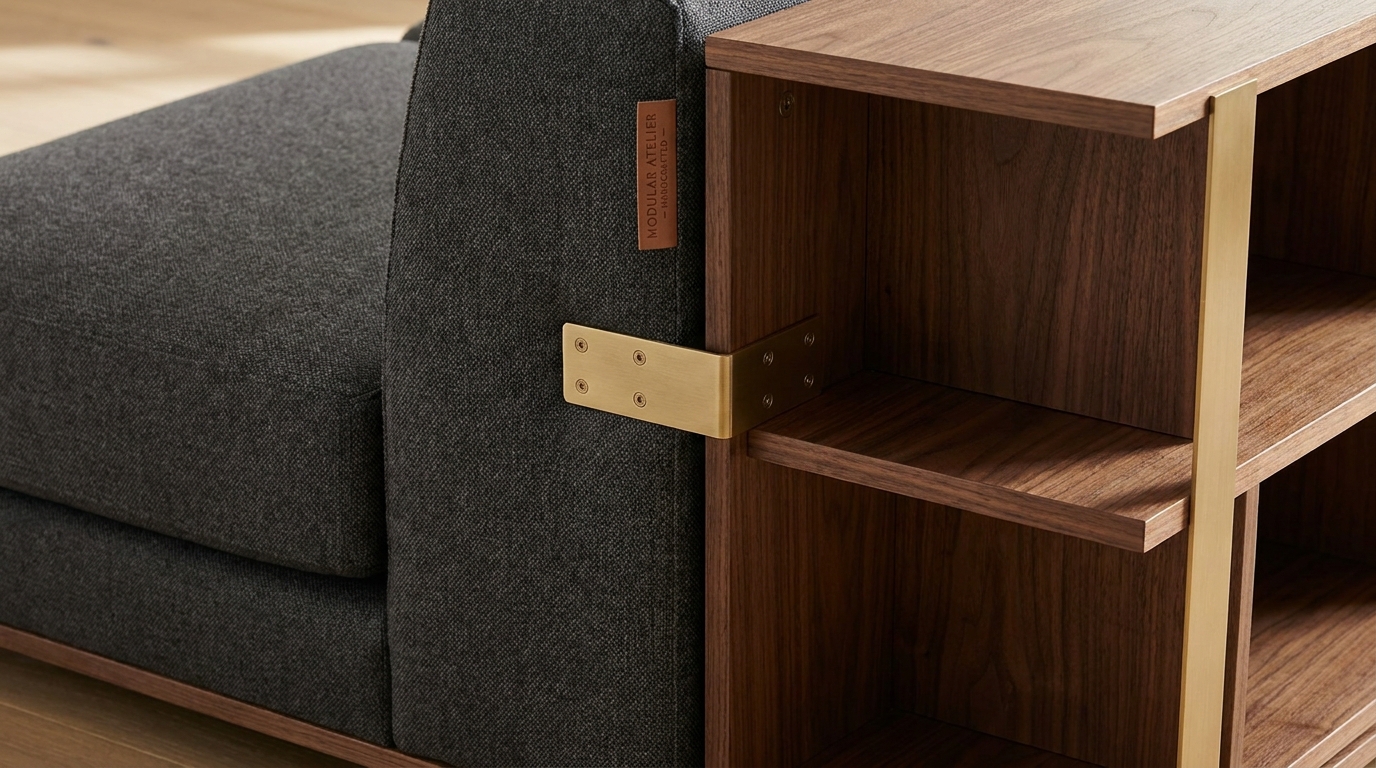
Start with the frame and structure. Whether purchasing seating or storage, the internal build matters enormously. Strong frames, stable joinery, and thoughtfully designed connectors determine whether a modular piece will remain secure over time. Hardware should feel precise, not flimsy. Modules should connect cleanly and stay aligned through repeated use. In well-made systems, reconfiguration feels smooth and intentional rather than awkward or unstable.
Upholstery and finishes deserve equal attention. Fabrics should not only be attractive, but also suited to the room’s level of use. High-resilience cushions, durable upholstery, and quality stitching contribute to both comfort and longevity. In cabinetry and shelving, examine finish consistency, edge detailing, and surface resilience. The true luxury of modular furniture often appears in these quieter details.
It is also wise to ask practical questions before buying. Consider whether replacement parts are available, whether additional modules can be purchased later, and whether the brand is likely to maintain the system over time. A modular platform becomes far more valuable when it can evolve gradually. This is especially important for larger investments such as sofas, storage walls, and office systems. Planning for future compatibility is part of planning for elegance.
Questions Worth Asking Before You Buy
-
Can the furniture be reconfigured easily without damaging the piece or requiring special labor every time?
-
Are replacement covers, parts, or modules available if the household’s needs change or damage occurs?
-
Does the system offer enough variety in dimensions, finishes, and accessories to feel truly personalized?
-
How does the piece look from every angle, especially if it will float in an open-plan room?
-
Will the style remain visually relevant if the room around it evolves over the next five to ten years?
Styling Modular Furniture with Sophistication
One of the loveliest aspects of modular furniture is that it can be styled to feel almost bespoke. The key is to treat it not as a utilitarian base, but as an integral part of the room’s composition. Begin with scale. Modular pieces often have generous horizontal presence, so they pair beautifully with vertical counterpoints such as floor lamps, art, drapery, or tall branches. This creates visual rhythm and prevents the room from feeling too low or spread out.
Texture is equally important. Because modular silhouettes are often clean and continuous, they benefit from tactile contrast. Boucle, wool, washed linen, velvet, leather, stone, smoked glass, and wood grain all add richness without clutter. This is where the artistry of styling becomes especially rewarding. Even a very simple modular system can feel luxurious when layered with thoughtful materials and a disciplined palette.
Color should support the furniture’s flexibility rather than fight it. Neutrals remain timeless because they allow reconfiguration without visual disruption, yet that does not mean modular furniture must be pale or understated. Deep olive, rust, aubergine, mocha, charcoal, and muted blue can all work beautifully in modular compositions, especially when balanced with quieter architectural surfaces. The most elegant interiors often combine compositional clarity with emotional warmth.
Accessories should be edited with intention. Since modular furniture already introduces a strong sense of geometry and repetition, too many small objects can create visual noise. Fewer, better pieces tend to work best. A sculptural lamp, a ceramic vessel, a single stack of art books, or a generous throw can enhance the furniture’s presence without competing with it. In this way, modular interiors often teach a valuable lesson in design maturity: flexibility does not require excess.
Common Misconceptions About Modular Furniture
Despite its growing popularity, modular furniture is still surrounded by a few persistent misunderstandings. One of the most common is the assumption that modular means cheap. In truth, modularity and quality are entirely separate matters. Some modular pieces are budget oriented, while others are meticulously engineered and beautifully finished. Premium systems can be among the most sophisticated furnishings on the market.
Another misconception is that modular furniture is the same as flat-pack furniture. The two may overlap, but they are not identical. Flat-pack refers mainly to shipping and assembly efficiency. Modular refers to reconfigurability and system-based design. A piece can be flat-packed without offering meaningful layout flexibility, and a modular piece can be highly refined, custom-looking, and long-lasting.
Many people also assume modular furniture is limited to highly modern interiors. In fact, modular pieces can be styled across a wide range of aesthetics. A clean-lined shelving system may suit a contemporary loft, while a softly upholstered modular sofa in natural linen may feel perfect in a warmer, more classic home. What matters is not whether the furniture is modular, but how its form, finish, and scale converse with the rest of the interior.
Finally, there is the idea that modular furniture is automatically sustainable or automatically practical. Neither is guaranteed. A poorly built piece can disappoint regardless of its flexibility. A beautiful system with no replacement support may age poorly. The most successful modular choices are those that unite adaptability, craftsmanship, and long-term thinking.
The Future of Modular Living
The future of modular furniture appears remarkably promising because it aligns with several powerful design currents at once. Consumers are seeking greater autonomy in shaping their homes. Retailers are investing more deeply in digital planning tools and online configuration. Designers are embracing adaptable layouts, softer forms, and furniture that can work across multiple contexts. Meanwhile, sustainability conversations continue to favor systems that can last, evolve, and be responsibly maintained.
We are also seeing modularity expand into broader ecosystems of personalization. Buyers increasingly expect to choose dimensions, finishes, fabrics, accessories, and complementary elements with confidence. In some cases, third-party additions and planning software further extend the life and individuality of modular platforms. This movement suggests that furniture is becoming less fixed as a product and more fluid as a design service.
What remains especially exciting is that this future does not feel cold or mechanical. On the contrary, the best new modular furniture is warmer, softer, and more expressive than earlier generations. Sculptural curves, richer materials, lower profiles, and tactile upholstery are bringing emotional depth to adaptable systems. The result is a category that speaks not only to changing lifestyles, but to changing tastes. Flexibility is no longer hidden behind utility. It is being dressed in elegance.
Conclusion: Designing a Home That Can Evolve Gracefully
The art of modular furniture lies in its quiet intelligence. It understands that beauty in the home is not only about appearance, but about responsiveness. A room should support life as it unfolds, with all its movement, surprises, routines, and reinventions. Modular furniture answers this with an uncommon grace. It offers structure without rigidity, personalization without chaos, and practicality without aesthetic compromise.
For those seeking interiors that feel refined yet deeply livable, modular furniture presents an extraordinary opportunity. It can shape small apartments with clarity, enrich larger homes with layered function, and accompany changing needs with poise. It can invite sustainability through longevity, support online-first planning with confidence, and express personal style with subtle authority. Most importantly, it can make a home feel genuinely yours.
In the end, modular furniture is not simply about rearranging pieces. It is about composing spaces with intention. It is about recognizing that elegance is not static. It moves, adjusts, and matures with us. And when furniture is designed to do the same, the home becomes more than well furnished. It becomes beautifully attuned to life.

No Comment! Be the first one.