



The bathroom is one of the most intimate rooms in any home. It greets the beginning of the day, receives the final quiet moments of the evening, and supports rituals that are both practical and deeply personal. Because it is often compact, every decision carries more visual and functional weight. A change in lighting can soften the atmosphere, a better vanity can ease the morning rush, and a well chosen finish can make the room feel composed rather than crowded.
Table Of Content
- Why Bathroom Design Deserves More Attention
- Begin with Function, Then Let Beauty Follow
- Ask the Right Questions Before You Renovate
- Ventilation and Moisture Control Are the Quiet Foundation of Luxury
- Lighting That Flatters the Room and Supports Daily Rituals
- Storage as a Form of Visual Calm
- Materials That Feel Timeless, Tactile, and Easy to Live With
- Color Without Fear
- Water Efficiency That Supports Beauty and Responsibility
- Accessibility, Comfort, and the New Definition of Luxury
- Accessible Features That Can Still Feel Beautiful
- The Spa Bathroom, Reimagined for Real Life
- Small Bathroom Design Ideas That Make a Big Difference
- High Impact Upgrades for a Smaller Budget
- Technology, Convenience, and Subtle Innovation
- Personal Aesthetics Matter More Than Perfect Trend Following
- When to Call a Professional
- Designing a Bathroom That Endures
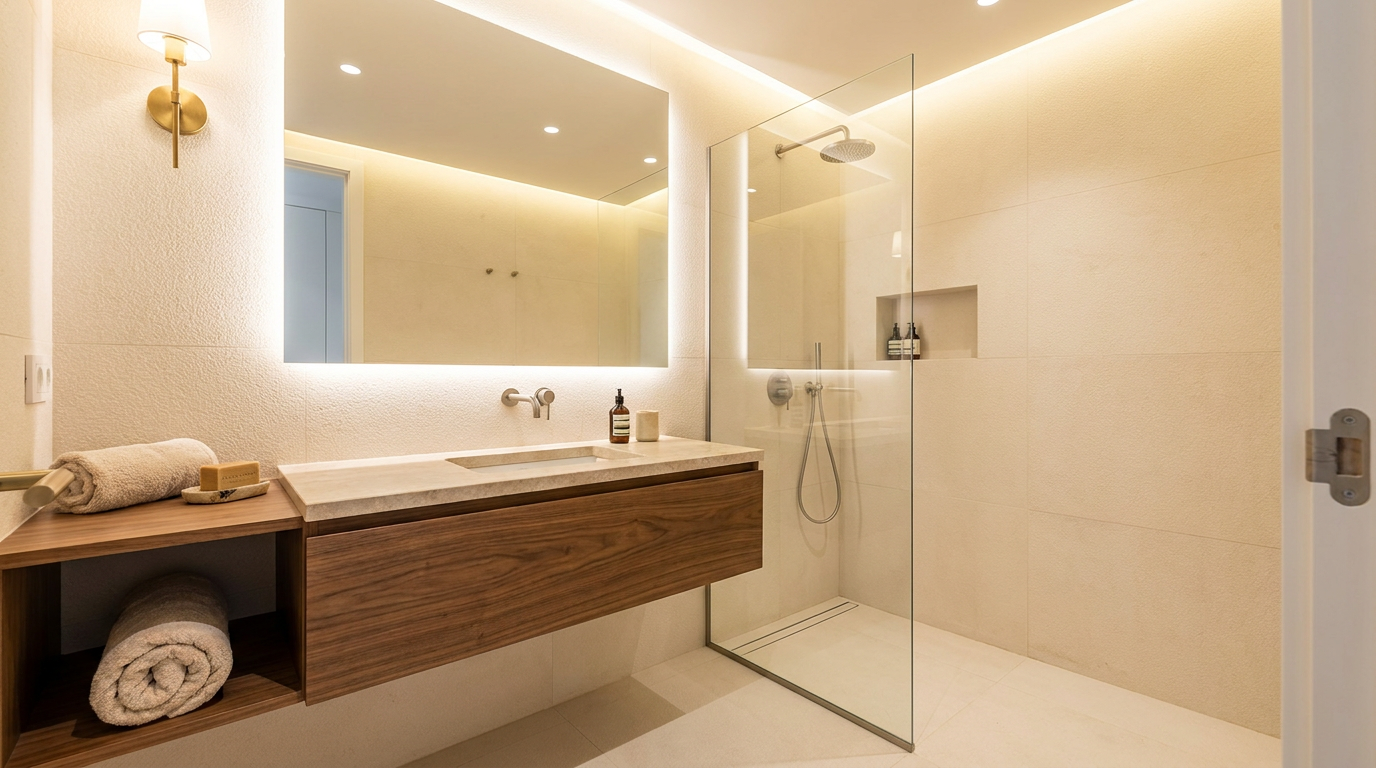
Timeless bathroom design is not about chasing a single trend or replicating a showroom. It is about shaping a space that works beautifully for the way you live while preserving a sense of serenity that lasts beyond seasonal fashions. A timeless bathroom balances hidden performance with visible grace: proper ventilation that clears moisture, layered lighting that flatters the room and supports daily rituals, storage that keeps surfaces clear, durable materials that age well, and safety features that work for every member of the household. It can be modern, traditional, organic, or minimal in style. What unites every timeless bathroom is that its choices are grounded in proportion, purpose, and personal meaning rather than a single aesthetic formula, so the room stays comfortable, easy to maintain, and visually composed for years to come, no matter its size or budget.
That balance matters more than ever. Across Canada and North America, homeowners are increasingly designing bathrooms around comfort, accessibility, wellness, and personalization rather than resale logic alone. Houzz’s 2025 U.S. Bathroom Trends Study found that 68 percent of homeowners considered special needs in their projects, a clear sign that future proofing and real life function are shaping design decisions. The result is a richer definition of luxury, one that values calm routines, easy movement, good air quality, and thoughtful beauty in equal measure.
This is where small design choices become transformative. A mirror that reflects more light, a fan that properly vents to the outdoors, a faucet that saves water without compromising elegance, or a niche that keeps surfaces clear can change the entire emotional texture of a bathroom. No matter the budget or square footage, these details have the power to turn a purely utilitarian room into a sanctuary of comfort and refinement.
Why Bathroom Design Deserves More Attention
A bathroom may be smaller than a kitchen or living room, yet it asks more of its materials and systems. Heat, steam, splashing water, cleaning products, and daily traffic all test the durability of every surface. That is why good bathroom design is never only decorative. It is an intelligent response to moisture, movement, routine, and comfort, wrapped in a visual language that feels calm and cohesive.
Bathrooms also have a unique emotional role in the home. They are places of privacy, restoration, and pause. When they are poorly lit, cluttered, or damp, the discomfort is immediate. When they are thoughtfully planned, even simple routines feel more graceful. A hand towel placed within easy reach, a warm tone of light near the mirror, or a shelf that clears the countertop can make the room feel intuitively supportive.
There is a practical case for taking bathroom design seriously as well. Houzz’s 2024 U.S. Bathroom Trends Study reported that 83 percent of homeowners relied on professionals for bathroom renovations, which underscores how technically layered these projects can be. Plumbing, waterproofing, electrical work, ventilation, and material transitions all need careful coordination. The beauty of a bathroom is often determined by how well these invisible elements have been resolved.
What makes a bathroom timeless is not whether it follows one specific aesthetic formula. It is whether the room feels comfortable to inhabit, easy to maintain, and visually composed over many years. A timeless bathroom can be modern, traditional, organic, or minimal. The common thread is that its choices are grounded in proportion, purpose, and personal meaning.
Begin with Function, Then Let Beauty Follow
It is tempting to begin a bathroom update with tile samples or fixture finishes, yet the strongest spaces start with function. Before choosing colors or materials, consider how the room is used each day. Does the morning feel rushed because storage is inadequate. Does the mirror area need better task lighting. Is the shower comfortable for every member of the household. These questions lead to design solutions that endure.
A key principle in bathroom design is that lighting, storage, ventilation, and easy clean materials often improve the day to day experience more than costly decorative upgrades. This does not diminish the importance of beauty. It simply means beauty should emerge from a room that is already working well. A lovely stone vanity will never compensate for a room with poor airflow, insufficient storage, or slippery flooring.
Function also protects long term value. Moisture that lingers after showers, water that pools in the wrong place, or fixtures that are difficult to clean can slowly erode the comfort of a bathroom. Practical planning prevents those small irritations from becoming permanent ones. In this way, timeless design is an act of generosity toward your future self.
Ask the Right Questions Before You Renovate
Every bathroom project benefits from a thoughtful brief. Consider who uses the space, what frustrates them, and what would make the room feel easier, calmer, and more beautiful. A family bathroom may need robust storage and durable finishes, while an ensuite may prioritize atmosphere and wellness. A guest bathroom may be modest in size yet still deserve a strong design identity.
Useful planning often starts with a few practical questions.
- How much natural and artificial light does the room have at different times of day?
- Is there enough storage to keep daily essentials out of sight but close at hand?
- Does the ventilation system remove moisture effectively and vent outdoors?
- Are surfaces safe, durable, and easy to maintain?
- Will the layout remain comfortable over time as needs change?
- What mood should the room create, whether serene, warm, crisp, or cocooning?
These considerations shape every later decision. Once they are clear, aesthetics become easier to refine because they are rooted in a coherent purpose rather than impulse.
Ventilation and Moisture Control Are the Quiet Foundation of Luxury
Few bathroom topics are less glamorous and more essential than ventilation. Health Canada states that excessive moisture is one of the most common causes of poor indoor air in homes, and it recommends using bathroom exhaust fans that vent to the outdoors to help prevent mould. This is a crucial reminder that elegance in a bathroom is never only surface deep. A room that looks beautiful but traps humidity is not truly well designed.
Moisture is created every day through showering, bathing, and even simple routines such as handwashing in a warm room. Health Canada also notes that moisture problems can come from everyday activities like showering or bathing, especially when exhaust fans are not working properly, not vented outside, or not used. In a bathroom, this means ventilation should be treated as a design priority from the start, not an afterthought hidden behind more exciting finish choices.
Proper ventilation supports more than building performance. It affects comfort, odor control, mirror fogging, paint durability, and the lifespan of cabinetry and finishes. It helps preserve the tactile beauty of wood, plaster, tile grout, and textiles by reducing the damp conditions that invite deterioration. In emotional terms, a dry and fresh bathroom simply feels cleaner, calmer, and more restorative.
A timeless bathroom protects what you cannot see as carefully as it celebrates what you can. Good ventilation is not merely technical. It is part of the room’s atmosphere, health, and longevity.
If you are renovating, ensure the fan is properly sized for the room, installed correctly, and vented outdoors. If you are not renovating, simple habits still matter. Use the fan during showers and for a period afterward, keep it clean, and address leaks quickly. These seemingly modest actions protect the room’s beauty in the most practical way possible.
Lighting That Flatters the Room and Supports Daily Rituals
Lighting may be the single most transformative design tool in a bathroom. It affects how spacious the room feels, how comfortable grooming tasks become, and how soothing the atmosphere is at the end of the day. Yet many bathrooms still rely on one overhead fixture that casts shadows and flattens the room. A timeless bathroom instead uses layered lighting to shape both function and mood.
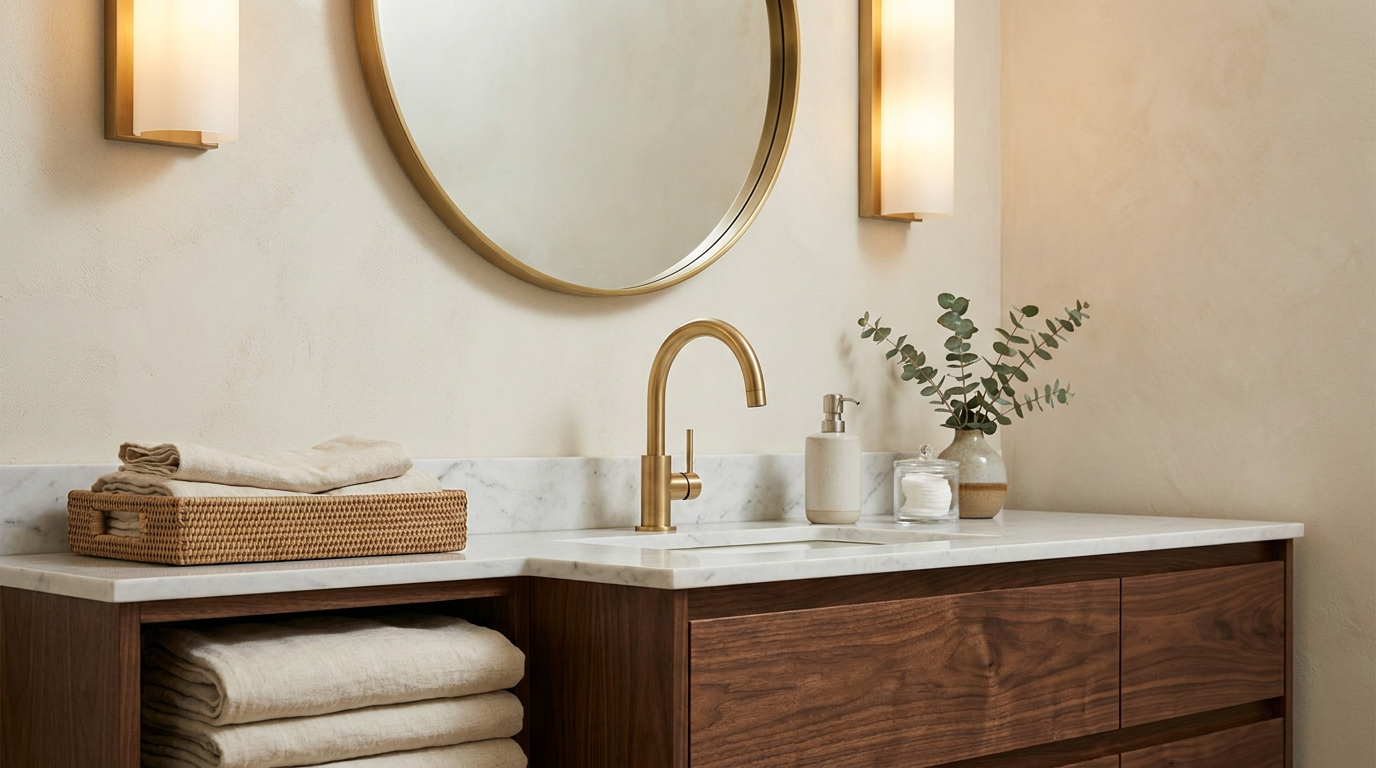
Task lighting near the mirror is essential for shaving, skincare, makeup, and grooming. Wall sconces placed at face level or a carefully integrated mirror light can reduce harsh shadows and create a more flattering effect than an overhead fixture alone. Ambient lighting fills the room with softness, while accent lighting can lend subtle drama to a niche, shelf, or architectural detail. Together, these layers make the room feel more complete and intuitive.
In small bathrooms, lighting also helps counter the misconception that everything must be white to appear larger. Bright white surfaces can certainly reflect light, but space is perceived through depth, contrast, and balance as much as color. A warm neutral wall, reflective mirror, luminous vanity surface, and thoughtfully placed sconces can make a compact room feel far richer than an all white scheme that lacks dimension.
Consider the temperature of light as well. Cooler lighting may feel clinical, while warmer tones create a gentler and more residential effect. The goal is a bathroom that is clear enough for tasks yet soft enough for rest. This blend of clarity and ease is what gives a room enduring sophistication.
Storage as a Form of Visual Calm
Clutter is one of the quickest ways to undermine a bathroom’s beauty. When counters are crowded and essentials have no clear home, even fine materials begin to feel diminished. Good storage is not simply about fitting more into the room. It is about editing the visual experience so the space can breathe.
A vanity with generous drawers often performs better than one with deep cabinet voids, since drawers bring items forward and make them easier to organize. Recessed medicine cabinets can provide discreet storage without projecting too far into the room. Built in shower niches keep bottles from collecting on the floor or tub edge. Tall linen storage, when proportioned carefully, can make use of vertical space in compact rooms.
The most elegant storage solutions are those that align with routine. Frequently used items should be easy to reach. Everyday products should have dedicated places, while backup supplies can be tucked further away. This choreography matters. A bathroom that supports movement gracefully will always feel more luxurious than one that requires constant adjustment.
Storage also contributes to visual identity. Natural wood grain, painted joinery, fluted fronts, or minimal slab drawers each influence the room’s character. The key is to choose a style that supports longevity rather than novelty. Refined simplicity tends to age beautifully, especially when paired with tactile materials and restrained hardware.
Materials That Feel Timeless, Tactile, and Easy to Live With
Timeless bathrooms are remembered as much by feeling as by appearance. The cool smoothness of stone, the warmth of wood, the softness of matte tile, and the gleam of metal all shape the atmosphere. Current trends in 2025 increasingly feature spa like finishes, wood vanities, brushed gold or warm metal accents, and cleaner, more minimal detailing. These elements feel contemporary, yet they can also become deeply timeless when used with restraint and balance.
The misconception that expensive materials automatically create a better bathroom deserves to be challenged. Luxury does not come from price alone. It comes from proportion, durability, and coherence. A modest porcelain tile with beautiful tone variation may feel more sophisticated over time than a dramatic but impractical slab chosen for impact alone. A well sealed wood vanity in the right finish can provide warmth and depth that sterile materials cannot achieve.
When choosing materials, consider how they age, how they respond to moisture, and how they feel under daily use. Matte finishes often soften glare and hide water spots better than highly polished ones. Easy clean surfaces reduce friction and support long term enjoyment. Non slip flooring brings peace of mind without sacrificing style, especially as more homeowners prioritize accessibility and future proofing.
A timeless palette often relies on a gentle tension between calm neutrals and one or two elements of character. This could be warm brass against pale stone, walnut against creamy plaster, or a handcrafted tile in a muted green or clay tone. Personality does not make a bathroom less timeless. In fact, carefully chosen character is what keeps a room from feeling generic.
Color Without Fear
One of the most persistent misconceptions in small bathroom design is that a compact room must remain white to feel open. White can certainly be luminous, but it is not the only path to spaciousness. Soft taupe, warm greige, mineral green, charcoal accents, or dusty blue can all work beautifully when paired with strong lighting, reflective surfaces, and clear sightlines.
Dark tones can even make a small room feel more intentional and enveloping. When the eye is not fixated on every boundary, the room can feel more atmospheric and expansive. The secret lies in balance. Use contrast strategically, maintain a sense of continuity in materials, and avoid excessive visual fragmentation. In this way, color becomes a source of depth rather than confinement.
Water Efficiency That Supports Beauty and Responsibility
Design today is increasingly measured not only by how a room looks but by how wisely it performs. Water efficient fixtures are one of the clearest examples of this union between beauty and responsibility. The U.S. EPA says WaterSense labeled bathroom sink faucets and aerators can save the average family nearly 11,000 gallons of water over the lifetime of the fixtures. That is a meaningful environmental and household benefit achieved through a seemingly small specification.
Water efficiency does not require compromise in aesthetics. Many contemporary faucets, showerheads, and controls now combine elegant silhouettes with smart flow design. This allows homeowners to reduce waste while preserving a sense of polish and comfort. In a timeless bathroom, performance and refinement should always work together rather than compete.
Choosing efficient fixtures can also sharpen the design process. It encourages attention to durability, maintenance, and long term value rather than impulsive novelty. In this sense, sustainability becomes not a separate layer of design but a natural extension of thoughtful living. The most beautiful rooms often reveal an ethic of care beneath their appearance.
Accessibility, Comfort, and the New Definition of Luxury
Bathrooms are increasingly being designed for a wider range of bodies, ages, and future needs. This shift is not only practical. It is profoundly elegant. Houzz’s 2025 U.S. Bathroom Trends Study found that 68 percent of homeowners considered special needs in their bathroom projects, while NKBA’s North American bath trends research indicates the market is moving toward wellness, accessibility, technology integration, and personalization. Together, these findings suggest that the future of bathroom design is more humane, more flexible, and more attuned to real life.
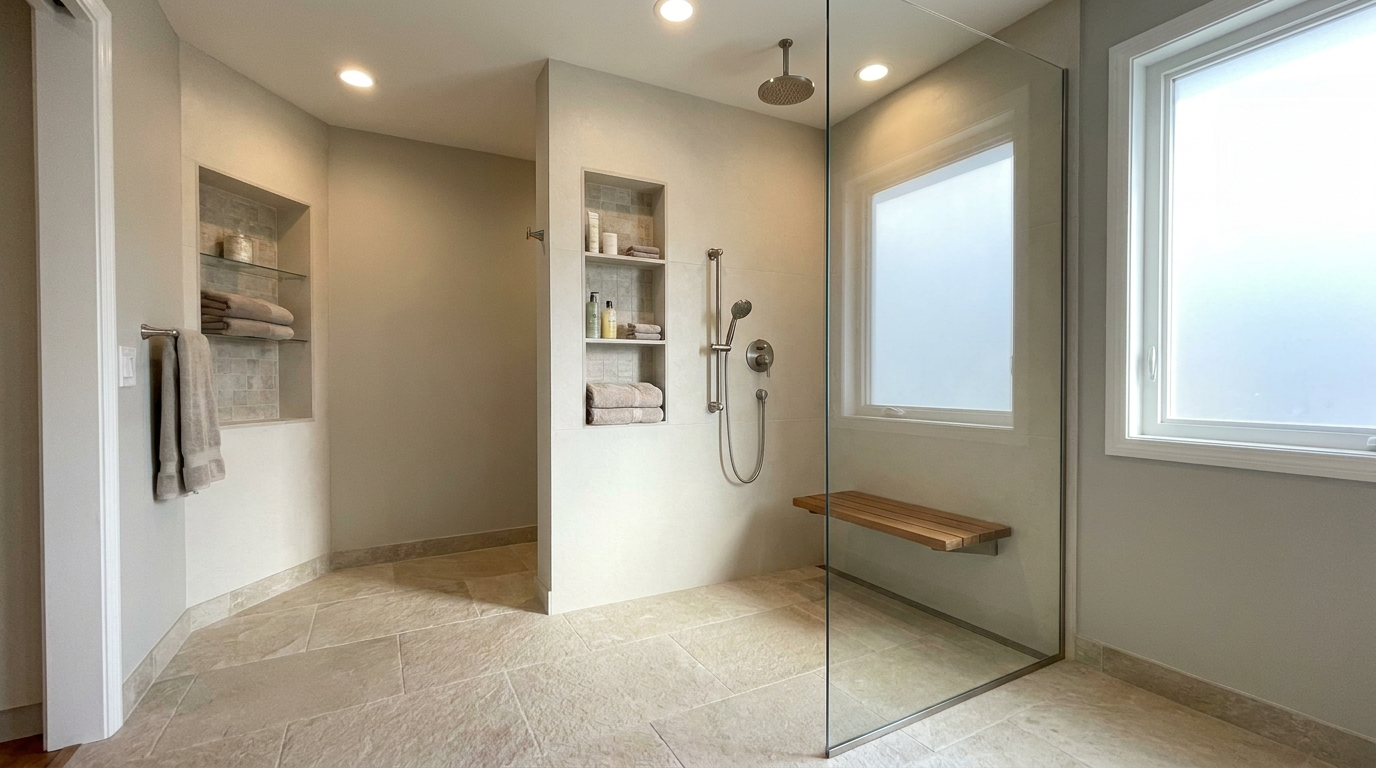
Universal design and aging in place once carried a visual stigma for some homeowners, as though accessibility features would make a room feel institutional. That misconception is quickly fading. A curbless shower can look beautifully minimal. A handheld showerhead can feel luxurious. A bench can read as spa inspired rather than clinical. Wider clearances, slip resistant surfaces, and intuitive controls can all be integrated so gracefully that they simply feel like good design.
Luxury today is increasingly defined by ease. It is the absence of awkward thresholds, the confidence of stable flooring, the convenience of reachable storage, and the comfort of a shower that welcomes every member of the household. These are not compromises. They are refinements that make the room richer in both experience and meaning.
Accessible Features That Can Still Feel Beautiful
Designing for comfort and accessibility can be both subtle and sophisticated. Features worth considering include the following.
- A curbless or low threshold shower for easy entry and a seamless visual line.
- A handheld shower in addition to a fixed showerhead for flexibility and convenience.
- Non slip flooring with tactile interest and a matte finish.
- A shower bench or integrated ledge that supports comfort and wellness.
- Drawer storage instead of deep lower cabinets for easier access.
- Layered lighting that improves visibility without glare.
- Clear circulation space that allows movement to feel relaxed rather than constrained.
These details contribute to a bathroom that feels more intuitive every year. Future proofing, at its best, is simply thoughtful hospitality within one’s own home.
The Spa Bathroom, Reimagined for Real Life
The desire for a spa like bathroom continues to shape interior design, yet the most successful versions are not built on fantasy alone. They translate wellness into practical terms. A spa bathroom is a room where stress is reduced through softness, order, light, and sensory restraint. It is not necessarily large, nor does it require extravagant amenities.
For a real-world look at this kind of hushed, materials-driven calm, Kingsgate Luxury Homes recently built a Calacatta marble spa-inspired ensuite into one of its North York custom homes, pairing a soaker tub and warm natural stone with the same layered restraint described here — see the spa ensuite here.
Calming palettes are especially effective in the bathroom because they support visual rest. Warm neutrals, soft stone tones, muted greens, and natural wood notes create a sense of grounded quiet. Layered textiles such as plush towels, a washable bath mat, and a linen shade or woven basket add depth without clutter. Even a simple branch of greenery can soften the room and bring a subtle biophilic quality.
Sound and touch matter too. Quiet ventilation, soft close drawers, easy turn controls, and surfaces that feel pleasant against bare skin all contribute to the atmosphere. In this way, wellness is not an abstract theme but a composition of sensory details. The room becomes a place that supports exhale.
If budget is limited, focus on the touches that most directly affect daily ritual. Better lighting, fresh textiles, a refined mirror, and careful decluttering can alter the mood dramatically. The spa feeling often emerges from what is removed as much as from what is added.
Small Bathroom Design Ideas That Make a Big Difference
Compact bathrooms demand precision, but they are also wonderfully rewarding to design. In a small footprint, every choice can dramatically change the room’s function and feeling. The goal is not simply to fit more in, but to create visual flow and eliminate friction. Thoughtful small bathroom design can feel every bit as luxurious as a large one.
Start by preserving as much clear floor area as possible. A floating vanity reveals more floor surface and can make the room feel lighter. A glass shower screen instead of a heavy curtain or framed enclosure keeps sightlines open. Large mirrors multiply light and reduce the sense of confinement. Continuous flooring with minimal transitions also helps the room feel more expansive.
Scale is equally important. Oversized fixtures can overwhelm a small room, while pieces that are too tiny can feel mean and unresolved. Seek proportion rather than minimum size. A well chosen vanity depth, a streamlined toilet profile, and carefully centered fittings can create a sense of order that visually enlarges the room.
Storage in small bathrooms should be disciplined and often vertical. Wall mounted shelves, recessed niches, mirrored cabinets, and integrated drawer organizers all help preserve calm. The aim is not to display everything beautifully, but to let the room retain a sense of air and intention.
High Impact Upgrades for a Smaller Budget
Not every bathroom transformation requires a full renovation. In many homes, strategic updates can deliver a remarkable shift in atmosphere and usability.
- Replace outdated lighting with layered fixtures that improve both mood and visibility.
- Upgrade the mirror to increase reflection and visual scale.
- Install a better vanity faucet, ideally a water efficient model with a refined finish.
- Repaint in a soft, modern tone that complements tile and cabinetry.
- Refresh hardware for a more cohesive and elevated look.
- Add tailored storage inserts to drawers or cabinets.
- Improve textiles with plush towels and a quality washable mat.
- Ensure the exhaust fan is effective, quiet, and properly used.
These changes may appear modest, yet together they can reshape the room’s identity. The bathroom begins to feel cared for, and that feeling is often the essence of design success.
Technology, Convenience, and Subtle Innovation
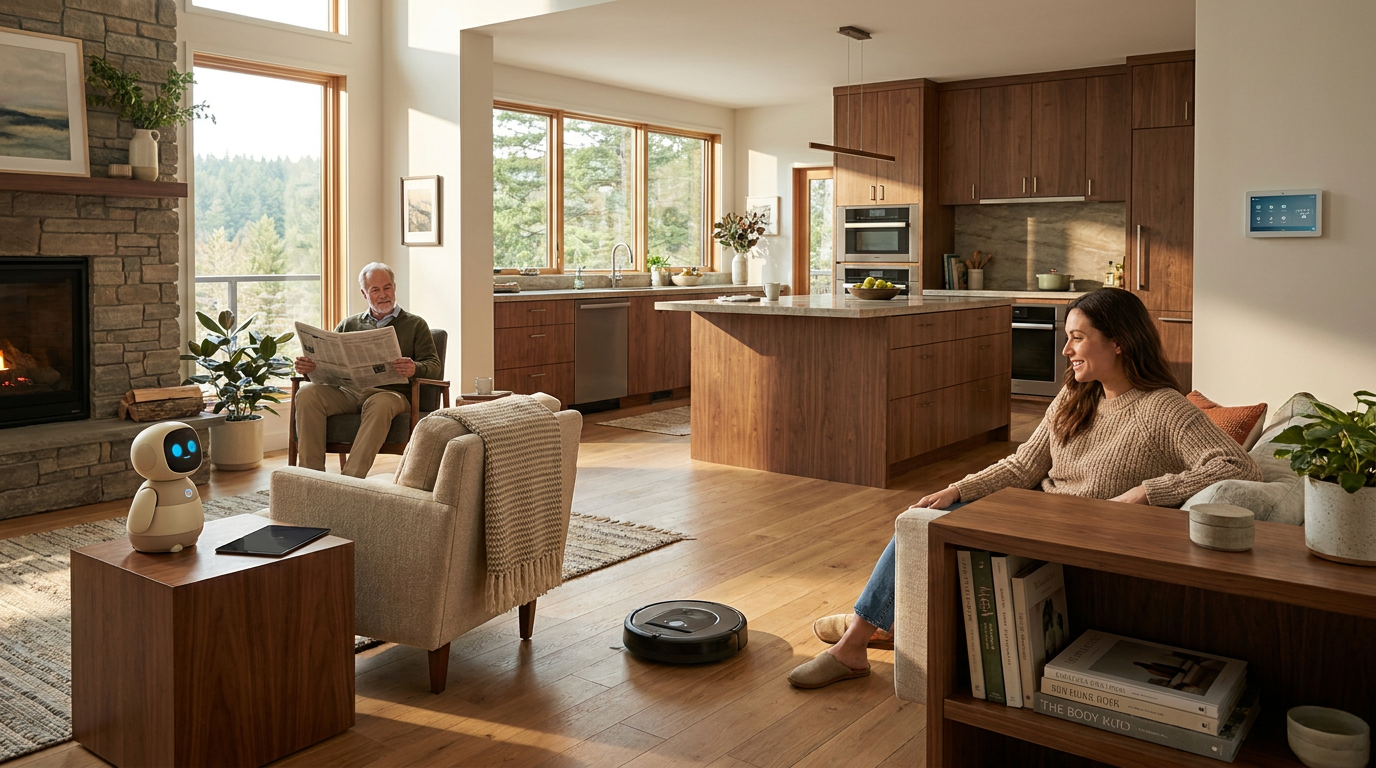
Technology in the bathroom is evolving beyond novelty into genuine convenience. NKBA’s bath trends research points to growing interest in technology enabled comfort, and this can be interpreted with restraint. The best innovations are those that reduce friction quietly rather than dominate the room visually.
Touchless faucets, improved fan controls, demisting mirrors, integrated lighting, and smart shower settings can all enhance the experience. The key is to choose technology that simplifies routine and complements the design language of the space. A timeless bathroom should not feel dated by gadgets too quickly, so subtlety is essential.
Consider whether each innovation solves a real problem. If mirror fogging interrupts the morning, a demisting feature may be worthwhile. If ventilation is frequently forgotten, a timer switch can support better moisture control. If accessibility or comfort is a concern, intuitive controls and easy reach features become especially valuable. Innovation should always answer a need with elegance.
Personal Aesthetics Matter More Than Perfect Trend Following
One of the most liberating truths in bathroom design is that timelessness does not require neutrality in personality. It requires clarity. A room should reflect the sensibilities of the people who use it, whether that means an affinity for French restraint, organic warmth, artisanal texture, tailored modernism, or classic architectural detail. Personal aesthetics are not separate from good design. They are what make a room feel lived in and lasting.
Trends can be useful references, especially as they point toward larger shifts in lifestyle. The current movement toward wellness, softer natural materials, wood vanities, warm metals, and cleaner detailing speaks to a desire for comfort and calm. Yet these elements should be filtered through your own home’s architecture and rhythm. A timeless bathroom does not copy another space exactly. It interprets ideas in a way that feels natural and sincere.
This is especially important because bathrooms are emotional rooms. They hold private routines, moments of fatigue, moments of care, and moments of pause. When a bathroom reflects your personal idea of comfort, it becomes more than stylish. It becomes reassuring. That emotional fit is often what gives a room its real longevity.
When to Call a Professional
Because bathrooms combine plumbing, waterproofing, electrical systems, moisture control, finish coordination, and often tight tolerances, professional guidance can be invaluable. Houzz’s 2024 study found that 83 percent of homeowners relied on professionals for bathroom renovations, a statistic that reflects both complexity and the desire for confidence in execution. Even if your design vision is clear, expert support can help protect the project from expensive mistakes.
A designer can refine layout, lighting, and material balance. A contractor can coordinate trades and sequencing. Plumbers and electricians ensure systems meet code and perform reliably. Ventilation specialists can help resolve humidity issues that decorative updates alone would never fix. In bathroom design, technical competence is part of the aesthetic outcome.
Professional help is especially important when changing layouts, moving plumbing, installing walk in showers, addressing mould or moisture damage, or adapting the room for accessibility. The most beautiful bathrooms often look effortless because so much expertise has been invested behind the scenes.
Designing a Bathroom That Endures
In the end, timeless bathroom design is a quiet form of intelligence. It understands that comfort is built through layers. Good air quality, thoughtful storage, graceful lighting, durable materials, safe surfaces, efficient fixtures, and personal atmosphere all work together to create a room that feels both composed and deeply usable. None of these choices is too small to matter. In a bathroom, the smallest decisions are often the most transformative.
There is elegance in a room that supports life gently. A mirror that catches the morning light, a shower that feels easy to enter, a vanity that keeps the countertop clear, a fan that protects the air and finishes, a faucet that conserves water beautifully, all of these details create a daily experience of care. The room becomes more than functional. It becomes restorative.
No matter your home’s size, style, or renovation budget, the path to a better bathroom rarely begins with extravagance. It begins with attention. Notice what would make the room easier, calmer, and more reflective of who you are. Build beauty upon performance. Choose materials that soothe, layouts that support, and details that last. That is how a bathroom becomes timeless.
And perhaps that is the most refined design lesson of all. The spaces that remain meaningful are not always the most dramatic ones. They are the ones that understand us quietly, improve the rhythm of our days, and offer a small but steady sense of sanctuary every time we enter.


No Comment! Be the first one.