



For many people, the phrase robotic assistant still sounds futuristic. It can bring to mind glossy demonstrations, complex gadgets, or a vision of home life that feels distant from ordinary routines. Yet in real homes across Canada and North America, robotic assistance is becoming something much more relatable. It is showing up in the quiet sweep of a robot vacuum before breakfast, in a companion device that encourages conversation, and in tools that help people feel a little safer, more supported, and more at ease in the place they know best.
Table Of Content
- Why robotic assistance feels timely now
- What robotic assistants really are in a home setting
- The lifestyle benefits homeowners feel first
- The research on emotional well being is more promising than many people realize
- Cleaning robots: the gateway to a calmer home
- Telepresence and communication robots: making distance feel smaller
- Companion robots and robotic pets: comfort, routine, and gentle social support
- Reminder helpers and routine support: small prompts, big reassurance
- Who benefits most from robotic assistance at home
- How to choose the right robotic assistant for your lifestyle
- Questions worth asking before you buy
- Important limits and misconceptions to keep in mind
- The future of robotic assistance will feel more personal and more normal
- Creating a home that feels supported, not automated
What makes this shift so meaningful is not just the technology itself. It is the emotional difference these tools can make. A home that feels easier to manage can also feel more restful. A routine that feels less physically demanding can create more room for connection, self care, and dignity. For homeowners who are balancing work, parenting, caregiving, mobility changes, or solo living, robotic assistants are beginning to offer a new kind of support that blends convenience with comfort.
This matters even more in today’s demographic reality. Statistics Canada reported that 4.4 million people in Canada lived alone in 2021, representing 15 percent of adults aged 15 and older in private households, while one person households made up just under 3 in 10 households overall. At the same time, the population aged 65 and older continued to grow in 2024, increasing by 3.4 percent year over year. Those numbers tell a very human story about changing households, aging in place, and the desire to preserve independence without sacrificing warmth, safety, or quality of life.
Robotic assistants fit naturally into that story when we see them clearly. They are not magic solutions, and they should not be treated as replacements for family, friendship, community, or professional care. But they can reduce friction in daily life. They can support routines, ease repetitive tasks, and create reassuring touchpoints throughout the day. When chosen thoughtfully, they can help a home feel less demanding and more supportive.
In this guide, we will look at how robotic assistants are transforming everyday living from a homeowner’s point of view. We will focus on the lifestyle outcomes people care about most, including comfort, emotional well being, convenience, independence, and a greater sense of control. We will also explore the main categories of home robots, what the current research says about emotional benefits, and how to integrate these devices in a balanced, human centered way.
Why robotic assistance feels timely now
There is a reason robotic support is moving from novelty to normal household conversation. Our homes are carrying more responsibility than ever. They are workspaces, care spaces, wellness spaces, and often multigenerational spaces all at once. In that setting, many homeowners are not looking for flashy innovation. They are looking for relief. They want practical tools that make daily life feel smoother and less draining.
That need spans many kinds of households. Robotic assistants are often associated with older adults, and aging in place is certainly one of the biggest reasons for growing interest. Federal Canadian guidance around assistive devices emphasizes helping people remain in their homes and communities for as long as possible, ideally with input from health professionals or occupational therapists when needs are more complex. But the appeal does not stop there. Busy dual income families, solo professionals, people managing chronic conditions, and family caregivers can all benefit from tools that reduce physical effort and create steadier routines.
There is also a cultural shift happening in how we think about support at home. A robot vacuum, for example, has helped many people grow comfortable with the idea that a robot can be useful without being intrusive. That small normalization matters. Once homeowners see a robot as a helper rather than a novelty, they may become more open to other forms of assistance, including telepresence devices, social robots, and reminder systems that support daily well being.
At the same time, emotional wellness has moved closer to the center of the home conversation. Loneliness, overwhelm, and caregiver fatigue are no longer side topics. They are part of how we define a healthy home. Statistics Canada reported that just under 1 in 10 Canadians aged 65 and older, or 9.2 percent, said they felt lonely always or often in late 2024, even while many also reported having someone to count on. That contrast is important because it reminds us that support is not only about crisis. It is also about the quality of daily experience, the rhythms of companionship, and the feeling that home is working with you instead of against you.
What robotic assistants really are in a home setting
Robotic assistants are devices that use sensors, software, and sometimes artificial intelligence to help with tasks or offer companionship inside a home, without requiring a person to operate them step by step. In practice, this covers several distinct categories: cleaning robots such as vacuums and mops that handle repetitive chores; telepresence robots that let family members or caregivers connect visually from a distance; companion robots and robotic pets designed to respond to voice, touch, or routine and support emotional well-being; and reminder helpers that cue medication, hydration, or appointments. Some tools focus purely on physical tasks, while others focus on social and emotional support, and many blend both. For homeowners, the shared goal across all these categories is the same: reducing daily friction, supporting independence, and making a home feel easier and more comfortable to live in, whether for aging in place, solo living, or busy family routines.
When people hear the word robot, they often imagine a single category. In reality, home robotic assistance includes several very different tools. Some are task oriented, some are socially oriented, and some sit somewhere in between. Understanding those differences makes it easier to choose technology that genuinely fits your life.
The most familiar category is the cleaning robot, including vacuums, mops, and combination units. These devices focus on repetitive household chores that can quietly consume time and energy. They are not glamorous, but their value is surprisingly emotional. Clean floors contribute to a sense of calm, order, and readiness, especially in homes with children, pets, allergies, or mobility challenges.
Another growing category is the telepresence robot or mobile communication device. These systems make it easier for distant family members or caregivers to connect visually and socially. In some homes, they provide a comforting bridge between independence and support. They can help someone living alone feel more connected without making the home feel clinical or heavily supervised.
Companion robots and robotic pets sit in a more emotional space. These devices are designed not just to do tasks but to interact. They may respond to voice, movement, touch, or routine. Research into socially assistive robots suggests that these tools may support loneliness, mood, stress, social interaction, and quality of life in some settings, especially among older adults. A 2024 review also found evidence that pet robot interventions can reduce depressive symptoms in older adults, which helps explain why these devices are attracting attention beyond the tech world.
There are also medication and reminder helpers, some with robotic features and some connected to broader home assistance systems. These devices can provide cues for medication, hydration, appointments, and daily activities. The practical role is obvious, but the emotional role is equally important. Consistent reminders can create structure, and structure often creates confidence, especially for people managing memory changes, chronic illness, or recovery.
Finally, there are emerging home service robots, which are still developing but increasingly relevant. These may help carry items, monitor basic home conditions, or support mobility in more specialized ways. They are not yet as common as robot vacuums, but they point toward a future where home support becomes more personalized and more integrated into daily living.
The lifestyle benefits homeowners feel first
The conversation about robotic assistance can become too technical very quickly. Most homeowners, however, do not start with sensors, processors, or machine learning. They start with a feeling. They want the house to run more smoothly. They want less strain. They want an easier morning, a tidier evening, and a little more space to exhale. That is where the true value of robotic assistance often appears first.
One of the clearest benefits is reduced physical effort. This is meaningful for older adults, of course, but it also matters for people recovering from injury, living with fatigue, managing arthritis, or simply trying to conserve energy for more important parts of the day. A machine that quietly handles a recurring chore can give someone back both time and stamina. In emotional terms, that can feel like relief, autonomy, and confidence.
Another important benefit is predictability. Homes feel better when routines are dependable. A robot that cleans on schedule, reminds someone to take medication, or supports regular family check ins can create a rhythm that lowers mental load. In a world where so much feels fragmented, even small pockets of consistency can improve the atmosphere of a home.
There is also the benefit of perceived control. When a home feels hard to maintain, it can quietly erode well being. Clutter, skipped chores, and disrupted routines can make people feel behind, embarrassed, or overwhelmed. Robotic assistants do not solve every household challenge, but they can help people feel more on top of their environment. That sense of control often has an outsized impact on mood.
For many families, robotic assistance can also reduce caregiver burden. Adult children supporting aging parents, partners caring for one another, and parents managing children with additional needs often carry an invisible planning load. Any tool that eases reminders, creates a safer routine, or helps maintain the household can reduce stress. The emotional payoff is not just convenience. It is the possibility of shifting energy away from constant task management and back toward the relationship itself.
The research on emotional well being is more promising than many people realize
One of the most interesting developments in this field is that researchers are no longer looking only at physical assistance or task automation. They are increasingly studying emotional outcomes such as loneliness, mood, stress, and social engagement. That matters because daily well being is shaped by more than practical efficiency. People need homes that support both function and feeling.
Several systematic reviews and meta analyses suggest that socially assistive robots may improve loneliness, social interaction, positive affect, mood, stress, and some quality of life outcomes, particularly among older adults in residential care or community settings. A 2024 meta analysis found that social robots with physical embodiment can support social engagement and interactions, both with the robot itself and with other people. This is an important distinction because it suggests that the best outcome is not dependence on a machine, but an increase in interaction and stimulation overall.
Research on robotic pets is especially compelling for homeowners interested in emotional comfort. A 2024 systematic review and meta analysis found that pet robot interventions can reduce depressive symptoms among older adults. For people who cannot care for a live animal due to housing restrictions, allergies, travel, cost, mobility limitations, or health concerns, a robotic pet may offer soothing ritual and gentle connection without the same practical demands. It is not the same as a living pet, of course, but for some households it can be a meaningful source of comfort.
Still, the research also asks us to stay balanced. Results are not identical across all users, robot types, settings, or intervention lengths. Reviews note variability in study quality and sample size, and outcomes often depend on user acceptance and the context of use. This is actually helpful guidance for homeowners because it reinforces a practical truth. A robot works best when it fits naturally into a person’s life, values, and habits. The emotional impact comes not from novelty alone, but from consistency, comfort, and thoughtful use.
The most helpful way to think about robotic assistance is simple: it should reduce friction and support emotional routines, not replace relationships, professional care, or a sense of community.
Cleaning robots: the gateway to a calmer home
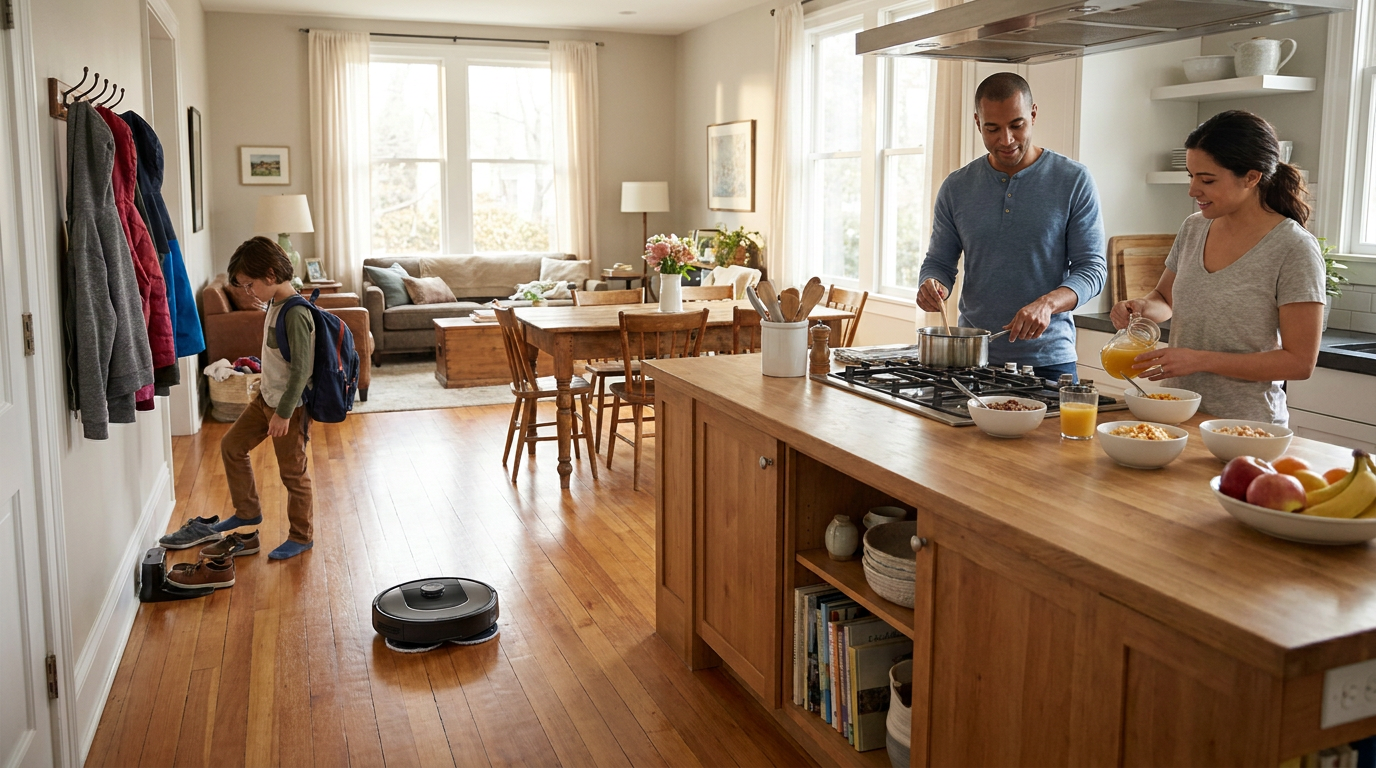
For many homeowners, the robot vacuum or mop is the first robotic assistant they invite in. That first step may seem modest, but it often changes how people think about home support. Cleaning robots are relatable because the benefit is immediate. Floors look better, dust is managed more consistently, and one repetitive job quietly disappears from the weekly list.
In a lifestyle sense, this matters more than it may sound. A cleaner floor can change the whole emotional tone of a room. It can make mornings feel less rushed and evenings feel more settled. In homes with children or pets, it can lower the low grade stress that comes from constantly seeing crumbs, fur, or tracked in debris. In homes where someone has back pain or limited mobility, it can mean preserving energy for cooking, socializing, or rest.
Cleaning robots also support what many homeowners value most, which is background help. Unlike a major renovation or a dramatic new system, they do their work quietly and become part of the home’s rhythm. This subtlety is one reason they have been so widely accepted. They are not asking the household to adapt around them too much. They are simply taking one repetitive burden off the table.
That said, it helps to set expectations realistically. A cleaning robot is a helper, not a full housekeeping replacement. It works best in a home with a reasonably clear floor plan, accessible charging, and regular maintenance. When homeowners see it as an everyday support rather than a perfect solution, satisfaction tends to be much higher.
Telepresence and communication robots: making distance feel smaller
Connection is one of the deepest needs a home can support. For older adults living alone, for adult children who live far from parents, and for families navigating illness or mobility changes, distance can create worry even when everyone is doing their best. Telepresence robots and related communication tools help close that emotional gap by making interaction more immediate and more embodied than a simple phone call.
These devices can allow a family member to check in more naturally, move visually through a space, or participate in conversation in a way that feels more active. For the person at home, this can make support feel less abstract. They are not just receiving a call. They are experiencing a more present form of company. That sense of visual, spatial connection can be reassuring, especially for those who feel isolated between in person visits.
For homeowners, the value of telepresence also includes dignity. Many people want support without feeling watched or controlled. A thoughtfully used communication robot can create a middle ground. It can make contact easier while preserving the sense that the home remains personal, familiar, and self directed. This is especially important in aging in place conversations, where emotional comfort matters just as much as practical monitoring.
As with any connected device, privacy and boundaries deserve attention. Families should agree on how often the device will be used, who has access, and what forms of check in feel respectful. When those expectations are clear, telepresence can support closeness without adding tension.
Companion robots and robotic pets: comfort, routine, and gentle social support
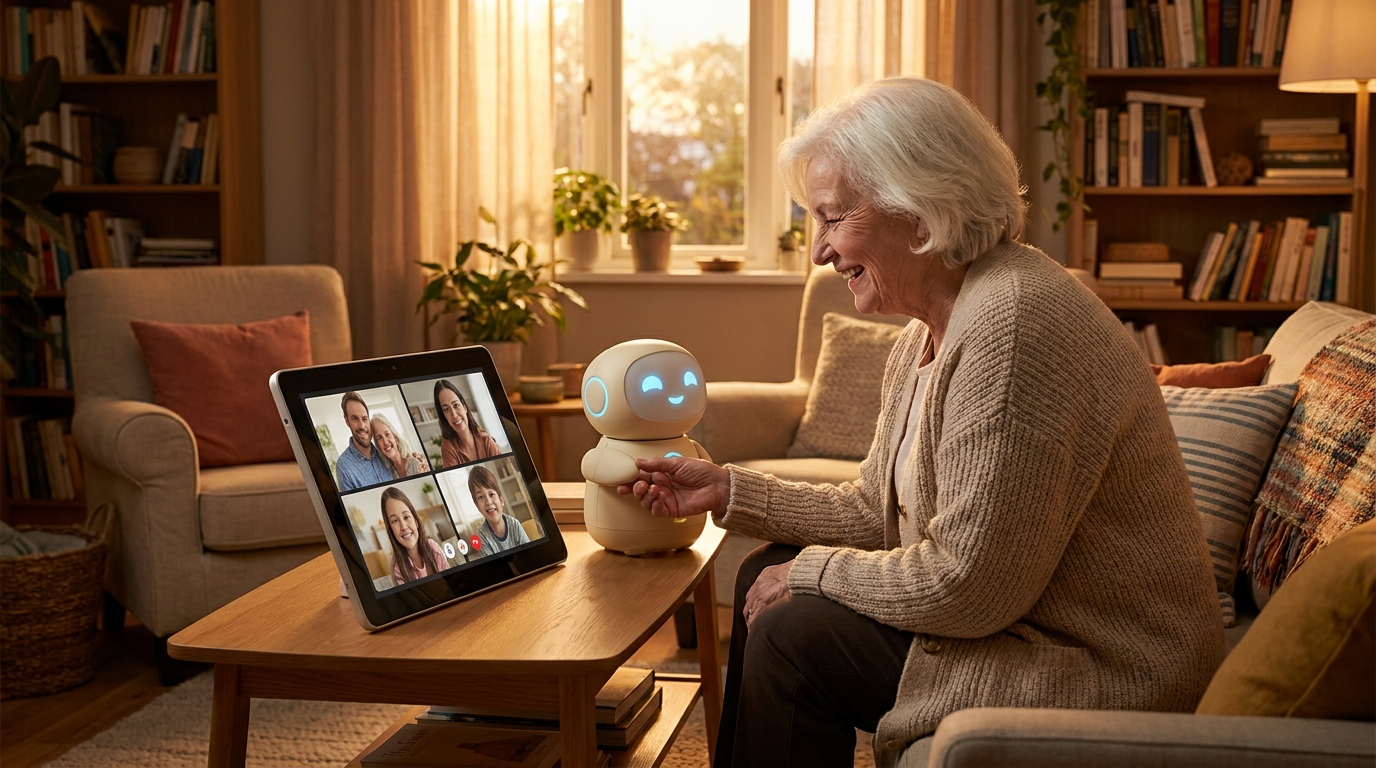
Companion robots tend to generate the strongest emotional reactions, both positive and skeptical. Some people immediately understand their appeal, while others wonder whether they are artificial substitutes for real relationships. The reality is more nuanced and more humane. Companion robots are not best understood as replacements. They are best understood as supportive presences that can encourage engagement, ritual, and responsiveness in the home.
For some users, especially older adults or those spending long stretches alone, a companion robot can provide structure through simple interactions. Greeting the device in the morning, responding to prompts, hearing familiar sounds, or engaging in a small routine can add shape to the day. Even limited interaction can help break the monotony of solitude, and monotony is often one of the hidden drivers of low mood.
Robotic pets can be especially effective because they tap into familiar forms of care and affection. Touch, responsiveness, and gentle sensory feedback can be soothing, particularly for people who find comfort in animals but cannot manage the demands of a live pet. The emotional benefit may come from memory, ritual, and the calming nature of responsive interaction. That does not make the experience trivial. It makes it deeply connected to how humans regulate emotion in everyday life.
There is also a social ripple effect. A companion robot can become a conversation starter with visiting family, caregivers, or friends. In some cases, it encourages more interaction rather than less. This lines up with research suggesting physically embodied social robots may support social engagement not only with the robot but with other people as well.
Reminder helpers and routine support: small prompts, big reassurance
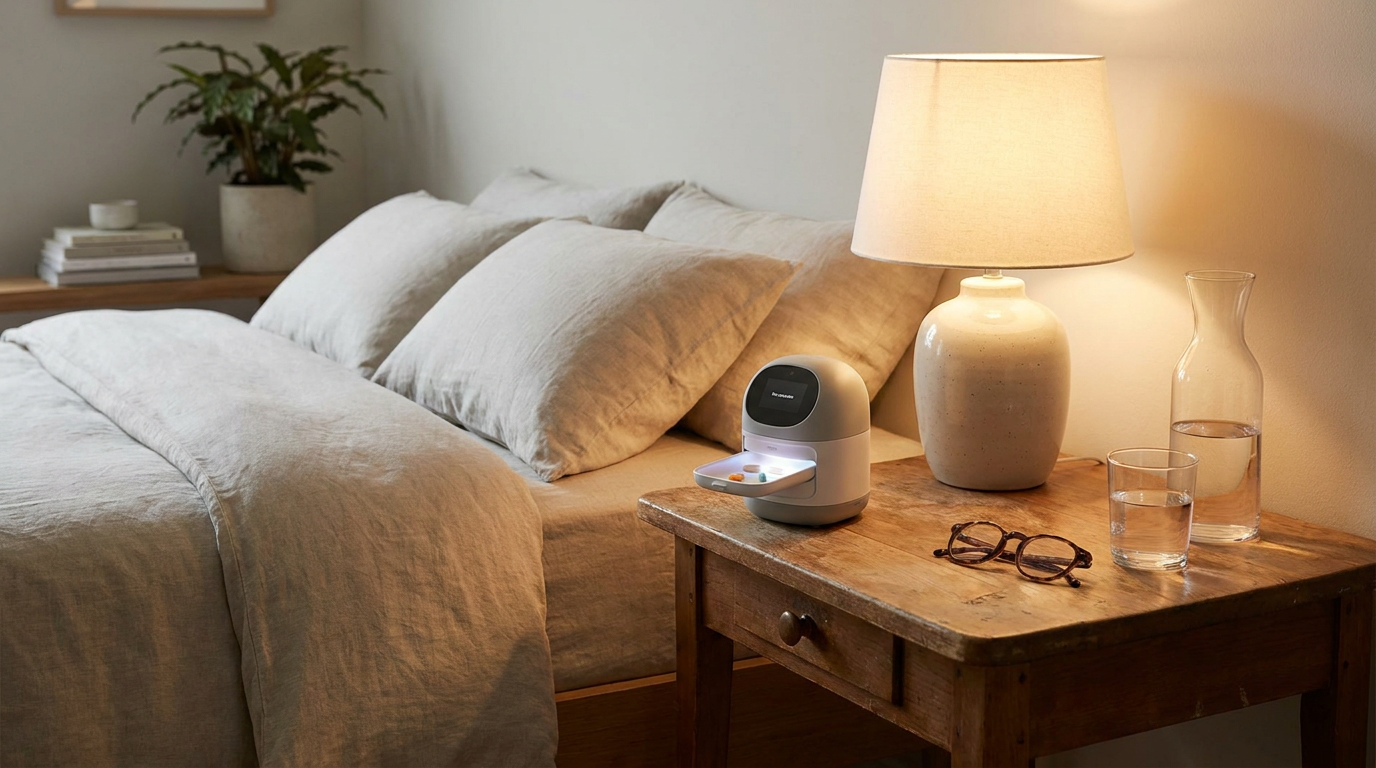
Many of the most helpful robotic supports do not look dramatic at all. A reminder assistant that cues medication, hydration, appointments, or bedtime routines may seem simple, but simplicity is often what makes a tool sustainable. Households thrive when the little things happen with less stress. The fewer tasks people must keep actively holding in mind, the more mental space they have for living well.
These devices can be particularly supportive for people managing memory changes, busy caregiving schedules, or chronic health conditions. Missing medication or losing track of routine can create anxiety for everyone involved. A reminder system introduces consistency, and consistency brings reassurance. For older adults living independently, that can support confidence. For family members, it can soften the constant fear that something important may be forgotten.
From a design perspective, the best routine support feels gentle rather than scolding. Homeowners tend to respond more positively to prompts that feel calm, clear, and easy to interact with. The emotional tone matters. A helpful device should blend into home life in a way that feels supportive and respectful, not harsh or infantilizing.
Who benefits most from robotic assistance at home
One of the biggest misconceptions about robotic assistants is that they are only relevant for seniors. In truth, the households that benefit are much broader. Anyone facing repetitive domestic work, physical strain, emotional isolation, or a heavy coordination load can find value in the right kind of support.
Busy families often appreciate robots because they make the home feel less reactive. A cleaning robot can run while everyone is occupied with school, work, meals, and activities. A routine assistant can help with recurring tasks and reminders. These small efficiencies can create a surprising emotional shift. When the home needs less constant catching up, family time can feel more present and less burdened by unfinished chores.
People who live alone may benefit from both practical and emotional support. Solo living can be fulfilling and peaceful, but it also means that every task falls to one person. Robotic assistance can reduce that pressure while also adding structure and connection. For some, that means cleaner floors and better routines. For others, it may mean a companion device that softens the silence of the day.
Older adults and people with mobility limitations often stand to gain the most visible benefits, particularly when the goal is aging in place. Yet even here, the best results usually come from matching the tool carefully to the person’s habits, comfort level, and evolving needs. In more complex situations, consulting an occupational therapist or health professional can be an excellent step, especially when safety, cognition, or physical accessibility are central concerns.
Caregivers, too, are important users of robotic assistance, even if they are not the ones directly interacting with the device most often. A robot that supports the person they care for can reduce practical demands and emotional vigilance. That can make the caregiving relationship feel less consumed by tasks and more open to companionship, conversation, and ease.
How to choose the right robotic assistant for your lifestyle
The best robotic assistant is not necessarily the newest or most advanced. It is the one that supports a real daily need in a way that feels natural inside your home. Before shopping, it helps to think less about features and more about friction. Where does the household feel strained, repetitive, or vulnerable? Which moments regularly create stress, fatigue, or worry?
If the answer is cleaning, a robot vacuum or mop may be the right place to begin. If the challenge is isolation or long distance family support, telepresence or a companion style device may make more sense. If routine management is the main concern, reminder tools may be the most valuable investment. Starting with one clear use case tends to lead to better satisfaction than trying to solve everything at once.
Comfort and acceptance are just as important as functionality. A device can be technically impressive and still fail if it feels intrusive, confusing, or emotionally awkward. Homeowners should consider how the device looks, sounds, moves, and fits into the atmosphere of the home. A warm, easy to understand device is more likely to be used consistently than one that feels clinical or demanding.
It is also wise to think about support needs over time. Ask whether the robot is easy to maintain, whether updates are straightforward, and whether the household has the connectivity and space to use it comfortably. In homes where needs are complex, especially around aging in place, involving a health professional or occupational therapist can help avoid expensive choices that do not translate well into everyday life.
Questions worth asking before you buy
-
What daily task or emotional need do I want this robot to support most clearly?
-
Will the person using it feel comfortable, respected, and at ease with its presence?
-
Does it reduce effort in a meaningful way, or does it create new maintenance and learning demands?
-
How does it fit with privacy preferences, especially if it uses cameras, microphones, or remote access?
-
Will it support independence and routine, or is there another tool that would do the job more simply?
Important limits and misconceptions to keep in mind
A human centered approach means being honest about what robots can and cannot do. They are useful tools, but they are not emotional shortcuts. A socially assistive robot may support mood or reduce feelings of loneliness in some cases, but it does not replace friendship, family presence, therapy, nursing care, or community belonging. The healthiest expectation is that a robot can supplement a support system, not become the support system.
It is also important not to assume that more advanced artificial intelligence automatically leads to better outcomes. Research and real life use both show that acceptance, comfort, context, and quality of interaction matter a great deal. A simpler device that fits naturally into someone’s day may be more helpful than a more sophisticated one that feels unfamiliar or stressful.
Another common misconception is that all home robots do basically the same thing. A robot vacuum and a companion robot have very different purposes. One reduces repetitive household labor. The other may support emotional engagement or routine. Understanding that difference helps homeowners make smarter, more satisfying choices.
Finally, benefits are not guaranteed for every person or household. Some users will love a device immediately, while others may find it unnecessary or awkward. That variability is normal. It does not mean robotic assistance lacks value. It simply means the best results come from matching the tool to the person rather than forcing the person to adapt to the tool.
The future of robotic assistance will feel more personal and more normal
One of the strongest trends in this space is the rise of AI enabled social robots that can adapt to user behavior. Over time, these devices may become better at recognizing preferences, responding to routines, and offering support in more natural ways. This does not mean homes are about to become filled with humanoid machines. More likely, it means the tools people already accept will gradually become more responsive, more intuitive, and more emotionally aware in modest but meaningful ways.
Another important shift is the growing focus on well being rather than pure efficiency. As research expands, more designers and care innovators are paying attention to loneliness, stress, positive affect, and quality of life. That is a welcome development because it aligns technology with the real emotional goals people have for their homes. Most homeowners do not want a smarter house for its own sake. They want a home that feels calmer, kinder, and easier to live in.
Companion style devices are also becoming more normalized, especially in situations where pets, family visits, or mobility are limited. As public familiarity grows, stigma may continue to fade. What once seemed unusual may soon feel as ordinary as a robot vacuum did a decade ago. That normalization could make it easier for families to explore supportive tools earlier, before stress becomes overwhelming.
Creating a home that feels supported, not automated
The most beautiful vision of robotic assistance is not a home that feels mechanized. It is a home that feels more livable. The best devices fade into the background and leave behind something more valuable than novelty. They leave behind energy, steadiness, confidence, and peace of mind. They help people protect what matters most, which is the ability to feel comfortable, capable, and connected in their own space.
For homeowners, that means the conversation should begin with feeling, not spectacle. Ask what would make everyday life gentler. Ask where small support could preserve independence or reduce strain. Ask how a home can better serve the people who live there through different ages and seasons of life. In many cases, robotic assistance will not be the whole answer, but it may be one thoughtful part of it.
As households continue to evolve, the appeal of robotic support will likely keep growing. More people are living alone. More families are balancing care across distance. More homeowners are thinking about aging in place, wellness, and the emotional experience of daily life. Against that backdrop, robotic assistants are becoming less about futuristic fascination and more about practical grace. They are helping homes function with a little more ease and helping the people inside them feel a little more held.
That is perhaps the most meaningful transformation of all. When technology supports the atmosphere of home rather than disrupting it, it stops feeling cold or abstract. It becomes part of a better routine, a calmer space, and a more reassuring way to live. For many homeowners, that future is not far away. It has already quietly started.



No Comment! Be the first one.