



Construction financing is one of the most important and least understood tools in real estate investing. Many investors focus heavily on land acquisition, location quality, rental demand, and resale projections, but financing structure often determines whether a project delivers a strong return or becomes a capital drain. The way money is advanced, monitored, priced, and repaid can materially affect profitability, timeline, and downside exposure. For investors who want to build, reposition, or redevelop property, understanding construction financing is not optional. It is a core part of the investment strategy.
Table Of Content
- Why Construction Financing Matters More Than Many Investors Realize
- How Construction Financing Actually Works
- Construction-to-Permanent Structures
- Key Types of Construction Financing for Real Estate Investors
- Traditional Bank Construction Loans
- Lines of Credit and Revolving Facilities
- CMHC-Insured Financing and Apartment Construction Programs
- Private Lenders and Alternative Funding Routes
- Joint Ventures, Preferred Equity, and Gap Capital
- C-PACE and Specialized Program Financing
- Modular and Prefab Financing: Opportunity with Conditions
- The Metrics Investors Need to Understand
- Loan-to-Cost and Loan-to-Value
- Interest Reserve and Contingency Reserve
- Debt Service Coverage and Take-Out Risk
- Common Misconceptions That Cost Investors Money
- How Market Conditions Change Financing Decisions
- What Lenders Want to See Before They Commit
- How to Choose the Right Financing Structure for Your Strategy
- A Practical Due Diligence Checklist for Investors
- Final Thoughts: Financing as an Investment Edge
This matters even more in today’s market. In Canada, housing supply has become a national economic issue, and CMHC estimated in 2025 that the country needs roughly 430,000 to 480,000 new housing units per year over the next decade to restore affordability levels seen in 2019. In 2026, CMHC reiterated that Canada needs to double housing starts over the next decade. For investors, this supply pressure creates opportunity, but it also raises the stakes around execution. When demand for new housing is strong but costs, rates, and timelines are uncertain, financing discipline becomes a major competitive advantage.
The central idea is simple. Construction financing is not just a way to pay for a project. It is a risk-managed capital structure that affects how much equity you need, how much interest you carry, when funds are released, how lenders evaluate your project, and how easily you can exit into permanent financing. Investors who understand these mechanics can preserve liquidity, avoid preventable delays, and improve return on equity. Investors who do not often discover too late that a project can look profitable on paper and still fail under the wrong debt structure.
This guide explains how construction financing works, the major loan options available, what lenders care about most, and how real estate investors can use financing as a strategic tool rather than simply a source of funds. Whether you are considering a small infill project, a rental development, a modular build, or a value-add redevelopment, the principles are the same. Better financing decisions usually lead to better outcomes.
Investor takeaway: In real estate development, the capital stack is part of the business plan. Financing is not a back-office detail. It is one of the main drivers of risk, speed, and return.
Why Construction Financing Matters More Than Many Investors Realize
A traditional mortgage is designed for a completed asset with established collateral value. A construction facility is different because the asset is being created in real time. That distinction changes everything. During construction, there is no fully stabilized income stream, no finished building to appraise conventionally, and no guarantee that the project will stay on budget or on schedule. The lender is therefore underwriting not only the property, but also the execution capability of the borrower, the contractor, and the entire development plan.
That is why construction financing is usually advanced through progress draws instead of one lump sum. Funds are released in stages as milestones are completed, inspected, and approved. This reduces the lender’s exposure on undrawn capital and imposes discipline on the borrower. It also means investors usually pay interest only on the portion that has been drawn, which can improve economics if the project is managed efficiently. At the same time, draw schedules create operational pressure because delays in approvals or construction milestones can create cash flow strain if contractors need payment before a lender releases the next advance.
The difference between a well-structured facility and a poorly structured one can be significant. A strong construction facility can reduce interest carry, support efficient project sequencing, and create a cleaner path to long-term financing. A weak structure can leave the borrower undercapitalized, overexposed to rate changes, and vulnerable to liquidity shocks if costs rise. This is one reason the FDIC treats acquisition, development, and construction lending as a distinct commercial real estate category with its own risk profile. Sophisticated investors recognize that construction debt has to be matched not just to the property type, but also to the project’s timing, cash needs, and exit plan.

How Construction Financing Actually Works
At a practical level, construction financing starts with underwriting. Before a lender commits capital, it typically reviews land value, zoning status, permits, plans, development budget, builder credentials, timeline, market demand, and the borrower’s available equity. It also assesses whether there is a realistic path to completion and whether the project can support permanent financing or sale at the end of construction. In other words, the lender is testing feasibility, not just collateral.
Once approved, the facility is generally structured around a loan-to-cost or loan-to-value limit. Loan-to-cost, often called LTC, measures how much the lender is willing to fund relative to the total project cost. Loan-to-value, or LTV, measures debt against the estimated value of the completed project or the value at a particular stage. These limits are not just technical terms. They determine how much equity the investor must contribute and how much leverage can be used to amplify returns or, in weaker scenarios, amplify losses.
Funds are then released over time as construction progresses. Typical milestones may include site preparation, foundation completion, framing, mechanical installation, substantial completion, and final occupancy. Inspections are usually required before each draw is released. This protects the lender, but it also gives investors a framework for cost control and project monitoring. When used properly, milestone-based lending can improve discipline across the project team and reduce surprises.
Most facilities also involve holdbacks, contingency requirements, and sometimes an interest reserve. A holdback means part of the approved funds is retained until certain conditions are met. A contingency reserve is additional capital set aside to absorb overruns or unexpected issues. An interest reserve is money earmarked to cover interest payments during the build period when the project may not yet produce income. These features can make a loan look more expensive at first glance, but they often reduce the chance of distress later. Investors who ignore them usually underestimate the true capital needed to finish a project safely.
Construction-to-Permanent Structures
One of the most important decisions is whether the project will use a construction-only loan or a construction-to-permanent structure. In the United States, Fannie Mae distinguishes between one-closing and two-closing construction-to-permanent financing. In a one-closing structure, the borrower closes once and the loan converts to permanent financing after the home or property is completed and qualifies under the required standards. In a two-closing structure, the construction loan is closed first and permanent financing is arranged separately at the end.
For investors, the distinction matters because each structure shifts risk differently. A one-closing structure can reduce transaction friction and may create more certainty around the end loan. A two-closing structure may offer flexibility if market conditions improve or if the investor wants to shop for better permanent terms later. The trade-off is that separate take-out financing can expose the borrower to refinance risk if rates move unfavorably, lease-up is slower than expected, or valuation comes in below expectations at completion.
Key Types of Construction Financing for Real Estate Investors
There is no universal construction financing product that fits every strategy. The right facility depends on asset type, scale, borrower profile, timeline, and exit. Investors often make costly mistakes when they choose debt based only on the headline rate instead of the project’s actual capital needs and operational realities. A lower rate can be offset by draw friction, extra fees, low leverage, heavy recourse, or restrictive covenants. The all-in cost of capital is what matters.
Traditional Bank Construction Loans
Traditional bank construction loans remain one of the most common funding options for experienced investors and developers. These facilities usually offer relatively competitive pricing compared with private debt, but underwriting is stricter and documentation is heavier. Banks tend to focus closely on borrower net worth, liquidity, guarantor strength, project feasibility, contractor experience, and market demand. They usually want a credible borrower with a clear business plan and a realistic path to stabilization or sale.
The advantage of a bank construction loan is that it can be cost effective and institutionally disciplined. The disadvantage is that banks can be conservative on leverage and slower in execution. In a higher-rate environment, feasibility can tighten quickly because debt service assumptions become more sensitive and exit values may soften. The Bank of Canada’s policy rate was 2.25 percent on June 10, 2026, and chartered-bank lending rates remain a central factor in project underwriting. For investors, that means debt that looked comfortable in an earlier cycle may no longer support the same leverage or projected return.
Lines of Credit and Revolving Facilities
Some investors use lines of credit or revolving facilities to support smaller projects, renovations, or early-stage development work. These can be useful for soft costs such as planning, consultants, permits, and pre-construction expenses, particularly when timing matters and a full construction loan has not yet been closed. They can also bridge short-term cash needs between milestones. For seasoned investors with substantial liquidity and strong banking relationships, a line of credit can add flexibility that a rigid construction facility may not provide.
That said, a line of credit is rarely a full substitute for a dedicated construction loan on a larger project. Revolving debt can carry variable pricing, tighter recall risk, and less alignment with milestone-based construction management. It works best when paired with a broader financing strategy, not when used as a stand-alone solution for a complex build. Investors should also be cautious about using expensive short-term debt to fund long-duration construction without a clear refinance path.
CMHC-Insured Financing and Apartment Construction Programs
For Canadian investors, CMHC-backed structures are especially important in the multi-unit and rental space. CMHC’s Apartment Construction Loan Program has become a major source of lower-cost financing for standard rental housing, and CMHC reference materials indicate that construction financing can be insured up to 85 percent of lending value in certain multi-unit structures. In some housing programs, CMHC materials show financing can reach as much as 100 percent of eligible construction and development costs depending on the program design and borrower type. That kind of leverage can be transformative for project feasibility when used carefully.
The appeal of CMHC-backed financing is straightforward. Lower borrowing costs, stronger leverage, and better support for rental housing can materially improve project viability. However, investors should not mistake institutional support for simplicity. CMHC-insured construction lending still requires early approval, lender control during construction, and strict use of funds for construction completion under applicable program rules. This is disciplined capital, not easy capital.
For rental investors, these programs can be especially powerful when the project aligns with policy priorities such as new supply, affordability, or energy efficiency. They may also improve the economics of long-term hold strategies because lower debt costs can support stronger debt service coverage after stabilization. The key is to understand program criteria early, not after land has been acquired or designs have been finalized.
Private Lenders and Alternative Funding Routes
Private lenders, debt funds, and alternative capital providers often serve projects that move too quickly for traditional banks, fall outside conventional underwriting parameters, or require a more flexible structure. These lenders may be useful for transitional assets, smaller developers, unusual property types, or projects with incomplete pre-sales or lease-up evidence. They can also help close timing gaps when investors need speed to secure land or begin construction before institutional financing is fully arranged.
The trade-off is cost. Private capital usually comes with higher rates, larger fees, stronger recourse, or more aggressive enforcement rights. It can still make sense if the investor is solving a timing problem, unlocking significant upside, or using the capital only for a short duration before refinancing into cheaper permanent debt. But using expensive construction debt without a realistic exit can quickly destroy project returns. Investors should model not only the best-case scenario, but also a slower completion and slower absorption scenario to test whether the project still survives.
Joint Ventures, Preferred Equity, and Gap Capital
Many projects are financed not only with debt, but also with strategic equity partners. Joint venture capital, preferred equity, and structured mezzanine funding can help close the gap between senior debt and the sponsor’s available cash. This is especially relevant when lenders reduce LTC or when cost inflation pushes total development costs above original expectations. In those cases, additional equity can preserve project momentum without forcing the sponsor to overextend personally.
However, gap capital is not free. It usually comes with profit sharing, priority returns, approval rights, or control provisions that affect the investor’s upside and flexibility. Sophisticated sponsors understand that bringing in the wrong capital partner can create operational friction even if the money solves the immediate funding need. Financing strategy must account for both pricing and governance.
C-PACE and Specialized Program Financing
Alternative structures such as C-PACE are gaining attention as investors look for ways to close capital gaps, especially in projects with strong sustainability components. These programs can support energy-related improvements and may offer attractive long-duration terms depending on jurisdiction and project type. While not appropriate for every deal, they can be highly useful in mixed capital stacks where traditional debt alone does not optimize project economics.
Investors should view these structures as tools, not trends to chase blindly. Every additional layer in the capital stack introduces complexity, intercreditor considerations, and potential closing delays. The right mix is the one that supports the business plan cleanly and predictably. Complex financing only adds value when it solves a real problem without creating a larger one later.
Modular and Prefab Financing: Opportunity with Conditions
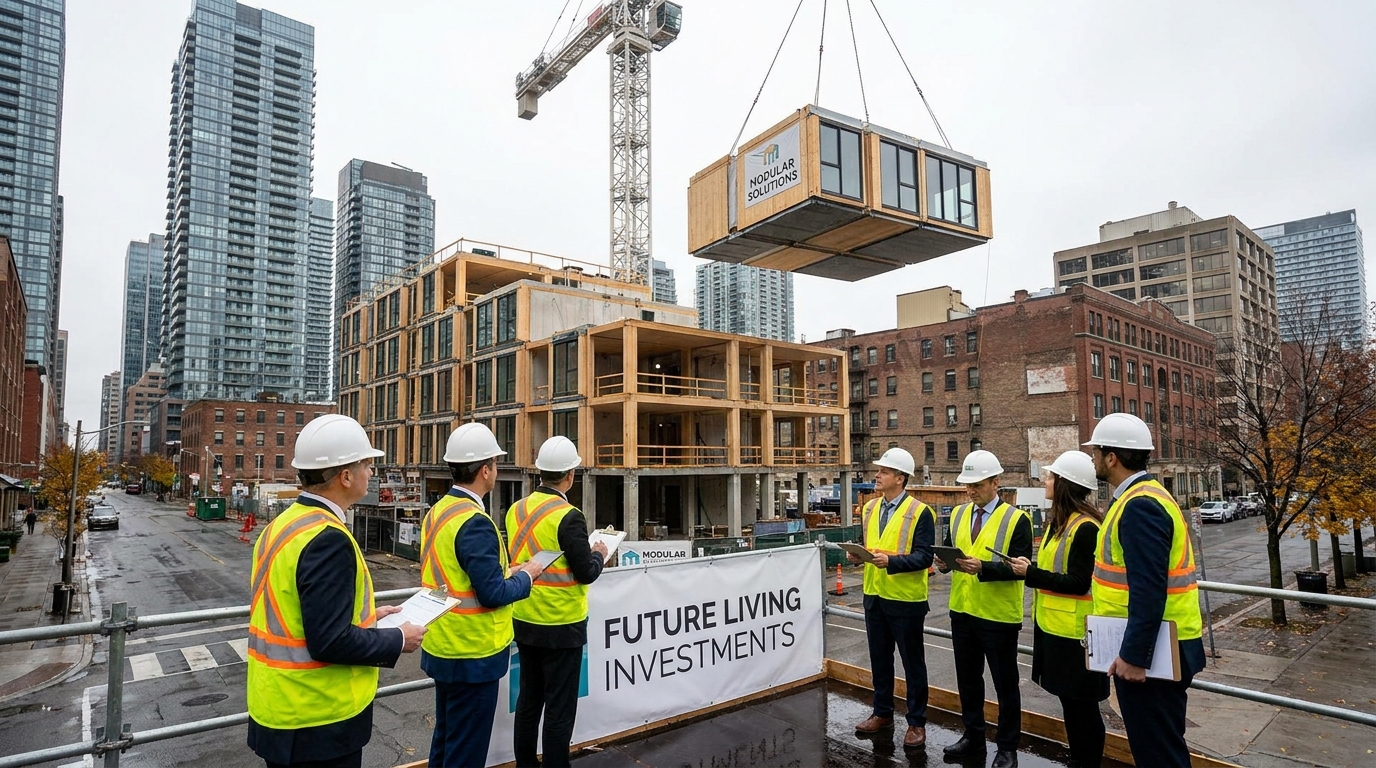
Modular and prefab construction has gained momentum because speed is increasingly valuable in a market defined by supply shortages and cost pressure. In 2026, CMHC expanded mortgage insurance support for prefab and modular construction across its multi-unit products after a pilot that supported more than 800 rental homes across five provinces. For investors, this is an important development because faster delivery can reduce interest carry, lower exposure to market volatility, and potentially improve internal rates of return if execution is strong.
Still, modular financing should not be misunderstood as automatically easier. Lenders continue to underwrite feasibility, builder capability, quality control, transportation logistics, installation timelines, and draw sequencing with care. In fact, some modular projects require financing structures that reflect off-site manufacturing schedules rather than purely on-site progress. That can introduce different documentation and monitoring requirements. The financing may improve, but the underwriting remains rigorous.
The strategic appeal is real. If modular construction shortens the build cycle, the investor may pay interest for fewer months, move into lease-up earlier, and reduce exposure to adverse market changes during construction. In a slower demand environment, that time advantage can be decisive. But the project still needs disciplined budgeting, experienced partners, and a lender that understands the construction method.
The Metrics Investors Need to Understand
Construction financing can feel technical, but a few core metrics shape most of the decision-making. Investors who understand them can evaluate options quickly and avoid superficial comparisons. Investors who do not often end up focused on rate alone, which is rarely the right lens.
Loan-to-Cost and Loan-to-Value
LTC tells you how much of the total project cost the lender is willing to finance. LTV tells you how much debt is supported by collateral value. In practice, whichever metric is more conservative usually controls the structure. A project with a high projected completed value may still receive lower leverage if the lender is concerned about budget risk or market volatility. Conversely, a lower-risk project with strong fundamentals may attract better terms even if the headline economics look modest.
Higher leverage can improve return on equity when everything goes to plan, but leverage also magnifies downside risk. If a project runs over budget, misses lease-up assumptions, or appraises lower than expected at completion, the sponsor may need to inject more equity at the worst possible moment. More leverage is not always better. The right amount is the amount that keeps the project durable under stress.
Interest Reserve and Contingency Reserve
Interest reserve protects the project during the period when there is little or no operating income. Contingency reserve protects it when reality does not match the original budget. Both are essential because construction rarely unfolds exactly as modeled. Material costs move, site conditions surprise, subcontractors change pricing, and approvals can take longer than expected. A project without reserves may look efficient until the first setback occurs.
Experienced investors do not view reserves as dead capital. They view them as strategic protection that reduces the probability of forced decisions. The best projects often are not the ones with the most aggressive assumptions. They are the ones with enough margin to survive normal friction without losing control of the timeline or the balance sheet.
Debt Service Coverage and Take-Out Risk
Many investors focus intensely on getting the construction loan closed and spend too little time on the exit. That is a mistake. Construction financing only works well when there is a credible take-out strategy, whether through sale, condo closings, or permanent refinancing. Lenders and equity partners want to know what happens at completion. If lease-up is slower, cap rates soften, or rates remain elevated, can the asset still qualify for long-term debt on acceptable terms?
Debt service coverage ratio, or DSCR, becomes especially important at this stage. If stabilized income is not strong enough to support permanent debt service, the investor may need to bring in additional equity, accept lower proceeds, or refinance into a more expensive product. This is why construction feasibility and stabilization underwriting should be analyzed together from day one. The development loan is only one chapter in the financing story.
Common Misconceptions That Cost Investors Money
The first major misconception is that construction financing is just a mortgage with a different name. It is not. It is an actively managed, milestone-based facility with tighter underwriting, more reporting, and greater lender oversight. Borrowers are being evaluated not only on creditworthiness, but on their ability to complete a project under uncertainty. Treating it like ordinary mortgage debt can lead to poor planning and dangerous liquidity assumptions.
The second misconception is that the lowest quoted rate always means the cheapest capital. In reality, fees, inspection costs, draw timing, legal expenses, holdbacks, reserve requirements, guarantee structures, and penalty provisions can materially change the all-in cost. Two loans with similar rates can produce very different returns depending on how capital is advanced and what conditions are attached. Serious investors compare the entire structure, not just the coupon.
The third misconception is that easier access to financing is always a positive. If leverage rises too high relative to budget resilience, the project becomes fragile. CMHC and other institutional programs may offer strong leverage in the right circumstances, but leverage only helps when the project stays within a controllable risk range. A highly levered project with weak contingencies can become far more dangerous than a moderately levered project with stronger reserves and a cleaner take-out plan.
The fourth misconception is that modular or prefab projects are simple to finance because they are newer and faster. Policy support has improved access, but lenders still want experienced builders, realistic sequencing, and transparent cost control. Financing innovation can enhance project economics, but it does not eliminate underwriting discipline. Execution still matters.
How Market Conditions Change Financing Decisions
Construction financing does not exist in a vacuum. It is highly sensitive to interest rates, labor costs, permit timing, buyer demand, rental absorption, and lender sentiment. CMHC’s 2026 housing outlook noted that uncertainty is causing many households to delay purchases and builders to hesitate on new projects. That matters because a project that looked compelling at underwriting can weaken if demand softens during construction or if the expected exit timeline stretches.
Building permits are also an important leading indicator for investors watching future supply and competitive pressure. If permit activity and starts begin to accelerate materially, future lease-up conditions could become more competitive in certain submarkets. If starts remain constrained, new supply may stay limited, supporting rents and occupancy for well-located projects. Financing choices should reflect not only the current market, but the likely market at completion.
In a higher-cost lending environment, sensitivity analysis becomes indispensable. Investors should test what happens if rates remain elevated for longer, if completion takes three months more than expected, if rents come in below pro forma, or if refinance proceeds are lower than planned. If the project only works under ideal assumptions, the financing is too aggressive or the deal needs to be repriced. Resilient projects are built around realistic downside scenarios, not optimistic narratives.

What Lenders Want to See Before They Commit
From a lender’s perspective, construction financing is about confidence in completion. That confidence is built through documentation, experience, and conservative planning. A strong application usually includes a clear budget, realistic timeline, detailed plans, contractor agreements, permits or permit status, market analysis, exit strategy, and evidence of borrower liquidity. The stronger the package, the easier it is for the lender to price risk and support the request.
Builder and sponsor experience carry significant weight. A first-time investor trying to finance a complex development will face a very different underwriting experience than an established sponsor with a track record of similar completions. Guarantees, cash equity, and third-party project oversight become more important when experience is limited. Investors should be realistic about where they sit on that spectrum and structure deals accordingly.
Lenders also care about discipline after closing. Timely reporting, transparent communication, orderly draw requests, and proactive issue management all matter. Construction debt is not passive. Sponsors who treat the lender like a strategic stakeholder rather than a remote funding source usually navigate challenges more effectively. Good projects can become stressed when communication breaks down. Average projects can stay stable when information flow is strong and decisions are timely.
How to Choose the Right Financing Structure for Your Strategy
The correct financing structure depends first on what kind of investor you are. A long-term rental investor prioritizing stable hold economics may value lower-cost CMHC-backed debt and a clean path to permanent financing. A small developer doing infill projects may prioritize speed and flexibility, even if that means accepting somewhat higher borrowing costs. A value-add investor converting or expanding an existing asset may need a hybrid of renovation financing, bridge debt, and eventual term financing. There is no single best option across every strategy.
Start with the business plan, then choose the debt. Ask how much equity you can commit without stressing liquidity. Ask whether the project has enough margin for delays and overruns. Ask what your backup plan is if the refinance comes in light or the lease-up takes longer. Ask whether your lender understands the asset type and your construction method. Financing should fit the project’s operational reality, not just its spreadsheet projection.
It is also wise to compare lenders on execution quality, not just economics. A lender with a slightly higher rate but smoother draw administration and clearer communication can produce a better real-world outcome than a cheaper lender that creates bottlenecks. Time is part of project cost. Friction is part of project cost. Reliable capital often outperforms theoretically cheap capital that becomes difficult when the project needs it most.
A Practical Due Diligence Checklist for Investors
Before committing to any construction financing, investors should pressure-test the structure from several angles. Review the full fee schedule, not just the interest rate. Understand the draw process, inspection requirements, and expected release timelines. Confirm whether interest is charged only on funded amounts and whether an interest reserve is built into the facility. Analyze the contingency requirement and determine how overruns will be funded if they exceed the reserve.
-
Verify total project costs using third-party input where possible, including hard costs, soft costs, financing costs, taxes, insurance, and lease-up expenses.
-
Model downside scenarios for rates, delays, cost overruns, and weaker absorption to see how much additional equity could be required.
-
Clarify recourse terms, guarantor obligations, completion covenants, and what events could trigger default or lender intervention.
-
Confirm the take-out strategy early, including likely permanent financing terms, DSCR expectations, and valuation assumptions at completion.
-
Assess whether the lender has direct experience with your asset type, market, and construction method, especially for modular, prefab, or mixed-use projects.
This due diligence process does more than reduce risk. It sharpens negotiation. Investors who understand the structure in detail are better positioned to negotiate contingencies, fees, draw flexibility, or reporting requirements. Knowledge improves terms because it improves credibility. Lenders respond differently when the borrower clearly understands both the project and the debt.
Final Thoughts: Financing as an Investment Edge
Construction financing can be a game changer for real estate investors because it directly shapes leverage, timing, resilience, and return on equity. In a market where housing supply remains under pressure, policy support is evolving, and rates still matter materially, smart financing choices can create real competitive advantage. The investors who perform best are rarely the ones chasing the maximum loan or the lowest quoted rate. They are the ones matching the capital structure to the project’s actual risk profile and operational demands.
Understanding progress draws, loan-to-cost limits, contingency reserves, interest reserves, and take-out risk allows investors to move beyond surface-level comparisons. It helps them protect downside, preserve liquidity, and build projects that can survive ordinary market friction. This is especially important today, when uncertainty around demand, timing, and borrowing costs can quickly pressure weakly structured deals. Strong financing does not eliminate project risk, but it makes that risk more manageable and more visible.
For serious real estate investors, construction financing should be approached with the same rigor as site selection and market analysis. It is not just a funding source. It is a strategic tool. Used well, it can help turn a promising project into a profitable one. Used poorly, it can undermine even a strong property in a good market. The difference is usually not luck. It is preparation, structure, and discipline.



No Comment! Be the first one.