



Designing a drought-resistant landscape is one of the most practical ways to reduce household water use while creating an outdoor space that still feels generous, inviting, and alive. For many homeowners, the phrase can sound a little stark at first, as if it means giving up beauty in favor of bare gravel and a few hardy plants. In reality, a well planned drought-wise garden can be richly planted, seasonally interesting, and deeply suited to the rhythms of where you live. It can support birds and pollinators, lower maintenance demands, and make your home look more intentional from the street.
Table Of Content
- Why Drought-Resistant Landscaping Matters Beyond Water Bills
- Start with the Site, Not the Plant List
- Choose Plants That Belong in Your Climate
- Hydrozoning: One of the Most Effective Water-Saving Strategies
- What to Do About the Lawn
- Healthy Soil Is Quietly Doing Much of the Work
- Efficient Irrigation Should Support the Design, Not Rescue It
- Design Ideas for Small Urban Gardens
- Design Ideas for Larger Suburban Lots
- Adapting the Approach to Different Climates
- Biodiversity and Beauty Can Work Together
- Common Misconceptions to Leave Behind
- A Practical Step-by-Step Plan for Homeowners
- The Long-Term Value of a Water-Wise Garden
The most useful way to think about drought-resistant landscaping is as a design system, not just a list of plants that survive with less water. The U.S. Environmental Protection Agency has consistently emphasized that water-smart landscapes work best when they combine regionally appropriate plants, healthy soil, hydrozoning, efficient irrigation, and a realistic understanding of the site. That approach matters because outdoor water use is not a small piece of household demand. According to the EPA, it represents about 30 percent of single-family home water use on average in the United States, and it can rise to 70 percent in hotter, drier regions. That makes the landscape one of the clearest opportunities for meaningful water savings.
There is a reassuring point here for homeowners who feel overwhelmed by the idea of a full yard renovation. You do not need to rebuild everything at once to make progress. Many of the best drought-resistant landscapes come together in phases, beginning with the thirstiest lawn areas, compacted soil, or poorly performing beds and gradually becoming more resilient over time. The process can be measured and practical, with each change improving water efficiency, maintenance, and long term garden health.
This article looks at how to create a drought-resistant landscape in a way that feels achievable across different garden sizes and climates. It covers plant selection, irrigation, soil improvement, and design choices that improve biodiversity and reduce maintenance. Just as importantly, it addresses common misconceptions, because drought resistant does not mean no water ever, and water-wise does not need to mean minimal or austere. The goal is not to impose a style. It is to help you build a garden that works better with your climate, your home, and your daily life.
Why Drought-Resistant Landscaping Matters Beyond Water Bills
Water savings are the clearest reason many homeowners begin exploring drought-resistant landscaping, but the benefits reach much further than utility costs. A landscape that is designed to use water carefully tends to be more stable during heat waves, more adaptable during watering restrictions, and easier to maintain across changing seasons. In a time when many regions across North America are experiencing hotter summers, irregular rainfall, and increasing concern about water infrastructure, resilience has become a useful quality in everyday residential design.
The EPA states that converting to a water-smart landscape can reduce outdoor water use by about 20 to 50 percent, especially where lawns are reduced and irrigation is matched more accurately to plant needs. That range is significant because it shows that the biggest gains usually come from combining strategies rather than relying on one product or one planting trend. Replacing part of a lawn helps. Using mulch helps. Choosing native or climate-adapted plants helps. Installing better irrigation controls helps. Together, these choices can transform how a garden performs.
There is also a maintenance advantage that should not be overlooked. Conventional landscapes often depend on frequent watering, repeated mowing, fertilizer applications, and ongoing pest management just to maintain a uniform appearance. By contrast, many drought-tolerant and regionally appropriate plantings need less intervention once established. This does not mean no care at all, but it often means less repetitive work and more durable beauty. A garden that is aligned with its environment usually asks less of the homeowner over time.
Another important benefit is ecological. Native and diverse plantings can create food and shelter for pollinators, songbirds, and beneficial insects. Guidance from USDA NRCS on soil health reinforces that healthy soil regulates water and supports biological function, which in turn improves resilience. A drought-resistant landscape can therefore become part of a broader sustainability strategy. It lowers water demand, reduces chemical inputs, supports habitat, and often creates a more layered, interesting outdoor environment than a large monoculture lawn.
A successful drought-resistant landscape is not a compromise garden. It is a better matched garden, designed to thrive with fewer inputs and more ecological intelligence.
Start with the Site, Not the Plant List
One of the most common mistakes in water-wise landscaping is starting with isolated plant choices before understanding the site itself. Even excellent drought-tolerant plants can struggle if they are placed in the wrong conditions. A south-facing slope with reflected heat from pavement behaves very differently from a shaded side yard with heavier soil. Before choosing what to plant, it helps to assess how water moves through the space, where heat builds up, and which areas are already telling you something about what can succeed there.
Begin by noticing sun exposure over the course of a day. Areas that receive intense afternoon sun usually dry out faster and may be best suited to plants that tolerate heat, reflected light, and occasional dryness. Shaded zones, on the other hand, often retain moisture longer and can support a different palette even within a drought-wise framework. Wind exposure also matters, because windy sites lose moisture more quickly through evaporation and plant transpiration.
Soil deserves equal attention. Sandy soil drains quickly and may require more frequent watering during the establishment phase, even for drought-tolerant plants. Clay soil holds moisture longer but can become compacted, reducing root growth and causing runoff. Loam is often the easiest to work with, but most home landscapes contain a mix of conditions rather than one ideal profile. A simple soil test and a close look at drainage after rain can reveal whether water is soaking in, pooling, or moving off site too quickly.
Topography shapes performance as well. Slopes are more prone to runoff, which means irrigation can be wasted unless planting density, soil condition, and groundcover are carefully considered. Low spots may capture more water and support species with slightly higher moisture needs. The EPA notes that landscape shape and drainage influence efficiency, and this is one reason a drought-resistant landscape is best approached as a coordinated design rather than a decorative update.
Choose Plants That Belong in Your Climate
The strongest foundation for a drought-resistant landscape is using native and regionally appropriate plants. EPA guidance emphasizes that these plants are generally adapted to local soils and climate and often need less supplemental water once established. They may also require fewer fertilizers and pesticides, which creates another layer of environmental and maintenance benefit. Parks Canada and other Canadian sources similarly highlight the habitat value and lower maintenance potential of native plants when they are matched to appropriate sites.
It is important, though, not to turn native planting into a rigid rule without context. Native plants are not automatically drought tolerant in every setting, and a plant that is native to a broader region may still be poorly suited to your exact site conditions. A woodland native from a moist forest edge will not necessarily thrive in a hot, exposed front yard. The practical goal is to look for species that are both locally or regionally appropriate and compatible with your soil, light, and moisture patterns.
For many homeowners, the best planting mix includes native plants as the backbone and climate-adapted noninvasive plants as supporting elements where appropriate. That might mean using native grasses, flowering perennials, and shrubs for most of the composition, then adding a few proven, low water ornamental plants that perform well in the local setting. What matters most is not purity. It is performance, resilience, biodiversity value, and ease of care.
A drought-resistant plant palette often includes a layered combination of trees, shrubs, perennials, and groundcovers. Trees are especially important because they moderate temperature, create shade, reduce evaporation from surrounding soil, and improve comfort around the home. Shrubs build structure and year-round presence. Perennials provide seasonal color and pollinator value. Groundcovers help protect soil and reduce exposed surfaces that dry out quickly. Together, these layers create a more self-supporting landscape than a flat expanse of lawn.
Hydrozoning: One of the Most Effective Water-Saving Strategies
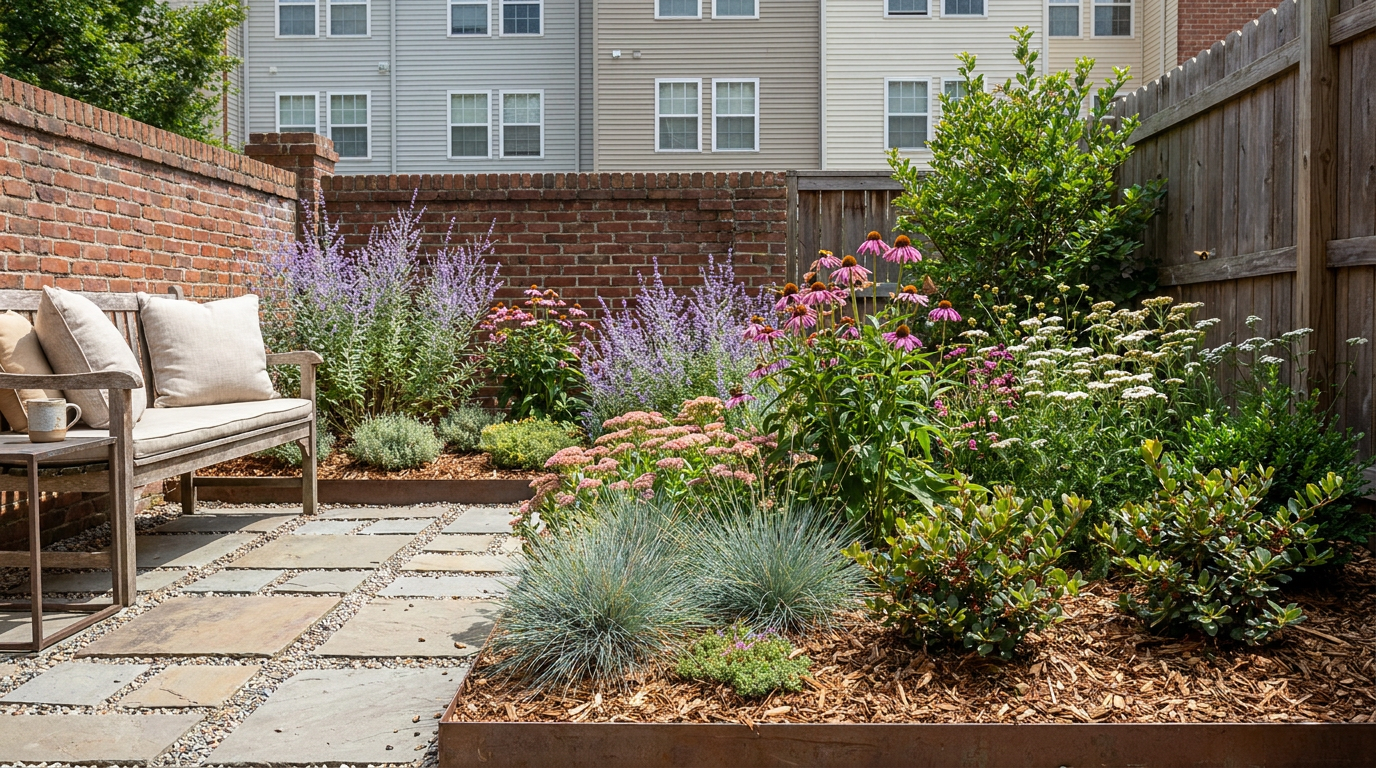
If there is one concept that consistently improves drought-resistant landscape performance, it is hydrozoning. The EPA recommends grouping plants with similar water needs together to reduce waste and prevent both overwatering and underwatering. This sounds simple, but it has a major effect on irrigation efficiency because mixed beds often force one watering schedule onto plants that need very different levels of moisture.
In practice, hydrozoning means creating distinct areas in the garden based on expected water demand. A low water zone might include established native grasses, dry-climate shrubs, and sun-loving perennials. A moderate water zone could include ornamental plants near the entry, young trees still establishing, or a small edible bed that needs more regular moisture. The point is not to avoid all irrigation. It is to apply water where it is useful and stop applying it where it is not.
Hydrozoning also makes maintenance more logical. Plants that share water needs often share care patterns more broadly, which can simplify pruning, mulching, and seasonal observation. It becomes easier to see whether a bed is thriving or stressed when its plants are responding to the same environmental conditions. This is far more manageable than combining moisture-loving species with dryland shrubs and trying to keep both equally happy.
For homeowners converting a conventional landscape, hydrozoning can begin with very small decisions. You might move the thirstiest ornamentals closer to the house where irrigation is easier to monitor, while shifting low water species to outer beds or exposed edges. Over time, these distinctions can guide the entire layout. The result is a garden that wastes less water because its design acknowledges that not every area needs the same treatment.
What to Do About the Lawn
Lawn is often the biggest water user in a conventional residential landscape, but the answer is not always to remove every blade of grass immediately. One of the most persistent misconceptions in drought-resistant landscaping is that all turf must disappear to achieve meaningful savings. In reality, a limited amount of functional turf can still make sense in some climates and households, especially where it serves a genuine purpose such as play space, access, or cooling around frequently used areas.
The more useful question is whether each lawn area is earning the water, maintenance, and fertilizer it requires. A narrow strip beside the driveway, a hard to irrigate slope, or a neglected patch in full sun often offers very little practical value. These are ideal places to begin a phased conversion. Replacing them with low water groundcovers, shrubs, deep-rooted perennials, or permeable hardscaping can create immediate savings and often improve curb appeal at the same time.
Where turf remains, choose the right type for the climate and use it intentionally. In arid and semi-arid regions, trying to maintain cool-season lawn over large areas is often a poor long term fit. In cooler or wetter climates, reducing lawn still matters because it lowers irrigation demand during summer dry spells and makes the landscape more resilient during restrictions or heat events. The broader aim is not to eliminate green space. It is to use lawn sparingly and purposefully.
For many households, a phased lawn reduction strategy feels more realistic than a full redesign. Start with a visible but manageable section, then observe how the new planting performs across a season. This approach gives you time to refine the plant palette, understand maintenance needs, and spread out costs. It also helps the garden evolve in a way that feels natural rather than abrupt.
Healthy Soil Is Quietly Doing Much of the Work
Soil improvement is not always the most visible part of a drought-resistant landscape, but it is often the part that determines whether the design truly succeeds. Healthy soil holds moisture more effectively, allows roots to penetrate more deeply, and supports the biological activity that keeps plants resilient. USDA NRCS guidance on soil health emphasizes that well functioning soil regulates water and supports life below the surface, both of which matter enormously in dry periods.
In many home landscapes, soil has been disturbed, compacted, or stripped during construction. Even good plants struggle in these conditions because water either runs off too quickly or sits in unhelpful ways near the surface. Improving soil structure with organic matter can increase infiltration and moisture retention while making it easier for roots to establish. The EPA also points to maintaining adequate topsoil depth, often around 4 to 6 inches where appropriate, as part of a water-smart landscape foundation.
Mulch is one of the simplest and most effective tools for supporting soil health. A properly applied mulch layer helps reduce evaporation, moderate soil temperature, and suppress weeds that compete for water. Organic mulches such as shredded bark, wood chips, or leaf mulch also break down gradually, contributing to soil improvement over time. In a drought-wise garden, mulch is not just a finishing touch. It is a practical water conservation measure.
It is worth noting that mulch should be used thoughtfully. Piling it against tree trunks or shrub crowns can create disease problems, and different plant communities respond best to different textures and depths. Still, in most residential situations, a well maintained mulch layer pays for itself in lower watering frequency and cleaner looking beds. It is one of the easiest upgrades for a homeowner making gradual changes.
Efficient Irrigation Should Support the Design, Not Rescue It
Irrigation has an important role in drought-resistant landscaping, but it should not be mistaken for the foundation. A poorly designed landscape with thirsty plantings and mismatched zones will not become efficient simply because drip lines are installed. The EPA’s WaterSense guidance consistently stresses that irrigation savings come from good design, weather-based controls, quality equipment, and regular adjustment. In other words, technology works best when the landscape itself already makes sense.
Drought-tolerant plants usually need consistent watering during their establishment period, which may last a full growing season or more depending on the plant and the climate. Young trees in particular benefit from deep, infrequent watering that encourages roots to move downward. Even mature low water landscapes may still need irrigation during prolonged drought, extreme heat, or in very sandy soils. This is why the phrase drought resistant is more accurate than no water. The aim is reduced demand, not permanent independence from weather conditions.
Drip irrigation is often a strong fit for shrubs, perennials, and planting beds because it delivers water close to the root zone with less evaporation than overhead spraying. Soaker hoses can also work well in some residential settings. For remaining lawn areas, high efficiency nozzles and careful scheduling are important. Weather-based controllers and WaterSense-labeled irrigation products can help reduce overwatering by adjusting irrigation to actual conditions rather than fixed habits.
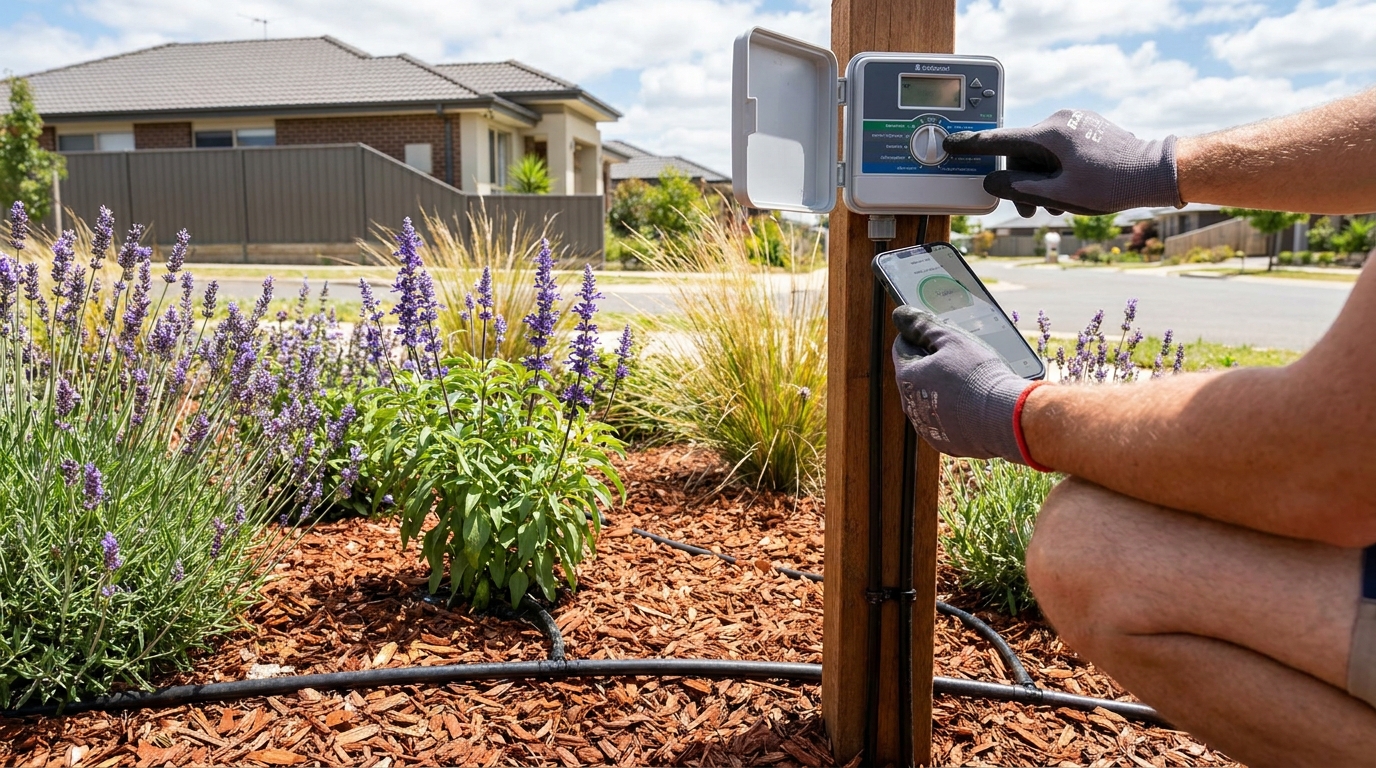
Regular irrigation audits are just as valuable as new equipment. Broken heads, clogged emitters, overspray onto paving, and outdated schedules are common reasons landscapes waste water. Walking the system a few times each season can reveal simple adjustments that improve performance immediately. This kind of maintenance is not glamorous, but it is often where real savings happen.
Design Ideas for Small Urban Gardens
Small gardens are often ideal candidates for drought-resistant landscaping because every square foot can be used intentionally. In a compact front yard or courtyard, reducing lawn may free up space for layered planting that feels fuller and more interesting without requiring heavy irrigation. A modest footprint also makes it easier to upgrade soil, install efficient watering, and maintain mulch consistently.
One effective approach for small spaces is to create a simple framework of compact shrubs and ornamental grasses, then weave in pollinator-friendly perennials for seasonal color. This combination provides structure through different times of year while avoiding the maintenance intensity of high-demand annual beds. Permeable paths or gravel stabilized with edging can guide movement without increasing runoff. A bench, small patio, or planted entry path can make the garden feel lived in rather than purely decorative.
In these tighter landscapes, repetition matters. Using a restrained palette of well chosen plants often looks calmer and more sophisticated than trying to include too many species in a small footprint. Repeating a few drought-tolerant plants creates visual rhythm and makes maintenance easier because each zone behaves more predictably. The result can be elegant as well as efficient, which is an important reminder that sustainability and visual refinement are not in conflict.
Where privacy is needed, consider low water hedging or layered screening rather than a large thirsty lawn enclosed by fencing. Compact trees can also play a major role in small spaces by creating cooling shade and softening urban heat. With careful planning, a small drought-resistant garden can feel abundant without being water intensive.
Design Ideas for Larger Suburban Lots
Larger properties often have more varied conditions, which makes them especially well suited to hydrozoning. Instead of treating the entire yard as one irrigated surface, it helps to divide the landscape into functional and ecological zones. A front yard might focus on curb appeal with lower water foundation plantings, while a backyard includes a small lawn for use, deeper planting borders for shade and habitat, and lower maintenance outer areas with native shrubs and grasses.
On suburban lots, trees are among the most valuable long term investments. Properly placed shade trees can reduce heat around the house, moderate conditions for surrounding plants, and make outdoor spaces more comfortable. Understory shrubs and perennials can then fill in below them, creating a layered landscape that is more stable and visually rich than isolated planting islands in lawn. This structure also supports wildlife in ways a simpler yard cannot.
Swales and subtle grading changes can help capture runoff and improve infiltration, particularly where downspouts or slopes send water quickly off the property. Rather than fighting those patterns, a drought-wise design can use them to place plants more intelligently. Areas that naturally collect moisture can support species with slightly higher water needs, while hot edges and sunny margins become ideal zones for tougher, lower water plants.
Because larger yards can be expensive to renovate all at once, phasing is especially useful here. Many homeowners begin by transforming the most water intensive or least functional sections first. Over several seasons, these converted areas can be connected into a coherent landscape that feels intentional, mature, and much easier to manage.
Adapting the Approach to Different Climates
Drought-resistant landscaping is often associated with desert regions, but the concept is useful across much of North America. In arid and semi-arid climates, the focus is naturally on reducing irrigation demand, minimizing high water turf, and using species that tolerate long dry periods and intense sun. Plants that can go semi-dormant in the hottest conditions may be more realistic than trying to preserve constant lushness through summer.
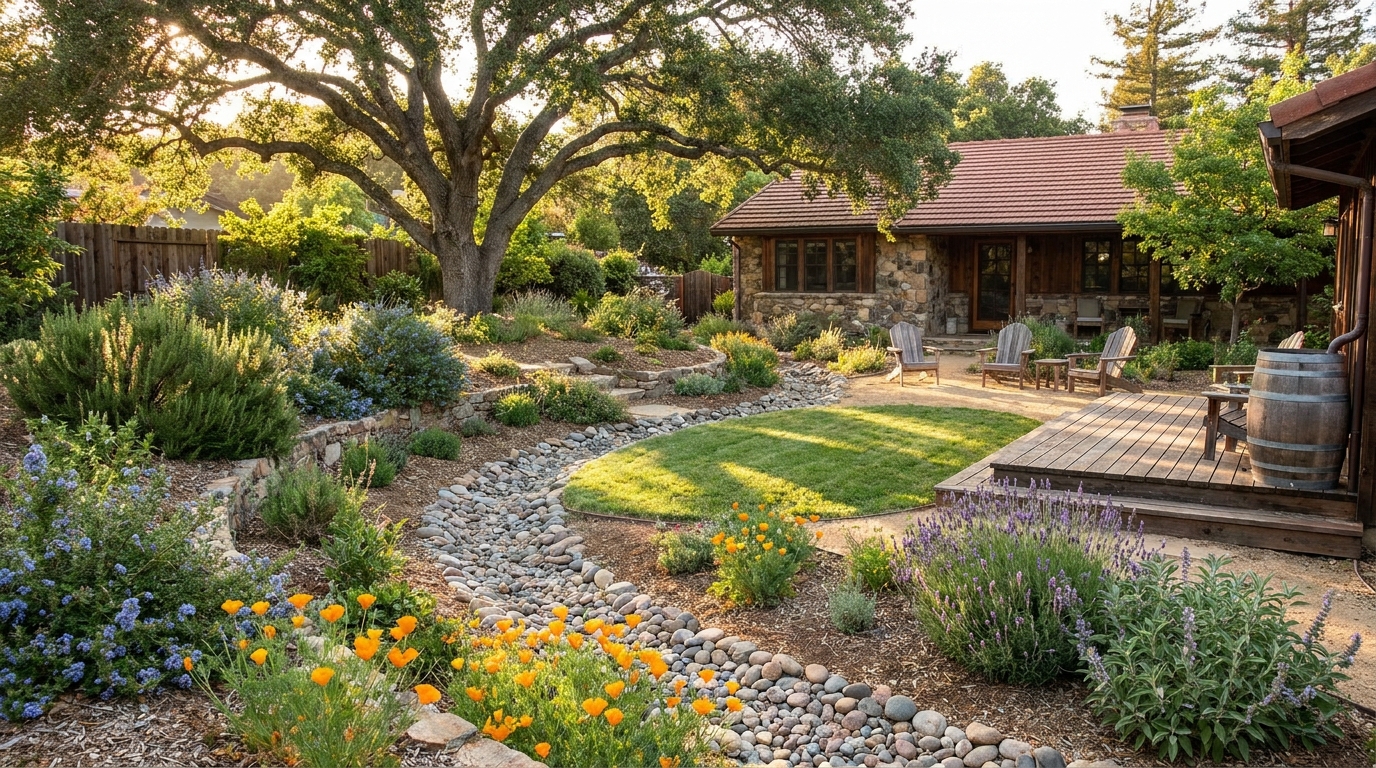
In Mediterranean and warm summer climates, there is often room for a richly textured palette of shrubs, grasses, aromatic perennials, and flowering plants that thrive with deep but infrequent watering. Mulch and soil management become essential because they help bridge the dry season. Shade from small trees can also transform how outdoor spaces feel and function without dramatically increasing water demand.
In cooler or wetter regions, drought resistance still matters because rainfall patterns are becoming less predictable and summer dry periods can place stress on conventional landscapes. A water-wise garden in these areas may not look obviously dry-climate in character. It may simply include more climate-suitable plants, smaller lawn areas, healthier soil, and irrigation that is used only when conditions truly call for it. This can improve resilience during heat waves and make the garden easier to care for during restrictions.
Canadian guidance on drought preparedness similarly recommends choosing drought-resistant trees and plants as part of adaptation planning. That is a helpful reminder that drought-wise landscaping is not only a response to desert conditions. It is increasingly relevant wherever homes face periods of heat, stress, or water uncertainty.
Biodiversity and Beauty Can Work Together
One of the most encouraging shifts in residential landscape design is the growing recognition that biodiversity and curb appeal are not opposing goals. In fact, many of the most attractive drought-resistant gardens are also the most ecologically functional. Layered plantings provide nectar, seed, shelter, and seasonal variation, while diverse communities tend to be more resilient than monocultures. They also often feel more alive and grounded in place.
Pollinator habitat can be integrated very naturally into a residential landscape by choosing flowering perennials with staggered bloom times, including host plants where possible, and avoiding heavy reliance on chemical inputs. Birds benefit from shrubs for cover, seed heads left standing through part of the season, and trees that offer nesting opportunities. Even a modest front bed can contribute if it is planted thoughtfully and maintained with care.
Diverse planting can also reduce pest pressure over time because it avoids the vulnerability that comes with repeating a single species too heavily. This does not mean a garden becomes maintenance free, but it often becomes less dependent on intervention. When plants are well matched to their conditions and supported by healthy soil, they are better able to withstand stress without collapsing into recurrent problems.
Perhaps most importantly, a biodiverse drought-resistant landscape tends to feel dynamic. There is movement in grasses, seasonal change in flowering cycles, and more visual depth than a flat irrigated lawn can provide. That richness is part of what makes these gardens so satisfying. They are not merely efficient. They are often more engaging to live with.
Common Misconceptions to Leave Behind
Several misconceptions still prevent homeowners from embracing drought-resistant landscaping with confidence. The first is that it must look barren or be dominated by rock. While hardscape and gravel can have a place, especially in certain climates, modern water-wise landscapes can be lush, layered, and full of plant life. Texture, color, and seasonal interest are all possible with the right regional palette.
A second misconception is that drought-tolerant plants never need water. In reality, nearly all plants need attention during establishment, and even mature plantings may require supplemental watering during extreme heat or prolonged drought. The difference is that a drought-resistant landscape uses water more strategically and less frequently overall. It works with natural conditions rather than trying to override them completely.
Another common misunderstanding is that native plants are automatically the right answer in every location. Native species are often an excellent choice, but suitability still depends on the site. Sun, drainage, soil texture, and local microclimate all matter. Likewise, drip irrigation alone does not guarantee efficiency. Without appropriate zoning, scheduling, and maintenance, even a drip system can waste water.
It is also worth leaving behind the idea that lawn removal is all or nothing. Some households genuinely benefit from keeping a small, useful area of turf. The key is to reduce lawn where it is unnecessary and support it intelligently where it remains. A balanced approach is often more sustainable and more likely to be maintained well over time.
A Practical Step-by-Step Plan for Homeowners
If you want to begin creating a drought-resistant landscape without taking on an overwhelming project, a phased approach is usually the most realistic. Start by identifying the areas of your yard that use the most water and provide the least value. This is often where the easiest wins are found. A struggling side lawn, a narrow strip by the sidewalk, or an overwatered mixed bed can become the first zone for improvement.
Next, improve the soil and add mulch before making major planting changes. These foundational steps support nearly every other strategy that follows. Then look at irrigation and ask whether current schedules match actual plant needs. If not, reduce frequency where appropriate, repair inefficiencies, and consider upgrading controls if the system is outdated.
From there, begin replacing portions of turf or thirsty planting with regionally appropriate species grouped by water need. As each section establishes, observe what performs well and what still needs adjustment. This process helps you build confidence and refine the garden gradually. It also spreads costs more comfortably over time.
- Assess sun, shade, slope, drainage, and existing irrigation patterns.
- Identify high water, low value lawn or planting areas for early conversion.
- Improve soil with organic matter where needed and maintain adequate topsoil depth.
- Apply mulch to reduce evaporation and suppress weeds.
- Choose native and climate-appropriate plants suited to the exact site conditions.
- Create hydrozones so plants with similar water needs are grouped together.
- Use efficient irrigation such as drip systems and weather-based controls where appropriate.
- Audit the system seasonally and water deeply but less often during establishment and drought.
- Keep some functional lawn only where it truly serves a purpose.
- Expand the conversion over time as your confidence and budget allow.
The Long-Term Value of a Water-Wise Garden
A drought-resistant landscape is one of those rare home improvements that can be both immediately practical and quietly transformative over the long term. It lowers outdoor water demand, often reduces upkeep, and creates a garden that is better suited to changing weather conditions. It can improve habitat, reduce reliance on fertilizers and pesticides, and make the home feel more grounded in its region. For many households, it also brings a sense of relief because the yard stops feeling like something that constantly needs to be rescued.
There is also an aesthetic value that becomes more apparent with time. Water-wise gardens often age beautifully because they are built around plant communities that settle in rather than fight the site. Shrubs gain structure, grasses move with the seasons, and trees begin to shape comfort and microclimate in ways that are difficult to achieve in a more conventional layout. What starts as a practical response to drought can become a more enduring and sophisticated landscape overall.
Most importantly, this kind of garden meets people where they are. It does not require perfection, and it does not ask every homeowner to follow the same formula. A small urban courtyard, a family backyard, and a larger suburban lot can all become more drought resistant in ways that fit their use and local conditions. The path can be gradual, and the choices can be elegant as well as sensible.
That may be the most valuable perspective to keep in mind. Sustainable landscaping does not need to feel restrictive or idealized. At its best, it feels like a series of smart, grounded decisions that make a home work better. A drought-resistant landscape is not simply about using less water. It is about creating a garden that asks for less while offering more.



No Comment! Be the first one.