



A home gym is a dedicated space in your house set up for exercise, typically combining basic equipment, a supportive layout, and an atmosphere that makes movement feel easy to start and easy to repeat. It doesn’t need to be large or expensive: a mat, a few adjustable weights, and a well-lit corner in a bedroom, basement, or garage are often enough to support strength training, mobility work, and recovery.
Table Of Content
- Why a Home Gym Can Support More Than Physical Fitness
- Start With the Feeling You Want the Room to Create
- Choosing the Best Space for Your Home Gym
- Smart Space Options in Different Homes
- Designing an Atmosphere That Motivates You to Return
- Lighting and Sound for a Better Workout Mood
- Essential Equipment for a Balanced Home Gym
- Core Equipment by Wellness Priority
- How to Make a Small Home Gym Feel Spacious and Useful
- Creating a Home Gym That Feels Welcoming for the Whole Household
- Wellness Details That Turn a Workout Room Into a Ritual Space
- Building Motivation Through Routine and Visual Cues
- Simple Ways to Stay Consistent
- Common Home Gym Mistakes to Avoid
- How Your Home Gym Can Grow With You
- Final Thoughts on Designing a Home Gym With Heart
The value of a home gym is not just convenience. It removes the friction of packing a bag, driving to a facility, or working around someone else’s schedule, which makes it easier to stay consistent. It also offers privacy that lets you move at your own pace, try new exercises without feeling watched, and tune in to what your body needs on a given day. When the space is designed with intention, it can support physical fitness and mental wellness at the same time.
That emotional ease matters. A room that feels bright, organized, and welcoming can shift exercise from something you have to squeeze in to something you genuinely look forward to. Even small choices such as the color on the walls, the way your yoga mat is stored, or the light that falls across the floor in the morning can influence your mood. The best home gyms are not necessarily the biggest or the most expensive. They are the ones that make movement feel natural, comforting, and sustainable.
This guide explores how to create a home gym that supports both physical fitness and mental wellness. We will look at how to choose the right location, how to shape the atmosphere of the room, which essentials are worth investing in, and how to make the space feel motivating for the long term. Whether you have a dedicated room, a garage, a basement, or simply a corner of a bedroom, the goal is the same. You want a space that helps you feel stronger, clearer, and more at home in your own routine.
Why a Home Gym Can Support More Than Physical Fitness
When people imagine a home gym, they often think first about equipment. Treadmills, weights, resistance bands, and exercise bikes usually come to mind before anything else. Yet the real value of a home gym often goes much deeper. It offers a dedicated setting for energy release, stress recovery, and emotional grounding. In a busy household or an overstimulating world, that kind of space can feel incredibly restorative.
Movement has long been linked with improved mood, better sleep, and reduced stress. Having a gym at home lowers the barrier between intention and action. You no longer need to pack a bag, drive somewhere, or plan around outside schedules. That simplicity helps people stay consistent, and consistency is often what brings the most meaningful mental and physical results. A twenty minute strength session or a gentle stretch before bed becomes much easier when the space is already waiting for you.
A home gym can also support a sense of autonomy. Many people feel more comfortable trying new exercises, stretching slowly, or moving at their own pace when they are in private. There is freedom in not feeling observed. That comfort can help beginners build confidence and can help experienced exercisers tune in more deeply to what their bodies need on a given day. In this way, the home gym becomes not just a fitness area but a personal wellness retreat.
There is also a subtle feeling of community that can grow from a home workout space. Community does not always mean a large class or a room full of people. Sometimes it means creating a family culture where health is visible and encouraged. When movement has a place in the home, it becomes part of the household rhythm. Children may stretch beside you, a partner may use the treadmill after work, or everyone may simply feel more aware that wellness belongs in everyday life.
A well designed home gym is not about perfection. It is about creating a space that says, in a quiet and consistent way, your wellbeing matters here.
Start With the Feeling You Want the Room to Create
Before choosing equipment or storage, it helps to think about the emotional purpose of the room. Ask yourself how you want to feel when you walk into this space. Energized and focused. Calm and grounded. Strong and capable. Refreshed after a long workday. Your answer will guide practical decisions in a way that feels much more personal than simply copying someone else’s setup.
If you enjoy high energy cardio or strength training, you may want the room to feel bright, open, and invigorating. Clean lines, clear floor space, and bold but balanced accents can create that effect. If your focus is yoga, mobility, or recovery, you may prefer a softer atmosphere with layered textures, warm light, and a more spa-like feeling. Neither approach is better. The point is to create a room that supports the type of wellness experience you want to have there.
This is especially helpful if motivation has felt inconsistent in the past. Many people do not struggle because they are lazy or undisciplined. They struggle because their environment does not support the habit. A cluttered room, awkward layout, harsh lighting, or hard to reach equipment can all add subtle resistance. Designing from the feeling outward helps remove those quiet obstacles and makes the room far more inviting.
Try writing down three words that describe your ideal home gym. You might choose words like peaceful, uplifting, polished, strong, cozy, focused, or restorative. These words can shape everything from the flooring and wall color to the style of storage baskets and the type of music you play. A home gym with emotional clarity tends to feel more cohesive, and a cohesive room is easier to use regularly.
Choosing the Best Space for Your Home Gym
The ideal location is the one that fits both your home and your habits. A dedicated room is lovely if you have one, but it is not required. Many excellent home gyms begin in underused corners, finished basements, garages, loft spaces, guest rooms, or even wider hallway nooks. The most important thing is that the area feels usable and easy to return to. If a setup is too hidden, too cramped, or too difficult to prepare each time, it can become easy to ignore.
Look for a place with enough floor space to move comfortably. You do not need a huge footprint for an effective workout. In many cases, enough room for a mat, a few weights, and a small bench is plenty. What matters is the ability to move your arms freely, step in different directions, and transition between exercises without constantly shifting furniture. Even a compact room can feel generous if the layout is intentional.
Natural light can make a remarkable difference in how the space feels. If possible, choose a room with windows. Daylight adds freshness, energy, and emotional lift, especially for morning workouts. It also helps the room feel like an integrated part of the home rather than a dark utility zone. If windows are limited, thoughtful lighting can still create warmth and clarity.
Privacy and noise levels matter too. Some people feel more comfortable in a tucked away area where they can move without interruption. Others prefer a location that feels connected to the household, such as a den or multipurpose room. Think honestly about your routine. If being near family life helps you stay engaged, that may be the better choice. If you crave quiet focus, a separate room could be worth prioritizing.
Smart Space Options in Different Homes
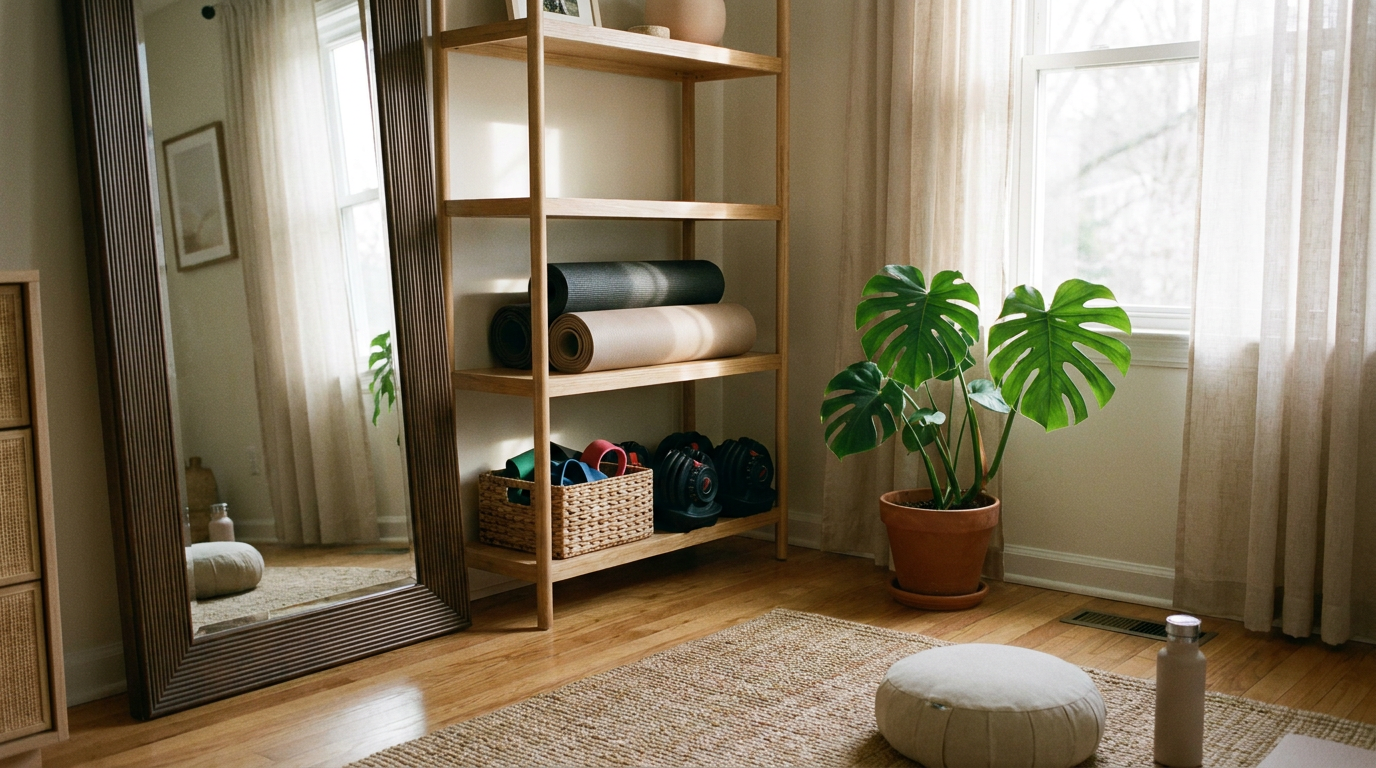
In smaller homes or apartments, a flexible setup often works beautifully. A bedroom corner with a mirror, slim shelf, and stylish basket for bands and weights can be transformed into a wellness nook that feels intentional rather than improvised. In a garage, adding proper flooring, better lighting, and a little decorative warmth can shift the atmosphere dramatically. In a basement, paint color, mirrors, and layered light are especially important for making the room feel brighter and more welcoming.
If you do have a larger dedicated room, consider dividing it into zones. One area can be for strength training, another for stretching, and perhaps a corner for recovery with a mat, foam roller, and small speaker. Zoning helps the room feel organized and can support different moods and energy levels throughout the week. It also makes the experience feel more intentional, almost like your own private wellness studio.
For homeowners planning a custom build, a dedicated home gym is increasingly treated as its own design priority rather than an afterthought carved out of leftover space. Kingsgate brought this exact feature to life on a recent build — see how a fully integrated home gym was designed into a custom residence here: 71 Northwood Dr, North York.
Designing an Atmosphere That Motivates You to Return
Once the location is chosen, atmosphere becomes everything. This is the part that turns a practical setup into a space you genuinely enjoy. The emotional tone of a home gym often comes from simple design choices that support comfort and focus. You want the room to feel clean, calm, and energizing all at once. That balance makes it easier to start a workout, and just as importantly, easier to finish feeling restored instead of depleted.
Color has a quiet but powerful role. Soft neutrals can make a room feel airy and calm, while earthy tones such as muted greens, warm taupes, or clay inspired shades can create grounding warmth. If you thrive on energy, a restrained accent color can add life without overwhelming the senses. The goal is not to create visual noise. It is to create an environment where your mind can settle and your body can work.
Mirrors are useful for form, but they also affect how spacious the room feels. A well placed mirror can reflect light and make a compact gym seem more open. If you prefer a gentler atmosphere, you do not need to cover every wall. One thoughtfully positioned mirror is often enough. Balance is key, especially if you want the room to feel supportive rather than intense.
Texture softens the experience. Rubber flooring may be practical, but pairing it with a woven basket, a linen curtain, or a wood stool can make the room feel less clinical. Indoor plants bring life and calm, especially in a fitness area where breath and energy are central. Even small details like a tray for water, a hook for your towel, or a shelf for your journal can make the room feel cared for.
Lighting and Sound for a Better Workout Mood
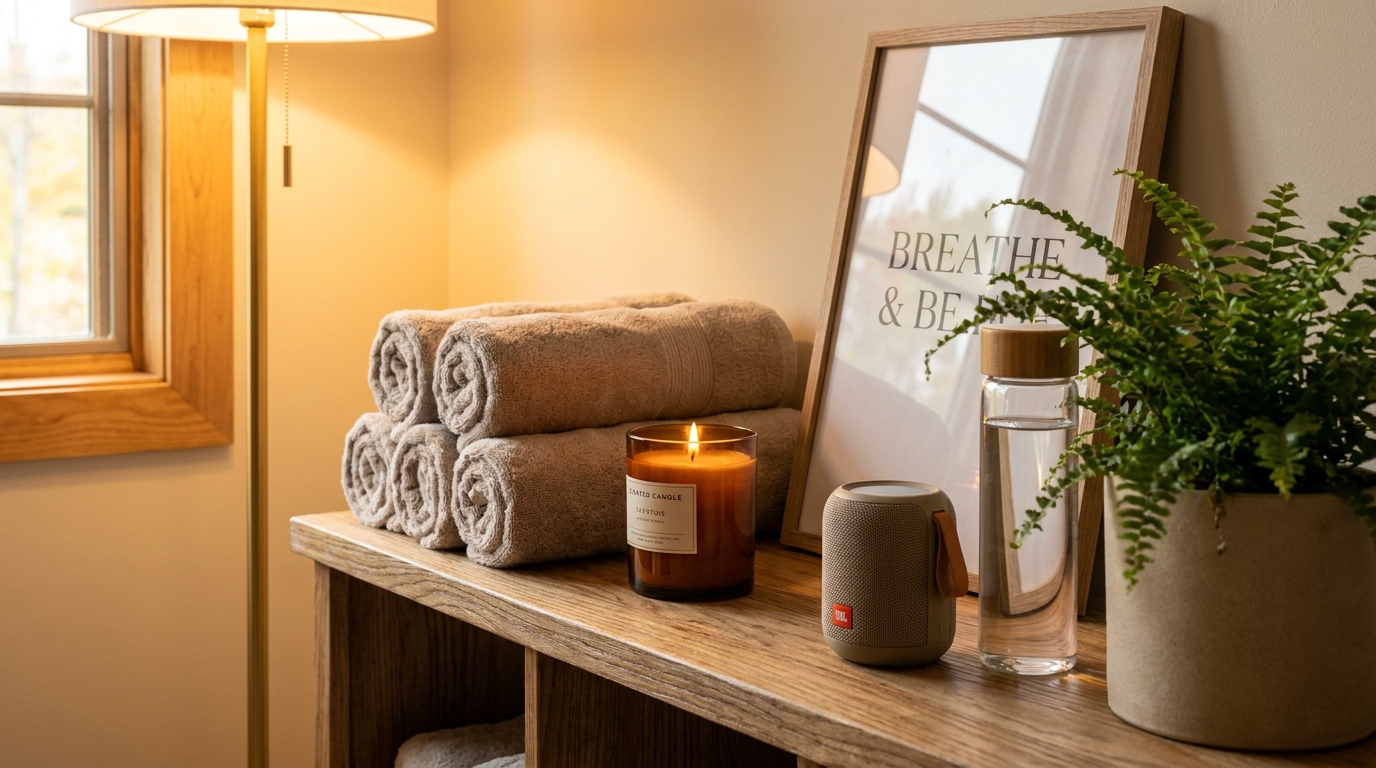
Lighting can completely change how a home gym feels. Bright overhead lighting can be useful for strength sessions or energetic workouts, but layered lighting often creates a more flexible and enjoyable room. A combination of ceiling lights, a floor lamp, and perhaps wall sconces or dimmable fixtures gives you options based on the time of day and the type of movement you are doing. Morning cardio may call for brightness, while evening stretching feels better with a softer glow.
Sound matters just as much. A small speaker can elevate the entire room, whether you love upbeat playlists, guided meditation, or quiet ambient music. Sound has the power to set a rhythm and shape the emotional texture of a workout. In homes with shared spaces, acoustic panels, rugs, or even upholstered elements can help soften echoes and make the room feel more peaceful.
Essential Equipment for a Balanced Home Gym
The most effective home gym equipment is the equipment you will actually use. It is easy to be drawn toward large machines or trendy tools, but a balanced and thoughtful setup often begins with versatile basics. For many households, the ideal collection includes pieces that support strength, mobility, cardio, and recovery without overwhelming the room. Start with your habits, your goals, and the amount of space you realistically want to dedicate.
Adjustable dumbbells are often one of the smartest investments because they offer a wide range of resistance without taking up much room. Resistance bands are affordable, easy to store, and surprisingly effective for both strength training and mobility work. A high quality exercise mat creates a comfortable base for stretching, yoga, pilates, and floor exercises. These foundational pieces can support an impressively wide variety of workouts.
If space allows, a bench adds flexibility for strength training and can double as a surface for step based exercises or seated work. Kettlebells can be wonderful for dynamic movement if you enjoy that style of training. A stability ball, foam roller, and yoga blocks can support recovery and body awareness. If cardio is important to you, consider whether a treadmill, rowing machine, stationary bike, or compact walking pad suits both your goals and your room dimensions.
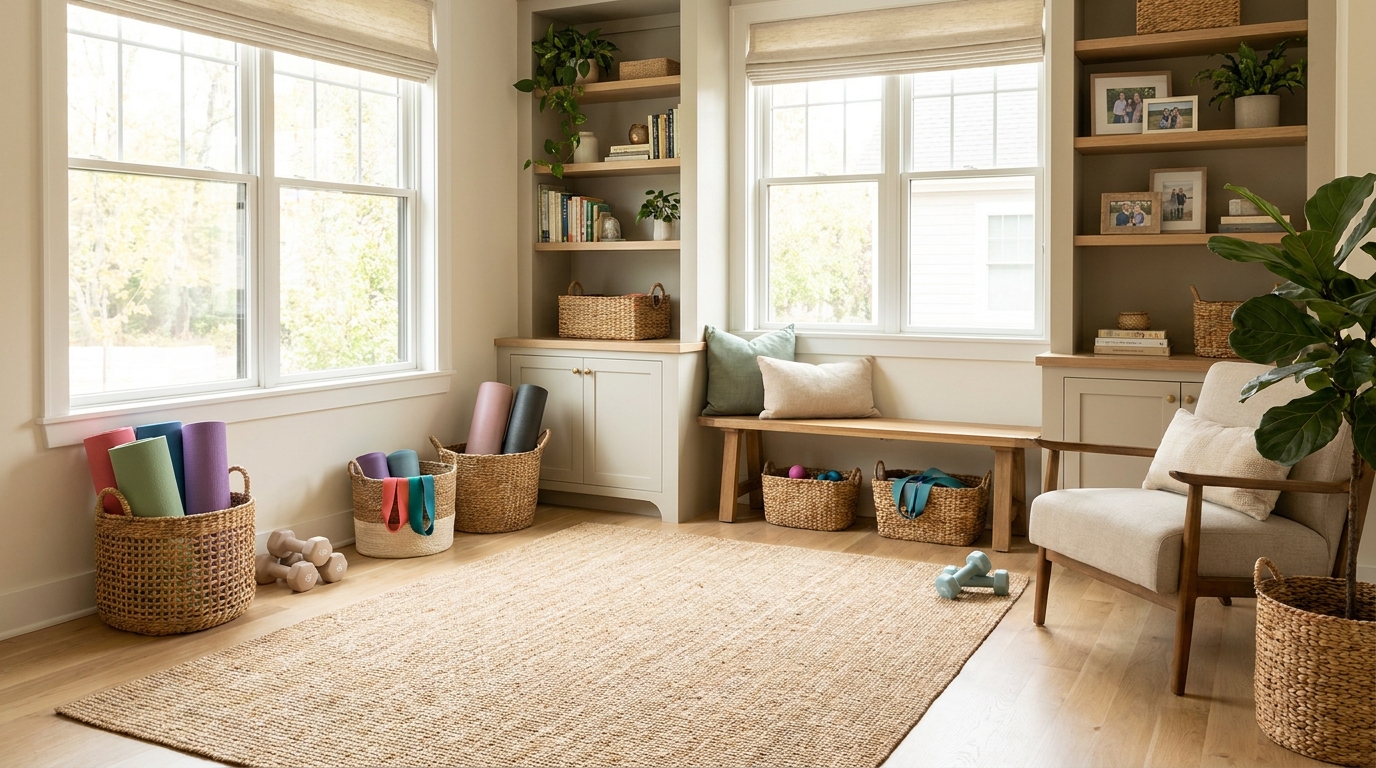
Do not overlook storage. Open shelves, baskets, cabinets, and wall hooks help maintain order and visual calm. When equipment has a place to live, the room feels easier to enter and easier to reset after use. That tidy feeling has a real psychological effect. A well organized gym reduces friction and creates a subtle sense of readiness that can make all the difference on a busy day.
Core Equipment by Wellness Priority
- For strength focused routines: adjustable dumbbells, bench, resistance bands, kettlebells, mirror, sturdy flooring.
- For yoga and mobility: quality mat, yoga blocks, bolster, straps, speaker, soft lighting, calming storage.
- For cardio and energy release: bike, treadmill, rower, jump rope, fan, water station, upbeat sound setup.
- For recovery and daily wellness: foam roller, massage gun, stretching mat, cushions, towel shelf, soothing atmosphere.
How to Make a Small Home Gym Feel Spacious and Useful
Small home gyms can be incredibly effective, and often they feel more intimate and easier to maintain than oversized rooms. The key is to use every element intentionally. Choose fewer, more versatile pieces instead of filling the space with equipment that only serves one purpose. Prioritize floor area and circulation so the room remains comfortable to move through and visually open.
Wall mounted storage is especially helpful in compact spaces. Hooks for bands, floating shelves for small accessories, and vertical racks for mats or weights keep the floor clear. Foldable equipment can also be useful if your gym shares space with a guest room, office, or family room. The less effort required to transition into workout mode, the more often the space will be used.
Mirrors, light colors, and uncluttered styling help a small room feel larger. Transparent or slender furniture can reduce visual heaviness. If possible, keep decorative choices simple but warm. A plant, one framed print, or a beautiful woven basket can add personality without crowding the space. The room should feel edited, not empty.
One of the best ways to support motivation in a small gym is to make the setup visible and appealing. If the mat is already laid out, the weights are neatly displayed, and the towel is within reach, the room gently encourages action. Visibility creates momentum. In a small space, thoughtful presentation becomes part of the wellness strategy.
Creating a Home Gym That Feels Welcoming for the Whole Household
A home gym can also become a place of connection. Even if each person uses it differently, the room can reflect a shared value around health, energy, and self care. If you live with a partner, children, or extended family, it helps to think about how the space can be inclusive without losing its sense of calm. A few smart choices can make the room more inviting to everyone.
Begin by considering flexibility. Storage that keeps equipment safely organized is important, especially in homes with children. Labeled baskets, closed cabinets, and secure racks help the space stay tidy and family friendly. Open floor space allows for stretching, dance workouts, or quiet movement breaks that do not depend on machines or advanced equipment. This makes the room approachable for different ages and comfort levels.
You might also think about adding simple elements that encourage participation. A soft mat for stretching, lighter weights, or a speaker for music can make the room feel less intimidating. If the gym is part of a family routine, it can help create positive associations around movement. Children who see wellness integrated into daily life often absorb the idea that taking care of the body is normal, not optional.
At the same time, a welcoming room does not have to feel chaotic. Boundaries matter. You can preserve a sense of peace by keeping the room organized, setting expected times for different uses, and maintaining an atmosphere that still feels restorative. A family friendly home gym works best when it balances accessibility with order.
Wellness Details That Turn a Workout Room Into a Ritual Space
Some of the most meaningful improvements in a home gym are not the biggest ones. They are the small details that make the room feel nurturing and complete. When exercise is paired with comfort and intentionality, it becomes easier to sustain. These details help transform movement from an obligation into a ritual.
Start with hydration. A water bottle station, a tray with a carafe, or even a small mini fridge if the room is larger can make the experience feel polished and cared for. Fresh towels, a nearby hamper, and a shelf for recovery tools also contribute to ease. These touches reduce interruption and make the room feel thoughtfully prepared.
Scent can subtly shape the mood. In some home gyms, a fresh eucalyptus spray, a naturally scented room mist, or simply clean air from an open window creates an uplifting atmosphere. If you use candles or diffusers, make sure they suit the type of workout and the ventilation of the room. A gentle sensory experience can reinforce the feeling that the room is a place of renewal.
Consider whether you would enjoy a corner for reflection or recovery. This might be as simple as a stool with a journal, a small cushion for meditation, or a shelf with wellness books. Not every session needs to be intense. A truly supportive home gym makes room for different kinds of care, from energizing workouts to quiet stretching and mental reset.
Building Motivation Through Routine and Visual Cues
Even the most beautiful home gym works best when it supports a realistic routine. Motivation is often less about willpower and more about environment, rhythm, and repetition. Your gym should make it easy to begin, especially on low energy days. This is where visual cues, simple habits, and a sense of ritual can be transformative.
Leave out the items you use most often. If your mat is rolled away behind boxes or your dumbbells are hidden in a closet, there is more friction between you and the workout. By contrast, a visible setup sends a quiet message that movement belongs in your day. This does not mean the room has to look busy. It simply means the essentials should feel accessible and ready.
Try anchoring your workout to an existing routine. You might move your body after your morning coffee, before your shower, or just after closing your laptop at the end of the workday. This kind of pairing helps habits feel more natural. Over time, the room itself begins to hold emotional memory. Walking into it can trigger a sense of readiness, calm, or release because your body recognizes the pattern.
It can also help to create different modes for the room. One playlist for strength days, another for recovery, one basket for yoga tools, another for cardio accessories. These tiny systems remove decision fatigue. They make the room feel responsive to your needs instead of demanding that you arrive with perfect energy every time.
Simple Ways to Stay Consistent
- Keep your most used equipment visible and easy to reach.
- Choose a regular time of day that works with your natural energy.
- Prepare the room in advance with a filled water bottle and clear floor space.
- Use music, lighting, or scent as cues that signal the start of your routine.
- Allow the room to support gentle movement on lower energy days, not only intense workouts.
Common Home Gym Mistakes to Avoid
One of the most common mistakes is buying too much equipment too quickly. A crowded room can feel stressful and may make workouts less enjoyable. Start with a few essentials and build over time as you learn what you truly use. This approach protects both your budget and the visual calm of the space.
Another mistake is ignoring atmosphere. Functional rooms matter, but if the lighting is harsh, the floor is uncomfortable, and the room feels like storage overflow, motivation can fade quickly. Design is not superficial in a wellness space. It shapes behavior. A room that feels pleasant and cared for is much easier to return to consistently.
Poor storage is another issue that can quietly undermine the experience. When equipment becomes scattered, the room starts to feel chaotic. That sense of disorder can add resistance before a workout even begins. A place for everything creates not only visual order but mental ease.
Finally, avoid designing the room around an idealized version of yourself instead of your real life. The most successful home gyms reflect actual routines, realistic energy levels, and the kinds of movement you genuinely enjoy. It is far better to have a modest setup you love than an elaborate one that rarely gets used.
How Your Home Gym Can Grow With You
The beauty of a home gym is that it can evolve. Your needs may change with the seasons, with your schedule, with family life, or with your fitness goals. What begins as a small strength corner may eventually include a recovery zone, a bike, or a more refined storage system. Because the space is yours, it can adapt in a way that supports your life as it unfolds.
This long term flexibility is part of what makes a home gym feel emotionally grounding. It is not a fixed performance space. It is a living environment that responds to you. Some weeks it may support energetic training. Other weeks it may offer a gentle place to stretch, breathe, and reconnect after stress. That adaptability is a powerful form of wellness in itself.
As you grow more comfortable in the space, you may also notice a shift in identity. The room becomes a visual reminder that you are someone who makes space for your health. That message can be deeply affirming. It reinforces the idea that wellbeing is not a luxury saved for special occasions. It is part of the home, and part of everyday life.
Final Thoughts on Designing a Home Gym With Heart
Creating your ideal home gym is not only about arranging equipment in a spare room. It is about designing a space that supports your body, steadies your mind, and makes healthy routines feel more natural. The most successful home gyms are the ones that feel deeply personal. They reflect the way you want to live, the way you want to feel, and the kind of care you want to offer yourself.
If you approach the process with both function and feeling in mind, even a simple setup can become something special. A mat near a sunny window, a tidy shelf of weights, a calm color palette, and a speaker with your favorite playlist may be all you need to change the rhythm of your day. What matters most is that the room welcomes you in and makes movement feel possible.
In the end, a home gym can become one of the most supportive spaces in the house. It can hold your effort, your release, your recovery, and your small daily promises to yourself. It can help create a home culture where wellness is visible, valued, and shared. And that is what makes it so meaningful. It is not just a place to exercise. It is a place to come back to yourself.



No Comment! Be the first one.