



Rental yield has always been one of the clearest measures of property performance, but the way investors improve it is changing. In Canada and across North America, the easiest gains no longer come from simply holding an asset and waiting for broad rent inflation to do the work. Supply has expanded, tenant expectations have risen, and financing costs remain a meaningful variable in overall returns. In this environment, investors who treat rental yield as a controllable business outcome rather than a passive market result are the ones most likely to outperform.
Table Of Content
- Understanding What Rental Yield Really Measures
- Why the Market Has Shifted and Why Strategy Matters More Now
- Strategy One: Improve Pricing Precision Instead of Chasing the Highest Asking Rent
- Using Renewal Strategy to Protect Yield
- Strategy Two: Reduce Vacancy and Turnover Loss with Better Leasing Execution
- Tenant Retention Is a Revenue Strategy
- Strategy Three: Make Targeted Property Improvements That Raise Rentability
- Which Improvements Usually Perform Best
- Strategy Four: Control Operating Costs Without Damaging Tenant Experience
- Standardization Improves Efficiency
- Strategy Five: Strengthen Tenant Screening and Lease Administration
- Strategy Six: Use Local Data, Not National Headlines, to Make Decisions
- Strategy Seven: Protect Yield Through Smart Financing and Rate Planning
- Reserve Planning Matters
- Traditional Practices Still Work When They Are Executed Well
- A Practical Framework for Investors to Apply
- Common Mistakes That Reduce Rental Yield
- Final Thoughts: Rental Yield Is a Management Outcome
That shift matters because many owners still think about yield in overly simple terms. They focus on the highest asking rent they can advertise, or they assume a renovation is worthwhile if it looks attractive, or they treat vacancy as an unavoidable inconvenience. In practice, true yield improvement comes from disciplined execution across a few measurable levers. Effective rent, occupancy stability, operating efficiency, and financing structure do far more for long term profitability than headline rent alone.
The current market backdrop makes this especially relevant. CMHC reported that Canada’s purpose-built rental supply grew 4.1% in 2024, the fastest increase in more than 30 years, and that expansion lifted the national vacancy rate from 1.5% in 2023 to 2.2% in 2024. Even with that increase, RBC Economics noted that 2.2% remained below the roughly 3% threshold often associated with a balanced market, so shortages did not disappear. What changed is that investors in many markets could no longer assume the same pricing power they had during the tightest phase of the rental cycle.
For investors, the takeaway is clear. Yield optimization now depends less on market momentum and more on management quality. The strongest strategies are not necessarily complicated, but they do require precision, local data, compliance awareness, and a willingness to make decisions based on return on capital rather than habit. Whether you own a single condo, a duplex, or a multi unit portfolio, the fundamentals are the same: raise income intelligently, limit avoidable losses, and spend only where returns are demonstrable.
Rental yield is not just a rent question. It is the result of pricing discipline, tenant retention, cost control, and capital allocation working together.
Understanding What Rental Yield Really Measures
Before discussing strategy, it is worth clarifying what rental yield should mean in an investment context. Gross yield is a useful headline figure because it compares annual rent to acquisition price, but it does not reflect what investors actually keep. Net rental yield is more informative because it accounts for vacancy, maintenance, property taxes, insurance, management costs, and other recurring expenses. Once financing is introduced, many investors also need to consider cash on cash return, because an asset can show a reasonable gross yield while still producing weak real world cash flow.
This distinction is where many mistakes begin. An owner might celebrate a rent increase while overlooking the fact that the increase came at the expense of two vacant months, leasing commissions, touch up repairs, and a lower quality replacement tenant. Another owner might over improve a unit with finishes that look premium but do not command enough additional rent to justify the capital spent. In both cases, the investor is focused on optics rather than return.
The better framework is to think in terms of three yield levers. First, increase effective rent, which means the actual revenue collected after concessions, incentives, and bad debt. Second, reduce vacancy and turnover loss, because every empty day has a direct effect on net operating income. Third, control operating costs and capital expenditures, especially in a market where rent growth may be moderating. These three levers create a practical roadmap for improving performance without relying on speculation.
Why the Market Has Shifted and Why Strategy Matters More Now
Canada’s rental market remains undersupplied in many areas, but it is no longer moving in only one direction. New completions have added purpose built supply, condo rentals have become more competitive in some urban centres, and demand growth has cooled from its most extreme pace. CMHC’s reporting in 2025 also noted that condo apartment rental vacancies rose in some markets as owners became more flexible on rent to avoid prolonged vacancies. That is a meaningful signal because it shows how quickly leverage can shift from landlord confidence to tenant selectivity.
Investors should read that shift carefully. A more balanced market does not mean poor opportunity. It means that opportunity is now distributed unevenly across asset types, submarkets, and management styles. A generic unit with average presentation and lazy pricing may struggle, while a well positioned property with targeted upgrades and smart tenant retention can still outperform. This is why local execution matters more than broad market narratives.
Another important market signal is the widening gap between renewal rent and turnover rent. CMHC reported that around 40% of the increase in average two bedroom rents in Canada came from turnover. That tells investors two things at once. First, repricing at turnover remains powerful. Second, turnover itself is expensive and should not be treated casually, particularly when legal rent increase limits apply during an ongoing tenancy. The real skill lies in understanding when retention creates a better net outcome and when repositioning a unit for a new lease produces superior yield.

Strategy One: Improve Pricing Precision Instead of Chasing the Highest Asking Rent
The first and often most immediate yield opportunity is better rent pricing. Many landlords still set rents based on intuition, outdated comparables, or the assumption that if the market was strong last year it will remain strong this quarter. That is risky in a market where local conditions can shift quickly. Statistics Canada and CMHC now provide Quarterly Rent Statistics, which give investors a more current benchmark for asking rents across major metros. Using current data is not just about maximizing price. It is about finding the level where a unit leases efficiently while still capturing fair market value.
Precision pricing starts with segmentation. A one bedroom with parking, air conditioning, in suite laundry, and proximity to transit should not be grouped with every other one bedroom in the postal code. Nor should a renovated unit be priced using the same assumptions as an older unrenovated product. Investors who understand their exact product tier can identify whether they are underpricing, overpricing, or missing an opportunity to reposition the unit into a higher value segment.
It is also important to separate asking rent from effective rent. If a landlord lists at an ambitious number but then offers free parking, a half month concession, or accepts a lower quality tenant to fill the space quickly, the effective result may be worse than a slightly lower but cleaner pricing strategy. Rental yield improves when the total leasing outcome is stronger, not simply when the listing appears aggressive. In softer periods, speed and stability often matter as much as headline rent.
Using Renewal Strategy to Protect Yield
Renewals are one of the least appreciated yield tools. In rent regulated environments, investors cannot assume they can fully reset rent every year, and CMHC guidance is clear that landlords must follow provincial or territorial rules governing increases. That means a thoughtful renewal approach is essential. A stable tenant who pays on time, treats the property well, and renews with minimal friction can be worth more than the theoretical upside of a turnover event.
This does not mean every tenant should be kept at any cost. It means investors should compare the economics. If replacing a tenant creates vacancy loss, repair costs, advertising expense, and leasing risk, the net benefit of a higher new lease may be smaller than expected. In many cases, offering a modest renewal incentive or completing a small unit refresh in exchange for a new term can create a stronger financial outcome than pushing too hard and triggering unnecessary turnover.
On the other hand, where local regulations and market conditions support repositioning, a strategic turnover can be valuable. If the existing rent is materially below market and the unit can be upgraded at a justifiable cost, the new lease may significantly improve income. The key is to run the numbers honestly. Yield focused investors model both scenarios instead of acting on instinct.
Strategy Two: Reduce Vacancy and Turnover Loss with Better Leasing Execution
Vacancy is one of the fastest ways to erode rental yield. A unit that sits empty for even a few weeks can wipe out a meaningful portion of the annual benefit from a rent increase. Yet many owners treat vacancy as a passive waiting period rather than a process they can manage. Better leasing execution starts well before a unit becomes available. It begins with lease expiry planning, tenant communication, unit condition, and marketing readiness.
Professional operators track renewal windows months in advance. They speak with tenants early, assess the likelihood of renewal, and prepare a leasing plan before notice is given. This allows photos, cleaning, maintenance, and pricing decisions to happen quickly. In competitive markets, delays between move out and listing can be as costly as overpricing. A prepared landlord reduces downtime and creates a smoother transition from one tenant to the next.
Marketing quality also matters more than many small investors assume. Prospective tenants compare listings rapidly, often making decisions based on first impressions. Well lit photos, accurate floor plans, transparent details, and prompt follow up improve conversion. If your property is professionally managed and well maintained, the listing should communicate that. In a tenant selective market, presentation becomes part of yield strategy because it affects both lease up speed and the quality of applicants you attract.
Tenant Retention Is a Revenue Strategy
There is a tendency to discuss tenant satisfaction as if it were mostly a service issue. It is not. It is a financial issue. Lower turnover means fewer vacant days, fewer cleaning and repair costs, less leasing friction, and often lower bad debt risk. A building or portfolio that retains good tenants efficiently can produce meaningfully better net operating income than one that constantly cycles occupants, even when average asking rents look similar on paper.
Retention is usually built through operational consistency rather than expensive perks. Fast maintenance response, clear communication, clean common areas, fair lease administration, and respect for tenant concerns all contribute to longer stays. These steps are not glamorous, but they are high return. Investors often spend heavily on marketing to replace tenants they could have retained with better management discipline.
Incentives can also play a role when used selectively. A minor appliance upgrade, repainting, storage improvement, or a modest renewal offer may be far cheaper than full turnover costs. The goal is not to give away value. It is to preserve net value by keeping strong tenants in place when the numbers support it.
Strategy Three: Make Targeted Property Improvements That Raise Rentability
Renovation can be one of the most reliable ways to improve rental yield, but only when it is targeted and costed with discipline. The best upgrades are not always the most expensive or dramatic. They are the ones that either support a measurable rent premium, reduce vacancy, improve tenant retention, or lower future maintenance burden. Investors should think of renovations as yield tools, not design exercises.
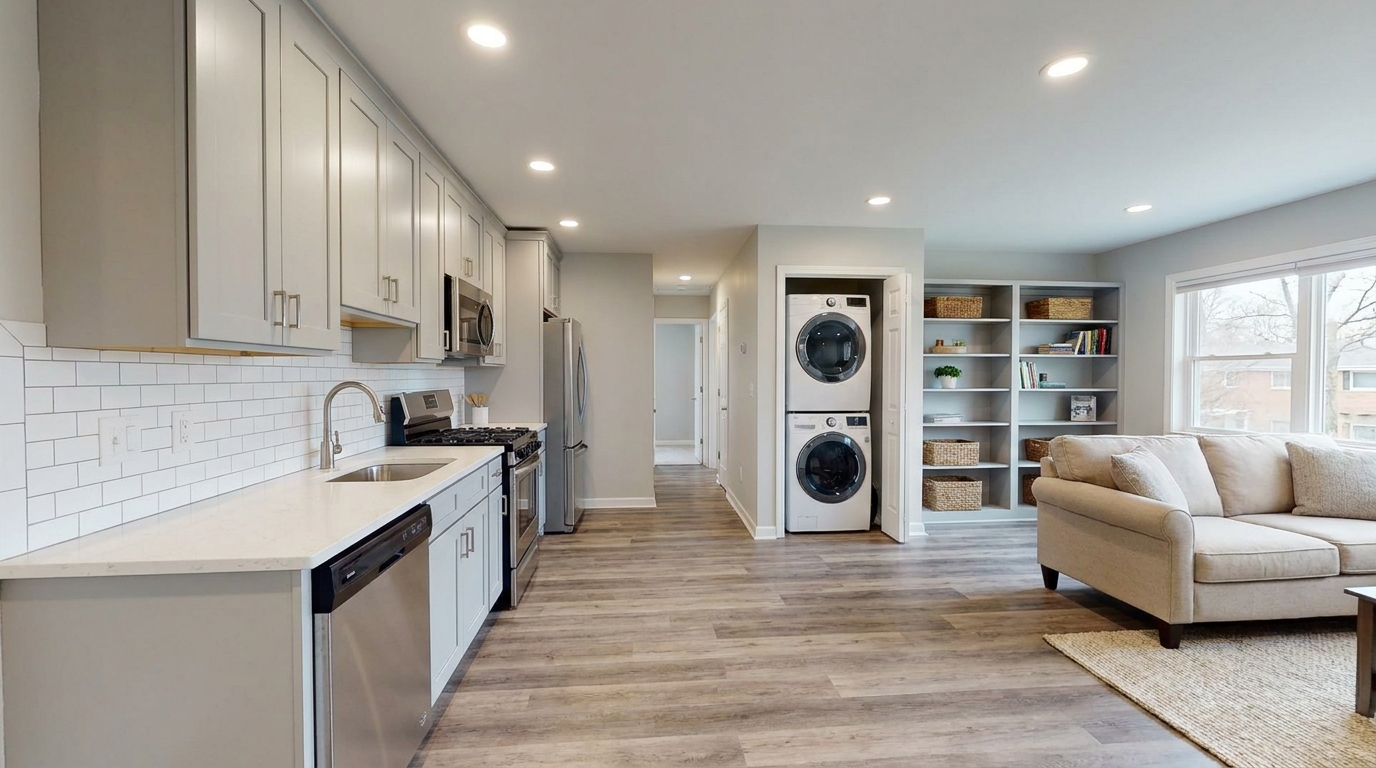
In many markets, tenants respond well to practical improvements that enhance daily living. In unit laundry, durable flooring, refreshed kitchens and bathrooms, improved lighting, additional storage, climate control, and energy efficient systems often deliver better leasing outcomes. These upgrades help a unit compete not only on appearance but also on convenience and functionality. In a market where condo rentals and purpose built rentals increasingly compete side by side, practical differentiation can matter more than luxury finishes.
Discipline is critical, particularly in a softer leasing environment. Not every renovation pays back through rent alone. Some improvements support faster lease up or stronger retention rather than immediate rent jumps. Others may be better justified through reduced repairs over time. The investor’s job is to estimate the likely rent delta, vacancy impact, and maintenance benefit, then compare those gains to the all in capital cost. If the numbers do not work, the project is not value add, no matter how attractive the result looks.
Which Improvements Usually Perform Best
The strongest upgrades are typically those with broad tenant appeal and controlled installation costs. Durable hard surface flooring often performs well because it improves appearance, reduces future replacement frequency, and appeals to a wide range of tenants. Updated lighting can modernize a unit quickly and improve perceived value without major structural work. Kitchen and bathroom refreshes can be effective when they focus on clean, durable, neutral finishes rather than highly customized premium design.
Storage is another underused yield driver. In compact urban units, added shelving, closet systems, or entry organization can meaningfully improve usability. The same applies to laundry. Where feasible, in unit laundry can support both stronger rent and stronger retention because tenants place a high value on convenience. These practical upgrades often outperform aesthetic indulgences that are expensive to install and difficult to monetize.
Energy efficiency should also be part of the conversation. Better windows, efficient appliances, improved insulation, or upgraded HVAC systems may not always generate immediate rent premiums, but they can lower operating costs and improve comfort. In a net yield framework, expense reduction matters just as much as income growth. Investors who ignore this often underestimate how much value can be created through lower utility and maintenance burdens.
Strategy Four: Control Operating Costs Without Damaging Tenant Experience
Many investors are far more focused on rent than expenses, even though every dollar saved on recurring operating costs has a direct effect on net operating income. Cost control should never mean neglect. Deferred maintenance usually creates larger expenses later and can damage retention. The goal is to run the property efficiently, standardize where possible, and prevent avoidable cost leakage.
Start with expense tracking at the property level. Too many owners know their gross monthly rent but cannot break down their true maintenance cost, turnover cost, utilities, cleaning, management, or insurance by unit or by year. Without that visibility, it is difficult to identify where margins are being lost. A disciplined investor reviews expense categories regularly and benchmarks them against prior performance and comparable assets.
Preventive maintenance is often one of the highest return cost control practices. Addressing minor plumbing issues, servicing HVAC systems, sealing problem areas, and replacing worn components before failure can prevent expensive emergency repairs. It also improves tenant satisfaction because the property feels cared for rather than reactive. Emergency maintenance is costly both financially and reputationally.
Standardization Improves Efficiency
If you own multiple units or buildings, standardizing finishes, appliances, paint colours, and fixtures can improve margins over time. It reduces purchasing complexity, simplifies repairs, and allows contractors or in house teams to work more quickly. Standardization also helps during turnover, when speed is valuable. The objective is not to make every unit identical in a way that suppresses appeal. It is to reduce unnecessary variation that adds cost without adding rent.
Vendor management also deserves attention. Insurance reviews, utility contracts where applicable, waste services, landscaping, snow removal, and maintenance vendors should be assessed periodically for pricing and service quality. A premium property should still be run with commercial discipline. Small inefficiencies repeated across months and units can meaningfully dilute yield.
Technology can support this process. Digital rent collection, maintenance tracking, document storage, and automated reminders reduce administrative friction and help owners respond faster. Even small landlords benefit from systems that improve consistency. In a more competitive market, operational professionalism is part of the product tenants are choosing.
Strategy Five: Strengthen Tenant Screening and Lease Administration
Few issues damage rental yield as quickly as bad debt, property damage, or prolonged legal disputes. Strong tenant screening is therefore not simply a risk management exercise. It is a return strategy. The best tenant is not always the one willing to pay the highest rent on day one. It is the one most likely to pay consistently, stay longer, and respect the property.
Screening should be consistent, compliant, and documented. Income verification, credit checks where legally appropriate, landlord references, employment review, and identity confirmation help reduce avoidable risk. Investors should be careful not to compromise standards out of impatience during slower leasing periods. A vacant unit is frustrating, but a problematic tenancy can be far more expensive than a short delay in leasing.
Lease administration is equally important. Clear lease terms, proper notice procedures, accurate record keeping, and timely communication help avoid disputes and reduce operational ambiguity. In jurisdictions with rent control or specific notice requirements, compliance discipline is essential. CMHC’s guidance makes it clear that rent increases must follow provincial or territorial rules. Investors who misunderstand or ignore these rules can create legal and financial setbacks that directly harm yield.

Strategy Six: Use Local Data, Not National Headlines, to Make Decisions
National rental reports are useful for context, but rental yield is always local. In 2025, CMHC noted that average rent paid by all tenants for two bedroom units rose 5.1% over the past year, yet turnover rents declined in some large markets such as Toronto. That divergence matters. An investor who relies only on the national average might overestimate pricing power in one city while missing stronger opportunities in another.
Data should be reviewed at several levels. Metro trends help frame broad direction, but neighbourhood level comparables often matter more. Building age, transit access, school catchment, walkability, parking, and unit finish level all affect pricing. Two assets in the same city can perform very differently because they serve different tenant profiles. Yield optimization improves when investors understand who their target tenant is and how that tenant compares options.
Quarterly rent data are especially useful because annual surveys can lag changing conditions. If completions have recently added competing supply, or if seasonal demand is softer than usual, waiting for annual reporting may leave a landlord overpriced. Conversely, some owners underprice because they rely on stale assumptions from a weaker quarter. Better information leads to better leasing decisions, and better leasing decisions compound into stronger annual returns.
Strategy Seven: Protect Yield Through Smart Financing and Rate Planning
Rental yield discussions often stop at operations, but financing can determine whether a decent property becomes a strong investment or a disappointing one. The Bank of Canada maintained its policy rate at 2.25% on June 10, 2026, yet borrowing costs, mortgage renewal terms, and lender stress tests still affect after financing returns in real terms. A property with healthy net operating income can still deliver weak cash flow if leverage is too expensive or poorly structured.
Investors should model multiple debt scenarios rather than rely on a single optimistic assumption. What happens if the mortgage renews at a higher rate than expected. What happens if rent growth slows while insurance and taxes rise. What happens if a vacancy period coincides with a refinancing event. These are not theoretical concerns. They are common stress points that separate resilient portfolios from fragile ones.
Cash on cash return is often the more useful metric for leveraged investors because it reflects actual capital efficiency after debt service. In some cases, a lower leverage structure may produce a more durable yield profile than aggressively financing for acquisition scale. The right answer depends on investor goals, but the principle is consistent: financing strategy is part of rental yield strategy, not a separate conversation.
Reserve Planning Matters
One of the simplest ways to protect yield is to maintain realistic reserves. Capital expenditures, appliance replacement, vacancy touch ups, deductible events, and unexpected repairs are all part of owning rental property. Investors who distribute every available dollar and fail to reserve for predictable expenses create avoidable pressure later. When a major cost arrives, they may be forced into high interest borrowing, deferred maintenance, or rushed leasing decisions.
Reserves support better judgement. They allow an owner to complete a strategic upgrade between tenants, hold firm on screening standards, or address maintenance before it becomes a crisis. In that sense, reserve planning is not defensive only. It supports offensive yield management because it preserves flexibility.
Traditional Practices Still Work When They Are Executed Well
There is a tendency in real estate to search for hidden hacks or highly creative yield solutions. In reality, many of the best results still come from traditional practices performed with consistency. Clean units lease faster. Responsive maintenance keeps tenants longer. Accurate pricing reduces vacancy. Professional screening lowers bad debt. Measured renovations outperform impulsive ones. None of these ideas are new, but many owners fail to apply them with enough discipline to see their full effect.
What has changed is the standard required. In a market moving from severe scarcity toward more balance, average execution is easier to notice and easier to punish. Tenants compare options more carefully, and competing landlords may become more flexible on rents to avoid empty units. CMHC’s reporting on condo landlords accepting more flexibility to reduce vacancy reinforces this point. If your property does not stand out on value, stability, or professionalism, price alone may become your only lever, and that is rarely the strongest one.
The better approach is to build a property level operating plan. Set a target rent range, vacancy allowance, turnover budget, retention goal, maintenance standard, and capex threshold. Review results quarterly. Adjust based on data. When rental yield is managed systematically, performance becomes less dependent on luck or market exuberance.
A Practical Framework for Investors to Apply
For both new and experienced investors, the most useful way to improve rental yield is to create a repeatable decision process. Start by measuring your current position honestly. Calculate gross rent, vacancy loss, repairs, taxes, insurance, management, and debt service. Determine your net operating income and your cash on cash return. Once you know where the property stands, identify the strongest lever for improvement rather than trying to change everything at once.
If the unit is consistently vacant, pricing and leasing execution may be the priority. If tenants leave frequently, retention and service quality deserve attention. If expenses keep rising, standardization and preventive maintenance may have the best payoff. If the property looks tired relative to local competition, a targeted renovation could create a stronger rent tier. And if cash flow looks weak despite solid occupancy, financing structure may be the issue rather than operations.
- Audit current performance by separating gross rent from true net income and identifying where losses occur.
- Benchmark the unit accurately using current local rent data, comparable listings, and product specific features.
- Set a retention strategy based on lease timing, tenant quality, and the economics of turnover versus renewal.
- Prioritize high return upgrades that support rentability, lower maintenance, or improve occupancy outcomes.
- Track expenses in detail so recurring inefficiencies become visible and manageable.
- Model financing scenarios to understand the effect of renewals, rate changes, and capital needs on actual returns.
This framework is effective because it keeps attention on controllable variables. Investors cannot dictate market cycles, but they can price intelligently, screen carefully, maintain professionally, and allocate capital with discipline. Over time, those habits create more consistent yield than relying on appreciation or generalized market inflation.
Common Mistakes That Reduce Rental Yield
Several recurring errors undermine otherwise promising rental properties. The first is confusing gross rent growth with stronger returns. If a rent increase is achieved through excessive turnover costs or prolonged vacancy, the result may be negative. The second is assuming every renovation is profitable. Without a clear link to rent premium, occupancy improvement, or lower future expense, renovation can become a vanity project rather than a value add investment.
Another common mistake is ignoring legal and regulatory constraints. In Canada, rent increase rules vary by province and territory, and some markets place meaningful limits on annual increases for existing tenants. Investors who build projections as if rents can be reset freely every year may overestimate future yield. Smart operators plan within the rules rather than around them.
The final major mistake is treating financing as an afterthought. In a period where borrowing costs can materially shape cash flow, the quality of the debt structure matters almost as much as the quality of the asset. Investors should underwrite conservatively, maintain reserves, and avoid assuming that future refinancing will always be favourable.
Final Thoughts: Rental Yield Is a Management Outcome
The most important idea for investors to keep in view is that rental yield is not a static feature of a property. It is an outcome produced by dozens of operating decisions made over time. In a tighter market, weak management can be concealed by rising rents and broad demand. In a more balanced market, that weakness becomes visible very quickly. The owners who perform best are usually those who manage each property like a business unit, with careful attention to pricing, retention, expenses, capital planning, and financing.
Today’s environment supports that approach. Supply growth has eased some rental pressure, vacancy has moved off historic lows, and local market differences are increasingly important. At the same time, demand remains structurally strong in many Canadian and North American markets, particularly for well located, professionally managed, and reasonably positioned rental housing. That means opportunity remains very real, but it belongs to disciplined operators more than passive holders.
For investors looking to maximize rental yield, the path forward is practical. Price with precision. Retain good tenants. Upgrade selectively. Control costs. Stay compliant. Underwrite financing carefully. These are not fashionable ideas, but they are durable ones. And in real estate, durable execution is usually what produces the best returns.



No Comment! Be the first one.