



Waste can feel like an unavoidable part of modern life. Packaging piles up after a grocery trip, leftovers spoil in the fridge, broken items sit in drawers because they seem too minor to fix and too useful to throw away, and recycling bins often become a catchall for things we hope can be processed somehow. For many people, that daily experience creates a quiet sense that waste is simply built into how we live. The idea of a circular economy offers a different perspective, one that is both more hopeful and more practical.
Table Of Content
- What a Circular Economy Actually Means
- Why Waste Reduction Matters More Than Ever
- Canada’s Waste Hierarchy and Why It Is So Useful
- The Everyday Circular Loop at Home
- Food Waste Is One of the Best Places to Start
- Simple Food Waste Habits That Work
- Plastic Waste and the Value of Using Less
- Repair, Reuse, and the Quiet Power of Keeping Things Longer
- Sharing, Borrowing, and Community Circularity
- How to Recycle Better Without Relying on Recycling Alone
- Common Misconceptions That Make Circular Living Seem Harder Than It Is
- A Practical Beginner Plan for the Next 30 Days
- How Circular Economies Connect Personal Action to Bigger Change
- Final Thoughts
At its core, a circular economy is about keeping products and materials in use for as long as possible. Instead of following a straight line of buy, use, throw away, it encourages a loop of reduce, reuse, repair, refurbish, remanufacture, recycle, and share. That may sound like a large policy concept, but in daily life it often comes down to small, approachable decisions. Buying fewer things, choosing durable products, fixing what still has value, composting food scraps, donating usable items, and recycling correctly are all part of the same logic.
This matters because the scale of waste is significant. OECD reporting shows that municipal solid waste in OECD countries exceeded 770 million tonnes in 2023, or about 552 kilograms per person. The World Bank projects global waste generation could reach 3.76 billion tonnes annually by 2050 without urgent action. UNEP and the International Resource Panel have also reported that global material extraction has tripled since 1970. Those numbers make it clear that waste is not just a clutter problem or a housekeeping issue. It is deeply connected to how resources are extracted, processed, consumed, and discarded.
In Canada, the policy direction is also clear. Federal guidance places waste prevention first in the hierarchy, above reuse, recycling, energy recovery, and landfill disposal. That is an important shift in mindset because many people still assume that sustainability begins and ends with recycling. In reality, the most effective action is often preventing waste from being created in the first place. Circular economy thinking helps make that principle feel less abstract and more usable in everyday life.
This guide is designed for beginners, especially anyone who wants to reduce waste without overhauling their entire lifestyle. You do not need to pursue perfection, spend heavily on eco products, or follow a strict identity label to participate. A circular approach is less about being ideal and more about being intentional. The goal is to make sustainability feel practical, elegant, and possible within the real rhythms of home, work, and family life.
What a Circular Economy Actually Means
The easiest way to understand a circular economy is to compare it with the system most of us are used to. In a traditional linear economy, resources are extracted, turned into products, sold, used briefly, and then disposed of. That sequence depends on a constant flow of new materials and produces a constant stream of waste. It also assumes that discard is normal, even when the product still contains useful materials, repairable components, or remaining value.
A circular economy tries to break that pattern. Instead of asking how we can dispose of things more responsibly at the end, it asks how we can design and live in ways that avoid waste from the beginning. That includes making products more durable, easier to repair, easier to refill, and easier to recycle when they finally reach the end of their useful life. It also includes systems like sharing, resale, donation, composting, and producer responsibility, all of which help keep materials circulating rather than buried in landfills.
For individuals, this means that circular living is not a single act. It is a set of habits that gradually reshape the flow of materials through a household. You may buy less often, keep clothes longer, repair a lamp instead of replacing it, borrow a tool you only need once, freeze leftovers before they spoil, or check local recycling rules instead of tossing doubtful items into the bin. None of these actions seem dramatic on their own, but together they reduce demand for new materials and lower the volume of waste sent out of the home.
One of the most useful misconceptions to clear up is the belief that circular economy simply means recycling everything. Recycling is important, but it sits later in the hierarchy. If a household can avoid buying an unnecessary item, choose a refill option, repair a cracked chair, or donate a working appliance, those actions often preserve more value than recycling the materials after disposal. In other words, circular economy is broader than recycling and often more effective.
A simple way to remember the idea: recycling is helpful, but a circular economy begins earlier, with buying thoughtfully, using things fully, and extending the life of what already exists.
Why Waste Reduction Matters More Than Ever
It is easy to think of waste as an issue that begins when a garbage bag leaves the house. In reality, waste is connected to a much larger chain of environmental and economic impacts. When products are used briefly and discarded quickly, more raw materials must be extracted, more energy is used in manufacturing and transport, and more pressure is placed on landfills and waste systems. That creates pollution at multiple stages, not just at the point of disposal.
The global rise in waste reflects this broader pattern of consumption. As material extraction has expanded over the last several decades, the volume of products entering markets has increased as well. Many are packaged for convenience, built for short life cycles, or designed in ways that make repair difficult. That combination encourages replacement over maintenance. Circular economy thinking offers a practical response by slowing the flow of materials and preserving their usefulness for longer.
There is also a climate dimension that often gets overlooked. In Canada, the waste sector accounts for about 3 percent of total greenhouse gas emissions, and landfills are a major source of methane. Methane is a potent greenhouse gas, which means that reducing waste, especially organic waste, can support climate goals alongside cleaner resource use. When households prevent food waste or compost scraps properly, they are not only reducing trash volume. They are also helping interrupt a source of harmful emissions.
For many readers, the strongest motivation may be financial rather than environmental, and that is entirely valid. Waste often represents money spent on items that were not fully used. Food thrown away is groceries paid for and never eaten. Cheap products that break quickly can cost more over time than durable ones. Duplicate purchases often happen because storage is disorganized or sharing options were overlooked. Circular habits are not only about reducing environmental strain. They can also improve household efficiency, reduce clutter, and save money in quiet but meaningful ways.
Canada’s Waste Hierarchy and Why It Is So Useful
Canada’s waste hierarchy is one of the clearest ways to understand practical circular thinking. It places prevention and reduction at the top, followed by reuse, then recycling, energy recovery, and finally landfill disposal. This ranking matters because it shows that not all waste actions have equal value. Preventing waste from being created has a bigger impact than trying to manage that waste after it already exists.
For a beginner, this hierarchy removes a lot of confusion. If you are unsure what to do, start by asking the earliest question, not the latest one. Do I need this item at all. If yes, can I borrow it, buy it secondhand, or choose a durable version. If I already own it, can I repair it or keep using it in another way. Only after those options are exhausted does recycling become the next step. This sequence is calming because it simplifies decision making.
The hierarchy also corrects a common cultural habit of celebrating recycling while ignoring overconsumption. Recycling can recover some materials, but it still requires energy, collection systems, sorting, and processing. Not every material is accepted everywhere, and contamination can limit what gets recovered. By contrast, avoiding unnecessary purchases or extending product life often has a more direct impact. That is why circular economy education is so helpful. It turns attention back to the choices that happen before the bin.
Another benefit of this framework is that it works across different areas of life. You can apply it to clothing, kitchen routines, furniture, electronics, packaging, and renovation materials. The specifics vary, but the underlying question remains the same. How can I keep this item or material useful for as long as possible before it becomes waste. Once that becomes a habit, many waste decisions become easier and less overwhelming.
The Everyday Circular Loop at Home
One reason circular economy resonates with households is that it can be understood as a simple loop. You begin by buying less and choosing more carefully. You then use what you have fully, maintain it, repair it when possible, and share or pass it on when you no longer need it. Organic materials can be composted, and remaining recyclable materials can be sorted according to local rules. Each step helps reduce the amount of material that needs to be replaced by something newly extracted and manufactured.
This loop is practical because it does not depend on one perfect action. It depends on a series of moderate ones. If you forget reusable bags one day, you can still reduce food waste that week. If a repair is not possible, you may still donate the item for parts or recycle components correctly. Circular living is flexible. Its strength comes from repetition, not purity.
For many people, the biggest shift is noticing that waste reduction starts long before disposal. The store shelf, the pantry, the closet, the utility drawer, and the garage are all part of the waste system. A household that buys intentionally, stores items well, and creates clear routines for maintenance and donation will usually produce less waste naturally. This is why circular economy can feel surprisingly manageable once it is translated into home systems.
It can also help to think of circular habits as a way of honoring value. Materials, labor, time, energy, and money all go into the things we use every day. Extending their life is not about guilt. It is about respect for what has already been made and a desire to get the full benefit from it. That perspective feels less restrictive and more grounded.
Food Waste Is One of the Best Places to Start
If you want an entry point that is highly practical, food waste is one of the most effective areas to focus on. The Government of Canada has said that about 31 percent of Canada’s food supply is wasted annually, with an estimated value of $49.5 billion. That is a remarkable amount of lost food and lost money, and much of it begins in ordinary household routines rather than dramatic mistakes. Food is purchased with good intentions, then forgotten, poorly stored, overprepared, or misunderstood after a date label.
Food waste is especially important in circular economy terms because organic matter can either become a landfill problem or a useful input. When food ends up in landfill, it contributes to methane emissions. When edible food is planned, stored, and consumed properly, it saves money and reduces waste at the source. When unavoidable scraps are composted, they can return nutrients to the soil rather than becoming part of the garbage stream. This is a clear example of how a circular loop works in daily life.
Most households can reduce food waste without making life harder. A short meal plan before shopping helps prevent overbuying. Keeping a visible list of perishables that need to be used soon can reduce forgotten produce. Storing food properly extends shelf life more than many people realize. Freezing bread, herbs, berries, cooked grains, and leftovers can create flexibility during busy weeks and prevent spoilage.
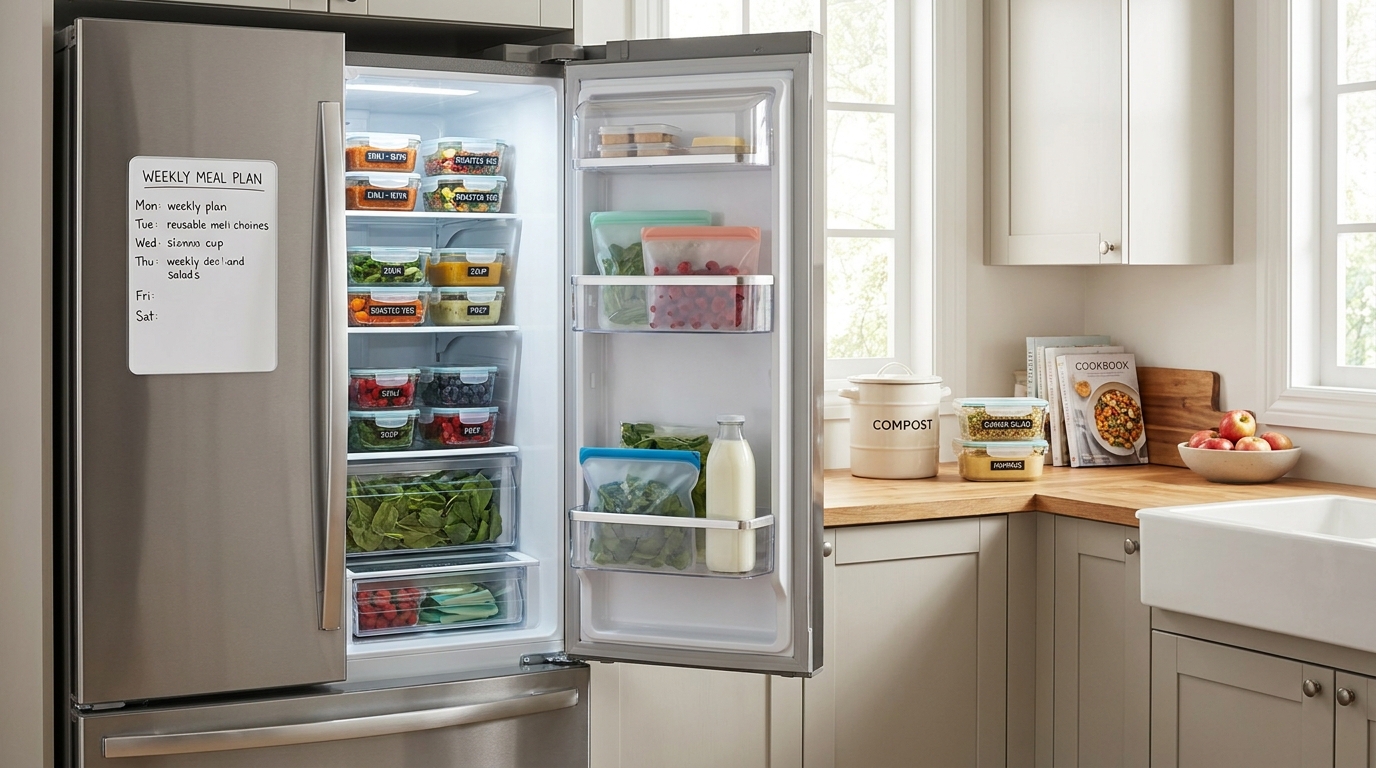
Leftovers also deserve a better reputation. In a circular household, leftovers are not an afterthought. They are ingredients already paid for, cooked, and available. A container of roasted vegetables can become soup, a grain bowl, or a frittata. Extra rice can become fried rice. Soft fruit can become smoothies, compote, or baking ingredients. This is not about forced creativity. It is simply about building one or two reliable habits for using what is already there.
Composting is the final layer, not the first. It is useful for peels, coffee grounds, eggshells, and other unavoidable scraps, but it does not replace prevention. A circular kitchen aims to waste less edible food first, then compost what genuinely cannot be eaten. That distinction matters because composting is valuable, yet it still comes after thoughtful planning and full use of food.
Simple Food Waste Habits That Work
Beginners often do best with small routines rather than large intentions. A few simple habits can create noticeable results within a month. You might designate one shelf in the fridge for foods that need to be eaten soon. You might keep a freezer container for vegetable scraps if you make stock. You might plan one flexible meal each week, such as soup, stir fry, pasta, or wraps, specifically to use leftovers. These are modest systems, but they reduce friction and help circular habits become automatic.
- Shop with a short list based on meals you know you will realistically cook.
- Store produce in ways that match its needs for airflow, moisture, and temperature.
- Label leftovers with dates so they are easier to notice and use in time.
- Freeze extras early instead of waiting until food is already declining.
- Compost unavoidable scraps according to your local organics program.
Plastic Waste and the Value of Using Less
Plastic is another important place to understand circular economy in practice. Canadians throw away nearly 5 million tonnes of plastic waste each year, according to the Government of Canada. Plastic is useful in many contexts, especially where safety, preservation, and durability matter, but the current system often allows far too much disposable plastic to move quickly from purchase to bin. That creates pressure on waste systems and leaves many people feeling as though they are constantly managing packaging rather than the products they actually wanted.
A circular approach to plastics does not require removing every plastic item from your life. It focuses on reducing unnecessary use, extending the life of durable plastic products, supporting refill and reuse options where available, and recycling correctly when local systems accept the material. This is a good example of practical sustainability. Most households can make progress without adopting an all or nothing mindset.
One of the most effective habits is to notice repeated disposable items. Water bottles, takeout cutlery, produce bags, coffee cups, food containers, and cleaning product packaging often appear in predictable patterns. Once those patterns are visible, it becomes easier to replace at least some of them with reusables. Even modest swaps can reduce household waste over time. The goal is not visual perfection in the pantry. It is fewer short-life items entering the home.
It is also worth paying attention to policy changes. Canada’s recent push on producer responsibility and zero plastic waste measures reflects a broader shift toward lifecycle thinking. That means the responsibility for materials is increasingly being shared by producers, not left entirely to households and municipalities. For readers, this is encouraging. It shows that individual actions are part of a wider transition already underway, not isolated gestures happening on the margins.
Repair, Reuse, and the Quiet Power of Keeping Things Longer
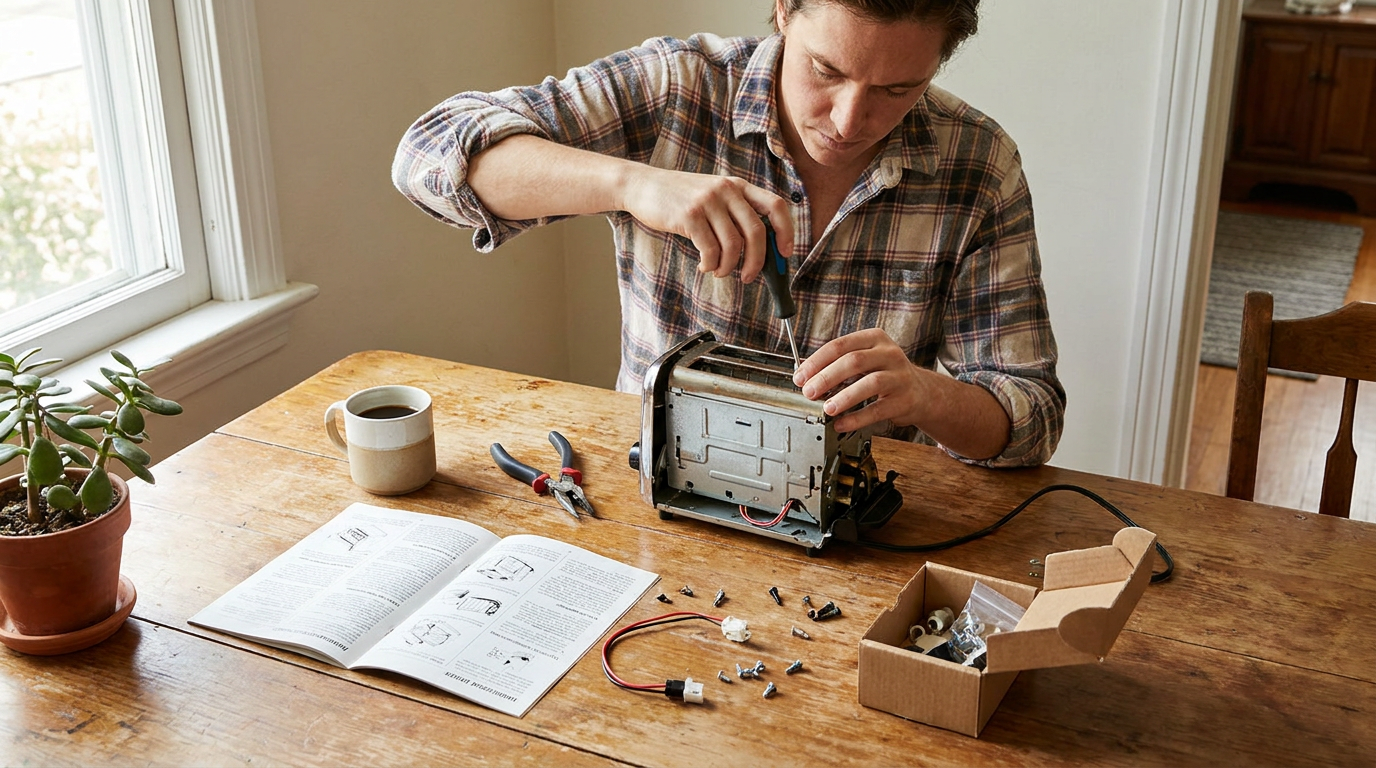
Repair is one of the most practical and underrated circular habits. A loose handle, missing button, dull blade, wobbly table, or slow appliance often sends an item toward replacement long before its useful life is actually over. In many homes, the issue is not unwillingness but uncertainty. People do not always know whether repair is possible, affordable, or worth the effort. Yet many small fixes are simpler than they appear, and local repair services can often restore value at a lower cost than replacement.
This is one reason the right to repair conversation has become more prominent across North America. Products that can be opened, maintained, and repaired are more compatible with circular economy goals than products designed for rapid disposal. As a shopper, you do not need to investigate every supply chain in detail. It is often enough to ask a few grounded questions. Can this item be repaired. Are replacement parts available. Is it likely to last. Does the company provide support or clear care information. Those questions tend to lead toward better long term choices.
Reuse is equally important. Before something becomes waste, it may still have value for someone else or for another purpose in your own home. Glass jars can become storage. A side table can move to a bedroom. Children’s clothes and gear can be passed between families. A lamp you no longer need may be exactly what someone else is looking for. Circularity thrives when usable items keep circulating rather than sitting idle or being discarded too early.
There is also an emotional benefit to keeping things longer. Homes often feel calmer when purchases are made with more intention and possessions are maintained rather than constantly replaced. Durability can create continuity, and repair can foster a more respectful relationship with the things we use. This may sound subtle, but it matters. Sustainable habits tend to last when they improve daily life rather than adding moral pressure.
Sharing, Borrowing, and Community Circularity
Not every useful item needs to be individually owned. Some of the most circular choices are the least dramatic, such as borrowing a ladder, sharing garden tools, renting special equipment, or using a local library for books, seeds, or even household items. These systems reduce the need for multiple households to buy products that are only used occasionally. They also help preserve space and reduce spending.
Community sharing has practical advantages beyond waste reduction. It can strengthen local relationships, support neighborhood resilience, and make access more equitable. A tool library, a children’s clothing swap, a small appliance exchange, or a community repair event can all extend the life of products while helping people meet everyday needs more affordably. Circular economy is often discussed in policy and industry terms, but some of its most visible forms are local and human.
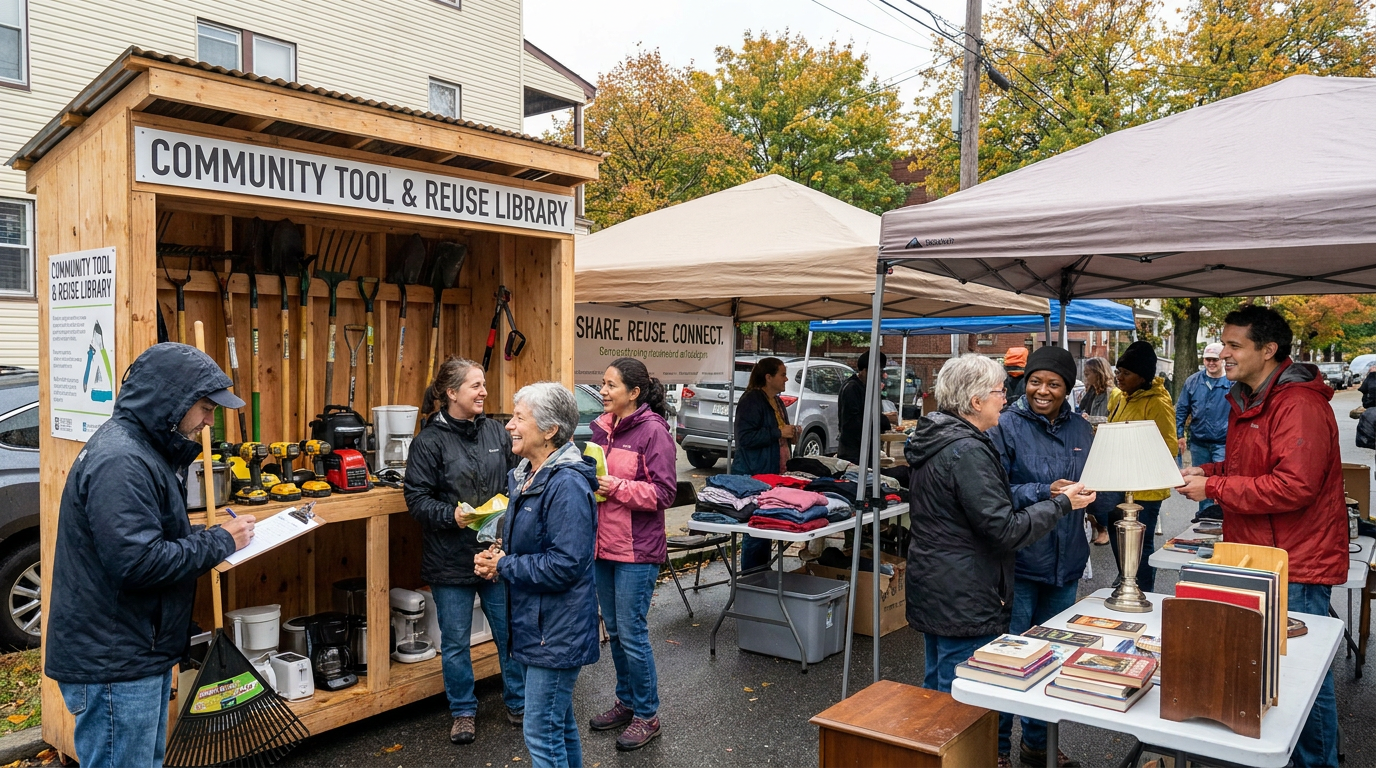
If you are new to this idea, it helps to begin with one category of rarely used items. Tools are an obvious example, but party supplies, camping equipment, moving boxes, and seasonal decorations also fit well. You may find that borrowing is easier than expected once you begin asking around or searching for local programs. In many places, repair cafes, buy nothing groups, and secondhand marketplaces have become more active, making circular choices more convenient than they were a few years ago.
Sharing also softens the pressure to buy immediately. Instead of solving every short term need with a purchase, it creates space to ask whether ownership is necessary. That question alone can prevent a surprising amount of waste over time. It also aligns with the broader circular goal of getting more use out of the materials and products already in circulation.
How to Recycle Better Without Relying on Recycling Alone
Recycling still matters, but it works best when it is treated as one part of a broader strategy rather than the whole strategy. A circular economy does not dismiss recycling. It simply places it in context. Once you have reduced unnecessary consumption, reused what you can, repaired what is worth saving, and composted organics, recycling becomes the next appropriate step for accepted materials.
The most important rule is to follow local guidance. Recycling systems vary by municipality, and assumptions often lead to contamination. A material that is accepted in one area may not be accepted in another. Black plastic, flexible film, mixed materials, and items with food residue are common sources of confusion. When doubtful items are added loosely in the hope that they might be recyclable, they can create problems in sorting and processing.
It is usually more helpful to recycle fewer things correctly than more things wishfully. Keep a short reference from your municipality in a visible place, especially for the kitchen. Rinse containers when required, flatten cardboard if recommended, and separate organics from recyclables carefully. These small steps help the system work more effectively and reduce frustration.
At the same time, do not let uncertainty around recycling derail broader waste reduction efforts. If a package is difficult to recycle locally, that is useful information for future purchasing. It may encourage you to choose a refill option, a product with simpler packaging, or a brand with better stewardship. In that way, recycling can become feedback that informs earlier and more powerful decisions.
Common Misconceptions That Make Circular Living Seem Harder Than It Is
Many people resist the idea of circular economy because it sounds technical, political, or overly demanding. In reality, much of that resistance comes from misconceptions. One common misunderstanding is that circular economy means recycling everything possible. As we have seen, recycling is only one stage. Prevention, reduction, reuse, and repair come first because they keep more value in the system and reduce the need for new material extraction.
Another misconception is that circular practices are only relevant to governments or large companies. Policy and business design absolutely matter, especially in areas like packaging, producer responsibility, and product standards. But individuals still play a meaningful role through purchasing choices, maintenance habits, composting, sharing, and proper disposal. Household demand influences what the market offers, and local reuse systems often depend on active community participation.
Some people also assume that buying an item labeled eco friendly automatically makes it circular. Labels can be useful, but they are not the whole story. A product is more circular when it lasts, can be repaired, is genuinely used for a long time, and has a realistic end of life pathway. A durable secondhand item may be more aligned with circular principles than a newly purchased product with green branding but a short life span.
Perhaps the most limiting misconception is the idea that circular living requires major sacrifice. In practice, many circular habits lower costs, reduce clutter, and simplify routines. Packing a reusable bottle, planning meals, repairing a zipper, borrowing a tool, or donating usable goods are not extreme acts. They are modest adjustments that often make daily life run more smoothly. That is part of what makes this approach so durable.
A Practical Beginner Plan for the Next 30 Days
If the concept feels clear but you are unsure where to begin, it helps to focus on one month rather than an indefinite lifestyle overhaul. Circular habits become sustainable when they are specific enough to practice and simple enough to repeat. A 30 day reset can help you identify where waste shows up most often in your own home and which changes are easiest to keep.
Start by observing rather than judging. For one week, notice what fills your garbage, recycling, and compost. Look for patterns. Are food scraps a major category. Is there a lot of plastic packaging from convenience purchases. Are there broken items sitting around that might be repaired or donated. This small audit often reveals that a few categories account for most household waste, which makes action feel more focused and less abstract.
In the second week, choose two low effort changes. You might create a meal plan and leftover shelf. You might begin carrying a reusable mug and bag. You might list one unused item for donation or resale. The key is to make the actions concrete and visible. Circular economy works best when it is translated into systems rather than intentions alone.
In the third week, add one repair or reuse action. Mend a piece of clothing, sharpen kitchen tools, replace a battery, fix a cabinet hinge, or arrange a donation pickup. This builds confidence because it shows that waste can often be interrupted before disposal. By the fourth week, review what felt easy and what felt inconvenient. Keep the habits that fit naturally and adjust the ones that need simplification.
- Week 1: Observe what you throw away and identify your top waste categories.
- Week 2: Introduce two prevention habits such as meal planning or carrying reusables.
- Week 3: Complete one repair, one donation, or one borrowing action.
- Week 4: Check local recycling and composting rules and refine your home system.
How Circular Economies Connect Personal Action to Bigger Change
One of the most reassuring aspects of circular economy is that it does not ask individuals to solve systemic problems alone. Instead, it gives people meaningful ways to participate in a broader transition that is already taking shape. Governments are increasingly linking circular strategies to climate policy, biodiversity, plastics regulation, and methane reduction. Producer responsibility rules are shifting some of the burden upstream. Local repair, sharing, and diversion programs are growing. In other words, the environment around households is changing too.
That broader context matters because it prevents personal action from feeling isolated. When you choose repair over replacement, compost organics, or support products designed to last, you are reinforcing the kind of market and policy direction that many institutions are now trying to build. Your household choices do not carry the entire solution, but they do help shape demand, normalize better habits, and support systems that keep materials in circulation longer.
There is also a cultural shift embedded in this idea. A circular economy challenges the assumption that convenience must always mean disposability. It suggests that good design should include durability, maintenance, refill systems, and sensible end of life options. For consumers, that can be empowering. Instead of reacting to waste after it appears, you begin noticing the design and infrastructure behind it. That awareness often leads to better questions and better choices.
Most importantly, circular economy offers a realistic form of hope. It does not require waiting for a perfect technology or a perfect person. It starts with practical actions that are already available, many of which save money, reduce clutter, and fit naturally into ordinary life. That combination is one reason the concept is becoming more relevant across North America. It meets people where they are.
Final Thoughts
Understanding circular economies begins with a simple but powerful shift in perspective. Waste is not just something to manage after the fact. It is often a sign that products, systems, or habits could be designed differently from the start. Once you see that, everyday decisions begin to feel more connected. Buying less, using items longer, repairing what still has value, sharing what is rarely needed, composting organics, and recycling correctly all become part of the same loop.
You do not need to become an expert overnight to make meaningful progress. In fact, circular living works best when it is calm, practical, and tailored to the realities of your home. Start with the habits that feel easiest, especially in areas like food waste and repeated disposable purchases. Build a few routines, refine them over time, and let convenience work in your favor.
In a world where waste volumes continue to rise and material extraction keeps growing, small household actions are not trivial. They are a grounded response to a very large challenge. And because circular habits often save money, reduce clutter, and make homes run more smoothly, they are not just environmentally responsible. They are simply sensible.
Circular economy is not about doing everything perfectly. It is about making better use of what already exists, one practical decision at a time.


No Comment! Be the first one.