



Enhancing Everyday Life with Connected Appliances
Connected appliances are household devices — ovens, refrigerators, washers, dryers — that connect to the internet or a home network so they can send alerts, follow schedules, and be checked or controlled remotely through an app. They are less a futuristic novelty now and more an everyday problem-solver. A washer that alerts you when a cycle finishes means one less thing to remember. An oven that preheats on the drive home means dinner feels less rushed. Statistics Canada reported that 47.4% of Canadians used at least one internet-connected smart home device in 2022, with 7.0% specifically using smart appliances, which shows that connected living is already familiar territory for many households. For homeowners, the real value isn’t the technology itself. It is the way these devices quietly reduce mental load, smooth daily routines, and help a home respond a little more gently to the pace of everyday life.
Table Of Content
- Why Connected Appliances Feel So Appealing Right Now
- How Connected Appliances Improve the Rhythm of Daily Routines
- The Emotional Benefit: Less Mental Load, More Peace of Mind
- Connected Kitchens and the Comfort of Better Meal Routines
- Laundry, Cleaning, and the Quiet Satisfaction of Better Flow
- Energy Awareness as a Lifestyle Advantage
- Why Interoperability Matters More Than Ever
- Security and Privacy: Essential for Real Peace of Mind
- Common Misconceptions About Connected Appliances
- How to Choose Connected Appliances That Truly Fit Your Life
- Simple Tips for Integrating Connected Appliances Gracefully
- The Future of Connected Appliances Feels More Human
- Final Thoughts
When people talk about smart homes, the conversation often leans technical very quickly. Yet most homeowners are not searching for complexity. They are looking for comfort, reliability, and a sense that their home supports them instead of constantly demanding their attention. Connected appliances fit beautifully into that lifestyle shift because they help with the repetitive, forgettable, easy-to-miss parts of the day. They can remind, alert, adjust, and coordinate in ways that make routines feel lighter.
That emotional value matters more than many product descriptions suggest. A connected washer that tells you when a cycle is done is not just a convenience feature. It can mean one less thing to remember while helping with homework, answering work emails, or trying to get dinner started before the evening gets away from you. A connected oven that preheats on your drive home is not only impressive. It can make dinner feel less rushed and more manageable.
In Canada, this is no longer a niche conversation. Many households are already familiar with the idea of connected living, even if they have not yet expanded into larger connected appliances. For a growing number of people, the question is no longer whether smart home technology belongs at home. It is which parts of it genuinely make everyday life better.
This is where connected appliances deserve a more human conversation. They are not only about app control or syncing with a platform. At their best, they are about creating a home that feels a little more thoughtful, a little more coordinated, and a little less mentally crowded. For households balancing work, family life, changing schedules, and a desire for more ease, that can be deeply appealing.
Why Connected Appliances Feel So Appealing Right Now
Modern life has a way of filling every corner of the day. Even in beautiful homes, the smallest tasks can pile up into background stress. Did the dishwasher finish. Is the laundry still sitting damp in the machine. Did anyone remember to preheat the oven. Is the refrigerator stocked for tomorrow’s breakfast and school lunches. The emotional promise of connected appliances is that they help smooth those edges.
That promise lands especially well in homes where time feels precious. Parents managing children’s schedules, professionals with long commutes, shift workers with irregular hours, and couples trying to coordinate household tasks all know how much energy goes into simply remembering what needs attention. A connected home appliance can relieve some of that pressure by turning a mental note into an automatic notification or a routine into a scheduled action.
There is also something reassuring about a home that feels responsive. Instead of needing your constant input, it can quietly keep you informed. That changes the emotional relationship many people have with chores. The work does not disappear entirely, of course, but it becomes easier to fit into the rhythm of life. A home that gives you useful reminders rather than extra friction can feel calmer and more supportive.
Another reason these appliances feel especially relevant now is that connected living has become more familiar. Statistics Canada found that, among Canadian smart home device categories in 2022, smart speakers and assistants reached 30.0%, video cameras 19.8%, smart plugs and lights 13.8%, smart thermostats 12.7%, and smart door and window locks 6.0%. In other words, many households already understand the basic language of app control, voice assistance, and home notifications. Connected appliances do not have to introduce an entirely new behavior. They often build naturally on routines people already know.
The real luxury of connected appliances is not novelty. It is the feeling that your home is helping you hold everything together a little more gracefully.
That shift from novelty to usefulness is one of the biggest reasons connected appliances deserve attention in 2025 and beyond. People are increasingly less interested in gadgets for their own sake and more interested in tools that make home life feel smoother, kinder, and more efficient.
How Connected Appliances Improve the Rhythm of Daily Routines
The best smart features are often the ones you stop thinking about because they fit so naturally into life. They work in the background, stepping in at just the right moment to prevent a delay, a forgotten task, or a bit of avoidable stress. Over time, those tiny improvements can have a surprisingly meaningful effect on the overall mood of a home.
In the kitchen, connected appliances can help meals come together with less scrambling. Preheating an oven remotely while you are wrapping up errands or commuting home can make dinner preparation feel more seamless. Some connected refrigerators can help track maintenance needs, temperature status, or reminders related to food management. These features do not replace good planning, but they can support it in a practical, forgiving way.
In the laundry room, connected washers and dryers are often among the easiest lifestyle wins to appreciate. An alert when a cycle finishes means fewer forgotten loads and less rewashing. Scheduling cycles around your day can be especially helpful in busy households where the laundry room seems to operate constantly. Instead of checking back repeatedly, you can let the appliance tell you when it needs you.
For homes with multiple people moving in different directions, this can make a real difference. One person can start a load, another can get a completion alert, and the household can function with less confusion. It may sound small, but reducing that kind of invisible coordination work is one of the most valuable things connected appliances can do.
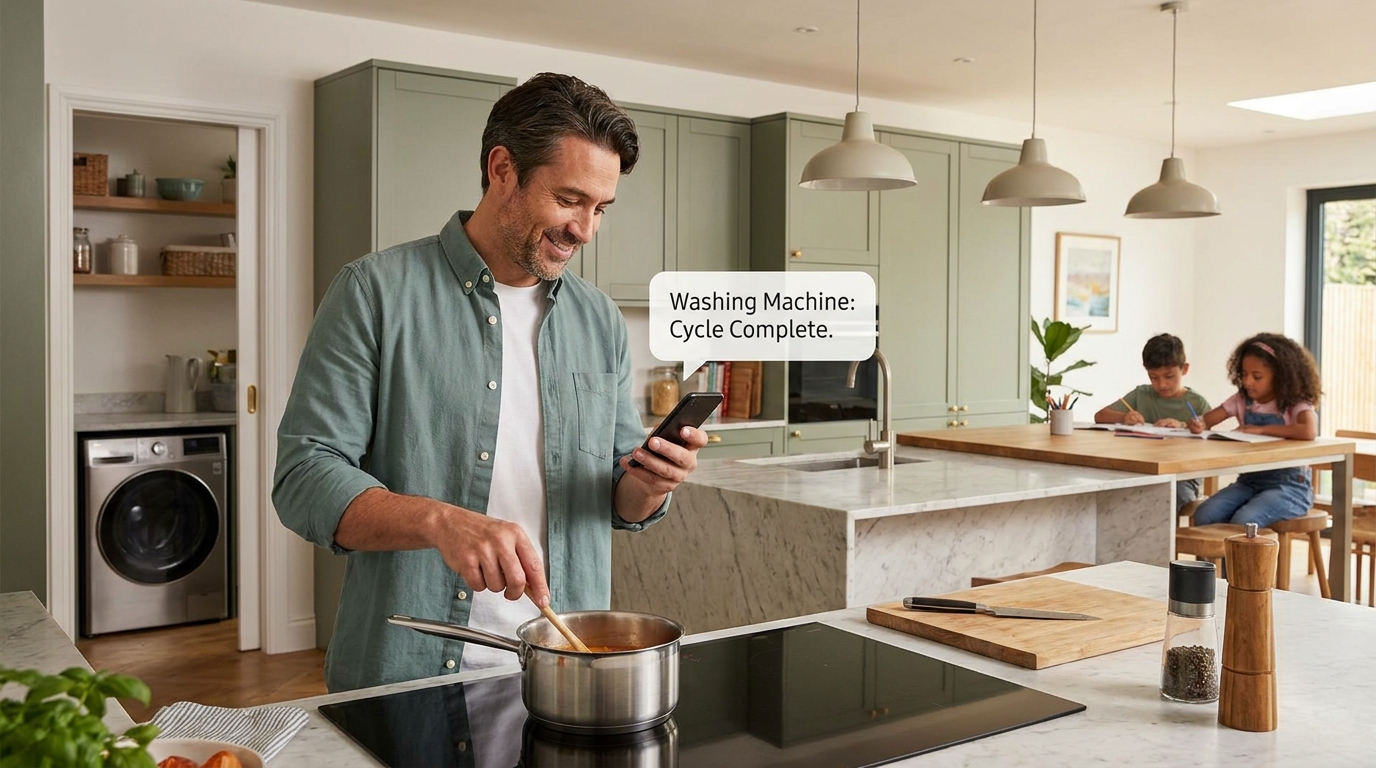
There is also a lifestyle benefit in being able to check on appliances while away from home. That does not mean being glued to your phone. In fact, the goal is often the opposite. A quick glance to confirm that a cycle finished, a temperature is stable, or a routine has started properly can offer peace of mind without requiring a trip across the house or an interruption to what you are doing. For many people, this creates a subtle but welcome sense of control.
When these appliances are used thoughtfully, they can help a home feel more synchronized with the people who live in it. The result is not a perfect life or a frictionless household. It is something more believable and more valuable, which is a home that absorbs a little more of the daily pressure instead of adding to it.
The Emotional Benefit: Less Mental Load, More Peace of Mind
Mental load is one of those aspects of home life that often goes unseen, yet it shapes daily well being in powerful ways. It is the constant tracking of what needs to happen next, what has been forgotten, and what still needs attention before the day feels settled. Connected appliances can play a quiet but meaningful role in easing that burden.
This matters because many household tasks are not difficult in themselves. What drains us is the constant need to remember them. The dishwasher needs unloading before dinner prep begins. The wash needs moving before bedtime. The oven should be ready the moment everyone arrives home hungry. A smart alert or scheduled routine can reduce the number of open loops in your mind, and that can make the whole home experience feel softer.
For parents, this support can be especially valuable. Family life is full of moving pieces, and anything that helps reduce missed steps can feel like a gift. For people who work unusual hours, connected appliances can help them adapt chores to their own timing rather than the other way around. For older adults or multi generational households, reminders and remote visibility can also support confidence and independence.
There is a reason so many people describe a well functioning home as one that feels calm. Calm is not only about decor, storage, or silence. It is also about predictability. It is about knowing that the practical side of life is not slipping through the cracks. Connected appliances can contribute to that feeling when they are chosen for real needs instead of flashy extras.
Used well, these devices do not demand more attention. They return attention to you. They help free up energy for the things that matter more, whether that is lingering over breakfast, making time for a walk, or simply ending the day feeling less scattered.
Connected Kitchens and the Comfort of Better Meal Routines
The kitchen is often the heart of the home, which makes it one of the most emotionally meaningful places to bring in connected appliances. This is where routines happen daily, often several times a day, and where small efficiencies can have an outsized impact. If there is one room where convenience quickly becomes comfort, it is here.
A connected oven is one of the clearest examples. Remote preheating can shave off waiting time and support more natural meal prep. Instead of arriving home and standing at the starting line, you can walk into a kitchen that is already one step ahead. That can make weeknight dinners feel much less hurried.
Connected refrigerators can support organization in ways that feel practical rather than overly technical. Depending on the model, they may offer reminders, maintenance notifications, or ways to keep an eye on temperature and food related needs. For households trying to waste less, plan meals better, or stay ahead of shopping, that can be genuinely helpful.
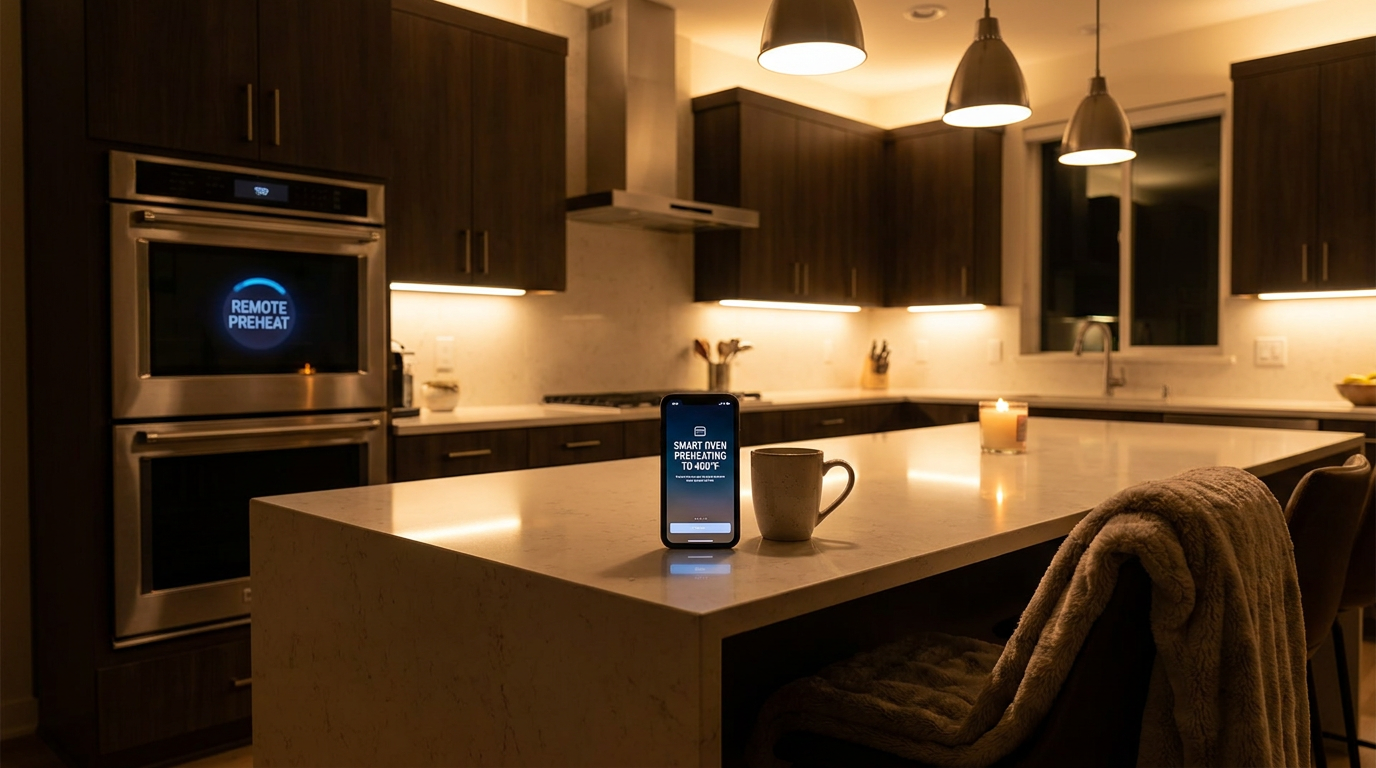
There is also something lovely about the way connected kitchen appliances can support hospitality. If you love hosting, even casually, every bit of reduced friction helps. A kitchen that is easier to coordinate leaves more room for presence. You can focus less on timing every detail manually and more on welcoming people in, setting the table, and enjoying the atmosphere you worked to create.
Of course, not every household needs every connected feature. The point is not to turn cooking into a tech project. It is to identify which routines regularly feel rushed or repetitive and look for appliances that can make those moments easier. When approached this way, connected kitchen appliances become less about technology and more about everyday nourishment, rhythm, and warmth.
Laundry, Cleaning, and the Quiet Satisfaction of Better Flow
Some of the most appreciated connected appliance features show up in the less glamorous zones of the home. Laundry rooms, utility spaces, and cleaning routines may not get the same design attention as kitchens, but they play a major role in how organized and comfortable a home feels. Connected appliances can bring a surprising sense of ease to these areas.
A washer notification is a simple example, but it solves a very real problem. Forgetting laundry in the machine often creates extra work, extra time, and sometimes extra irritation. An alert sent directly to your phone can prevent that. It takes a task that once lingered in the background and makes it easier to complete at the right moment.
Scheduling can also be useful, especially in households where chores need to be fitted around work, children’s bedtime, or shared spaces. Starting a cycle at a more convenient time can support a smoother flow to the day. It can also make home management feel more intentional, less reactive, and easier to share among household members.
When connected appliances help these ordinary tasks run more smoothly, the emotional payoff is greater than it first appears. Cleaner transitions, fewer forgotten chores, and less repetitive checking all contribute to a home that feels more under control. Sometimes that quiet sense of order is exactly what makes a space feel restful.
Energy Awareness as a Lifestyle Advantage
One of the most important conversations around connected appliances is energy use, but it is most helpful when framed in a balanced, realistic way. Many homeowners care about lower bills, better habits, and a more efficient home, even if they are not deeply interested in technical energy management. Connected appliances can support those goals, but they are not automatically efficient simply because they are smart.
Natural Resources Canada notes that connected products can contribute to network standby power usage. In plain language, that means some devices may still use energy while waiting in a connected state, even when they are not actively doing a task. This is an important reminder that mindful ownership matters. Smart features can be useful, but they should be paired with smart setup and thoughtful habits.
At the same time, connected appliances can make energy awareness easier to live with. Some products now offer better reporting and visibility into use patterns, which can help households understand how and when appliances consume energy. That information can support better scheduling, more informed choices, and a stronger sense of control over monthly costs.
This area is evolving quickly. Matter 1.5 added enhanced energy management capabilities, and the broader direction of the industry suggests that energy reporting and context aware operation will continue becoming more practical for everyday homes. For homeowners, the takeaway is simple. Energy management is increasingly part of the connected appliance story, not as a technical burden but as a way to make the home’s rhythm more efficient and less wasteful.
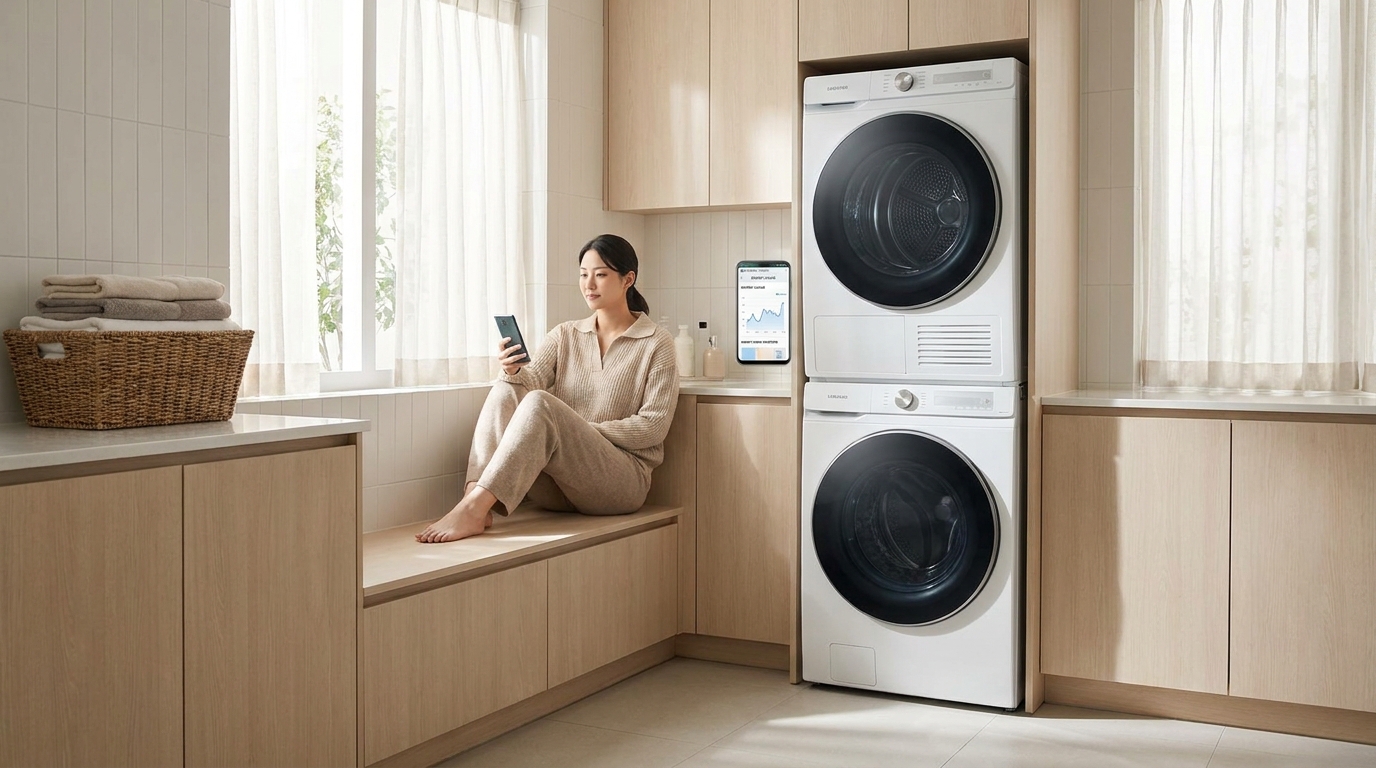
For many families, that is appealing because it aligns with everyday priorities. People want homes that feel easier to manage. They want routines that make sense financially and practically. They want insight without feeling overwhelmed. Connected appliances can help with that, particularly when the goal is not perfection but a more aware and comfortable way of living.
Why Interoperability Matters More Than Ever
One of the biggest emotional barriers to buying connected appliances has long been the fear of complication. People worry that a new appliance will require a separate app, create setup headaches, or fail to work with the smart home products they already own. That concern is understandable because convenience disappears very quickly when a system feels fragmented.
This is why interoperability matters so much. When appliances can work across ecosystems more smoothly, they become easier to trust and easier to recommend. You do not have to be a tech enthusiast to appreciate that. In fact, broader compatibility is most valuable for everyday households that simply want things to work without constant troubleshooting.
Matter is an important part of this shift. Matter 1.5 introduced enhanced energy management capabilities, while Matter 1.6 emphasized simpler setup, multi ecosystem experiences, and more context driven control. The language may sound technical, but the lifestyle impact is refreshingly straightforward. Easier setup means less frustration on day one. Better cross platform support means a more unified home over time.
That kind of simplicity changes the buying experience. Instead of asking whether an appliance is smart in the abstract, homeowners can ask a more useful question, which is whether it fits naturally into the home they already have. The more confidently the answer is yes, the more connected appliances move from niche interest to practical household upgrade.
For many people, this is the difference between admiring a feature and actually using it. A connected appliance that integrates smoothly into familiar routines and platforms is far more likely to become part of daily life. That is where the real value lives.
Security and Privacy: Essential for Real Peace of Mind
Convenience only feels comforting when it also feels trustworthy. Any conversation about connected appliances should include security and privacy because these devices are part of the Internet connected home. They may not seem as sensitive as cameras or locks, but they still deserve thoughtful setup and ongoing attention.
NIST has established consumer IoT cybersecurity guidance and baseline criteria, which reinforces an important point for shoppers. Security is not a bonus feature. It is a basic quality marker. When you bring a connected appliance into your home, you are also bringing in software, account access, permissions, and data practices that deserve scrutiny.
The good news is that safer ownership habits are often straightforward. Strong unique passwords matter. Software updates matter. Reviewing app permissions matters. It is also wise to choose brands that are transparent about how they handle data and how long they support devices with updates. These steps may not feel glamorous, but they are part of creating a connected home that feels dependable rather than risky.
For lifestyle minded homeowners, the goal is not to become anxious about every device. It is to build trust into the experience from the beginning. A connected appliance should make you feel more relaxed, not more vulnerable. When security is treated as a core part of the purchase, that peace of mind becomes much easier to achieve.
Common Misconceptions About Connected Appliances
As connected appliances become more mainstream, it helps to clear away some of the assumptions that can make people hesitant. Many of these misconceptions come from the earlier era of smart home marketing, when products were often promoted for wow factor rather than genuine usefulness. Today, the conversation is more grounded.
- They are only about convenience. Convenience is certainly part of the appeal, but the deeper benefit is often reduced mental load. Connected appliances can ease routine stress, support coordination, and create a greater sense of calm.
- They always save energy. Not necessarily. Smart features can support better energy habits, but connected products can also draw network standby power. The benefit depends on thoughtful use and setup.
- Everything works together automatically. Compatibility still matters. Standards like Matter are improving the experience, but shoppers should still confirm ecosystem support before buying.
- They are too technical for normal households. This is becoming less true as setup improves and products become more user friendly. Many connected features are now designed specifically for ease and clarity.
- Security only matters for cameras and locks. Any Internet connected appliance deserves secure setup, software support, and careful account management.
Seeing these devices clearly helps homeowners make better decisions. The goal is neither to overhype them nor dismiss them. It is to understand where they genuinely contribute to better living and where mindful expectations are needed.
How to Choose Connected Appliances That Truly Fit Your Life
The smartest connected appliance is not necessarily the one with the longest list of features. It is the one that solves a real problem in your home. Before shopping, it helps to think less about technology and more about routine. Where does your day feel repetitive, rushed, or easy to forget. Which household tasks create the most friction. Those answers can guide much better choices than shopping based on trend alone.
If dinner timing is your biggest challenge, a connected oven or range may be more meaningful than any other upgrade. If laundry is the task that constantly interrupts your day, a connected washer and dryer may offer the clearest daily payoff. If you are focused on reducing waste and improving planning, connected refrigeration features may feel worthwhile. Start where the stress actually lives.
It is also wise to check compatibility before falling in love with a model. Look at whether the appliance supports the smart home ecosystem you already use, whether the app experience is well reviewed, and whether the brand has a reputation for updates and support. In a connected home, ease after purchase matters just as much as features on the sales page.
Here are a few questions worth asking before you buy:
- Will this appliance save time or reduce mental load in a routine I deal with every week?
- Does it work with the voice assistant or smart home platform I already use?
- Are the app controls intuitive enough that I will actually use them?
- Does the brand provide clear information about updates, security, and privacy?
- Are any energy reporting or scheduling features useful for my household habits?
Connected appliances are most satisfying when they feel like a natural extension of your home, not a separate system you need to manage constantly. Choosing with that mindset leads to a more comfortable and lasting result.
Simple Tips for Integrating Connected Appliances Gracefully
Once you bring connected appliances home, a thoughtful setup makes all the difference. The best smart home experiences tend to feel almost invisible. They are not loud or overly busy. They quietly support your habits in ways that make sense for your household.
Begin by setting up only the notifications you truly want. If every appliance sends constant alerts, the experience can become noisy and easy to ignore. Focus on the updates that will genuinely help, such as cycle complete notifications, maintenance reminders, or temperature alerts that matter for your routines.
Next, create a few practical schedules instead of over automating everything. A preheating routine before dinner, a laundry schedule that fits your evenings, or an energy aware timing choice can be enough to make the home feel more organized. You do not need dozens of automations to feel the benefit.
It also helps to involve everyone in the household. Connected appliances work best when they support shared routines. If one person understands the app and no one else does, the benefit stays limited. A quick family conversation about how alerts work, who responds to what, and which routines matter most can make the system feel more useful and less individual.
Finally, revisit your setup after a few weeks. The connected features you thought you would love may turn out to be unnecessary, while one simple alert might become indispensable. That is completely normal. The most successful smart homes are rarely built all at once. They evolve around real life.
The Future of Connected Appliances Feels More Human
The most exciting direction for connected appliances is not that they are becoming more advanced. It is that they are becoming more intuitive. Better interoperability, more thoughtful energy tools, easier setup, and more context aware control all point toward a future where these products feel less like gadgets and more like natural household partners.
That future matters because most people do not want to spend their time managing technology. They want to enjoy their homes. They want dinner to feel easier to make, chores easier to coordinate, and household systems easier to trust. In that sense, the future of connected appliances is not really about technology at all. It is about how homes can feel gentler, more supportive, and better aligned with real human routines.
Adoption is already significant, but not universal, which makes education and trust especially important right now. Many households are curious but cautious. They want clear benefits, not hype. They want reassurance that appliances will fit into their lives simply and securely. They want smart features that are useful on ordinary days, not only in showroom demonstrations.
That is exactly where connected appliances shine when they are at their best. They create fewer surprises, fewer forgotten steps, and fewer moments of unnecessary friction. They help the home respond with a little more intelligence and a lot more grace. For anyone who cares about comfort, atmosphere, and the happiness value of a well run home, that is a compelling kind of progress.
Final Thoughts
Enhancing everyday life with connected appliances is ultimately about supporting the way people actually live. It is about reducing small daily stresses that accumulate over time and replacing them with smoother routines, better visibility, and a stronger sense of ease. Whether it is a washer notification, a remotely preheated oven, or a more energy aware schedule, the true value lies in how these features make home life feel.
Connected appliances are not magic, and they are not necessary in every category for every household. But when chosen thoughtfully, set up carefully, and used with intention, they can make a home feel more responsive and less demanding. That shift can be subtle, but it is powerful. It gives back attention, time, and peace of mind.
In a world where daily life can feel crowded and fast, there is something deeply appealing about a home that quietly helps. That is the promise of connected appliances at their most meaningful. Not more complexity, but more comfort. Not more noise, but more flow. And for many households, that is exactly the kind of smart living worth bringing home.



No Comment! Be the first one.