



Brand identity is often discussed in terms of logos, typography, packaging, and digital presence, yet one of its most persuasive expressions is physical space. The moment someone steps into a store, office, showroom, clinic, or hospitality setting, they begin reading the brand through atmosphere. They notice the light before the signage, the materials before the messaging, and the mood before the offer. In that quiet sequence of impressions, interior design becomes a language that speaks on behalf of the brand.
Table Of Content
- Why Interior Design Matters in Brand Identity
- How Space Encodes Brand Personality
- The Subtle Psychology of Aesthetic Influence
- Branding Through Design Is Not the Same as Decoration
- The Core Elements That Shape Perception
- Materials and Texture
- Lighting and Atmosphere
- Layout, Flow, and Wayfinding
- Acoustics, Scent, and Multisensory Design
- Designing for Different Brand Values
- Experiential Retail, Third Places, and the New Role of the Physical Space
- Omnichannel Continuity and the Relationship Between Digital and Physical Identity
- Sustainability as Brand Expression, Not Surface Styling
- How Data and AI Are Changing Interior Branding
- Practical Principles for Creating an Unforgettable Brand Space
- Common Mistakes That Weaken Brand Expression
- Conclusion: The Brand People Feel Before They Name It
Thoughtful design choices can communicate confidence, warmth, precision, sustainability, exclusivity, creativity, or care without relying on overt statements. A restrained palette can suggest discretion and sophistication, while natural textures and daylight can express wellness and responsibility. Spatial organization can signal whether a brand values efficiency, discovery, intimacy, or community. Even acoustics, scent, and the rhythm of movement contribute to the larger perception of who the brand is and what it promises.
This is why branding through design has become increasingly important for businesses across Canada and North America. In a market where customer experience is a major differentiator, interiors are no longer decorative afterthoughts. They are part of brand strategy, customer journey planning, and operational thinking. The most effective spaces create an emotional and sensory continuity that aligns what a brand says with what it feels like to encounter it in person.
Branding through design refers to the practice of expressing a brand’s identity through physical space rather than through logos or text alone. Instead of placing a logo on a wall or repeating corporate colors, it translates a brand’s values into physical cues that people encounter directly: materials, scale, tone, sequence, and sensory detail. A luxury brand might use restrained palettes and fine detailing to convey confidence, while a wellness brand might rely on natural textures and soft light to convey calm. Because people read these cues in seconds, often before speaking to staff or examining a product, the space itself becomes one of the first and most persuasive expressions of the brand. When done well, people remember the feeling of the space long after they forget the individual design decisions that created it. This is why interior design has become a strategic branding tool for retailers, hospitality groups, clinics, and offices alike.
In this article, we will explore how aesthetic choices influence perception, how interiors encode brand personality, and how companies can design spaces that feel beautiful, authentic, and unmistakably their own. We will also examine common misconceptions, current trends, and practical strategies for shaping a memorable brand presence through design.
Why Interior Design Matters in Brand Identity
Research in consumer psychology and retail design consistently shows that people form rapid judgments based on environmental cues. Before a staff member greets them or a product is handled, visitors have already begun deciding whether a brand feels trustworthy, premium, approachable, innovative, or careless. Interior design plays a central role in these judgments because it creates the context in which every other interaction is interpreted.
A beautiful interior can make identical products feel more desirable, more valuable, and more credible. This is often described as an aesthetic halo, where the coherence and care expressed by the environment spill over into how the brand itself is judged. If a space feels thoughtfully composed, people tend to infer that the service, product, and company behind it are equally considered. Conversely, if the environment feels chaotic or generic, confidence can quietly erode even when the offering is strong.
In practical terms, this means the physical setting becomes part of the brand promise. A premium skincare clinic cannot rely only on elegant packaging if its reception area feels harsh or disorganized. A sustainability-driven café weakens its message if its finishes appear disposable or energy-intensive. A creative agency that presents itself as visionary but operates from an anonymous and uninspired office creates a subtle but meaningful disconnect. Space either reinforces the story or works against it.
For customer-facing brands in particular, interior design shapes not only perception but behavior. People stay longer in spaces that feel comfortable and intuitive. They are more willing to explore when wayfinding is clear and displays are inviting. They are more likely to associate positive emotions with brands that create environments of ease, delight, and sensory balance. Design therefore supports not only aesthetics but also conversion, loyalty, and advocacy.
Interior design is not simply where a brand lives. It is one of the clearest ways a brand introduces itself without words.
This perspective is especially relevant today because physical spaces are increasingly expected to offer something more than transaction. Online channels handle convenience with remarkable efficiency, so in-person environments must justify their presence through experience, emotion, trust, and memorability. That challenge has elevated interior branding into a more strategic discipline where design decisions carry commercial and cultural weight.
How Space Encodes Brand Personality
Every brand has a personality, whether formal or relaxed, minimalist or expressive, heritage-driven or experimental. Interior design gives that personality shape. It does so not through one dramatic gesture but through a series of repeated signals that feel coherent over time. The most successful spaces create a sense of recognition, where each element seems to belong to the same narrative world.
Spatial planning is one of the first tools in this translation. Open, airy layouts with long sightlines often convey confidence, clarity, and calm. More layered, intimate arrangements can feel artisanal, personal, or exploratory. A hospitality brand that wants guests to linger may create soft transitions and lounge-like zones, while a fast-moving urban concept may privilege speed, clarity, and visual immediacy. The plan itself tells visitors what kind of relationship the brand intends to have with them.
Materials carry an equally powerful emotional code. Stone, hardwood, linen, patinated metal, and handmade ceramics often suggest tactility, permanence, and care. High-gloss surfaces, smoked glass, and sleek composites can communicate modernity, precision, or glamour. Reclaimed timber, cork, and low-impact finishes may express environmental values in a more direct way than any slogan could. Because materials are touched as well as seen, they create one of the most intimate forms of brand communication.
Color, too, performs more than a decorative role. Soft neutrals can imply serenity, refinement, and confidence. Deep tones may feel moody, intellectual, or luxurious. Fresh greens and earth tones often reinforce wellness and biophilic values. A bright palette can introduce optimism and energy when aligned with the brand character. What matters is not trend alone but alignment, as color should support the larger personality of the space rather than overpower it.
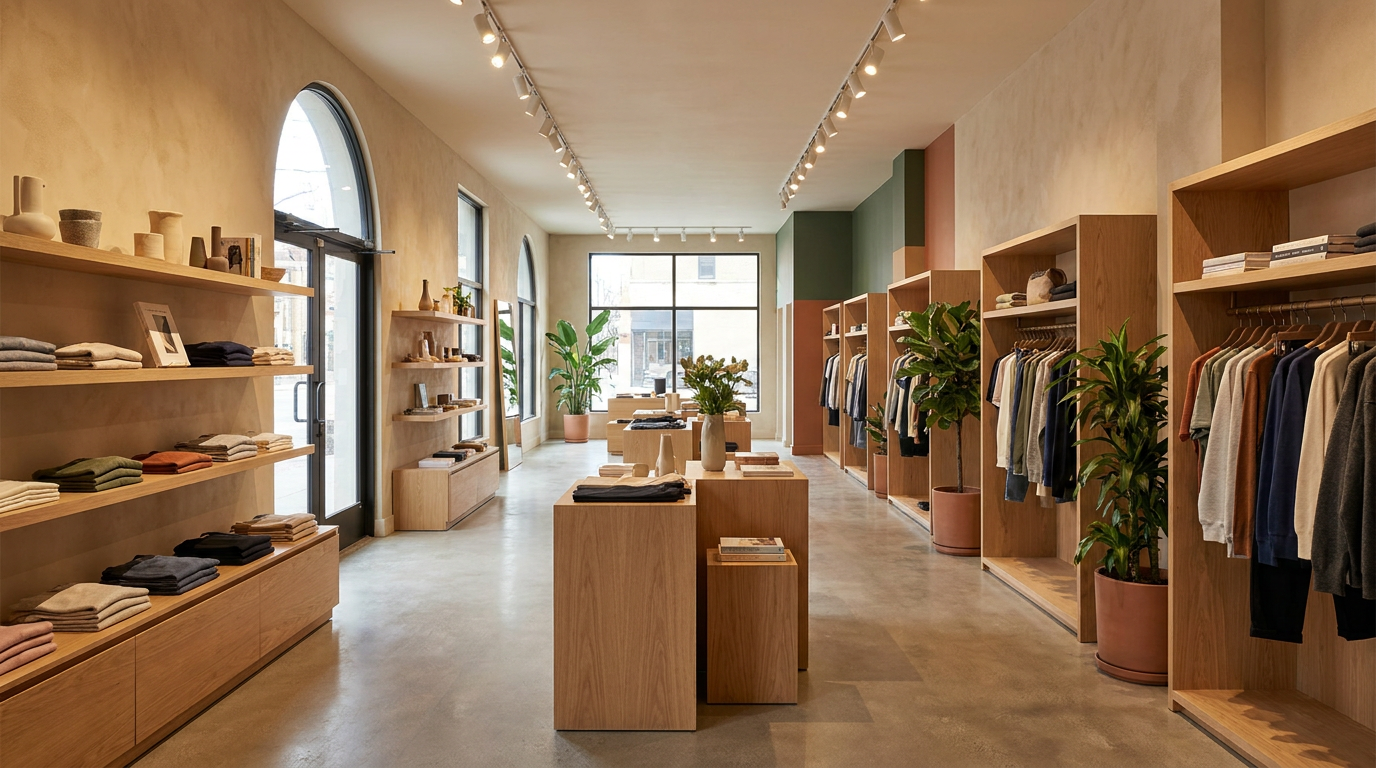
Lighting often determines whether all these choices feel elevated or unresolved. Diffused ambient light can soften a space and encourage ease, while focused accent lighting can create theater and product emphasis. A design-led brand may use dramatic contrast to create memorability, while a healthcare or wellness concept may rely on even, flattering illumination to cultivate trust. Light does not simply reveal the environment. It edits mood, hierarchy, and emotional response.
Architectural language also matters. Arches, paneling, symmetry, and measured proportions may evoke heritage and timelessness. Crisp lines, frameless details, and restrained joinery suggest precision and modernity. Organic forms and irregular compositions can communicate creativity or softness. When this language is repeated across locations or consistently paired with the brand’s visual identity, the interior becomes unmistakably part of the same family.
The Subtle Psychology of Aesthetic Influence
Many of the strongest design effects are subtle enough to go unnoticed consciously, yet they still shape perception. This is one reason why aesthetic decisions are so powerful. People may not be able to name why one brand feels more trustworthy or desirable than another, but they often respond to atmosphere with great certainty. In psychological terms, environmental cues help organize expectation.
If a space appears carefully maintained, balanced, and visually coherent, it can trigger assumptions of competence and consistency. If details feel bespoke rather than generic, people may infer greater quality and distinction. If textures and lighting create comfort, the brand may be perceived as more humane and attentive. The built environment becomes evidence, even if indirect, for a brand’s values and standards.
This effect is especially significant in crowded sectors where offerings may seem similar on paper. In retail, hospitality, wellness, and service settings, aesthetic experience often becomes the differentiator that turns a visit into a memory. Distinctive interiors can create a sense of uniqueness that generic environments rarely achieve. Research on store atmospherics and aesthetic cues supports this idea, showing that well-composed spaces can influence evaluation and strengthen perceptions of desirability.
Yet beauty alone is not enough. A visually striking space that confuses movement, overwhelms the senses, or ignores accessibility quickly loses its persuasive power. The psychology of good design depends on harmony between expression and usability. People trust spaces that feel intuitive because intuition itself reads as care. A brand that understands how people move, pause, browse, wait, and interact communicates respect through design.
That is why the best branded environments feel both composed and effortless. They do not ask visitors to decode the concept in order to function within it. Instead, they reveal brand character through comfort, clarity, and emotional resonance. The space feels natural, but behind that naturalness is a careful orchestration of decisions.
Branding Through Design Is Not the Same as Decoration
One of the most persistent misconceptions in this area is the belief that branding through interior design simply means decorating a space attractively. Decoration can enhance atmosphere, but strategy gives it meaning. Without strategic alignment, even a visually beautiful interior may fail to communicate the right message or support the right behaviors.
Another common misunderstanding is that stronger branding requires more visible branding. In reality, excessive logos, slogans, and graphic repetition can make a space feel forced or theatrical. It may reduce sophistication, interrupt usability, or create a tone that feels less authentic. The most memorable brand spaces often rely on indirect expression, where the brand is felt in the choice of stone, the softness of lighting, the cadence of wayfinding, and the shape of service interactions.
There is also the assumption that interior branding belongs only to retail. In truth, offices, clinics, salons, residential sales centers, co-working hubs, restaurants, hotels, and mixed-use spaces all communicate identity through their environments. A law office can express discretion and authority through calm detailing and material depth. A pediatric clinic can communicate reassurance through warm scale, gentle color, and clear navigation. A developer showroom can make a future lifestyle feel tangible through spatial narrative and finish selection.
Likewise, sustainability should not be reduced to a rustic visual style. A genuinely responsible brand may express its values through low-VOC finishes, local sourcing, durable materials, adaptive reuse, efficient lighting, and design choices that support long-term maintenance. The visual result may be sleek, minimal, or richly layered. What matters is the integrity between the value and the execution.
In all these cases, branding through design works best when it is strategic rather than literal. The space should not shout the brand. It should embody it.
The Core Elements That Shape Perception
Materials and Texture
Materials are among the most eloquent carriers of identity because they communicate quality through direct sensory contact. A honed stone counter, a linen wall covering, or a finely crafted wood detail can speak of permanence, craft, and quiet luxury. By contrast, thin laminates or poorly considered substitutions may signal disposability even if the visual styling is similar from a distance. Texture adds emotional depth, giving the space a tactile richness that helps people remember it.
Brands should choose materials not only for appearance but for message. A wellness studio may prefer breathable fabrics, natural timber, and matte surfaces that feel gentle and grounded. A technology showroom may opt for seamless edges, controlled reflections, and precision-engineered finishes that reinforce innovation. The key is consistency, where tactile language supports brand story at every touchpoint.
Lighting and Atmosphere
Lighting establishes emotional temperature. It can make a brand feel intimate, elevated, efficient, dramatic, or restorative. In branded spaces, layered lighting tends to work best because it gives designers control over mood and hierarchy. Ambient light creates overall comfort, task lighting supports function, and accent lighting draws attention to features or products that deserve emphasis.
Brands should also think about how light aligns with customer behavior. A boutique may use spotlighting to make merchandise feel precious. A café may use warm pools of light to encourage longer stays. A clinic may prioritize clean, flattering illumination that reassures visitors and reduces unease. Light becomes part of the service experience because it shapes how the space is physically and emotionally read.
Layout, Flow, and Wayfinding
A beautifully designed space fails if people do not know how to move through it. Layout communicates values by showing what the brand prioritizes. Clear circulation can imply confidence and transparency. Discovery-based movement can support curiosity and storytelling. Lounge zones and transition spaces can express generosity and hospitality.
Wayfinding should feel integrated rather than intrusive. Signage, sightlines, thresholds, floor changes, and focal points can all guide behavior without visual clutter. When these cues are designed elegantly, visitors feel cared for rather than controlled. That emotional distinction matters, especially in sectors where trust and comfort are part of the offering.
Acoustics, Scent, and Multisensory Design
Brand identity is never only visual. Sound absorption, background music, scent diffusion, and tactile comfort all contribute to the emotional register of a space. A luxury environment often feels quiet not by accident but through considered acoustic treatment. A wellness-focused brand may use subtle natural fragrance to support calm. A lively hospitality venue may balance energy with enough softness to preserve conversation.
These sensory dimensions should always be handled with restraint. Their role is to deepen atmosphere, not compete with it. When balanced well, they create the kind of place attachment that makes a brand feel immersive rather than superficial.
Designing for Different Brand Values
No single aesthetic signals good branding. What matters is the fidelity between design choices and brand ethos. A premium brand, for example, often benefits from visual discipline. Restrained palettes, fewer but finer materials, impeccable detailing, and uncluttered sightlines help create a sense of confidence. Luxury rarely needs to prove itself loudly. It feels assured because every choice appears intentional.
A community-oriented brand may express itself differently. It may use warmer finishes, more flexible seating, softer boundaries between zones, and locally resonant details that make people feel welcomed rather than curated at a distance. The design may support conversation, gathering, and repeat visits. In this context, hospitality-like comfort becomes part of the brand’s social value.
Sustainability-driven brands often communicate best through transparency and material honesty. Reclaimed surfaces, visible craftsmanship, low-impact products, biophilic elements, and energy-conscious lighting can all contribute to an environment that feels responsible and grounded. Importantly, these elements should not appear as symbolic decoration alone. Their effectiveness comes from being integrated into the whole operational and aesthetic logic of the space.
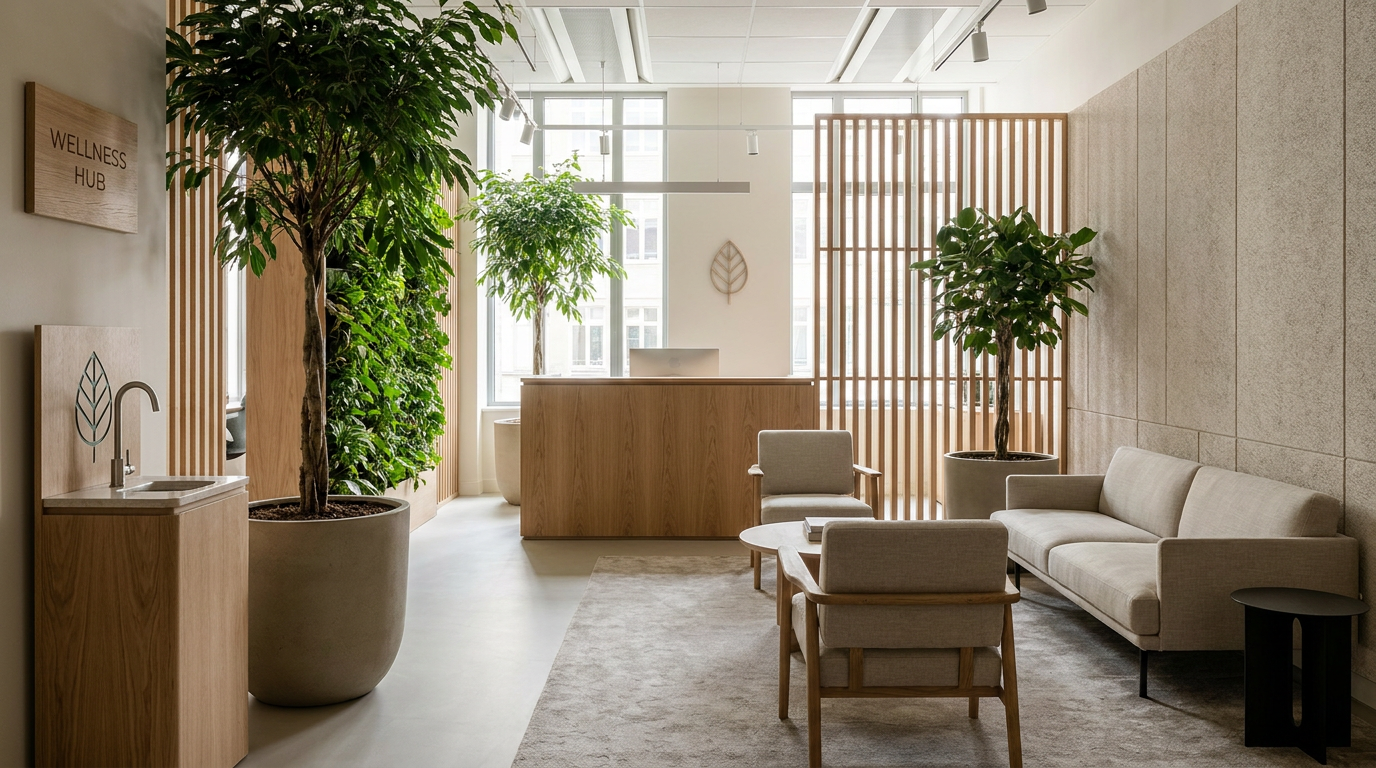
Innovative or technology-focused brands may communicate through fluid layouts, digital integration, precision detailing, and material contrasts that feel advanced without becoming cold. Screens, interactive surfaces, or smart systems can support the brand story if they are elegantly integrated into the environment rather than inserted as novelties. The goal is to make innovation feel seamless and human-centered.
Brands rooted in heritage or craftsmanship may favor layered textures, artisanal finishes, architectural references, and storytelling moments that convey continuity and depth. Such spaces often benefit from a slower visual rhythm, allowing visitors to dwell on details and absorb a sense of history. This can be especially effective in hospitality, retail, and residential presentation environments where emotional narrative is central.
Across all categories, the principle remains the same. The right space is not the most fashionable one. It is the one that renders brand values visible, tangible, and emotionally believable.
Experiential Retail, Third Places, and the New Role of the Physical Space
One of the most important developments in recent years is the rise of experiential environments. As online commerce has taken over convenience, physical spaces are being asked to deliver presence, meaning, and immersion. This has changed the role of interior branding significantly. A space now often functions as a destination, a stage, a gathering point, and a brand narrative all at once.
Experiential retail is a clear example. Rather than simply presenting products, many brands now create environments that encourage trial, conversation, education, and emotional engagement. Seating areas, tasting counters, consultation zones, event corners, and flexible installations transform the customer journey from transaction into participation. The interior becomes part showroom, part hospitality setting, and part storytelling device.
This shift has also encouraged the idea of the third place, a setting that is neither home nor work but somewhere people are happy to spend time. Brands that cultivate this feeling often gain deeper loyalty because they occupy a more meaningful place in everyday life. A café-bookshop hybrid, a wellness retail lounge, or a community-centered studio can all benefit from interiors that support gathering and return visits. The brand becomes associated not only with consumption but with belonging.
For designers and business leaders, this means aesthetic choices must support dwell time and emotional connection. Seating comfort, acoustic softness, flexibility, and warmth become strategic assets. Details that might once have been considered secondary now shape whether people stay long enough to engage, share, purchase, and return.
This experiential approach also applies beyond retail. In workplaces, branded interiors can improve culture, recruitment, and client perception. In clinics, they can reduce anxiety and reinforce trust. In hospitality, they can define an entire market position. Physical space is increasingly expected to perform as a complete expression of the brand world.
Omnichannel Continuity and the Relationship Between Digital and Physical Identity
Today’s brands are encountered across websites, apps, social platforms, packaging, and physical environments. If these touchpoints feel unrelated, trust can weaken. If they feel harmonized, the brand gains depth and clarity. This is why omnichannel continuity has become a defining concern in interior branding.
The goal is not to make a physical space look like a website, but to ensure that tone, values, and visual language translate across mediums. A brand known online for calm elegance should not feel noisy and visually chaotic in person. A company with a digital identity based on transparency and usability should reflect those values through intuitive layout and clear in-store communication. Customers notice alignment even when they do not consciously analyze it.
Digital systems can also influence the spatial journey more directly. Click-and-collect counters, consultation booking stations, interactive displays, and integrated product education areas all shape how visitors experience continuity between online discovery and offline interaction. When designed elegantly, these functions support convenience without diminishing atmosphere.
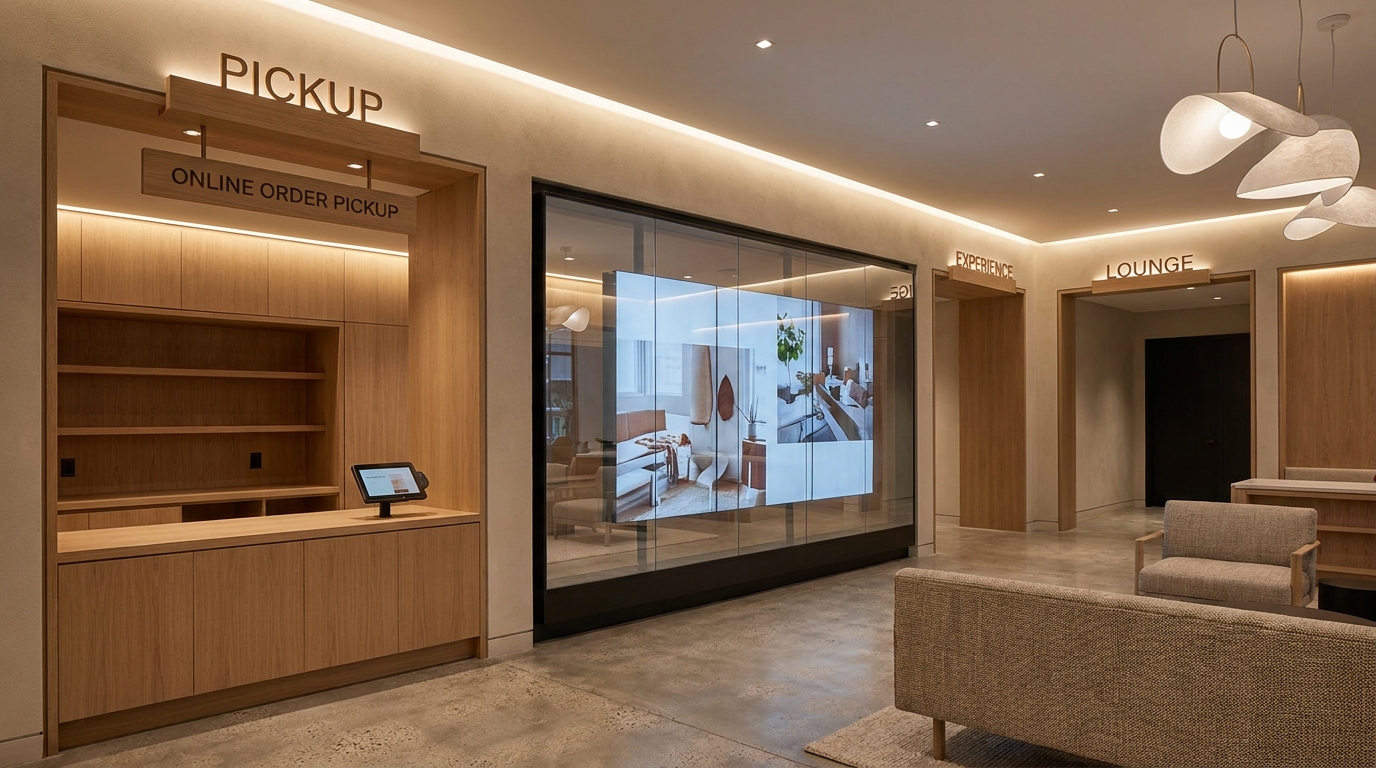
Visual continuity can be expressed through recurring proportions, color accents, iconography, tonal consistency, and material analogues that echo the digital identity. For example, a clean and editorial online brand might use quiet spacing, strong hierarchy, and crisp material transitions in the physical environment. A playful brand might translate its digital rhythm into rounded forms, unexpected moments of color, and more informal circulation.
What matters most is that the customer moves from one channel to another without feeling a rupture in personality. In this sense, interior design is not separate from branding systems. It is their spatial extension.
Sustainability as Brand Expression, Not Surface Styling
Sustainability has become one of the most meaningful values a space can communicate, but it must be expressed with integrity. Consumers are increasingly attentive to whether a brand’s physical environment aligns with its claims around responsibility, wellness, and locality. Design is one of the clearest ways to make those values visible.
Biophilic design is one powerful avenue. Daylight, natural materials, indoor planting, views to greenery, and organic textures can create environments that feel restorative and connected to nature. These choices often support not only aesthetics but well-being, helping visitors feel calmer and more comfortable. For brands rooted in wellness, hospitality, or sustainability, this atmosphere can be deeply aligned with identity.
Yet sustainability reaches beyond visual cues. Low-VOC finishes, durable construction, adaptive reuse, energy-conscious lighting, and local sourcing all communicate seriousness and care. These decisions may not always be immediately visible, but they can still shape the emotional truth of the environment. A responsible brand should look considered because it is considered.
There is also a compelling elegance in restraint. Durable materials that age well, layouts that can adapt over time, and details designed for maintenance and longevity all suggest a more mature relationship to design. Rather than chasing novelty, the brand expresses confidence through stewardship. In many ways, this is the essence of timeless branding.
How Data and AI Are Changing Interior Branding
While branding through design is deeply emotional and aesthetic, it is becoming more measurable than ever. Data-informed planning and AI-assisted tools are influencing how brands test layouts, evaluate movement, and optimize customer journeys. This does not replace design intuition, but it can refine it.
Digital twins, heat mapping, behavioral analytics, and AI-supported planning tools can help teams understand where people pause, where congestion forms, which zones are overlooked, and how different sequences affect interaction. For brands investing heavily in customer experience, these insights make it possible to align beauty with performance more precisely. A space can be expressive and strategically tuned.
This is especially valuable in North American contexts where customer expectations are high and real estate costs demand thoughtful efficiency. If a brand can improve flow, dwell time, service clarity, and product engagement through design, interior branding becomes easier to justify as a business investment rather than a stylistic indulgence.
At the same time, data should never flatten the soul of a space. Metrics can reveal friction, but they cannot alone create atmosphere, cultural nuance, or emotional resonance. The most compelling branded environments use data as a quiet support system while preserving the artistic intelligence that makes interiors memorable in the first place.
Practical Principles for Creating an Unforgettable Brand Space
For brands looking to strengthen identity through interior design, a few principles are especially useful. The first is to begin with values rather than visuals. Before selecting colors or finishes, define what the brand should make people feel. Should the space communicate trust, serenity, boldness, intimacy, innovation, or celebration? Emotional clarity provides a far stronger design foundation than aesthetic trend references alone.
The second principle is to design for consistency, not repetition. Every touchpoint does not need to be identical, but each should feel like it belongs to the same universe. Materials, service flow, tone of signage, lighting character, and spatial rhythm should all echo the same story. Consistency is often what makes a brand memorable even when overt branding is minimal.
The third principle is to think in layers. Effective branding through design is rarely carried by one feature wall or one dramatic fixture. It emerges through accumulation. The threshold, the seating comfort, the acoustics, the tactile finishes, the bathroom details, the checkout sequence, and the scent all work together. Layered coherence always outperforms isolated spectacle.
The fourth principle is to protect usability. Accessibility, comfort, circulation, and operational clarity are not compromises to the concept. They are part of the concept. A brand that values people should be legible to people. Functional intelligence gives aesthetic identity credibility.
The fifth principle is to leave room for subtlety. Not every message needs to be literal, and not every value needs a graphic treatment. Often the most elegant environments rely on suggestion. A palette, a material, a proportion, or a moment of quiet can communicate more than a wall of explanation ever could.
- Define the brand feeling before defining the visual style.
- Translate values into materials, light, and layout rather than relying only on graphics.
- Support the customer journey through intuitive circulation and clear wayfinding.
- Use sensory details carefully so atmosphere feels immersive, not excessive.
- Measure performance while preserving emotional and aesthetic integrity.
Common Mistakes That Weaken Brand Expression
Even well-intentioned spaces can miss the mark when design decisions are disconnected from brand meaning. One common mistake is trend chasing without strategic fit. A fashionable palette or material may look current, but if it contradicts the brand’s core identity, the result can feel confusing or short-lived. Timeliness is valuable only when it serves the larger narrative.
Another mistake is overbranding. When logos, slogans, and overt thematic references dominate the space, visitors may feel they are inside an advertisement rather than a thoughtfully designed environment. This often reduces sophistication and can make a brand seem less confident. A refined identity does not need constant explanation.
Brands also weaken themselves when they separate design from operations. A beautiful concept that ignores queue management, acoustic control, maintenance realities, or staff workflows rarely performs well over time. Customers sense when a space is working against the people in it. The best interiors support both the brand image and the practical choreography of everyday use.
Finally, inconsistency across locations or channels can dilute memory. If each environment feels unrelated, the brand loses the cumulative power of recognition. Some adaptation is natural, especially across different footprints, but the underlying design language should remain traceable. This continuity is what turns a good space into a true brand asset.
Conclusion: The Brand People Feel Before They Name It
Branding through design is ultimately about creating alignment between identity and experience. It asks what a brand believes, how it wishes to be perceived, and how those values can become tangible in the physical world. Through space planning, materials, lighting, texture, sound, and atmosphere, a brand can express itself long before any formal message is delivered.
The most effective interiors are not the loudest ones. They are the ones that feel intentional, coherent, and emotionally true. They balance symbolism with function, beauty with clarity, and memorability with comfort. They understand that every design choice, no matter how quiet, participates in the larger story.
For brands across North America, this approach has never been more relevant. Customer experience is a decisive differentiator, and physical space remains one of the few places where a brand can be encountered in full sensory dimension. A well-designed interior can communicate trust, distinctiveness, and care in an instant, then deepen that impression with every step, touch, and pause.
In the end, people may not remember the exact finish specifications or lighting temperatures that shaped their experience. What they remember is how the place made them feel. If that feeling reflects the essence of the brand with grace and consistency, the design has done something far more powerful than decoration. It has given identity a physical form.



No Comment! Be the first one.