



For many people, the phrase smart home still brings to mind cold gadgets, glowing screens, and complicated systems that seem better suited to a showroom than a real family living room. Yet the most meaningful shift in home technology is not about making a space feel more mechanical. It is about making a home feel more responsive, more calming, and more deeply aligned with the people who live there. Artificial intelligence, when used thoughtfully, can help a house support daily rhythms in ways that feel almost invisible, creating a home that is easier to enjoy and gentler to move through.
Table Of Content
- What Makes an AI-Powered Home Feel Warm Rather Than Clinical
- Start With Comfort: Why Climate Control Sets the Emotional Tone
- How to Make Smart Climate Control Feel Personal
- Lighting That Supports Mood, Ritual, and Rest
- How AI Supports Daily Routines Without Taking Over
- Energy Efficiency as Part of a Cozy Home, Not Separate From It
- Smart Choices That Keep the Home Feeling Light Rather Than Overloaded
- Security That Reassures Without Creating Tension
- Privacy Is Part of Warmth
- Questions to Ask Before Bringing AI Into a Room
- Creating Emotional Comfort Room by Room
- How to Integrate AI Smoothly Into Family Life
- Common Misconceptions About Warm Smart Homes
- A Gentle Starting Plan for Homeowners
- The Future of Home Will Feel More Human
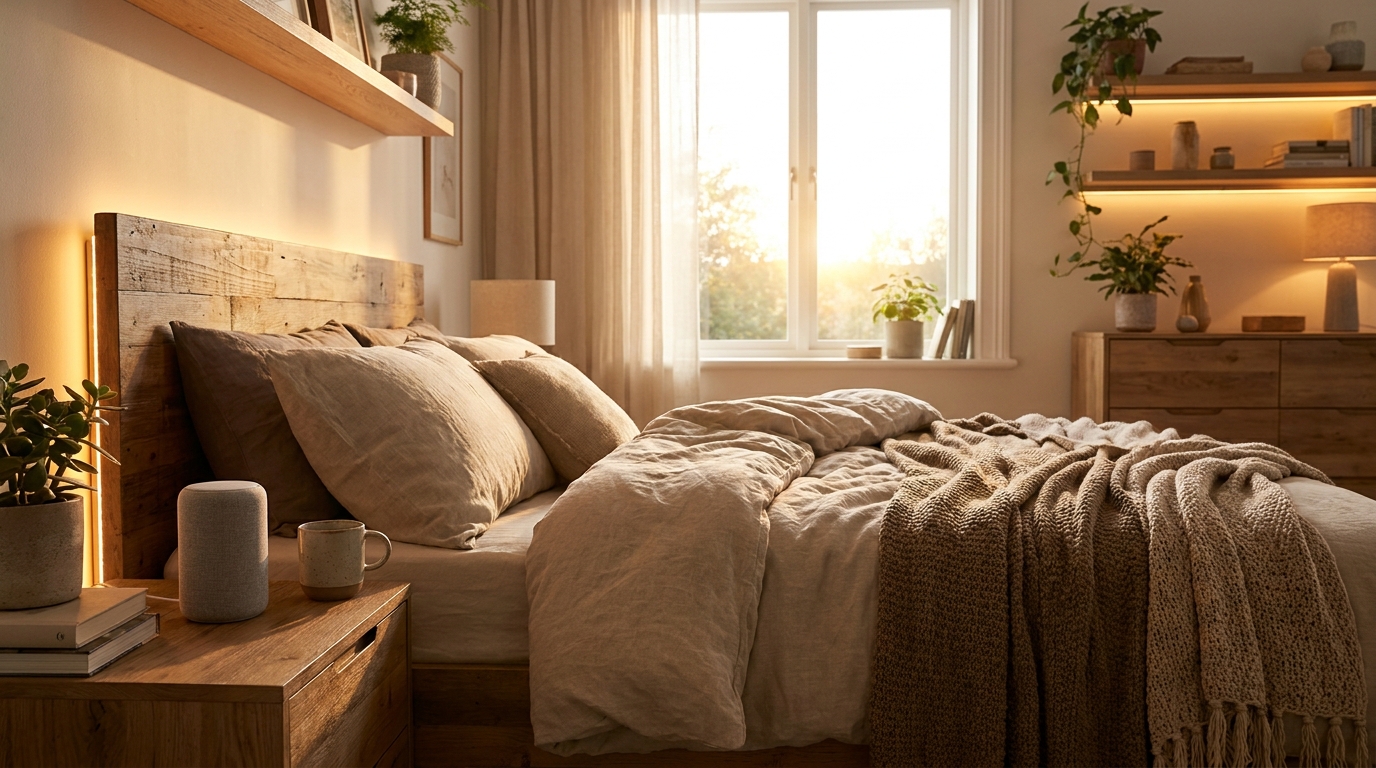
A warm, AI-powered smart home works quietly in the background rather than announcing itself. It learns household patterns, reduces small daily frictions, and helps each room feel ready when needed — a bedroom that is already comfortably warm at wake-up, a softly lit kitchen in the early morning, a security camera that can tell the family dog from a stranger at the door. Rather than filling a house with devices, this kind of AI supports comfort, simplifies routines, and reduces the mental clutter of busy days. It also helps homeowners make more energy-conscious choices without sacrificing ease, and it respects the emotional role of home as a place to recover, gather, and reconnect. Done well, AI does not replace habits or personalities; it simply makes it easier for good routines to happen, for stress to soften, and for a space to match the life unfolding inside it.
There is also an important emotional layer to this conversation. Home is where most of us recover, gather, and reconnect. It is where we want to feel safe, understood, and comfortable. The best smart homes respect that emotional role. They do not replace habits or personalities. They simply make it easier for good routines to happen, for stress to soften, and for the atmosphere of a space to match the life unfolding inside it.
In this guide, we will look at how to create a warm smart home that feels intuitive and welcoming. We will explore lighting, climate, energy, security, privacy, accessibility, and everyday rituals, all through a lifestyle lens. The goal is not to build the most advanced home on the block. The goal is to create a home that feels wonderful to live in.
What Makes an AI-Powered Home Feel Warm Rather Than Clinical
Warmth in a home has always come from more than temperature alone. It comes from softness, rhythm, predictability, and the feeling that a space welcomes you without demanding too much from you. AI supports this feeling when it removes friction from ordinary moments. Rather than requiring constant taps, commands, and adjustments, it learns and anticipates. It pays attention to patterns such as when the family wakes up, when rooms are usually occupied, and how evening routines tend to unfold.
That subtle shift matters. When lights turn on too brightly, thermostats lag behind the weather, or a home constantly asks for manual input, technology becomes one more thing to manage. A well-designed AI system does the opposite. It lowers your cognitive load. It helps your home feel emotionally easier, and that can be just as valuable as any headline-making feature.
This is why the most inviting smart homes usually do not begin with a shopping spree. They begin with observation. What moments in your home feel rushed, uncomfortable, or slightly annoying? Is the upstairs too cold in the morning? Do the children come home to a dark entryway in winter? Do you forget to turn off lights at night or worry when you are away? AI works best when it is matched to these real patterns rather than layered on top of them.
There is also beauty in restraint. Natural Resources Canada notes that standby power from connected devices can account for 5% to 10% of a household electricity bill. That reminder is useful because it reframes smart home planning. More devices do not necessarily create a better experience. A few carefully chosen, well-integrated products often deliver far more comfort than a house filled with disconnected gadgets drawing power around the clock.
The smartest homes often feel the least performative. Their technology fades into the background so comfort can come forward.
Start With Comfort: Why Climate Control Sets the Emotional Tone
If there is one place where AI makes an immediate difference, it is climate. Temperature has a profound effect on mood, sleep, concentration, and the overall sense of ease within a home. A room that is slightly too cold or too warm can quietly undermine the atmosphere, even when everything else looks beautiful. AI-powered thermostats help solve this by learning when people are home, how long spaces take to warm or cool, and how weather changes affect the house.
The U.S. Department of Energy has noted that smart thermostats can use occupancy data, building response times, and weather forecasts to balance comfort with energy savings. That balance is important because comfort should not have to come at the expense of efficiency. A home can feel cozy and responsible at the same time. In fact, the best systems often make those goals work together.
For homeowners who want practical proof, the Department of Energy also says a programmable thermostat can save as much as 10% a year on heating and cooling by setting back temperatures 7 to 10 degrees Fahrenheit for 8 hours a day. Smart thermostats go a step further by adapting those changes to lived patterns rather than relying only on a rigid schedule. In real life, routines shift. AI can account for that in ways traditional programming often cannot.
Imagine a weekday morning in winter. Instead of waking to a chilly floor and fumbling with the heat, your thermostat has already begun warming the house based on your usual wake-up time and the outdoor forecast. By the time coffee is brewing, the kitchen feels pleasant. By the time everyone leaves, the system eases back to a more efficient setting. It is a small shift, but it changes the emotional texture of the morning.
That same logic applies in the evening. AI can recognize when the household tends to gather, soften the temperature for dinner or movie time, and reduce unnecessary heating or cooling in unused rooms. Over time, this creates a deeper sense of attunement. The house feels as though it understands the pace of daily life.
How to Make Smart Climate Control Feel Personal
To create a warmer experience, think beyond numbers on a screen. Consider where comfort matters most in your own routines. Bedrooms may need a cooler sleep setting but a warmer wake-up period. A nursery may benefit from more stable overnight temperatures. A home office may need extra attention during work hours, especially in homes where one room tends to run hotter or colder than the rest.
It is also worth remembering that AI works best as part of a broader comfort strategy. Energy efficiency research consistently shows that insulation, air sealing, and draft reduction improve comfort in tangible ways. Smart thermostats are valuable, but they cannot fully compensate for a poorly performing home envelope. If a room always feels drafty, adding insulation or sealing leaks may do as much for your daily well-being as any device.
Lighting That Supports Mood, Ritual, and Rest
Lighting may be the most emotional element in any smart home. It shapes how a room feels from one hour to the next, influencing alertness, relaxation, and the sense of occasion attached to ordinary moments. Harsh overhead light can make even a lovely room feel flat. Layered, adaptive light can make the same room feel restorative and intimate. AI helps bridge that gap by learning patterns and adjusting brightness, timing, and even tone in a way that feels natural.
Morning and evening are where this matters most. Many households benefit from gentle wake-up lighting that gradually brightens instead of switching on all at once. In the evening, lights can dim automatically to support winding down. This is part of the broader wellness conversation around circadian-friendly living, where the home feels aligned with the body rather than working against it.
Picture a calm bedtime routine. Hallway lights lower after dinner. Lamps in the living room glow softly while overhead fixtures stay off. A child heading to the bathroom at night is met with enough low light for safety but not enough to feel jarring. These are the moments when AI feels less like automation and more like hospitality.
Lighting can also support social warmth. If you entertain often, smart scenes can help shift a room from busy daytime brightness to a softer dinner atmosphere with one command or at a set time. If your household includes multiple generations, you can create pathways that brighten when someone gets up at night or darken gently after everyone is settled. The result is not theatrical. It is simply thoughtful.
How AI Supports Daily Routines Without Taking Over
One of the biggest misconceptions about smart homes is that they replace human habits. In reality, the best systems support the habits that already matter to you. They help morning routines run more smoothly, make evenings feel less hectic, and reduce the number of tiny decisions that drain attention over the course of a day. That is especially meaningful for busy households where mental bandwidth is often in short supply.
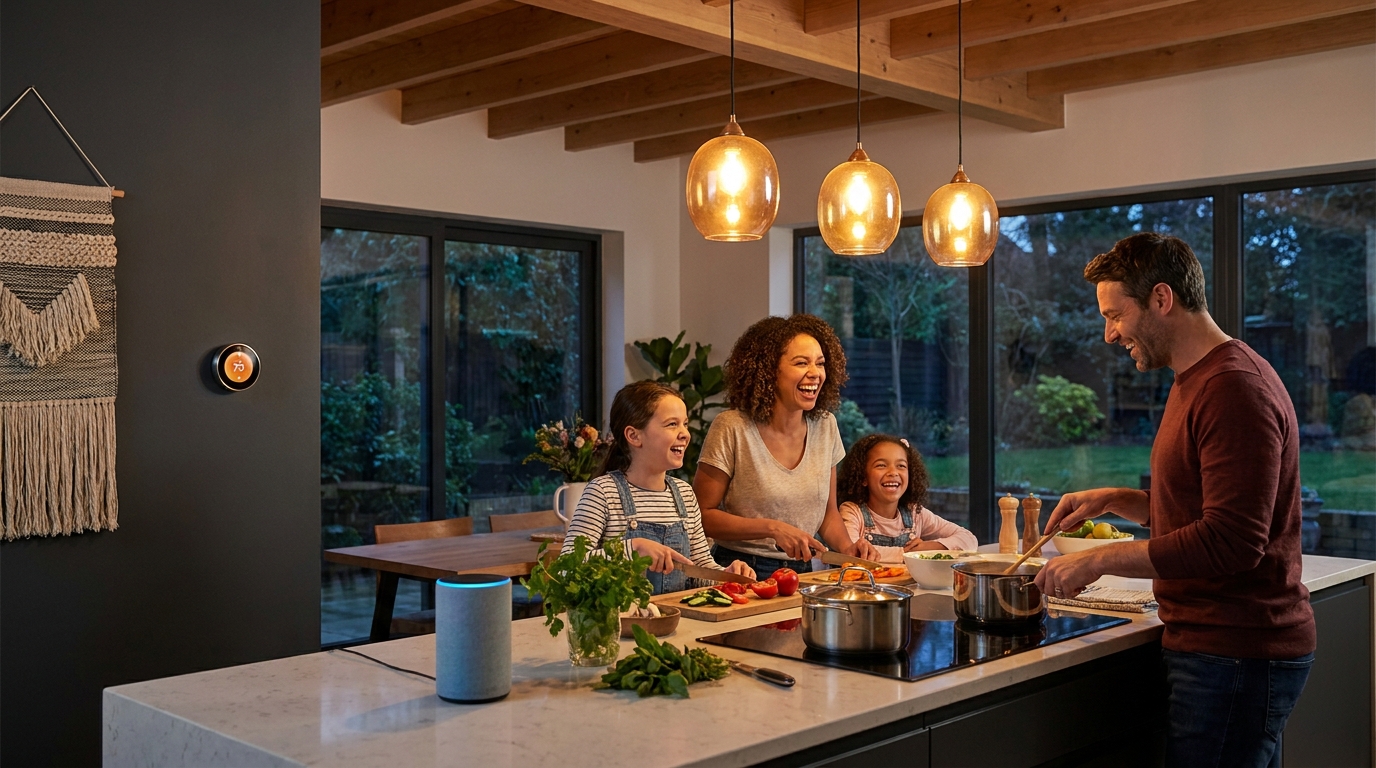
A simple morning sequence can be transformative. Lights rise gradually in the kitchen, the thermostat shifts to a comfortable setting, and a voice assistant shares weather or reminders while breakfast is underway. None of this is flashy, but it can make the home feel more organized and less reactive. Instead of starting the day with a series of manual tasks, you begin with a sense of flow.
Evening routines matter just as much. AI can lower lights, turn off forgotten fixtures, lock doors, and cue a favorite playlist during dinner or cleanup. For families, it can help anchor transitions that are often stressful. For people living alone, it can bring a sense of rhythm and reassurance. For older adults, it can make everyday control easier and more accessible.
Voice assistants play a central role here, especially when hands are full or mobility is limited. Saying a simple phrase to dim lights, adjust music, or raise the temperature can feel like a luxury at first. Very quickly, though, it becomes something deeper. It becomes ease. It becomes independence. It becomes one less barrier between a person and the comfort they want from their space.
Accessibility is one of the most human benefits of AI in the home. Parents carrying a baby, someone recovering from surgery, an older adult aging in place, or a family member with limited dexterity can all benefit from hands-free controls and ambient automation. These features should not be framed as extras. They are part of what makes a home truly livable across different seasons of life.
Energy Efficiency as Part of a Cozy Home, Not Separate From It
Comfort and energy efficiency are often discussed as though they belong to different conversations, but in real homes they are closely linked. A home that wastes energy is often a home that feels less consistent, less stable, and less comfortable. Rooms overheat, systems work harder than they should, and homeowners are left adjusting things manually. AI can help create a more balanced environment by responding in real time to occupancy, weather, and household patterns.
There is also the practical issue of connected devices themselves. Natural Resources Canada recommends ENERGY STAR certified connected products because they generally use less standby power than comparable non-certified options. That matters because convenience should not quietly add avoidable energy waste. When choosing devices, it is wise to look for products designed with efficiency in mind, especially if they will remain plugged in all day and night.
In the future, this relationship between comfort and energy management will become even more integrated. Home energy management systems, smart meters, demand response programs, and interoperable devices are all moving toward a broader ecosystem where homes can support both personal comfort and grid resilience. For homeowners, that may sound abstract, but the lived experience is simple. Your home becomes better at using energy when and where it is needed without feeling demanding or complicated.
Health Canada has also said that smart meters emit low-level radiofrequency signals far below Canadian safety limits, with no need for precautionary measures to reduce exposure. For homeowners who feel uncertain about connected energy systems, that context can be reassuring. A thoughtful smart home should feel safe in every sense, including physically and emotionally.
Smart Choices That Keep the Home Feeling Light Rather Than Overloaded
When you are choosing devices, it helps to think in layers rather than categories. Start with one system that solves a daily problem, then expand only if it genuinely improves life. A thermostat, a few well-placed lights, and a voice assistant may already cover most of the routines that matter. If you later add leak sensors, smart shades, or connected plugs, do so because they serve the atmosphere and practical needs of your home.
The aim is coherence. An inviting smart home is edited. It reflects your habits, your values, and your tolerance for complexity. A smaller, more integrated setup often feels more elegant than a house full of apps, notifications, and devices that each demand separate attention.
Security That Reassures Without Creating Tension
Feeling safe is one of the foundations of feeling at home. AI-enhanced security has real potential here because it can reduce false alarms and make monitoring more nuanced. Consumer Reports has noted that AI and video analytics can help cameras and sensors distinguish between pets and intruders. That capability can make alerts more meaningful and less exhausting, especially for households that do not want to be interrupted by every bit of routine motion.
This is an ideal example of AI serving emotional comfort. A camera that can tell the difference between a raccoon on the porch and an unfamiliar person approaching the door creates a different kind of peace of mind than a generic motion alert. It feels more intelligent, more respectful of attention, and less likely to create unnecessary stress.
At the same time, security devices require caution. Consumer Reports has also documented serious security flaws in some video doorbells and connected devices, including weaknesses that could expose personal information such as Wi-Fi names and IP addresses. That tension matters. A security system should not undermine the very safety it is meant to support.
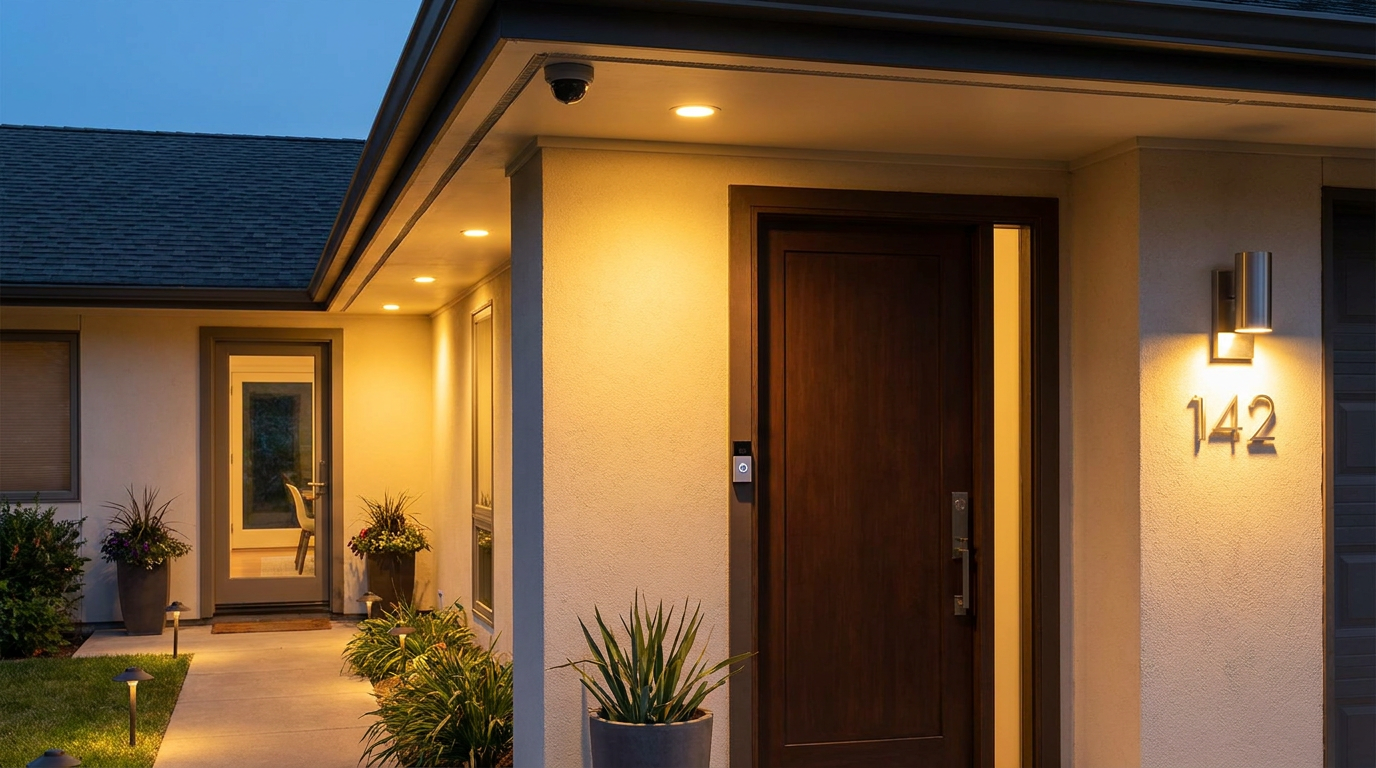
To keep security feeling warm rather than invasive, choose devices with strong reputations, clear update policies, and privacy settings you can actually control. Think carefully about camera placement, especially indoors. Many homeowners prefer outdoor cameras, entry sensors, and video doorbells while keeping private interior spaces free from constant monitoring. That balance often preserves both reassurance and comfort.
Good security also extends beyond cameras. Smart locks, leak sensors, smoke and carbon monoxide alerts, and occupancy-aware lighting can all contribute to a deeper sense of protection. AI becomes especially valuable when it helps homeowners respond early. A leak alert before a small issue becomes major damage, or a porch light that brightens as someone approaches, can protect not only the house itself but the calm attached to living there.
Privacy Is Part of Warmth
There is no truly inviting smart home without trust. If a device feels intrusive, confusing, or overly hungry for data, it disrupts the emotional ease that smart living is supposed to create. Government of Canada consumer guidance warns that IoT devices may collect more data than users expect and advises people to evaluate privacy, security, offline functionality, and product lifespan before buying. That advice belongs at the center of any conversation about AI in the home.
Privacy can sound abstract until you bring it into the language of home life. A warm home is one where people feel at ease relaxing, parenting, sleeping, aging, and simply being themselves. Technology should support that sense of ease, not chip away at it. This is why privacy-by-design matters so much. The best systems collect only what is needed, keep settings clear, and allow homeowners to maintain meaningful control.
Recent Canadian privacy guidance for AI applications emphasizes minimizing personal information collection, setting retention and deletion schedules, keeping audit logs, and reviewing privacy early rather than as an afterthought. For everyday homeowners, that translates into a few simple principles. Buy less data-hungry products when possible. Turn off features you do not need. Review permissions. Update devices regularly. Choose brands that make privacy understandable rather than obscure.
Offline functionality is another underrated comfort feature. A product that still works in a limited way when the internet drops often feels more dependable. In practical terms, a light switch should still function as a light switch. A thermostat should still allow basic control. A smart home becomes warmer when it is not fragile.
Questions to Ask Before Bringing AI Into a Room
Before buying any connected product, it helps to pause and ask a few grounding questions. What problem is this solving in daily life? How much data does it need to function well? Will it still be useful in three to five years? Can it work manually if needed? Does it integrate with the ecosystem you already have, or will it create more clutter than convenience?
These questions help shift the focus from novelty to fit. They also reduce the chance of building a smart home that feels scattered or invasive. Every device should earn its place by improving comfort, safety, accessibility, or peace of mind in a clear and lasting way.
Creating Emotional Comfort Room by Room
Different rooms support different forms of comfort, so AI should be tailored accordingly. In the bedroom, the goal is often calm. Automated shades, gentle wake-up lighting, and climate settings that support sleep can make the room feel more restorative. In a nursery or child’s room, predictability matters. Soft night lighting, stable temperature, and simple routines can help create consistency for both children and parents.
In the kitchen, convenience and atmosphere tend to matter most. Voice control can be useful when hands are busy, and lighting scenes can help the room transition from breakfast energy to a slower dinner mood. A connected speaker or assistant can support recipes, timers, and music without turning the room into a screen-filled command center.
Living rooms benefit from emotional layering. This is often where families gather, guests linger, and quiet evenings unfold. Lighting, temperature, shades, and media controls can all work together to make the space feel settled at the right times. The key is to create scenes that support how the room is actually used, whether that means cozy movie nights, reading in the late afternoon, or entertaining friends.
Entryways are another surprisingly powerful place to begin. A warm porch light, a smart lock, or an interior hallway light that turns on softly when someone arrives after dark can transform the first impression of home. Arrival is emotional. The best smart homes honor that moment.
How to Integrate AI Smoothly Into Family Life
Family-friendly smart homes are not built around perfection. They are built around flexibility. Children forget switches, schedules change, guests come and go, and no two days are entirely alike. AI can help hold the edges of that unpredictability by making the house a little more forgiving. Lights can turn off after rooms are empty. Entry notifications can quietly reassure parents. Temperature can adjust before the after-school rush or bedtime routine begins.
That said, family comfort also depends on clarity. If everyone in the house can understand the basics of how things work, the system will feel more helpful and less mysterious. Shared routines should be easy to override. Manual controls should stay intuitive. A guest should not need a tutorial to turn on a lamp.
Children often respond especially well to simple environmental cues. A color change in lighting can signal homework time or bedtime wind-down. Music and lighting scenes can support cleanup or family dinner in a way that feels playful rather than authoritarian. Used gently, AI can reinforce routine without making home life feel rigid.
For multigenerational households, the value can be even greater. Voice control, motion-activated lighting, and smart alerts can support aging in place while preserving dignity and independence. This is one of the most generous uses of home technology. It helps the home adapt to the people inside it, rather than requiring the people to adapt to the technology.
Common Misconceptions About Warm Smart Homes
One common misconception is that smart homes are mainly about luxury or novelty. In truth, their strongest value often lies in convenience, comfort, safety, and reduced mental load. Another misconception is that AI always means constant surveillance. Many systems can be configured with limited data collection, local processing, or privacy-conscious settings that make them feel far less intrusive.
It is also easy to assume that connected devices automatically save energy. They do not. Poorly configured or always-on devices can increase standby power and add to monthly bills. That is why product choice, settings, and ecosystem design matter so much. Energy-conscious smart homes are intentional, not automatic.
Perhaps the biggest misunderstanding is the idea that more technology always creates a better result. It rarely does. The warmest smart homes are often the simplest ones. They rely on a few thoughtful systems that work reliably and support the household’s actual needs. Restraint creates elegance, and elegance creates ease.
A Gentle Starting Plan for Homeowners
If you are drawn to the idea of a warm AI-powered home but do not know where to begin, it helps to move in stages. Start with the part of home life that most needs support. For many people, that is temperature, lighting, or entry security. Build one small layer, live with it for a while, and notice whether it genuinely makes the home feel better.
-
Identify one recurring friction point in daily life, such as uncomfortable mornings, dark evenings, or anxiety when the house is empty.
-
Choose one high-value device or system that addresses that issue clearly, ideally from a trusted brand with good privacy practices and strong compatibility.
-
Set up simple routines first, such as morning temperature changes, evening light dimming, or arrival lighting near the front door.
-
Review privacy settings, software updates, and manual controls before adding more devices.
-
Expand only when a new device truly supports comfort, safety, or ease in a meaningful way.
This slower approach protects both your budget and your attention. It also makes it more likely that the final result will feel cohesive and personal rather than overbuilt. A home should not feel like a project you are constantly managing. It should feel like a place that quietly supports your life.
The Future of Home Will Feel More Human
As interoperability improves and AI becomes more embedded in everyday products, smart homes are likely to become less visible and more ambient. Thermostats, lights, security devices, shades, and energy systems will increasingly communicate with each other, responding not only to user commands but to broader patterns such as occupancy, weather, utility signals, and time of day. The most exciting part of this shift is not technical sophistication alone. It is the possibility of homes that feel more finely tuned to the people who live in them.
There will always be important conversations about privacy, security, and responsible data use, and those should remain central. But alongside those concerns, there is room for optimism. AI can help create homes that feel calmer, kinder, and more accommodating. It can support rest, accessibility, energy awareness, and peace of mind. It can make ordinary routines feel a little less demanding and a little more graceful.
In the end, embracing AI at home is not about chasing the future. It is about refining the present. It is about asking how your home can care for you better, and then choosing tools that answer that question softly and well. The warmest smart homes do not dazzle. They welcome. They anticipate. They steady the day. And in that quiet support, they become more than smart. They become deeply livable.



No Comment! Be the first one.