



Eco-finishes can sound like one of those renovation ideas that feels admirable in theory but hard to translate into everyday decisions. Many homeowners want healthier materials, fewer harsh smells, and a home that reflects their values, yet the product labels can be confusing and the claims can feel inconsistent. The encouraging reality is that eco-finishes do not require a perfect renovation plan or expert knowledge. In most homes, they begin with a few practical choices that improve comfort, support indoor air quality, and create spaces that simply feel better to live in.
Table Of Content
- What eco-finishes really mean in a home
- Why eco-finishes matter beyond sustainability claims
- The biggest categories to focus on first
- Paint and wall finishes: the easiest place to start
- How to choose paint more confidently
- Cabinetry, shelving, and wood products: where formaldehyde matters
- What to look for in cabinets and millwork
- Flooring and underlayments: balancing comfort, durability, and emissions
- Sealants, adhesives, and coatings: the quiet materials that matter a lot
- The role of embodied carbon in finish choices
- How to read product claims without getting lost
- A practical room by room approach
- Ventilation, curing, and installation still matter
- Common misconceptions worth clearing up
- How to build an eco-finish plan that feels realistic
- Final thoughts: sustainability that feels livable
- Quick checklist for choosing eco-finishes
At their best, eco-finishes are not about chasing trends or turning a home into a science project. They are the paints, coatings, sealants, flooring products, wall materials, stains, and wood finishes that reduce environmental impact while also supporting daily wellbeing. That may mean lower emissions, more responsible sourcing, better durability, easier maintenance, or more transparency about what a product contains. For homeowners, the benefit is often surprisingly immediate: less lingering odour, fewer concerns during renovation, and a home environment that feels cleaner and calmer.
Health Canada notes that volatile organic compounds, often called VOCs, can come from paints, glues, varnishes, composite wood products, flooring, adhesives, and cleaning products. It also states that reducing exposure can involve choosing low-emission products and improving ventilation. That guidance is useful because it frames eco-finishes as part of a sensible home strategy rather than an all or nothing philosophy. You do not need to replace everything at once. You can start where impact is highest and build from there.
There is also a larger sustainability dimension worth understanding. Eco-finishes are not only about the air inside your home today. They are also about how materials are extracted, manufactured, transported, installed, maintained, and eventually discarded. The Canada Green Building Council describes this broader picture as embodied carbon, and in many buildings it can represent a significant share of lifecycle emissions. For homeowners, that means smart finish choices are about health and aesthetics, but also about durability, repairability, and buying materials that will not need replacement again too soon.
This guide is designed to make eco-finishes feel approachable. Rather than overwhelming you with every possible product category, it focuses on the finish decisions that matter most in real homes: paint, sealants, wood products, cabinetry, flooring, and a handful of natural or mineral-based alternatives. It also explains how to read labels more confidently, which certifications can help, and why installation practices still matter even when you choose better products.
What eco-finishes really mean in a home
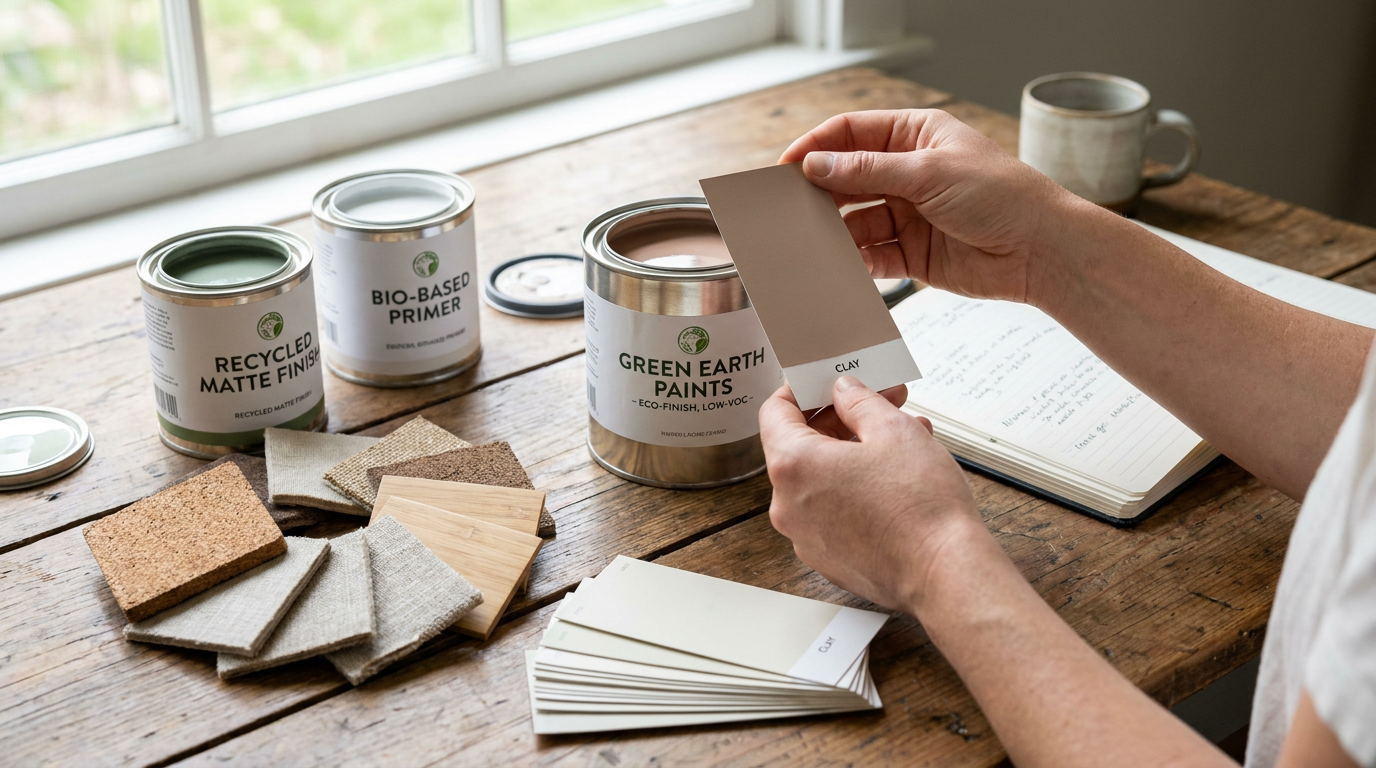
An eco-finish is any finishing material selected to reduce harm and improve long term performance, either for your household, for the environment, or ideally both. In practice, this often includes low-emission paints and coatings, formaldehyde-conscious cabinetry and shelving, natural or mineral wall finishes, responsibly sourced wood, and flooring systems designed to limit off-gassing. Some homeowners also include recycled-content materials, plant-based treatments, and products with verified environmental disclosures.
What makes this category slightly tricky is that there is no single universal definition. A product may market itself as eco-friendly because it contains recycled content, while another may earn that label because it has low VOC content. A third may be durable enough to last decades, which also makes it a sustainable choice even if its ingredient story is more complex. This is why thoughtful selection matters more than marketing language. The most reliable eco-finish is usually one that balances low emissions, strong durability, transparent documentation, and appropriate use for the space.
It also helps to separate appearance from performance. A finish can look earthy, natural, and handmade while still emitting irritants or requiring high-maintenance upkeep. On the other hand, a simple factory-finished product may be less romantic in branding but perform very well in emissions testing and longevity. The goal is not to buy the product with the greenest label design. The goal is to choose materials that genuinely support a healthier and more durable home.
Eco-finishes work best when they are treated as part of a broader healthy-home approach that includes ventilation, moisture control, and durable design choices.
Why eco-finishes matter beyond sustainability claims
For many households, the strongest reason to care about eco-finishes is not abstract environmental benefit. It is the practical experience of living through a renovation and then living in the space afterward. Conventional finishes can bring strong odors, lingering chemical smells, and concerns about indoor air quality, especially in tightly sealed modern homes. Choosing lower-emission materials can reduce that burden and make a project feel less disruptive from the beginning.
The U.S. Environmental Protection Agency and green building guidance from USGBC both emphasize that low-emitting materials can help reduce indoor pollution, especially during remodeling. At the same time, they also stress that ventilation and good installation practices remain important. This is a useful reality check. No paint, adhesive, or finish should be expected to solve indoor air quality by itself. A healthier renovation comes from the combination of better products, proper curing, fresh air, moisture management, and skilled application.
Eco-finishes also influence how a home ages. Durable coatings that resist premature wear, flooring that can be refinished rather than discarded, and wood products chosen for stability and low emissions can reduce replacement cycles over time. That matters both financially and environmentally. Replacing a cheap finish every few years often costs more in total and creates more waste than choosing a better product once.
There is also a design benefit that deserves more attention. Many eco-finishes have a quieter, more tactile quality than heavily processed alternatives. Mineral paints, natural oils, lime-based plasters, matte low-VOC coatings, and real wood surfaces often create a layered, grounded look that feels timeless rather than trend-driven. Sustainability, in this sense, can support a home that is both elegant and enduring.
The biggest categories to focus on first
If you are trying to make better material choices without getting overwhelmed, it helps to focus on the products that cover the most surface area or contribute most directly to indoor air concerns. In a typical home, that usually means paint, primers, coatings, adhesives, sealants, flooring, underlayments, cabinetry, shelving, trim, and composite wood components. Starting here gives you the best return on your effort because these materials are used in large quantities and often sit very close to daily living spaces.
A room by room approach tends to work well. In bedrooms and living areas, paint and flooring are often the highest-impact finish decisions. In kitchens and bathrooms, cabinetry, sealants, and moisture-resistant coatings become more important. In basements, moisture control and mold resistance may shape which “green” materials are actually practical. And for exterior work, durability through climate exposure matters just as much as emissions or sourcing.
This measured approach is also kinder to your budget. You do not need to replace every finish in your home to make meaningful progress. If a renovation involves repainting a bedroom, installing a new vanity, or replacing tired flooring in one part of the house, that is an opportunity to choose lower-emission and more durable products in a focused way. Sustainable decisions often become easier when they are attached to a real project rather than imagined as a full-house transformation.
Paint and wall finishes: the easiest place to start
For many homeowners, low-VOC or zero-VOC paint is the most accessible entry point into eco-finishes. Paint covers large surface areas, is frequently updated, and is a common source of renovation odour. Green Seal notes that paints with fewer than 50 grams per litre of VOCs are generally considered low-VOC, while zero-VOC paints are under 5 grams per litre. It also points out an important detail that many shoppers miss: colorants can affect the final VOC level, so a base labeled zero-VOC may not remain at that level once tinted.
This is one reason to look beyond a simple front-label claim. VOC content is helpful, but it does not tell the whole story. USGBC’s low-emitting materials guidance is performance-based and focuses on actual emissions rather than only VOC content. In practical terms, that means the best paint choice is not just one with a low number on the can, but one with credible emissions testing, clear documentation, and a finish quality appropriate for the room.
For walls, ceilings, and trim, the goal is to find a product that balances low emissions with washability, touch-up performance, and long term appearance. A paint that needs frequent repainting because it scuffs too easily may not be the greener option in real life. Matte and eggshell low-emission paints can work beautifully in bedrooms and living rooms, while kitchens and bathrooms often need more scrubbable formulations that still meet strong emissions criteria.
Natural and mineral wall finishes can also be worth considering, especially for those drawn to texture and depth. Limewash, clay paint, and mineral-based coatings are increasingly available and can create a soft, breathable finish with distinct visual character. That said, natural does not automatically mean safer or better. Some natural finishes may have strong odors, specialty installation requirements, or maintenance needs that do not suit every household. The right choice depends on the room, the installer, and your expectations for upkeep.
How to choose paint more confidently
When comparing paints, start with product data rather than brand messaging. Look for low-emission certification where available, review technical sheets, and confirm that the final tinted formulation still aligns with your goals. If you are sensitive to odors or renovating a bedroom, nursery, or frequently used family space, ask specifically about curing time and ventilation recommendations after application. A thoughtful paint store or contractor should be able to answer these questions clearly.
It is also wise to plan your painting schedule around ventilation. Even lower-emission products should be applied with windows open where possible, fans used appropriately, and enough dry time allowed before heavy occupancy. The practical lesson here is reassuring rather than restrictive. Better paint helps, and so do better renovation habits.
Cabinetry, shelving, and wood products: where formaldehyde matters
If there is one category where homeowners in Canada should pay close attention, it is composite wood products. Health Canada states that formaldehyde is emitted by more than 90 percent of select tested composite wood products, and that emissions increase with higher temperature and humidity. That makes cabinetry, shelving, built-ins, plywood, furniture panels, and some flooring underlayments especially important when planning an eco-finish strategy. Canada also published amended formaldehyde emissions regulations in December 2024, which reflects how significant this issue is.
Composite wood is common because it can be cost-effective, stable, and easy to manufacture. The concern is not that every engineered wood product should be avoided, but that homeowners should ask better questions about what they are buying. Products made with added formaldehyde resins can contribute to indoor air pollution, particularly in new installations or poorly ventilated spaces. This is why low-emission panels, no-added-formaldehyde products, and transparent sourcing are worth prioritizing.
There is also room for nuance here. Solid wood is often seen as the ideal sustainable choice, and in many cases it is excellent, especially when responsibly sourced. Natural Resources Canada notes that wood products can store carbon for long periods and may provide substitution benefits compared with more carbon-intensive materials. But sustainability depends on more than species alone. A responsibly sourced, well-finished wood product that lasts decades is usually preferable to a poorly made “natural” option that warps, requires replacement, or uses questionable coatings.
What to look for in cabinets and millwork
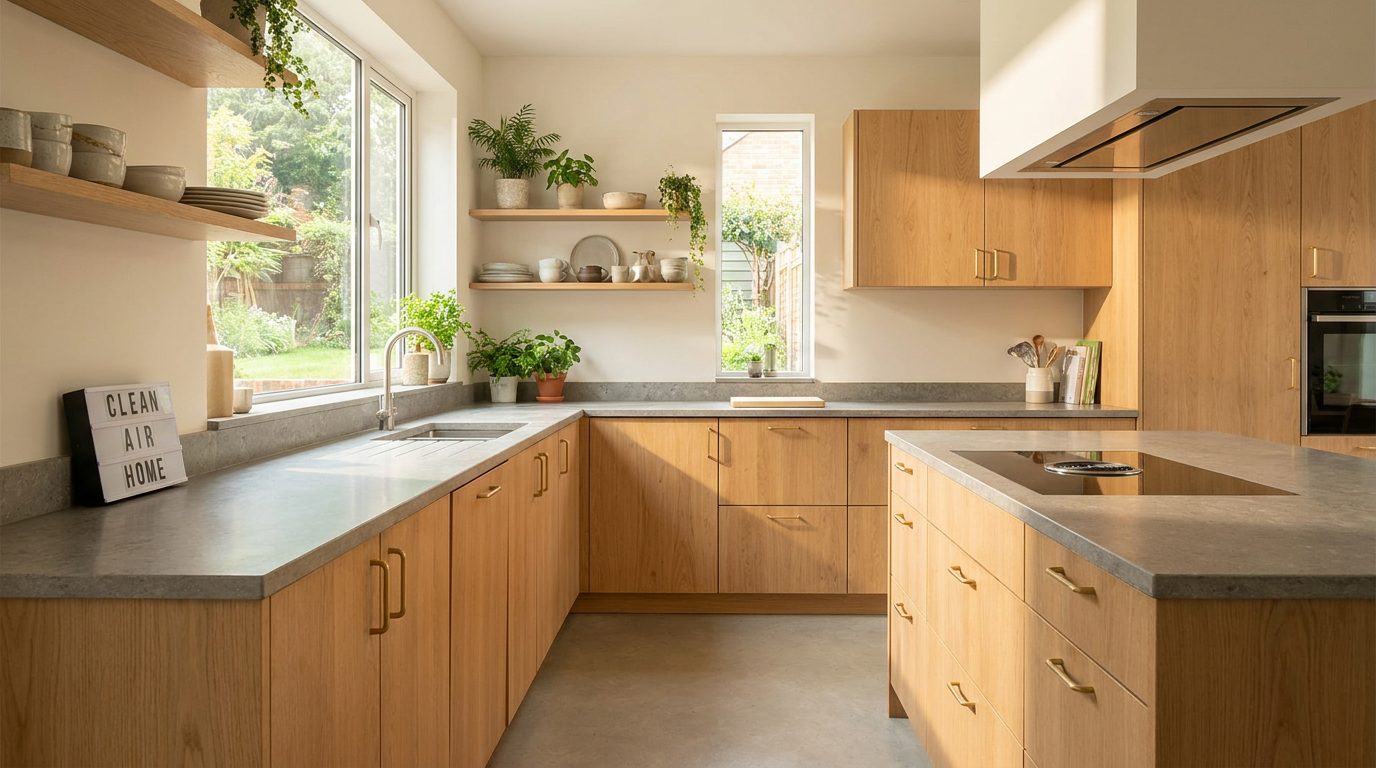
When selecting cabinets, shelves, or built-ins, look for products that disclose panel composition and emissions information. FSC-certified wood can help address responsible forestry, while low-emission certifications or product disclosures can help address indoor air quality. If a cabinet line uses engineered panels, ask whether they meet formaldehyde emissions standards and whether finishes or adhesives are also chosen for low emissions. This combination matters because a low-emitting board can still be paired with a higher-emitting coating.
Factory-finished cabinetry can sometimes be a strong option because finishes are applied in controlled settings, which may support consistency and reduce on-site chemical exposure. That does not make every factory finish superior, but it can be a practical advantage. Again, transparency is key. The best suppliers are usually the ones willing to share technical documentation rather than asking you to rely on vague sustainability language.
Flooring and underlayments: balancing comfort, durability, and emissions
Flooring influences comfort more than almost any finish category because it covers so much area and is in constant contact with daily life. It affects acoustics, cleaning routines, indoor air quality, visual warmth, and long term durability. From an eco-finish perspective, the best flooring decisions are rarely about one perfect material. They are about balancing low emissions, repairability, sourcing, maintenance, and suitability for the room.
Hardwood remains a compelling option when responsibly sourced and properly finished. It can last for decades, be refinished instead of replaced, and store carbon over time. Engineered wood can also perform well, especially in spaces where dimensional stability matters, but the composition of the core and the chemistry of adhesives should be examined more carefully. Asking about low-emission adhesives and formaldehyde-conscious manufacturing is especially important here.
Natural linoleum is another material worth more attention than it often receives. Made from largely natural ingredients such as linseed oil, cork dust, and wood flour, it can be durable, resilient underfoot, and suitable for many family spaces. Cork can also be attractive for comfort and acoustic softness, though finish quality and moisture suitability vary by product. Tile can be excellent for durability and maintenance, though grout, sealers, and installation adhesives still matter in the overall finish system.
Carpet is often the most complicated category because it can involve fibers, backings, adhesives, and pads with differing emissions profiles. If you want softness in a bedroom or family space, seek low-emission carpet systems and consider area rugs made from natural fibers over low-emission hard flooring. As with other finish choices, the system matters as much as the visible top layer. Underlayments, adhesives, and site-applied sealers can shape the final indoor air experience.
Sealants, adhesives, and coatings: the quiet materials that matter a lot
Many homeowners focus on visible materials and forget the supporting products that help hold everything together. Yet sealants, adhesives, caulks, stains, and clear coats can be major contributors to indoor air pollution during renovation. Health Canada specifically includes glues, varnishes, and adhesives among common VOC sources. This means an otherwise thoughtful project can be undermined if these secondary materials are selected carelessly.
Fortunately, there has been steady improvement in this category. Many manufacturers now offer lower-emission sealants and adhesives designed for residential interiors, and technical standards are becoming easier to compare. South Coast AQMD Rule 1113, while specific to architectural coatings, is often used as a reference point in North America for VOC content expectations in coatings. Homeowners do not need to become code specialists, but it helps to know that stronger benchmarks exist and can guide product selection.
For clear finishes on wood, look for products that combine low emissions with realistic durability. Waterborne finishes have improved significantly and can be a practical option for floors, trim, millwork, and furniture in many settings. Natural oils and waxes can also be beautiful, especially where touch-up and patina are welcome, but they may require more maintenance and should still be evaluated for solvents and drying agents. The greener option is often the one that truly fits the room and the household, not the one with the most romantic story.
The role of embodied carbon in finish choices
Indoor air quality tends to dominate conversations about eco-finishes, and understandably so, because people feel it immediately. But there is another layer that matters just as much over time: embodied carbon. According to CAGBC, embodied carbon includes the emissions associated with raw material extraction, manufacturing, transportation, installation, maintenance, and end-of-life stages. In lower operational carbon buildings, this share can be substantial.
For homeowners, embodied carbon becomes relevant in refreshingly simple ways. A finish with a long service life is often better than one that must be replaced every few years. A refinishable wood floor may have advantages over a disposable surface. Locally available materials can reduce transportation impacts. A product with an Environmental Product Declaration, or EPD, gives you a clearer sense of how it performs across its lifecycle, even if the document itself looks technical at first glance.
This does not mean every renovation needs a carbon calculator. It means homeowners can ask a few grounded questions: Will this material last? Can it be repaired? Is its sourcing credible? Is there documented information about its environmental profile? Does it help avoid wasteful replacement? These are practical questions, and they often lead to more satisfying design decisions as well.
How to read product claims without getting lost
One of the biggest misconceptions around eco-finishes is that a product labeled green, natural, or non-toxic has already passed every relevant test. In reality, product claims vary widely. A low-VOC label may refer to content rather than actual emissions. A natural product may still include solvents or trigger sensitivities. A renewable material may have a short lifespan or high-maintenance finish chemistry. This is why a calm, evidence-based approach is more useful than trying to memorize every label on the market.
As a general rule, it is wise to look for a combination of signals rather than a single promise. That may include low-emission certification, VOC content disclosure, ingredient transparency, sourcing certification such as FSC for wood, and environmental documents like EPDs or Health Product Declarations. USGBC’s performance-based approach is helpful here because it reminds us that emissions in actual use matter more than marketing language alone.
If you are standing in a showroom or reviewing samples with a contractor, a few questions can go a long way. Ask what the product is made from, whether it has third-party emissions testing, whether any adhesives or coatings are part of the system, how long it typically lasts, and what maintenance it requires. If the answers are vague, that is useful information too. Informed brands and suppliers are usually willing to show their work.
A practical room by room approach
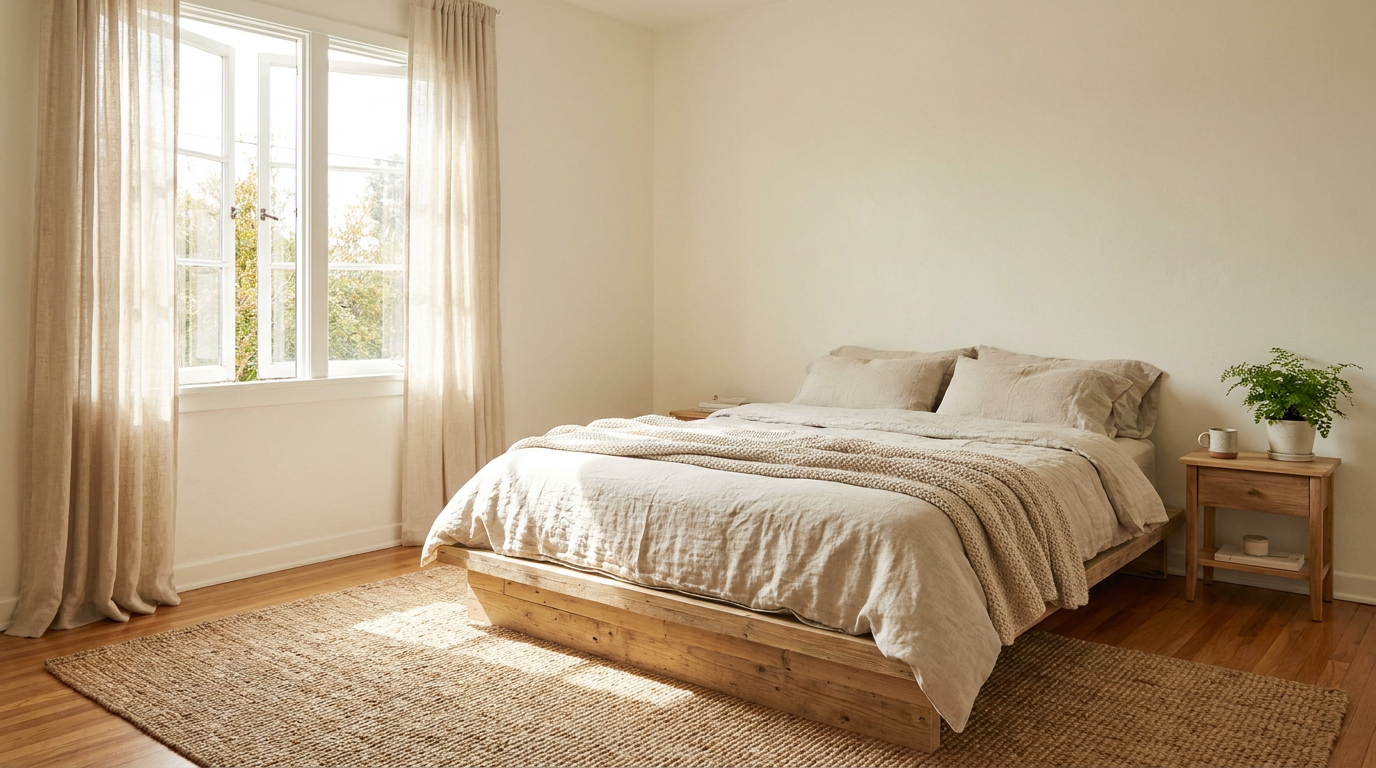
The most manageable way to incorporate eco-finishes is to follow a room by room plan. In bedrooms, prioritize low-emission paint, flooring, and furniture or built-ins made from low-emitting wood products. Because these are spaces where people spend long hours, comfort and indoor air quality tend to matter more than flashy materials. Softer palettes, durable matte finishes, and natural fiber textiles can also reinforce the feeling of calm that healthier materials support.
In kitchens, focus on cabinetry, panels, sealants, and durable surfaces that are easy to maintain. This is often where formaldehyde-conscious choices make a real difference because so much millwork is installed in a concentrated area. Factory-finished cabinetry with low-emission documentation, responsibly sourced wood, and carefully selected sealants can create a kitchen that feels refined and easier to live with during installation and after occupancy.
Bathrooms require a slightly different mindset because moisture resilience is non-negotiable. This is where some eco-finish ideals need to be grounded in building science. A finish that is “natural” but poorly suited to repeated humidity may fail quickly and create bigger problems. In bathrooms, the most sustainable choice is often the one that controls moisture well, resists damage, and avoids premature replacement while still meeting low-emission goals where possible.
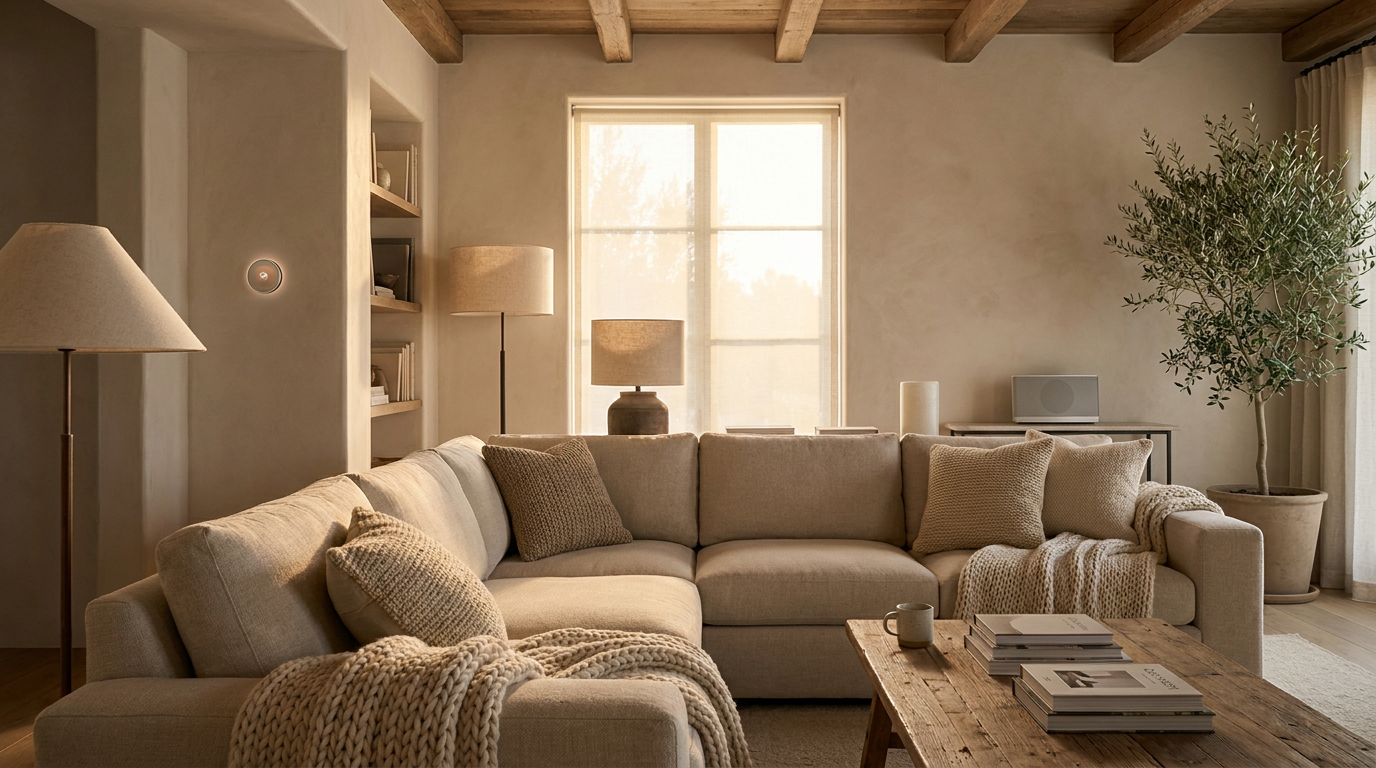
Living rooms and family areas usually offer more flexibility, which makes them a good place to experiment with mineral paints, natural plasters, wood details, or lower-impact flooring upgrades. If you are interested in texture and character, this is often where eco-finishes can become most visibly expressive. The beauty of a breathable wall finish or warm wood detail is that it can improve the atmosphere of a room without asking for dramatic design gestures.
Ventilation, curing, and installation still matter
It is tempting to believe that buying better materials completes the job, but installation practices remain a major part of the equation. EPA guidance on remodeling and indoor environmental concerns emphasizes that even lower-emitting materials should be paired with ventilation and sensible jobsite management. This matters during painting, flooring installation, cabinet installation, and any work involving adhesives, stains, or coatings.
Ventilation helps dilute and remove pollutants released during application and curing. If weather allows, opening windows and doors, using exhaust fans appropriately, and allowing extra dry time before sleeping in a space or moving soft furnishings back in can all reduce exposure. In larger projects, sequencing rooms so that sensitive occupants spend less time near active work zones can also help. These are not dramatic interventions. They are small practical habits that make good materials perform better.
Contractor communication matters too. If eco-finishes are important to you, discuss them early and in writing. Confirm substitutions are not made without approval, ask where products will be stored, and verify what ancillary materials will be used. Many strong eco-finish plans fall apart not because homeowners chose badly, but because they specified one thing and the installer used another adhesive, caulk, or coating on site.
Common misconceptions worth clearing up
One of the most persistent myths is that low-VOC automatically means non-toxic. It does not. VOC content is only one piece of the picture, and emissions profiles can vary based on the formula, the colorant, application conditions, and curing. Another common belief is that zero-VOC paint solves indoor air quality by itself. It helps, certainly, but ventilation, moisture control, and the rest of the material palette still matter.
Natural materials are also often treated as inherently safer, which is not always true. Some natural finishes can produce strong odours, contain solvents, or create sensitivities for certain users. Likewise, some high-performance synthetic materials may have lower verified emissions than untested alternatives marketed as natural. This is why performance data and transparency are more dependable than assumptions about what sounds healthy.
There is also a tendency to think embodied carbon only matters in large commercial projects. In reality, repeated home renovations, frequent material replacement, and disposable finishes all add up. A homeowner does not need to pursue perfection to make a meaningful difference. Choosing one durable, repairable, well-documented finish over a shorter-lived alternative is already a sensible climate-conscious decision.
How to build an eco-finish plan that feels realistic
If you are beginning from scratch, start by identifying your top priorities. For some households, health and odour reduction are most important. For others, it may be durability, ethical sourcing, or lowering embodied carbon where possible. Ranking these priorities helps narrow decisions quickly and keeps the process from becoming emotionally exhausting. It is easier to compare products when you know what matters most in your daily life.
Next, focus on the highest-impact categories for your project. If you are repainting, choose a low-emission paint with good durability and ask about tint effects and cure time. If you are redoing a kitchen, put extra energy into cabinetry and panel products. If you are replacing flooring, think beyond the visible surface and evaluate underlayments, adhesives, and finishing systems. This kind of targeted effort usually leads to better results than trying to optimize every product in every room at once.
Finally, give yourself permission to choose progress over purity. Eco-finishes are not about getting every material decision perfectly right. They are about creating a home that is healthier, more resilient, and more aligned with your values over time. Even small upgrades, when made carefully, can shift the feel of a home in meaningful ways.
Final thoughts: sustainability that feels livable
The most appealing thing about eco-finishes is that they make sustainability feel tangible. They are not a distant idea or a technical badge hidden in a construction file. They are the walls you touch, the floor you walk on, the cabinet you open every morning, and the air you notice less because it feels cleaner and calmer. That kind of sustainability is not performative. It is quietly practical.
As the market continues to improve, homeowners have more access to low-emission products, stronger certifications, better documentation, and more refined design options than ever before. The shift noted by green building organizations toward transparency and performance-based evaluation is good news for everyday renovations. It means you do not need expert-level training to make thoughtful choices. You simply need a framework, a few trusted questions, and the willingness to start with the finishes that matter most.
In the end, eco-finishes are less about doing everything differently and more about doing familiar things more wisely. Paint the room, but choose a better paint. Replace the cabinets, but ask harder questions about the panels and coatings. Refresh the flooring, but think about durability, repairability, and emissions together. That is how greener living becomes achievable: not through pressure, but through well-made decisions that feel good long after the renovation dust settles.
Quick checklist for choosing eco-finishes
-
Start with high-impact materials such as paint, flooring, cabinetry, adhesives, and sealants.
-
Look for low-emission certification and transparent technical documentation, not just green marketing claims.
-
Ask about formaldehyde emissions in composite wood products, especially for kitchens, shelving, and built-ins.
-
Consider durability, repairability, and maintenance as part of sustainability, not separate from it.
-
Use ventilation and allow proper curing time during and after installation.
-
Where possible, choose responsibly sourced wood and products with disclosures such as EPDs or HPDs.
-
Take a room by room approach so the process stays manageable and budget-friendly.
When approached this way, eco-finishes stop feeling intimidating. They become what they should have been all along: smart, elegant material choices that help a home look better, feel better, and last longer.


No Comment! Be the first one.