



Development financing is often treated like a technical subject reserved for lenders, developers, and public finance specialists. In reality, it is one of the clearest determinants of how cities evolve, how quickly housing gets delivered, and whether growth becomes inclusive or exclusionary. When people ask why one project moves forward while another stalls for years, the answer is often found not only in planning policy or design quality, but in the financing structure underneath the project. Capital has a timetable, it has conditions, and it has a cost. Those factors shape what gets built, when it gets built, and at what price point it can enter the market.
Table Of Content
- What Is Development Financing?
- Why Financing Shapes Urban Growth, Not Just Individual Projects
- The Core Components of a Housing Development Capital Stack
- Land Acquisition and Early Capital
- Construction Debt and Equity
- Soft Funding, Grants, and Take-Out Financing
- CMHC and the Strategic Role of Low-Cost Lending
- Municipal Finance Is Housing Finance
- Public-Private Partnerships and the Politics of Risk
- Innovative Financing Models and New Delivery Priorities
- Common Misconceptions About Development Financing
- How Better Financing Strategy Can Improve Housing Outcomes
- The Strategic Future of Urban Development Finance
- Conclusion
In the Canadian and broader North American context, development financing has become a central policy issue because housing demand remains strongest in urban centres while delivery remains constrained by cost, infrastructure, approvals, and borrowing conditions. Federal, provincial, and municipal governments are no longer discussing housing supply as a planning issue alone. They are increasingly recognizing that housing production depends on a coordinated financial system that supports land servicing, infrastructure delivery, pre-development work, construction, and long term operations. The city that understands this relationship is better positioned to grow with stability and purpose.
The core reality is simple. Development financing determines who pays, when they pay, and how much risk each stakeholder bears. That is why financing is not just a back-end concern after a plan is approved. It is a strategic lever that influences density, affordability, project timing, land value, and the pace of urban growth. A well-designed financing structure can unlock rental housing, mixed-use intensification, and transit-oriented development. A poor one can delay housing for years, inflate end prices, and leave infrastructure gaps unresolved.
This is particularly important at a time when interest rates have remained elevated compared with the ultra-low cost borrowing period that shaped many prior development assumptions. Higher rates have changed the math for developers, lenders, municipalities, and governments. Projects that once penciled out under conventional financing now require concessional loans, grants, deferrals, or alternative delivery structures to remain viable. In that environment, development financing stops being a narrow accounting exercise and becomes a city-building priority.

What Is Development Financing?
At its most basic level, development financing is the collection of funding tools used to pay for land acquisition, land servicing, infrastructure, approvals, design, construction, and long term project stabilization. Many people assume financing begins when a construction loan is issued, but by that point a project has already consumed significant capital. Before a shovel enters the ground, there are legal costs, consultant fees, due diligence reports, planning applications, servicing studies, environmental assessments, and carrying costs on land. Those early expenditures can be substantial, and they carry meaningful risk because they are incurred before a project has certainty.
That is why sophisticated urban projects rely on what the industry calls a capital stack. The stack typically includes land acquisition capital, pre-development capital, construction debt, equity, grants or soft funding, and longer term take-out financing once a project is completed and stabilized. Each layer serves a different purpose and comes with different expectations around return, repayment, security, and risk. Equity usually absorbs the highest risk and seeks the highest return. Senior debt is generally lower return but more protected. Grants and concessional funding can lower the overall cost of capital and improve affordability outcomes.
Understanding the capital stack matters because financing is not neutral. Cheap or patient capital can support deeper affordability, more ambitious density, or longer project horizons. Expensive capital often pushes projects toward higher rents, faster timelines, or reduced design flexibility in order to preserve feasibility. In practical terms, that means the structure of financing directly affects the built form and social outcome of urban growth. A city that wants more rental housing, more complete communities, and more resilient infrastructure cannot ignore the structure and price of capital.
In Canada, this conversation has become more prominent as housing policy increasingly focuses on reducing financing friction. Federal tools, particularly through the Canada Mortgage and Housing Corporation, have played a significant role in making rental development more viable. CMHC’s reporting in 2025 continued to emphasize that housing finance tools support both development and broader market stability, especially as urban demand remains strong. That message reflects an important policy shift. Housing finance is no longer being viewed simply as a market service. It is increasingly understood as a strategic instrument of national urban policy.
Why Financing Shapes Urban Growth, Not Just Individual Projects
When we talk about urban growth, we often focus on where density should go, how neighbourhoods should evolve, and what infrastructure should support them. Those are essential questions, but financing determines whether those ideas become reality. A municipality can designate land for higher density and a province can set housing targets, yet if the funding for roads, water, wastewater, parks, and vertical construction does not align, growth remains theoretical. In that sense, financing is the connective tissue between policy ambition and physical delivery.
Consider a transit-oriented site with strong planning support and real housing demand. On paper, it may appear ideal for a significant mixed-use residential project. But if land costs are high, utility upgrades are expensive, development charges are front-loaded, and construction debt is costly, the project may be delayed or redesigned downward. Conversely, if the site benefits from public land contributions, lower cost debt, or deferred municipal charges, a more ambitious outcome may become possible. Financing therefore influences not only whether a project proceeds, but whether a city captures the full value of strategic sites.
This has direct implications for housing supply. The pace of supply depends on the speed with which viable projects can move through land assembly, servicing, approvals, and construction. Every financing bottleneck creates delay, and delay in a high-demand market translates into higher carrying costs and ultimately higher rents or sale prices. The result is that financing conditions become embedded in the cost of housing. That is why the current discussion around affordability cannot be separated from the broader financing environment.
In fast-growing cities, development financing is not a back-office detail. It is a front-line force that shapes supply, affordability, and the timing of urban transformation.
The Core Components of a Housing Development Capital Stack
To understand how financing influences urban growth, it helps to look more closely at the main layers of a typical project. While every development has its own structure, most significant housing projects rely on several sources of capital rather than a single funding stream. The more complex the public objectives, such as affordability, mixed income tenancy, or integrated community infrastructure, the more layered the stack tends to become.
Land Acquisition and Early Capital
Land acquisition is often the first major financial hurdle. Capital used for land purchases can come from developer equity, private investors, or shorter term financing secured against the property. This phase carries strategic risk because land is typically acquired before full planning certainty is achieved. In strong markets, developers may accept this risk in exchange for future upside, but in a high interest rate environment the cost of carrying land can become severe. That makes speed in approvals and clarity in planning even more important.
Pre-development capital comes next and funds the work required to convert land into an approvable project. This includes planning consultants, architects, engineers, legal counsel, market studies, servicing analysis, and municipal application fees. These expenditures are not always visible to the public, but they are critical and can reach significant amounts before construction financing is even discussed. If projects face prolonged uncertainty during this stage, costs rise without any offsetting revenue. That risk can discourage ambitious or affordable projects unless some form of public support or streamlined approvals is in place.
Construction Debt and Equity
Construction debt is usually the largest and most visible financing component. It funds the actual building phase and is typically provided by banks, credit unions, pension-backed lenders, or specialized real estate financiers. Construction lenders pay close attention to lease-up assumptions, contingencies, borrower experience, municipal approvals, and market conditions because they need confidence that the completed asset will support repayment. In periods of elevated rates, this debt becomes more expensive and more difficult to underwrite, especially for rental projects where income growth may not immediately keep pace with construction costs.
Equity remains essential because lenders rarely fund the full cost of development. Equity can come from the developer, institutional investors, family offices, private funds, or public sector partners in certain structures. It is patient in some cases and highly return-sensitive in others. The required equity contribution affects the scale and speed of projects because many otherwise feasible developments stall when enough risk capital cannot be assembled. This is one reason public interventions that reduce overall project risk can have an outsized effect on supply.
Soft Funding, Grants, and Take-Out Financing
Projects with affordability goals often depend on grants, fee relief, tax support, or concessional loans to close the gap between development cost and sustainable operating income. Affordable housing is rarely financed through grants alone. More often, it requires layered support that may include subsidized debt, public land, charge deferrals, and in some cases operating assistance after completion. This is a crucial point because capital support without operating viability can still leave a project financially fragile.
Take-out financing is the longer term mortgage or permanent debt that replaces the construction loan once the project is completed and stabilized. For rental buildings, the availability and pricing of take-out financing strongly influence what lenders are willing to provide during construction. If permanent financing terms are uncertain or too expensive, the entire development stack can become unstable. This is why a healthy housing finance ecosystem needs to support the full life cycle of a project rather than focusing on only one stage.
CMHC and the Strategic Role of Low-Cost Lending
Few financing tools have received as much attention in Canada as CMHC’s Apartment Construction Loan Program. The reason is straightforward. Rental apartment projects are highly sensitive to the cost and availability of debt. Unlike condominium projects that may secure revenue through pre-sales, purpose-built rental projects rely on long term operating income, which means their economics are heavily affected by borrowing rates, amortization periods, and construction carrying costs. When rates rise, many rental projects become far more difficult to launch.
The Apartment Construction Loan Program was designed to respond to that challenge by providing low-cost loans that improve project feasibility and support rental supply. It is a major federal instrument because it lowers financing friction at a point in the stack where private capital can become prohibitively expensive. Budget 2024 further signaled the strategic importance of this approach by earmarking funding for housing above commercial space and for prefabricated or innovative homebuilding methods through the program. That is not just a technical adjustment. It reflects a broader effort to support more flexible urban intensification and faster delivery models.
This matters especially in urban centres where rental demand remains the strongest. CMHC has continued to stress that housing finance tools support both development and market stability, which is an important framing. Stable access to development financing can reduce the stop-and-start cycles that plague housing delivery. It can also support a more deliberate pipeline of purpose-built rental housing rather than leaving supply entirely dependent on moments of unusually cheap private debt.
From a strategic standpoint, low-cost federal lending can do more than rescue individual projects. It can influence the types of projects pursued in the first place. If developers know that rental, mixed-use, or innovative building forms have access to more favourable financing, they may allocate capital differently, pursue more urban sites, and advance projects that would otherwise remain dormant. That is a powerful example of financing shaping the long term direction of city growth.
Municipal Finance Is Housing Finance
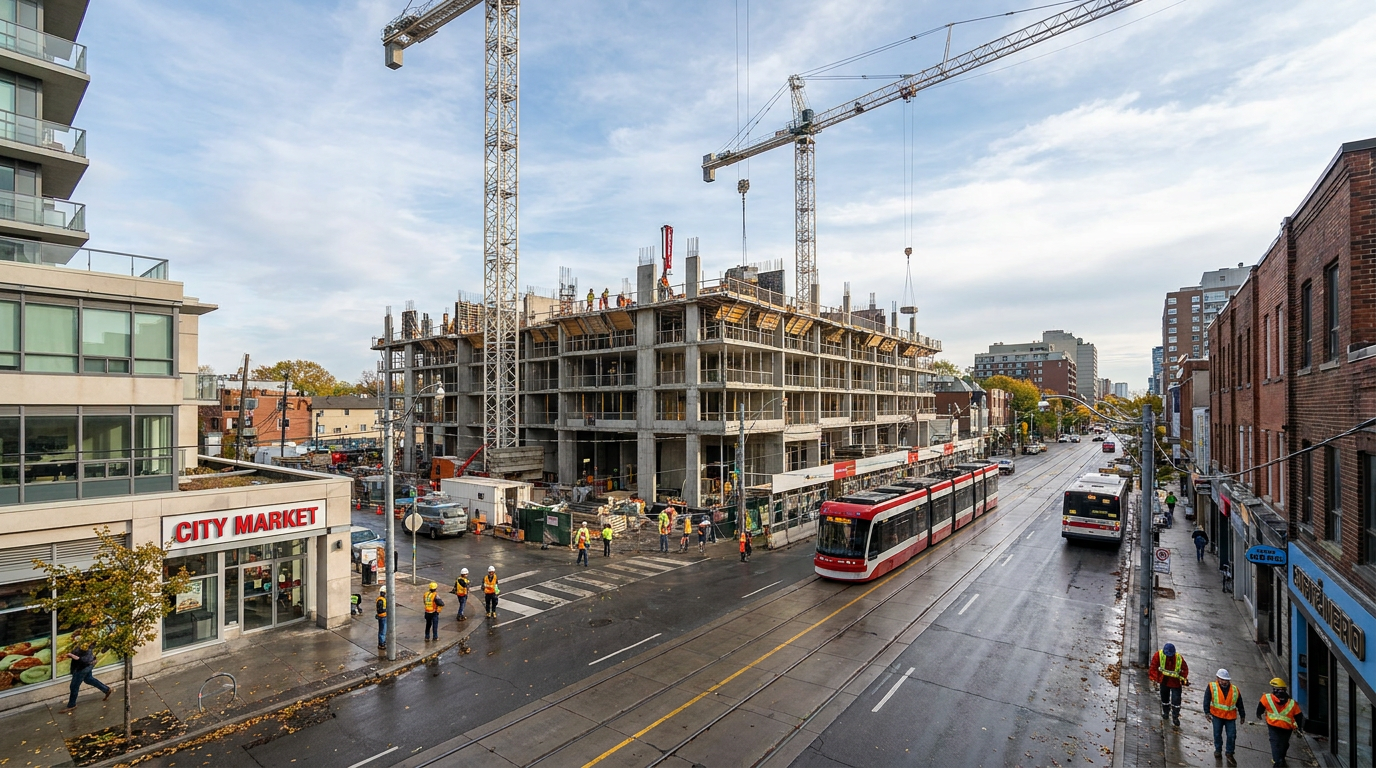
One of the most important insights in the current policy conversation is that municipal finance is effectively housing finance. This is not rhetorical. It is an economic fact. Development charges, development cost charges, and related municipal levies are a principal way local governments recover the cost of growth-related infrastructure such as roads, water systems, wastewater capacity, and parks. These systems are necessary, and cities need mechanisms to pay for them. But the timing and scale of these charges directly affect project viability.
When charges are set high and payable early, they add to the upfront cost burden on development. That burden must be financed, carried, and eventually absorbed through rents, sale prices, land value adjustments, or some combination of the three. In markets where costs are already elevated, the additional pressure can make otherwise desirable projects unworkable. This is why CMHC and other observers have argued that municipal charges are not peripheral to housing affordability. They are deeply embedded in it.
There is no simple story here because development charges are not arbitrary fees by default. They are generally intended to recover real infrastructure costs generated by growth. The challenge is that cities face a difficult tradeoff between cost recovery and supply expansion. If infrastructure is underfunded, growth quality deteriorates and service deficits emerge. If charges are too aggressive, housing delivery slows and affordability worsens. Sound municipal finance policy requires balancing those objectives rather than treating them as separate issues.
Provincial and municipal governments can sometimes waive, reduce, or defer development-related charges for affordable, supportive, or non-profit housing. Those measures can materially improve feasibility by lowering upfront cash requirements and reducing financed costs during the most vulnerable project stages. Yet even here, the broader lesson is strategic. Fee relief works best when paired with infrastructure planning, land use certainty, and financing tools that support construction. Isolated interventions help, but integrated systems deliver more durable outcomes.
Public-Private Partnerships and the Politics of Risk
Public-private partnerships, often referred to as PPPs or P3s, are commonly used when governments want private capital and delivery expertise while retaining policy control over land use outcomes, infrastructure standards, or affordability objectives. In urban development, these partnerships are particularly relevant for large mixed-income communities, transit-oriented development, district-scale redevelopment, and projects involving public land. They are attractive because they can distribute risk across parties and accelerate delivery where the public sector alone may lack capacity or financing flexibility.
That said, PPPs should not be romanticized. They are not automatically cheaper than direct public delivery, and they are not inherently better aligned with public outcomes. Poorly structured partnerships can reduce transparency, create higher long term costs, or transfer too much risk back to the public after the fact. The key issue is not whether a project uses a PPP label. The key issue is how incentives, responsibilities, and performance obligations are designed.
The strongest PPP models tend to share several features. They have clear affordability commitments that are enforceable over time. They set transparent infrastructure and delivery standards. They allocate risk to the party best positioned to manage it. They also preserve enough public leverage to ensure that long term community outcomes are not subordinated to short term financial optimization. When those elements are present, PPPs can be an effective way to combine public purpose with private execution.
For cities facing severe housing shortages, the attraction of PPPs is obvious. Public land can be leveraged more productively, projects can move at greater scale, and capital can be mobilized faster than through conventional public budgeting alone. But that advantage only holds if the public sector enters the partnership from a position of strategy rather than desperation. The city must know what outcome it wants and structure finance accordingly.
Innovative Financing Models and New Delivery Priorities
The financing landscape is changing in response to new policy priorities and market pressures. Higher borrowing costs from 2024 through 2026 have increased the value of concessional finance, loan guarantees, and low-cost public lending. At the same time, governments are showing greater interest in financing tools that support prefabricated, modular, and other innovative building methods. These approaches are promising because they can shorten construction timelines, improve quality control, and potentially reduce risk in a sector where delay is expensive.
There is also growing attention on above-commercial-space housing and similar urban infill models. These forms are strategically important because they enable incremental intensification in already serviced areas, often near transit and existing amenities. If financing programs are structured to support them, cities can unlock meaningful supply without waiting for entirely new greenfield infrastructure. This is a strong example of why finance should be seen as a planning tool. The capital available for certain typologies can influence what kind of city is actually delivered.
Another important shift is the move toward integrated land-plus-infrastructure financing. Traditionally, housing support, infrastructure funding, and land strategy have often been treated as separate budget items or policy silos. That fragmentation weakens delivery because the economics of housing depend on all three. A major site may need public investment in utilities, flexible treatment of development charges, and affordable financing for vertical construction all at once. Treating those needs separately can delay a project that would make sense if assessed as a whole.
Urban growth at scale increasingly requires a district perspective rather than a parcel-by-parcel one. Financing tools should reflect that. The more a city can coordinate land assembly, servicing, transportation investment, and development capital, the greater its ability to shape complete communities rather than isolated buildings. This is where development financing becomes truly visionary. It moves beyond project rescue and starts to guide the structure of metropolitan growth.

Common Misconceptions About Development Financing
Public debate about housing often reduces financing to a single issue, usually borrowing costs or developer profit. While those factors matter, the real picture is more complex. Several misconceptions continue to distort policy discussions and make it harder to identify practical solutions. Clearing them up is essential if governments and communities want to improve supply outcomes.
-
Development financing is not just construction lending. It includes land servicing, infrastructure, pre-development costs, municipal fees, and permanent financing. Ignoring those layers leads to incomplete policy responses that solve one problem while leaving others intact.
-
Public-private partnerships are not automatically cheaper. They can improve speed and transfer certain risks, but only well-structured PPPs create lasting public value. Poor design can make them more expensive over time.
-
Development charges are not simply arbitrary obstacles. They are typically intended to recover legitimate growth-related infrastructure costs. The real issue is how to fund infrastructure without undermining affordability and feasibility.
-
Affordable housing does not get built through grants alone. Most affordable projects require layered capital stacks that include debt, equity, public support, and sometimes operating assistance. Capital subsidy without a viable operating model is rarely enough.
-
Lower interest rates alone will not solve housing shortages. Even when borrowing costs improve, projects can still be constrained by approvals, infrastructure capacity, labour supply, and land availability. Financing is critical, but it works within a larger delivery system.
How Better Financing Strategy Can Improve Housing Outcomes
If financing shapes urban growth so powerfully, then better financing strategy should be a central part of housing policy. That begins with recognizing that the best interventions are rarely isolated. Cheap land can unlock a site, but only if infrastructure and construction financing also align. Low-cost debt can improve rental feasibility, but only if approvals are timely enough to prevent that benefit from being consumed by delay. Development charge relief can help affordable housing, but long term operating resilience may still require separate support.
In practical terms, governments should think in terms of coordinated capital systems. Federal programs can reduce the cost of debt for rental and innovative housing forms. Provinces can create enabling rules around charges, tax treatment, or infrastructure alignment. Municipalities can improve certainty through servicing plans, approvals reform, and strategic use of local levies or deferrals. When these layers reinforce one another, project economics improve in ways that are larger than the sum of each individual policy.
The private sector also has a strategic role. Developers and institutional capital providers are most effective when they treat financing as an integral part of place-making rather than a transaction to be solved after design. Projects that are conceived with a realistic understanding of infrastructure, public goals, operating performance, and capital constraints are better positioned to attract supportive funding and move faster through risk review. The strongest projects are not simply well designed physically. They are well designed financially.
For large urban redevelopment sites, the ideal approach often combines public land strategy, infrastructure phasing, and mixed-capital structures from the outset. This allows cities to pursue affordability, density, and long term community benefits without relying entirely on one funding source or one delivery actor. It also supports better sequencing, which is often overlooked. Financing should help determine not just whether a district gets built, but how it unfolds over time in a way that sustains momentum and public trust.
The Strategic Future of Urban Development Finance
Looking ahead, the most successful cities will be those that understand development financing as a strategic urban system. Housing shortages, infrastructure deficits, and affordability pressures are all interconnected. They cannot be solved through planning regulation alone, nor through one-time subsidies that ignore the deeper mechanics of delivery. What is needed is a durable framework that aligns land, infrastructure, capital, and public purpose.
That means thinking carefully about where public dollars have the greatest leverage. In some cases, low-cost loans will do more than direct grants because they unlock large volumes of private delivery. In other cases, charge deferrals or public infrastructure commitments may be the intervention that turns a stalled site into an active housing district. In still other cases, the decisive move may be using public land through a structured partnership that secures affordability over the long term. The right answer depends on the project, the market, and the policy objective, but the principle remains constant. Finance must be shaped intentionally if growth is to be shaped successfully.
There is also a broader governance lesson here. City building is not just about vision statements or zoning maps. It is about creating a reliable pathway from concept to completion. Residents experience the consequences when that pathway fails. They see rents rise, projects stall, and infrastructure strain under unmet demand. Conversely, when financing systems are coherent and strategic, they make it possible for cities to add housing at scale, maintain economic competitiveness, and support more inclusive urban futures.
For Canadian cities in particular, this is a defining challenge. Urban centres continue to attract residents, jobs, investment, and immigration. Demand is not the problem. The problem is whether the financial architecture of development can support enough supply, at enough speed, with enough affordability, and with the necessary infrastructure to sustain quality of life. That is why development financing deserves far more public attention than it usually receives. It is one of the most powerful levers available in the effort to build better cities.
Conclusion
Development financing is not merely the mechanism that pays for buildings. It is the framework that determines the pace, form, and affordability of urban growth. It influences whether a city can convert land into complete communities, whether rental projects remain viable in high-rate environments, and whether public objectives can be embedded into large-scale redevelopment. From CMHC’s low-cost lending tools to municipal development charges, from layered affordable housing capital stacks to carefully structured PPPs, the financing model behind a project has profound consequences for what gets delivered.
The strategic lesson is clear. If governments want more housing, more quickly, and at a wider range of price points, they must treat finance as a central part of planning. If developers want to build resilient projects in uncertain markets, they must design their capital structures as carefully as their site plans. And if cities want growth that supports long term prosperity, they must align infrastructure funding, housing policy, and development economics instead of addressing each in isolation.
Urban growth succeeds when vision and feasibility move together. Development financing is where those two forces meet. Get it right, and cities can unlock supply, accelerate delivery, and shape stronger communities for decades to come.



No Comment! Be the first one.