



There is something unmistakably soothing about stepping into a beautiful hotel suite. The lighting feels softer, the bed looks impossibly inviting, the bathroom seems designed for exhale-worthy evenings, and even the smallest details suggest that comfort has been considered in advance. For many people, that feeling is the real appeal of luxury. It is not simply about expense or status. It is about being held by a space that feels calm, intentional, and deeply easy to live in.
Table Of Content
- Why Luxury Suite Concepts Resonate Right Now
- What Actually Makes a Space Feel Like a Luxury Suite?
- Start with the Bedroom: The Heart of the Suite Experience
- Create a Stronger Bed Wall
- Layer the Lighting Gently
- Use Drapery to Add Height and Softness
- Bring a Spa Mindset into the Bathroom
- Focus on Sensory Calm, Not Overload
- Comfort Should Feel Effortless, Including the Temperature
- Think Beyond Scent to Real Air Quality
- Use Quiet Luxury Principles in Shared Living Spaces
- Add a Lounge Moment
- Storage Is Part of the Luxury
- How to Make Luxury Suite Style Renter Friendly
- Wellness Stations and Small Ritual Corners
- The Role of Biophilic and Sensory Design
- What Not to Copy from a Hotel Suite
- A Step by Step Plan for Creating a Suite Inspired Home
- Luxury Suite Living for Families, Guests, and Aging in Place
- The Emotional Value of Bringing Hospitality Home
- Final Thoughts
Luxury suite concepts are the design principles behind a great hotel room — layered bedding, soft ambient lighting, spa-style bathrooms, and clutter-free surfaces — translated into everyday homes. Across North American design coverage, the conversation has shifted from showy decorating to restorative living: bedrooms are being reimagined as sanctuaries, bathrooms are taking cues from spas, and living areas are becoming softer, quieter, and more layered. Warm earthy palettes, tactile fabrics, cocooning shapes, and wellness-minded comforts now define upscale living, and these ideas are surprisingly adaptable for everyday homes and rentals. You do not need a full renovation or an unlimited budget to borrow the emotional logic of a suite. Many of the most memorable suite-inspired details, including a dramatic headboard, floor-length drapery, better bedding, layered light, hidden clutter control, and a small corner for winding down, are portable, affordable, and renter friendly.
The goal is not to copy a hotel room exactly. It is to create a home that offers the same sense of rest, ease, and quiet pleasure, while still reflecting the rhythm of real life.
In this guide, we will explore practical ways to bring luxury suite style into your home through the lens of comfort, wellness, and atmosphere. Whether you live in a suburban house, an urban condo, or a compact rental apartment, these ideas can help you design a space that feels more elevated and more personal at the same time.
The best luxury suite concept is not excess. It is a home that helps you feel restored, organized, and gently cared for every day.
Why Luxury Suite Concepts Resonate Right Now
Luxury suite style has become more appealing because people want more from their homes than visual polish alone. Home is now expected to support sleep, focus, recovery, self care, hosting, and emotional comfort. Design trends for 2025 and 2026 reflect that shift clearly. Bedrooms are becoming more enveloping, with richer colors, statement headboards, layered textures, and dramatic drapery. Boutique hotel inspired spaces are increasingly being used to support relaxation and wellness rather than simply impress visitors.
This matters because it makes luxury feel more human. The modern interpretation of upscale design is less about formality and more about how a room behaves throughout the day. Does it calm you when you wake up? Does it reduce visual noise? Does it encourage you to rest properly, put things away, and slow down? A luxury suite concept answers yes to those questions by combining beauty with convenience.
There is also a strong aspirational component. North America continues to be a major luxury residential market, and many people are drawn to the visual language of high end interiors even when they are not purchasing a true luxury property. Quiet luxury, organic textures, and wellness centered design have entered mainstream decorating, making suite inspired living feel attainable rather than remote. You can borrow the mood without needing the square footage.
What Actually Makes a Space Feel Like a Luxury Suite?
Before buying anything, it helps to understand what creates the effect in the first place. A luxury suite is rarely about one expensive object. More often, it is about how several sensory cues work together. The room feels cohesive. The bed is generously dressed. The lighting can shift from bright and practical to soft and ambient. There is somewhere to place a robe, a book, a glass of water, and a phone charger. The bathroom feels calm rather than chaotic. Clutter is minimal, and comfort is immediate.
At home, these same principles can be applied in simple, scalable ways. Think of luxury suite design as a mix of softness, order, and intention. Softness comes through textiles, curves, warm finishes, and layered lighting. Order comes through edited surfaces, hidden storage, and thoughtful placement of daily items. Intention comes through the rituals your space supports, whether that is better sleep, a slower skincare routine, a quiet reading moment, or easier mornings.
When you frame it this way, the concept becomes wonderfully practical. You are not chasing perfection. You are creating a home that is easier to inhabit beautifully.
Start with the Bedroom: The Heart of the Suite Experience
If there is one room that deserves your attention first, it is the bedroom. Recent design reporting has emphasized that bedrooms are becoming more cocoon like, richer in texture, and more emotionally protective. This aligns perfectly with the suite mindset. A great suite bedroom does not feel sparse or temporary. It feels layered, quiet, and complete.
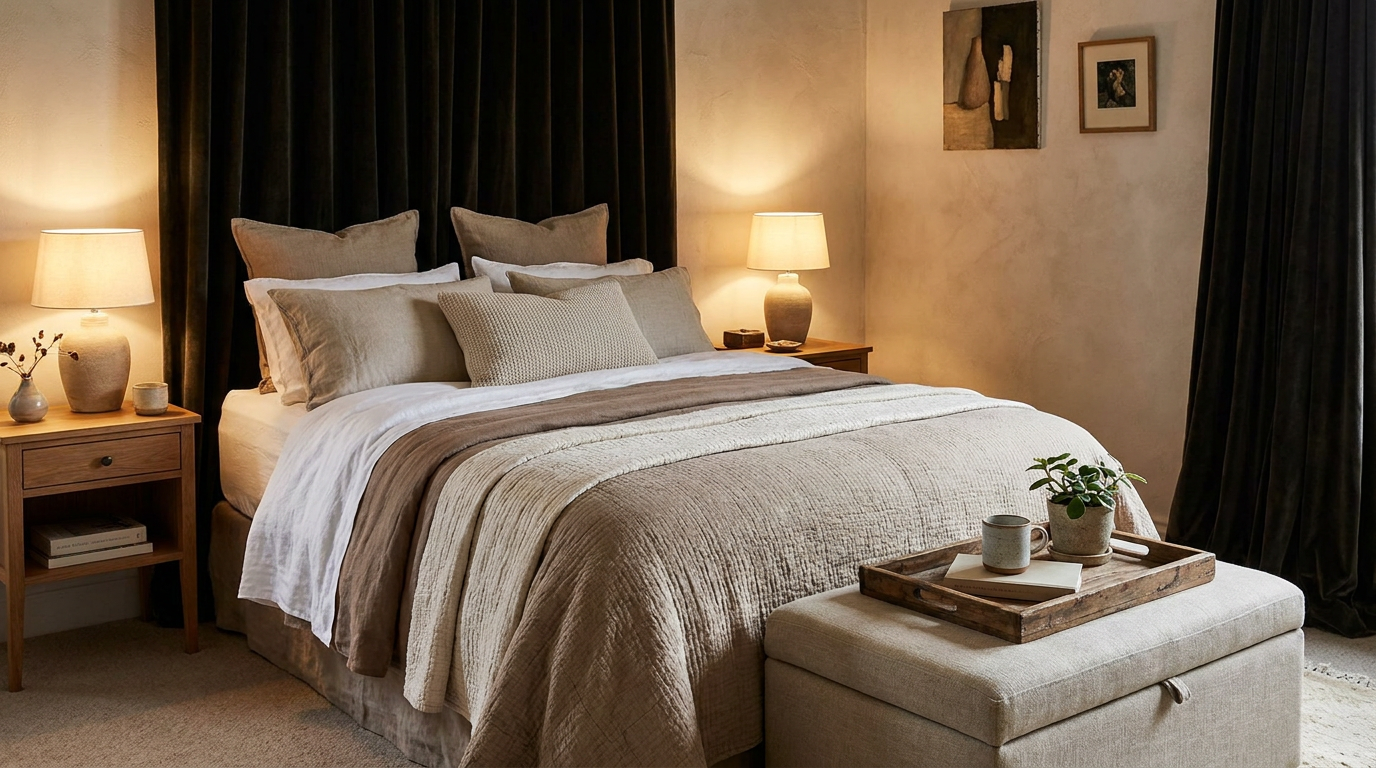
The easiest place to begin is with the bed itself. Bedscaping, a term that has become more visible in design coverage, treats the bed as the visual and emotional centerpiece of the room. This means paying attention not only to sheets and pillows, but to the overall shape, volume, and styling of the bed. A generous duvet, supportive pillows, a quilt or coverlet, and one tactile accent layer can instantly make a room feel more elevated.
You do not need a dozen decorative pillows or a designer mattress to achieve the look. What matters more is a sense of fullness and quality. Crisp sheets in breathable fabric, a mattress topper if needed, and bedding in tonal shades can create a boutique hotel effect without overwhelming the space. Warm neutrals, muted clay, soft olive, mushroom, oat, taupe, and creamy white all work beautifully for a suite inspired palette.
Create a Stronger Bed Wall
One of the most recognizable luxury suite features is a dramatic headboard. Design coverage has highlighted extended and oversized headboards as a powerful way to make a room feel larger and more polished. At home, this can be interpreted in many ways. An upholstered headboard, a wall mounted panel, a painted accent area behind the bed, or even a removable fabric treatment can add depth and presence.
For renters, this is especially helpful because it delivers impact without changing the room structurally. Peel and stick wall treatments, a large textile hung neatly behind the bed, or a freestanding headboard can all suggest the same upscale mood. The effect is strongest when the headboard visually anchors the bedside tables and lamps, creating a horizontal line that feels intentional and balanced.
Layer the Lighting Gently
Luxury bedrooms never rely on one harsh overhead fixture. They use light in layers so the room can adapt to different moments. At home, that means combining ambient light with task light and low evening light. Bedside lamps are a must, and wall sconces can be lovely if they suit your setup. A dimmable floor lamp in a corner or a soft accent light on a dresser can make the room feel more considered.
Warm bulbs make a significant difference. Instead of bright, cool light that flattens the room, choose a warmer glow that softens skin tones, textiles, and wall color. This helps create the cocooning atmosphere people love in hotels. It also supports a calmer transition into sleep, which is one of the most meaningful forms of luxury you can build at home.
Use Drapery to Add Height and Softness
Floor to ceiling drapery is another suite inspired detail that changes a room dramatically. Even simple panels can make ceilings feel taller and windows feel more substantial. Beyond appearance, drapery adds practical comfort by softening sound, improving privacy, and reducing early morning brightness when lined correctly. It gives the room that enveloping quality designers keep returning to.
If custom drapes are not in the budget, ready made panels hung high and wide can still look elegant. Choose fabrics with some weight so they fall well, and consider a color that blends with your walls for a calm, tonal effect. This is one of those updates that reads expensive while being relatively approachable.
Bring a Spa Mindset into the Bathroom
The bathroom is the second most important area when translating luxury suite concepts at home. In both hospitality and residential design, wellness is one of the clearest overlaps. People want bathrooms that feel less rushed and more restorative. Steam showers, heated tile floors, wet rooms, smart shower controls, and aromatherapy are all in demand, but the suite feeling does not depend on major upgrades alone.
At the far end of that spectrum, the lower level at 216 Duncan Rd in Richmond Hill places a stone-lined steam room and a cedar sauna side by side behind glass, steps from an indoor pool.
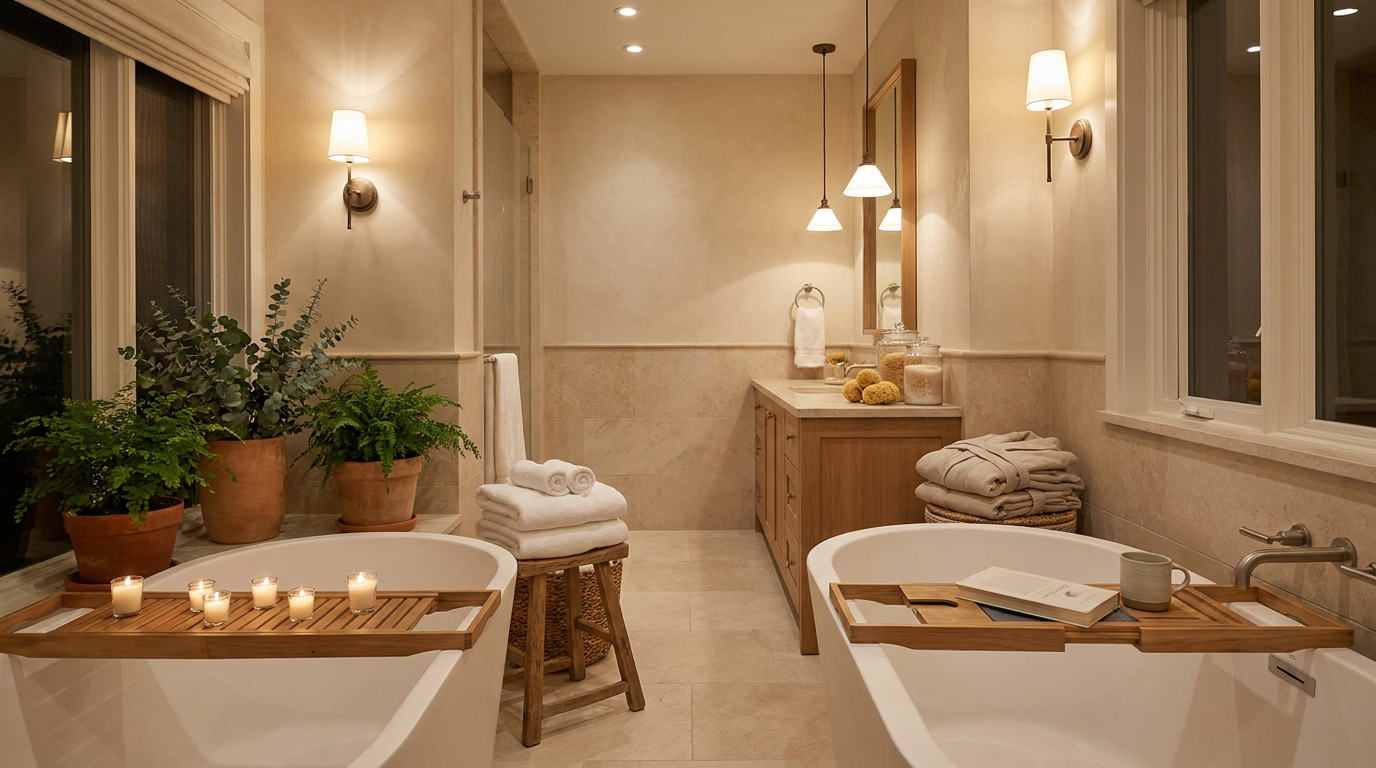
Some of the most effective changes are simple. Start by reducing visual clutter on the counter. Decant everyday products when practical, keep only the most used items visible, and use trays to gather smaller pieces neatly. Matching hand towels, a bath mat with real softness, and one or two elevated accessories can create immediate order. A wooden stool, a ceramic dish, or a beautiful canister makes daily routines feel less purely functional.
Textiles matter here just as much as in the bedroom. Thick towels, a robe hook in the right place, and a washable mat with plush texture all contribute to that suite quality. If you have room, a bench or small stool can be both useful and visually grounding. These details signal comfort before you even turn on the water.
Focus on Sensory Calm, Not Overload
It is easy to assume luxury means more scent, more steam, more products, and more visual styling. In reality, true comfort comes from balance. EPA guidance notes that odor is not a reliable test of indoor air quality, which is a valuable reminder when designing wellness spaces. A bathroom should smell fresh because it is clean and properly ventilated, not because it is masking problems with heavy fragrance.
Indoor humidity also affects certain indoor pollutants, so the spa feeling should always be paired with moisture awareness. Use your exhaust fan, allow textiles to dry properly, and keep humidity levels under control. A beautiful bathroom that also feels healthy is much closer to modern luxury than one filled with dampness and overpowering scent.
This is a good place to invest in one or two wellness details that suit your real habits. A subtle diffuser, a shower steamer, a teak bath tray, or a filtered handheld showerhead can all improve the experience without creating clutter. If you love long showers, smart shower controls may be worth exploring during a renovation, but many households will get more value from upgraded lighting and better storage.
Comfort Should Feel Effortless, Including the Temperature
One of the invisible reasons hotel suites feel so good is climate consistency. The room is neither too hot nor too cold, and the air does not feel stale. Bringing that comfort home is less glamorous than buying decorative accessories, yet it may have a greater impact on daily life. Wellness centered luxury includes how your space breathes, warms, and cools.
The U.S. Department of Energy recommends looking at practical comfort systems such as efficient HVAC choices, home energy assessments, and programmable or smart thermostats. According to DOE guidance, programmable thermostats can save as much as 10 percent a year on heating and cooling when temperatures are set back for eight hours a day, depending on system type and use. For many homes, that means you can make your space feel more thoughtfully managed while also improving efficiency.
What matters most is not chasing gadgets for their own sake. It is choosing comfort tools that make your home easier to live in. A smart thermostat that gently warms the house before you wake up or cools the bedroom before bedtime can contribute to that suite like feeling of being anticipated. If certain rooms are drafty or stuffy, a professional home energy assessment can help identify problem areas and prioritize upgrades wisely.
Think Beyond Scent to Real Air Quality
Luxury should never come at the expense of health. If you are trying to make your bedroom and bathroom feel fresher, begin with ventilation, filtration, and cleanliness. Open windows when conditions allow, maintain your HVAC system, and consider whether your home needs better moisture control. This is particularly relevant in bathrooms, basements, and tightly sealed apartments where air can become stagnant.
Air quality is one of the least visible but most meaningful components of a restorative environment. When a room feels easy to breathe in, sleep in, and spend time in, everything else becomes more enjoyable. In that sense, air quality is not separate from design. It is part of the emotional architecture of comfort.
Use Quiet Luxury Principles in Shared Living Spaces
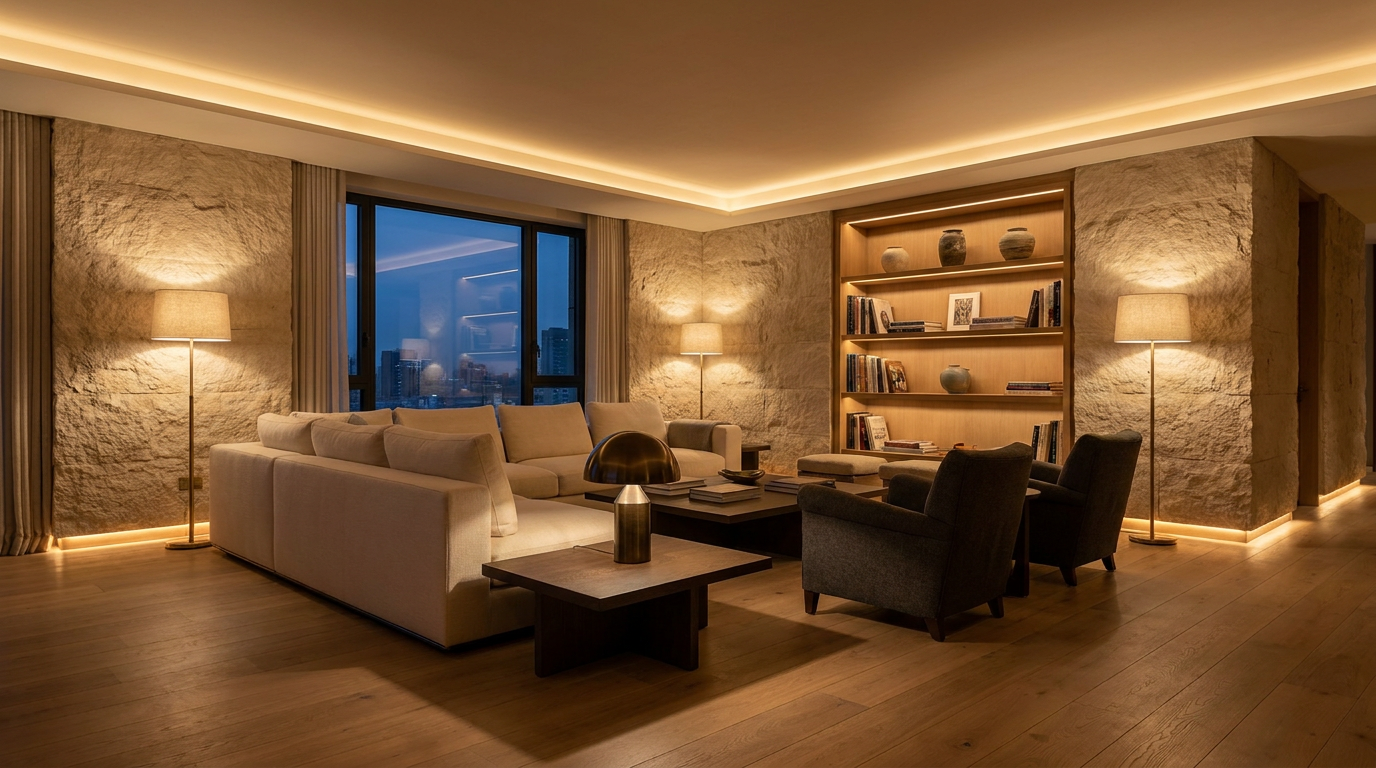
Luxury suite concepts often begin in the bedroom, but they become more convincing when the rest of the home supports the same tone. Quiet luxury is especially useful here because it emphasizes restraint, material richness, and calm rather than flashy decoration. In a living room or den, this can look like a more cohesive palette, fewer but better chosen accessories, and seating that invites people to settle in.
Warm earthy tones continue to define this direction. Consider shades such as sand, caramel, bark, sage, muted rust, and stone. These colors create a grounded atmosphere that feels current without being trendy in a disposable way. They also pair beautifully with tactile surfaces like bouclé, velvet, washed linen, wood, ceramic, and woven natural fibers.
Curvy furniture is another important trend entering 2025 and 2026. A rounded chair, softened coffee table silhouette, or arched lamp can subtly shift the emotional tone of a room. Suites feel relaxing partly because they avoid too many sharp visual interruptions. Softer shapes are easier on the eye, which makes the room feel more welcoming almost instantly.
Add a Lounge Moment
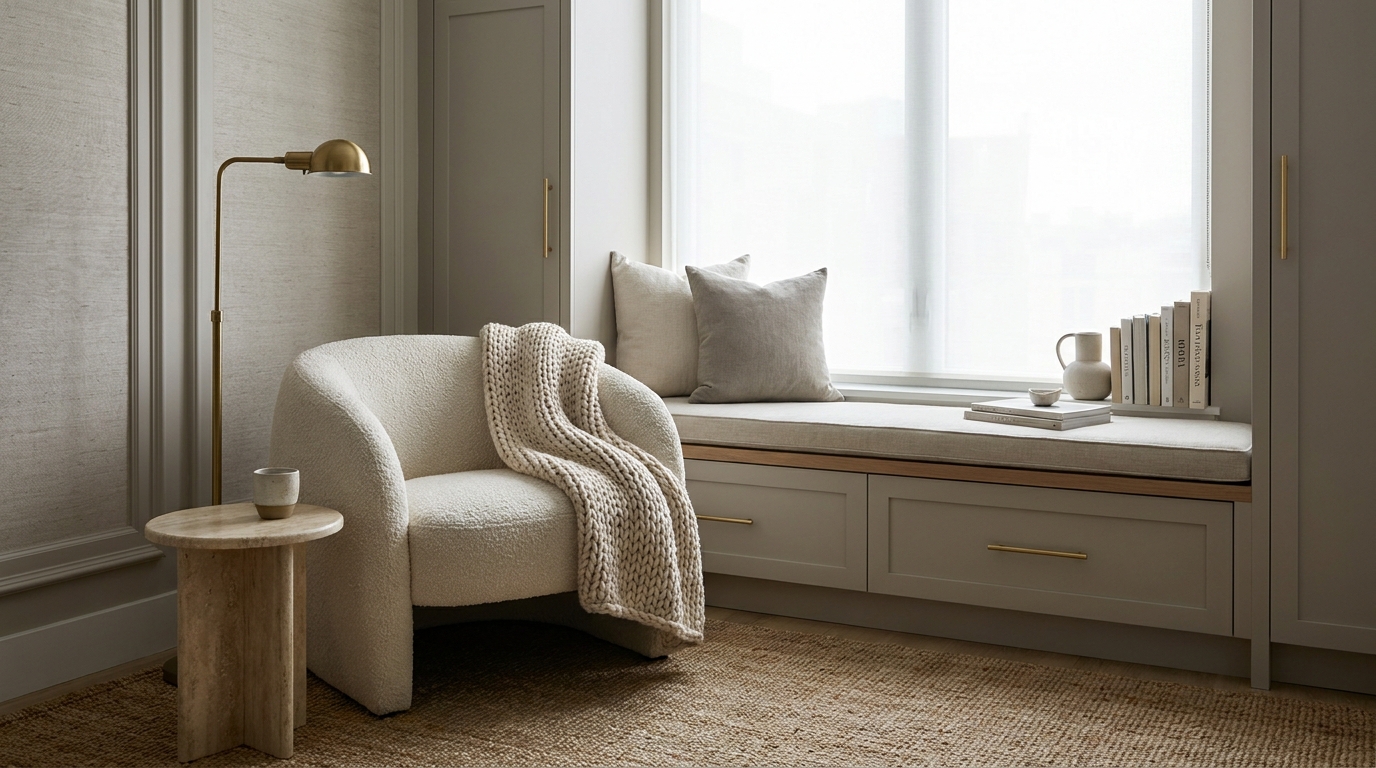
Boutique hotel rooms often include a small lounge corner, and this idea translates beautifully at home. Even in smaller spaces, a single comfortable chair, a side table, and a lamp can create a personal retreat within a room. This is especially helpful in a bedroom if you want the space to feel more suite like and less purely utilitarian.
A lounge area does not have to be large. It simply needs to support one pleasant ritual, such as morning coffee, evening reading, journaling, or taking a phone call away from the bed. This kind of zone makes a home feel intentionally layered, which is a hallmark of upscale design. It also helps a room serve more than one emotional purpose.
Storage Is Part of the Luxury
One reason hotel suites feel so peaceful is that visual clutter has been carefully managed. There is usually a place for everything, and the things you need most are easy to reach. This is where many homes can improve dramatically without changing their footprint. Hidden storage, edited surfaces, and consistent systems all contribute to a more elevated environment.
Look for opportunities to reduce open clutter in the areas you use every day. Nightstands should hold only what genuinely serves your evening and morning routine. Bathroom counters benefit from trays and containers that group items by purpose. Entryways feel more luxurious when shoes, bags, and coats have a designated landing place. These are not dramatic moves, but they transform how a home feels to live in.
Furniture that does double duty can be especially useful in apartments and condos. An ottoman with storage, a bed frame with drawers, a bench that conceals blankets, or a slim cabinet in the bathroom can all support suite style by removing friction. When the room feels visually calm, every soft texture and beautiful finish has more space to shine.
How to Make Luxury Suite Style Renter Friendly
A common misconception is that hotel inspired luxury only works in large owned homes. In reality, many of the most effective elements are ideal for rentals because they rely on styling, portability, and layout rather than construction. If you rent, focus on what can be added, swapped, layered, or removed later. Textiles, lamps, art, mirrors, headboards, side tables, and peel and stick solutions can go a very long way.
Start with the biggest visual surfaces you can influence. Bedding, drapery, and rugs create a large percentage of a room’s feeling. If your walls are white and fixed, lean into that by adding warmth through fabric, wood tones, and lighting. If overhead fixtures are unattractive, use floor and table lamps more strategically. If your bathroom is builder basic, elevate it with better towels, matching bottles, a refined shower curtain, and a neat tray of daily essentials.
Luxury in a rental often comes down to consistency. Choose a palette and repeat it gently. Mix textures rather than too many colors. Replace small utilitarian items with versions that feel nicer in the hand. A soap dispenser, tissue box cover, robe hook, or bedside carafe can sound minor, yet these pieces contribute to the feeling of being in a home that has been thoughtfully dressed.
Wellness Stations and Small Ritual Corners
One of the loveliest suite inspired ideas for modern homes is the wellness station. This does not have to mean expensive equipment. It can be as simple as a dedicated tray or corner that supports one calming habit. On a nightstand, that might include a water carafe, hand cream, lip balm, a book, and a small lamp. In a bathroom, it might be a basket with bath salts, a towel, and your favorite body oil. Near a window, it might be a chair with a throw and a journal.
These small setups matter because they turn comfort into something tangible and repeatable. Instead of hoping you will relax more, you make relaxation easier to access. This is one of the strongest lessons homes can borrow from hospitality. The environment quietly invites the behavior you want.
For busy households, these corners also protect a little sense of individuality. In family homes, shared spaces often carry the noise of multiple schedules. A wellness nook, however modest, gives one part of the home a clear emotional purpose. It says this area is for pausing, not just passing through.
The Role of Biophilic and Sensory Design
Luxury suite concepts pair naturally with biophilic and sensory design. People tend to feel more relaxed in spaces that include natural references, organic materials, and sensory softness. That does not mean filling every room with plants, though greenery can certainly help. It means considering the tactile and visual experience of the space as a whole.
Wood, stone look finishes, linen, cotton, clay toned ceramics, and woven textures all create an environment that feels rooted and warm. Natural light should be used thoughtfully, especially in the morning, while evening lighting should invite the body to unwind. Sound matters too. Soft rugs, curtains, and upholstered pieces reduce echo and create a quieter emotional backdrop.
These choices work because they make the home feel less engineered and more nurturing. In a world full of alerts, hard surfaces, and constant stimulation, a room that feels tactile and grounded can be its own kind of luxury.
What Not to Copy from a Hotel Suite
Not every hotel feature belongs at home, and it is helpful to say that clearly. Some suite elements are expensive, space intensive, or simply impractical for daily residential life. Full wet rooms, extensive built ins, highly specialized climate systems, or oversized furniture can become burdens if they do not fit your home’s scale or your maintenance capacity.
The smarter approach is to borrow the sensory logic rather than duplicate the blueprint. Ask yourself what you actually love in a hotel suite. Is it the quiet? The clean surfaces? The soft lighting? The bedding? The feeling that everything has its place? Those are the qualities worth translating because they improve real life rather than just creating a fantasy.
There is also a sustainability dimension to consider. A luxury home that wastes energy, traps moisture, or encourages constant consumption is not especially sophisticated. Long term comfort comes from balance. Choose upgrades that support both wellbeing and practical stewardship, such as efficient temperature control, quality over quantity, and durable materials that age gracefully.
A Step by Step Plan for Creating a Suite Inspired Home
If you want to make this concept actionable, it helps to move in stages rather than trying to overhaul everything at once. Begin with the room that would improve your daily life the most. For most people, that is the bedroom. Upgrade bedding, add layered lighting, reduce clutter, and create a stronger bed wall. Then move to the bathroom and refine textiles, storage, and sensory calm.
Next, look at the small rituals that shape your day. Could you create a better bedside setup, a more inviting reading corner, or a more peaceful morning routine at the sink? Then assess comfort systems. Is the room too bright, too cold, too dry, or too noisy? Sometimes the most luxurious improvement is not decorative at all. It is solving the thing that quietly annoys you every day.
- Edit first. Remove visual clutter and clear surfaces so the room can breathe.
- Upgrade the bed and bath textiles. Focus on softness, layering, and quality that you can feel.
- Improve lighting. Add lamps, warm bulbs, and dimmable options wherever possible.
- Strengthen the focal point. Use a headboard, drapery, or lounge corner to give the room presence.
- Support wellness. Add practical rituals such as a diffuser, water carafe, robe hook, or reading chair.
- Address invisible comfort. Review temperature control, ventilation, humidity, and air quality.
This order works because it mirrors what makes a suite feel special. First, there is calm. Then there is softness. Then there is convenience. The visual beauty follows naturally.
Luxury Suite Living for Families, Guests, and Aging in Place
Suite inspired design can also be wonderfully family friendly when interpreted thoughtfully. In a home with children or frequent guests, comfort and order are not opposing goals. They simply need to be handled with a little more flexibility. Washable fabrics, hidden storage, rounded edges, and durable finishes can still feel refined. In fact, true luxury often means a space that remains beautiful while accommodating real life gracefully.
For guest rooms, suite concepts are especially effective. A layered bed, good reading light, a luggage stand or bench, and a small water station can make visitors feel genuinely welcome. These are simple details, yet they communicate care in the same way a beautiful hotel does. You are not just offering a room. You are offering ease.
There is also a natural connection between luxury suite thinking and aging in place. A bathroom that is calm, well lit, and easy to move through is not only attractive, it is supportive. A bedroom with accessible storage, soft night lighting, and a comfortable chair has long term value. When luxury is defined as comfort and dignity rather than extravagance, it becomes more inclusive and more enduring.
The Emotional Value of Bringing Hospitality Home
Perhaps the most compelling reason to embrace luxury suite concepts at home is emotional. A well designed room can change the tone of ordinary life. It can make bedtime feel less like collapse and more like restoration. It can make a shower feel like a reset instead of a rushed necessity. It can create those small pauses in the day when you feel more present inside your own home.
This is why the trend has staying power. It speaks to something deeper than aesthetics. People want homes that help them live well, not just look accomplished. They want spaces that support better sleep, quieter evenings, easier hosting, and a little more softness around daily routines. Hospitality inspired living offers a language for that desire.
And the most encouraging part is that accessibility is built into the concept. You do not need a penthouse. You need a point of view. With a few intentional upgrades, a clearer sense of what comfort means to you, and a willingness to design around how you actually live, your home can begin to feel less ordinary and more nurturing.
Final Thoughts
Luxury suite concepts are not about chasing someone else’s version of perfection. They are about borrowing the best qualities of hospitality and translating them into a home that feels restful, layered, and quietly beautiful. Rich bedding, warm lighting, calmer bathrooms, thoughtful storage, lounge corners, and smarter comfort systems all have a role to play. The most successful spaces do not look staged. They feel supportive.
As design moves further toward wellness, quiet luxury, and restorative living, suite inspired interiors will continue to resonate. They offer a practical bridge between aspiration and everyday life. Whether you make one small change this month or slowly refine your home over time, each step toward softness, order, and ease is a meaningful one.
In the end, the true luxury is not just how your home looks when guests arrive. It is how it welcomes you back, every single day.


No Comment! Be the first one.