



Autonomous property systems are moving from niche technology to a serious part of how modern homes, offices, and mixed-use buildings operate. The phrase may sound futuristic, but the underlying idea is surprisingly practical. These systems combine sensors, software, automation, and increasingly artificial intelligence to help buildings monitor conditions, make routine adjustments, and respond to people’s needs with less manual effort. Instead of waiting for someone to notice a problem or make a change, the property can detect signals and act earlier.
Table Of Content
- What are autonomous property systems?
- Why the user experience matters more than the technology label
- How these systems work behind the scenes
- The comfort layer: what smart living feels like day to day
- The efficiency layer: why autonomy matters for bills and emissions
- From reactive buildings to predictive buildings
- Grid-aware living and why buildings now matter to the energy system
- Common misconceptions that deserve a reset
- Privacy, cybersecurity, and trust in a truly smart property
- What a good autonomous property experience should include
- What this means for retrofits, rentals, and everyday housing decisions
- The future of smart living is adaptive, not automatic for its own sake
- Frequently asked questions about autonomous property systems
- Are autonomous property systems only for large commercial buildings?
- Will these systems take away user control?
- Do autonomous property systems always save money?
- What is the biggest barrier to adoption?
- Why is this topic important now?
For most people, the real story is not technical complexity. It is user experience. A well-designed autonomous property system should not make daily life feel more complicated. It should make spaces feel more comfortable, reliable, efficient, and understandable. When it works properly, a resident may simply notice that the temperature stays steady, lighting feels appropriate to the time of day, entry is secure but frictionless, and maintenance problems get resolved before they turn into disruption.
This matters because many people still associate building automation with corporate cost cutting or gadget-heavy smart homes that require constant setup. That perception is incomplete. The next generation of intelligent property systems is being shaped by a broader set of goals that includes occupant comfort, energy savings, operational resilience, safety, and lower emissions. In Canada especially, autonomous building technology is increasingly tied to decarbonization policy, retrofit programs, and the need to make buildings cheaper and easier to operate over time.
The result is a shift in how we think about living and working spaces. Buildings are no longer just static structures with mechanical equipment hidden behind walls and ceilings. They are becoming responsive environments that learn patterns, detect inefficiencies, and support both people and the wider energy system. To understand where smart living is going, it helps to understand what autonomous property systems really are, how they function, and why the human experience sits at the center of their value.
What are autonomous property systems?
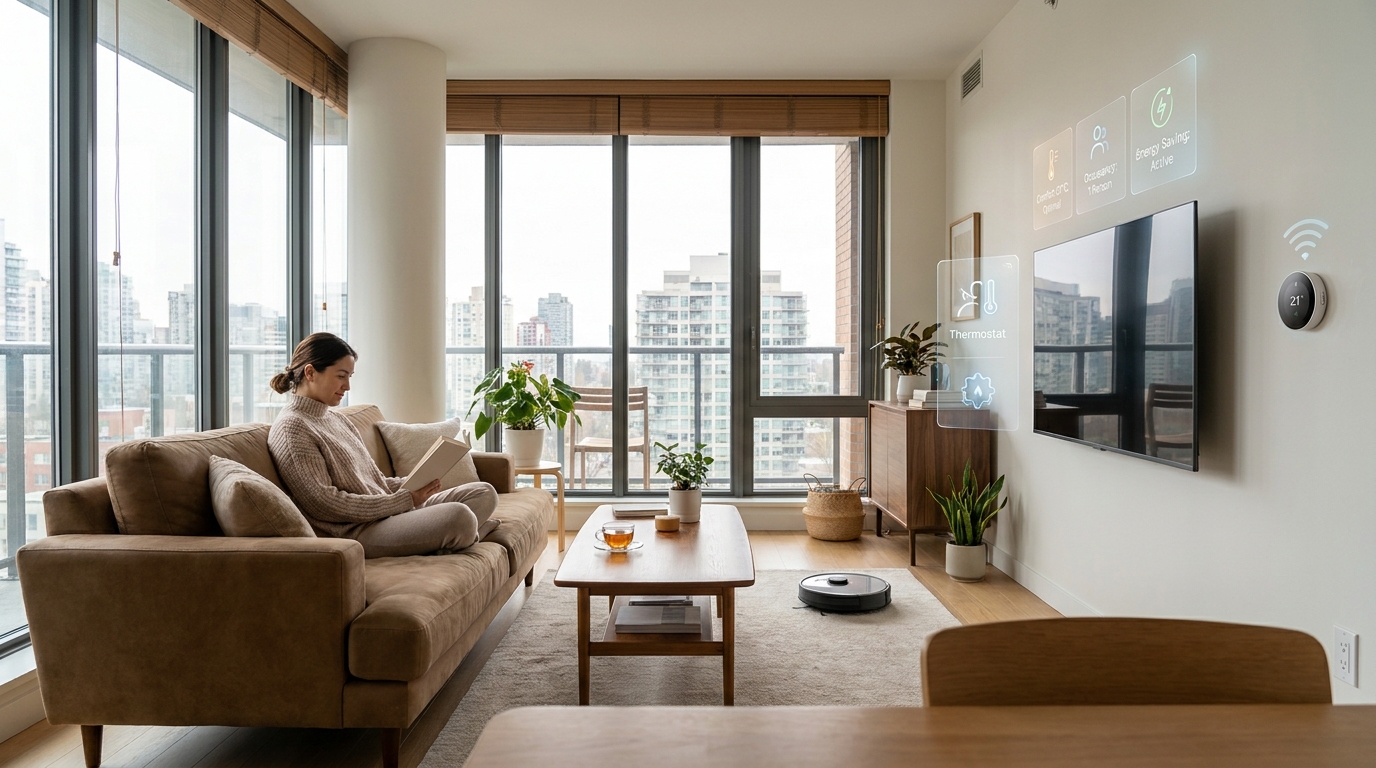
An autonomous property system is a connected environment that uses data from building equipment and sensors to support automatic or semi-automatic decisions. In simple terms, it allows a home, apartment building, office, or other property to observe what is happening, process that information, and adjust operations without requiring someone to manually intervene each time. This can include heating and cooling, lighting, ventilation, access control, leak detection, security, and maintenance scheduling. Unlike older building automation that runs on a fixed schedule, an autonomous system continuously adapts to real conditions such as occupancy, weather, indoor air quality, and utility pricing, which is what separates true autonomy from simple timers and set-schedule controls.
Traditional building automation has existed for years, especially in commercial real estate. Many large buildings already have building automation systems that control HVAC equipment or manage timed lighting schedules. What makes autonomous property systems different is their growing ability to integrate more data sources, adapt to real conditions, and optimize decisions continuously. Rather than just following a fixed schedule, they can respond to occupancy, weather, indoor air quality, utility pricing, or signs that a piece of equipment is drifting out of normal performance.
Government and standards-focused research increasingly describes the next phase of smart buildings as more integrated and more adaptive. Canada’s federal Smart Buildings initiative, for example, emphasizes collecting operational data from equipment every few minutes to uncover inefficiencies that people might miss by sight alone. This includes problems such as simultaneous heating and cooling or unusually high fan energy use. That point is important because many waste patterns are invisible to occupants until they show up as discomfort, high bills, or equipment failure.
So while the word autonomous can sound like a building is entirely self-running, the reality is more grounded. These systems are not replacing all human involvement. They are improving the intelligence layer behind ordinary building functions. A property manager still needs oversight. A resident still needs simple controls. A technician still needs to inspect and repair equipment. Autonomy in this context means reducing unnecessary manual work while making the environment more responsive and informed.
Why the user experience matters more than the technology label
The most successful autonomous systems are often the least dramatic from the user’s perspective. People do not wake up hoping to interact with more building software. They want spaces that feel comfortable, safe, and easy to use. That is why the best user experience in autonomous property systems is often invisible. The room feels right. The elevator or entry system works smoothly. Air quality remains healthy. A leak is caught before it becomes damage. The user receives clarity, not complexity.
This user-centered lens is essential because technology in real estate often gets evaluated from the ownership side first. Owners and operators understandably care about energy use, maintenance costs, tenant retention, and asset performance. But occupants are the people who experience these systems every day. If the system lowers energy use but makes temperature controls confusing, it fails part of the real-world test. If a security system is advanced but creates constant friction at the door, the experience feels worse, not smarter.
Good autonomy should reduce cognitive load. It should remove the need to constantly correct the environment. That means fewer thermostat battles, less wasted lighting, quicker detection of faults, and more useful notifications. It also means a system should know when to stay quiet. Many smart products fail because they confuse activity with value. Sending too many alerts, exposing too many settings, or forcing users into rigid routines can make a space feel like a machine rather than a home or workplace.
The goal of autonomous property systems is not to make people serve the building. It is to make the building serve people more intelligently.
That is why modern smart living should be judged less by the number of connected devices and more by the quality of the outcomes. Does the space stay comfortable? Does it respond to real use? Does it save energy without sacrificing livability? Does it explain itself clearly when something changes? Those are the questions that define adoption at scale.
How these systems work behind the scenes
At a basic level, autonomous property systems follow a loop. They sense, analyze, decide, and act. Sensors gather information about temperature, humidity, carbon dioxide, occupancy, light levels, door status, power use, equipment performance, and sometimes water flow or vibration. That raw data moves into software platforms that compare it against expected patterns, comfort ranges, schedules, or optimization goals. If conditions differ from the desired state, the system can trigger a response.
That response may be simple or sophisticated. A home system might dim lights and lower heating in rooms that have been empty for hours. A commercial building might detect that a meeting room is filling up and increase ventilation before the air feels stale. A multifamily property could identify a leak signature in a unit and alert maintenance before serious water damage spreads. In more advanced environments, machine learning models can estimate future demand, recognize abnormal equipment behavior, or coordinate building loads based on utility price signals.
Interoperability is what makes this possible at a meaningful scale. If the HVAC, access control, lighting, security, and metering systems cannot communicate with one another, the building stays fragmented. A property may end up with several disconnected technologies that are each smart in isolation but weak as a system. Research from NIST on AI for Building Systems Innovation highlights this challenge directly by focusing on integrated sensors and distributed AI that can support HVAC, lighting, security, transport, energy management, and emergency systems in a coordinated way.
For everyday users, that coordination is what turns a collection of devices into a coherent experience. It is the difference between having a smart thermostat and having a property that actually understands whether a room is occupied, whether outside conditions are shifting, and whether ventilation or shading should change along with temperature. Real autonomy depends on safe communication between systems, not just on adding more hardware.
The comfort layer: what smart living feels like day to day
When people imagine the future of smart living, they often picture voice assistants or app-controlled appliances. Those features matter, but the strongest use cases for autonomous property systems are usually quieter and more foundational. They live in the comfort layer of a property. This includes temperature stability, fresh air, appropriate humidity, balanced lighting, low noise from equipment, and a sense that the environment fits how the space is actually being used.
Think about a typical day in a residential building. Morning sunlight begins to warm one side of the unit, while the shaded rooms remain cool. Occupancy changes as people move through the kitchen, workspace, and living room. Outdoor air quality may shift. Electricity prices may rise in the afternoon. A conventional system handles some of this with rough schedules and manual adjustments. An autonomous system can fine-tune conditions continuously using sensor data and learned patterns, helping the unit feel consistent without wasting energy.
In offices and shared spaces, the benefits become even more visible. Meeting rooms are a classic example. Conventional schedules may cool and ventilate them whether they are full or empty. Autonomous controls can pre-condition a room before use, then scale back once the room is vacant again. The user experience here is simple: fewer stuffy meetings, fewer freezing rooms, and less need to submit comfort complaints to facilities teams.
Indoor air quality is another major part of this comfort layer. Occupants increasingly care about ventilation and air cleanliness, especially after years of elevated public awareness around indoor health. An intelligent property system can monitor CO2 and related signals, then adjust airflow when occupancy rises. Done properly, this improves health and concentration while also avoiding the waste that comes from running ventilation at maximum levels all the time.
The efficiency layer: why autonomy matters for bills and emissions
Comfort is one side of the story. Efficiency is the other. Buildings are a major energy and emissions challenge across North America, and that gives autonomous property systems a much larger role than simple convenience. Canada’s 2024 Green Buildings Strategy states that buildings are the country’s third-largest emitting sector and that more than 96 percent of building emissions come from space and water heating. That statistic puts heating decisions, equipment performance, and control logic at the center of climate and cost outcomes.
Autonomous systems help because they can identify waste that people rarely catch on their own. The federal Smart Buildings initiative in Canada specifically points to inefficiencies such as simultaneous heating and cooling and unusual fan loads. These are exactly the kinds of problems that look minor in the moment but become expensive over a year. A building can appear to be operating normally while still consuming more energy than necessary due to poor sequencing, drifted settings, or hidden faults.
Benchmarking data also shows why measurable operations matter. Natural Resources Canada reports that ENERGY STAR Portfolio Manager tracks 30,500 buildings in Canada, covering 380 million square meters of floor area, with a median site energy use intensity of 1.1 GJ/m². NRCan also notes that benchmarking is gaining momentum across Canadian jurisdictions. That trend matters because benchmarking creates the baseline intelligence required for better automation. You cannot improve what you do not measure, and autonomous systems become more useful when they sit on top of strong operational data.
For residents and tenants, the efficiency argument is not abstract. Better controls can help lower utility bills, reduce peak demand charges in some building types, and make electrified systems such as heat pumps operate more smoothly. In a period when affordability is a major concern, intelligent property operations are part of the economic conversation, not just the environmental one.
From reactive buildings to predictive buildings
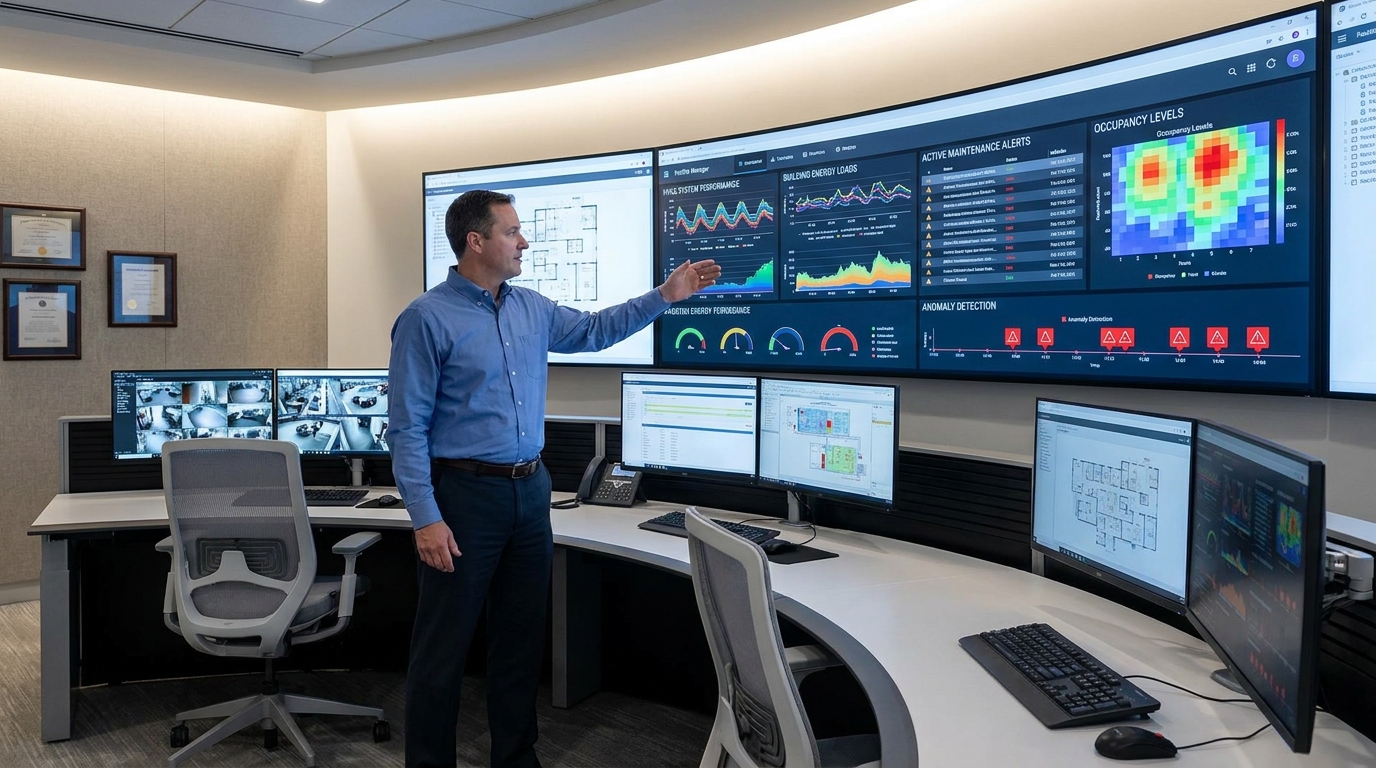
One of the most important shifts in autonomous property systems is the move from reactive operation to predictive operation. In a reactive model, a person notices discomfort, a breakdown, or an unusually high bill, and then action begins. In a predictive model, the system detects patterns early enough to intervene before disruption occurs. This is where artificial intelligence and advanced analytics are becoming especially influential.
Predictive maintenance is a strong example. Equipment rarely fails without warning. Motors vibrate differently. Run times increase. Temperature differentials change. Energy use drifts upward. An autonomous system that continuously analyzes those signals can flag a likely issue before the occupant feels the result. For a resident, that may mean the heat pump gets serviced before a hot day becomes unbearable. For a commercial tenant, it may mean the air handling unit is repaired before indoor conditions affect employee comfort or productivity.
NIST’s AI for Building Systems Innovation program reflects this direction clearly. Its work focuses on distributed AI-enabled intelligence that can optimize building performance, detect failures, and integrate systems such as HVAC, lighting, security, and emergency functions. The implication is that buildings are not just becoming automated. They are becoming more capable of pattern recognition, coordination, and anticipation.
This predictive layer also changes the relationship between users and their environment. Instead of manually asking for every adjustment, occupants increasingly interact with a building that is aware of context. Spaces can be pre-conditioned before meetings. Common areas can adapt to actual occupancy. Energy-intensive activities can shift in timing when electricity is more expensive or the grid is under stress. The best outcome is not constant machine activity. It is fewer unpleasant surprises.
Grid-aware living and why buildings now matter to the energy system
Autonomous property systems are also becoming more relevant beyond the walls of any single building. Energy systems increasingly need flexibility, especially as electrification grows and renewable generation changes supply patterns over the course of the day. This is where the concept of grid-interactive efficient buildings becomes important. The U.S. Department of Energy defines these buildings as energy-efficient properties that use smart technologies and on-site distributed energy resources to provide demand flexibility while co-optimizing for energy cost, grid services, and occupant needs.
In practical terms, this means a building can become a more active participant in the energy ecosystem. It may preheat water when electricity is cheaper or cleaner, delay non-urgent loads, or modestly adjust HVAC settings during demand response periods without compromising comfort. Battery storage, solar power, and smart electric vehicle charging can all become part of this operational intelligence in some properties. The building stops being a passive consumer and starts acting like a flexible energy asset.
For users, the key is that this flexibility should not feel intrusive. A resident should not feel like their comfort is being sacrificed for the grid. Instead, autonomy should coordinate those objectives intelligently. Minor adjustments can often happen in ways people barely notice, particularly when the building has a good understanding of thermal conditions, occupancy, and personal preferences. This is where the intelligence layer matters. Without strong control logic, grid participation can become clumsy. With it, the user experience can remain smooth while costs and emissions improve.
This is one reason autonomous property systems are increasingly relevant in Canada and across North America. They sit at the intersection of housing affordability, resilience, emissions reduction, and electric system stability. That gives them a broader policy significance than earlier generations of building technology.
Common misconceptions that deserve a reset
As with any fast-moving technology category, autonomous property systems attract both hype and skepticism. Several misconceptions keep appearing, and they shape how people judge the technology before they have experienced it well.
The first misconception is that autonomy means a property runs itself with no human oversight. That is not how responsible systems work. Buildings still require governance, maintenance, commissioning, and fallback controls. Automation helps reduce repetitive manual intervention, but people remain accountable for strategy, safety, and final decision-making. In many cases, human oversight becomes more important because the system is making more frequent operational adjustments.
The second misconception is that automation mainly benefits owners and operators. Cost savings do matter, but occupant value is central. Better air quality, better thermal comfort, faster maintenance response, stronger security, and easier access are all user benefits. A building that quietly prevents discomfort and disruption is delivering value directly to the people inside it.
The third misconception is that connected buildings automatically save energy. They do not. Smart devices alone are not enough. Savings depend on proper controls, commissioning, interoperability, maintenance, and how people actually use the space. A badly configured smart building can still waste energy. Intelligence only creates value when it is implemented well.
The fourth misconception is that privacy and cybersecurity are side issues. They are not. As systems collect occupancy and household or workplace data, trust becomes central to adoption. Security and privacy need to be part of procurement, design, and daily operation from the start. Canadian cyber guidance for operational technology reinforces this by promoting secure-by-demand selection of digital products. In other words, safety must be built into the system, not patched on later.
The fifth misconception is that autonomy eliminates manual control. In reality, most people want simple override options. They want to understand what the system is doing and why. They want the ability to change settings without fighting a black box. Good autonomy supports user agency rather than replacing it.
Privacy, cybersecurity, and trust in a truly smart property
No conversation about autonomous living is complete without trust. A property system may know when spaces are occupied, how people move through a building, when doors open, how much energy is being used, and whether indoor conditions suggest someone is home or away. That data can improve comfort and efficiency, but it also creates legitimate concerns. People are right to ask what is being collected, who can access it, how long it is stored, and how securely it is managed.
For residents, the trust question is often simple: does this system make me feel informed and protected, or monitored and exposed? The answer depends less on technical marketing and more on interface design, policy clarity, and operational discipline. Clear consent settings, understandable data policies, visible security practices, and straightforward control options all matter. A property that hides behind vague language will struggle to earn confidence.
Cybersecurity is equally important because building automation has become part of operational technology. If access control, HVAC, alarms, and connected devices are poorly secured, the consequences can move beyond inconvenience. Secure-by-design and secure-by-demand thinking is therefore essential. That includes selecting products with strong update practices, authentication controls, segmentation, logging, and incident response procedures. These decisions may sound technical, but they shape whether users can trust the environment around them.
There is also a cultural side to trust. Smart-device adoption is already mainstream in North America, which helps normalize the idea of connected environments. Pew Research survey data showing that roughly one-third of adults report having a smart speaker at home reflects that comfort with consumer smart technology is no longer unusual. But mainstream adoption does not remove the responsibility to design more carefully. In fact, it raises the bar. People are becoming more experienced users, which means they are also becoming more aware of weak privacy practices and poor usability.
What a good autonomous property experience should include
Not every smart building or smart home deserves to be called user-friendly. The best systems share a few practical traits that make autonomy feel useful rather than intrusive. First, they prioritize outcomes over novelty. The point is not to impress users with constant visible automation. It is to deliver reliable comfort, lower waste, and faster problem detection.
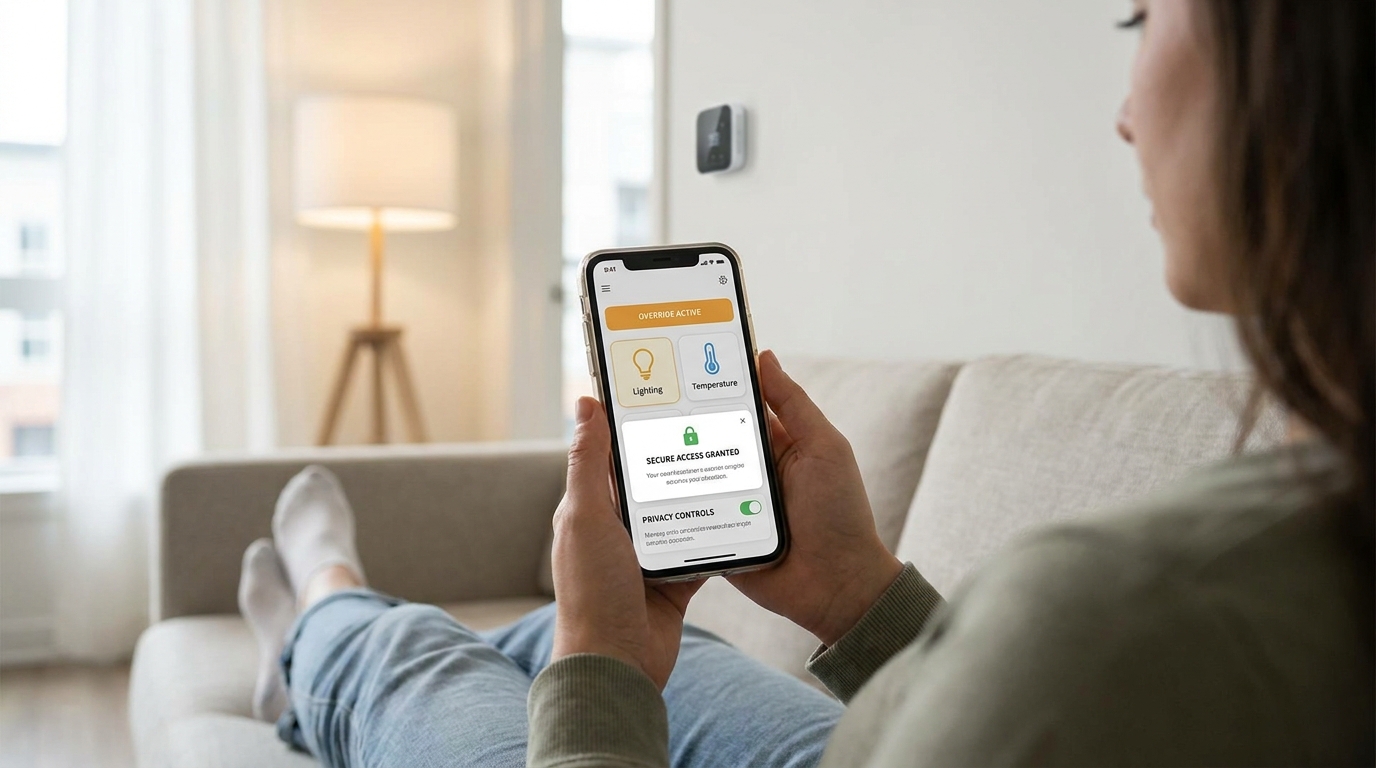
Second, they make controls simple. Even in a highly automated environment, people should be able to adjust the basics without navigating a maze of menus. Temperature, lighting, ventilation preferences, access permissions, and notifications should be understandable. Override options should exist, and the system should communicate when a change is temporary or when automation will resume.
Third, they provide meaningful transparency. Users should know what kinds of data are being used and what benefits that data supports. They should be able to distinguish between occupancy sensing for ventilation and more sensitive forms of monitoring. If an autonomous system changes a setting, a clear reason helps maintain trust. Explanations reduce the feeling that the building is acting arbitrarily.
Fourth, they are resilient. A smart building should not become unusable if connectivity drops or a platform update fails. Essential systems need fallback modes and graceful degradation. Real intelligence includes knowing how to fail safely. That principle is often overlooked in consumer conversations, but it is fundamental to dependable property technology.
Finally, they improve over time. Buildings are dynamic environments. Tenants change, usage patterns shift, weather varies, and equipment ages. A strong autonomous property system is not static after installation. It is commissioned, tuned, reviewed, and updated as conditions evolve. That ongoing refinement is what turns early automation into long-term performance.
What this means for retrofits, rentals, and everyday housing decisions
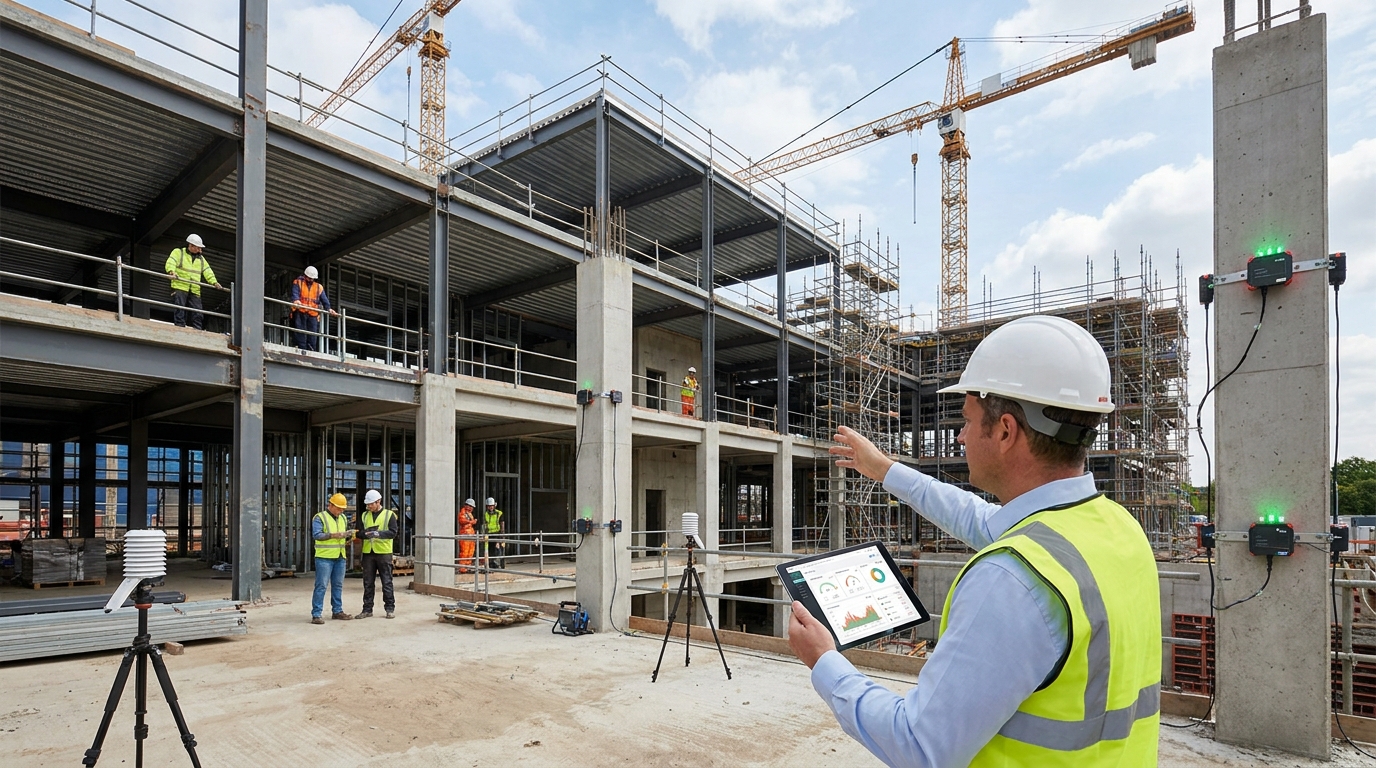
One of the biggest opportunities in autonomous property systems is not flashy new construction. It is the upgrade of existing buildings. Most of the buildings people will occupy over the next several decades already exist today, which means the future of smart living depends heavily on retrofits. Sensors, controls, submetering, fault detection software, and modern energy management systems can often be layered onto older assets in stages, creating better performance without rebuilding from scratch.
For renters and condo residents, this shift may become more visible through the quality of everyday operations rather than through dramatic hardware changes. Better package access, smoother entry systems, more stable heating and cooling, leak alerts, and clearer utility reporting are all signs that an intelligent property layer is developing. These features can influence satisfaction just as much as design finishes, particularly in competitive housing markets.
For owners and developers, autonomy is also becoming a strategic differentiator. As benchmarking expands and energy performance becomes more transparent, buildings that cannot measure and optimize their operations may look increasingly outdated. NRCan’s point that building benchmarking is gaining momentum across Canada suggests a market moving toward measurable accountability. In that environment, autonomous property systems are less of a luxury add-on and more of an operational foundation.
For homebuyers and tenants, the practical question is not just whether a property is smart. It is whether it is smart in useful ways. Does it help manage costs? Does it improve comfort? Does it protect privacy? Does it offer intuitive controls? Does it have strong maintenance support behind the scenes? These are the criteria that will define the next phase of adoption.
The future of smart living is adaptive, not automatic for its own sake
The phrase future of smart living can easily drift into vague futurism, but the most meaningful direction is clear. Autonomous property systems are evolving toward environments that are more adaptive, more predictive, and more responsive to both human needs and energy realities. They are becoming occupant-aware, grid-aware, and operationally self-improving in ways that can make buildings more pleasant and more efficient at the same time.
What should not be lost in that evolution is the human standard. A successful autonomous property does not force people into rigid digital systems. It respects preferences, supports consent, offers clarity, and reduces friction. Its intelligence should feel like better living, not just better machinery. That is the test that matters most.
The broader momentum is already visible in public policy, energy programs, and research. Canada’s decarbonization agenda, federal smart-building efforts, benchmarking growth, and North American interest in grid-interactive efficient buildings all point in the same direction. Buildings are becoming active systems, and the intelligence inside them increasingly shapes affordability, resilience, and user satisfaction.
For everyday users, the takeaway is simple. Autonomous property systems are not just about automation for automation’s sake. They represent a new layer of housing and building intelligence that can quietly improve comfort, reduce waste, prevent disruption, and help properties fit a lower-carbon future. If the technology keeps moving in a transparent, secure, and user-centered direction, smart living may feel less like a dramatic leap and more like something even better: a space that simply works the way it should.
Frequently asked questions about autonomous property systems
Are autonomous property systems only for large commercial buildings?
No. Large commercial properties were early adopters because they have complex operations and clear cost incentives, but the same principles now apply to apartments, condos, single-family homes, and mixed-use buildings. The scale changes, yet the core functions remain similar: monitoring conditions, improving comfort, reducing waste, and simplifying maintenance. What differs is usually the sophistication of the platform and the number of connected systems involved.
Will these systems take away user control?
They should not. Good autonomous systems are designed to reduce repetitive manual adjustments while preserving simple user controls. Residents and occupants generally still need the ability to override temperature, lighting, or access settings when necessary. The strongest user experience combines smart defaults with clear options, not rigid automation that ignores individual needs.
Do autonomous property systems always save money?
They can create meaningful savings, but results depend on implementation quality. Strong commissioning, interoperability, equipment condition, and user behavior all influence outcomes. A connected system with poor settings may underperform, while a well-tuned system can reduce energy waste, lower maintenance costs, and catch problems early. In other words, intelligence helps most when it is managed well.
What is the biggest barrier to adoption?
Trust is one of the biggest barriers, followed closely by fragmentation. People need confidence that their data is secure, their privacy is respected, and the technology will not become confusing or unreliable. At the same time, many buildings still use disconnected systems that do not communicate well. Better interoperability, transparent design, and secure-by-design procurement will be central to broader adoption.
Why is this topic important now?
It matters now because buildings sit at the center of several pressures at once: energy costs, decarbonization, resilience, and user expectations. As policy and market signals push for more efficient buildings, and as people expect smoother digital experiences in everyday life, autonomous property systems become a practical bridge between technology and livability. They are no longer a side category in property technology. They are becoming part of the core operating model for smarter spaces.


No Comment! Be the first one.