



There is something irresistibly transporting about a tropical garden. The atmosphere feels softer, greener, and more immersive, as though the boundary between home and retreat has quietly dissolved. Large leaves catch the light with drama, layered planting creates a sense of abundance, and the entire landscape begins to feel less like a yard and more like an experience. For many homeowners, that dream is deeply appealing, yet it often seems reserved for truly warm climates.
Table Of Content
- What Tropical Landscaping Really Means
- Start with Your Climate, Not Your Wishlist
- Understanding Hardiness Without Overcomplicating It
- The Building Blocks of a Tropical Look
- Plants That Create Tropical Character
- Hardy Look-Alikes and Visual Substitutions
- Why Containers Matter So Much
- Designing the Layout of a Tropical Landscape
- Creating Privacy and Enclosure
- The Role of Water, Stone, and Surface Materials
- Light, Moisture, and Microclimates
- Maintenance: The Difference Between Lush and Overgrown
- Overwintering Tender Plants
- Common Misconceptions About Tropical Landscaping
- A Climate-Adaptive Approach to Tropical Design
- How to Plan Your Own Tropical Oasis Step by Step
- Final Thoughts
The good news is that tropical landscaping is a design style, not a strict plant list. You do not need to live in South Florida or on a Caribbean hillside to create a tropical mood. In much of the United States and Canada, the most successful tropical-style landscapes combine a few true tropicals, a selection of hardy plants with bold foliage, and a practical strategy for containers, seasonal change, and winter protection. The result can be every bit as lush and beautiful as a warm-climate garden, while remaining grounded in local conditions.
This guide explores how to create a tropical oasis in a way that is visually rich, realistic to maintain, and adaptable to your region. From understanding plant hardiness zones to choosing the right foliage, shaping layered compositions, and planning for overwintering, the approach is both inspiring and practical. A tropical garden should feel generous and effortless, but beneath that softness there is always thoughtful structure.
A successful tropical landscape is not about forcing exotic plants to survive where they should not. It is about capturing the feeling of paradise through texture, scale, color, shelter, and smart plant selection.
What Tropical Landscaping Really Means
When people imagine tropical landscaping, they often picture dense jungle planting, palm trees, dramatic flowers, and glossy leaves in every direction. Those elements certainly influence the style, but the essence of tropical design is more nuanced. It is built around visual abundance, bold foliage, layered planting, and a relaxed sense of enclosure. In other words, the feeling matters just as much as the species.
This distinction is especially important for homeowners in North America. Many plants associated with tropical gardens are not frost hardy, which means they cannot remain outdoors year round in colder regions. Rather than seeing this as a limitation, it helps to think of tropical landscaping as a composition of materials and moods. Large leaves, upright architectural forms, saturated color, water, stone, and shade can all contribute to a tropical atmosphere, even when the exact plants vary from one climate to another.
In the most elegant tropical-style landscapes, flowers play a supporting role rather than carrying the entire scene. Blooms can certainly add excitement, especially in coral, gold, red, or hot pink tones, but structure usually comes first. Repeated masses of foliage, different leaf scales, and a carefully arranged sequence of heights create the immersive effect people love. This is why a tropical garden can still be compelling even when it is almost entirely green.
Start with Your Climate, Not Your Wishlist
If there is one practical foundation for tropical landscaping, it is climate awareness. Before choosing plants, begin with your local hardiness information. The USDA Plant Hardiness Zone Map is based on average annual extreme minimum winter temperatures, using 10 degree Fahrenheit zones and 5 degree half zones, and the current edition is based on 1991 to 2020 climate data. In Canada, plant hardiness mapping is also being updated with modern climate data and interactive tools, which reflects a growing emphasis on climate-responsive gardening.
These maps are extremely useful, but they are not guarantees. Both USDA and Canadian guidance emphasize that hardiness zones are only a guide. A plant may be rated for your zone and still suffer during an unusual freeze, a windy winter, or a season of poorly drained cold soil. On the other hand, a sheltered urban courtyard or south-facing wall may create a microclimate where a tender plant performs better than expected.
For homeowners dreaming of a tropical look, this means the first design question should not be, “Can I grow a tropical garden?” It should be, “Which version of tropical style makes sense here?” In warm zones, true tropicals may become permanent elements. In cooler zones, they may be seasonal stars in containers or summer bedding displays. In all climates, the most durable tropical landscapes respect local light, moisture, wind exposure, and winter conditions.
Understanding Hardiness Without Overcomplicating It
Hardiness zones help you estimate which plants can survive winter outdoors, but they do not tell the whole story. Summer heat, humidity, rainfall, drainage, and exposure all matter. A protected courtyard with reflected warmth may support more tender choices than an open site with winter wind. Likewise, a plant that tolerates cold may still struggle if it sits in heavy, wet soil through the dormant season.
That is why tropical landscaping works best when it is layered into categories. Some plants will be permanent structural anchors, some will be seasonal accents, and some may spend summer outdoors before moving inside for winter. This tiered approach is not a compromise. In fact, it often produces a more dynamic and thoughtfully curated landscape.
The Building Blocks of a Tropical Look
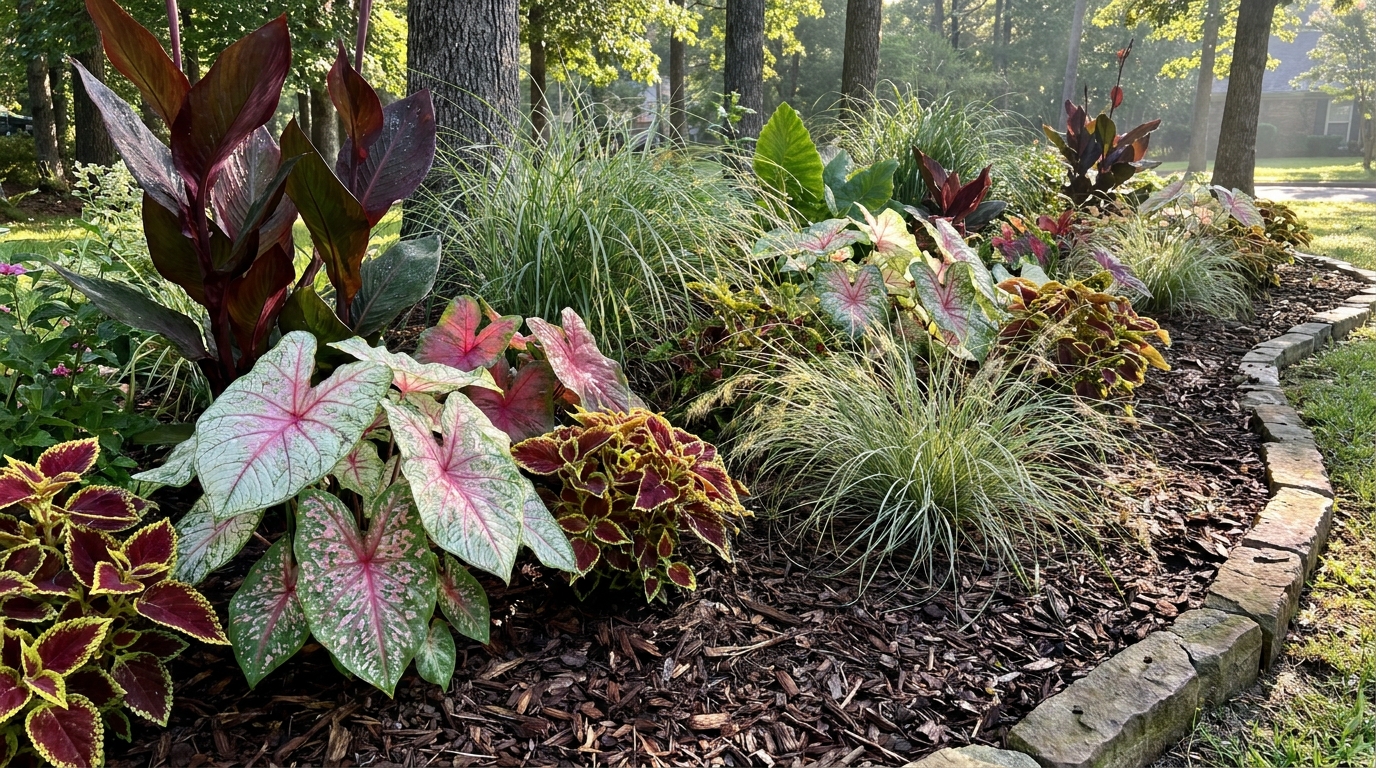
Tropical design has a visual language, and once you understand it, you can recreate it almost anywhere. The first element is leaf scale. Large leaves immediately evoke warmth and luxuriance, whether they belong to a true tropical species or a hardy look-alike. Elephant ear forms, banana-like silhouettes, broad canna leaves, and oversized caladium foliage all contribute to that generous effect.
The second element is layering. Tropical landscapes do not usually present themselves as single specimens separated by lawn. Instead, they feel full and enveloping. Tall screening plants create a backdrop, medium shrubs and broad perennials build the middle layer, and low mounding plants soften edges near pathways and seating areas. Layering also helps create privacy, which adds to the feeling of retreat.
The third element is contrast. A beautiful tropical composition balances glossy with matte, broad with feathery, upright with arching. Fern-like textures beside bold leaves create rhythm and relief. Dark green foliage can be punctuated by chartreuse, burgundy, variegation, or a precise burst of flower color. The garden should feel lush, but not visually chaotic.
Plants That Create Tropical Character
A practical tropical landscape usually draws from three groups of plants. The first group includes true tropical or subtropical plants that can live outdoors year round only in warm climates. The second includes tender plants used seasonally in colder regions. The third includes hardy plants that deliver a tropical visual effect, even if they are not tropical by origin. Combining all three groups is often the secret to a garden that feels rich and believable.
Among the classic tropical ornamentals, croton is beloved for its painterly foliage in gold, green, red, and orange, but it is generally hardy only in USDA zones 11 to 12. Hibiscus is another favorite, with large flowers that instantly suggest warmth and leisure, yet in cold climates it must be brought indoors before the first fall frost. Caladiums offer some of the most dramatic leaves in ornamental gardening, though they are generally only hardy in very mild climates and are otherwise treated as seasonal plants or lifted for storage.
Angel’s trumpet adds theatrical form and pendulous flowers, and in tropical or subtropical climates it can become very large outdoors, sometimes reaching impressive height. In containers, however, pruning and root restriction help keep it at a more manageable size, which makes it useful for patios in cooler regions. Lantana, golden shrimp plant, heliconia, and similar tropical or subtropical choices can also be striking, though many of them need winter protection or annual replacement outside warm zones.
Hardy Look-Alikes and Visual Substitutions
For homeowners in temperate regions, the most liberating idea is that many non-tropical plants can still look tropical. The eye responds to shape, texture, density, and color more than botanical origin. A planting can feel lush and exotic while relying largely on plants suited to local winters. This is where artistry enters the process.
Look for hardy or adaptable plants with large foliage, sword-like leaves, arching forms, or dramatic clumping habits. Bold ornamental grasses, large hostas in shaded settings, certain cannas where treated seasonally, hardy hibiscus varieties, ferns, rodgersia, ligularia, and broad-leaf perennials can all contribute to the effect. In sunny regions, richly colored coleus, castor bean in appropriate contexts, and architectural annuals can create remarkable tropical depth for a single season.
Native and regionally adapted plants also deserve a place in this conversation. Designers are increasingly blending tropical aesthetics with resilient local species to improve long-term performance. A moisture-loving native with oversized leaves may offer the same visual drama as a tender exotic, while requiring far less intervention. This is one of the most intelligent directions in contemporary landscape design.
Why Containers Matter So Much
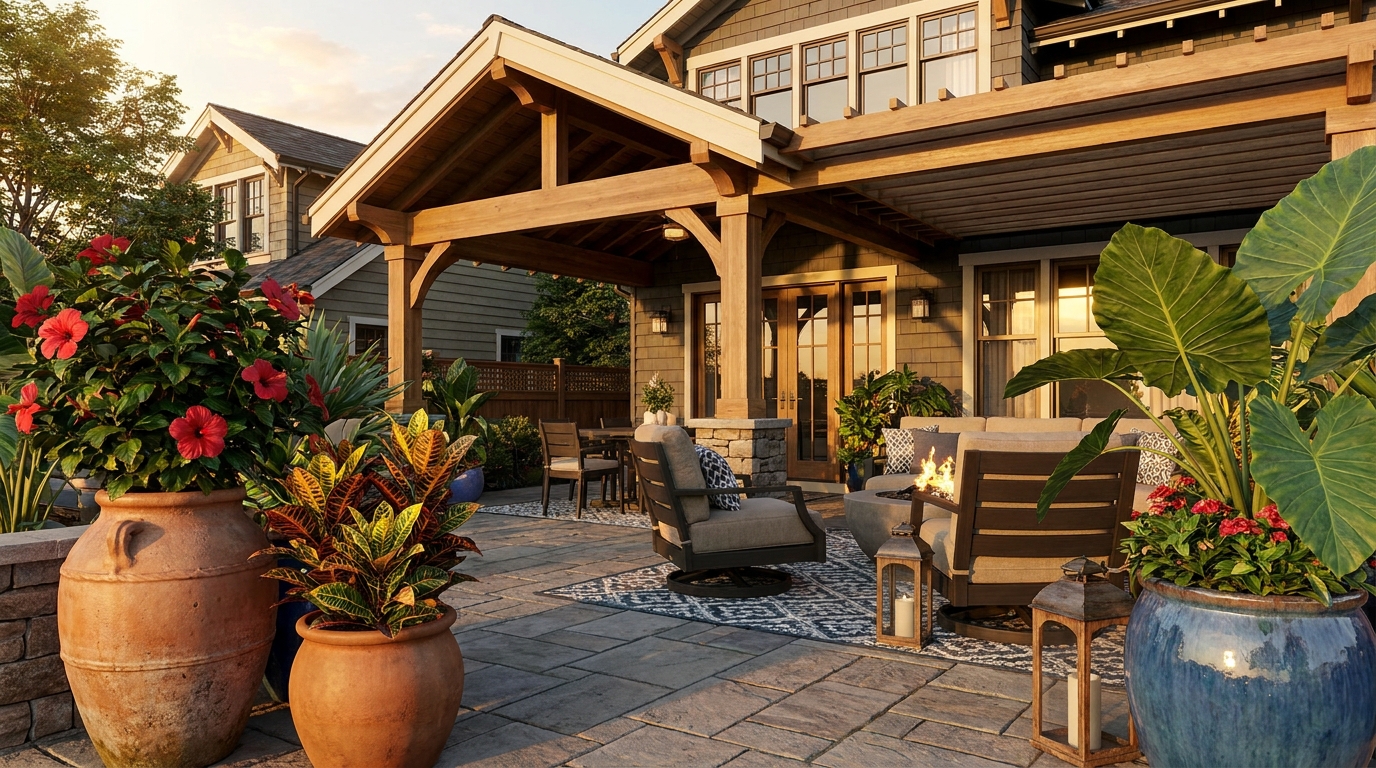
Container gardening is one of the most effective tools in tropical landscaping, especially outside warm climates. A large pot instantly elevates a plant into an intentional focal point, and it also gives you flexibility. Tender tropicals can decorate patios, entries, pool areas, and terraces during the growing season, then move indoors or into a greenhouse before frost. For many homeowners, this is the bridge between aspiration and practicality.
Containers are also useful because they let you place tropical drama exactly where it will have the most impact. A pair of glazed ceramic pots flanking a doorway, each planted with hibiscus or croton, creates an immediate sense of arrival. A cluster of varied containers around a seating area can establish enclosure and intimacy without permanent in-ground planting. On small properties, containers may be the primary vehicle for the entire tropical theme.
To make container compositions feel elevated rather than improvised, think in layers just as you would in the ground. Use a dominant structural plant, add supporting foliage around its base, and choose vessels that complement your home’s architecture. Stone, ceramic, textured concrete, or dark matte finishes often work beautifully. The goal is not to create a patio crowded with unrelated pots, but rather a curated arrangement with rhythm and coherence.
Designing the Layout of a Tropical Landscape
The layout of a tropical-style garden should invite movement and discovery. This is one of the reasons the style feels so transporting. Curving paths, partial screening, and layered planting encourage the eye to travel gradually instead of taking in the whole space at once. Even a modest yard can feel more expansive when the landscape unfolds in moments.
Begin by identifying the experience you want the garden to provide. Do you want a resort-like entertaining terrace, a private reading corner, a poolside setting, or a family garden with tropical character? Once the purpose is clear, shape the planting around that function. Tropical landscaping is most successful when it supports how people actually live outdoors.
Structure the space with a few strong gestures rather than many small ones. A generous bed line, a central path, a low stone wall, or a water feature can anchor the design. Around those elements, use layered planting to soften edges and build atmosphere. Repetition is especially important. Repeated masses of similar foliage create calm and sophistication, whereas too many different specimens can make the garden feel busy.
Creating Privacy and Enclosure
A tropical oasis often feels intimate because it is partially enclosed. This does not necessarily require tall fences or dense hedges. You can create privacy with staggered planting, screens, pergolas, trellises, or taller containers arranged strategically around seating areas. The effect should be soft and inviting rather than sealed off.
Vertical planting is especially useful in smaller spaces. Tall foliage at the back or edges of a bed creates a green wall that makes the garden feel immersive. Layering medium and low plants in front of that backdrop produces depth. If your property overlooks neighboring homes, think about where sightlines fall from windows, decks, or adjoining yards, then use planting to gently redirect attention.
The Role of Water, Stone, and Surface Materials
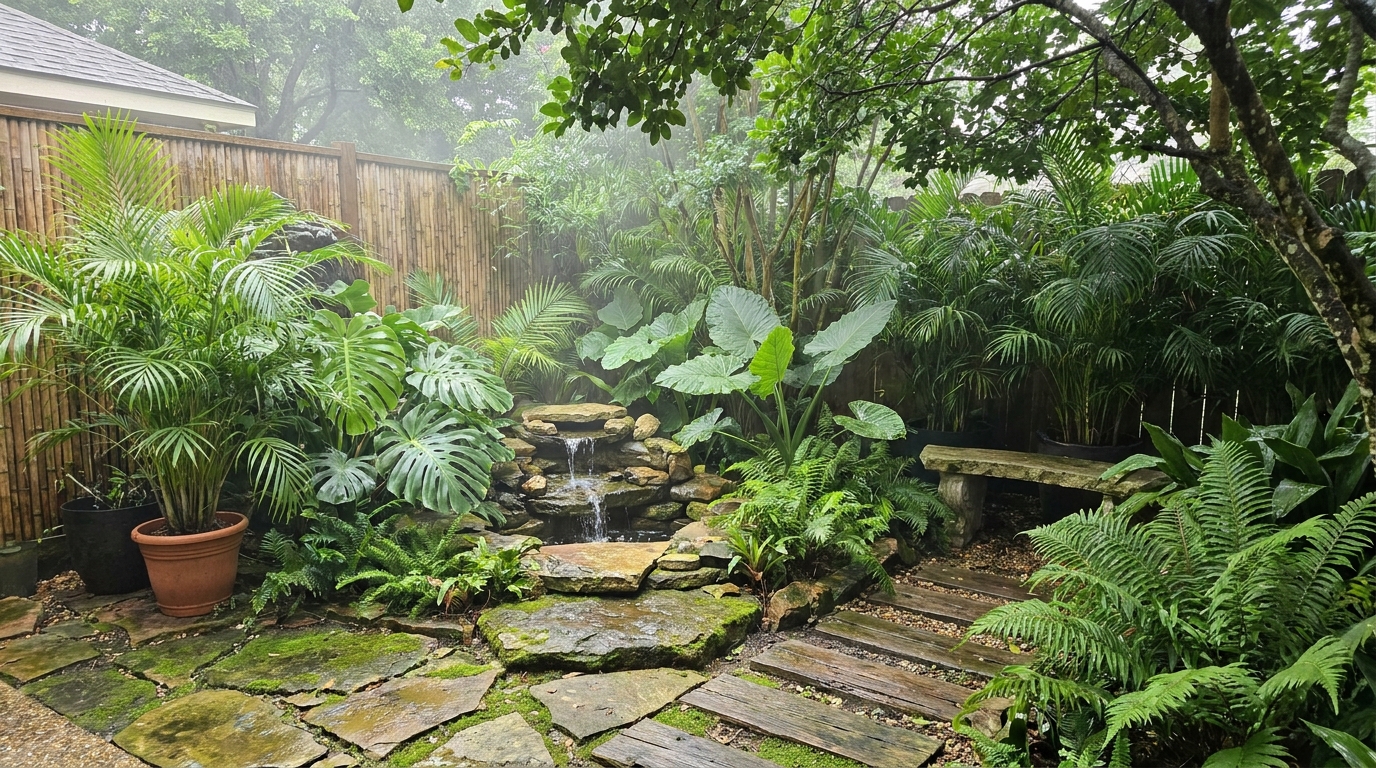
Tropical landscapes are not made of plants alone. Materials and atmosphere are equally important. Water features, natural stone, gravel, timber details, and richly textured paving all help reinforce the sense of retreat. The most successful combinations feel tactile and grounded, as though the planting and hardscape belong to the same world.
A small water feature can make a remarkable difference. The sound of moving water introduces calm and masks urban noise, while the visual shimmer adds freshness to the garden. You do not need a large pond to achieve this effect. A simple basin fountain, a narrow runnel, or a wall-mounted water element can be enough to transform a corner of the yard into a destination.
Stone is particularly effective in tropical-style spaces because it balances the softness of planting with permanence and weight. Consider warm-toned pavers, irregular stepping stones, stacked stone planters, or gravel paths edged in dark mulch. These surfaces support the lushness around them and keep the design from feeling overgrown. In refined landscapes, the contrast between disciplined materials and abundant planting is where much of the beauty lies.
Light, Moisture, and Microclimates
Many tropical-looking plants prefer rich soil, consistent moisture, and shelter from harsh wind. That does not mean every tropical garden must be high-maintenance or water-hungry, but it does mean you should match plants carefully to site conditions. A broad-leaf plant placed in dry reflected heat with no irrigation may struggle, while the same plant in amended soil with mulch and some protection can thrive.
Microclimates deserve special attention. South-facing walls, courtyards, areas near masonry, sheltered patios, and urban heat islands often create warmer pockets where tender plants perform better. Low spots where cold air settles may be riskier in winter. Wind exposure can also be surprisingly important, since large leaves tear easily and tropical aesthetics depend partly on foliage looking generous and intact.
Mulch is one of the simplest ways to support a tropical-style planting. It helps conserve moisture, moderates soil temperature, and visually unifies the garden. Dark mulch can make green foliage appear especially vivid, though natural shredded bark or composted organic mulch may suit certain settings better. Good soil preparation is equally important, since many lush ornamental plants respond beautifully to fertile, well-structured ground.
Maintenance: The Difference Between Lush and Overgrown
A tropical garden should look abundant, but not neglected. Maintenance is what keeps the distinction clear. Regular watering, feeding where appropriate, deadheading, pruning damaged leaves, and monitoring for pests all help preserve the polished quality of the design. Because tropical-style landscapes rely so strongly on foliage, even small signs of stress can affect the overall impression.
Container plants usually need more attention than in-ground plantings. They dry out faster, exhaust nutrients more quickly, and may require periodic grooming to stay balanced. However, they also allow greater control over placement, drainage, and winter protection. For many homeowners, that tradeoff is entirely worthwhile.
Seasonal transitions are another part of maintenance planning. In cold climates, tropical annuals and tender perennials may need to be replaced, stored, or brought indoors each year. Hibiscus, lantana, caladium, and angel’s trumpet are all examples of plants that are often grown seasonally or overwintered indoors beyond their hardy range. If you build your design with this cycle in mind from the beginning, the process becomes routine rather than disruptive.
Overwintering Tender Plants
Bringing tropical plants through winter is often simpler than people expect, though each species has its own preferences. Some can continue as houseplants in bright conditions, while others need a cool resting period. The key is to act before the first damaging frost rather than after. Tender foliage often declines quickly once cold weather arrives.
Inspect plants for pests before moving them indoors, reduce watering as light levels fall, and prune lightly if needed to make them manageable. Some gardeners maintain a few beloved specimens year after year and refresh the rest of the display seasonally. This is often the most balanced approach, combining continuity with flexibility.
Common Misconceptions About Tropical Landscaping
One of the most persistent misconceptions is that tropical landscaping only works in tropical climates. In reality, the style can be recreated beautifully with a combination of hardy look-alikes, container displays, and seasonal planting. The effect is based on atmosphere and composition, not climate alone.
Another common misunderstanding is that a hardiness zone guarantees plant survival. It does not. Zones are useful guides based on average annual extreme minimum temperatures, but unusual cold snaps, wet winters, poor siting, and wind exposure can all change the outcome. Wise plant selection always includes room for local observation and flexibility.
There is also a tendency to assume that more flowers automatically create a more tropical garden. Often the opposite is true. Too many competing blooms can make the space feel busy, while a refined balance of bold foliage and selective color feels more immersive and luxurious. Tropical landscaping is often at its most convincing when leaves do most of the work.
Finally, many people think a tropical garden must consume large amounts of water and attention. While some plants do prefer regular moisture, thoughtful design can reduce maintenance significantly. Mulching, selecting site-appropriate plants, using microclimates, and blending in resilient species can create a garden that feels lush without becoming wasteful or exhausting to manage.
A Climate-Adaptive Approach to Tropical Design
One of the most meaningful trends in contemporary landscaping is climate adaptation. Gardeners and designers are increasingly looking beyond a single zone number and considering future conditions, changing winters, shifting summers, and species-specific suitability. Updated hardiness maps and climate tools make it easier to think in this broader way.
For tropical-style landscapes, this is especially relevant. A plant that struggles now may become easier to grow in certain regions over time, while another may suffer from hotter summers, drought stress, or erratic seasonal swings. Rather than chasing novelty, the most intelligent approach is to create a resilient framework. Use dependable structural plants as your backbone, then layer in more experimental or tender elements where they can be protected or replaced easily.
This climate-adaptive mindset also encourages designers to look more carefully at native and regionally suitable substitutes. The goal is not to abandon the tropical aesthetic, but to build it on a stronger ecological and horticultural foundation. A garden can still feel escapist, elegant, and emotionally transporting while being rooted in sound environmental judgment.
How to Plan Your Own Tropical Oasis Step by Step
If you are starting from scratch, the process becomes much easier when broken into clear stages. First, assess your site. Observe sun and shade patterns, note windy areas, check drainage after rain, and identify any naturally sheltered spots near walls or fences. These conditions will shape your plant choices and help determine where the most tropical-looking compositions should go.
Next, define your permanent structure. Decide where pathways, seating, privacy planting, and focal elements will live. Then select your backbone plants, meaning the hardy or long-term choices that will anchor the design year after year. After that, add seasonal and container elements for drama, color, and flexibility. This sequence keeps the garden from depending too heavily on plants that may only shine for part of the year.
Finally, think about the garden across seasons. What will it look like in midsummer, in early autumn, and after tender plants come indoors? A beautiful tropical landscape in North America often has a dual identity: exuberant and immersive in the warm season, then edited and architectural in winter. Planning for both states is what gives the garden maturity.
- Study your hardiness zone and microclimates so you know which plants can stay outdoors and which must be protected.
- Choose a clear mood such as resort-like, jungle-inspired, modern tropical, or family-friendly lush retreat.
- Build the structure first with paths, screening, focal points, and backbone planting.
- Layer for depth using tall background plants, medium masses, and low softening edges.
- Use containers strategically to feature tender tropicals where they create the most impact.
- Add water or stone accents to reinforce atmosphere and sensory richness.
- Plan for maintenance and winter before you buy plants, especially if you live in a colder climate.
Final Thoughts
Creating a tropical oasis at home is ultimately an act of interpretation. It is not about copying a rainforest or insisting on plants that cannot thrive in your climate. It is about capturing a feeling of lushness, ease, and sensory richness through layered design and intelligent choices. When done well, tropical landscaping feels generous and restorative, offering a daily sense of escape just outside the door.
Whether your garden includes true tropical plants year round or only for one glorious season, the essential principles remain the same. Prioritize foliage, create depth, respect your site, and use containers and microclimates to expand your possibilities. Let hardiness maps guide you, but also observe the subtle character of your own landscape. Beauty becomes more enduring when it is rooted in reality.
Perhaps that is the real luxury of tropical landscaping. It does not ask you to live somewhere else. It asks you to see your own outdoor space differently, and to shape it with a little more warmth, softness, and imagination. With the right balance of vision and practicality, paradise can feel surprisingly close to home.


No Comment! Be the first one.