



There is something deeply emotional about the way a home sounds. We often focus on what we can see first, from the sofa shape to the paint color to the lighting at dusk, yet sound is one of the most powerful forces in shaping how a room feels. A soft jazz playlist in the kitchen can make an ordinary breakfast feel calm and intentional. A rich movie soundtrack in the living room can turn a quiet Friday night into a memorable event. A gentle spoken news update while you get ready for the day can make routines feel more connected and less rushed. This is why smart audio systems have become such an important part of modern home entertainment.
Table Of Content
- Why Sound Matters So Much in the Home
- How Smart Audio Systems Transform Everyday Atmosphere
- Smart Audio as Part of the New Entertainment Hub
- The Emotional Benefits of Different Smart Audio Setups
- Single Room Smart Speakers
- Soundbars for Elevated Living Room Comfort
- Multi Room Audio for Flow and Hospitality
- Features That Matter Most for Atmosphere
- Voice Control That Feels Effortless
- Room Calibration and Balanced Sound
- Listening Modes for Different Moods
- Integration With Lighting and Routines
- Choosing the Right Smart Audio System for Your Home
- Safe Listening Is Part of Good Home Design
- Common Misconceptions About Smart Audio Systems
- Creating Signature Audio Moods for Different Moments
- The Future of Smart Audio Feels More Human
- Final Thoughts
For many homeowners, smart audio is no longer a novelty. Research from Pew Research Center shows that roughly 1 in 3 U.S. adults have a smart speaker, which tells us that voice controlled audio is already familiar to many households across North America. Brand ownership data has also shown how established the category has become, with Alexa leading among voice activated smart speakers and Google Home and Apple HomePod continuing to play major roles. In other words, the conversation has moved beyond whether smart audio belongs in the home. The real question is how to use it in a way that makes everyday living feel warmer, easier, and more enjoyable.
Smart audio systems are networks of voice-controlled speakers, soundbars, and multi-room devices that let a household shape the sound of every room without manually adjusting dials or hunting for remotes. Rather than simply delivering louder sound or more features, they are increasingly part of the emotional architecture of the home. They create atmosphere. They support rituals. They help set the tone for a dinner party, a family board game night, a work-from-home afternoon, or a slow evening under a blanket. A single voice command or automated routine can shift a room’s music, ambience, or volume to match the moment, whether that means brightening a rushed morning or softening a living room for a movie night. When chosen thoughtfully, these systems can make a home feel more alive without demanding attention every second, turning sound into one of the quietest but most powerful tools in home design.
That is especially relevant now, as smart home technology becomes more integrated and more discreet. Homeowners are showing stronger interest in systems that blend into beautiful spaces rather than dominate them. Audio fits this shift perfectly. The best setups feel natural and supportive, almost like an invisible layer of comfort. They help a room feel complete, not cluttered.
In this guide, we will look at how smart audio systems transform home entertainment through mood, connection, and lifestyle. We will also explore practical features worth considering, how to choose a system that suits your home, and why safe listening matters just as much as sound quality. Because the goal is not simply to hear more. It is to live better in your space.
Why Sound Matters So Much in the Home
Most of us instinctively understand that sound can change the emotional tone of a moment. Think about the difference between a silent room and one filled with soft piano music. Or the contrast between a movie watched through a laptop speaker and one experienced with balanced, room filling audio. Sound has an almost immediate effect on comfort, energy, and perception. It can make a room feel intimate, lively, serene, festive, or restorative.
That is why smart audio systems have become such a natural extension of home design and home entertainment. They support not only what you do in a room, but how you feel while doing it. They help your kitchen become more uplifting in the morning, your office feel more focused in the afternoon, and your bedroom feel more peaceful at night. In many ways, audio becomes part of the rhythm of daily life.
This emotional value is often underestimated because smart audio is frequently marketed through technical specifications. People hear about drivers, wattage, app controls, and assistant compatibility. Those things matter, but they are not the whole story. Atmosphere comes from the experience a system creates over time. It comes from how naturally it fits into routines, how pleasing it sounds at comfortable levels, and how easily it allows you to shape a moment without friction.
The right smart audio system does not just fill a room with sound. It gives the room a feeling.
There is also a social dimension. Homes are where we gather, celebrate, recharge, and reconnect. Audio can support all of those moments beautifully. Background music can make guests feel instantly welcome. A seamless multi-room playlist can keep the energy flowing during a dinner party. A calming bedtime soundscape can help a family slow down at the end of the day. When entertainment technology supports human connection so effortlessly, it becomes much more than a device.
How Smart Audio Systems Transform Everyday Atmosphere
One of the loveliest things about smart audio is that it makes atmosphere easy to create. Instead of manually adjusting speakers or searching for remotes, you can simply ask for a playlist, trigger a routine, or let the system respond to your habits. This convenience matters because anything that feels too complicated tends to get ignored. Atmosphere should feel effortless, especially in a home.
Morning is a perfect example. A smart speaker in the kitchen or dining area can gently start the day with low volume music, weather, and a favorite news briefing. This can shift the energy of a rushed morning into something more grounded. It does not have to be dramatic. In fact, subtlety is often what makes smart audio so powerful. A barely there soundtrack while coffee brews can change the emotional quality of the entire start of the day.

In the afternoon, smart audio can support focus and flow. If you work from home, you already know how much the background feel of a room affects concentration. A thoughtfully placed speaker playing instrumental music or ambient sounds can soften household distractions and create a sense of separation between work time and personal time. It is a small intervention that can make a home office feel more intentional and less improvised.
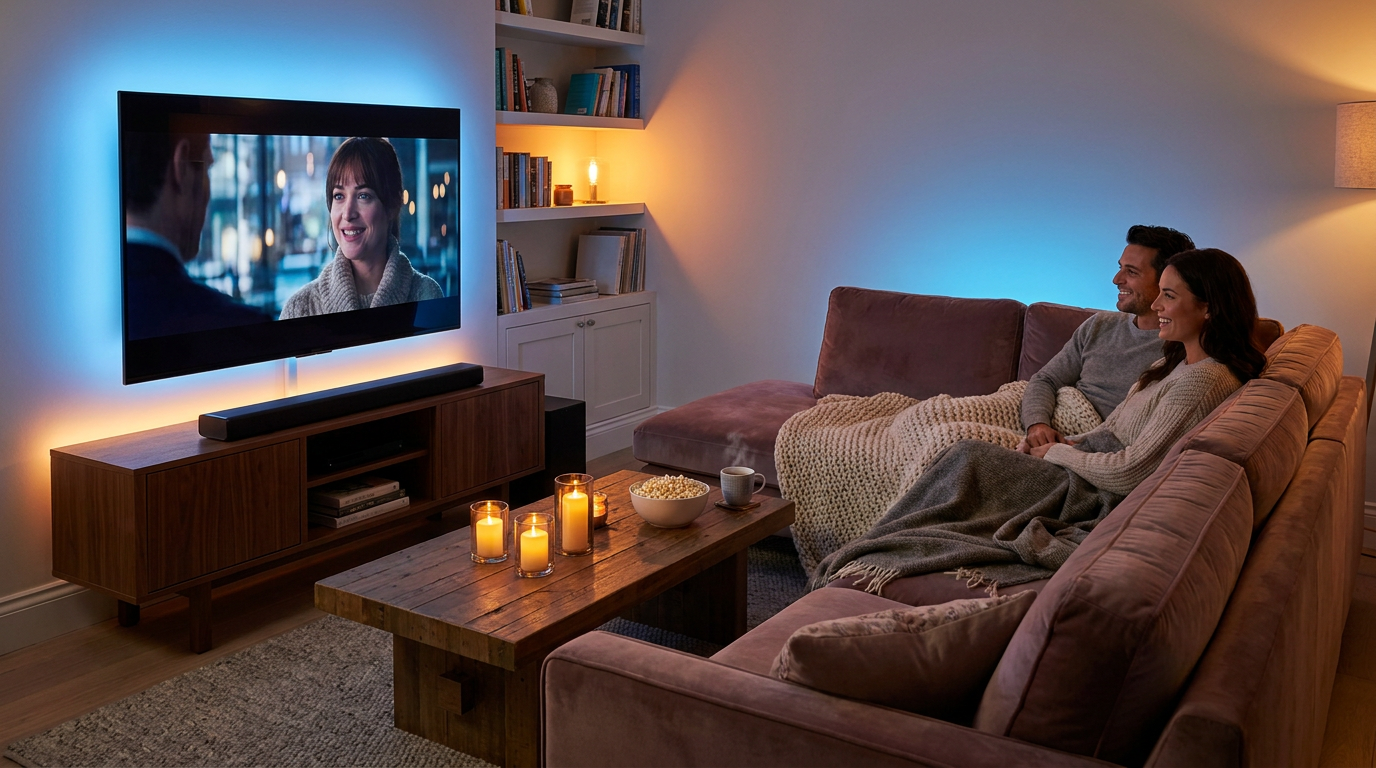
In the evening, the experience becomes even more layered. A smart soundbar for television can bring greater richness to films and streaming shows, but the best systems do more than amplify dialogue or effects. They create immersion. They help transform a familiar living room into a cinematic retreat, even if you are simply staying in with popcorn and a throw blanket. For many families, this kind of cozy, elevated entertainment is one of the true luxuries of home life.
Then there are social occasions. Hosting becomes easier when your audio can move with the mood. You might begin with soft background playlists while guests arrive, transition into upbeat dinner music, and then switch to a mellow after dinner atmosphere as the evening winds down. A smart system lets these transitions happen gracefully. Instead of fussing with controls, you stay present with the people in your home.
Smart Audio as Part of the New Entertainment Hub
Today, home entertainment is less about a single television in one room and more about a connected lifestyle. Audio now sits at the center of that shift. A soundbar in the living room, a speaker in the kitchen, another in the bedroom, and voice control across all of them can create a more continuous and personalized home experience. Rather than separate entertainment zones, you begin to have a home that responds as one.
This integrated feeling is one reason the smart home market continues to expand. Grand View Research reported that the North America smart home market generated more than USD 32.7 billion in 2024, showing how large and relevant this category has become. Audio is part of that broader ecosystem, often working alongside lighting, routines, and voice assistants. The result is not only convenience but a more cohesive sense of atmosphere throughout the home.
Imagine dimming the lights, lowering the blinds, and starting your movie soundtrack with a single voice prompt. Or beginning a weekend cleaning routine with bright lighting and an energetic playlist that follows you from room to room. Or setting a dinner scene that adjusts audio and lighting together at the same time each evening. These combinations sound simple, but emotionally they are quite meaningful. They make the home feel responsive, polished, and supportive.
Importantly, this does not have to feel cold or overly automated. In fact, the newest direction in smart living is often toward technology that stays in the background. People want homes that feel beautiful and human first. They do not necessarily want every device to announce itself. Smart audio is especially well suited to this quieter style of innovation because it can be discreet, nearly invisible, and deeply effective.
The Emotional Benefits of Different Smart Audio Setups
Single Room Smart Speakers
A single smart speaker can be enough to change how one room feels. In a bedroom, it can offer calming playlists, white noise, or guided meditations that support rest. In a bathroom, it can make getting ready feel less rushed and more enjoyable. In a kitchen, it can become a companion during cooking, homework time, or slow Sunday mornings. The beauty of a single speaker is its simplicity. It is often the easiest entry point for homeowners who want more atmosphere without committing to a whole home system.
These speakers are also useful because they tend to become part of the room’s personality. A kitchen speaker might be associated with cheerful family playlists and recipe timers. A bedroom speaker might become part of a nighttime ritual. These emotional associations matter. They help shape the feeling of each space in a way that is both practical and personal.
Soundbars for Elevated Living Room Comfort
Soundbars are one of the most effective upgrades in home entertainment because they enhance a central gathering space without requiring a complicated setup. For many households, the living room is where people unwind together. It is where children pile onto the sofa for movie night, where couples stream a new series, and where friends watch big games or concerts. A good soundbar can make all of that feel richer and more immersive.
What matters here is not simply volume. A soundbar can improve dialogue clarity, deepen music, and create a more enveloping atmosphere at moderate listening levels. This is especially valuable for people who want the room to feel cinematic and full without becoming harsh or overwhelming. In homes where comfort is the priority, that balance is everything.
For homeowners who want to see how far that cinematic ambition can go, it helps to look at how custom builders integrate a dedicated home theatre into the architecture itself rather than treating it as an afterthought. Kingsgate brought this exact feature to life on a recent North York build — see it here: 71 Northwood Dr, North York.
Multi Room Audio for Flow and Hospitality
Multi-room audio may be one of the most lifestyle changing features in the category. It creates continuity. Music can move gently with you as you get ready in the morning, tidy the house, entertain guests, or settle into the evening. Instead of isolated listening moments, your home begins to feel more fluid and curated.
For people who love to host, this is particularly valuable. There is a special ease that comes from being able to keep the same atmosphere moving through the kitchen, dining room, and living room. Guests feel it even if they do not consciously notice it. The home feels considered. It feels welcoming. It feels alive in a graceful, low effort way.
Multi-room setups can also support family life beautifully. Parents can play music in common spaces while keeping children’s rooms quieter. Family members can choose different audio zones when needed. Shared spaces can feel social and connected, while private spaces still feel restful. This flexibility is one of the reasons smart audio fits real homes so well.

Features That Matter Most for Atmosphere
If you are shopping for a smart audio system, it helps to look beyond technical language and focus on the features that affect how your home actually feels. Excellent sound quality matters, of course, but it is not only about power or precision. In a lifestyle context, the best system is the one that supports mood, comfort, and convenience in a way that fits naturally into daily life.
Voice Control That Feels Effortless
Voice assistants are helpful because they remove friction. If your hands are busy cooking, cleaning, or carrying laundry, it is lovely to be able to ask for a playlist or lower the volume without stopping what you are doing. This hands free ease is one of the reasons smart speakers became so popular in the first place. According to ownership reporting, Amazon Alexa remains a leading platform, with Google Home and Apple HomePod also widely used, so many homeowners are already familiar with the idea.
Still, voice control should feel supportive rather than intrusive. The best systems respond quickly, integrate well with your existing habits, and offer privacy settings that make you feel comfortable. Technology always works best in a home when it feels respectful and calm.
Room Calibration and Balanced Sound
One common misconception is that better sound always means bigger sound. In reality, atmosphere often depends more on balance than intensity. Room calibration features can help a speaker or soundbar adapt to the room’s size, shape, and surfaces. That means you get fuller, clearer sound that feels pleasant and natural, instead of boomy or sharp audio that tires the ear.
Placement matters too. A beautiful speaker hidden in the wrong corner may not create the room feeling you want. Thoughtful positioning, whether on a shelf, console, or built into the room more discreetly, can make a tremendous difference. Smart audio is not only about the device. It is also about how the sound lives in the space.
Listening Modes for Different Moods
Many systems now offer different listening modes for movies, music, dialogue, or late night viewing. This is useful because our homes serve many purposes across the day. You may want crisp voices while watching a documentary, immersive depth for a film, or softer dynamics after the children are asleep. Modes that adapt to these scenarios can make the system feel far more intuitive and home friendly.
Spatial audio is another feature gaining interest because it can make listening feel more expansive and enveloping. Used well, it supports a sense of immersion that is especially lovely for movies, concerts, and certain playlists. But as with everything else, emotional comfort matters more than novelty. The right effect should feel natural and inviting, never forced.
Integration With Lighting and Routines
Audio becomes even more atmospheric when it works with other sensory elements in the home. Smart lighting integration is especially powerful. Warm lamps, dimmed overhead lights, and a mellow playlist can instantly shift the room into evening mode. Brighter lights and a motivating soundtrack can energize a daytime routine. When sound and light support each other, the result feels far more intentional.
Automation routines can help here. A morning routine, a dinner routine, a party routine, or a bedtime routine allows the home to transition smoothly between moods. This is where smart audio begins to feel less like entertainment equipment and more like part of the home’s emotional rhythm.
Choosing the Right Smart Audio System for Your Home
The right system depends less on trends and more on how you actually live. Begin by thinking about your routines. Where do you naturally spend time. When do you most want music, podcasts, news, or immersive sound. Which moments in your day feel rushed, flat, or disconnected and might be improved with a more intentional audio backdrop. These questions are often more useful than comparing endless technical charts.
If your main goal is better TV and movie sound, a smart soundbar may be your best starting point. It offers the most noticeable improvement in one of the home’s primary entertainment spaces. If your goal is creating a calmer, more personalized daily flow, one or two smart speakers in the kitchen and bedroom may be more meaningful. If you love hosting or want a more seamless whole home feel, multi-room audio is worth considering.
You should also think about aesthetics. Some homeowners prefer a visible speaker that feels sculptural and stylish, while others want audio that fades into the background. There is growing interest in discreet, built in, and custom fit solutions for exactly this reason. A home should never feel dominated by technology. The best systems support the room visually as much as they support it acoustically.
Compatibility matters too. If you already use a particular voice assistant or smart home platform, staying within that ecosystem may make your experience smoother. Likewise, consider who will use the system. A family with children may value simple controls and reliable shared routines. A couple in a smaller condo may prioritize elegant compact design. A frequent host may want stronger zoning and easy playlist management across spaces.
Above all, choose a system that feels emotionally aligned with the life you want at home. A beautiful listening experience is not only about fidelity. It is about what the sound helps you create.
Safe Listening Is Part of Good Home Design
When we talk about home atmosphere, it is important to include hearing health in the conversation. Health Canada notes that listening to music and other audio at home can absolutely be enjoyable, but it also explains that sound level and exposure time both matter. Excessive noise can contribute to hearing loss, tinnitus, and even negative effects on mental well being. This is a reminder that a satisfying sound experience does not have to be loud to be powerful.
Health Canada also notes that a normal conversation is around 60 dBA, which is a useful baseline when thinking about comfortable listening in the home. It explains that an environment may be too loud if it is consistently above 80 dBA, or if people need to shout to be heard from about a metre away. That is a simple and practical way to evaluate your entertainment setup during parties or movie nights. If the room feels strained rather than enjoyable, it may be time to lower the level.
Many smart systems and smartphones include volume monitors, warnings, or limiters. These features are worth using, especially for children, teens, and anyone who regularly listens on headphones. Health Canada advises keeping headphone volume at a safe level, and this guidance translates beautifully into a larger home entertainment philosophy. Richness matters more than maximum intensity. Comfort matters more than force.
The most luxurious home entertainment experience is one you can enjoy for hours without feeling overwhelmed.
If you want your audio system to support wellness as well as atmosphere, consider a few simple habits.
- Keep everyday listening at moderate levels so sound enhances the room instead of dominating it.
- Use late night or dialogue modes when appropriate to reduce the urge to turn the volume too high.
- Take breaks during long listening sessions, especially with headphones.
- Teach children healthy listening habits early, including volume awareness.
- Choose systems with clear sound at lower levels, since clarity often reduces the temptation to over amplify.
These choices support a home that feels both lively and caring. They remind us that good design is not only about immediate pleasure. It is also about long term comfort.
Common Misconceptions About Smart Audio Systems
One of the biggest misconceptions is that smart audio is only about sound quality. Of course quality matters, but atmosphere depends just as much on placement, room acoustics, and listening habits. A modest speaker used thoughtfully can sometimes create a more beautiful experience than a more expensive system used poorly. The room itself is part of the result.
Another common myth is that bigger volume means a better entertainment experience. In reality, emotional impact often comes from balanced sound at moderate levels. A film can feel immersive because dialogue is clear, bass is warm, and ambient effects are present, not because everything is dramatically louder. In fact, overpowered sound can make a room feel stressful rather than elevated.
Some people also assume smart speakers are only useful for voice commands. Yet for many households, the real value lies in routines, background ambiance, multi-room playback, and effortless transitions between parts of the day. The system becomes part of the home’s emotional flow. It is not just about asking a device a question.
Finally, there is the idea that smart home audio must be intrusive. That may once have been true in some cases, but many current systems focus on discreet design, privacy controls, and subtle automation. They are designed to support beautiful living, not interrupt it. This shift is especially appealing to homeowners who want the benefits of technology without losing the softness and personality of home.
Creating Signature Audio Moods for Different Moments
One of the easiest ways to get more from smart audio is to think in moods rather than genres. Instead of simply choosing music you like, choose soundscapes that support how you want a room to feel. This creates a more intentional relationship between entertainment and home atmosphere.
For mornings, you might choose something bright but gentle. Acoustic playlists, soft soul, light classical, or instrumental cafe music all work beautifully. For work hours, ambient electronic or piano can help create focus without demanding attention. For dinner, jazz, bossa nova, or mellow vocal playlists can make the room feel intimate and relaxed. For gatherings, choose music with warmth and rhythm that supports conversation rather than competes with it.
For movie night, think about the environment as a whole. Adjust the lighting, clear visible clutter, add blankets or floor cushions, and let the audio become part of a comforting ritual. For wind down time, sound machines, rain tracks, soft instrumental music, or guided meditations can help the home feel quieter and more restorative.
These choices may seem small, but they build emotional memory. Over time, certain sounds become associated with comfort, celebration, focus, or peace. That is one of the most beautiful things about smart audio. It helps create a home that is not only functional, but deeply felt.
The Future of Smart Audio Feels More Human
Industry trends continue to point toward stronger integration, AI assisted automation, and more discreet audio solutions. That sounds technical on the surface, but the most meaningful result is actually quite human. The future of smart audio is likely to feel less like operating equipment and more like living in a home that understands your rhythms.
Imagine systems that recognize the time of day, adapt room by room, and quietly support the mood you tend to prefer in each part of the house. Imagine entertainment setups that automatically calibrate for clearer sound without any fuss. Imagine voice control that feels conversational and routines that anticipate gatherings, quiet evenings, and family transitions more intuitively. These developments matter because they reduce effort and increase comfort.
At the same time, many homeowners are becoming more selective about how visible smart technology feels. This is a healthy shift. The ideal smart home does not feel like a showroom full of devices. It feels calm, elegant, and easy to live in. Smart audio aligns beautifully with that vision because it can be almost invisible while still changing the emotional tone of a space dramatically.
In that sense, the future is not really about more gadgets. It is about more harmony between technology and everyday life. Audio happens to be one of the most graceful ways to achieve that harmony.
Final Thoughts
Creating the perfect atmosphere at home is rarely about one dramatic design move. More often, it comes from a collection of small choices that make everyday life feel richer and more supportive. Smart audio systems are one of those choices. They can help a room feel warmer, a gathering feel more welcoming, a movie feel more immersive, and a routine feel more intentional.
What makes them so compelling is not only convenience or innovation. It is the emotional value they bring to the way we live. They let us shape mood with ease, support connection without effort, and enjoy our homes more fully. When paired with safe listening habits and a thoughtful understanding of your space, smart audio becomes far more than entertainment technology. It becomes part of the home’s atmosphere in the deepest sense.
If you are considering a smart audio upgrade, begin with the moments you want to improve. Think about the breakfast table, the family room sofa, the dinner party, the quiet evening, the bedtime ritual. The best system is the one that helps those moments feel more beautiful, more comfortable, and more alive. In the end, that is what great home entertainment should do.



No Comment! Be the first one.