


Sustainable landscaping has entered a new era. It is no longer viewed as a compromise between environmental responsibility and visual beauty. Today, the most compelling outdoor spaces often achieve both at once, offering gardens that are graceful, climate-aware, ecologically generous, and deeply pleasurable to inhabit. A sustainable landscape can feel as curated as a formal courtyard, as lush as a romantic retreat, or as clean and contemporary as a minimalist terrace, all while conserving resources and supporting the living systems around it.
Table Of Content
- What Sustainable Landscaping Really Means
- Why Sustainable Landscaping Matters Now
- Start With the Site, Not the Trend
- Rethinking the Lawn With Elegance
- Planting for Beauty, Biodiversity, and Climate Resilience
- Qualities to look for in a sustainable planting palette
- Water-Smart Design Without Sacrificing Luxury
- The Importance of Soil Health
- Materials, Hardscape, and the Quiet Power of Restraint
- Maintenance the Sustainable Way
- Habits that support low-input maintenance
- Designing Pollinator Habitat With Sophistication
- Small Changes That Make a Large Difference
- A Practical Framework for Your Sustainable Garden Plan
- The Future of Garden Beauty
This shift is especially meaningful at a time when gardens are being asked to do more. Homeowners want outdoor spaces that remain attractive through heat, heavy rain, and changing seasons. They want landscapes that require fewer chemical inputs, less water, and more thoughtful maintenance. They also want gardens that welcome birds, butterflies, bees, and beneficial insects, restoring a sense of vitality that conventional lawns and high-input planting schemes often fail to provide.
The good news is that sustainable landscaping is wonderfully adaptable. It does not prescribe one fixed look, nor does it mean allowing a yard to become wild and unmanaged. Instead, it invites a more intelligent design approach, one that begins with the character of the site and shapes beauty through restraint, resilience, and ecological awareness. In practical terms, that may mean reducing unused turf, choosing regionally appropriate plants, enriching soil naturally, rethinking irrigation, and creating layered plant communities that feel both composed and alive.
Across North America, the conversation around sustainable landscaping is now tied to a wider movement toward climate-adaptive and biodiversity-positive design. Pollinator habitat creation, lawn reduction, rain gardens, water reuse, regenerative planting strategies, and mixed native groundcovers are all part of this evolving language. Far from being a niche interest, this is becoming a standard of intelligent landscape design, particularly for those who care about long-term beauty, function, and environmental value.
In this guide, we will explore the principles behind sustainable landscaping and show how they can be translated into refined, practical outdoor spaces. Whether you have a compact city garden, a suburban front yard, or a larger property with multiple landscape zones, the goal remains the same: to create a garden that looks exquisite, performs well, and gives something back to the environment.
What Sustainable Landscaping Really Means
At its heart, sustainable landscaping is about designing and maintaining outdoor space in a way that works with natural systems rather than against them. That includes water use, soil health, biodiversity, material selection, maintenance routines, and the broader environmental impact of the garden over time. It is a holistic approach, not a single trend or product. The landscape becomes more than decoration. It becomes a living framework that supports daily life while reducing unnecessary strain on resources.
One of the most persistent misconceptions is that a sustainable garden must look unruly or unfinished. In reality, many of the most elegant landscapes today rely on ecological principles. Structure, rhythm, repetition, and contrast remain as important as ever. The difference is that each design decision is made with more intention, asking not only how a space will look in a photograph but also how it will function across seasons, how much water it will need, and what forms of life it can support.
Another misconception is that sustainability is only about saving water. Water conservation is indeed central, especially because outdoor water use can account for roughly 30 percent to 70 percent or more of household water use depending on region. Yet the sustainable landscape extends beyond irrigation. It also includes reducing chemical dependency, protecting and building soil, selecting climate-resilient plants, supporting pollinators, limiting waste, and designing hardscape surfaces that handle stormwater more thoughtfully.
It is also worth noting that sustainability does not require eliminating every lawn area, every paved surface, or every ornamental gesture. Rather, it means using each element strategically. Turf may still have a place where people gather, children play, or views are intentionally framed. Hardscape can provide clarity, movement, and outdoor living space. Ornament can still flourish. The aim is not deprivation. It is alignment between design, use, climate, and care.
A sustainable landscape is not a neglected one. It is a designed environment where beauty, purpose, and ecological intelligence are given equal weight.
Why Sustainable Landscaping Matters Now
The urgency behind sustainable landscaping has grown because the pressures on our outdoor environments have become more visible. Many regions experience hotter summers, irregular rainfall, longer drought periods, and more intense storms than in the past. Conventional landscapes, especially those dominated by thirsty turf and high-maintenance annuals, can struggle under these conditions. Gardens designed for yesterday’s climate often demand excessive water, fertilizer, and intervention simply to remain presentable.
Climate resilience is now one of the defining goals of modern landscape design. A resilient garden is one that can absorb weather variation with grace. It uses plants that can tolerate heat and periodic dryness, but it also considers drainage, soil absorption, shade patterns, and plant diversity so the landscape is not vulnerable to a single stressor. This resilience is not only practical. It contributes to an atmosphere of ease. A garden that is adapted to place tends to look more settled, more coherent, and more naturally beautiful.
Biodiversity is another powerful reason for this movement. Canada alone is home to more than 1,000 species of pollinators, and public sources have identified habitat loss, pesticide use, disease, and climate change as major threats to these essential creatures. Residential and urban landscapes can play a meaningful role in restoring food sources and shelter. A thoughtfully planted garden, even on a modest lot, can become part of a wider network of support for bees, butterflies, birds, and beneficial insects.
There is also a cultural dimension to the trend. People increasingly want outdoor spaces that feel authentic rather than overly manufactured. They are drawn to gardens with movement, seasonal change, and a sense of life unfolding. Meadow-inspired planting, native species, soft grasses, flowering perennials, and habitat-rich borders offer this richness while asking less of the land. The result is a garden that feels not only stylish but sincere.
Start With the Site, Not the Trend
The most successful sustainable landscapes begin with observation. Before choosing plants or materials, it is essential to understand the site itself. Notice how the sun moves through the space, where water collects after rain, which areas dry quickly, and where wind is strongest. Pay attention to soil texture, existing trees, nearby buildings, and views from inside the home. A beautiful garden emerges from this reading of place, because the design responds to what is already present rather than imposing a disconnected idea.
This site-first approach often prevents expensive mistakes. A plant that looks exquisite in one garden may fail in another if drainage, light, or winter exposure differ. A paving material may seem ideal until it reflects too much heat or directs water toward the house. Sustainable landscaping values harmony between the chosen elements and the conditions they must inhabit. The garden becomes easier to care for because it is not constantly resisting its environment.
Once you understand the site, it becomes easier to divide the landscape into functional zones. Some areas may be best suited to outdoor dining, others to habitat-rich planting, stormwater capture, or a modest patch of lawn for use. This zoning creates a more sophisticated composition because each area is designed with purpose. It also makes the landscape more resource-efficient, since high-input elements are limited to places where they are genuinely needed.
Rethinking the Lawn With Elegance
One of the clearest and most impactful sustainable landscaping strategies is lawn reduction. This does not mean every garden should abandon turf altogether. It means questioning whether large expanses of lawn truly serve the space. In many properties, lawns are maintained out of habit rather than function, consuming water, fertilizer, mowing time, and attention without offering much return. Replacing underused turf with planting can dramatically improve both beauty and ecological value.
The U.S. EPA recommends water-smart landscaping strategies that include using regionally appropriate plants, placing turf strategically, and reducing unnecessary irrigation. This guidance reflects a growing understanding that turf should be purposeful, not default. If a lawn is central to family activity, open recreation, or a visual clearing within a larger garden, it may deserve a place. If it is merely a filler between driveway and fence, there may be better possibilities.
Mixed native groundcovers, meadow-style plantings, low mounding shrubs, and layered perennial borders can all replace lawn in a more expressive way. These alternatives soften the garden, create seasonal interest, and often require fewer inputs once established. They can also be composed with great refinement. Repetition of form, controlled edges, generous drifts of one or two species, and a restrained color palette will keep the effect polished rather than chaotic.
For those who still want green continuity underfoot, modern lawn alternatives offer compelling options. Depending on region, a tapestry of low-growing native plants or drought-tolerant groundcovers can create a visually rich carpet that reads as lush without behaving like conventional turf. These surfaces are especially effective in spaces where the desire is primarily ornamental rather than heavily recreational.
Planting for Beauty, Biodiversity, and Climate Resilience
Plant selection is where sustainable landscaping becomes truly expressive. Native and pollinator-friendly plantings are especially valuable because they are adapted to local conditions and can support habitat while reducing maintenance inputs. Yet native does not have to mean rustic. A refined native planting palette can feel architectural, romantic, or contemporary depending on how it is arranged. It is less about the label of the plant than the sophistication of the composition.
The most captivating sustainable gardens use layering. A resilient planting scheme often includes a structural backbone of shrubs or small trees, a middle layer of flowering perennials and grasses, and a lower layer of groundcovers that help protect the soil. This layered approach creates visual depth while reducing bare ground, suppressing weeds naturally, and offering food and shelter to wildlife. It also gives the garden presence in every season, rather than concentrating beauty into a single brief bloom period.
Climate-adaptive planting is another essential principle. Choose species that can handle the realities of your region, whether that means summer heat, intermittent drought, saturated spring soil, or sudden temperature swings. Diversity matters here. A garden made up of many compatible species is more resilient than one overly dependent on a few plants with identical needs and vulnerabilities. Diversity also enriches the sensory experience of the space, adding variation in leaf shape, movement, texture, and color.
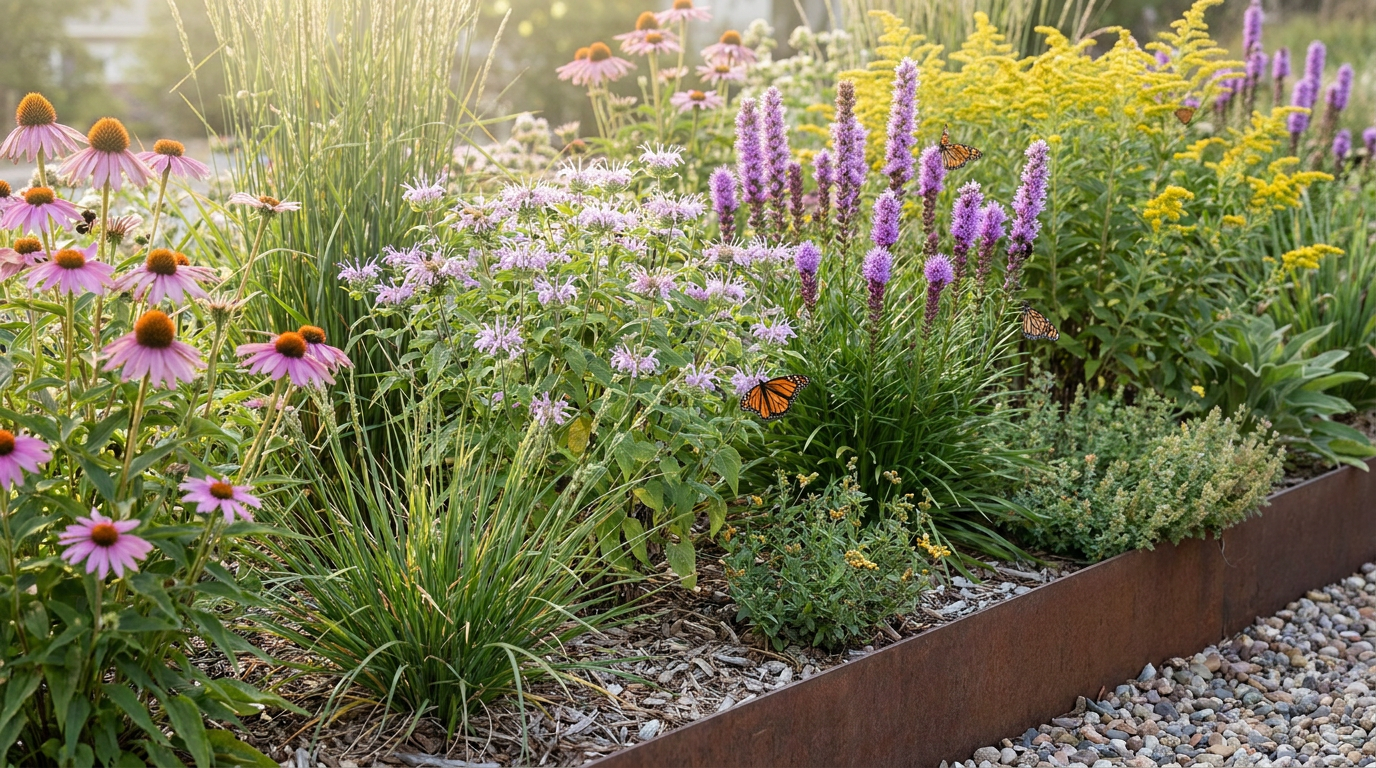
Pollinator gardens deserve special attention because they answer both ecological and aesthetic goals. Flowering species that provide nectar and pollen through multiple seasons can be arranged in graceful combinations that feel lush and intentional. Fragrance, bloom succession, seed heads, and winter silhouettes all contribute to the garden’s life beyond summer. A pollinator-friendly garden is not only a habitat. It is one of the most enchanting forms of planting design.
Qualities to look for in a sustainable planting palette
- Plants suited to your region, soil, and light conditions
- A mix of bloom times to support pollinators across seasons
- Strong foliage and texture so the garden remains attractive beyond peak flowering
- Species that tolerate local climate extremes such as heat, rain, or drought
- Layered combinations of trees, shrubs, perennials, grasses, and groundcovers
- Low-input plants that need less fertilizer, fewer chemicals, and less frequent watering once established
Water-Smart Design Without Sacrificing Luxury
Because landscapes can account for such a significant share of household water use, irrigation deserves careful attention in any sustainable garden plan. Water-smart design begins with reducing unnecessary demand. Plants should be grouped according to their moisture needs, thirsty species should be limited, and irrigation should be focused where it offers real value. This kind of planning feels discreetly luxurious because it removes waste without diminishing comfort or beauty.
Efficient irrigation systems can make an enormous difference. Drip irrigation, for example, delivers water more directly to plant roots and can reduce evaporation compared with less targeted methods. Smart controllers that respond to weather conditions or soil moisture further refine water use. They help ensure that the landscape is watered because it needs it, not simply because the timer says so.
Water reuse is also becoming an increasingly discussed part of sustainable landscape planning. For non-edible vegetation, reused water can be a valuable strategy in water-conscious regions when local regulations and systems allow it. Even if a property does not incorporate formal water reuse, the broader principle remains relevant: water should be treated as a design resource, managed carefully from the moment it enters the site to the moment it leaves.
Another elegant approach is to shape the landscape so rainfall becomes part of the garden’s performance. Rain gardens, bioswales, and subtle grading interventions can direct stormwater into planted areas where it can infiltrate the soil rather than rushing into drains. These features are often strikingly beautiful, especially when designed with layered moisture-tolerant planting and natural stone or gravel edges. Utility and aesthetic pleasure become inseparable.
The Importance of Soil Health
Beneath every successful sustainable landscape is healthy soil. Soil is not simply a medium that holds roots in place. It is a living system that affects drainage, fertility, carbon storage, microbial activity, and plant resilience. A garden with healthy soil generally needs fewer interventions because plants are better able to establish, access nutrients, and withstand stress. Improving soil is often one of the most transformative actions a gardener can take.
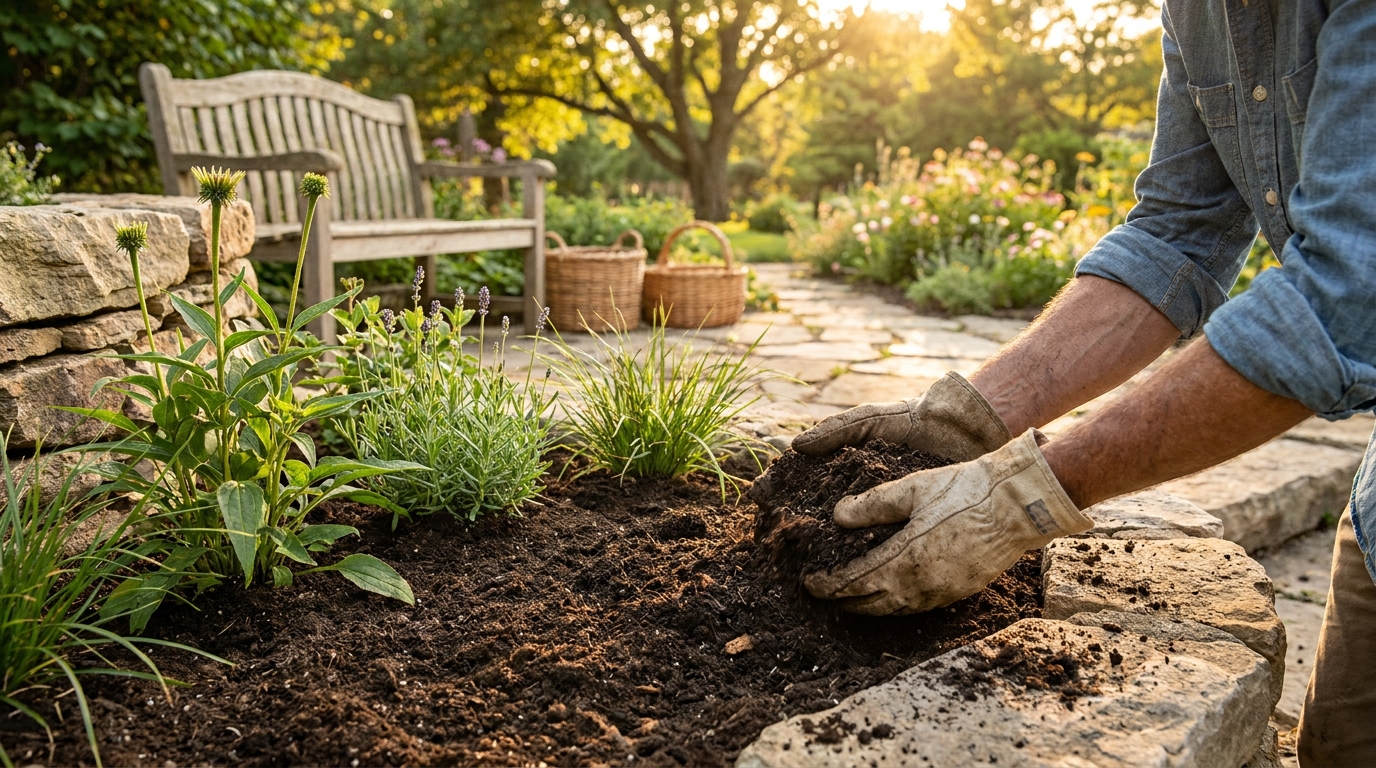
Compost is among the most valuable tools in this process. It enriches soil structure, improves water retention in sandy soils, enhances drainage in heavier soils, and supports beneficial organisms. Organic matter also helps the landscape become more self-sustaining over time. Rather than forcing constant growth through synthetic fertilizers, compost fosters steady vitality from below.
Mulch is equally important, both visually and functionally. A well-mulched bed looks finished and cared for, but it also moderates soil temperature, reduces evaporation, and suppresses weeds. Natural mulches gradually break down and contribute to soil health, making them one of the simplest sustainable practices with immediate design benefits. The garden appears more composed while quietly becoming more resilient.
When soil is treated as a living asset, maintenance changes as well. Gardeners tend to disturb the ground less, use fewer chemicals, and work with seasonal cycles rather than trying to dominate them. This creates a more balanced landscape, one where plant health arises from good conditions rather than from constant correction.
Materials, Hardscape, and the Quiet Power of Restraint
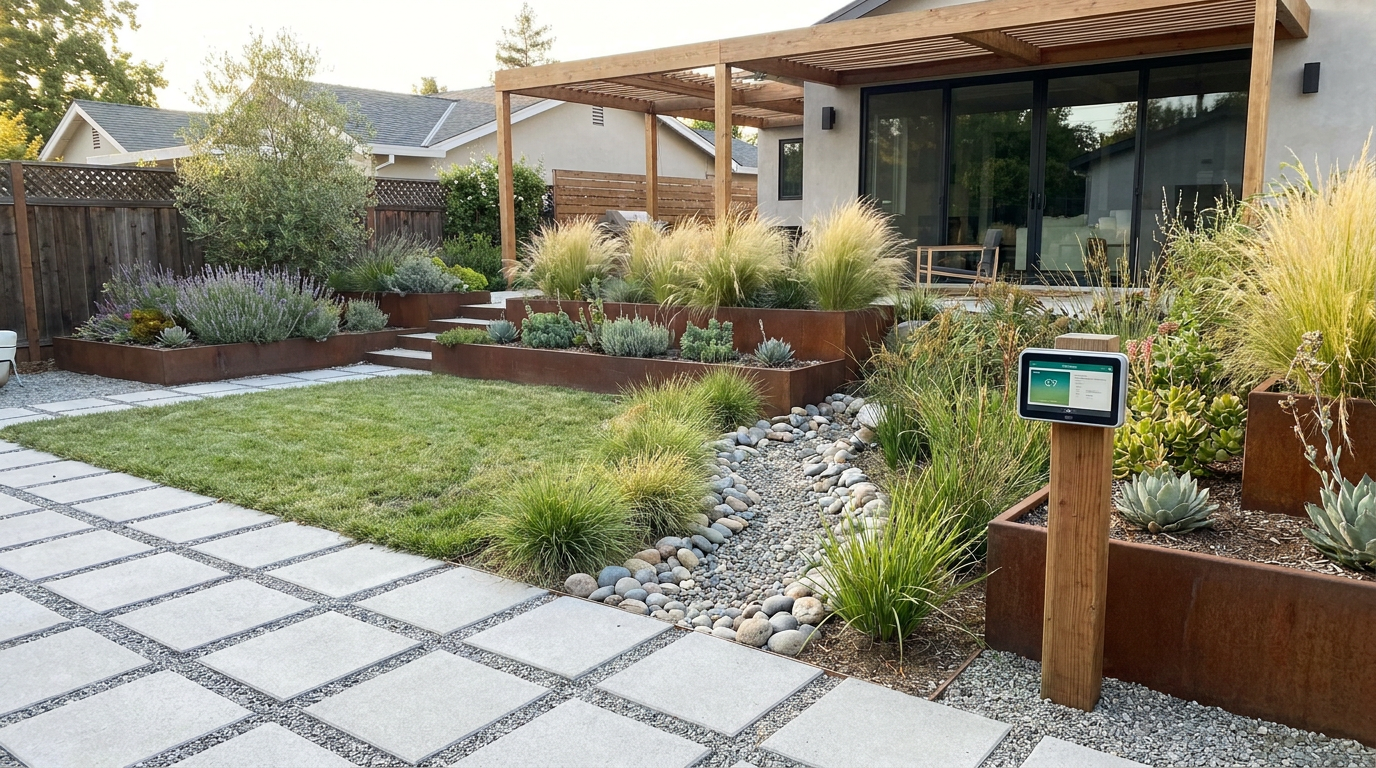
Sustainable landscaping includes more than plants. The materials used in paths, patios, edging, walls, and furnishings also influence environmental performance. Permeable paving is especially relevant, as it allows water to move through or around surfaces more effectively than conventional impervious paving. This can reduce runoff, support groundwater recharge, and complement stormwater-focused features such as rain gardens or swales.
Material choice should also consider longevity and local character. Durable stone, responsibly sourced wood, recycled content materials, and finishes that age beautifully can all support a more sustainable design language. In refined landscape architecture, permanence is a form of sustainability. A material that lasts, acquires patina, and remains visually relevant for years is often preferable to something fashionable but short-lived.
There is also an aesthetic lesson here. Many of the most graceful sustainable gardens rely on restraint rather than excess. A limited palette of materials repeated thoughtfully across the site creates calm. Clean edges, generous planting masses, and simple paths framed by abundant greenery can feel more luxurious than an overdesigned space filled with too many competing elements. Sustainability often heightens elegance because it encourages clarity.
Maintenance the Sustainable Way
A sustainable landscape is not maintenance-free, but it should be lower-input and more intelligent to care for. This distinction matters. Every garden needs editing, monitoring, seasonal cutting back, and occasional replanting. The difference is that a well-designed sustainable garden asks for maintenance that supports natural cycles rather than fighting them at every turn. Over time, this can reduce labor, cost, and chemical use while improving the health of the space.
Integrated pest management is an important framework in this regard. Instead of reaching immediately for broad chemical controls, the gardener begins by observing the problem, identifying causes, and choosing the least disruptive response. Healthier soil, greater plant diversity, good spacing, and habitat for beneficial insects often reduce pest pressure naturally. This approach protects pollinators and contributes to a more balanced garden ecology.
Seasonal maintenance can also be timed with wildlife in mind. Leaving seed heads through winter, delaying some spring cleanup until temperatures rise, and allowing certain stems to stand a little longer can support beneficial insects and birds without making the garden feel abandoned. The key is selective intention. The landscape can remain tailored and elegant while still acknowledging that it is part of a living cycle.
Habits that support low-input maintenance
- Water deeply but less frequently once plants are established and suited to site conditions.
- Refresh organic mulch as needed to retain moisture and keep planting beds defined.
- Use compost to build long-term soil health rather than depending on high-input fertilization.
- Choose plants for mature size so they do not require constant pruning or replacement.
- Monitor pests early and favor ecological responses before chemical intervention.
- Edit and divide perennials thoughtfully to preserve vigor and maintain a clean design structure.
Designing Pollinator Habitat With Sophistication
Pollinator habitat creation is one of the strongest current themes in sustainable landscaping, and for good reason. It allows even small gardens to make a meaningful environmental contribution. Yet what makes this movement especially exciting is that pollinator-friendly design can be deeply ornamental. Flower-rich borders, flowering shrubs, small native trees, and layered seasonal succession create a garden that is animated, fragrant, and filled with visual rhythm.
To design pollinator habitat well, think beyond a single burst of summer bloom. Aim for continuity from spring through autumn so nectar and pollen are available across the active seasons. Include varied flower shapes and colors to attract different species, and consider shelter as well as food. Dense plantings, stems left standing through winter, and undisturbed areas can all provide ecological value.
It is important to avoid pesticide-heavy maintenance if pollinator support is the goal. Public Canadian sources note that habitat loss, pesticide use, disease, and climate change are among the major threats facing pollinators. A landscape designed for habitat but treated in ways that undermine insect life is working against itself. Sustainable gardening asks for consistency between intention and practice.
From a design perspective, pollinator gardens become most compelling when structure is paired with softness. A clipped hedge, gravel path, or low wall can frame exuberant planting beautifully. This balance between order and abundance is one of the secrets to making ecological landscapes feel elevated and architecturally complete.
The most memorable gardens are not static compositions. They shimmer, move, attract life, and reveal the intelligence of care.
Small Changes That Make a Large Difference
For those feeling overwhelmed by the idea of a full landscape transformation, it helps to remember that sustainable landscaping can begin in stages. Replacing a section of unnecessary lawn, adding a pollinator border, installing a rain barrel, switching to drip irrigation, or top-dressing beds with compost are all meaningful first steps. Each action reduces environmental pressure while moving the garden toward greater beauty and coherence.
Small gardens are especially well suited to this gradual approach because every change is visible. A modest planting bed by the entrance can become a richly layered native composition. A narrow side yard can shift from sterile paving to permeable stone with shade-tolerant groundcovers. A front lawn corner can become a miniature habitat garden that softens the streetscape and invites seasonal interest.
These incremental choices often change how people relate to their property. The garden becomes more observed, more edited, more loved. Sustainable design is not merely a set of techniques. It is a different relationship with outdoor space, one grounded in attention, patience, and a desire to create lasting value rather than immediate but fragile effect.
A Practical Framework for Your Sustainable Garden Plan
If you are ready to shape your own sustainable landscape, it helps to work from a clear sequence. Begin by studying the site and identifying where the garden succeeds or struggles today. Then consider function. Decide where seating, movement, play, screening, habitat, and visual focus should occur. From there, you can reduce underperforming lawn, improve soil, choose a climate-appropriate planting palette, and refine irrigation and drainage strategies.
The following framework can guide the process in a manageable way:
- Assess the site: Observe sun, shade, drainage, exposure, soil, and existing vegetation.
- Clarify use: Identify which areas need recreation, gathering, circulation, privacy, or habitat value.
- Reduce wasteful lawn: Keep turf only where it has a clear aesthetic or functional role.
- Choose regionally appropriate plants: Favor native and climate-resilient species with layered seasonal interest.
- Support pollinators: Provide bloom succession, shelter, and low-chemical care.
- Improve water management: Use smart irrigation, mulch, permeable surfaces, and stormwater features.
- Build the soil: Add compost and organic matter to strengthen plant health naturally.
- Refine the design: Use repetition, structure, and a limited material palette to keep the garden elegant.
The Future of Garden Beauty
Sustainable landscaping is not a temporary style. It is a mature and necessary evolution in how gardens are imagined. As climate pressures intensify and ecological awareness deepens, outdoor spaces will continue to be valued not only for how they look but for how they perform and what they contribute. The most admired landscapes of the future will likely be those that unite aesthetic refinement with environmental intelligence so seamlessly that the two can no longer be separated.
This is encouraging news for anyone who loves design. It means sustainability does not ask us to lower our expectations of beauty. On the contrary, it expands them. It invites us to appreciate movement, habitat, seasonality, resilience, and local character as elements of luxury in their own right. A garden that drinks less, shelters more life, and remains graceful through changing conditions is not less sophisticated. It is more so.
Ecological garden models across Canada, including native plant and meadow-style gardens, have already shown that low-input landscapes can be highly attractive and educational at the same time. They demonstrate that sustainability and elegance are not opposing ideas. They are increasingly part of the same design vocabulary, one that values restraint, richness, and responsibility in equal measure.
If you are planning a garden transformation, let this be the guiding principle: create a space that belongs to its place. Let the soil improve year by year. Let water be used wisely. Let pollinators find nourishment. Let hardscape feel purposeful and enduring. And above all, let the garden be beautiful in a way that lasts, not only for the eye, but for the living landscape that surrounds it.


No Comment! Be the first one.