Why Alto’s Environmental Pact With TRCA Is Really a Land Development Story
When a transportation company signs an environmental agreement with a conservation authority, most people file it under climate news. I file it under land strategy. The Memorandum of Understanding that Alto signed with the Toronto and Region Conservation Authority on July 7, 2026 is not just about protecting watersheds along a future rail line. It is an early signal of how a thousand kilometre corridor from Toronto to Quebec City will reshape land value, growth patterns, and housing demand in every community it touches.
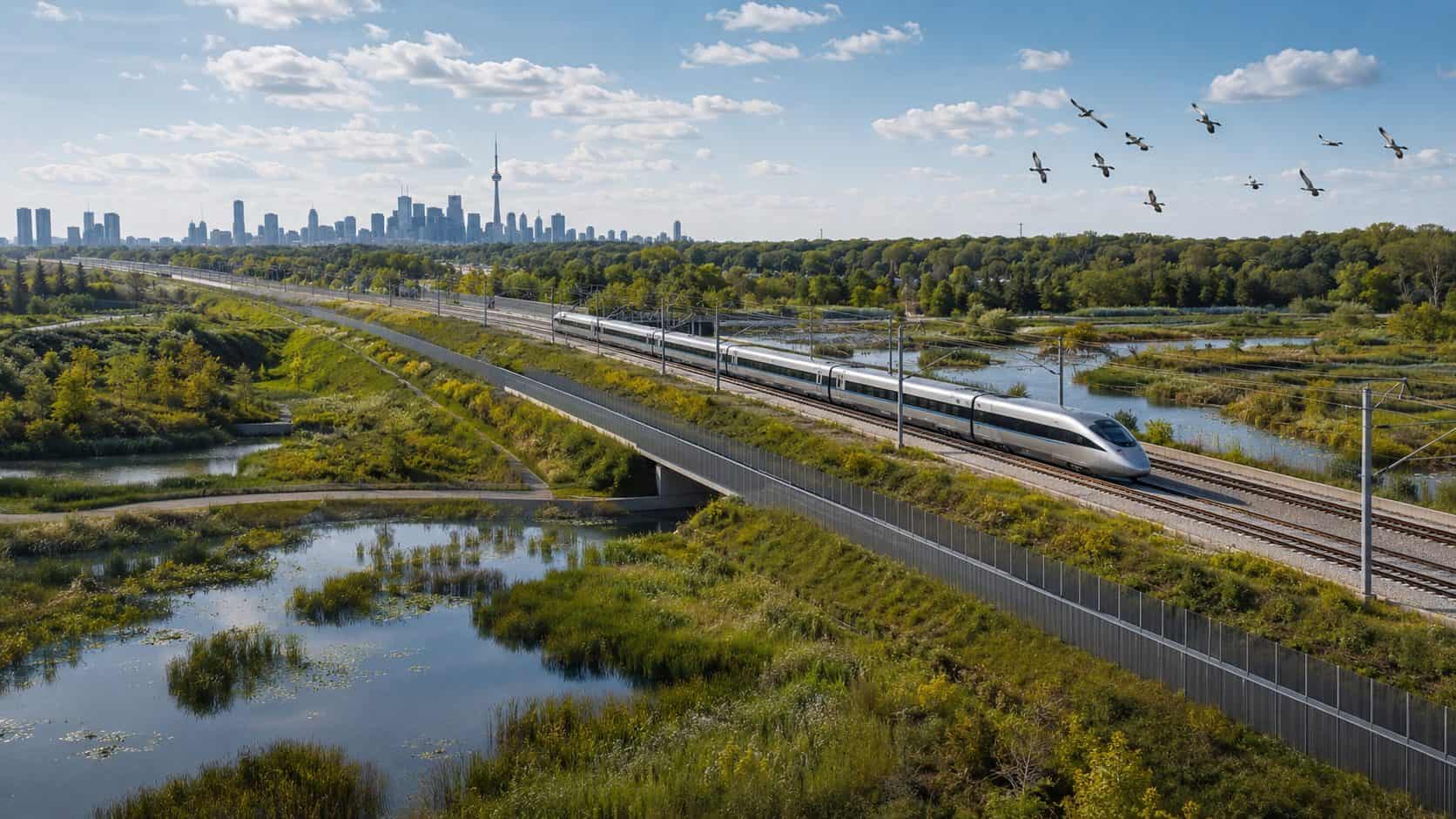
Large infrastructure projects rarely fail because of engineering. They stall because of environmental risk that surfaces too late, after routes are chosen and capital is committed. By bringing TRCA into the process now, ahead of construction, Alto is doing something developers should pay close attention to: de-risking the corridor before land decisions harden. Watershed management, flood and erosion assessment, habitat restoration, and climate adaptation are being built into the planning stage rather than bolted on afterward. That sequencing matters enormously for anyone thinking about what happens to land near the eventual stations.
The proposed core corridor runs through Toronto, Peterborough, Ottawa, Montreal, Laval, Trois-Rivieres, and Quebec City. Every one of those names represents a市場 of potential transit oriented development. High speed rail stations, when they succeed, tend to become gravitational centers for housing, commercial space, and mixed use intensification. Peterborough and Trois-Rivieres, in particular, are the kind of secondary markets that quietly benefit most when a major connectivity upgrade lands in their backyard. Land near a confirmed, environmentally cleared station site behaves differently than land near a proposed one still fighting hazard and habitat objections.
Development is never just about land. It is about timing, access, infrastructure, policy, demand, and the future identity of a community.
What TRCA brings to this partnership is decades of watershed science and natural hazard experience across the Greater Toronto Area, the kind of institutional knowledge that typically takes developers years and multiple failed applications to accumulate on their own. Its involvement gives Alto, and by extension every municipality along the line, a head start on the regulatory and community engagement work that usually delays large scale growth plans by years, not months.
None of this guarantees the project reaches construction on any particular timeline. Environmental reviews, government approvals, and community consultation still lie ahead. But for anyone tracking where the next wave of housing supply and regional intensification will land in Ontario and Quebec, this agreement is worth watching closely. Corridors that solve their environmental questions early tend to be the ones that eventually get built, and built land is where development strategy begins.
Source: Travel And Tour World