


There is something deeply appealing about cooking outside while still being part of the conversation. Instead of stepping away from guests and disappearing into the house, you remain in the heart of the moment, stirring, serving, laughing, and lingering with everyone else. That simple shift changes the feeling of hosting in a way that is hard to measure but easy to love. A well-designed outdoor kitchen is not just a place to grill dinner. It is a comfortable living space that brings people together and makes home feel more open, relaxed, and alive.
Table Of Content
- Why Outdoor Kitchens Matter for Everyday Living
- Start With Lifestyle, Not Appliances
- Planning the Right Layout for Comfort and Flow
- Popular Outdoor Kitchen Layout Ideas
- Choosing Appliances That Support Real Life
- Appliances Worth Considering
- The Importance of Shade, Shelter, and Weather Protection
- Materials That Feel Beautiful and Hold Up Well
- Creating Ambiance That Invites People to Linger
- Designing for Family Gatherings and Entertaining
- Small Outdoor Kitchens Can Still Feel Like a Dream
- Safety, Codes, and Permits Matter More Than Many People Expect
- Making the Space Work Across Seasons
- The Best Outdoor Kitchens Feel Personal
- Final Thoughts on Building a Comfortable Outdoor Living Space
A dream outdoor kitchen is a fully functional, weather-ready extension of the home that combines a defined cooking zone, ample prep and storage space, dedicated dining and lounge areas, shelter from sun and wind, and thoughtful lighting so people can cook, eat, and gather outside without constant trips indoors. It typically includes a built-in grill as the centerpiece, along with refrigeration, a sink or cleanup station, durable weather-resistant materials such as stone, stainless steel, or sealed masonry, and code-compliant gas, electrical, or plumbing connections. Rather than being defined by size or luxury appliances, a successful outdoor kitchen is organized around zones for cooking, prepping, serving, dining, and relaxing, then scaled to fit the household’s actual habits, climate, and budget. The result is a space that feels like a natural part of the home rather than a separate backyard project, one that supports everyday meals as easily as it does larger family gatherings and entertaining.
In recent years, outdoor kitchens have moved far beyond the basic grill station. Across North America, they are increasingly being designed as true extensions of the home, with thoughtful layouts, weather-ready finishes, dining space, lighting, storage, and even beverage centers and cleanup zones. Research from the National Kitchen and Bath Association shows that outdoor kitchens remain a meaningful design priority, with 33% of respondents in its 2024 Kitchen Trends research planning to add one within the next three years. That kind of interest reflects a larger lifestyle shift. People want homes that support connection, ease, and everyday enjoyment, not just special-occasion beauty.
The dream outdoor kitchen looks a little different for every household. For one family, it might mean weeknight dinners under a pergola while children play nearby. For another, it may be a polished entertaining space where friends gather around an island with drinks and small plates. For someone who craves solitude, it could simply be a peaceful place to make morning coffee or cook a quiet meal in the open air. The most successful spaces are not necessarily the largest or most expensive. They are the ones designed around real life, with comfort, flow, and atmosphere at the center.
This guide walks through the essential elements of an outdoor kitchen with a focus on how the space should feel as much as how it should function. From layout and appliances to shelter, ambiance, materials, and seasonal planning, the goal is to help you create a space that is practical, beautiful, and truly enjoyable to live with. Because when an outdoor kitchen is planned well, it becomes more than an upgrade. It becomes one of the most welcoming parts of the home.
Why Outdoor Kitchens Matter for Everyday Living
The emotional value of an outdoor kitchen is often what makes it so compelling. Meals become more social because the cook is no longer isolated indoors while everyone else is outside. Gatherings feel less formal and more effortless because food, conversation, and seating all happen in one connected setting. Even ordinary evenings can feel a little more special when dinner is prepared in fresh air and served in a space that encourages people to slow down and stay awhile.
That sense of togetherness is exactly why outdoor kitchens continue to resonate with homeowners. NKBA design guidance has emphasized the human component of outdoor kitchen planning, including comfort, natural surroundings, and the way clients actually gather and move through the space. In other words, good design is not just about placing appliances in a row. It is about supporting real habits and making people feel at ease. The best outdoor kitchens create a setting where family members naturally gravitate, guests feel welcome, and hosting becomes lighter rather than more demanding.
There are practical benefits as well, and they matter more than many homeowners expect. Having prep surfaces, refrigeration, storage, and cleanup space outside reduces constant back-and-forth trips into the house. That makes entertaining smoother and weekday meals less disruptive. Instead of juggling platters through patio doors every few minutes, you can keep what you need close at hand and stay present with the people around you.
It also helps that outdoor kitchens are no longer an unusually niche idea. Market research continues to show strong growth in this category. Grand View Research reports that North America accounted for 46.4% of the global outdoor kitchen market in 2025, a sign that this is firmly part of mainstream outdoor living rather than a passing luxury trend. For homeowners, that means more design options, more product innovation, and more inspiration for creating spaces that feel personal and livable.
An outdoor kitchen works best when it feels like a natural extension of home life, not a separate project tucked at the edge of the yard.
Start With Lifestyle, Not Appliances
When people begin planning an outdoor kitchen, it is easy to get pulled immediately into appliance choices. Grills, smokers, outdoor refrigerators, ice makers, sinks, pizza ovens, and side burners all sound exciting, and many are genuinely useful. But before choosing any of them, it helps to think about how you want to live in the space. A dream outdoor kitchen starts with rhythm and routine. Who will use it, how often, in what seasons, and for what kind of meals and gatherings?
If your home is the one where everyone gathers for birthdays and summer holidays, your priorities may include generous seating, buffet-style serving space, and a beverage station that keeps traffic out of the cooking zone. If you are designing for your own household first, you may care more about efficient prep surfaces, easy cleanup, and a layout that supports quick weeknight dinners. If relaxation is the main goal, the kitchen itself may be compact while the surrounding lounge area becomes the true focal point.
This is where many outdoor kitchen projects become more successful. They stop trying to be everything at once and instead become very good at supporting a specific lifestyle. A compact built-in grill station with beautiful counters and nearby dining can be far more satisfying than a sprawling setup filled with features that rarely get used. The goal is not to create an outdoor showroom. It is to create a place people genuinely want to spend time in.
Modern design coverage increasingly reflects this function-first mindset. Trends for 2024 through 2026 point toward layouts that prioritize usability, shelter, flexibility, and integrated living zones rather than purely decorative statements. That is encouraging because it aligns beautifully with the emotional purpose of the space. An outdoor kitchen should make life easier, warmer, and more connected. It should not feel like another area of the home that requires performance.
Planning the Right Layout for Comfort and Flow
Layout is one of the most important parts of any outdoor kitchen, and it often matters more than square footage. A small, thoughtfully planned space can feel effortless and inviting, while a large one can feel awkward if movement is cramped or disconnected. The key is to think about flow. How do people approach the space, where do they gather, and how can cooking happen without blocking conversation or circulation?
In many homes, the ideal outdoor kitchen sits close enough to the house to feel connected, but far enough from doors and indoor pathways that smoke, traffic, and clutter do not interfere with daily life. Proximity matters because it affects convenience. Even a well-equipped outdoor kitchen will still have some relationship with the indoor kitchen, especially for serving dishes, pantry items, and seasonal storage. Keeping that transition intuitive makes the whole experience more pleasant.
The cooking zone itself should feel safe and efficient, with enough landing space beside the grill or cooktop and enough clearance for drawers, cabinet doors, and foot traffic. Nearby prep space makes a major difference in comfort. Without it, the outdoor kitchen becomes a hot, narrow place to stand rather than an enjoyable place to cook. Think of counter space as emotional ease. It gives you room to breathe, set things down, and stay organized.
Seating and dining placement deserve equal attention. Guests naturally drift toward the action, but they should not have to stand directly in the work zone. A counter with stools can create sociable proximity while still giving the cook space to move. A dining table slightly off to the side, under shade or near a garden edge, can make meals feel intimate and restful. Good flow allows people to mingle around the kitchen rather than bottleneck through it.
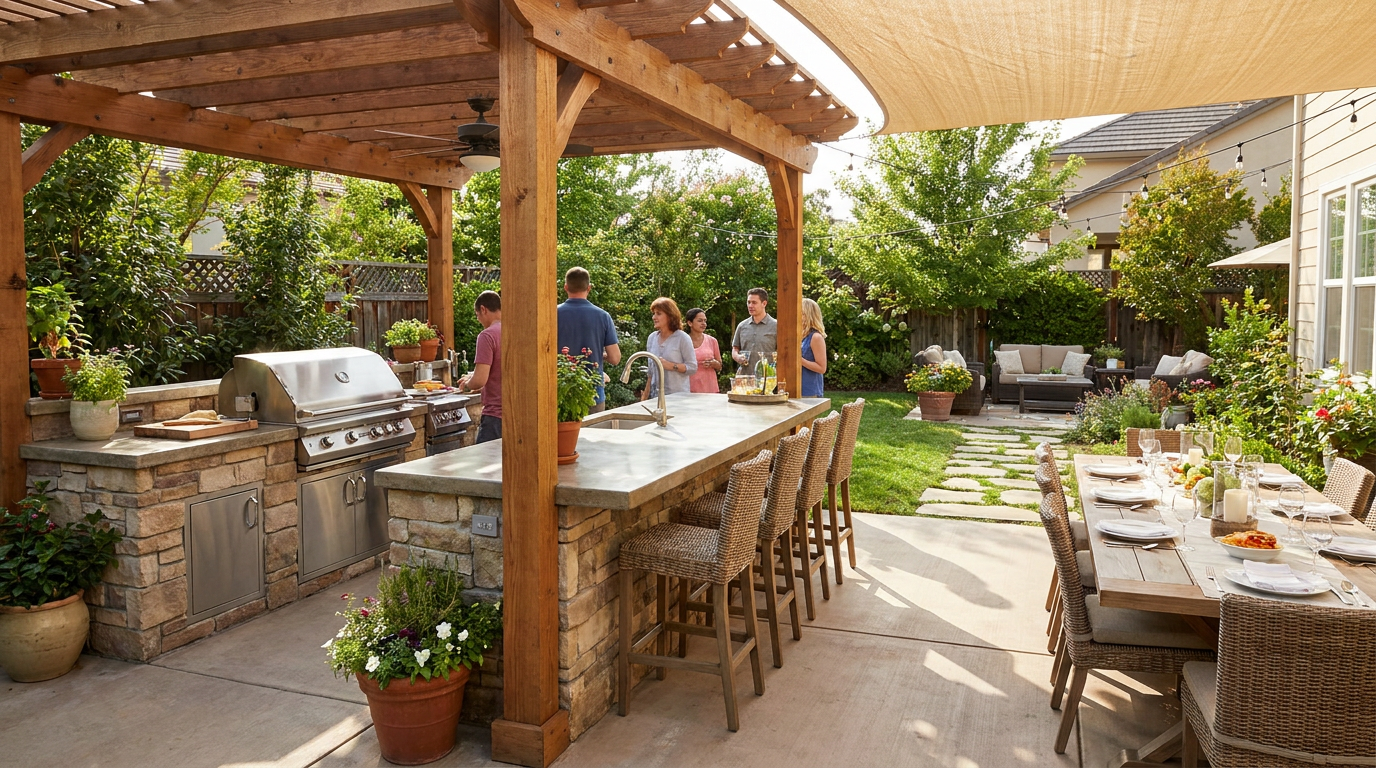
One of the simplest ways to plan layout is to think in zones. Cooking, prepping, serving, dining, and lounging do not have to be far apart, but they should each have a clear place. When these zones are gently defined, the whole backyard begins to feel like a comfortable outdoor room. This is especially helpful for households that want the space to function equally well for quiet dinners and larger entertaining.
Popular Outdoor Kitchen Layout Ideas
Some layouts naturally support comfort and conversation better than others. The right one depends on the shape of your yard, your home’s architecture, and how you plan to use the space. A few of the most popular approaches include the following:
- Straight-line kitchen: Ideal for smaller patios or side-yard placements, this layout keeps everything compact and efficient while leaving room for a separate dining or seating area.
- L-shaped kitchen: A versatile option that creates distinct prep and cooking areas while helping define the outdoor room.
- U-shaped kitchen: Best for larger entertaining spaces, this layout offers generous work surfaces and a more immersive cooking zone.
- Island-centered kitchen: A wonderful choice for social households because it allows guests to gather around while still maintaining a clear cooking workflow.
Whichever layout you choose, comfort should guide every decision. Sightlines, shade, noise, breeze, and walking paths matter just as much as the placement of the grill. A dream outdoor kitchen should feel intuitive from the first moment you step into it.
Choosing Appliances That Support Real Life
Appliances are often the most exciting part of the planning process, but the smartest choices are the ones that genuinely fit your habits. A built-in grill remains the centerpiece for many outdoor kitchens, and for good reason. It supports everything from quick weeknight meals to larger gatherings and has a natural social quality that invites people to gather nearby. But beyond that, it is worth asking what will actually make the space easier and more enjoyable to use.
For many households, refrigeration is one of the most valuable additions. A compact outdoor refrigerator or beverage center keeps drinks, marinades, and fresh ingredients within reach, which reduces trips indoors and helps the host stay present. A sink can also be transformative if plumbing is feasible, especially for rinsing produce, washing hands, or handling simple cleanup without interrupting the flow of the evening. These practical additions often have a greater impact on comfort than a more dramatic specialty appliance.
That said, specialty features can be wonderful when they reflect how you truly live. If pizza night is part of your family culture, a pizza oven may become the heart of the backyard. If coffee, cocktails, or sparkling water rituals shape how you entertain, a beverage zone can make the space feel layered and thoughtful. The point is not to avoid luxury. It is to choose luxury with purpose.
There is also growing interest in more sustainable and electric outdoor cooking products, reflecting broader shifts in product innovation. NKBA sustainability coverage has highlighted eco-friendly product development, and newer outdoor kitchen trends increasingly include smarter appliance selection and refined performance choices. For homeowners, that can mean looking beyond the biggest grill on the market and considering energy use, maintenance, durability, and how each appliance will serve the way you gather.
Appliances Worth Considering
- Built-in grill: The core of most outdoor kitchens and often the first appliance homeowners choose.
- Outdoor refrigerator or beverage center: Helpful for drinks, condiments, fresh ingredients, and easy entertaining.
- Sink and cleanup station: Convenient for prep, handwashing, and lighter cleanup tasks.
- Side burner or cooktop: Useful for sauces, sides, and meals that go beyond grilling alone.
- Pizza oven or smoker: Best when they suit your cooking style and add joy rather than complexity.
- Ice maker or beverage tap: Excellent in entertaining-focused spaces with regular guest use.
The most beautiful outdoor kitchen is not necessarily the one with the longest feature list. It is the one where each element feels intentional and supportive of the life unfolding around it.
The Importance of Shade, Shelter, and Weather Protection
One of the most important design truths about outdoor kitchens is that weather always shapes the experience. Sun, wind, rain, humidity, and seasonal temperature shifts all influence how long people stay outside and how comfortable the space feels. This is why shelter has become such a defining trend in newer outdoor kitchen design. More homeowners are integrating pergolas, covered patios, roof structures, and partial enclosures that make outdoor living feel less exposed and more dependable.
Shade is not simply a visual upgrade. It changes the emotional tone of the space. A shaded kitchen feels calmer, more welcoming, and more usable during peak afternoon hours. It protects surfaces, improves cooking comfort, and creates a softer backdrop for dining. If the space receives intense sun, thoughtful overhead coverage can make the difference between a kitchen that gets admired and one that gets used.
Wind protection matters too, especially in colder regions and more open suburban or rural settings. Strategic placement near walls, fencing, plantings, or architectural screens can help preserve warmth and reduce the frustration of dealing with gusty cooking conditions. In climates with strong freeze-thaw cycles, weather planning should extend to drainage, material durability, and winterization. A dream outdoor kitchen should feel lovely in photographs, but it also needs to stand up beautifully to real seasons.
For many North American homes, the rise of the covered outdoor room is especially meaningful. Rather than treating the kitchen as a distant backyard feature, homeowners are creating sheltered spaces that blur indoor and outdoor boundaries. This makes it easier to enjoy the area across more months of the year and helps the kitchen feel more integrated with the rhythms of the home.
Materials That Feel Beautiful and Hold Up Well
Material selection in an outdoor kitchen is one of those areas where beauty and practicality must work together. The finishes need to feel warm and inviting, but they also need to handle moisture, sunlight, heat, and seasonal wear. The best outdoor kitchens usually combine tactile, timeless materials with durable surfaces that are easy to maintain. Think stone, stainless steel, concrete, porcelain, sealed masonry, and weather-resistant cabinetry designed specifically for outdoor use.
Cabinetry has become more refined in recent outdoor kitchen design, moving far beyond the utilitarian look that once defined the category. Homeowners now have access to elevated finish choices that help the outdoor kitchen feel more like a true extension of the home’s interior style. That might mean a sleek contemporary palette, a rustic stone-and-wood mix, or something in between. What matters most is that the materials feel cohesive with the architecture and landscape around them.
Countertops deserve careful attention because they shape both daily function and visual character. You want a surface that can tolerate outdoor conditions while still feeling polished enough for serving and entertaining. Texture is important here. A heavily glossy finish may not feel as relaxed outdoors, while a honed or matte surface often creates a softer, more grounded atmosphere. Touch matters in these spaces. The way a counter feels under your hand can subtly influence whether the kitchen feels restful or overly hard.
Durability should always be considered through a regional lens. In colder climates, freeze-thaw resilience is essential. In coastal or humid areas, corrosion resistance becomes more important. In hot, sunny regions, fade resistance and heat management should guide your choices. A dream outdoor kitchen is one that ages gracefully, not one that demands constant repair or loses its beauty after one difficult season.
Creating Ambiance That Invites People to Linger
The most memorable outdoor kitchens are rarely memorable because of the grill. They stay with us because of how they felt at dusk, how the lights glowed, how the air moved through the space, and how easy it was to settle in and stay a little longer. Ambiance turns an outdoor kitchen from a practical cooking area into a true living space. It is the layer that makes a backyard feel intimate, welcoming, and emotionally restorative.
Lighting is central to that feeling. A combination of task lighting near the cooking area, softer ambient lighting overhead, and accent lighting around dining or planting zones creates a balanced atmosphere. Pendant lights under a covered patio can add warmth and definition, while integrated step or path lighting helps the whole area feel safe and polished. Candlelight, lanterns, and subtle table lamps can soften the edges and make evening gatherings feel especially inviting.
Seating also plays a major role in ambiance because comfort is visual as much as physical. Bar stools, dining chairs, benches, and lounge seating should feel supportive and easy rather than overly stiff or precious. Outdoor fabrics have come a long way, making it much easier to introduce cushions, pillows, and even rugs that add softness without sacrificing practicality. These details matter because they signal to people that the space is meant for lingering, not just quick meals.
Nature should be part of the mood as well. Potted herbs, layered planting, climbing greenery, and nearby garden beds help the kitchen feel settled into its environment rather than imposed on it. One of the most appealing aspects of outdoor living is the sense of openness and sensory richness it offers. When the kitchen engages with landscape rather than competing against it, the result feels calmer and more grounded.
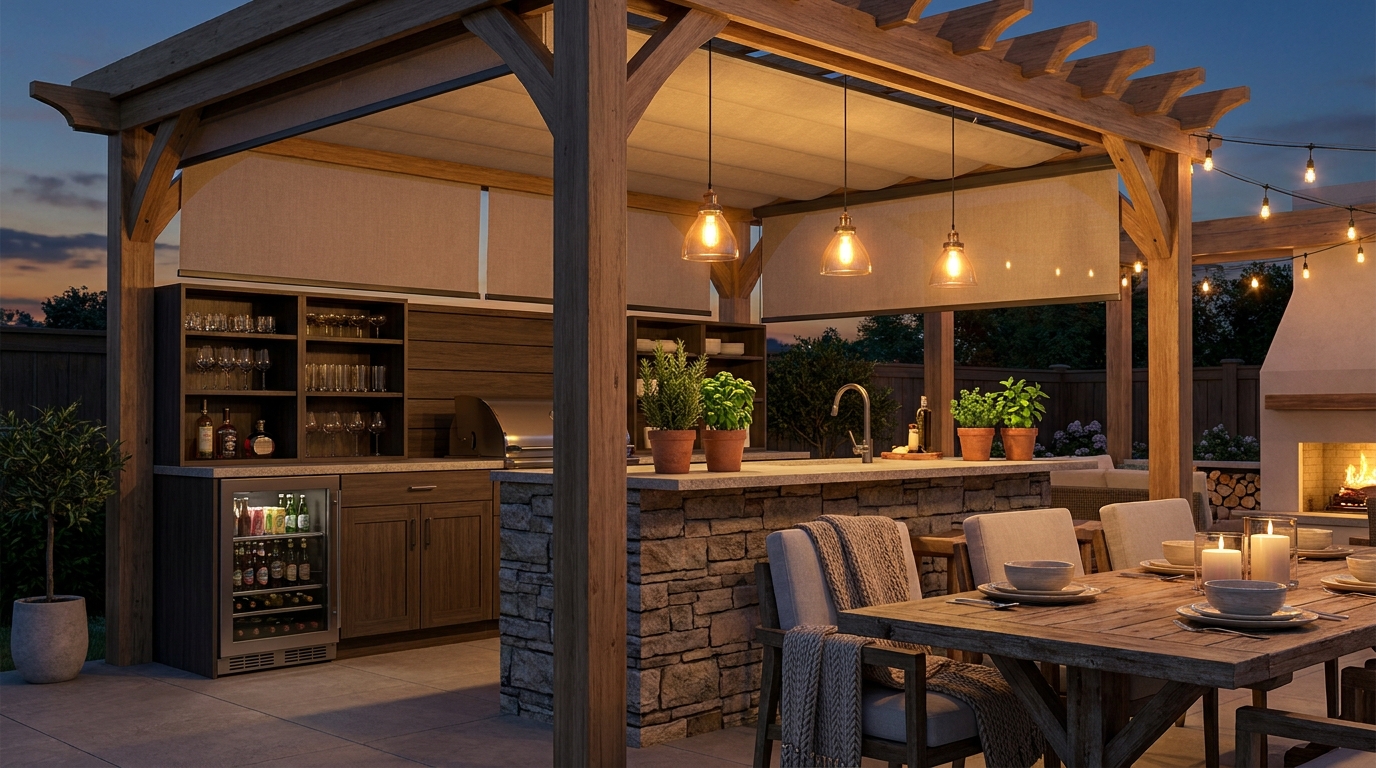
The dream is not only to cook outside. It is to create a place where people exhale, settle in, and feel grateful to be home.
Designing for Family Gatherings and Entertaining
Outdoor kitchens shine brightest when they make time together feel easier. Family gatherings become more fluid because there is room to cook, serve, snack, and talk without everyone crowding into one indoor zone. Children can move between the yard and the table, grandparents can sit comfortably nearby, and hosts can stay engaged instead of vanishing inside every few minutes. That kind of ease is part of what makes outdoor kitchens so emotionally rewarding.
For entertaining, the real magic often lies in reducing friction. A serving counter keeps platters accessible. A beverage area allows guests to help themselves without entering the cooking zone. Visible storage for plates, glasses, napkins, and tools helps everything feel organized and calm. Even small details, like a place to set down a drink or a nearby bin for cleanup, can subtly improve the hosting experience.
Multi-generational use is worth planning for as well. A family-friendly outdoor kitchen should not feel like it only works for one type of guest. Comfortable seating with backs, gentle lighting, stable walking surfaces, and flexible dining arrangements help the space welcome everyone. If your household often hosts larger groups, it helps to think beyond the kitchen footprint itself and consider how the whole outdoor area supports gathering. Pathways, sightlines, and nearby seating zones all contribute to the overall experience.
One reason outdoor kitchens continue to grow in popularity is that they support a more casual style of entertaining that many people now prefer. The space does not need to feel formal to be beautiful. In fact, it is often most successful when it encourages simple pleasures, grilled meals, easy conversation, a pitcher of something cold, and enough comfort that no one feels rushed to leave.
Small Outdoor Kitchens Can Still Feel Like a Dream
One of the biggest misconceptions about outdoor kitchens is that they are only for large luxury properties. In reality, outdoor kitchens can be scaled beautifully for many different homes and budgets. A compact patio can still support a lovely built-in grill, a bit of prep space, storage below, and a nearby dining corner with excellent ambiance. What matters is not excess. It is intention.
Smaller outdoor kitchens often have an advantage because they encourage editing. Every element needs to earn its place, which can lead to spaces that feel cleaner, easier to use, and less visually cluttered. In many cases, pairing a modest kitchen wall with thoughtful lighting, planters, and a strong dining setup creates a more inviting environment than trying to squeeze in every available appliance.
If space is limited, think vertically and relationally. A kitchen does not have to contain every function if nearby zones can help support it. A console table for serving, a dining bench with hidden storage, or a separate cart for drinks can all extend usability without overwhelming the footprint. The goal is to preserve a sense of openness while still giving the space enough function to feel genuinely helpful.
Dreaming well often means understanding your own home honestly. A beautiful outdoor kitchen should feel proportionate to the architecture, the yard, and the way you live. Even a very simple setup can feel deeply luxurious when it is comfortable, cohesive, and easy to enjoy.
Safety, Codes, and Permits Matter More Than Many People Expect
While outdoor kitchens are often discussed through the lens of style and entertaining, safety and compliance are essential parts of the planning process. This becomes especially important when the project includes permanent gas, electrical, or plumbing connections. Many homeowners are surprised to learn that utility-connected outdoor kitchens are not always straightforward DIY projects. Once those systems are involved, local permits, inspections, and code requirements may apply.
In Canada, gas, electrical, and plumbing work may require permits and inspections depending on the province, municipality, and project scope. Parks Canada specifically notes that such installations require permits under the Alberta Safety Codes Act in Jasper contexts, which underscores how regulated these additions can be. In the United States, the International Code Council has also noted that extending home gas distribution to an outdoor grill engages building code concerns. These are not details to leave until the last minute.
Beyond permits, there are practical safety decisions that should shape the design from the start. Appliances need appropriate clearances from combustible materials. Ventilation matters, especially under covered structures. Surfaces should be stable, slip-resistant, and capable of handling heat. Lighting should support safe cooking after dark, and storage should be designed to keep tools, fuel, and cleaning products organized and secure.
The warmest, most welcoming homes are usually the ones that feel effortless because the difficult decisions were handled responsibly behind the scenes. Hiring qualified professionals for gas, plumbing, and electrical work protects both your investment and your peace of mind. A dream outdoor kitchen should feel relaxing, and that starts with knowing it has been built safely and correctly.
Making the Space Work Across Seasons
Seasonal planning is especially important in colder parts of North America, where outdoor living spaces have to work harder to earn their place. But a climate-conscious kitchen can still offer beautiful value even if it is not used every single day of the year. The trick is to design for a longer season rather than expecting year-round perfection. Shelter, wind protection, heating options, durable materials, and thoughtful storage all help extend use.
Covered structures can make spring and fall evenings far more enjoyable, especially when paired with outdoor-rated heating or a fireplace nearby. Storage for cushions, serving pieces, and smaller accessories helps with transitions between seasons and reduces wear. Proper drainage and weatherproof detailing protect the space during heavy rain or winter conditions. In freezing climates, winterization for plumbing and appliances is essential and should be part of your plan, not an afterthought.
Even if snow eventually quiets the space for part of the year, that does not diminish its value. Seasonal living has its own emotional richness. There is pleasure in anticipating the first outdoor dinner of spring, the long evenings of summer, and the cozy shoulder-season meals under lights and blankets. A dream outdoor kitchen supports those rhythms and makes each season feel a little more vivid.
For homes in milder regions, seasonal planning may focus more on heat management, storm protection, and material longevity. The common thread is simple. Outdoor kitchens should be designed for the climate they actually inhabit. Beauty lasts longer when it respects reality.
The Best Outdoor Kitchens Feel Personal
As outdoor kitchens become more sophisticated, there can be pressure to follow trends too closely. Shelter, beverage centers, integrated storage, and elevated finishes are all meaningful developments, and they can genuinely improve how a space performs. But trends should support your home, not define it. The most successful outdoor kitchens feel personal. They reflect the home’s architecture, the household’s habits, and the atmosphere the owners want to create.
That might mean a calm neutral palette with stone and wood for a family that loves understated comfort. It might mean sleek cabinetry and integrated lighting for someone who wants a more contemporary outdoor room. It might mean a simple grill station surrounded by overflowing planters because gardening is as important to the homeowner as cooking. Personality does not require excess. It simply requires honesty.
There is also emotional beauty in designing for small rituals. A shelf for herbs you cut while cooking. A low lamp that glows during late dinners. Hooks for aprons and linens. A drinks fridge stocked for Friday evenings. These details can seem modest, but they are often what make a space feel truly lived in. They turn a renovation into a lifestyle.
NKBA luxury outdoor kitchen research has included projects from seven U.S. states and two Canadian provinces, which is a helpful reminder that this category is broad and adaptable. Outdoor kitchens can be coastal or mountain-inspired, urban or suburban, compact or expansive. The dream is not one specific look. The dream is a place that enhances the way you live.
Final Thoughts on Building a Comfortable Outdoor Living Space
An outdoor kitchen is one of the clearest examples of design improving daily life in both practical and emotional ways. It helps meals unfold more naturally, keeps the cook connected to the people around them, and creates a setting where family gatherings and casual entertaining feel easier and more joyful. At its best, it is not about showing off features. It is about creating comfort.
If you are planning your own outdoor kitchen, begin with the experience you want to have there. Picture the sounds, the pace, the time of day, the kinds of meals, and the people around you. Then let those images guide decisions about layout, shelter, materials, appliances, and ambiance. A smaller space can still feel beautiful. A simpler plan can still feel luxurious. What matters most is how naturally the space supports your life.
Outdoor kitchens continue to grow in popularity for good reason. They answer a very human desire for togetherness, ease, and a more relaxed way of being at home. And in a world where comfort often feels like a luxury, creating a backyard space that invites people to gather, linger, and exhale may be one of the most meaningful home improvements of all.
Your dream outdoor kitchen does not need to be extravagant. It needs to be thoughtful, welcoming, and built around the life you want to live. When it is, it becomes far more than a place to cook. It becomes a space for memory, connection, and the simple happiness of feeling at home outdoors.


No Comment! Be the first one.