


There is a particular kind of beauty that never pleads for attention, yet quietly transforms the way a room is felt. It is not dependent on spectacle, nor on sharp trend cycles, nor on decorative excess. Instead, it emerges through atmosphere, touch, light, and material honesty. This is the essence of organic luxury, a design language that pairs the sophistication of high-end interiors with the grounding presence of nature.
Table Of Content
- What Organic Luxury Really Means
- Why Organic Luxury Feels Timeless Rather Than Trend-Driven
- The Biophilic Foundation of Organic Luxury
- The Materials That Define Organic Luxury
- Material Authenticity and Responsible Sourcing
- How Color Works in an Organic Luxury Interior
- Creating Elegance Through Form, Shape, and Space Planning
- Practical Ways to Bring Organic Luxury Into Your Home
- A Room-by-Room Perspective
- Common Misconceptions About Organic Luxury
- The Emotional Power of Warmth and Layering
- Organic Luxury as an Investment in Longevity
- A Refined Checklist for Designing with Organic Luxury
- Conclusion: Living Beautifully, Naturally, and Well
In recent years, homeowners and designers across North America have moved away from sterile minimalism and toward spaces that feel warmer, more layered, and emotionally restorative. Rich woods, tactile plaster, natural stone, linen upholstery, wool textiles, and sculptural forms have all returned to the foreground. Major design coverage continues to show demand for interiors that feel lived in rather than impersonal, elegant rather than flashy, and deeply connected to comfort. Organic luxury answers that desire with unusual grace because it is not merely a look. It is a philosophy of living beautifully.
At its best, organic luxury transcends trends because it is rooted in enduring human preferences. People consistently respond to daylight, natural materials, visual softness, and spaces that calm the nervous system. Building organizations and design frameworks now reinforce what intuitive design has long understood, namely that our environments affect wellbeing in profound ways. Through biophilic design, responsible sourcing, and a restrained but layered aesthetic, organic luxury offers a timeless path for those who want interiors that feel both elevated and deeply human.
This article explores what organic luxury truly means, why it has become so resonant, and how to bring it into your home without losing sophistication. The goal is not to imitate a rustic retreat or fill a room with obvious references to nature. The goal is to compose spaces that feel refined, tactile, architectural, and calm. When done well, organic luxury creates the kind of interior that seems to exhale.
What Organic Luxury Really Means
Organic luxury is often misunderstood because the phrase combines two ideas that some people assume are opposites. The word organic suggests the natural world, irregularity, softness, and ease. The word luxury suggests precision, craftsmanship, rarity, and polish. In truth, the most compelling interiors have always held these tensions together. Organic luxury is not rustic disorder and it is not cold opulence. It is the artful meeting point between cultivated elegance and nature-inspired warmth.
In practical terms, this means spaces built around authentic materials, muted but rich color palettes, nuanced texture, and forms that feel sculptural rather than rigid. Dark woods such as walnut and smoked oak add gravity and depth. Limestone, travertine, slate, and other natural stones provide visual permanence. Limewash and plaster walls introduce atmosphere through subtle movement and shadow. Linen, wool, cotton, leather, and woven fibers soften the room while maintaining refinement. These elements are layered with intention so that the final result feels curated and architectural rather than casual.
What distinguishes organic luxury from a simple natural style is its level of restraint and composition. A rustic room might celebrate rawness for its own sake. An organic luxury interior edits carefully, allowing each material to speak in a controlled and elegant way. The wood is not cluttered with too many companions. The stone is given space to breathe. The palette remains quiet enough to let texture become the visual event. Luxury, in this context, comes from proportion, craftsmanship, finish quality, and atmosphere.
It also comes from how a space makes you feel. Organic luxury is designed to be sensorial. You notice the softness of a handwoven rug beneath your feet, the warmth of wood under natural light, the gentle curve of a chair, the cool solidity of stone, and the calm that comes from visual coherence. This emotional effect is precisely why the style has such longevity. It speaks to the body as much as to the eye.
Why Organic Luxury Feels Timeless Rather Than Trend-Driven
Many design trends are driven by novelty. They rise quickly because they offer a look that feels new, dramatic, or highly shareable. Yet novelty fades. Interiors designed purely around what is current can quickly feel dated because they were never rooted in deeper principles. Organic luxury resists this cycle because its foundation is not fashion. Its foundation is enduring materiality, human comfort, and a lasting connection to nature.
Design publications have noted a sustained move toward warm interiors, textured surfaces, darker woods, artisanal detailing, and rooms that feel materially rich rather than visually flat. This evolution matters because it reflects something larger than seasonal taste. It suggests a broad cultural desire for environments that feel grounding and restorative. As homes increasingly serve as places of work, retreat, gathering, and recovery, people want spaces that support emotional ease instead of visual austerity.
Organic luxury also aligns with the growing emphasis on quality over quantity. A room built from fewer but better materials tends to age more gracefully than one filled with decorative statements. Stone develops character. Wood gains depth. Linen relaxes beautifully. Handmade ceramics and woven textiles acquire familiarity and warmth. This slow aging process is part of the style’s appeal because it allows the interior to evolve without losing its identity.
There is another reason the aesthetic feels timeless. Nature itself does not date. Light filtering through a sheer linen drape, a tree visible from a dining table, a plaster wall catching afternoon shadow, the grain of oak across a floor, the quiet rhythm of repeated natural textures, these experiences do not belong to one year or one trend report. They belong to a deeper visual memory that people instinctively trust. Organic luxury simply gives that memory a refined architectural expression.
Organic luxury endures because it is built on what people consistently seek from home: comfort, beauty, calm, craftsmanship, and a meaningful connection to the natural world.
The Biophilic Foundation of Organic Luxury
One of the strongest reasons organic luxury has such resonance today is that it is supported by the principles of biophilic design. Biophilic design goes far beyond decorating with plants. It is a broader approach that seeks to strengthen the relationship between people and nature within built environments. The World Green Building Council recognizes access to nature, comfort, and harmony between natural and built systems as part of healthy and sustainable design. This makes organic luxury more than an aesthetic preference. It gives it a functional and wellness-oriented foundation.
In the home, biophilic thinking can be expressed through daylight, views to greenery, natural ventilation, indoor plant life, local materials, water elements, tactile surfaces, and spatial layouts that invite calm and ease. North American guidance on biophilic design often emphasizes practical strategies such as maximizing natural light, improving airflow, integrating potted plants or courtyard gardens, using local materials, and strengthening indoor outdoor relationships. These moves support both the sensory atmosphere of a room and the everyday wellbeing of its occupants.
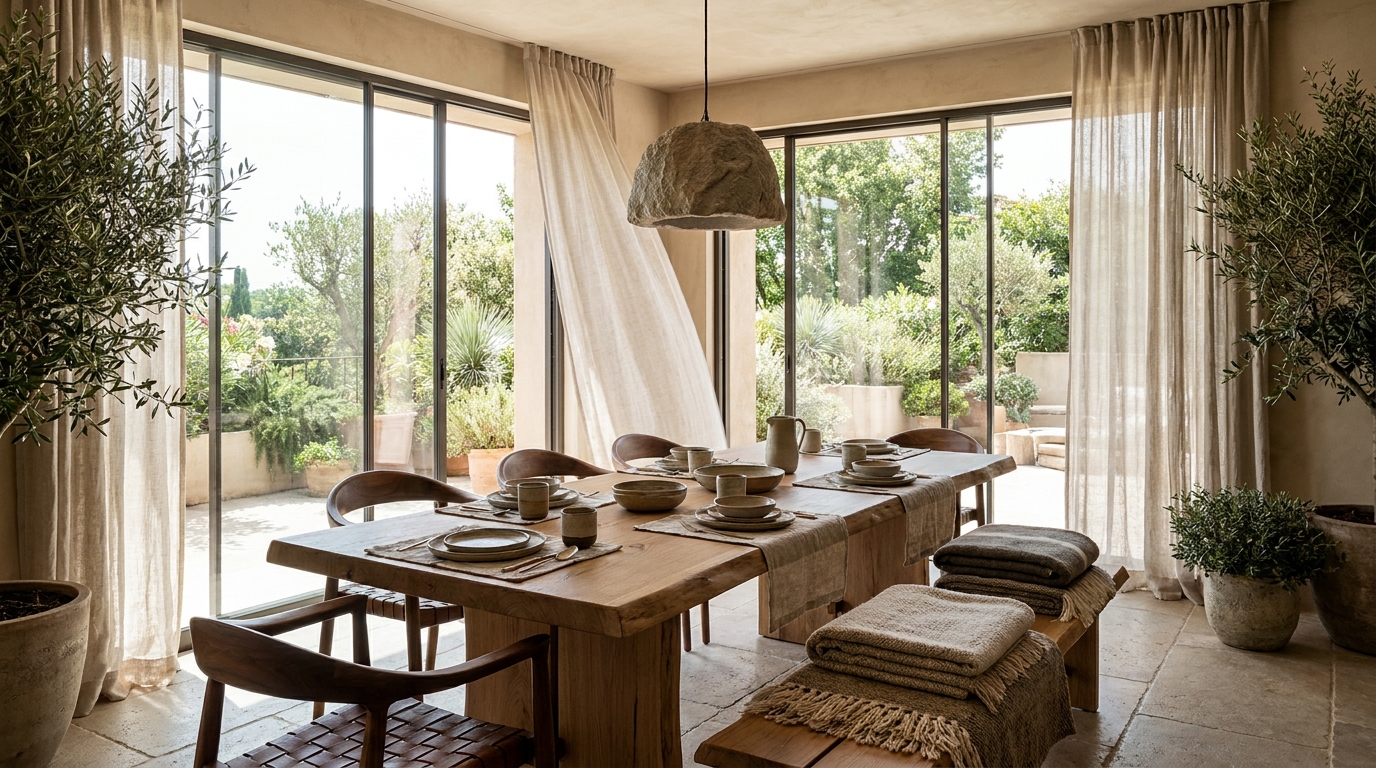
Organic luxury naturally incorporates these principles because it already values material authenticity and visual softness. A room with large windows, stone flooring, plaster walls, linen drapes, and carefully chosen greenery does more than look beautiful. It invites the body into a more balanced experience of space. It reduces the mechanical feeling that many highly polished interiors can unintentionally create. Instead of acting as a stage set, the room begins to feel alive.
Importantly, biophilic design reminds us that luxury need not be disconnected from health. In fact, the most sophisticated homes increasingly integrate wellness as a core design value. The presence of natural light, breathable materials, reduced visual noise, and stronger environmental connection all support a more restorative domestic life. Organic luxury is therefore not indulgence without purpose. It is elegance with a physiological intelligence.
The Materials That Define Organic Luxury
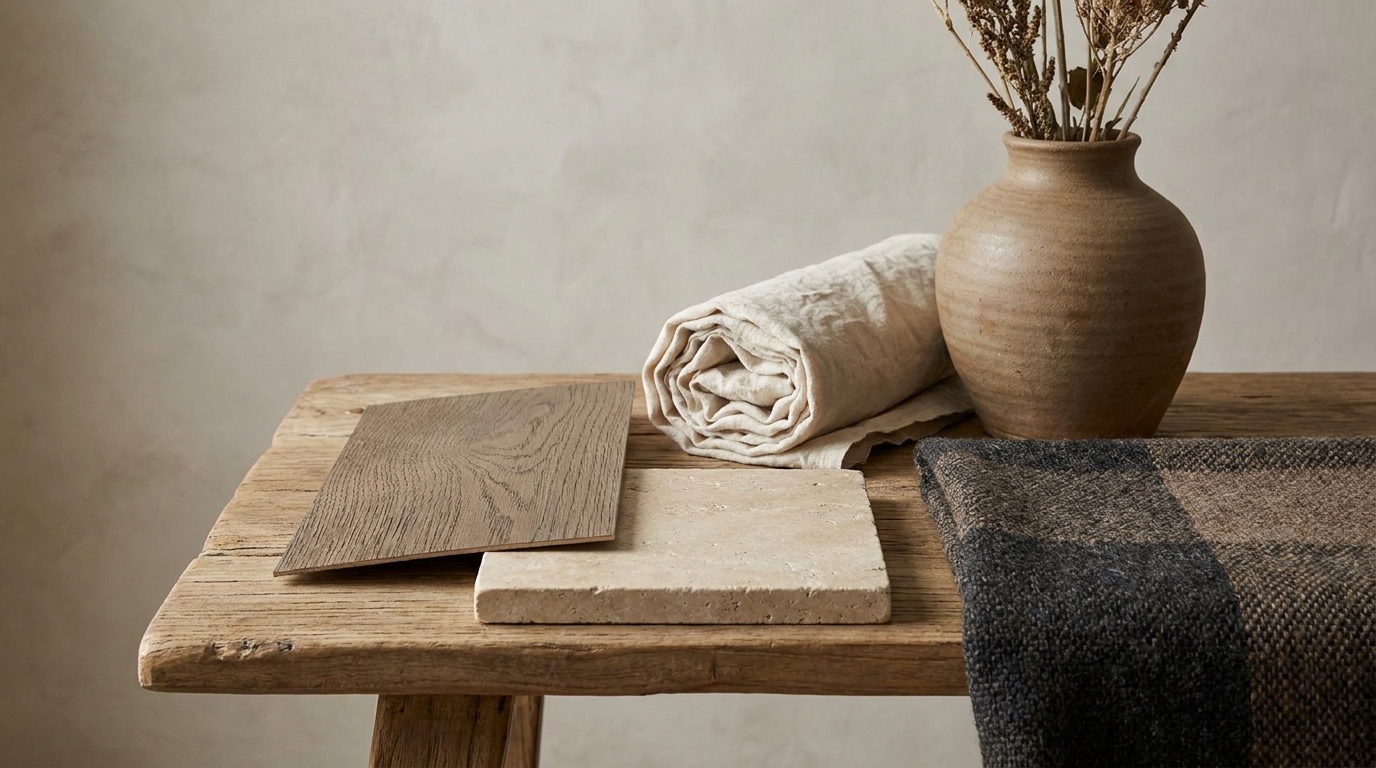
If color is the mood of an interior, materials are its soul. Organic luxury depends on materials that feel honest, tactile, and enduring. This does not mean every finish must be raw or visibly imperfect. Rather, it means the materials should reveal their nature instead of disguising it. Wood should look like wood, with grain and warmth. Stone should have depth, variation, and presence. Textiles should invite touch. Surfaces should carry light in nuanced ways.
Among the most compelling choices today are walnut, smoked oak, and other darker woods that bring a sense of maturity to a room. These woods are especially powerful in North American homes where pale minimalism has long dominated. Their return signals a shift toward interiors with greater visual gravity and emotional warmth. Used on cabinetry, wall paneling, flooring, or furniture, dark woods immediately create a more enveloping atmosphere.
Stone is equally central. Travertine, limestone, marble with soft veining, slate, and soapstone each bring distinct character. In an organic luxury space, stone is rarely used only as a symbol of expense. It is chosen for texture, tonal depth, and permanence. A honed finish often feels more sophisticated than a high gloss one because it complements the quiet, sensorial direction of the room. Stone can appear in fireplaces, countertops, side tables, basins, flooring, or sculptural accessories.
Wall treatments deserve special attention because they set the atmospheric tone for the entire interior. Limewash, plaster, clay-based finishes, and subtle textured paint all create surfaces that feel dimensional and alive. They interact beautifully with daylight, producing shadows and tonal shifts that flat painted walls cannot achieve. This quality is essential to organic luxury because it allows elegance to emerge through subtlety rather than ornament.
Textiles complete the experience. Linen, wool, bouclé, mohair, cotton, and woven natural fibers soften architecture and add visual rhythm. The key is to layer them in a restrained palette so the eye reads richness without chaos. A room might combine a wool rug, linen upholstery, soft drapery, leather accents, and woven baskets or shades. The effect is comforting and sophisticated at once.
Material Authenticity and Responsible Sourcing
One of the most important distinctions in contemporary luxury design is the difference between looking natural and being thoughtfully sourced. Natural materials do not automatically equal sustainable materials. Their environmental impact depends on extraction, transportation, processing, durability, maintenance, and end-of-life considerations. This is why responsible sourcing has become central to the conversation around organic luxury, especially in Canada and across North America.
Certification and provenance matter. Timber sourced through responsible forestry frameworks, including FSC-certified wood, supports both occupant wellbeing and forest protection when chosen carefully. Stone sourced regionally may reduce transport impacts while also creating a stronger connection to place. Durable, repairable materials often represent better long-term value than finishes that need frequent replacement. In this sense, sustainability and luxury are no longer opposites. They increasingly reinforce one another.
Green building frameworks such as LEED have also strengthened interest in healthier materials, indoor environmental quality, and sustainable construction practices. While not every homeowner is pursuing certification, these frameworks influence the broader market and shape what many people now expect from well-designed spaces. The refined home of today is not simply beautiful. It is informed, responsible, and built to age well.
How Color Works in an Organic Luxury Interior
The palette of organic luxury is often quiet, but it is never flat. It relies on tonal variation, depth, and softness rather than sharp contrast or decorative brightness. Think of colors drawn from landscape and mineral sources: stone, sand, bark, clay, moss, smoke, cream, charcoal, and muted bronze. These shades work together because they feel naturally related, allowing texture and form to become the dominant expression of the room.
Neutrals are especially powerful when layered with intention. A warm ivory wall may sit beside a taupe linen curtain, a mushroom-toned rug, a walnut sideboard, and a smoky olive accent in the form of upholstery or foliage. None of these colors demands attention on its own, yet together they produce a room of immense richness. This is one of the defining pleasures of organic luxury. It teaches the eye to appreciate nuance.
Darker tones are also increasingly significant. Rather than making a space feel heavy, they can create intimacy and depth when balanced with natural light and tactile materials. A deep brown wood panel, a clay-toned plaster wall, or charcoal textile can anchor a room beautifully. These darker notes prevent organic interiors from drifting into blandness and help preserve the luxurious edge that distinguishes the aesthetic from generic neutral design.
Metal finishes, when used, are usually subtle and warm. Antiqued brass, bronze, blackened steel, or softly patinated finishes feel more appropriate than overly reflective chrome. They act as punctuation rather than spectacle. The same principle applies to decorative accents. In an organic luxury home, every object should feel chosen for shape, craft, or quiet resonance, not simply for trend appeal.
Creating Elegance Through Form, Shape, and Space Planning
Organic luxury is not only about materials. It is equally about the geometry of the room and the way movement unfolds through it. One of the reasons this style feels so calming is that it often favors softer silhouettes and sculptural balance over hard visual interruption. Curved chairs, rounded tables, arched openings, and gently contoured lighting all contribute to a more fluid and welcoming environment.
This does not mean every line should be soft. In fact, contrast is essential. The most memorable interiors often pair a monolithic stone island with curved stools, or a linear wood wall with a rounded sofa, or a structured bed frame with relaxed linen bedding. These compositions create tension and harmony at once. They keep the room elegant and contemporary rather than overly thematic.
Space planning should also support the restorative goals of the aesthetic. Furniture should allow for ease of circulation, comfortable conversation, and a visual sense of breathing room. Organic luxury rarely relies on overfurnished spaces. Instead, it values proportion and placement. A single well-scaled armchair in the right material can contribute more to the atmosphere than several smaller pieces competing for attention.
Negative space is especially important in luxury interiors. It allows materials to be appreciated and the architecture to remain legible. A beautifully veined stone console requires visual space around it. A textured wall treatment needs uninterrupted light to reveal its depth. Organic luxury therefore embraces editing. The room should feel layered, but never crowded.
Practical Ways to Bring Organic Luxury Into Your Home
One of the strengths of organic luxury is that it can be interpreted at many scales. You do not need a complete architectural renovation to begin. What matters is understanding the principles and applying them consistently. Even a modest room can feel elevated if it is guided by material honesty, thoughtful layering, and visual calm. The approach is less about buying more and more about choosing better.
The first step is to simplify your palette. Select a cohesive range of warm neutrals and nature-based tones, then build depth through texture rather than excessive color contrast. This creates a foundation that feels serene and sophisticated. Once the palette is established, introduce one or two anchoring materials such as dark wood, stone, or textured plaster. These elements give the room identity.
The second step is to improve the tactile composition of the space. Replace synthetic or visually flat surfaces where possible with materials that have warmth and depth. Consider linen curtains instead of heavy shiny drapery, wool or textured rugs instead of slick low-character flooring, ceramic lamps rather than generic metal fixtures, and natural wood furniture with visible grain. Each replacement contributes to a cumulative shift in atmosphere.
The third step is to consider the room’s relationship with light and nature. Open window treatments to maximize daylight. Add a potted tree, sculptural branch arrangement, or herb collection in the kitchen. Rearrange furniture to face a garden view or a source of natural light. If privacy allows, strengthen the visual bond between indoors and outdoors through glass doors, terraces, or simply by framing greenery from inside the room.
A Room-by-Room Perspective
In the living room, organic luxury thrives through layered seating, soft upholstery, wood and stone accents, and thoughtful lighting. A cream or oatmeal sofa paired with walnut tables, a textured rug, a plaster lamp, and a few sculptural accessories can create remarkable depth without clutter. The aim is to combine comfort with restraint. The room should invite lingering, not performance.
In the kitchen, this aesthetic often appears through timber cabinetry, natural stone counters, warm metallic hardware, handmade ceramics, and integrated storage that preserves visual calm. Material drenching can be especially effective here, using a single dominant finish such as oak or plaster across several surfaces to create continuity. The result feels immersive and architectural.
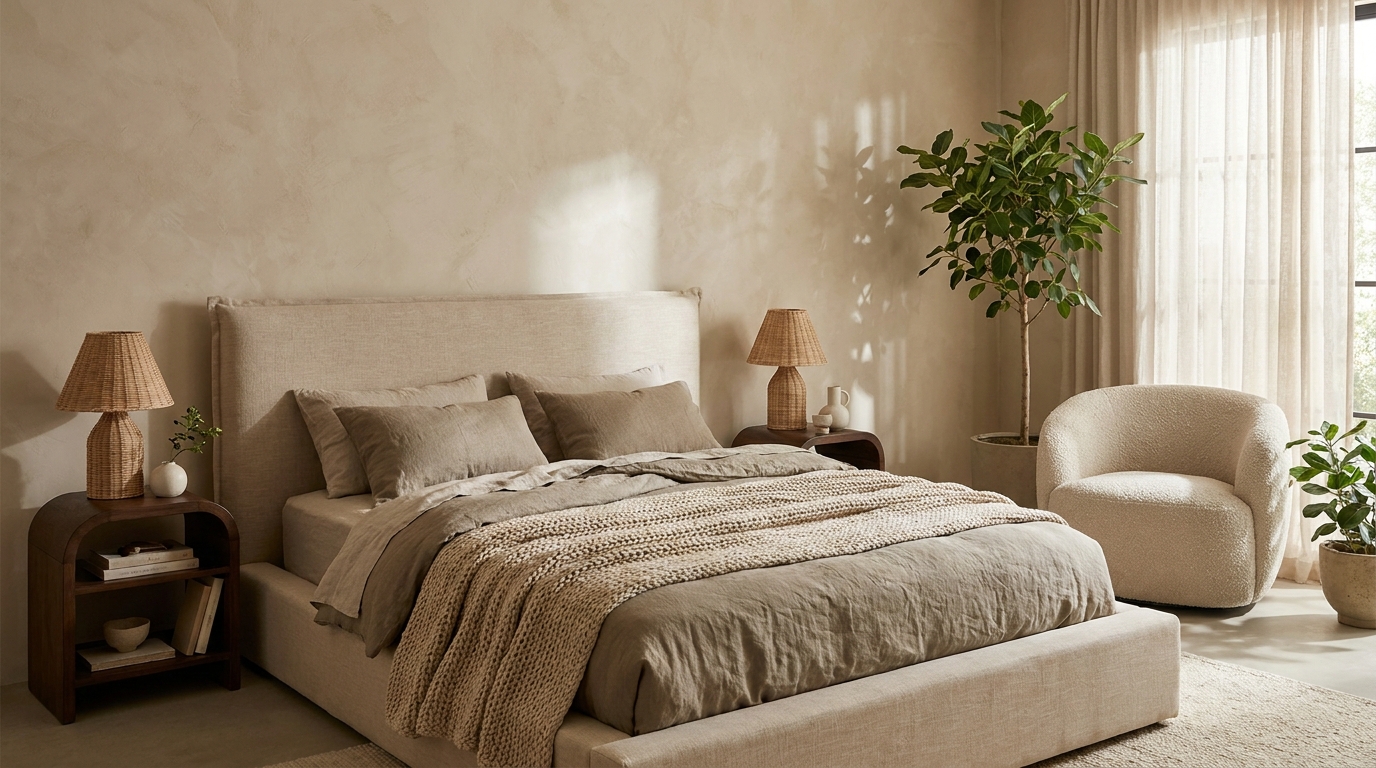
Bedrooms are perhaps the most natural setting for organic luxury because they are already associated with rest. Layered linen bedding, upholstered headboards, wool rugs, dimmable lighting, and a soft natural palette create a deeply restorative retreat. Avoid visual harshness. Instead, focus on touch, acoustics, and a quiet atmosphere that supports sleep and reflection.
Bathrooms can become spa-like when stone, plaster, wood accents, and gentle lighting are brought together with care. A honed stone vanity, textured walls, woven storage, and high-quality towels in muted tones can transform even a compact room into a place of ritual. The effect is one of intimacy and permanence rather than overt glamour.
Common Misconceptions About Organic Luxury
Because the style is increasingly popular, it is often diluted by broad or inaccurate interpretations. One common misconception is that organic luxury is simply another version of bohemian, rustic, or unfinished design. In reality, the best examples are highly tailored. They may include rough or tactile surfaces, but those surfaces are balanced by deliberate composition, fine craftsmanship, and architectural clarity.
Another misconception is that biophilic design begins and ends with indoor plants. While greenery is welcome, true biophilic thinking includes light, airflow, views, spatial layout, natural materials, and sensory connection to the outdoors. A room with excellent daylight, operable windows, stone flooring, and a framed garden view may be more biophilic than a dim room crowded with houseplants.
Some also assume that luxury requires rare marble, conspicuous statement pieces, or overt glamour. Organic luxury proposes a quieter definition. A beautifully made oak cabinet, a hand-applied limewash wall, responsibly sourced timber, or a perfectly scaled linen sofa can feel more refined than expensive materials used without sensitivity. Timelessness often comes from discernment, not excess.
Finally, there is a tendency to confuse organic luxury with strict minimalism. Although both aesthetics may use restraint, organic luxury is generally warmer, more tactile, and more layered. It welcomes texture, tonal variation, and softness. It is edited, yes, but not austere. Its elegance comes from richness beneath simplicity.
The Emotional Power of Warmth and Layering
One of the most significant shifts in contemporary interiors is the return of emotional warmth. For years, many homes were shaped by a version of modernism that prized cleanliness but often neglected atmosphere. Rooms became pale, hard, and visually efficient, yet emotionally distant. Organic luxury responds by restoring feeling to design through layering, contrast, and tactile depth.
Layering is what keeps a restrained palette from becoming dull. It allows a room to feel complete without relying on ornamental excess. A plaster wall behind a walnut console, a linen-covered chair beside a stone side table, a wool rug underfoot, and a bronze lamp above create a visual dialogue of surfaces. The luxury lies in the richness of these relationships.
Warmth is equally important because it changes how a room is inhabited. Spaces with warm undertones, soft shadows, and comfortable textures encourage people to settle in. They support conversation, reading, reflection, and rest. In this way, organic luxury aligns naturally with wellness design. It does not merely photograph well. It improves daily life.
True luxury is not the loudness of a room, but the depth of ease it offers.
Organic Luxury as an Investment in Longevity
For homeowners thinking long term, organic luxury offers more than immediate visual appeal. It supports residential value by emphasizing durable materials, timeless palettes, and broad emotional appeal. While highly trend-driven interiors can feel outdated within a few years, an interior grounded in wood, stone, texture, and careful proportion tends to remain relevant across decades.
This longevity is practical as well as aesthetic. Durable surfaces often perform better over time. Natural materials can frequently be maintained, refinished, or repaired rather than replaced. A well-made wood table can be restored. Stone can patinate gracefully. Linen and wool often age with softness and character. These qualities make organic luxury especially attractive to those who see design as a long-term investment rather than a quick visual refresh.
The style also adapts well to changing tastes because it is based on essentials. Accessories can evolve, art can shift, and lighting can be updated without destabilizing the whole interior. The foundation remains strong. This flexibility is one reason organic luxury feels so sophisticated. It allows a home to mature naturally with the people who live in it.
A Refined Checklist for Designing with Organic Luxury
For readers who want a concise framework, the following principles can help guide decisions while preserving elegance and coherence:
- Choose authenticity over imitation by prioritizing real wood, stone, plaster, linen, wool, and ceramics whenever possible.
- Build around a restrained palette with warm neutrals and earthy depth rather than high contrast or overly bright accents.
- Layer texture thoughtfully so the room feels rich through touch and finish variation, not through excess decoration.
- Balance rough and refined by pairing tactile materials with precise forms and tailored silhouettes.
- Use biophilic strategies such as daylight, plants, natural ventilation, views to greenery, and indoor outdoor connection.
- Invest in fewer, better pieces that offer craftsmanship, durability, and timeless proportion.
- Consider sourcing carefully because responsible materials add both ethical value and long-term quality.
- Edit with confidence so each material and object has room to be appreciated.
Conclusion: Living Beautifully, Naturally, and Well
Organic luxury is not a decorative formula. It is a way of understanding beauty through relationship, between texture and light, architecture and comfort, refinement and nature. Its power lies in its restraint, its honesty, and its ability to make a home feel quietly extraordinary. In a design culture often pulled toward extremes, it offers something more lasting: balance.
By embracing natural materials, biophilic principles, responsible sourcing, and a warm layered palette, homeowners can create interiors that feel deeply current yet entirely timeless. These spaces do not chase attention. They cultivate atmosphere. They honor the human need for calm, touch, and connection while preserving the elegance that makes luxury meaningful.
Perhaps that is why organic luxury resonates so strongly today. It reminds us that the most memorable interiors are not those that impress us for a moment, but those that continue to comfort and inspire us over time. When nature and refinement are allowed to meet with sensitivity, the result is not simply stylish. It is enduring.


No Comment! Be the first one.