



Autonomous construction sites are jobsites where robotics, machine-guided equipment, and connected software handle routine or hazardous tasks under human supervision, rather than fully unmanned operations. They are no longer just a trade show idea or a far-off promise: real projects already use machine-guided equipment, robotic layout tools, remote-operated machinery, site scanning systems, AI-assisted scheduling, and connected equipment that can make routine decisions without waiting for constant manual input. For homeowners, this shift may sound abstract at first, but it affects cost, timelines, safety, quality control, and the way builders manage risk. For contractors and project teams, it is becoming another practical tool in the kit rather than a complete replacement for the crew.
Table Of Content
- What an autonomous construction site really looks like
- Why the industry is moving in this direction
- The safety case is the clearest argument
- Where autonomous systems are already useful on real jobsites
- What homeowners should understand before they hear the word automation
- What builders need to get right before implementation
- Regulation, standards, and liability still apply
- The new risks that come with autonomous sites
- Why adoption will be uneven across the market
- How autonomous systems affect schedule, cost, and quality
- What the future probably looks like
- Final takeaway for homeowners and builders
The first thing worth clearing up is the language. When people hear the word autonomous, they often imagine a fully unmanned site where robots build a house from start to finish with little or no human involvement. That is not the reality on most North American jobsites, and it is not likely to be the near-term model for residential building. What is actually happening is more grounded and more useful: supervised autonomy, where software and equipment handle repetitive or hazardous tasks while experienced people oversee the work, manage exceptions, and remain accountable for the outcome.
This matters because construction is still one of the riskiest industries to work in, and it also remains under constant pressure to do more with limited labor and tight schedules. OSHA reported 389 fatal falls to a lower level out of 1,034 construction fatalities in 2024, which is a blunt reminder that even basic site hazards remain serious. At the same time, both Canada and the United States continue to face productivity and workforce pressures that push owners and builders to look for better ways to deliver projects. Autonomous systems are gaining attention because they can help remove people from some of the most punishing and dangerous work while also improving consistency, tracking, and jobsite coordination.
The practical question is not whether robots will replace all builders. The practical question is where autonomous systems can make a site safer, more efficient, and more predictable without creating new problems that outweigh the benefits. That is where this conversation becomes useful for homeowners trying to understand what they are paying for and for builders trying to decide what is worth implementing today.
What an autonomous construction site really looks like
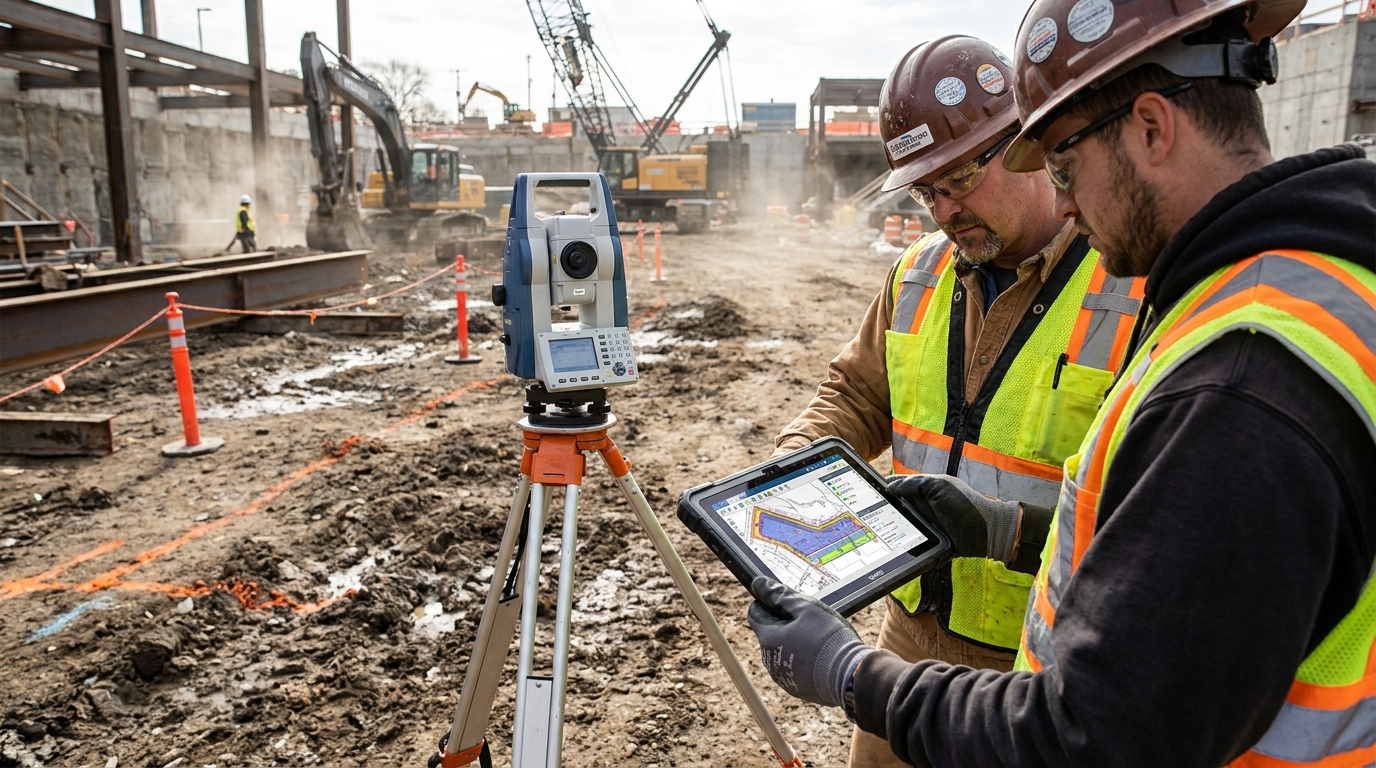
A real autonomous construction site does not look like science fiction. It looks like a normal site with better tools, more sensors, more connected equipment, and clearer digital control over what is happening. You might see a robotic total station handling layout with high precision, a drone or scanner capturing site conditions for progress tracking, an excavator using machine guidance to cut grade more accurately, or a remote operator controlling equipment from a safer location. The work still depends on foremen, superintendents, skilled trades, operators, and inspectors who understand how to interpret conditions and respond when something does not match the plan.
This distinction matters because construction is not a factory floor. A factory operates in a controlled, repeatable environment where the materials, sequence, and conditions are heavily managed. A construction site changes by the day and often by the hour. Weather shifts, deliveries are late, ground conditions vary, subcontractors overlap, access routes move, and the work area itself keeps changing as the project advances.
That is why the most realistic model is human-in-the-loop or human-on-the-loop automation. In one case, the system performs routine tasks while a person actively supervises and approves critical actions. In the other, the system operates more independently during normal conditions, but a person monitors performance and steps in when the situation falls outside expected limits. Either way, autonomy in construction is less about removing people and more about assigning the right kind of work to machines and the right kind of judgment to experienced humans.
The strongest near-term version of an autonomous jobsite is not human-free construction. It is a better organized site where routine work is automated, dangerous exposure is reduced, and human judgment stays in charge.
Why the industry is moving in this direction
Construction has been talking about productivity problems for years, and the issue is not theoretical. Delays, rework, labor gaps, equipment idle time, and coordination mistakes all add cost without adding value. In Canada, Statistics Canada reported that the construction sector’s industrial capacity utilization rate was 82.7% in the first quarter of 2024, which signals that the sector was not operating at full capacity. That does not mean machines alone fix the problem, but it does mean there is room for better systems and more consistent output.
Labor demand is another major pressure point. In the United States, the Bureau of Labor Statistics projects construction and extraction occupations to grow faster than average from 2024 to 2034. That is an important point because it undercuts the simple fear that automation means construction workers will no longer be needed. The more likely outcome is that technology will support crews that are already stretched thin by handling repetitive measurement, transport, scanning, grading, and documentation tasks more efficiently.
There is also a basic business reason owners and builders pay attention to autonomous tools. Construction schedules are expensive, and uncertainty gets priced into every bid. If a builder can reduce rework, tighten layout accuracy, shorten scanning and verification time, or operate equipment more safely in low visibility or hazardous conditions, that creates measurable value. For homeowners, that can mean fewer surprises and better schedule discipline. For commercial builders and developers, it can mean improved throughput and stronger margins on difficult projects.
The safety case is the clearest argument
If there is one area where autonomous construction systems have the strongest immediate case, it is safety. Construction remains a high-risk industry, and the pattern of risk is well known. Falls, struck-by incidents, heavy equipment hazards, unstable surfaces, limited visibility, and physically punishing repetitive tasks continue to injure and kill workers every year. OSHA’s numbers on fatal falls are a direct reminder that many of the most common hazards have not gone away.
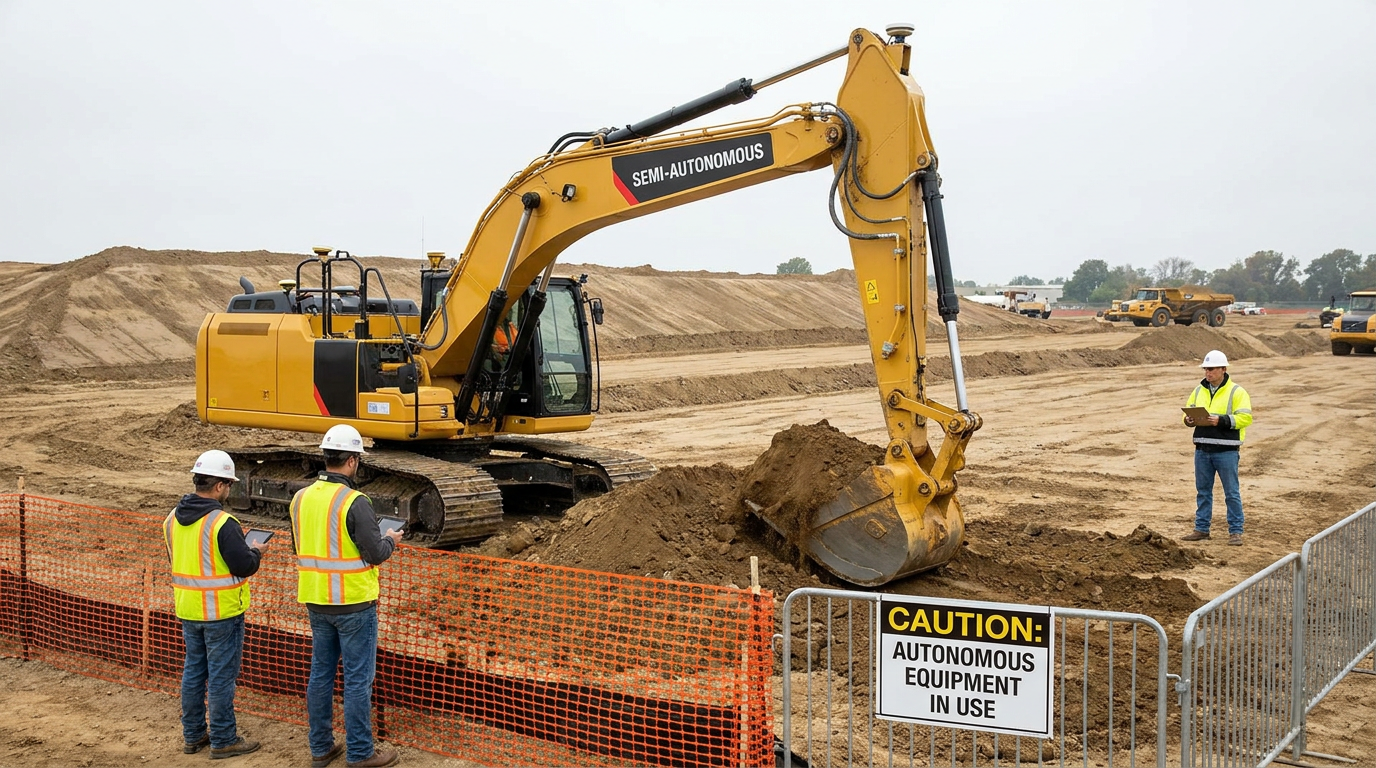
Autonomous and semi-autonomous systems can help by reducing the number of times people need to be exposed to those hazards directly. A scanner can capture conditions in an unstable area before a crew enters. A remote-controlled demolition unit can work where collapse risk or debris exposure makes close human access a bad option. Machine-guided earthmoving equipment can reduce repeated corrections and lower the chance of confusion in tight work zones. Robotic layout systems can cut down on repetitive bending, measuring, and marking work while improving accuracy.
For elevated work, inspection, and hazardous access, autonomy can also support better decisions before crews move in. Drones, cameras, and connected monitoring tools can provide a clearer picture of conditions at height, around edges, and in partially completed areas. That does not eliminate the need for fall protection, guardrails, training, and proper sequencing, but it can reduce unnecessary exposure and give site supervisors better information before they commit workers to a task.
Still, there is a hard truth that should not be ignored. Automation does not erase risk. It shifts risk. OSHA notes that many robot accidents happen during non-routine conditions such as programming, maintenance, testing, setup, and adjustment. That point is especially relevant in construction because a site is full of non-routine conditions. The danger often increases during commissioning, integration, repairs, troubleshooting, and handoff between trades or systems. In other words, autonomous technology can make a site safer only when the technology itself is installed, safeguarded, maintained, and supervised properly.
Where autonomous systems are already useful on real jobsites
The most practical use cases today are not glamorous, but they are exactly the kinds of tasks where construction gains are made. Earthmoving is one of the clearest examples. Semi-autonomous excavation and grading systems can follow digital site models with high consistency, helping operators reach target grades faster and with fewer corrections. On large sites, that can reduce wasted movement, improve fuel use, and support tighter schedule control. It also gives supervisors cleaner records of what was done and where.
Layout is another area where autonomy is already making a visible difference. Robotic total stations and digital layout systems can place points more accurately than traditional methods and can update field crews directly from current digital models. That helps cut errors that would otherwise turn into rework later in the job. Anyone who has seen framing, concrete, mechanical, or partition work slowed down by bad layout understands how expensive small mistakes become once multiple trades build on top of them.
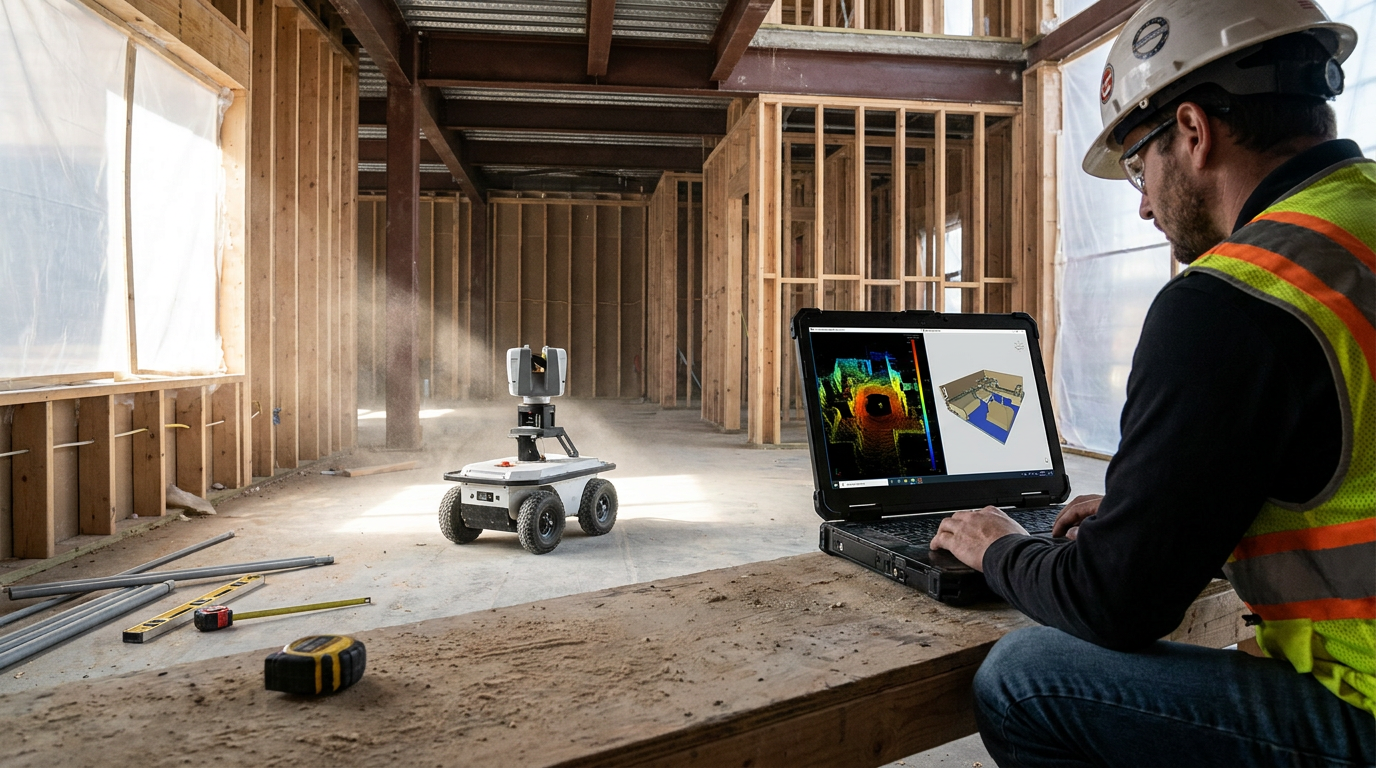
Reality capture and scanning are also moving quickly. Autonomous or semi-autonomous site scanning can document progress, compare actual conditions to the model, identify clashes, and support better quality control before finishes or concealment make correction more expensive. For homeowners, this may show up behind the scenes as better verification of framing, mechanical rough-ins, or slab conditions. For builders, it means stronger documentation and a more disciplined handoff between phases.
Material handling is another growing category. Moving materials around a site is often repetitive, physically hard, and vulnerable to delay. Autonomous carts, lifting aids, and connected equipment can reduce unnecessary carrying and waiting, especially on larger projects or more controlled environments such as industrial sites, warehouses, or structured developments. Not every residential site will justify that level of investment, but larger multifamily and production-building operations are more likely to see value sooner.
Demolition and hazardous work zones are also strong candidates. Remote-operated or autonomous-capable equipment can work in poor visibility, unstable conditions, or dust-heavy zones while keeping people farther from immediate danger. That is often where the technology earns trust first. Builders are far more willing to adopt a tool when it clearly protects workers from exposure that nobody wants to accept if there is a workable alternative.
What homeowners should understand before they hear the word automation
For a homeowner planning a custom house, renovation, or major addition, autonomous construction may never be marketed directly. You may not get a sales pitch that says your project is being built on an autonomous site. Instead, you may notice the effects indirectly. The survey may be more accurate. Excavation may be completed faster and with fewer corrections. Site documentation may be clearer. Prefabricated elements may arrive with better consistency because off-site manufacturing used more automation than a traditional field process would.
The practical benefit for homeowners is usually not a robot on site for its own sake. It is better schedule reliability, fewer avoidable mistakes, and stronger quality control. If a builder uses digital layout and scanning to confirm rough-ins before closing walls, the homeowner gets value even if they never see the technology. If remote monitoring and telematics help reduce idle time and improve equipment coordination, the project may move more smoothly with less wasted labor and less confusion between trades.
Homeowners should also understand the limits. Smaller residential jobs often have constrained access, one-off details, and site conditions that are not ideal for high-end autonomous systems. The economics are different from those of a major infrastructure project. That means adoption will be uneven. Some residential builders will use advanced digital layout, scanning, and prefabrication heavily, while others will see little immediate return beyond better documentation and project management tools.
It is still fair for homeowners to ask practical questions. Are digital models being used in the field, or only in the office. How is layout verified. What systems are in place to document hidden work before walls are closed. How does the builder handle machine safety, equipment maintenance, and operator training if autonomous or semi-autonomous systems are used. Those are good questions because they focus on outcomes and controls rather than marketing language.
What builders need to get right before implementation
The biggest implementation mistake is treating autonomy like a gadget purchase. It is not just a hardware decision. It is a systems-integration decision that affects planning, training, supervision, scheduling, and responsibility on site. A machine can only perform well when the digital model is reliable, the work zone is properly managed, and the crews around it understand how the system behaves. If those basics are weak, automation can simply add another layer of confusion.
Builders need to start with the workflow, not the machine. A contractor should identify where repetitive effort, avoidable error, or dangerous exposure is happening in a repeatable way, then decide whether autonomy can improve that part of the process. Earthmoving on a large greenfield site is a very different case from finish carpentry in a one-off custom home. Layout, scanning, and remote inspection often offer lower-friction entry points because they improve coordination without forcing the whole site to reorganize around a single piece of equipment.
Training is another non-negotiable. Autonomous systems still need operators, monitors, maintainers, and supervisors who know what normal operation looks like and what signs point to trouble. Workers need clear procedures for startup, shutdown, emergency stop, exclusion zones, maintenance access, software updates, and reporting malfunctions. Without that foundation, the site can move from familiar hazards to unfamiliar ones very quickly.
Builders also need to be honest about jobsite readiness. Connected equipment, machine vision, and digital workflows depend on stable data, good communication between teams, and disciplined change management. A site that struggles with basic housekeeping, weak supervision, and poor document control is not likely to become safer just because it adds autonomous gear. In many cases, the firms that benefit most are the ones that already run a tight operation and use technology to reinforce good habits rather than cover for bad ones.
Regulation, standards, and liability still apply
One of the most common misunderstandings around construction robotics is that the technology exists in some regulatory gray zone where normal rules no longer matter. That is not how it works. OSHA states that there are currently no specific OSHA standards for the robotics industry, but general machine-guarding and construction safety rules still apply. That means the basic duties of hazard assessment, safe access, machine protection, training, and work planning are still in force when autonomous or semi-autonomous equipment is on site.
In Canada, CCOHS notes that the CAN/CSA-Z434 standard applies to industrial robots and robot systems, including installation, safeguarding, maintenance, repair, testing, startup, and personnel training. Internationally, the 2025 updates to ISO 10218-1 and ISO 10218-2 reinforce the growing focus on robot applications, robot cells, integration, commissioning, operation, maintenance, and decommissioning. The key takeaway is simple: implementation is not just about buying equipment. It is about creating a safe operating system around that equipment.
For builders, this has direct contract and liability implications. Who is responsible for integration. Who validates the safe operating parameters. Who trains the crew. Who controls software updates. Who handles lockout and service access. Who decides when a machine is taken out of operation after a fault. Those responsibilities have to be clear between vendors, integrators, general contractors, subcontractors, site supervisors, and owners.
A good autonomous workflow should include several familiar controls:
- Documented risk assessments before deployment
- Machine guarding and exclusion zones where needed
- Clear emergency stop procedures
- Lockout and tagout for maintenance and servicing
- Training for operators, nearby workers, and supervisors
- Defined handoff procedures between autonomous tasks and manual tasks
- Inspection, maintenance, and software management records
None of this is glamorous, but this is where reliable implementation lives. Most serious failures in construction are not caused by a lack of promising technology. They come from weak planning, unclear authority, poor maintenance, or shortcuts taken under schedule pressure.
The new risks that come with autonomous sites
It is easy to oversell technology by talking only about what it removes. A more useful approach is to ask what new risks it introduces. Autonomous systems can create software risks, sensor blind spots, mapping errors, poor edge-case performance, communication failures, and maintenance complexity. A machine may function well under expected conditions but behave unpredictably when the environment changes in a way the system was not designed to interpret. Construction sites are full of those conditions.
Cybersecurity is another practical issue that deserves more attention than it usually gets. Connected equipment, telematics, remote access systems, and cloud-based project tools create efficiency, but they also increase the number of digital points that need protection. A site does not need a dramatic cyberattack to suffer damage. Something as basic as corrupted files, unauthorized access, wrong model data, or an interrupted connection during remote operation can create serious field consequences.
Maintenance is a quieter but equally important concern. Autonomous equipment is not just iron and hydraulics anymore. It depends on sensors, calibration, software, connectivity, and testing. If a contractor is not prepared to support those systems properly, reliability drops and trust goes with it. Once crews lose confidence in the equipment, adoption stalls and the site often falls back to manual work with added delay and frustration.
There is also the matter of responsibility during exceptions. In normal operation, a system may perform exactly as intended. The real question is what happens when conditions shift, a pedestrian enters the zone, a sensor loses visibility, the model is outdated, or a task needs judgment rather than repetition. Those are the moments that prove whether the site truly has human oversight or whether it has simply assumed the technology will sort itself out.
Why adoption will be uneven across the market
Not every project is a good candidate for the same level of autonomy. Large civil, infrastructure, industrial, and master-planned development projects are likely to adopt first because they have repeatable tasks, larger budgets, controlled access, and more room to justify capital investment. These sites can standardize workflows across broad areas and gain measurable savings from equipment guidance, remote operation, and automated progress tracking.
Smaller residential jobs are more variable. Access is tighter, sequencing is less repetitive, and margins may not support high-cost systems directly on site. That does not mean homeowners are outside the trend. It simply means they will often encounter autonomy through adjacent parts of the building process such as automated off-site prefabrication, robotic manufacturing of components, advanced surveying, digital layout, or contractor use of scanning and remote documentation.
This uneven adoption is normal. Construction technology almost always enters where the economics are strongest and the workflows are easiest to repeat. Over time, tools become cheaper, interfaces improve, and best practices spread downward into smaller projects. Homeowners and small builders should expect that pattern here as well. The first major impact may not be a robot framing a house in your neighborhood. It may be better site prep, better as-built verification, better prefab quality, and tighter coordination across trades.
How autonomous systems affect schedule, cost, and quality
Schedule is often where the benefits are easiest to see. Autonomous systems can reduce waiting, reduce rework, and speed up repetitive operations that tend to bog down field crews. Better scanning and model comparison can catch problems before they become expensive downstream repairs. More accurate layout can prevent one trade from inheriting mistakes from another. Equipment guidance can improve first-pass accuracy, which saves time and reduces material waste.
Cost is more complicated. These systems require investment in equipment, software, integration, training, and support. In the short term, that can increase overhead, especially for firms that are not set up to use the tools efficiently. The real savings come when the technology is used in the right place, on the right project, by a team that understands the process. Cost gains often show up less as direct labor elimination and more as fewer errors, less downtime, tighter sequencing, and stronger documentation when disputes arise.
Quality is where disciplined builders may see some of the most durable value. Construction quality often suffers from drift between the design intent, the field layout, the installed work, and the verification process. Autonomous or semi-autonomous layout and scanning can tighten that chain. The result is not perfection, but it is a more reliable way to compare what was supposed to happen with what actually got built.
What the future probably looks like
The future of autonomous construction in North America will likely be incremental rather than dramatic. More sites will use connected telemetry, digital twins, machine vision, robotic layout, autonomous mobile equipment, and remote operation. More builders will rely on off-site fabrication supported by automation rather than trying to automate every field task. More owners will expect stronger digital documentation and more reliable progress tracking. What will not disappear is the need for skilled supervision, safe sequencing, trade coordination, and practical field judgment.
That last point matters because the best construction is rarely about one tool. It comes from getting many ordinary things right at the same time. Good drawings, good supervision, trained crews, clean handoffs, safe access, realistic schedules, quality checks, and clear responsibility still decide whether a project succeeds. Autonomous systems can strengthen that chain, but they cannot replace the discipline that makes the chain hold together in the first place.
As standards continue to evolve and more equipment enters the market, the winners will be the firms that treat autonomy as part of a complete jobsite system. They will build procedures around it. They will train people properly. They will understand where the technology adds value and where manual skill still does the job better. They will also be realistic about risk, because every new tool changes the hazard profile even when it improves overall safety.
Final takeaway for homeowners and builders
The rise of autonomous construction sites is real, but it is not a story about empty jobsites and disappearing trades. It is a story about better tools being used to handle repetitive, risky, and data-heavy tasks more effectively. For homeowners, that can mean better schedule certainty, stronger documentation, improved quality control, and safer site practices. For builders, it can mean a practical way to improve productivity and reduce exposure in an industry that still struggles with dangerous conditions and avoidable inefficiency.
The grounded view is the right one here. Construction will not become fully autonomous overnight, and many projects will never need that level of automation at all. But supervised autonomy, machine guidance, remote operation, digital verification, and connected site intelligence are already changing how work gets done. The builders who use those tools well will not be the ones chasing novelty. They will be the ones respecting the realities of the site, keeping human judgment in charge, and using technology where it makes the work safer, cleaner, and more dependable.
If there is one phrase worth remembering, it is this: autonomous does not mean unattended. In construction, the best results still come from people who understand the craft, understand the risks, and know how to use new systems without losing control of the basics. That is what homeowners should look for, and that is what serious builders should be aiming to deliver.



No Comment! Be the first one.