


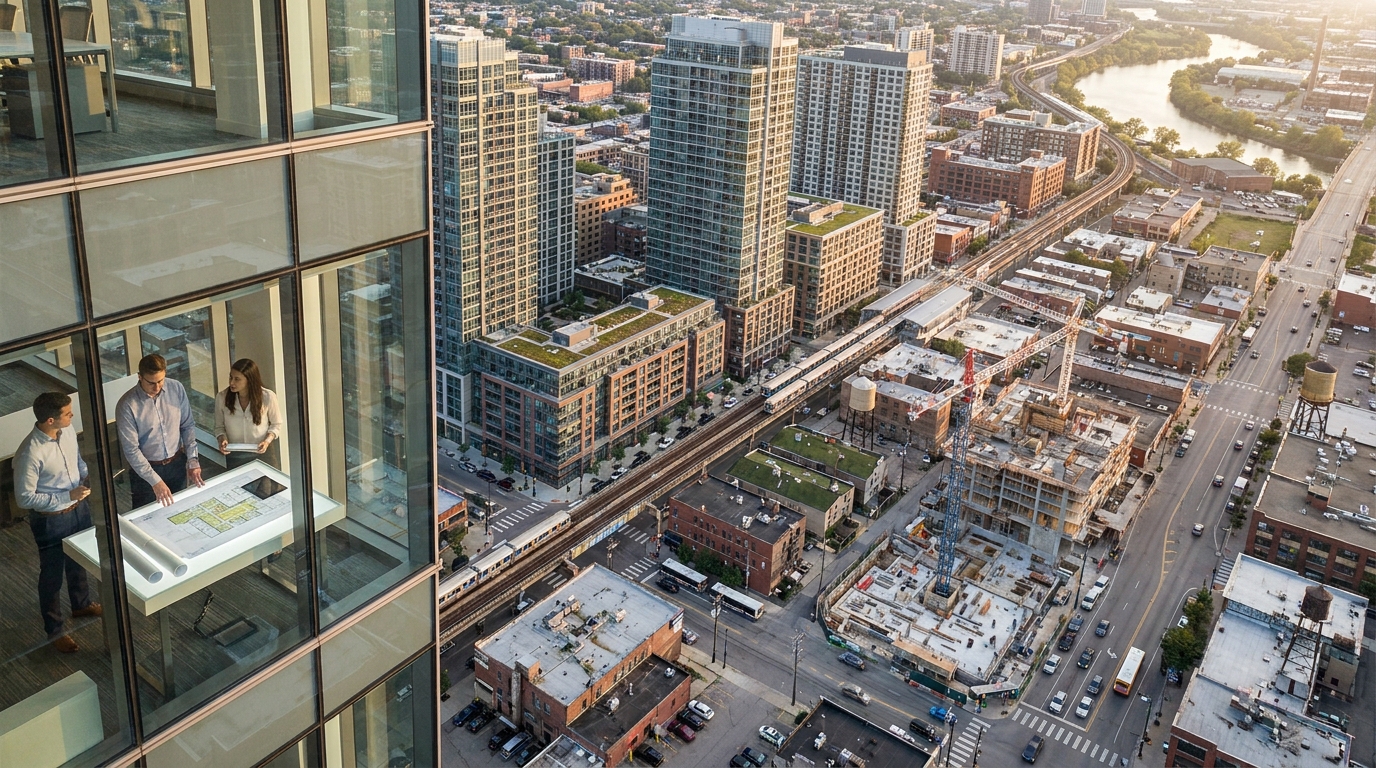
Net-zero buildings can sound like a concept reserved for architects, custom homes, or households with large budgets. In reality, the idea is much more approachable. A net-zero building is one that uses very little energy first, then meets the rest of its energy needs with renewable power so that, over the course of a year, the energy it uses is balanced by the clean energy it generates. For homeowners, that does not mean perfection, and it does not mean every utility bill suddenly disappears. It means creating a home that works smarter, wastes less, and becomes steadily more efficient over time.
Table Of Content
- What a net-zero building actually means
- Why net-zero matters beyond the climate conversation
- The biggest misconception: solar panels come first
- A practical roadmap for homeowners
- Step 1: Start with a home energy audit
- Step 2: Air sealing and insulation first
- Step 3: Upgrade heating and cooling with heat pumps
- Step 4: Improve windows, doors, and ventilation when needed
- Step 5: Add renewable energy after reducing demand
- Net-zero is not all or nothing
- What about existing homes versus new homes?
- Affordability is improving, and incentives matter
- How net-zero connects to electrification and embodied carbon
- Real-life examples of what progress can look like
- Questions homeowners should ask before starting
- The long view: sustainable living that feels achievable
That distinction matters because many people picture net-zero as an all-or-nothing leap. It is often better understood as a pathway. You improve the building envelope, reduce drafts, add insulation, upgrade mechanical systems, and make careful decisions about electrification and renewable energy. Each step lowers the home’s energy demand, which makes the next step easier and often more affordable. In that sense, net-zero is less about one dramatic renovation and more about a sequence of sensible decisions.
There is also a broader reason this topic is becoming more relevant. In both Canada and the United States, policy, building codes, and homeowner programs are increasingly aligned with higher-performance homes. Natural Resources Canada has been moving toward net-zero-ready code development through upcoming code cycles, while retrofit support is expanding through affordability-focused programs. At the same time, the U.S. Department of Energy has reported that thousands of homes have already reached high-performance zero-energy-ready standards, showing that this is no longer a fringe idea. It is steadily becoming part of mainstream housing.
For everyday homeowners, the appeal is practical. Better-performing homes are often quieter, more comfortable, less drafty, and less expensive to run. They can also offer better indoor air quality and more resilience during periods of energy price volatility or outages. If climate benefits are part of your motivation, that is important too, but most people start with immediate concerns such as monthly costs, aging equipment, and comfort in winter or summer. The good news is that those concerns point toward many of the same solutions.
What a net-zero building actually means
The simplest definition comes from the idea of annual balance. According to the U.S. Department of Energy, zero energy buildings combine strong energy efficiency with renewable energy so they produce as much energy as they use over a year. That annual framing is important. A home may still draw power from the grid at night, during winter, or during periods of high demand, and it may produce excess renewable electricity at other times. Net-zero is about the year as a whole, not a guarantee that every day or every month looks identical.
That is one reason performance labels should be understood carefully. The Canadian Home Builders’ Association notes that net-zero labeling is performance-based and that annual net-zero energy consumption cannot be guaranteed in every case. Occupant behavior, weather, appliance use, and maintenance all affect results. A home filled with efficient systems can still use more energy than expected if it is operated inefficiently or if conditions vary significantly from normal patterns. The label points to a design target and a measured level of performance, not an ironclad promise.
It also helps to separate net-zero from related terms you may see while researching upgrades. Net-zero-ready or zero-energy-ready homes are built or renovated to a high enough standard that reaching net-zero later becomes easier, often by adding solar or another renewable system. ENERGY STAR certified homes are also part of the same journey, typically exceeding code requirements and reducing waste. Passive house is a stricter design approach focused heavily on envelope performance, airtightness, and comfort. These are not competing ideas so much as different places on the same spectrum of better building performance.
For homeowners, that distinction can be reassuring. You do not need to decide today whether your home will become a textbook net-zero house next year. You only need to begin moving in the right direction. A home that becomes significantly more efficient, more electric, and more comfortable is already making meaningful progress. That is often the best way to approach sustainable living without turning it into an overwhelming project.
Why net-zero matters beyond the climate conversation
There is no question that net-zero buildings matter for emissions reduction. Homes that use less fossil fuel for heating and rely more on clean electricity can significantly lower their carbon footprint over time. Yet for many households, the practical benefits are what make the concept real. Lower operating costs, more stable indoor temperatures, and healthier air tend to feel more immediate than abstract environmental goals. Fortunately, those benefits often arrive together.
The Department of Energy has emphasized that zero energy buildings can reduce operating and maintenance costs, improve comfort, and support resilience during outages. Those benefits are especially relevant now. Energy prices can be unpredictable, and weather extremes are becoming more noticeable in many parts of North America. A well-insulated home with efficient equipment holds temperature better and may remain safer for longer during disruptions. Even before you add batteries or solar, efficiency itself is a form of resilience.
Comfort is another underestimated advantage. Drafty rooms, cold floors, uneven temperatures between upstairs and downstairs, and stale indoor air are not just annoyances. They are often signs that the home is leaking energy. People sometimes imagine efficiency upgrades as invisible technical measures, but the lived experience is usually very tangible. When a home is properly sealed, insulated, and ventilated, it simply feels better to live in.
Indoor air quality deserves special mention as well. As homes become tighter and better insulated, good ventilation becomes more important. That is not a drawback. It is an opportunity to bring in fresh air in a controlled way rather than through random cracks and gaps. In practical terms, a higher-performance home can be both more efficient and healthier when ventilation is part of the plan.
Net-zero is not only about producing clean energy. It begins with reducing waste so the home needs less energy in the first place.
The biggest misconception: solar panels come first
One of the most common misunderstandings around net-zero homes is the assumption that the path begins with rooftop solar. Solar can be valuable, and for many homes it becomes an important part of the final equation. But in most cases, the biggest gains come earlier. If a home leaks heat through the attic, has poor air sealing, relies on old mechanical systems, or uses inefficient windows and doors, adding solar first can be like filling a bucket with a hole in the bottom.
This is why building experts tend to emphasize efficiency before generation. The less energy your home needs, the smaller and more affordable your renewable system can be later. That makes net-zero more achievable within an ordinary household budget. It also means that even if solar is not feasible because of roof orientation, shading, or upfront cost, you can still move significantly toward net-zero performance through retrofit work alone.
ENERGY STAR offers a useful benchmark here. It states that air sealing and adding insulation can reduce heating and cooling costs by an average of 15 percent and total energy costs by 11 percent in a typical home. Those are meaningful savings from measures that are often less visible than a solar array but more foundational. In many homes, these are the upgrades that quietly do the heavy lifting.
There is a psychological benefit to this sequence too. Starting with efficiency can make the process feel manageable. Instead of trying to solve everything at once, you begin with the home’s core performance. Each improvement gives you information about how the building behaves, which helps you make better decisions about future equipment and renewable energy.
A practical roadmap for homeowners
The most accessible route toward net-zero is usually a staged retrofit. That phrase may sound technical, but the concept is simple. You improve the home in a deliberate order so each upgrade supports the next one. This approach avoids overspending, reduces disruption, and makes it easier to spread costs over time. It also aligns well with how most homeowners already make decisions, which is often around maintenance cycles, comfort complaints, and available incentives.
A thoughtful roadmap usually begins with understanding your home’s current performance. That means looking at where energy is being lost, which systems are aging, and which rooms are hardest to heat or cool. From there, the highest-impact improvements typically involve the building envelope. Only after reducing demand does it make sense to size and select major equipment such as heat pumps or solar panels. This sequence is not glamorous, but it is effective.
Step 1: Start with a home energy audit
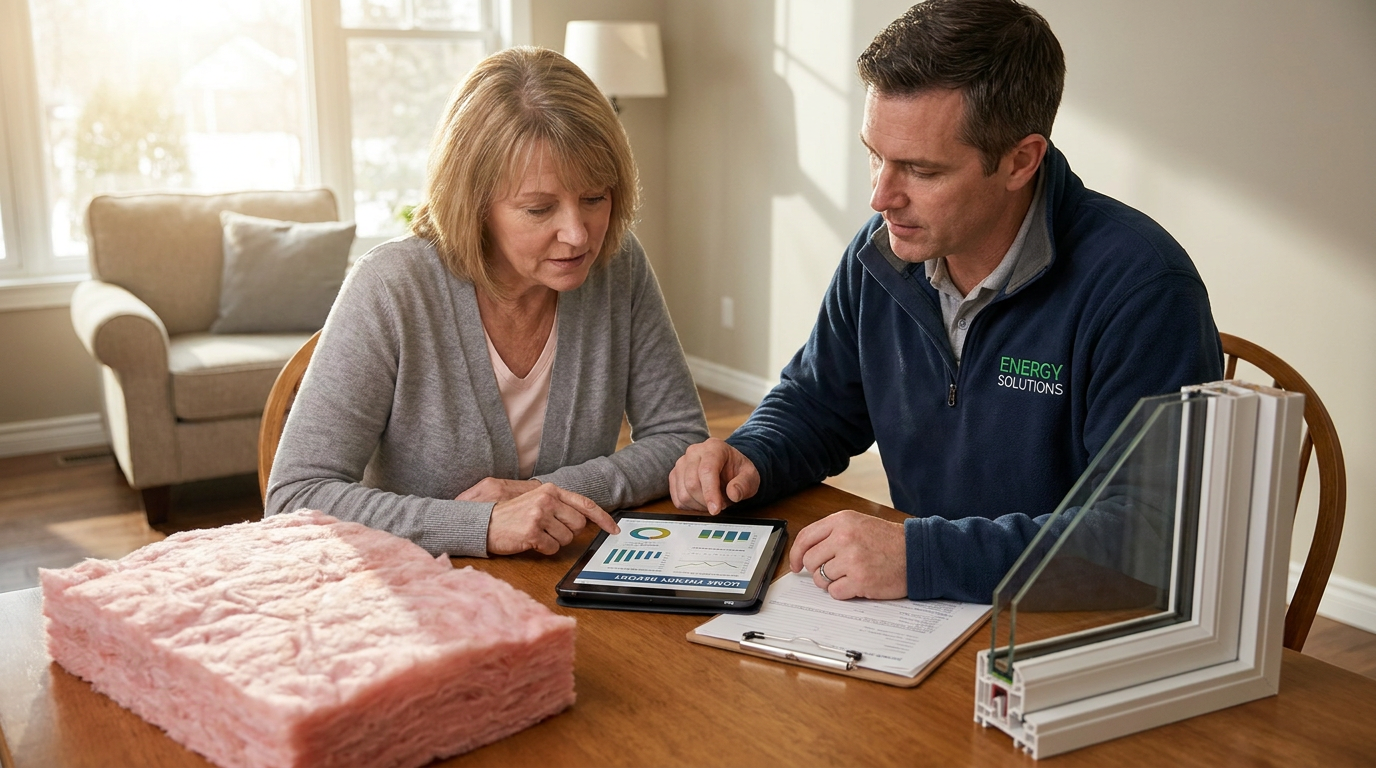
If you are serious about making smart upgrades, a home energy audit is one of the most useful first steps. An energy audit helps identify where your home is losing energy and which retrofits are likely to deliver the greatest impact. Depending on where you live, this may include blower door testing, insulation assessment, equipment review, and utility bill analysis. In Canada, homeowners may also encounter the EnerGuide rating system, which helps measure performance and can support access to certain programs.
The value of an audit is not only diagnostic. It also helps you avoid guesswork. Many homeowners spend money replacing windows before sealing the attic, or upgrade heating equipment before addressing the drafts that make the old system work too hard. An audit can reveal a more strategic order of operations. That tends to produce better results with less waste.
Even if you are not ready for a whole-house retrofit, an audit gives you a map. It turns a vague goal such as “make the house greener” into concrete decisions tied to cost, comfort, and savings. For many households, that clarity is what transforms net-zero from an abstract idea into a realistic plan.
Step 2: Air sealing and insulation first
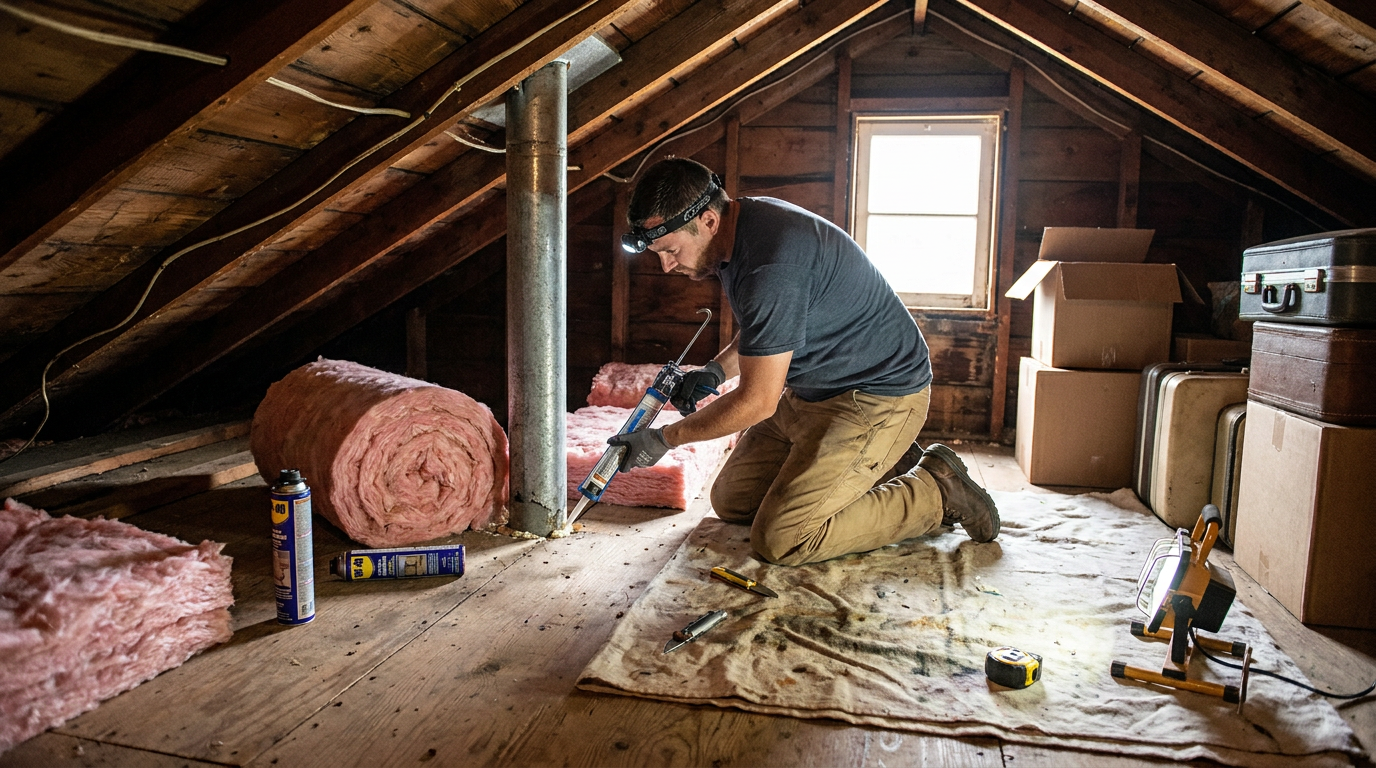
Air sealing and insulation are often the least flashy upgrades and the most important. In many existing homes, especially older ones, conditioned air escapes through attics, basements, crawlspaces, rim joists, wall penetrations, recessed lights, and around windows and doors. This leakage forces heating and cooling systems to work harder than necessary. It also creates drafts, uneven temperatures, and moisture risks over time.
Addressing these weaknesses can produce an immediate difference in comfort. Rooms hold temperature more evenly. Mechanical systems cycle less aggressively. Noise from outdoors may be reduced. Just as importantly, these improvements lower the home’s overall energy demand, which means future upgrades can be smaller and more affordable.
Insulation should be approached with care and context. The right strategy depends on climate zone, existing assembly conditions, and moisture management. Adding insulation without understanding ventilation or air leakage can create unintended issues. That is why envelope work is best informed by an audit or professional guidance. Done properly, it forms the backbone of net-zero progress.
Step 3: Upgrade heating and cooling with heat pumps
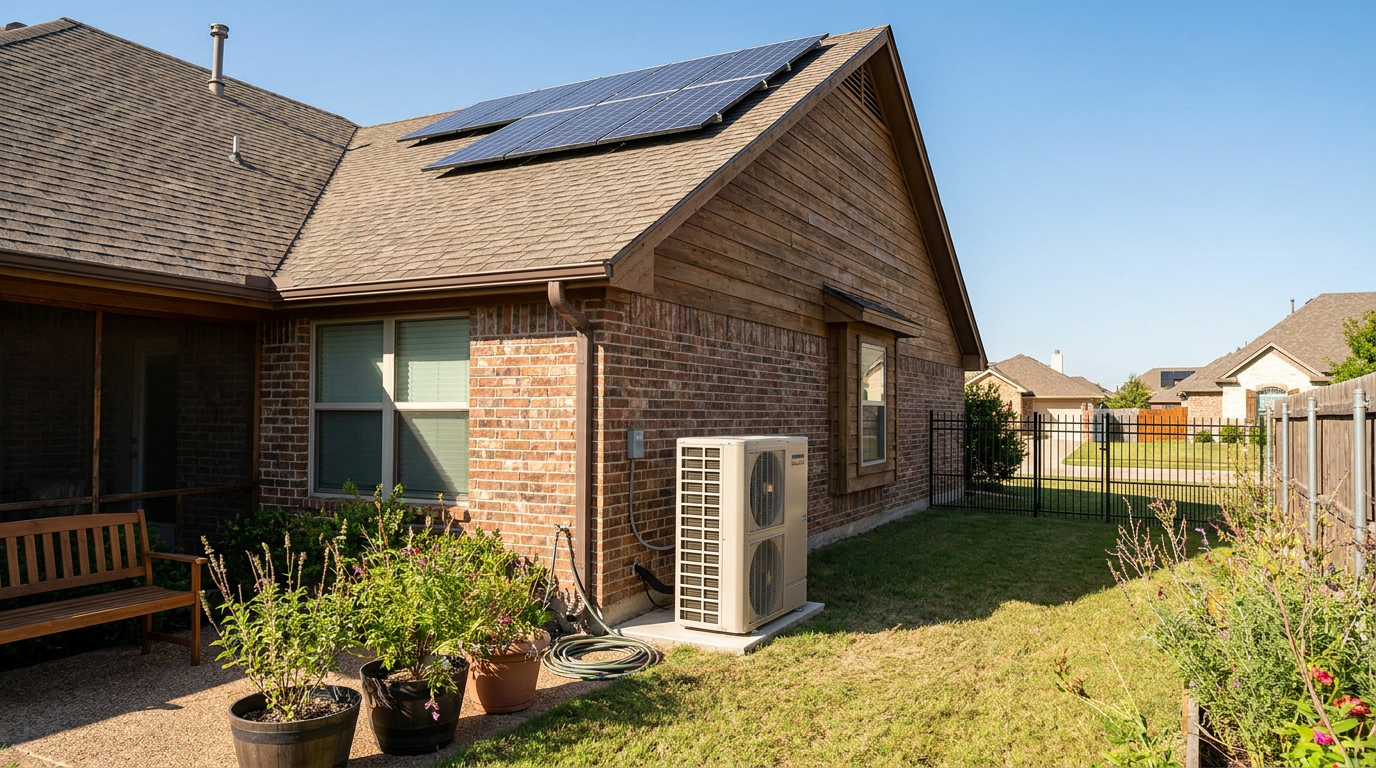
Once the home needs less energy, the next major step is often upgrading heating and cooling equipment. Heat pumps have become central to this conversation because they provide efficient electric heating and cooling in one system. Rather than generating heat in the traditional way, they move heat, which makes them far more efficient than many older systems. For homeowners interested in building electrification, heat pumps are frequently one of the most practical upgrades available.
The case for heat pumps is strongest when they are paired with envelope improvements. If a home is very leaky, even a good heat pump may struggle to deliver the comfort and efficiency people expect. But in a tightened and better-insulated home, a correctly sized heat pump can significantly reduce energy use and emissions. It can also simplify the home’s mechanical systems by replacing older air conditioners and reducing or eliminating fossil fuel heating.
There are several types of heat pumps, including ducted, ductless mini-split, and cold-climate models suited to harsher winters. The best option depends on the home’s layout, existing ductwork, and regional climate. This is one of those areas where good design matters more than product marketing. Oversized or poorly installed systems can underperform, while a well-designed system can quietly transform daily comfort.
Step 4: Improve windows, doors, and ventilation when needed
Windows and doors tend to receive a lot of attention because they are visible and often expensive, but they should not always be the first upgrade. If existing windows are still in decent condition, air sealing and insulation may offer better returns initially. That said, truly poor-performing windows can contribute to drafts, condensation, and discomfort, especially in colder climates. Replacing them with efficient models can improve both energy use and livability.
Ventilation matters just as much, even if it is discussed less often. As a home becomes tighter, it needs a more deliberate way to maintain fresh air and manage humidity. This can involve exhaust improvements, balanced ventilation, or heat recovery systems depending on the project scope. The aim is simple: reduce uncontrolled air leakage while preserving healthy indoor air quality.
Thinking of these upgrades together is helpful. Windows, doors, and ventilation all shape how the home feels. They affect noise, temperature, humidity, and air freshness. In a net-zero pathway, efficiency is not only about consuming less energy. It is about creating a home that is easier and more pleasant to live in every day.
Step 5: Add renewable energy after reducing demand
Only after reducing the home’s energy needs does renewable energy usually make the most sense. For many households, that means solar photovoltaic panels. By this point, the home’s overall demand has been lowered through envelope work and efficient systems, which can reduce the scale and cost of the solar installation needed to approach annual net-zero balance. The result is a more cost-effective project with stronger long-term performance.
Solar is not the right fit for every property. Roof orientation, shading, structural conditions, local regulations, and utility arrangements all influence feasibility. Some homeowners may benefit more from community solar or from simply living in a cleaner electricity grid while pursuing deep efficiency and electrification. The important point is that renewable energy is part of the destination, not necessarily the first stop.
By approaching solar this way, homeowners can avoid disappointment. Instead of expecting panels alone to solve a home’s inefficiencies, they can use renewable energy to complement a stronger building foundation. That is a much more reliable path toward genuine net-zero performance.
Net-zero is not all or nothing
Perhaps the most important message for homeowners is that net-zero is not a purity test. A home does not have to become perfectly net-zero next year to make meaningful progress now. In fact, many of the most valuable improvements stand on their own. Air sealing, insulation, better controls, ventilation upgrades, and electrified heating can all reduce costs and emissions even if solar comes later or never.
This matters because homes are upgraded in real life, not in idealized design diagrams. Families have budgets, maintenance timelines, competing priorities, and homes with quirks that do not always allow for textbook solutions. A staged approach respects that reality. It allows people to improve what they can, when they can, while keeping the larger goal in view.
It is also worth remembering that many high-performance homes are not technically net-zero but still perform dramatically better than standard construction. The Department of Energy reported that by early 2023, more than 12,000 homes had achieved zero-energy certification and that such homes are often 40 to 50 percent more efficient than typical homes. ENERGY STAR certified new homes are at least 10 percent more efficient than code-built homes and improve performance by about 20 percent on average. Those are meaningful stepping stones, not consolation prizes.
What about existing homes versus new homes?
Another common misconception is that only brand-new custom homes can reach net-zero standards. New construction certainly has advantages. It is easier to design airtightness, insulation levels, window placement, and mechanical systems from the beginning than to retrofit them later. But that does not mean existing homes are excluded from the journey. In fact, staged retrofits are often the most accessible route for ordinary households.
Existing homes can make substantial progress through sequenced upgrades. A drafty older house may never become a showcase project overnight, but it can become significantly more efficient, healthier, and lower-carbon over time. Improvements such as attic insulation, basement sealing, heat pump installation, and ventilation upgrades are achievable in many homes without complete reconstruction. Each intervention can be timed to coincide with necessary maintenance or equipment replacement.
New homes, meanwhile, can be designed as net-zero-ready from the start. That often means going beyond basic code compliance with stronger insulation, airtightness, efficient windows, and all-electric systems sized for low demand. The result is a house that may only need solar added later to reach annual balance. For buyers considering a new build, asking about these performance pathways can be more useful than focusing only on square footage or finish materials.
Affordability is improving, and incentives matter
One of the strongest reasons for optimism is that net-zero-style improvements are becoming more accessible. Government and utility programs increasingly recognize that efficiency upgrades and electrification should not be limited to high-income households. In Canada, the policy direction is especially notable. Natural Resources Canada’s broader strategy continues to move building performance toward net-zero-ready code levels, and recent affordability programs have expanded support for retrofits such as insulation, air sealing, heat pumps, solar panels, windows, and doors.
The Canada Greener Homes Affordability Program is particularly important in this context because it signals a shift from encouragement to practical support. With no-cost retrofits available for eligible low- and median-income households and tenants in expanding regions, improvements that once felt financially out of reach may become possible without major upfront payment. That changes the tone of the conversation. Net-zero stops being an aspiration for a narrow group and starts looking more like a public-interest housing strategy.
Homeowners in the United States should also look closely at available state, local, and utility incentives, especially for heat pumps, insulation, energy audits, and solar. Incentives change often, so current local research is essential. But the broader trend is clear: support is growing for the kinds of upgrades that form the backbone of net-zero progress.
How net-zero connects to electrification and embodied carbon
When people think about greener homes, they often focus only on operating energy, meaning the energy used to heat, cool, light, and power the building over time. That is central to net-zero, but it is not the whole sustainability picture. Building electrification is closely connected because a home that relies more on efficient electric systems can benefit as the grid becomes cleaner. Replacing fossil-fuel equipment with efficient electric alternatives is often a major step toward lower operational emissions.
There is also the related issue of embodied carbon, which refers to the emissions associated with manufacturing, transporting, and installing building materials. For homeowners doing deep renovations, this can influence choices around insulation types, finishes, and replacement timing. In practical terms, the greenest choice is not always to replace everything immediately. Sometimes it is better to keep durable components in service while improving the systems around them. Sustainability is strongest when it balances performance, durability, and material impact.
This is another reason calm, sequenced decision-making matters. A practical net-zero pathway considers both energy and longevity. It asks what should be upgraded now, what should be repaired, what can wait, and how each choice fits into a longer-term plan. That kind of thinking tends to produce homes that are both lower-impact and more financially sensible.
Real-life examples of what progress can look like
Imagine a 1980s detached home in a cold Canadian climate. The owners are dealing with high winter bills, an aging furnace, and upstairs bedrooms that never feel comfortable. Instead of jumping straight to solar, they begin with an energy audit. The audit identifies major attic leakage, underinsulated areas, and poor basement air sealing. They complete that envelope work first, and the home immediately feels more stable and less drafty.
A year later, when the old furnace reaches the end of its life, they install a cold-climate heat pump and make a few ventilation improvements. Their energy use drops again, and cooling comfort in summer improves at the same time. Only after living with the changes do they size a solar array based on the home’s lower demand. They may or may not hit formal net-zero labeling, but they have moved dramatically closer while also making the house more pleasant and more affordable to operate.
Now imagine a new suburban home in the United States where the buyers ask for better-than-code construction. The builder offers an ENERGY STAR certified package with improved insulation, air sealing, efficient windows, and electric-ready systems. The family later adds rooftop solar. That home may start from a stronger baseline and become net-zero-ready more quickly, but the principle is the same. Efficiency first, then clean generation.
Questions homeowners should ask before starting
Before committing to major work, it helps to ask a few grounding questions. What are the biggest comfort problems in the home right now? Which systems are nearing the end of their useful life? What incentives are available locally? Is the goal lower bills, lower emissions, improved resilience, better air quality, or all of the above? Clear priorities make sequencing much easier.
- Where is the home losing the most energy? Start with an audit rather than assumptions.
- Which upgrade will improve both comfort and efficiency? High-value retrofits often solve more than one problem at once.
- Are there rebates or no-cost retrofit programs available? Funding can change the order of operations.
- Is the home ready for electrification? Consider panel capacity, equipment age, and envelope condition.
- Would a phased approach reduce disruption? Many households benefit from doing the work over several seasons.
These questions are useful because they shift the conversation away from trends and toward fit. The right path is not identical for every house. Climate, building age, budget, and local energy prices all shape the answer. Net-zero is a strong goal, but the route should still be tailored to the home you actually live in.
The long view: sustainable living that feels achievable
There is something deeply encouraging about the net-zero conversation when it is framed well. It tells homeowners that sustainability is not only about sacrifice or expensive technology. It can begin with sealing a draft, improving insulation, replacing tired equipment with smarter systems, and paying closer attention to how a house performs. Those are practical acts of care. They lower waste, improve daily life, and create a stronger foundation for whatever comes next.
It also suggests a more elegant idea of sustainable living. Rather than adding complexity, a good net-zero pathway simplifies things. The home becomes easier to heat and cool. Temperature becomes steadier. Bills become more predictable. Air feels fresher. Renewable energy, when added, works harder because the house asks for less. That is not a futuristic fantasy. It is thoughtful building practice applied to ordinary life.
As building codes evolve, retrofit programs expand, and clean technology improves, the path toward net-zero should become even more accessible. Homeowners do not need to wait for the perfect moment or the perfect budget. Starting with the home’s biggest inefficiencies is often enough to set meaningful change in motion. Over time, those decisions can add up to a house that is lower-carbon, lower-cost, and more comfortable in every season.
Net-zero buildings are best understood not as a distant ideal, but as a practical direction. Reduce demand first. Upgrade wisely. Electrify where it makes sense. Add clean energy when the home is ready. For most households, that is the clearest and most sustainable path forward.



No Comment! Be the first one.