
Pearson’s $1.5 Billion Terminal Renewal Is a Growth Signal for the Western GTA
Toronto Pearson’s $1.5 billion terminal modernization is not only an aviation project. It is a regional growth signal. As reported by Construction Canada, the airport has awarded major contracts to NORR-DIALOG and PCL Construction to renew Terminal 1 and Terminal 3, upgrading passenger processing, gates, baggage systems, customs, immigration areas, and lounges. For developers and planners, the larger implication is clear: the western GTA’s most important mobility node is being repositioned for long-term capacity, and land strategy around it will follow.
Airports shape development patterns because they concentrate employment, logistics, hospitality, business travel, and infrastructure investment. Pearson already sits at the centre of one of Canada’s most economically significant employment zones. When a facility of this scale commits to a multi-year modernization program, it does more than improve passenger experience. It reinforces the airport district as a durable anchor for future commercial intensification, industrial competitiveness, and transportation-oriented investment.
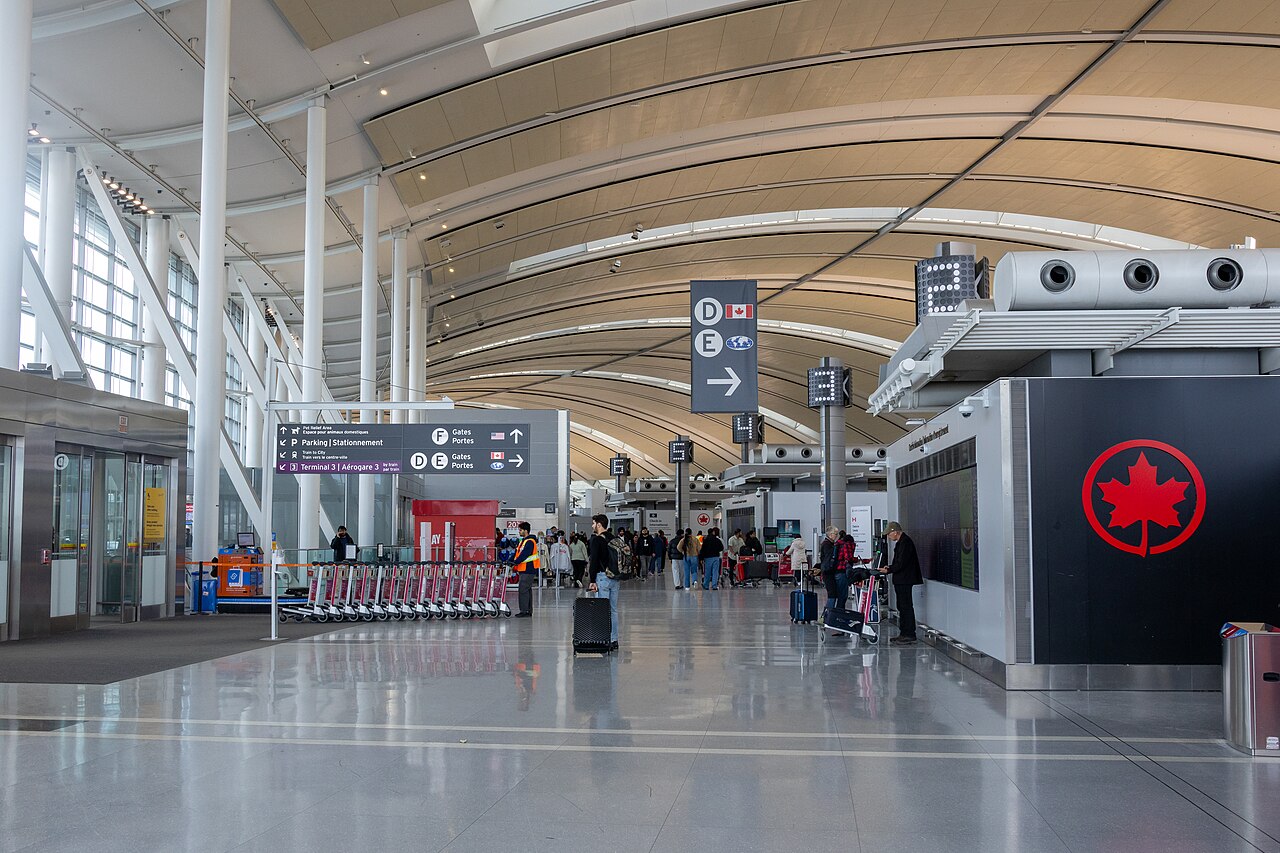
The terminal program is part of Pearson LIFT, a broader transformation focused on renewing facilities, adding technology, and improving airport operations. That matters because terminal capacity and operational reliability are core constraints on airport-adjacent growth. If Pearson can process passengers more efficiently from curb to gate, it strengthens the business case for surrounding hotel, office, logistics, convention, and service uses. It also supports the long-term value of employment lands in Mississauga, Brampton, Etobicoke, and the broader airport megazone.
The development question is not whether land around Pearson is valuable. It already is. The question is how much additional value can be unlocked when infrastructure reliability improves. Better passenger flow, upgraded customs and immigration facilities, modern baggage systems, and more resilient gate operations all support higher airport throughput. That throughput is directly tied to demand for nearby accommodation, ground transportation, freight handling, food services, maintenance operations, and corporate travel infrastructure.
Major airport investment is never isolated. It changes the long-term feasibility map for every employment, logistics, hospitality, and mobility asset around it.
For municipalities, this investment should sharpen the planning conversation around access. Pearson’s growth cannot be understood only inside the terminal walls. The curb, transit links, road capacity, rideshare zones, employee movement, and regional rail connections are all part of the same urban system. If terminal modernization increases airport efficiency but ground access remains constrained, the region leaves value on the table. The strongest planning response would align airport upgrades with improved transit integration, better last-mile connections, and protection of critical employment lands from incompatible conversion pressure.
There is also a construction feasibility lesson in this project. PCL has been selected as construction manager at risk, and the work must proceed inside an active airport environment. That signals complexity, phasing discipline, and a premium on operational continuity. For large-scale developers, Pearson’s approach reflects the reality of modern infrastructure renewal: the market increasingly needs major assets rebuilt while still functioning. Hospitals, transit stations, campuses, ports, and dense mixed-use districts face the same challenge.
What should developers watch next? Not only the construction timeline, but the surrounding policy response. Airport modernization can trigger land value movement, but that value is captured only where zoning, servicing, mobility, and municipal priorities are aligned. Pearson’s terminal renewal should put airport-adjacent planning back on the table, particularly around employment density, hotel supply, logistics modernization, and transit-supportive commercial development. The terminal is being upgraded from curb to gate. The region now needs to think from runway to city.
Source: Construction Canada