



Property management is becoming less about static reports and more about live operational intelligence. That shift matters because buildings are no longer managed effectively through spreadsheets, occasional inspections, and delayed maintenance logs alone. Modern properties generate data every hour through building systems, utility meters, access controls, occupancy tools, and connected equipment. A digital twin turns that fragmented information into a structured, usable operating layer that helps teams understand what is happening now, what is likely to happen next, and where to act first.
Table Of Content
- What Is a Digital Twin in Property Management?
- How Digital Twins Work in Real Time
- Why Property Managers Are Paying Attention Now
- The Highest Value Use Cases for Digital Twins
- Fault Detection and Faster Response
- Predictive Maintenance
- Energy Optimization
- Space and Occupancy Management
- Portfolio Benchmarking and Capital Planning
- Case Studies That Show the Practical Value
- Siemens Building X and Operational Visibility
- IBM and JLL Replacing Stale Reporting
- University of California and Structured Facilities Data
- Common Misconceptions That Hold Teams Back
- How to Implement a Digital Twin in Practical Stages
- What Data Should a Property Team Prioritize First
- Where Digital Twins Fit with Related Building Technologies
- The Growing Role of AI, Carbon Reporting, and Resilience
- Actionable Insights for Owners and Property Managers
- The Bottom Line
At its core, a digital twin is a virtual replica of a physical asset that stays synchronized with real world conditions through data. In smart property management, that asset might be a single building, a campus, or an entire portfolio. The most useful twins combine multiple sources such as Building Information Modeling data, IoT sensors, building management systems, energy platforms, maintenance records, floor plans, and asset registers. When those sources are connected well, the twin becomes more than a visual model. It becomes a decision environment.
This distinction is important because the market still confuses glossy 3D visuals with true operational twins. A static model may look impressive, but it does not help much if it cannot surface alarms, track equipment performance, or connect to work order systems. A useful digital twin is defined by live or frequently refreshed data, interoperability, and actionability. It supports faster diagnosis, stronger reporting, better maintenance planning, and more informed capital decisions.
For property owners and managers, the timing is right. Buildings account for roughly 40% of global energy consumption according to one recent review, and other research puts the sector at around one third of global greenhouse gas emissions. That means smarter building operations are not just a convenience layer. They are increasingly tied to operating costs, sustainability goals, compliance obligations, tenant experience, and asset value protection. In that context, digital twins are moving from experimental technology to practical infrastructure.
This article takes a practical look at how digital twins operate in real time to optimize smart property management. We will define what a digital twin really is, explain how it works day to day, review case studies from the field, separate hype from reality, and outline a phased path for implementation. The goal is simple: to show where digital twins deliver measurable value and how property teams can apply them without getting lost in technical jargon.
What Is a Digital Twin in Property Management?
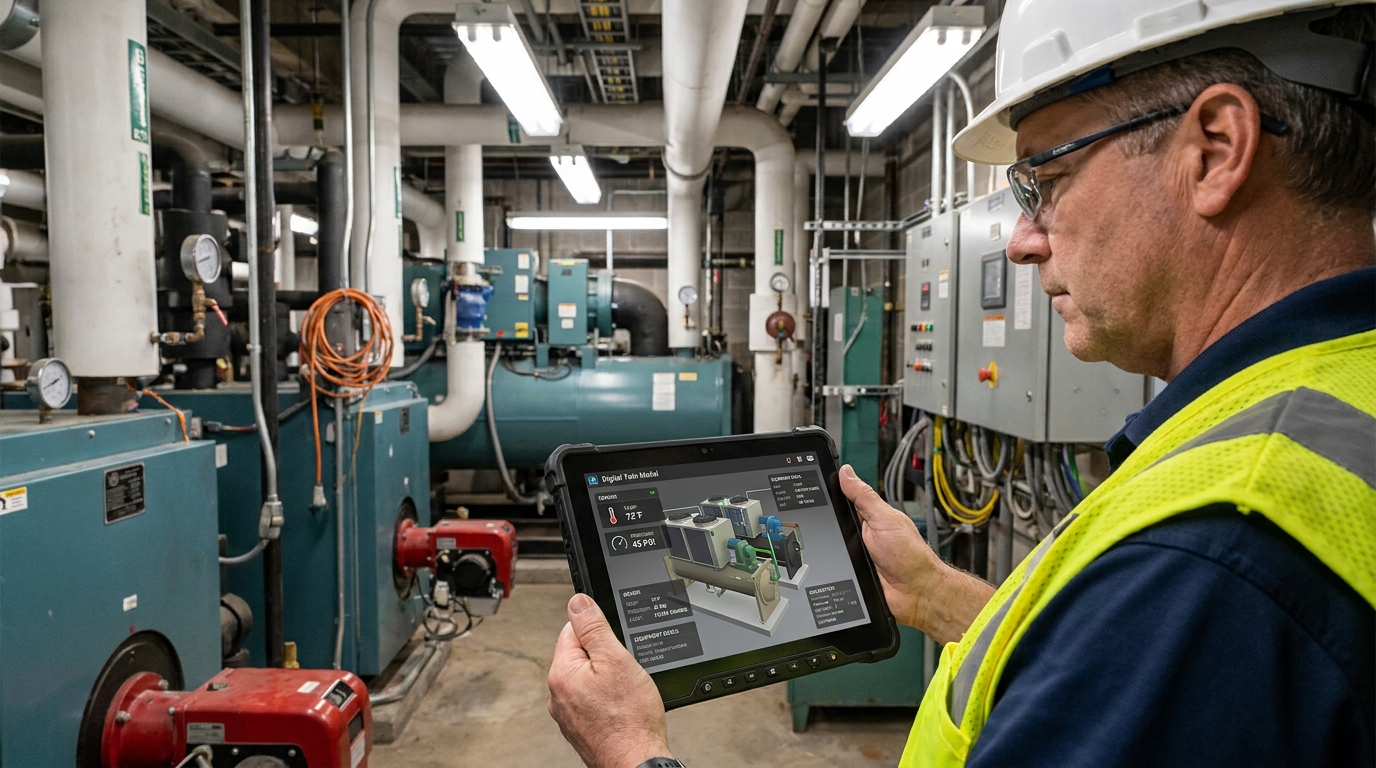
A digital twin in real estate is best understood as a living digital representation of a building and its operations. It is living because it changes with the building. If a sensor reports unusual temperature variation in an air handling unit, the twin reflects that change. If occupancy patterns shift on one floor, the twin captures the operational impact. If a maintenance event is completed, the twin can show updated asset status and maintenance history.
The National Institute of Standards and Technology has emphasized the need for a synchronized, interoperable digital infrastructure for buildings. That phrase may sound technical, but the practical message is straightforward. A building becomes easier to manage when systems can communicate, when data can be trusted across platforms, and when the digital view stays aligned with the physical reality. This is the foundation of a useful building digital twin.
That also explains why a digital twin is not the same as BIM alone. BIM is often essential because it provides structured information about spaces, systems, and assets. Yet BIM by itself is typically a design and documentation environment. A digital twin extends beyond design into operations by connecting the model to live data streams, alarms, maintenance processes, and analytics. In the same way, a 3D scan or a lidar model can improve spatial accuracy, but it becomes a true twin only when it is linked to operational intelligence.
In property management, the highest value does not usually come from prettier visualization. It comes from practical workflows. Teams need to know which asset is failing, which tenant area is consuming abnormal energy, which site visit can be avoided through remote diagnostics, and which capital issue should be prioritized before it becomes a costly outage. A digital twin answers those questions by turning disconnected data into operational context.
How Digital Twins Work in Real Time
Most building operations already produce large amounts of data. The problem is that the data usually sits in silos. HVAC information may be trapped in the BMS, electrical usage in an energy platform, maintenance activity in the CMMS, and asset documentation in separate folders or vendor systems. Property managers then spend valuable time reconciling these sources, often after the fact. A digital twin creates a common operating layer that pulls those feeds into one environment.
In practice, a digital twin often starts with a spatial and asset framework. That framework might use BIM, CAD drawings, scanned floor plans, or lidar-based models to define the building geometry and asset locations. The next layer is systems data, which may include temperatures, run times, air quality, power draw, water use, occupancy, alarms, and equipment states. On top of that comes business logic, such as maintenance rules, fault detection models, service histories, space classifications, energy baselines, and reporting thresholds.
Once connected, the twin can continuously compare expected performance against actual performance. If a chiller is running longer than expected, if a zone is overventilated, or if lighting loads remain high after hours, the twin can flag the anomaly. When paired with fault detection and diagnostics, it can go further by suggesting likely causes or identifying related assets. This is where digital twins begin to save time. Instead of knowing that something feels off, teams can identify where the problem sits and how severe it is.
Real time does not always mean every second. In many property environments, near live data refreshed every few minutes is sufficient for operational decision making. What matters more is reliability and consistency. A twin that receives trustworthy updates from key systems is usually more valuable than a more complex platform filled with noisy or poorly calibrated inputs. This is one reason implementation quality matters as much as software selection.
Another important aspect is workflow integration. The digital twin becomes far more useful when it does not stop at observation. A detected issue should ideally create an alert, associate that alert with the affected asset, surface historical context, and connect to a work order process. If the maintenance technician can arrive on site already knowing the equipment location, service history, warranty information, and likely fault pattern, resolution time falls and labor becomes more efficient.
Why Property Managers Are Paying Attention Now
Property operations are under pressure from multiple directions at once. Energy costs remain volatile, building systems are aging in many markets, maintenance teams are stretched, and stakeholders expect clearer reporting on sustainability and risk. At the same time, tenants and occupants expect comfort, responsiveness, and reliability. These pressures make reactive management harder to justify. When a team only learns about issues after complaints or monthly reports, it loses time and often spends more money.
Digital twins address this gap because they make operations visible in context. A property manager can see whether an equipment fault is isolated or part of a larger system issue. An asset manager can compare performance across sites. A facilities team can prioritize deferred work based on actual operational impact instead of guesswork alone. An ownership group can move from delayed summaries to current portfolio visibility.
The energy case is especially strong. Research on digital-twin-enabled building control has reported potential energy savings in the 20% to 30% range in some applications, though results vary by building type, baseline efficiency, and implementation maturity. Those numbers should be treated as opportunity ranges rather than guaranteed outcomes. Still, they help explain why digital twins matter. Even modest efficiency gains can produce meaningful operating savings in large commercial or institutional properties.
The same logic applies to carbon and compliance. As carbon disclosure and ESG expectations expand, property teams need operational data that can stand up to scrutiny. A digital twin can support this by centralizing utility data, control system readings, and equipment context in one environment. That does not automatically solve reporting challenges, but it improves the quality and timeliness of the information available for carbon accounting and performance tracking.
Key takeaway: The real value of a digital twin is not that it mirrors a building. It is that it helps teams make better decisions about that building while conditions are still changing.
The Highest Value Use Cases for Digital Twins
Fault Detection and Faster Response
One of the most immediate wins comes from fault detection and diagnostics. Traditional building operations often rely on alarms that are too noisy, too generic, or too disconnected from asset context. A digital twin can improve this by tying alarms to specific systems, physical locations, and service histories. Instead of seeing an abstract alert, operators can understand what is affected, what adjacent systems may be involved, and whether similar issues have occurred before.
This has practical consequences for response time. If a maintenance team knows exactly which unit is involved and can review trend data before dispatch, unnecessary site visits decline and repairs become more targeted. In multi building portfolios, remote visibility also allows central teams to support local staff more effectively. Faster fault response is one reason vendors such as Siemens increasingly position digital twins as operational platforms rather than just visualization tools.
Predictive Maintenance
Predictive maintenance is one of the most talked about benefits of digital twins, and for good reason. Instead of servicing equipment strictly by calendar schedule or waiting for failures, teams can monitor indicators such as vibration, temperature drift, run time irregularities, power anomalies, or repeated alarms. The digital twin can then identify patterns that suggest declining performance before a breakdown becomes disruptive.
For property managers, the advantage is not only lower downtime. It is better prioritization. Budgets are finite, and maintenance teams cannot treat every asset as equally urgent. A twin helps identify which assets are critical, which are degrading faster than expected, and which interventions are likely to prevent larger failures. Over time, that supports more defensible maintenance planning and capital replacement strategy.
Energy Optimization
Energy management is where digital twins often become visible to executive stakeholders because the impact can be quantified more directly. By combining utility data, occupancy signals, weather conditions, system performance, and equipment status, a twin can reveal where energy is being used inefficiently. That might mean simultaneous heating and cooling, equipment running outside occupied hours, ventilation rates that do not match demand, or zones with chronic control drift.
Once those issues are visible, teams can test operational changes more confidently. They may adjust schedules, refine setpoints, sequence systems differently, or target underperforming equipment for commissioning. The twin can then track whether the changes are delivering the intended outcome. This makes energy optimization less of a one time audit exercise and more of a continuous operational discipline.
Space and Occupancy Management
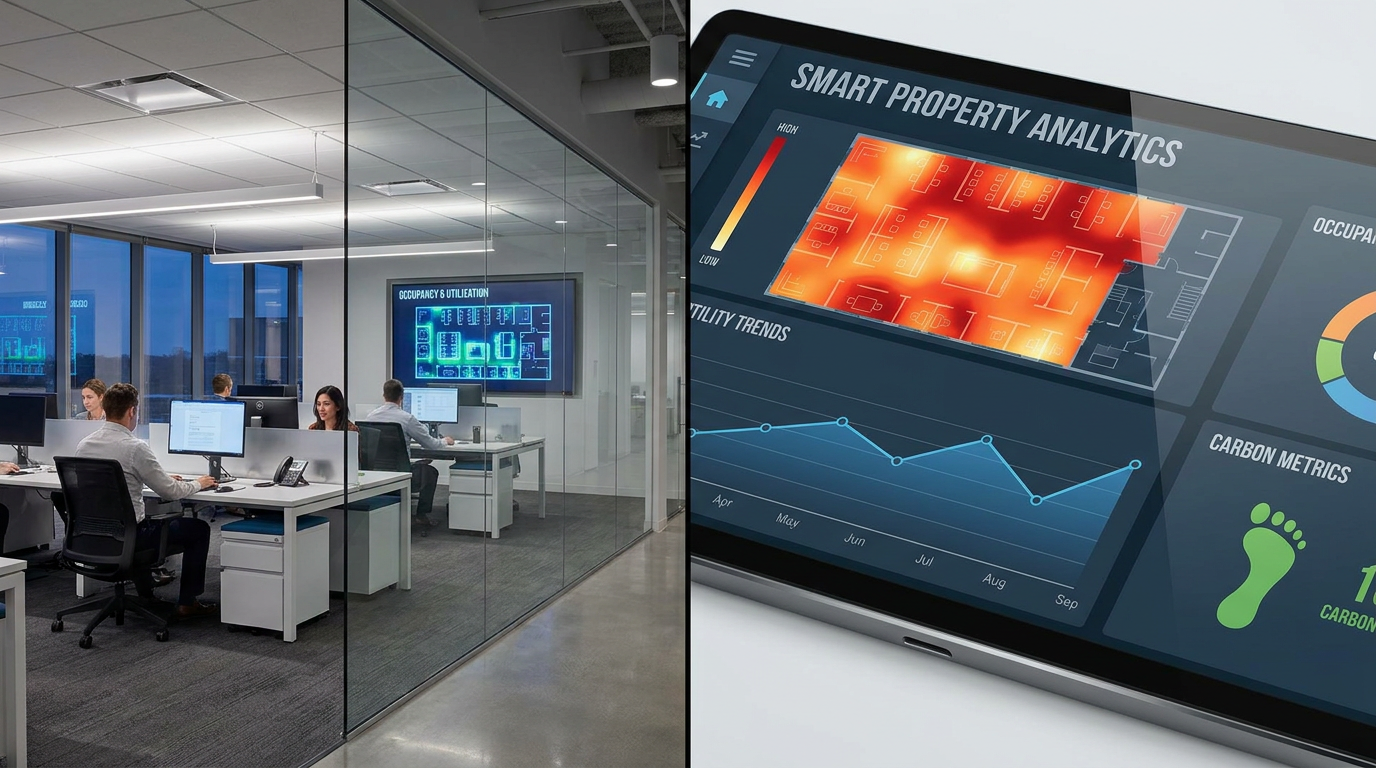
In offices, campuses, multifamily, and mixed use properties, space performance matters more than ever. A digital twin can integrate occupancy data, access patterns, room booking information, and floor plan context to show how space is actually being used. This can help identify underused zones, congested areas, mismatches between cleaning schedules and occupancy, or opportunities to consolidate operations.
These insights are especially relevant as portfolios adapt to hybrid work, flexible tenancy, and higher demand for operational efficiency. Space is expensive. If a property team can understand utilization with more precision, it can improve leasing strategy, amenity planning, and service allocation. In some cases, the operational savings from better space alignment can be as meaningful as direct energy savings.
Portfolio Benchmarking and Capital Planning
Digital twins are increasingly moving beyond individual flagship buildings into portfolio level management. That shift matters because many real estate decisions are comparative. Which property has the highest deferred maintenance exposure. Which building has the most frequent HVAC faults. Which site is underperforming on energy intensity despite recent upgrades. Which assets should receive capital first. A portfolio twin can bring those questions into one analytical frame.
When asset and operational data are structured consistently across multiple properties, managers can benchmark buildings against one another with much more confidence. This becomes particularly useful for large owners, public sector facilities, healthcare systems, universities, and multifamily operators managing dispersed assets. The result is not just better visibility, but stronger prioritization.
Case Studies That Show the Practical Value
Siemens Building X and Operational Visibility
Siemens case studies around Building X are useful because they focus on operations rather than abstract promise. These examples describe digital twins supporting real time monitoring of building systems, faster fault response, centralized asset and document management, and energy optimization. That framing is important. It shows the twin acting as a practical control and intelligence layer for property teams, not just as a digital showcase.
In smart property management terms, that means operators can move through one environment instead of switching constantly between systems. Alarms, documents, system status, and asset context can be linked in one place. For a technician or facilities manager, this reduces friction. For a portfolio manager, it creates a more reliable basis for reporting and governance. The lesson is clear: value increases when the twin is embedded into daily workflows.
IBM and JLL Replacing Stale Reporting
Another strong example comes from IBM’s case study involving JLL, where a lidar-derived 3D model was combined with real time operational data streams. The significance here is not just the model accuracy. It is the transition away from stale monthly reporting toward instant operational insight. Many property organizations still rely on reports that summarize what has already happened, often too late to influence the underlying issue.
A real time digital twin changes that cadence. It lets decision makers see current conditions, compare trends across sites, and respond before problems become expensive. For larger portfolios, that shift is powerful because a month is a long time in building operations. Energy anomalies, equipment inefficiencies, and occupant comfort issues can accumulate quickly. A live operational layer shrinks the lag between signal and action.
University of California and Structured Facilities Data
The University of California case study is compelling for a different reason: scale. According to the reported figures, the program inventoried more than 125,000 assets and identified over 41,000 deferred maintenance opportunities through a facilities data platform. This does not represent a digital twin in the narrow visual sense, but it strongly supports the broader argument for structured operational infrastructure. You cannot manage what you cannot clearly inventory, classify, and compare.
For North American readers, this case highlights one of the most practical digital twin outcomes: better control over deferred maintenance and capital prioritization. Large campuses and portfolios often struggle less from lack of effort than from lack of integrated visibility. Once assets, condition data, and maintenance needs are consistently represented, decision quality improves. A digital twin becomes the operational surface through which that intelligence is applied.
Common Misconceptions That Hold Teams Back
The first misconception is that a digital twin is just a 3D model with some dashboards attached. That view misses the operational core of the concept. A true twin is synchronized with live or regularly refreshed data and supports analysis, alerts, and decisions. If a platform cannot meaningfully connect the physical building to operational workflows, it may be useful software, but it is not delivering the full value of a digital twin.
The second misconception is that digital twins are only for new construction or iconic smart buildings. In reality, many deployments are retrofit friendly. Existing properties can be onboarded through a mix of scans, BIM where available, BMS data, utility feeds, and maintenance records. Perfect data is not a prerequisite. What matters more is defining the operational questions clearly and connecting enough trusted sources to answer them.
The third misconception is that a digital twin automatically saves money. It does not. Savings depend on data quality, interoperability, implementation discipline, and whether teams actually use the insights. A sophisticated twin with poor calibration, missing asset metadata, or no workflow adoption can create a false sense of intelligence. In some cases, more data simply means more confusion if the data is inconsistent or poorly governed.
The final misconception is that the twin needs to do everything from day one. This is a common reason projects stall. Property teams do not need a perfect model of every system across every site to realize value. In most cases, a phased approach produces better outcomes because it focuses effort on high value problems first and allows teams to refine governance as they scale.
How to Implement a Digital Twin in Practical Stages
The most successful implementations usually begin with a narrow operational purpose rather than a broad technology ambition. A good starting question is not, “How do we build a digital twin?” It is, “What decision do we need to improve first?” That decision might relate to after hours energy waste, recurring HVAC faults, deferred maintenance prioritization, or remote visibility across a campus. Starting with a specific problem helps define the data needed and the workflows to connect.
Stage one is selecting the pilot environment. This is often one building, one campus zone, or one asset class that has visible operational pain and enough accessible data to support a useful pilot. Good candidates include energy intensive buildings, mechanically complex sites, or properties with recurring service issues. The goal is to prove workflow value, not to showcase every possible feature.
Stage two is connecting existing systems rather than rebuilding the world. Many buildings already have BMS platforms, utility meters, maintenance logs, floor plans, and asset lists. The first win often comes from integration. Bringing these sources into one environment can reveal operational gaps immediately, even before advanced analytics are added. This is where standards based interoperability becomes critical. Without clean mapping between assets, systems, and spaces, the twin becomes harder to trust.
Stage three is establishing a clear data model and governance process. Teams need consistent naming, asset identifiers, units of measure, refresh rules, and ownership for each data stream. They also need processes for validation and calibration. A digital twin is only as credible as its underlying data relationships. Strong governance may sound unglamorous, but it is one of the main determinants of long term value.
Stage four is adding analytics and workflow automation. Once the operational layer is stable, teams can implement fault detection, anomaly alerts, predictive maintenance triggers, portfolio benchmarks, and reporting views for different stakeholders. This is where AI enhanced analytics are increasingly entering the picture. AI can help detect unusual behavior, identify likely fault clusters, summarize anomalies, and prioritize actions. Used well, it accelerates diagnosis. Used poorly, it simply creates more noise. The difference again comes down to data quality and workflow design.
Stage five is scaling to portfolio strategy. After a successful pilot, organizations can extend the twin framework to additional buildings, normalize reporting across sites, and use the resulting data for capital planning, retrofit decisions, carbon management, and resilience planning. The payoff at this stage is not just operational efficiency within one property. It is organizational intelligence across many properties.
What Data Should a Property Team Prioritize First
Not every data source matters equally at the beginning. The highest value starting points are usually the ones tied directly to operational decisions. These often include BMS data for HVAC and core systems, utility meter data for energy and water, asset registers for equipment context, work order history from the CMMS, and spatial information such as floor plans or BIM. With those elements, teams can already answer a large number of practical questions.
Occupancy and indoor environmental quality data can be extremely useful as the program matures. Temperature, humidity, CO2, air quality, and occupancy trends help connect system behavior to occupant outcomes. This becomes valuable for comfort complaints, scheduling logic, and ventilation strategy. It also helps explain why certain buildings use more energy than expected. Energy intensity without occupancy context can be misleading.
Document management is another overlooked category. Operations manuals, submittals, warranties, service procedures, and commissioning records often sit in disconnected folders or become difficult to locate over time. A digital twin that centralizes documents alongside assets and live system data saves real labor. The person responding to an issue needs information in one place, not a scavenger hunt across multiple repositories.
Where Digital Twins Fit with Related Building Technologies
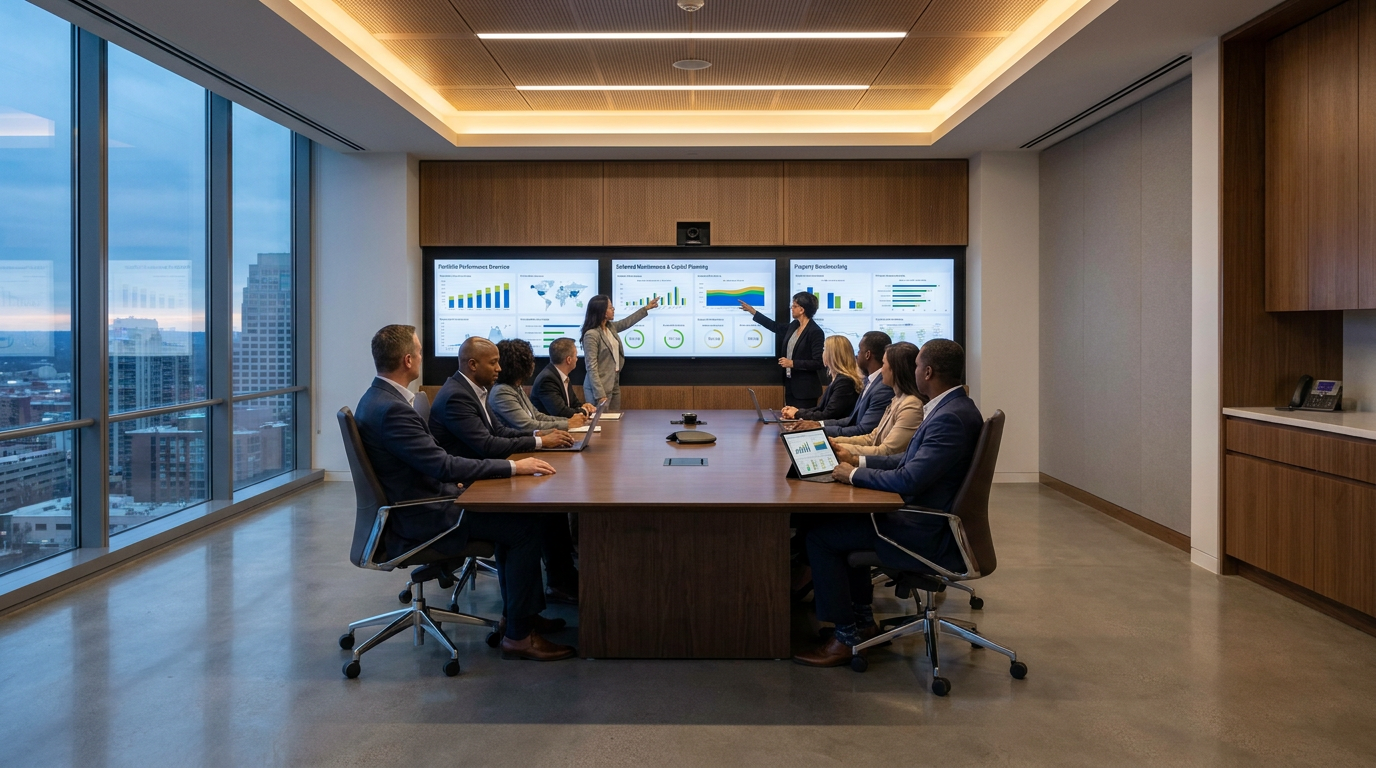
Digital twins do not replace core building systems. They sit above them as an intelligence and coordination layer. A BMS still controls HVAC and other mechanical systems. An EMS still tracks energy performance. A CMMS still manages maintenance workflows and work orders. BIM still provides structured building information. The twin connects these systems into an operationally coherent view.
This matters because some organizations frame digital twins as a complete technology reset, which can create resistance. In reality, the twin often creates value by making existing investments more useful. If a property already has solid control systems and maintenance software, the twin can surface the relationships between those tools and turn siloed data into practical insight. It is less a replacement and more an organizing intelligence layer.
Related concepts like fault detection and diagnostics, predictive maintenance, lifecycle asset management, and the digital thread all fit naturally into this model. The digital thread refers to the continuity of information across the asset lifecycle, from design to construction to operations to renovation. Digital twins are one of the most effective ways to make that thread operational in the management phase, especially when retrofit planning and commissioning are involved.
The Growing Role of AI, Carbon Reporting, and Resilience
One of the most important recent developments is the addition of AI assisted analytics on top of digital twins. This does not change the need for good building data. It amplifies the value of that data when applied carefully. AI can help classify anomalies, detect recurring patterns across equipment types, summarize operational risk for managers, and surface maintenance priorities that might otherwise be buried in trend logs. In large portfolios, that can reduce the time required to move from raw signal to useful decision.
Carbon and ESG reporting are also increasing the relevance of digital twins. Stakeholders want more than annual utility totals. They want operational context, trend evidence, and improvement pathways. A digital twin can support live dashboards for energy use, emissions factors, equipment efficiency, and retrofit tracking. This makes reporting more dynamic and helps teams shift from documenting performance to improving it.
Resilience is another emerging use case. Property teams are thinking more seriously about continuity during equipment failure, extreme weather, and utility disruption. A digital twin can support scenario awareness by showing which systems are critical, which spaces are most vulnerable, and where operational dependencies sit. In advanced settings, twins are also being linked to smart grid and demand response strategies, allowing buildings to respond more intelligently to energy market conditions and grid events.
Actionable Insights for Owners and Property Managers
If you are evaluating digital twins today, the most practical move is to define the business outcome before the technology stack. Decide whether the first objective is reducing maintenance downtime, cutting avoidable energy use, improving reporting speed, or prioritizing deferred capital. A narrow and measurable target makes vendor evaluation far easier and keeps internal teams aligned.
Next, inventory the systems and datasets you already have. Many organizations underestimate how much useful information already exists across BMS platforms, maintenance systems, energy software, drawings, scans, and spreadsheets. The goal is not to collect everything at once. It is to identify the data that can answer your first operational question with reasonable confidence.
Then build a cross functional team. Property operations, facilities, IT, energy management, and asset management should all have a role. Digital twins succeed when operational users trust the platform and incorporate it into daily processes. They fail when they remain isolated inside a technology pilot with no workflow ownership. Governance, training, and response protocols matter just as much as the software interface.
Finally, measure outcomes rigorously. Track response times, repeat faults, truck rolls avoided, energy deviations corrected, work order completion rates, and maintenance prioritization accuracy. These metrics show whether the twin is actually improving decisions. They also help justify broader rollout. In property technology, the strongest scaling strategy is still evidence.
The Bottom Line
Digital twins are revolutionizing smart property management because they change the speed and quality of decision making. They give building teams a synchronized, operationally useful view of assets, systems, energy, maintenance, and space. That matters in a market where owners need more efficiency, more resilience, and better reporting from increasingly complex properties.
The most important point is that the revolution is practical, not theoretical. The strongest use cases are not about futuristic graphics. They are about faster fault response, smarter maintenance, better energy control, clearer portfolio visibility, and more confident capital planning. Case studies from Siemens, IBM, and large institutional portfolios all point in the same direction: when property data is connected and contextualized, management becomes more proactive.
For most organizations, the right approach is phased and disciplined. Start with one operational problem, connect the systems that already exist, focus on trusted data, and build toward predictive workflows and portfolio benchmarking over time. A digital twin does not need to be perfect to be useful. It needs to answer real questions well and fit into the way teams work.
In that sense, digital twins represent the intelligence layer that property management has been missing. They help buildings explain themselves. And when buildings become more legible, owners and managers can operate them with far greater precision.



No Comment! Be the first one.