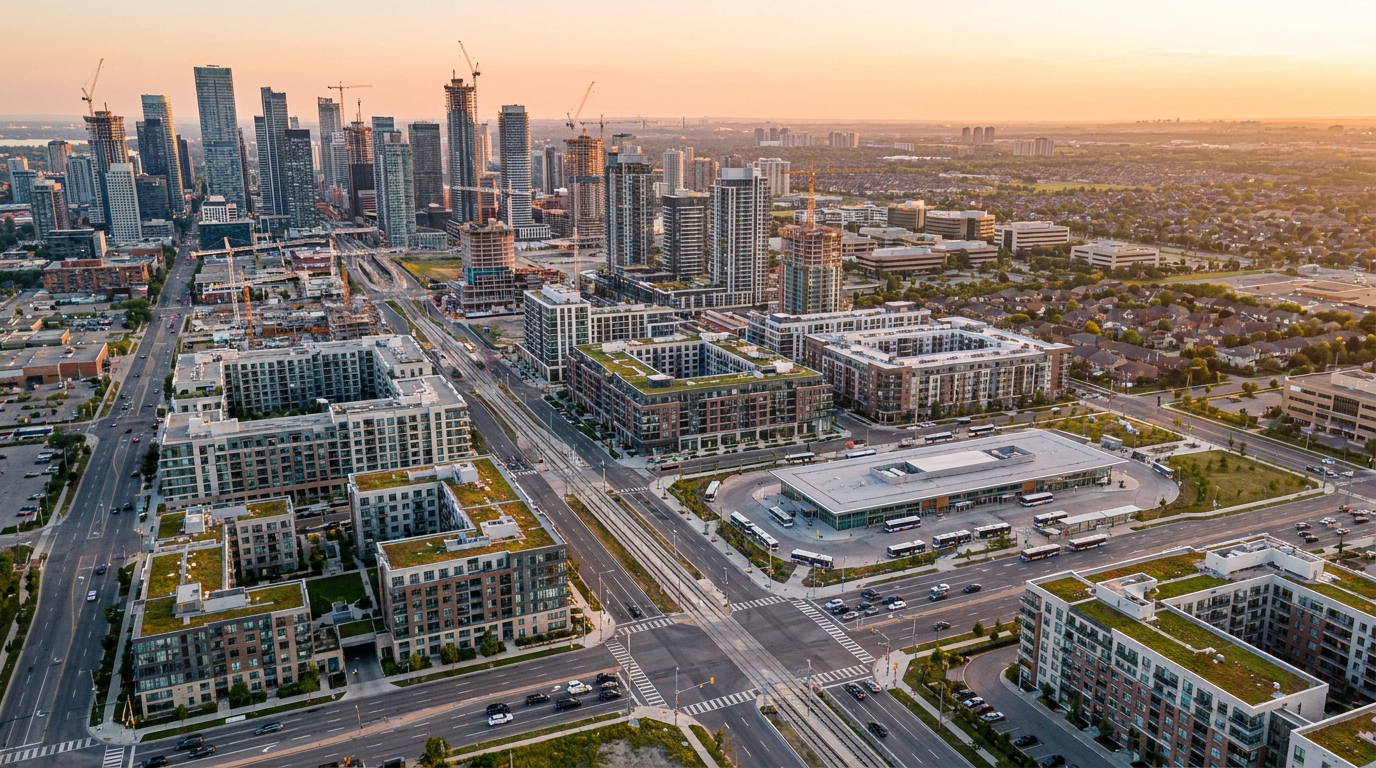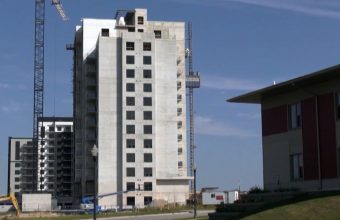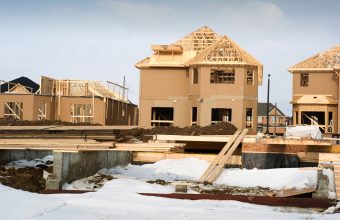

Not every signal from August was positive. The continuing saga around the Park Lawn GO station is a reminder of how often housing gets built ahead of the infrastructure meant to support it, leaving residents and city planners to manage the gap after the fact. And SmartCentres pivoting from a residential concept to an office proposal at Vaughan Metropolitan Centre shows that even well positioned transit hub sites are not immune to shifting feasibility calculations, whether driven by financing costs, absorption rates, or tenant demand.
Table Of Content
- What Toronto’s August Headlines Reveal About the City’s Next Growth Cycle
- What Toronto’s August Headlines Reveal About the City’s Next Growth Cycle
- What Toronto’s August Headlines Reveal About the City’s Next Growth Cycle
- What Toronto’s August Headlines Reveal About the City’s Next Growth Cycle
- What Toronto’s August Headlines Reveal About the City’s Next Growth Cycle
- What Toronto’s August Headlines Reveal About the City’s Next Growth Cycle
- What Toronto’s August Headlines Reveal About the City’s Next Growth Cycle
- What Toronto’s August Headlines Reveal About the City’s Next Growth Cycle
- What Toronto’s August Headlines Reveal About the City’s Next Growth Cycle
- What Toronto’s August Headlines Reveal About the City’s Next Growth Cycle
- What Toronto’s August Headlines Reveal About the City’s Next Growth Cycle
For anyone tracking where large scale housing supply is actually going to come from over the next decade, the lesson from this month’s headlines is straightforward. Toronto’s growth is increasingly tied to transit delivery timelines, not just zoning approvals. The projects that move fastest and hold their value best will be the ones built around infrastructure that is already committed, funded, and, increasingly, already being tunneled.
Source: UrbanToronto, “Tunnels, Transit, and Towers Led August’s Headlines”
Pinnacle One Yonge remains the clearest symbol of this cycle. Crane removal beginning at Canada’s tallest building, as its glass parapet nears completion, marks the tail end of a project that has anchored years of attention and speculation about what supertall density looks like in this market. Projects like this do not just add units, they set a ceiling, literally and figuratively, for what the next generation of proposals will be measured against.
Development is never just about land. It is about timing, access, infrastructure, policy, demand, and the future identity of a community.
Not every signal from August was positive. The continuing saga around the Park Lawn GO station is a reminder of how often housing gets built ahead of the infrastructure meant to support it, leaving residents and city planners to manage the gap after the fact. And SmartCentres pivoting from a residential concept to an office proposal at Vaughan Metropolitan Centre shows that even well positioned transit hub sites are not immune to shifting feasibility calculations, whether driven by financing costs, absorption rates, or tenant demand.
For anyone tracking where large scale housing supply is actually going to come from over the next decade, the lesson from this month’s headlines is straightforward. Toronto’s growth is increasingly tied to transit delivery timelines, not just zoning approvals. The projects that move fastest and hold their value best will be the ones built around infrastructure that is already committed, funded, and, increasingly, already being tunneled.
Source: UrbanToronto, “Tunnels, Transit, and Towers Led August’s Headlines”
The tunneling milestone on the Eglinton Line 5 West Extension and the contract award for the Ontario Line’s Pape tunnel and underground stations are not just engineering wins. They are the groundwork, quite literally, for the next wave of transit-oriented development along those corridors. When a tunnel gets mined or a station contract gets signed, land near those future stops starts to reprice. Developers watch these milestones closely because they de-risk long term bets on density that would not otherwise pencil out.
That repricing logic is already visible in the proposals moving through the pipeline. Zoning applications seeking towers up to 71 storeys at the Canada Life Campus, and a pair of towers reaching 55 storeys proposed at York Mills and Yonge, both sit near existing or planned rapid transit. So does the University of Toronto’s redesigned residence plan, which is set to bring 1,200 new beds to the St George campus. None of these are isolated development decisions. They are responses to a city where land near transit is treated as the scarcest and most valuable input in the entire housing equation.
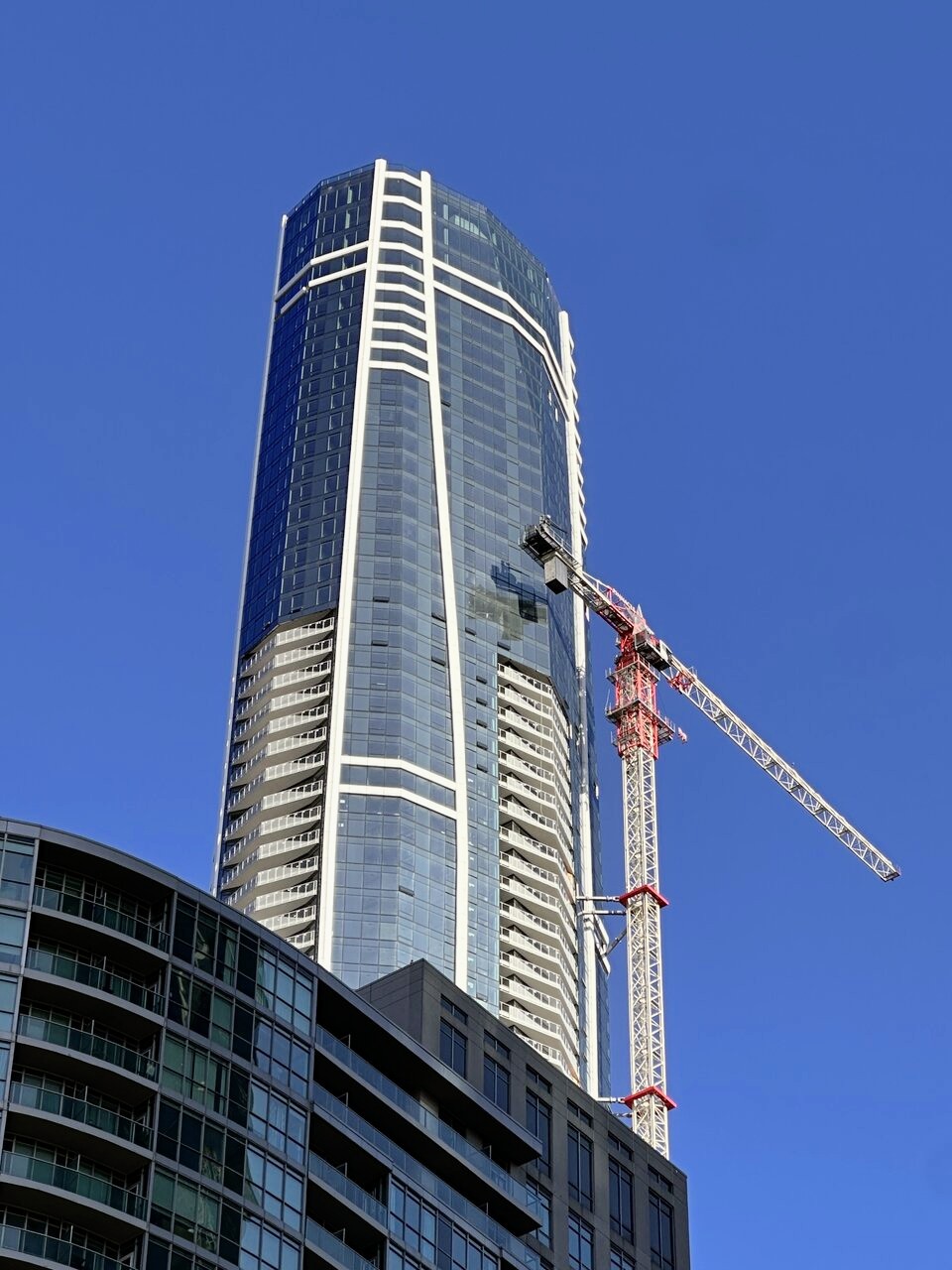
Pinnacle One Yonge remains the clearest symbol of this cycle. Crane removal beginning at Canada’s tallest building, as its glass parapet nears completion, marks the tail end of a project that has anchored years of attention and speculation about what supertall density looks like in this market. Projects like this do not just add units, they set a ceiling, literally and figuratively, for what the next generation of proposals will be measured against.
Development is never just about land. It is about timing, access, infrastructure, policy, demand, and the future identity of a community.
Not every signal from August was positive. The continuing saga around the Park Lawn GO station is a reminder of how often housing gets built ahead of the infrastructure meant to support it, leaving residents and city planners to manage the gap after the fact. And SmartCentres pivoting from a residential concept to an office proposal at Vaughan Metropolitan Centre shows that even well positioned transit hub sites are not immune to shifting feasibility calculations, whether driven by financing costs, absorption rates, or tenant demand.
For anyone tracking where large scale housing supply is actually going to come from over the next decade, the lesson from this month’s headlines is straightforward. Toronto’s growth is increasingly tied to transit delivery timelines, not just zoning approvals. The projects that move fastest and hold their value best will be the ones built around infrastructure that is already committed, funded, and, increasingly, already being tunneled.
Source: UrbanToronto, “Tunnels, Transit, and Towers Led August’s Headlines”
Every month, the headlines that rise to the top of a city’s attention tell you something about where that city is headed. Toronto’s August news cycle was dominated by three things: tunnels, transit, and towers. Read individually, these are just construction updates. Read together, they describe a city entering a new phase of intensification, one where infrastructure and density are finally being asked to move at the same pace.
The tunneling milestone on the Eglinton Line 5 West Extension and the contract award for the Ontario Line’s Pape tunnel and underground stations are not just engineering wins. They are the groundwork, quite literally, for the next wave of transit-oriented development along those corridors. When a tunnel gets mined or a station contract gets signed, land near those future stops starts to reprice. Developers watch these milestones closely because they de-risk long term bets on density that would not otherwise pencil out.
That repricing logic is already visible in the proposals moving through the pipeline. Zoning applications seeking towers up to 71 storeys at the Canada Life Campus, and a pair of towers reaching 55 storeys proposed at York Mills and Yonge, both sit near existing or planned rapid transit. So does the University of Toronto’s redesigned residence plan, which is set to bring 1,200 new beds to the St George campus. None of these are isolated development decisions. They are responses to a city where land near transit is treated as the scarcest and most valuable input in the entire housing equation.
Pinnacle One Yonge remains the clearest symbol of this cycle. Crane removal beginning at Canada’s tallest building, as its glass parapet nears completion, marks the tail end of a project that has anchored years of attention and speculation about what supertall density looks like in this market. Projects like this do not just add units, they set a ceiling, literally and figuratively, for what the next generation of proposals will be measured against.
Development is never just about land. It is about timing, access, infrastructure, policy, demand, and the future identity of a community.
Not every signal from August was positive. The continuing saga around the Park Lawn GO station is a reminder of how often housing gets built ahead of the infrastructure meant to support it, leaving residents and city planners to manage the gap after the fact. And SmartCentres pivoting from a residential concept to an office proposal at Vaughan Metropolitan Centre shows that even well positioned transit hub sites are not immune to shifting feasibility calculations, whether driven by financing costs, absorption rates, or tenant demand.
For anyone tracking where large scale housing supply is actually going to come from over the next decade, the lesson from this month’s headlines is straightforward. Toronto’s growth is increasingly tied to transit delivery timelines, not just zoning approvals. The projects that move fastest and hold their value best will be the ones built around infrastructure that is already committed, funded, and, increasingly, already being tunneled.
Source: UrbanToronto, “Tunnels, Transit, and Towers Led August’s Headlines”
Every month, the headlines that rise to the top of a city’s attention tell you something about where that city is headed. Toronto’s August news cycle was dominated by three things: tunnels, transit, and towers. Read individually, these are just construction updates. Read together, they describe a city entering a new phase of intensification, one where infrastructure and density are finally being asked to move at the same pace.
The tunneling milestone on the Eglinton Line 5 West Extension and the contract award for the Ontario Line’s Pape tunnel and underground stations are not just engineering wins. They are the groundwork, quite literally, for the next wave of transit-oriented development along those corridors. When a tunnel gets mined or a station contract gets signed, land near those future stops starts to reprice. Developers watch these milestones closely because they de-risk long term bets on density that would not otherwise pencil out.
That repricing logic is already visible in the proposals moving through the pipeline. Zoning applications seeking towers up to 71 storeys at the Canada Life Campus, and a pair of towers reaching 55 storeys proposed at York Mills and Yonge, both sit near existing or planned rapid transit. So does the University of Toronto’s redesigned residence plan, which is set to bring 1,200 new beds to the St George campus. None of these are isolated development decisions. They are responses to a city where land near transit is treated as the scarcest and most valuable input in the entire housing equation.
Pinnacle One Yonge remains the clearest symbol of this cycle. Crane removal beginning at Canada’s tallest building, as its glass parapet nears completion, marks the tail end of a project that has anchored years of attention and speculation about what supertall density looks like in this market. Projects like this do not just add units, they set a ceiling, literally and figuratively, for what the next generation of proposals will be measured against.
Development is never just about land. It is about timing, access, infrastructure, policy, demand, and the future identity of a community.
Not every signal from August was positive. The continuing saga around the Park Lawn GO station is a reminder of how often housing gets built ahead of the infrastructure meant to support it, leaving residents and city planners to manage the gap after the fact. And SmartCentres pivoting from a residential concept to an office proposal at Vaughan Metropolitan Centre shows that even well positioned transit hub sites are not immune to shifting feasibility calculations, whether driven by financing costs, absorption rates, or tenant demand.
For anyone tracking where large scale housing supply is actually going to come from over the next decade, the lesson from this month’s headlines is straightforward. Toronto’s growth is increasingly tied to transit delivery timelines, not just zoning approvals. The projects that move fastest and hold their value best will be the ones built around infrastructure that is already committed, funded, and, increasingly, already being tunneled.
Source: UrbanToronto, “Tunnels, Transit, and Towers Led August’s Headlines”
What Toronto’s August Headlines Reveal About the City’s Next Growth Cycle
Every month, the headlines that rise to the top of a city’s attention tell you something about where that city is headed. Toronto’s August news cycle was dominated by three things: tunnels, transit, and towers. Read individually, these are just construction updates. Read together, they describe a city entering a new phase of intensification, one where infrastructure and density are finally being asked to move at the same pace.
The tunneling milestone on the Eglinton Line 5 West Extension and the contract award for the Ontario Line’s Pape tunnel and underground stations are not just engineering wins. They are the groundwork, quite literally, for the next wave of transit-oriented development along those corridors. When a tunnel gets mined or a station contract gets signed, land near those future stops starts to reprice. Developers watch these milestones closely because they de-risk long term bets on density that would not otherwise pencil out.
That repricing logic is already visible in the proposals moving through the pipeline. Zoning applications seeking towers up to 71 storeys at the Canada Life Campus, and a pair of towers reaching 55 storeys proposed at York Mills and Yonge, both sit near existing or planned rapid transit. So does the University of Toronto’s redesigned residence plan, which is set to bring 1,200 new beds to the St George campus. None of these are isolated development decisions. They are responses to a city where land near transit is treated as the scarcest and most valuable input in the entire housing equation.
Pinnacle One Yonge remains the clearest symbol of this cycle. Crane removal beginning at Canada’s tallest building, as its glass parapet nears completion, marks the tail end of a project that has anchored years of attention and speculation about what supertall density looks like in this market. Projects like this do not just add units, they set a ceiling, literally and figuratively, for what the next generation of proposals will be measured against.
Development is never just about land. It is about timing, access, infrastructure, policy, demand, and the future identity of a community.
Not every signal from August was positive. The continuing saga around the Park Lawn GO station is a reminder of how often housing gets built ahead of the infrastructure meant to support it, leaving residents and city planners to manage the gap after the fact. And SmartCentres pivoting from a residential concept to an office proposal at Vaughan Metropolitan Centre shows that even well positioned transit hub sites are not immune to shifting feasibility calculations, whether driven by financing costs, absorption rates, or tenant demand.
For anyone tracking where large scale housing supply is actually going to come from over the next decade, the lesson from this month’s headlines is straightforward. Toronto’s growth is increasingly tied to transit delivery timelines, not just zoning approvals. The projects that move fastest and hold their value best will be the ones built around infrastructure that is already committed, funded, and, increasingly, already being tunneled.
Source: UrbanToronto, “Tunnels, Transit, and Towers Led August’s Headlines”
Pinnacle One Yonge remains the clearest symbol of this cycle. Crane removal beginning at Canada’s tallest building, as its glass parapet nears completion, marks the tail end of a project that has anchored years of attention and speculation about what supertall density looks like in this market. Projects like this do not just add units, they set a ceiling, literally and figuratively, for what the next generation of proposals will be measured against.
Development is never just about land. It is about timing, access, infrastructure, policy, demand, and the future identity of a community.
Not every signal from August was positive. The continuing saga around the Park Lawn GO station is a reminder of how often housing gets built ahead of the infrastructure meant to support it, leaving residents and city planners to manage the gap after the fact. And SmartCentres pivoting from a residential concept to an office proposal at Vaughan Metropolitan Centre shows that even well positioned transit hub sites are not immune to shifting feasibility calculations, whether driven by financing costs, absorption rates, or tenant demand.
For anyone tracking where large scale housing supply is actually going to come from over the next decade, the lesson from this month’s headlines is straightforward. Toronto’s growth is increasingly tied to transit delivery timelines, not just zoning approvals. The projects that move fastest and hold their value best will be the ones built around infrastructure that is already committed, funded, and, increasingly, already being tunneled.
Source: UrbanToronto, “Tunnels, Transit, and Towers Led August’s Headlines”
What Toronto’s August Headlines Reveal About the City’s Next Growth Cycle
Every month, the headlines that rise to the top of a city’s attention tell you something about where that city is headed. Toronto’s August news cycle was dominated by three things: tunnels, transit, and towers. Read individually, these are just construction updates. Read together, they describe a city entering a new phase of intensification, one where infrastructure and density are finally being asked to move at the same pace.
The tunneling milestone on the Eglinton Line 5 West Extension and the contract award for the Ontario Line’s Pape tunnel and underground stations are not just engineering wins. They are the groundwork, quite literally, for the next wave of transit-oriented development along those corridors. When a tunnel gets mined or a station contract gets signed, land near those future stops starts to reprice. Developers watch these milestones closely because they de-risk long term bets on density that would not otherwise pencil out.
That repricing logic is already visible in the proposals moving through the pipeline. Zoning applications seeking towers up to 71 storeys at the Canada Life Campus, and a pair of towers reaching 55 storeys proposed at York Mills and Yonge, both sit near existing or planned rapid transit. So does the University of Toronto’s redesigned residence plan, which is set to bring 1,200 new beds to the St George campus. None of these are isolated development decisions. They are responses to a city where land near transit is treated as the scarcest and most valuable input in the entire housing equation.
Pinnacle One Yonge remains the clearest symbol of this cycle. Crane removal beginning at Canada’s tallest building, as its glass parapet nears completion, marks the tail end of a project that has anchored years of attention and speculation about what supertall density looks like in this market. Projects like this do not just add units, they set a ceiling, literally and figuratively, for what the next generation of proposals will be measured against.
Development is never just about land. It is about timing, access, infrastructure, policy, demand, and the future identity of a community.
Not every signal from August was positive. The continuing saga around the Park Lawn GO station is a reminder of how often housing gets built ahead of the infrastructure meant to support it, leaving residents and city planners to manage the gap after the fact. And SmartCentres pivoting from a residential concept to an office proposal at Vaughan Metropolitan Centre shows that even well positioned transit hub sites are not immune to shifting feasibility calculations, whether driven by financing costs, absorption rates, or tenant demand.
For anyone tracking where large scale housing supply is actually going to come from over the next decade, the lesson from this month’s headlines is straightforward. Toronto’s growth is increasingly tied to transit delivery timelines, not just zoning approvals. The projects that move fastest and hold their value best will be the ones built around infrastructure that is already committed, funded, and, increasingly, already being tunneled.
Source: UrbanToronto, “Tunnels, Transit, and Towers Led August’s Headlines”
The tunneling milestone on the Eglinton Line 5 West Extension and the contract award for the Ontario Line’s Pape tunnel and underground stations are not just engineering wins. They are the groundwork, quite literally, for the next wave of transit-oriented development along those corridors. When a tunnel gets mined or a station contract gets signed, land near those future stops starts to reprice. Developers watch these milestones closely because they de-risk long term bets on density that would not otherwise pencil out.
That repricing logic is already visible in the proposals moving through the pipeline. Zoning applications seeking towers up to 71 storeys at the Canada Life Campus, and a pair of towers reaching 55 storeys proposed at York Mills and Yonge, both sit near existing or planned rapid transit. So does the University of Toronto’s redesigned residence plan, which is set to bring 1,200 new beds to the St George campus. None of these are isolated development decisions. They are responses to a city where land near transit is treated as the scarcest and most valuable input in the entire housing equation.
Pinnacle One Yonge remains the clearest symbol of this cycle. Crane removal beginning at Canada’s tallest building, as its glass parapet nears completion, marks the tail end of a project that has anchored years of attention and speculation about what supertall density looks like in this market. Projects like this do not just add units, they set a ceiling, literally and figuratively, for what the next generation of proposals will be measured against.
Development is never just about land. It is about timing, access, infrastructure, policy, demand, and the future identity of a community.
Not every signal from August was positive. The continuing saga around the Park Lawn GO station is a reminder of how often housing gets built ahead of the infrastructure meant to support it, leaving residents and city planners to manage the gap after the fact. And SmartCentres pivoting from a residential concept to an office proposal at Vaughan Metropolitan Centre shows that even well positioned transit hub sites are not immune to shifting feasibility calculations, whether driven by financing costs, absorption rates, or tenant demand.
For anyone tracking where large scale housing supply is actually going to come from over the next decade, the lesson from this month’s headlines is straightforward. Toronto’s growth is increasingly tied to transit delivery timelines, not just zoning approvals. The projects that move fastest and hold their value best will be the ones built around infrastructure that is already committed, funded, and, increasingly, already being tunneled.
Source: UrbanToronto, “Tunnels, Transit, and Towers Led August’s Headlines”
What Toronto’s August Headlines Reveal About the City’s Next Growth Cycle
Every month, the headlines that rise to the top of a city’s attention tell you something about where that city is headed. Toronto’s August news cycle was dominated by three things: tunnels, transit, and towers. Read individually, these are just construction updates. Read together, they describe a city entering a new phase of intensification, one where infrastructure and density are finally being asked to move at the same pace.
The tunneling milestone on the Eglinton Line 5 West Extension and the contract award for the Ontario Line’s Pape tunnel and underground stations are not just engineering wins. They are the groundwork, quite literally, for the next wave of transit-oriented development along those corridors. When a tunnel gets mined or a station contract gets signed, land near those future stops starts to reprice. Developers watch these milestones closely because they de-risk long term bets on density that would not otherwise pencil out.
That repricing logic is already visible in the proposals moving through the pipeline. Zoning applications seeking towers up to 71 storeys at the Canada Life Campus, and a pair of towers reaching 55 storeys proposed at York Mills and Yonge, both sit near existing or planned rapid transit. So does the University of Toronto’s redesigned residence plan, which is set to bring 1,200 new beds to the St George campus. None of these are isolated development decisions. They are responses to a city where land near transit is treated as the scarcest and most valuable input in the entire housing equation.
Pinnacle One Yonge remains the clearest symbol of this cycle. Crane removal beginning at Canada’s tallest building, as its glass parapet nears completion, marks the tail end of a project that has anchored years of attention and speculation about what supertall density looks like in this market. Projects like this do not just add units, they set a ceiling, literally and figuratively, for what the next generation of proposals will be measured against.
Development is never just about land. It is about timing, access, infrastructure, policy, demand, and the future identity of a community.
Not every signal from August was positive. The continuing saga around the Park Lawn GO station is a reminder of how often housing gets built ahead of the infrastructure meant to support it, leaving residents and city planners to manage the gap after the fact. And SmartCentres pivoting from a residential concept to an office proposal at Vaughan Metropolitan Centre shows that even well positioned transit hub sites are not immune to shifting feasibility calculations, whether driven by financing costs, absorption rates, or tenant demand.
For anyone tracking where large scale housing supply is actually going to come from over the next decade, the lesson from this month’s headlines is straightforward. Toronto’s growth is increasingly tied to transit delivery timelines, not just zoning approvals. The projects that move fastest and hold their value best will be the ones built around infrastructure that is already committed, funded, and, increasingly, already being tunneled.
Source: UrbanToronto, “Tunnels, Transit, and Towers Led August’s Headlines”
Every month, the headlines that rise to the top of a city’s attention tell you something about where that city is headed. Toronto’s August news cycle was dominated by three things: tunnels, transit, and towers. Read individually, these are just construction updates. Read together, they describe a city entering a new phase of intensification, one where infrastructure and density are finally being asked to move at the same pace.
The tunneling milestone on the Eglinton Line 5 West Extension and the contract award for the Ontario Line’s Pape tunnel and underground stations are not just engineering wins. They are the groundwork, quite literally, for the next wave of transit-oriented development along those corridors. When a tunnel gets mined or a station contract gets signed, land near those future stops starts to reprice. Developers watch these milestones closely because they de-risk long term bets on density that would not otherwise pencil out.
That repricing logic is already visible in the proposals moving through the pipeline. Zoning applications seeking towers up to 71 storeys at the Canada Life Campus, and a pair of towers reaching 55 storeys proposed at York Mills and Yonge, both sit near existing or planned rapid transit. So does the University of Toronto’s redesigned residence plan, which is set to bring 1,200 new beds to the St George campus. None of these are isolated development decisions. They are responses to a city where land near transit is treated as the scarcest and most valuable input in the entire housing equation.
Pinnacle One Yonge remains the clearest symbol of this cycle. Crane removal beginning at Canada’s tallest building, as its glass parapet nears completion, marks the tail end of a project that has anchored years of attention and speculation about what supertall density looks like in this market. Projects like this do not just add units, they set a ceiling, literally and figuratively, for what the next generation of proposals will be measured against.
Development is never just about land. It is about timing, access, infrastructure, policy, demand, and the future identity of a community.
Not every signal from August was positive. The continuing saga around the Park Lawn GO station is a reminder of how often housing gets built ahead of the infrastructure meant to support it, leaving residents and city planners to manage the gap after the fact. And SmartCentres pivoting from a residential concept to an office proposal at Vaughan Metropolitan Centre shows that even well positioned transit hub sites are not immune to shifting feasibility calculations, whether driven by financing costs, absorption rates, or tenant demand.
For anyone tracking where large scale housing supply is actually going to come from over the next decade, the lesson from this month’s headlines is straightforward. Toronto’s growth is increasingly tied to transit delivery timelines, not just zoning approvals. The projects that move fastest and hold their value best will be the ones built around infrastructure that is already committed, funded, and, increasingly, already being tunneled.
Source: UrbanToronto, “Tunnels, Transit, and Towers Led August’s Headlines”
What Toronto’s August Headlines Reveal About the City’s Next Growth Cycle
Every month, the headlines that rise to the top of a city’s attention tell you something about where that city is headed. Toronto’s August news cycle was dominated by three things: tunnels, transit, and towers. Read individually, these are just construction updates. Read together, they describe a city entering a new phase of intensification, one where infrastructure and density are finally being asked to move at the same pace.
The tunneling milestone on the Eglinton Line 5 West Extension and the contract award for the Ontario Line’s Pape tunnel and underground stations are not just engineering wins. They are the groundwork, quite literally, for the next wave of transit-oriented development along those corridors. When a tunnel gets mined or a station contract gets signed, land near those future stops starts to reprice. Developers watch these milestones closely because they de-risk long term bets on density that would not otherwise pencil out.
That repricing logic is already visible in the proposals moving through the pipeline. Zoning applications seeking towers up to 71 storeys at the Canada Life Campus, and a pair of towers reaching 55 storeys proposed at York Mills and Yonge, both sit near existing or planned rapid transit. So does the University of Toronto’s redesigned residence plan, which is set to bring 1,200 new beds to the St George campus. None of these are isolated development decisions. They are responses to a city where land near transit is treated as the scarcest and most valuable input in the entire housing equation.
Pinnacle One Yonge remains the clearest symbol of this cycle. Crane removal beginning at Canada’s tallest building, as its glass parapet nears completion, marks the tail end of a project that has anchored years of attention and speculation about what supertall density looks like in this market. Projects like this do not just add units, they set a ceiling, literally and figuratively, for what the next generation of proposals will be measured against.
Development is never just about land. It is about timing, access, infrastructure, policy, demand, and the future identity of a community.
Not every signal from August was positive. The continuing saga around the Park Lawn GO station is a reminder of how often housing gets built ahead of the infrastructure meant to support it, leaving residents and city planners to manage the gap after the fact. And SmartCentres pivoting from a residential concept to an office proposal at Vaughan Metropolitan Centre shows that even well positioned transit hub sites are not immune to shifting feasibility calculations, whether driven by financing costs, absorption rates, or tenant demand.
For anyone tracking where large scale housing supply is actually going to come from over the next decade, the lesson from this month’s headlines is straightforward. Toronto’s growth is increasingly tied to transit delivery timelines, not just zoning approvals. The projects that move fastest and hold their value best will be the ones built around infrastructure that is already committed, funded, and, increasingly, already being tunneled.
Source: UrbanToronto, “Tunnels, Transit, and Towers Led August’s Headlines”
Every month, the headlines that rise to the top of a city’s attention tell you something about where that city is headed. Toronto’s August news cycle was dominated by three things: tunnels, transit, and towers. Read individually, these are just construction updates. Read together, they describe a city entering a new phase of intensification, one where infrastructure and density are finally being asked to move at the same pace.
The tunneling milestone on the Eglinton Line 5 West Extension and the contract award for the Ontario Line’s Pape tunnel and underground stations are not just engineering wins. They are the groundwork, quite literally, for the next wave of transit-oriented development along those corridors. When a tunnel gets mined or a station contract gets signed, land near those future stops starts to reprice. Developers watch these milestones closely because they de-risk long term bets on density that would not otherwise pencil out.
That repricing logic is already visible in the proposals moving through the pipeline. Zoning applications seeking towers up to 71 storeys at the Canada Life Campus, and a pair of towers reaching 55 storeys proposed at York Mills and Yonge, both sit near existing or planned rapid transit. So does the University of Toronto’s redesigned residence plan, which is set to bring 1,200 new beds to the St George campus. None of these are isolated development decisions. They are responses to a city where land near transit is treated as the scarcest and most valuable input in the entire housing equation.
Pinnacle One Yonge remains the clearest symbol of this cycle. Crane removal beginning at Canada’s tallest building, as its glass parapet nears completion, marks the tail end of a project that has anchored years of attention and speculation about what supertall density looks like in this market. Projects like this do not just add units, they set a ceiling, literally and figuratively, for what the next generation of proposals will be measured against.
Development is never just about land. It is about timing, access, infrastructure, policy, demand, and the future identity of a community.
Not every signal from August was positive. The continuing saga around the Park Lawn GO station is a reminder of how often housing gets built ahead of the infrastructure meant to support it, leaving residents and city planners to manage the gap after the fact. And SmartCentres pivoting from a residential concept to an office proposal at Vaughan Metropolitan Centre shows that even well positioned transit hub sites are not immune to shifting feasibility calculations, whether driven by financing costs, absorption rates, or tenant demand.
For anyone tracking where large scale housing supply is actually going to come from over the next decade, the lesson from this month’s headlines is straightforward. Toronto’s growth is increasingly tied to transit delivery timelines, not just zoning approvals. The projects that move fastest and hold their value best will be the ones built around infrastructure that is already committed, funded, and, increasingly, already being tunneled.
Source: UrbanToronto, “Tunnels, Transit, and Towers Led August’s Headlines”
What Toronto’s August Headlines Reveal About the City’s Next Growth Cycle
Every month, the headlines that rise to the top of a city’s attention tell you something about where that city is headed. Toronto’s August news cycle was dominated by three things: tunnels, transit, and towers. Read individually, these are just construction updates. Read together, they describe a city entering a new phase of intensification, one where infrastructure and density are finally being asked to move at the same pace.
The tunneling milestone on the Eglinton Line 5 West Extension and the contract award for the Ontario Line’s Pape tunnel and underground stations are not just engineering wins. They are the groundwork, quite literally, for the next wave of transit-oriented development along those corridors. When a tunnel gets mined or a station contract gets signed, land near those future stops starts to reprice. Developers watch these milestones closely because they de-risk long term bets on density that would not otherwise pencil out.
That repricing logic is already visible in the proposals moving through the pipeline. Zoning applications seeking towers up to 71 storeys at the Canada Life Campus, and a pair of towers reaching 55 storeys proposed at York Mills and Yonge, both sit near existing or planned rapid transit. So does the University of Toronto’s redesigned residence plan, which is set to bring 1,200 new beds to the St George campus. None of these are isolated development decisions. They are responses to a city where land near transit is treated as the scarcest and most valuable input in the entire housing equation.
Pinnacle One Yonge remains the clearest symbol of this cycle. Crane removal beginning at Canada’s tallest building, as its glass parapet nears completion, marks the tail end of a project that has anchored years of attention and speculation about what supertall density looks like in this market. Projects like this do not just add units, they set a ceiling, literally and figuratively, for what the next generation of proposals will be measured against.
Development is never just about land. It is about timing, access, infrastructure, policy, demand, and the future identity of a community.
Not every signal from August was positive. The continuing saga around the Park Lawn GO station is a reminder of how often housing gets built ahead of the infrastructure meant to support it, leaving residents and city planners to manage the gap after the fact. And SmartCentres pivoting from a residential concept to an office proposal at Vaughan Metropolitan Centre shows that even well positioned transit hub sites are not immune to shifting feasibility calculations, whether driven by financing costs, absorption rates, or tenant demand.
For anyone tracking where large scale housing supply is actually going to come from over the next decade, the lesson from this month’s headlines is straightforward. Toronto’s growth is increasingly tied to transit delivery timelines, not just zoning approvals. The projects that move fastest and hold their value best will be the ones built around infrastructure that is already committed, funded, and, increasingly, already being tunneled.
Source: UrbanToronto, “Tunnels, Transit, and Towers Led August’s Headlines”
Pinnacle One Yonge remains the clearest symbol of this cycle. Crane removal beginning at Canada’s tallest building, as its glass parapet nears completion, marks the tail end of a project that has anchored years of attention and speculation about what supertall density looks like in this market. Projects like this do not just add units, they set a ceiling, literally and figuratively, for what the next generation of proposals will be measured against.
Development is never just about land. It is about timing, access, infrastructure, policy, demand, and the future identity of a community.
Not every signal from August was positive. The continuing saga around the Park Lawn GO station is a reminder of how often housing gets built ahead of the infrastructure meant to support it, leaving residents and city planners to manage the gap after the fact. And SmartCentres pivoting from a residential concept to an office proposal at Vaughan Metropolitan Centre shows that even well positioned transit hub sites are not immune to shifting feasibility calculations, whether driven by financing costs, absorption rates, or tenant demand.
For anyone tracking where large scale housing supply is actually going to come from over the next decade, the lesson from this month’s headlines is straightforward. Toronto’s growth is increasingly tied to transit delivery timelines, not just zoning approvals. The projects that move fastest and hold their value best will be the ones built around infrastructure that is already committed, funded, and, increasingly, already being tunneled.
Source: UrbanToronto, “Tunnels, Transit, and Towers Led August’s Headlines”
Every month, the headlines that rise to the top of a city’s attention tell you something about where that city is headed. Toronto’s August news cycle was dominated by three things: tunnels, transit, and towers. Read individually, these are just construction updates. Read together, they describe a city entering a new phase of intensification, one where infrastructure and density are finally being asked to move at the same pace.
The tunneling milestone on the Eglinton Line 5 West Extension and the contract award for the Ontario Line’s Pape tunnel and underground stations are not just engineering wins. They are the groundwork, quite literally, for the next wave of transit-oriented development along those corridors. When a tunnel gets mined or a station contract gets signed, land near those future stops starts to reprice. Developers watch these milestones closely because they de-risk long term bets on density that would not otherwise pencil out.
That repricing logic is already visible in the proposals moving through the pipeline. Zoning applications seeking towers up to 71 storeys at the Canada Life Campus, and a pair of towers reaching 55 storeys proposed at York Mills and Yonge, both sit near existing or planned rapid transit. So does the University of Toronto’s redesigned residence plan, which is set to bring 1,200 new beds to the St George campus. None of these are isolated development decisions. They are responses to a city where land near transit is treated as the scarcest and most valuable input in the entire housing equation.
Pinnacle One Yonge remains the clearest symbol of this cycle. Crane removal beginning at Canada’s tallest building, as its glass parapet nears completion, marks the tail end of a project that has anchored years of attention and speculation about what supertall density looks like in this market. Projects like this do not just add units, they set a ceiling, literally and figuratively, for what the next generation of proposals will be measured against.
Development is never just about land. It is about timing, access, infrastructure, policy, demand, and the future identity of a community.
Not every signal from August was positive. The continuing saga around the Park Lawn GO station is a reminder of how often housing gets built ahead of the infrastructure meant to support it, leaving residents and city planners to manage the gap after the fact. And SmartCentres pivoting from a residential concept to an office proposal at Vaughan Metropolitan Centre shows that even well positioned transit hub sites are not immune to shifting feasibility calculations, whether driven by financing costs, absorption rates, or tenant demand.
For anyone tracking where large scale housing supply is actually going to come from over the next decade, the lesson from this month’s headlines is straightforward. Toronto’s growth is increasingly tied to transit delivery timelines, not just zoning approvals. The projects that move fastest and hold their value best will be the ones built around infrastructure that is already committed, funded, and, increasingly, already being tunneled.
Source: UrbanToronto, “Tunnels, Transit, and Towers Led August’s Headlines”
What Toronto’s August Headlines Reveal About the City’s Next Growth Cycle
Every month, the headlines that rise to the top of a city’s attention tell you something about where that city is headed. Toronto’s August news cycle was dominated by three things: tunnels, transit, and towers. Read individually, these are just construction updates. Read together, they describe a city entering a new phase of intensification, one where infrastructure and density are finally being asked to move at the same pace.
The tunneling milestone on the Eglinton Line 5 West Extension and the contract award for the Ontario Line’s Pape tunnel and underground stations are not just engineering wins. They are the groundwork, quite literally, for the next wave of transit-oriented development along those corridors. When a tunnel gets mined or a station contract gets signed, land near those future stops starts to reprice. Developers watch these milestones closely because they de-risk long term bets on density that would not otherwise pencil out.
That repricing logic is already visible in the proposals moving through the pipeline. Zoning applications seeking towers up to 71 storeys at the Canada Life Campus, and a pair of towers reaching 55 storeys proposed at York Mills and Yonge, both sit near existing or planned rapid transit. So does the University of Toronto’s redesigned residence plan, which is set to bring 1,200 new beds to the St George campus. None of these are isolated development decisions. They are responses to a city where land near transit is treated as the scarcest and most valuable input in the entire housing equation.
Pinnacle One Yonge remains the clearest symbol of this cycle. Crane removal beginning at Canada’s tallest building, as its glass parapet nears completion, marks the tail end of a project that has anchored years of attention and speculation about what supertall density looks like in this market. Projects like this do not just add units, they set a ceiling, literally and figuratively, for what the next generation of proposals will be measured against.
Development is never just about land. It is about timing, access, infrastructure, policy, demand, and the future identity of a community.
Not every signal from August was positive. The continuing saga around the Park Lawn GO station is a reminder of how often housing gets built ahead of the infrastructure meant to support it, leaving residents and city planners to manage the gap after the fact. And SmartCentres pivoting from a residential concept to an office proposal at Vaughan Metropolitan Centre shows that even well positioned transit hub sites are not immune to shifting feasibility calculations, whether driven by financing costs, absorption rates, or tenant demand.
For anyone tracking where large scale housing supply is actually going to come from over the next decade, the lesson from this month’s headlines is straightforward. Toronto’s growth is increasingly tied to transit delivery timelines, not just zoning approvals. The projects that move fastest and hold their value best will be the ones built around infrastructure that is already committed, funded, and, increasingly, already being tunneled.
Source: UrbanToronto, “Tunnels, Transit, and Towers Led August’s Headlines”
The tunneling milestone on the Eglinton Line 5 West Extension and the contract award for the Ontario Line’s Pape tunnel and underground stations are not just engineering wins. They are the groundwork, quite literally, for the next wave of transit-oriented development along those corridors. When a tunnel gets mined or a station contract gets signed, land near those future stops starts to reprice. Developers watch these milestones closely because they de-risk long term bets on density that would not otherwise pencil out.
That repricing logic is already visible in the proposals moving through the pipeline. Zoning applications seeking towers up to 71 storeys at the Canada Life Campus, and a pair of towers reaching 55 storeys proposed at York Mills and Yonge, both sit near existing or planned rapid transit. So does the University of Toronto’s redesigned residence plan, which is set to bring 1,200 new beds to the St George campus. None of these are isolated development decisions. They are responses to a city where land near transit is treated as the scarcest and most valuable input in the entire housing equation.
Pinnacle One Yonge remains the clearest symbol of this cycle. Crane removal beginning at Canada’s tallest building, as its glass parapet nears completion, marks the tail end of a project that has anchored years of attention and speculation about what supertall density looks like in this market. Projects like this do not just add units, they set a ceiling, literally and figuratively, for what the next generation of proposals will be measured against.
Development is never just about land. It is about timing, access, infrastructure, policy, demand, and the future identity of a community.
Not every signal from August was positive. The continuing saga around the Park Lawn GO station is a reminder of how often housing gets built ahead of the infrastructure meant to support it, leaving residents and city planners to manage the gap after the fact. And SmartCentres pivoting from a residential concept to an office proposal at Vaughan Metropolitan Centre shows that even well positioned transit hub sites are not immune to shifting feasibility calculations, whether driven by financing costs, absorption rates, or tenant demand.
For anyone tracking where large scale housing supply is actually going to come from over the next decade, the lesson from this month’s headlines is straightforward. Toronto’s growth is increasingly tied to transit delivery timelines, not just zoning approvals. The projects that move fastest and hold their value best will be the ones built around infrastructure that is already committed, funded, and, increasingly, already being tunneled.
Source: UrbanToronto, “Tunnels, Transit, and Towers Led August’s Headlines”
Every month, the headlines that rise to the top of a city’s attention tell you something about where that city is headed. Toronto’s August news cycle was dominated by three things: tunnels, transit, and towers. Read individually, these are just construction updates. Read together, they describe a city entering a new phase of intensification, one where infrastructure and density are finally being asked to move at the same pace.
The tunneling milestone on the Eglinton Line 5 West Extension and the contract award for the Ontario Line’s Pape tunnel and underground stations are not just engineering wins. They are the groundwork, quite literally, for the next wave of transit-oriented development along those corridors. When a tunnel gets mined or a station contract gets signed, land near those future stops starts to reprice. Developers watch these milestones closely because they de-risk long term bets on density that would not otherwise pencil out.
That repricing logic is already visible in the proposals moving through the pipeline. Zoning applications seeking towers up to 71 storeys at the Canada Life Campus, and a pair of towers reaching 55 storeys proposed at York Mills and Yonge, both sit near existing or planned rapid transit. So does the University of Toronto’s redesigned residence plan, which is set to bring 1,200 new beds to the St George campus. None of these are isolated development decisions. They are responses to a city where land near transit is treated as the scarcest and most valuable input in the entire housing equation.
Pinnacle One Yonge remains the clearest symbol of this cycle. Crane removal beginning at Canada’s tallest building, as its glass parapet nears completion, marks the tail end of a project that has anchored years of attention and speculation about what supertall density looks like in this market. Projects like this do not just add units, they set a ceiling, literally and figuratively, for what the next generation of proposals will be measured against.
Development is never just about land. It is about timing, access, infrastructure, policy, demand, and the future identity of a community.
Not every signal from August was positive. The continuing saga around the Park Lawn GO station is a reminder of how often housing gets built ahead of the infrastructure meant to support it, leaving residents and city planners to manage the gap after the fact. And SmartCentres pivoting from a residential concept to an office proposal at Vaughan Metropolitan Centre shows that even well positioned transit hub sites are not immune to shifting feasibility calculations, whether driven by financing costs, absorption rates, or tenant demand.
For anyone tracking where large scale housing supply is actually going to come from over the next decade, the lesson from this month’s headlines is straightforward. Toronto’s growth is increasingly tied to transit delivery timelines, not just zoning approvals. The projects that move fastest and hold their value best will be the ones built around infrastructure that is already committed, funded, and, increasingly, already being tunneled.
Source: UrbanToronto, “Tunnels, Transit, and Towers Led August’s Headlines”
What Toronto’s August Headlines Reveal About the City’s Next Growth Cycle
Every month, the headlines that rise to the top of a city’s attention tell you something about where that city is headed. Toronto’s August news cycle was dominated by three things: tunnels, transit, and towers. Read individually, these are just construction updates. Read together, they describe a city entering a new phase of intensification, one where infrastructure and density are finally being asked to move at the same pace.
The tunneling milestone on the Eglinton Line 5 West Extension and the contract award for the Ontario Line’s Pape tunnel and underground stations are not just engineering wins. They are the groundwork, quite literally, for the next wave of transit-oriented development along those corridors. When a tunnel gets mined or a station contract gets signed, land near those future stops starts to reprice. Developers watch these milestones closely because they de-risk long term bets on density that would not otherwise pencil out.
That repricing logic is already visible in the proposals moving through the pipeline. Zoning applications seeking towers up to 71 storeys at the Canada Life Campus, and a pair of towers reaching 55 storeys proposed at York Mills and Yonge, both sit near existing or planned rapid transit. So does the University of Toronto’s redesigned residence plan, which is set to bring 1,200 new beds to the St George campus. None of these are isolated development decisions. They are responses to a city where land near transit is treated as the scarcest and most valuable input in the entire housing equation.
Pinnacle One Yonge remains the clearest symbol of this cycle. Crane removal beginning at Canada’s tallest building, as its glass parapet nears completion, marks the tail end of a project that has anchored years of attention and speculation about what supertall density looks like in this market. Projects like this do not just add units, they set a ceiling, literally and figuratively, for what the next generation of proposals will be measured against.
Development is never just about land. It is about timing, access, infrastructure, policy, demand, and the future identity of a community.
Not every signal from August was positive. The continuing saga around the Park Lawn GO station is a reminder of how often housing gets built ahead of the infrastructure meant to support it, leaving residents and city planners to manage the gap after the fact. And SmartCentres pivoting from a residential concept to an office proposal at Vaughan Metropolitan Centre shows that even well positioned transit hub sites are not immune to shifting feasibility calculations, whether driven by financing costs, absorption rates, or tenant demand.
For anyone tracking where large scale housing supply is actually going to come from over the next decade, the lesson from this month’s headlines is straightforward. Toronto’s growth is increasingly tied to transit delivery timelines, not just zoning approvals. The projects that move fastest and hold their value best will be the ones built around infrastructure that is already committed, funded, and, increasingly, already being tunneled.
Source: UrbanToronto, “Tunnels, Transit, and Towers Led August’s Headlines”
Every month, the headlines that rise to the top of a city’s attention tell you something about where that city is headed. Toronto’s August news cycle was dominated by three things: tunnels, transit, and towers. Read individually, these are just construction updates. Read together, they describe a city entering a new phase of intensification, one where infrastructure and density are finally being asked to move at the same pace.
The tunneling milestone on the Eglinton Line 5 West Extension and the contract award for the Ontario Line’s Pape tunnel and underground stations are not just engineering wins. They are the groundwork, quite literally, for the next wave of transit-oriented development along those corridors. When a tunnel gets mined or a station contract gets signed, land near those future stops starts to reprice. Developers watch these milestones closely because they de-risk long term bets on density that would not otherwise pencil out.
That repricing logic is already visible in the proposals moving through the pipeline. Zoning applications seeking towers up to 71 storeys at the Canada Life Campus, and a pair of towers reaching 55 storeys proposed at York Mills and Yonge, both sit near existing or planned rapid transit. So does the University of Toronto’s redesigned residence plan, which is set to bring 1,200 new beds to the St George campus. None of these are isolated development decisions. They are responses to a city where land near transit is treated as the scarcest and most valuable input in the entire housing equation.
Pinnacle One Yonge remains the clearest symbol of this cycle. Crane removal beginning at Canada’s tallest building, as its glass parapet nears completion, marks the tail end of a project that has anchored years of attention and speculation about what supertall density looks like in this market. Projects like this do not just add units, they set a ceiling, literally and figuratively, for what the next generation of proposals will be measured against.
Development is never just about land. It is about timing, access, infrastructure, policy, demand, and the future identity of a community.
Not every signal from August was positive. The continuing saga around the Park Lawn GO station is a reminder of how often housing gets built ahead of the infrastructure meant to support it, leaving residents and city planners to manage the gap after the fact. And SmartCentres pivoting from a residential concept to an office proposal at Vaughan Metropolitan Centre shows that even well positioned transit hub sites are not immune to shifting feasibility calculations, whether driven by financing costs, absorption rates, or tenant demand.
For anyone tracking where large scale housing supply is actually going to come from over the next decade, the lesson from this month’s headlines is straightforward. Toronto’s growth is increasingly tied to transit delivery timelines, not just zoning approvals. The projects that move fastest and hold their value best will be the ones built around infrastructure that is already committed, funded, and, increasingly, already being tunneled.
Source: UrbanToronto, “Tunnels, Transit, and Towers Led August’s Headlines”
Every month, the headlines that rise to the top of a city’s attention tell you something about where that city is headed. Toronto’s August news cycle was dominated by three things: tunnels, transit, and towers. Read individually, these are just construction updates. Read together, they describe a city entering a new phase of intensification, one where infrastructure and density are finally being asked to move at the same pace.
The tunneling milestone on the Eglinton Line 5 West Extension and the contract award for the Ontario Line’s Pape tunnel and underground stations are not just engineering wins. They are the groundwork, quite literally, for the next wave of transit-oriented development along those corridors. When a tunnel gets mined or a station contract gets signed, land near those future stops starts to reprice. Developers watch these milestones closely because they de-risk long term bets on density that would not otherwise pencil out.
That repricing logic is already visible in the proposals moving through the pipeline. Zoning applications seeking towers up to 71 storeys at the Canada Life Campus, and a pair of towers reaching 55 storeys proposed at York Mills and Yonge, both sit near existing or planned rapid transit. So does the University of Toronto’s redesigned residence plan, which is set to bring 1,200 new beds to the St George campus. None of these are isolated development decisions. They are responses to a city where land near transit is treated as the scarcest and most valuable input in the entire housing equation.
Pinnacle One Yonge remains the clearest symbol of this cycle. Crane removal beginning at Canada’s tallest building, as its glass parapet nears completion, marks the tail end of a project that has anchored years of attention and speculation about what supertall density looks like in this market. Projects like this do not just add units, they set a ceiling, literally and figuratively, for what the next generation of proposals will be measured against.
Development is never just about land. It is about timing, access, infrastructure, policy, demand, and the future identity of a community.
Not every signal from August was positive. The continuing saga around the Park Lawn GO station is a reminder of how often housing gets built ahead of the infrastructure meant to support it, leaving residents and city planners to manage the gap after the fact. And SmartCentres pivoting from a residential concept to an office proposal at Vaughan Metropolitan Centre shows that even well positioned transit hub sites are not immune to shifting feasibility calculations, whether driven by financing costs, absorption rates, or tenant demand.
For anyone tracking where large scale housing supply is actually going to come from over the next decade, the lesson from this month’s headlines is straightforward. Toronto’s growth is increasingly tied to transit delivery timelines, not just zoning approvals. The projects that move fastest and hold their value best will be the ones built around infrastructure that is already committed, funded, and, increasingly, already being tunneled.
Source: UrbanToronto, “Tunnels, Transit, and Towers Led August’s Headlines”
What Toronto’s August Headlines Reveal About the City’s Next Growth Cycle
Every month, the headlines that rise to the top of a city’s attention tell you something about where that city is headed. Toronto’s August news cycle was dominated by three things: tunnels, transit, and towers. Read individually, these are just construction updates. Read together, they describe a city entering a new phase of intensification, one where infrastructure and density are finally being asked to move at the same pace.
The tunneling milestone on the Eglinton Line 5 West Extension and the contract award for the Ontario Line’s Pape tunnel and underground stations are not just engineering wins. They are the groundwork, quite literally, for the next wave of transit-oriented development along those corridors. When a tunnel gets mined or a station contract gets signed, land near those future stops starts to reprice. Developers watch these milestones closely because they de-risk long term bets on density that would not otherwise pencil out.
That repricing logic is already visible in the proposals moving through the pipeline. Zoning applications seeking towers up to 71 storeys at the Canada Life Campus, and a pair of towers reaching 55 storeys proposed at York Mills and Yonge, both sit near existing or planned rapid transit. So does the University of Toronto’s redesigned residence plan, which is set to bring 1,200 new beds to the St George campus. None of these are isolated development decisions. They are responses to a city where land near transit is treated as the scarcest and most valuable input in the entire housing equation.
Pinnacle One Yonge remains the clearest symbol of this cycle. Crane removal beginning at Canada’s tallest building, as its glass parapet nears completion, marks the tail end of a project that has anchored years of attention and speculation about what supertall density looks like in this market. Projects like this do not just add units, they set a ceiling, literally and figuratively, for what the next generation of proposals will be measured against.
Development is never just about land. It is about timing, access, infrastructure, policy, demand, and the future identity of a community.
Not every signal from August was positive. The continuing saga around the Park Lawn GO station is a reminder of how often housing gets built ahead of the infrastructure meant to support it, leaving residents and city planners to manage the gap after the fact. And SmartCentres pivoting from a residential concept to an office proposal at Vaughan Metropolitan Centre shows that even well positioned transit hub sites are not immune to shifting feasibility calculations, whether driven by financing costs, absorption rates, or tenant demand.
For anyone tracking where large scale housing supply is actually going to come from over the next decade, the lesson from this month’s headlines is straightforward. Toronto’s growth is increasingly tied to transit delivery timelines, not just zoning approvals. The projects that move fastest and hold their value best will be the ones built around infrastructure that is already committed, funded, and, increasingly, already being tunneled.
Source: UrbanToronto, “Tunnels, Transit, and Towers Led August’s Headlines”
Pinnacle One Yonge remains the clearest symbol of this cycle. Crane removal beginning at Canada’s tallest building, as its glass parapet nears completion, marks the tail end of a project that has anchored years of attention and speculation about what supertall density looks like in this market. Projects like this do not just add units, they set a ceiling, literally and figuratively, for what the next generation of proposals will be measured against.
Development is never just about land. It is about timing, access, infrastructure, policy, demand, and the future identity of a community.
Not every signal from August was positive. The continuing saga around the Park Lawn GO station is a reminder of how often housing gets built ahead of the infrastructure meant to support it, leaving residents and city planners to manage the gap after the fact. And SmartCentres pivoting from a residential concept to an office proposal at Vaughan Metropolitan Centre shows that even well positioned transit hub sites are not immune to shifting feasibility calculations, whether driven by financing costs, absorption rates, or tenant demand.
For anyone tracking where large scale housing supply is actually going to come from over the next decade, the lesson from this month’s headlines is straightforward. Toronto’s growth is increasingly tied to transit delivery timelines, not just zoning approvals. The projects that move fastest and hold their value best will be the ones built around infrastructure that is already committed, funded, and, increasingly, already being tunneled.
Source: UrbanToronto, “Tunnels, Transit, and Towers Led August’s Headlines”
Every month, the headlines that rise to the top of a city’s attention tell you something about where that city is headed. Toronto’s August news cycle was dominated by three things: tunnels, transit, and towers. Read individually, these are just construction updates. Read together, they describe a city entering a new phase of intensification, one where infrastructure and density are finally being asked to move at the same pace.
The tunneling milestone on the Eglinton Line 5 West Extension and the contract award for the Ontario Line’s Pape tunnel and underground stations are not just engineering wins. They are the groundwork, quite literally, for the next wave of transit-oriented development along those corridors. When a tunnel gets mined or a station contract gets signed, land near those future stops starts to reprice. Developers watch these milestones closely because they de-risk long term bets on density that would not otherwise pencil out.
That repricing logic is already visible in the proposals moving through the pipeline. Zoning applications seeking towers up to 71 storeys at the Canada Life Campus, and a pair of towers reaching 55 storeys proposed at York Mills and Yonge, both sit near existing or planned rapid transit. So does the University of Toronto’s redesigned residence plan, which is set to bring 1,200 new beds to the St George campus. None of these are isolated development decisions. They are responses to a city where land near transit is treated as the scarcest and most valuable input in the entire housing equation.
Pinnacle One Yonge remains the clearest symbol of this cycle. Crane removal beginning at Canada’s tallest building, as its glass parapet nears completion, marks the tail end of a project that has anchored years of attention and speculation about what supertall density looks like in this market. Projects like this do not just add units, they set a ceiling, literally and figuratively, for what the next generation of proposals will be measured against.
Development is never just about land. It is about timing, access, infrastructure, policy, demand, and the future identity of a community.
Not every signal from August was positive. The continuing saga around the Park Lawn GO station is a reminder of how often housing gets built ahead of the infrastructure meant to support it, leaving residents and city planners to manage the gap after the fact. And SmartCentres pivoting from a residential concept to an office proposal at Vaughan Metropolitan Centre shows that even well positioned transit hub sites are not immune to shifting feasibility calculations, whether driven by financing costs, absorption rates, or tenant demand.
For anyone tracking where large scale housing supply is actually going to come from over the next decade, the lesson from this month’s headlines is straightforward. Toronto’s growth is increasingly tied to transit delivery timelines, not just zoning approvals. The projects that move fastest and hold their value best will be the ones built around infrastructure that is already committed, funded, and, increasingly, already being tunneled.
Source: UrbanToronto, “Tunnels, Transit, and Towers Led August’s Headlines”
Every month, the headlines that rise to the top of a city’s attention tell you something about where that city is headed. Toronto’s August news cycle was dominated by three things: tunnels, transit, and towers. Read individually, these are just construction updates. Read together, they describe a city entering a new phase of intensification, one where infrastructure and density are finally being asked to move at the same pace.
The tunneling milestone on the Eglinton Line 5 West Extension and the contract award for the Ontario Line’s Pape tunnel and underground stations are not just engineering wins. They are the groundwork, quite literally, for the next wave of transit-oriented development along those corridors. When a tunnel gets mined or a station contract gets signed, land near those future stops starts to reprice. Developers watch these milestones closely because they de-risk long term bets on density that would not otherwise pencil out.
That repricing logic is already visible in the proposals moving through the pipeline. Zoning applications seeking towers up to 71 storeys at the Canada Life Campus, and a pair of towers reaching 55 storeys proposed at York Mills and Yonge, both sit near existing or planned rapid transit. So does the University of Toronto’s redesigned residence plan, which is set to bring 1,200 new beds to the St George campus. None of these are isolated development decisions. They are responses to a city where land near transit is treated as the scarcest and most valuable input in the entire housing equation.
Pinnacle One Yonge remains the clearest symbol of this cycle. Crane removal beginning at Canada’s tallest building, as its glass parapet nears completion, marks the tail end of a project that has anchored years of attention and speculation about what supertall density looks like in this market. Projects like this do not just add units, they set a ceiling, literally and figuratively, for what the next generation of proposals will be measured against.
Development is never just about land. It is about timing, access, infrastructure, policy, demand, and the future identity of a community.
Not every signal from August was positive. The continuing saga around the Park Lawn GO station is a reminder of how often housing gets built ahead of the infrastructure meant to support it, leaving residents and city planners to manage the gap after the fact. And SmartCentres pivoting from a residential concept to an office proposal at Vaughan Metropolitan Centre shows that even well positioned transit hub sites are not immune to shifting feasibility calculations, whether driven by financing costs, absorption rates, or tenant demand.
For anyone tracking where large scale housing supply is actually going to come from over the next decade, the lesson from this month’s headlines is straightforward. Toronto’s growth is increasingly tied to transit delivery timelines, not just zoning approvals. The projects that move fastest and hold their value best will be the ones built around infrastructure that is already committed, funded, and, increasingly, already being tunneled.
Source: UrbanToronto, “Tunnels, Transit, and Towers Led August’s Headlines”
What Toronto’s August Headlines Reveal About the City’s Next Growth Cycle
Every month, the headlines that rise to the top of a city’s attention tell you something about where that city is headed. Toronto’s August news cycle was dominated by three things: tunnels, transit, and towers. Read individually, these are just construction updates. Read together, they describe a city entering a new phase of intensification, one where infrastructure and density are finally being asked to move at the same pace.
The tunneling milestone on the Eglinton Line 5 West Extension and the contract award for the Ontario Line’s Pape tunnel and underground stations are not just engineering wins. They are the groundwork, quite literally, for the next wave of transit-oriented development along those corridors. When a tunnel gets mined or a station contract gets signed, land near those future stops starts to reprice. Developers watch these milestones closely because they de-risk long term bets on density that would not otherwise pencil out.
That repricing logic is already visible in the proposals moving through the pipeline. Zoning applications seeking towers up to 71 storeys at the Canada Life Campus, and a pair of towers reaching 55 storeys proposed at York Mills and Yonge, both sit near existing or planned rapid transit. So does the University of Toronto’s redesigned residence plan, which is set to bring 1,200 new beds to the St George campus. None of these are isolated development decisions. They are responses to a city where land near transit is treated as the scarcest and most valuable input in the entire housing equation.
Pinnacle One Yonge remains the clearest symbol of this cycle. Crane removal beginning at Canada’s tallest building, as its glass parapet nears completion, marks the tail end of a project that has anchored years of attention and speculation about what supertall density looks like in this market. Projects like this do not just add units, they set a ceiling, literally and figuratively, for what the next generation of proposals will be measured against.
Development is never just about land. It is about timing, access, infrastructure, policy, demand, and the future identity of a community.
Not every signal from August was positive. The continuing saga around the Park Lawn GO station is a reminder of how often housing gets built ahead of the infrastructure meant to support it, leaving residents and city planners to manage the gap after the fact. And SmartCentres pivoting from a residential concept to an office proposal at Vaughan Metropolitan Centre shows that even well positioned transit hub sites are not immune to shifting feasibility calculations, whether driven by financing costs, absorption rates, or tenant demand.
For anyone tracking where large scale housing supply is actually going to come from over the next decade, the lesson from this month’s headlines is straightforward. Toronto’s growth is increasingly tied to transit delivery timelines, not just zoning approvals. The projects that move fastest and hold their value best will be the ones built around infrastructure that is already committed, funded, and, increasingly, already being tunneled.
Source: UrbanToronto, “Tunnels, Transit, and Towers Led August’s Headlines”
The tunneling milestone on the Eglinton Line 5 West Extension and the contract award for the Ontario Line’s Pape tunnel and underground stations are not just engineering wins. They are the groundwork, quite literally, for the next wave of transit-oriented development along those corridors. When a tunnel gets mined or a station contract gets signed, land near those future stops starts to reprice. Developers watch these milestones closely because they de-risk long term bets on density that would not otherwise pencil out.
That repricing logic is already visible in the proposals moving through the pipeline. Zoning applications seeking towers up to 71 storeys at the Canada Life Campus, and a pair of towers reaching 55 storeys proposed at York Mills and Yonge, both sit near existing or planned rapid transit. So does the University of Toronto’s redesigned residence plan, which is set to bring 1,200 new beds to the St George campus. None of these are isolated development decisions. They are responses to a city where land near transit is treated as the scarcest and most valuable input in the entire housing equation.
Pinnacle One Yonge remains the clearest symbol of this cycle. Crane removal beginning at Canada’s tallest building, as its glass parapet nears completion, marks the tail end of a project that has anchored years of attention and speculation about what supertall density looks like in this market. Projects like this do not just add units, they set a ceiling, literally and figuratively, for what the next generation of proposals will be measured against.
Development is never just about land. It is about timing, access, infrastructure, policy, demand, and the future identity of a community.
Not every signal from August was positive. The continuing saga around the Park Lawn GO station is a reminder of how often housing gets built ahead of the infrastructure meant to support it, leaving residents and city planners to manage the gap after the fact. And SmartCentres pivoting from a residential concept to an office proposal at Vaughan Metropolitan Centre shows that even well positioned transit hub sites are not immune to shifting feasibility calculations, whether driven by financing costs, absorption rates, or tenant demand.
For anyone tracking where large scale housing supply is actually going to come from over the next decade, the lesson from this month’s headlines is straightforward. Toronto’s growth is increasingly tied to transit delivery timelines, not just zoning approvals. The projects that move fastest and hold their value best will be the ones built around infrastructure that is already committed, funded, and, increasingly, already being tunneled.
Source: UrbanToronto, “Tunnels, Transit, and Towers Led August’s Headlines”
Every month, the headlines that rise to the top of a city’s attention tell you something about where that city is headed. Toronto’s August news cycle was dominated by three things: tunnels, transit, and towers. Read individually, these are just construction updates. Read together, they describe a city entering a new phase of intensification, one where infrastructure and density are finally being asked to move at the same pace.
The tunneling milestone on the Eglinton Line 5 West Extension and the contract award for the Ontario Line’s Pape tunnel and underground stations are not just engineering wins. They are the groundwork, quite literally, for the next wave of transit-oriented development along those corridors. When a tunnel gets mined or a station contract gets signed, land near those future stops starts to reprice. Developers watch these milestones closely because they de-risk long term bets on density that would not otherwise pencil out.
That repricing logic is already visible in the proposals moving through the pipeline. Zoning applications seeking towers up to 71 storeys at the Canada Life Campus, and a pair of towers reaching 55 storeys proposed at York Mills and Yonge, both sit near existing or planned rapid transit. So does the University of Toronto’s redesigned residence plan, which is set to bring 1,200 new beds to the St George campus. None of these are isolated development decisions. They are responses to a city where land near transit is treated as the scarcest and most valuable input in the entire housing equation.
Pinnacle One Yonge remains the clearest symbol of this cycle. Crane removal beginning at Canada’s tallest building, as its glass parapet nears completion, marks the tail end of a project that has anchored years of attention and speculation about what supertall density looks like in this market. Projects like this do not just add units, they set a ceiling, literally and figuratively, for what the next generation of proposals will be measured against.
Development is never just about land. It is about timing, access, infrastructure, policy, demand, and the future identity of a community.
Not every signal from August was positive. The continuing saga around the Park Lawn GO station is a reminder of how often housing gets built ahead of the infrastructure meant to support it, leaving residents and city planners to manage the gap after the fact. And SmartCentres pivoting from a residential concept to an office proposal at Vaughan Metropolitan Centre shows that even well positioned transit hub sites are not immune to shifting feasibility calculations, whether driven by financing costs, absorption rates, or tenant demand.
For anyone tracking where large scale housing supply is actually going to come from over the next decade, the lesson from this month’s headlines is straightforward. Toronto’s growth is increasingly tied to transit delivery timelines, not just zoning approvals. The projects that move fastest and hold their value best will be the ones built around infrastructure that is already committed, funded, and, increasingly, already being tunneled.
Source: UrbanToronto, “Tunnels, Transit, and Towers Led August’s Headlines”
Every month, the headlines that rise to the top of a city’s attention tell you something about where that city is headed. Toronto’s August news cycle was dominated by three things: tunnels, transit, and towers. Read individually, these are just construction updates. Read together, they describe a city entering a new phase of intensification, one where infrastructure and density are finally being asked to move at the same pace.
The tunneling milestone on the Eglinton Line 5 West Extension and the contract award for the Ontario Line’s Pape tunnel and underground stations are not just engineering wins. They are the groundwork, quite literally, for the next wave of transit-oriented development along those corridors. When a tunnel gets mined or a station contract gets signed, land near those future stops starts to reprice. Developers watch these milestones closely because they de-risk long term bets on density that would not otherwise pencil out.
That repricing logic is already visible in the proposals moving through the pipeline. Zoning applications seeking towers up to 71 storeys at the Canada Life Campus, and a pair of towers reaching 55 storeys proposed at York Mills and Yonge, both sit near existing or planned rapid transit. So does the University of Toronto’s redesigned residence plan, which is set to bring 1,200 new beds to the St George campus. None of these are isolated development decisions. They are responses to a city where land near transit is treated as the scarcest and most valuable input in the entire housing equation.
Pinnacle One Yonge remains the clearest symbol of this cycle. Crane removal beginning at Canada’s tallest building, as its glass parapet nears completion, marks the tail end of a project that has anchored years of attention and speculation about what supertall density looks like in this market. Projects like this do not just add units, they set a ceiling, literally and figuratively, for what the next generation of proposals will be measured against.
Development is never just about land. It is about timing, access, infrastructure, policy, demand, and the future identity of a community.
Not every signal from August was positive. The continuing saga around the Park Lawn GO station is a reminder of how often housing gets built ahead of the infrastructure meant to support it, leaving residents and city planners to manage the gap after the fact. And SmartCentres pivoting from a residential concept to an office proposal at Vaughan Metropolitan Centre shows that even well positioned transit hub sites are not immune to shifting feasibility calculations, whether driven by financing costs, absorption rates, or tenant demand.
For anyone tracking where large scale housing supply is actually going to come from over the next decade, the lesson from this month’s headlines is straightforward. Toronto’s growth is increasingly tied to transit delivery timelines, not just zoning approvals. The projects that move fastest and hold their value best will be the ones built around infrastructure that is already committed, funded, and, increasingly, already being tunneled.
Source: UrbanToronto, “Tunnels, Transit, and Towers Led August’s Headlines”
What Toronto’s August Headlines Reveal About the City’s Next Growth Cycle
Every month, the headlines that rise to the top of a city’s attention tell you something about where that city is headed. Toronto’s August news cycle was dominated by three things: tunnels, transit, and towers. Read individually, these are just construction updates. Read together, they describe a city entering a new phase of intensification, one where infrastructure and density are finally being asked to move at the same pace.
The tunneling milestone on the Eglinton Line 5 West Extension and the contract award for the Ontario Line’s Pape tunnel and underground stations are not just engineering wins. They are the groundwork, quite literally, for the next wave of transit-oriented development along those corridors. When a tunnel gets mined or a station contract gets signed, land near those future stops starts to reprice. Developers watch these milestones closely because they de-risk long term bets on density that would not otherwise pencil out.
That repricing logic is already visible in the proposals moving through the pipeline. Zoning applications seeking towers up to 71 storeys at the Canada Life Campus, and a pair of towers reaching 55 storeys proposed at York Mills and Yonge, both sit near existing or planned rapid transit. So does the University of Toronto’s redesigned residence plan, which is set to bring 1,200 new beds to the St George campus. None of these are isolated development decisions. They are responses to a city where land near transit is treated as the scarcest and most valuable input in the entire housing equation.
Pinnacle One Yonge remains the clearest symbol of this cycle. Crane removal beginning at Canada’s tallest building, as its glass parapet nears completion, marks the tail end of a project that has anchored years of attention and speculation about what supertall density looks like in this market. Projects like this do not just add units, they set a ceiling, literally and figuratively, for what the next generation of proposals will be measured against.
Development is never just about land. It is about timing, access, infrastructure, policy, demand, and the future identity of a community.
Not every signal from August was positive. The continuing saga around the Park Lawn GO station is a reminder of how often housing gets built ahead of the infrastructure meant to support it, leaving residents and city planners to manage the gap after the fact. And SmartCentres pivoting from a residential concept to an office proposal at Vaughan Metropolitan Centre shows that even well positioned transit hub sites are not immune to shifting feasibility calculations, whether driven by financing costs, absorption rates, or tenant demand.
For anyone tracking where large scale housing supply is actually going to come from over the next decade, the lesson from this month’s headlines is straightforward. Toronto’s growth is increasingly tied to transit delivery timelines, not just zoning approvals. The projects that move fastest and hold their value best will be the ones built around infrastructure that is already committed, funded, and, increasingly, already being tunneled.
Source: UrbanToronto, “Tunnels, Transit, and Towers Led August’s Headlines”
Pinnacle One Yonge remains the clearest symbol of this cycle. Crane removal beginning at Canada’s tallest building, as its glass parapet nears completion, marks the tail end of a project that has anchored years of attention and speculation about what supertall density looks like in this market. Projects like this do not just add units, they set a ceiling, literally and figuratively, for what the next generation of proposals will be measured against.
Development is never just about land. It is about timing, access, infrastructure, policy, demand, and the future identity of a community.
Not every signal from August was positive. The continuing saga around the Park Lawn GO station is a reminder of how often housing gets built ahead of the infrastructure meant to support it, leaving residents and city planners to manage the gap after the fact. And SmartCentres pivoting from a residential concept to an office proposal at Vaughan Metropolitan Centre shows that even well positioned transit hub sites are not immune to shifting feasibility calculations, whether driven by financing costs, absorption rates, or tenant demand.
For anyone tracking where large scale housing supply is actually going to come from over the next decade, the lesson from this month’s headlines is straightforward. Toronto’s growth is increasingly tied to transit delivery timelines, not just zoning approvals. The projects that move fastest and hold their value best will be the ones built around infrastructure that is already committed, funded, and, increasingly, already being tunneled.
Source: UrbanToronto, “Tunnels, Transit, and Towers Led August’s Headlines”
The tunneling milestone on the Eglinton Line 5 West Extension and the contract award for the Ontario Line’s Pape tunnel and underground stations are not just engineering wins. They are the groundwork, quite literally, for the next wave of transit-oriented development along those corridors. When a tunnel gets mined or a station contract gets signed, land near those future stops starts to reprice. Developers watch these milestones closely because they de-risk long term bets on density that would not otherwise pencil out.
That repricing logic is already visible in the proposals moving through the pipeline. Zoning applications seeking towers up to 71 storeys at the Canada Life Campus, and a pair of towers reaching 55 storeys proposed at York Mills and Yonge, both sit near existing or planned rapid transit. So does the University of Toronto’s redesigned residence plan, which is set to bring 1,200 new beds to the St George campus. None of these are isolated development decisions. They are responses to a city where land near transit is treated as the scarcest and most valuable input in the entire housing equation.
Pinnacle One Yonge remains the clearest symbol of this cycle. Crane removal beginning at Canada’s tallest building, as its glass parapet nears completion, marks the tail end of a project that has anchored years of attention and speculation about what supertall density looks like in this market. Projects like this do not just add units, they set a ceiling, literally and figuratively, for what the next generation of proposals will be measured against.
Development is never just about land. It is about timing, access, infrastructure, policy, demand, and the future identity of a community.
Not every signal from August was positive. The continuing saga around the Park Lawn GO station is a reminder of how often housing gets built ahead of the infrastructure meant to support it, leaving residents and city planners to manage the gap after the fact. And SmartCentres pivoting from a residential concept to an office proposal at Vaughan Metropolitan Centre shows that even well positioned transit hub sites are not immune to shifting feasibility calculations, whether driven by financing costs, absorption rates, or tenant demand.
For anyone tracking where large scale housing supply is actually going to come from over the next decade, the lesson from this month’s headlines is straightforward. Toronto’s growth is increasingly tied to transit delivery timelines, not just zoning approvals. The projects that move fastest and hold their value best will be the ones built around infrastructure that is already committed, funded, and, increasingly, already being tunneled.
Source: UrbanToronto, “Tunnels, Transit, and Towers Led August’s Headlines”
Every month, the headlines that rise to the top of a city’s attention tell you something about where that city is headed. Toronto’s August news cycle was dominated by three things: tunnels, transit, and towers. Read individually, these are just construction updates. Read together, they describe a city entering a new phase of intensification, one where infrastructure and density are finally being asked to move at the same pace.
The tunneling milestone on the Eglinton Line 5 West Extension and the contract award for the Ontario Line’s Pape tunnel and underground stations are not just engineering wins. They are the groundwork, quite literally, for the next wave of transit-oriented development along those corridors. When a tunnel gets mined or a station contract gets signed, land near those future stops starts to reprice. Developers watch these milestones closely because they de-risk long term bets on density that would not otherwise pencil out.
That repricing logic is already visible in the proposals moving through the pipeline. Zoning applications seeking towers up to 71 storeys at the Canada Life Campus, and a pair of towers reaching 55 storeys proposed at York Mills and Yonge, both sit near existing or planned rapid transit. So does the University of Toronto’s redesigned residence plan, which is set to bring 1,200 new beds to the St George campus. None of these are isolated development decisions. They are responses to a city where land near transit is treated as the scarcest and most valuable input in the entire housing equation.
Pinnacle One Yonge remains the clearest symbol of this cycle. Crane removal beginning at Canada’s tallest building, as its glass parapet nears completion, marks the tail end of a project that has anchored years of attention and speculation about what supertall density looks like in this market. Projects like this do not just add units, they set a ceiling, literally and figuratively, for what the next generation of proposals will be measured against.
Development is never just about land. It is about timing, access, infrastructure, policy, demand, and the future identity of a community.
Not every signal from August was positive. The continuing saga around the Park Lawn GO station is a reminder of how often housing gets built ahead of the infrastructure meant to support it, leaving residents and city planners to manage the gap after the fact. And SmartCentres pivoting from a residential concept to an office proposal at Vaughan Metropolitan Centre shows that even well positioned transit hub sites are not immune to shifting feasibility calculations, whether driven by financing costs, absorption rates, or tenant demand.
For anyone tracking where large scale housing supply is actually going to come from over the next decade, the lesson from this month’s headlines is straightforward. Toronto’s growth is increasingly tied to transit delivery timelines, not just zoning approvals. The projects that move fastest and hold their value best will be the ones built around infrastructure that is already committed, funded, and, increasingly, already being tunneled.
Source: UrbanToronto, “Tunnels, Transit, and Towers Led August’s Headlines”
Every month, the headlines that rise to the top of a city’s attention tell you something about where that city is headed. Toronto’s August news cycle was dominated by three things: tunnels, transit, and towers. Read individually, these are just construction updates. Read together, they describe a city entering a new phase of intensification, one where infrastructure and density are finally being asked to move at the same pace.
The tunneling milestone on the Eglinton Line 5 West Extension and the contract award for the Ontario Line’s Pape tunnel and underground stations are not just engineering wins. They are the groundwork, quite literally, for the next wave of transit-oriented development along those corridors. When a tunnel gets mined or a station contract gets signed, land near those future stops starts to reprice. Developers watch these milestones closely because they de-risk long term bets on density that would not otherwise pencil out.
That repricing logic is already visible in the proposals moving through the pipeline. Zoning applications seeking towers up to 71 storeys at the Canada Life Campus, and a pair of towers reaching 55 storeys proposed at York Mills and Yonge, both sit near existing or planned rapid transit. So does the University of Toronto’s redesigned residence plan, which is set to bring 1,200 new beds to the St George campus. None of these are isolated development decisions. They are responses to a city where land near transit is treated as the scarcest and most valuable input in the entire housing equation.
Pinnacle One Yonge remains the clearest symbol of this cycle. Crane removal beginning at Canada’s tallest building, as its glass parapet nears completion, marks the tail end of a project that has anchored years of attention and speculation about what supertall density looks like in this market. Projects like this do not just add units, they set a ceiling, literally and figuratively, for what the next generation of proposals will be measured against.
Development is never just about land. It is about timing, access, infrastructure, policy, demand, and the future identity of a community.
Not every signal from August was positive. The continuing saga around the Park Lawn GO station is a reminder of how often housing gets built ahead of the infrastructure meant to support it, leaving residents and city planners to manage the gap after the fact. And SmartCentres pivoting from a residential concept to an office proposal at Vaughan Metropolitan Centre shows that even well positioned transit hub sites are not immune to shifting feasibility calculations, whether driven by financing costs, absorption rates, or tenant demand.
For anyone tracking where large scale housing supply is actually going to come from over the next decade, the lesson from this month’s headlines is straightforward. Toronto’s growth is increasingly tied to transit delivery timelines, not just zoning approvals. The projects that move fastest and hold their value best will be the ones built around infrastructure that is already committed, funded, and, increasingly, already being tunneled.
Source: UrbanToronto, “Tunnels, Transit, and Towers Led August’s Headlines”
What Toronto’s August Headlines Reveal About the City’s Next Growth Cycle
Every month, the headlines that rise to the top of a city’s attention tell you something about where that city is headed. Toronto’s August news cycle was dominated by three things: tunnels, transit, and towers. Read individually, these are just construction updates. Read together, they describe a city entering a new phase of intensification, one where infrastructure and density are finally being asked to move at the same pace.
The tunneling milestone on the Eglinton Line 5 West Extension and the contract award for the Ontario Line’s Pape tunnel and underground stations are not just engineering wins. They are the groundwork, quite literally, for the next wave of transit-oriented development along those corridors. When a tunnel gets mined or a station contract gets signed, land near those future stops starts to reprice. Developers watch these milestones closely because they de-risk long term bets on density that would not otherwise pencil out.
That repricing logic is already visible in the proposals moving through the pipeline. Zoning applications seeking towers up to 71 storeys at the Canada Life Campus, and a pair of towers reaching 55 storeys proposed at York Mills and Yonge, both sit near existing or planned rapid transit. So does the University of Toronto’s redesigned residence plan, which is set to bring 1,200 new beds to the St George campus. None of these are isolated development decisions. They are responses to a city where land near transit is treated as the scarcest and most valuable input in the entire housing equation.
Pinnacle One Yonge remains the clearest symbol of this cycle. Crane removal beginning at Canada’s tallest building, as its glass parapet nears completion, marks the tail end of a project that has anchored years of attention and speculation about what supertall density looks like in this market. Projects like this do not just add units, they set a ceiling, literally and figuratively, for what the next generation of proposals will be measured against.
Development is never just about land. It is about timing, access, infrastructure, policy, demand, and the future identity of a community.
Not every signal from August was positive. The continuing saga around the Park Lawn GO station is a reminder of how often housing gets built ahead of the infrastructure meant to support it, leaving residents and city planners to manage the gap after the fact. And SmartCentres pivoting from a residential concept to an office proposal at Vaughan Metropolitan Centre shows that even well positioned transit hub sites are not immune to shifting feasibility calculations, whether driven by financing costs, absorption rates, or tenant demand.
For anyone tracking where large scale housing supply is actually going to come from over the next decade, the lesson from this month’s headlines is straightforward. Toronto’s growth is increasingly tied to transit delivery timelines, not just zoning approvals. The projects that move fastest and hold their value best will be the ones built around infrastructure that is already committed, funded, and, increasingly, already being tunneled.
Source: UrbanToronto, “Tunnels, Transit, and Towers Led August’s Headlines”