



Urban growth markets remain one of the most important themes in modern real estate investing. These are the metropolitan areas and surrounding urban nodes where population, employment, infrastructure investment, and housing demand are expanding faster than the broader region. For investors focused on long term wealth, these markets can provide a powerful combination of rental income potential, capital appreciation, and inflation resilience. The key, however, is to move beyond the headline story and understand exactly where growth is occurring, how durable it is, and whether current pricing still leaves room for attractive returns.
Table Of Content
- What Defines an Urban Growth Market
- Why Urban Growth Markets Matter for Investors
- The Demographic Engine Behind Growth
- Rental Markets Are Still Investable, but More Selective
- The Most Attractive Characteristics of Urban Growth Markets
- Think in Layers of Opportunity
- Core downtowns
- Inner-ring neighborhoods
- Suburban municipalities and secondary nodes
- Why Submarket Analysis Matters More Than City-Wide Averages
- Common Misconceptions About Urban Growth Investing
- Actionable Strategies for Investing in Urban Growth Markets
- Key Metrics Every Investor Should Review
- Risk Management in a Changing Growth Cycle
- Canada and the U.S.: Similar Themes, Different Timing
- Final Takeaway: Buy Growth, but Buy It Precisely
That distinction matters more today than it did a few years ago. In both Canada and the United States, broad urban demand remains meaningful, yet performance is becoming increasingly selective. Population gains, immigration, housing affordability pressures, transit investment, and a shortage of attainable homeownership options continue to support many urban rental markets. At the same time, higher interest rates, newly delivered supply, and uneven economic momentum mean investors can no longer assume that every major city, every neighborhood, or every new development will outperform.
For disciplined investors, that is not a problem. It is an opportunity. As markets normalize, pricing inefficiencies become easier to spot, operational execution matters more, and informed buyers can build stronger portfolios by focusing on submarkets where jobs, transportation access, and limited competing supply align. The most effective strategy is not simply to buy into a growing city. It is to buy the right asset, in the right corridor, at the right point in the cycle.
This article provides a strategic overview of urban growth markets with a focus on investment potential and long term wealth building. It draws on current market research to explain what growth markets are, what drives them, where the risks sit, and how investors can evaluate opportunities with greater precision. The goal is to offer a practical framework that helps readers think like sophisticated capital allocators rather than speculative buyers chasing momentum.
Core principle: A growing metro can support strong real estate performance, but long term wealth is usually built through submarket selection, asset quality, and disciplined underwriting, not city-wide optimism alone.
What Defines an Urban Growth Market
An urban growth market is not simply a city with a rising population. It is a metropolitan ecosystem where multiple demand drivers reinforce one another over time. Population gains matter, but so do employment growth, household formation, infrastructure expansion, educational institutions, policy support for density, and the local capacity to absorb new housing supply. When these factors come together, they tend to create sustained demand for housing across ownership and rental segments.
In Canada, the urban story remains particularly important. Statistics Canada reported that the country’s 41 census metropolitan areas accounted for 37.4 million people as of July 1, 2025, and international migration remained the main driver of growth in most CMAs. That is a significant concentration of population and demand in metropolitan regions, and it reinforces why major urban markets continue to attract investor capital even in a more cautious economic backdrop.
Toronto is one of the clearest examples of this concentration effect. Its census metropolitan area surpassed 7 million people in 2024, illustrating the scale of ongoing demand in a major urban core and its surrounding suburban ring. This matters because large metropolitan economies tend to create layers of opportunity, from resilient downtown multifamily to inner-ring repositioning and suburban expansion plays linked to transit and affordability. The biggest opportunities are often found not in the most obvious central district, but in the corridors where that metropolitan demand spills outward.
Urbanization trends also support this thesis. Statistics Canada’s 2016 to 2021 census data showed that 18 of the country’s 25 largest municipalities grew faster than the national population rate, with several suburban municipalities near Toronto and other major metros posting especially strong gains. For investors, this confirms a crucial point. Growth does not stop at the downtown boundary. In many cases, the strongest long term gains emerge where urban demand meets new infrastructure and relatively better affordability.
Why Urban Growth Markets Matter for Investors
Urban growth markets matter because they can support both sides of the real estate return equation. On one side is income, driven by tenant demand, rent growth potential, and occupancy stability. On the other side is appreciation, supported by rising land values, improving neighborhood economics, and scarcity of well-located housing. When these forces align, real estate becomes more than a store of value. It becomes a compounding asset that can build wealth across market cycles.
That said, current conditions require more precision than broad narratives suggest. In Canada, CMHC reported that the national purpose-built rental vacancy rate rose to 3.1 percent in 2025 from 2.2 percent in 2024. This increase was driven by historically high rental completions and slower population growth. Vacancy rates also rose across major Canadian cities, and newly built units recorded the highest vacancy rates nationally at 6.7 percent. This does not mean the urban thesis has weakened. It means investors need to be careful about where supply is entering and how quickly it can be absorbed.
In practical terms, a city can still have strong long term demand while certain product types face short term lease-up pressure. New supply often enters the market at premium rents, which can lengthen stabilization periods when affordability is stretched. Investors who understand this dynamic can identify stronger opportunities in stabilized existing assets, value-add buildings, or neighborhoods where supply is more constrained and tenant demand is less vulnerable to rent fatigue.
Urban growth markets also matter because affordability constraints in owner-occupied housing continue to push households toward rentals. This is one of the clearest support pillars for multifamily investing across many metros. When buying a home becomes harder due to higher rates or pricing, rental demand often remains firm, especially in markets with job creation, immigration, student populations, and transit-linked employment hubs.
The Demographic Engine Behind Growth
Demographics remain one of the strongest predictors of long term real estate demand. Population growth expands the pool of renters and buyers, but it becomes especially powerful when it is paired with household formation and labor market depth. Younger professionals, newcomers, students, downsizers, and service-sector workers all create distinct forms of housing demand, and urban growth markets often capture several of these groups at once.
Canada’s metropolitan concentration illustrates how powerful this can be. When international migration drives most CMA growth, rental demand often receives the first and most immediate boost. New arrivals typically rent before purchasing, which increases near-term occupancy support for multifamily, purpose-built rental, student-oriented housing, and professionally managed units near employment and transit. Investors who understand this sequence can position themselves in product types that benefit earlier in the housing cycle.
In the United States, the Census Bureau reported that metro areas as a whole grew faster than the nation between 2023 and 2024, and that several large metros that had previously lost residents returned to population gains. Markets such as New York, Washington, and San Francisco saw recovery in headline growth after post-pandemic disruption. More recent updates, however, show that growth slowed in many large metros between 2024 and 2025. This is a useful reminder that short term migration rebounds do not always equal structural long term strength.
For investors, the lesson is simple. Demographic growth must be tested for quality, durability, and depth. Ask whether the market is attracting permanent households or temporary migration. Ask whether jobs are broad based or tied to one fragile industry. Ask whether affordability remains competitive relative to nearby alternatives. Population growth is important, but by itself it is not enough to justify an aggressive purchase price.
Rental Markets Are Still Investable, but More Selective
The rental market backdrop in both Canada and the United States remains informative, but it is no longer uniformly tight. In the U.S., CBRE’s 2025 multifamily outlook projected average vacancy around 4.9 percent and annual rent growth of 2.6 percent, supported by job creation, population growth, and the ongoing affordability challenge in owner-occupied housing. Those are still constructive fundamentals, though not the explosive conditions investors saw when demand and supply were more sharply imbalanced.
In Canada, the tone is more mixed. CMHC’s 2026 outlook indicated that affordability pressures, higher interest rates, and uncertainty continue to weigh on housing demand, with Ontario’s most expensive urban centres expected to remain softer in 2026 before recovering later. This creates a more nuanced environment for investors. Softer near-term conditions can reduce competition and create entry opportunities, but only if the underlying neighborhood fundamentals remain solid and financing assumptions are conservative.
Importantly, rising vacancy at the national or metro level should not be interpreted as a universal warning sign. Vacancy can increase because of healthy supply delivery, and that supply can still be absorbed over time if jobs, migration, and household formation remain intact. The key is to distinguish between temporary lease-up pressure and structural oversupply. A new tower with elevated concessions in the first year may still sit within a corridor that benefits from long term demand, while an overbuilt fringe submarket without strong transit or employment anchors may struggle for much longer.
Experienced investors therefore look at more than vacancy in isolation. They assess rent growth by asset class, concessions, turnover, absorption, renewal rates, neighborhood affordability, and competitive supply. They also study the spread between existing stock and newly delivered units. If new product is pricing too far above local affordability, older well-located assets may offer better risk-adjusted performance.
The Most Attractive Characteristics of Urban Growth Markets
The best urban growth markets tend to share a set of common investment fundamentals. Diversified employment is near the top of the list because jobs support both household stability and sustained housing demand. Markets anchored by healthcare, education, technology, finance, logistics, and government typically have greater resilience than those tied to one cyclical industry. A broad employment base reduces volatility and expands the renter pool across income bands.
In-migration is another critical factor, especially when supported by international immigration, domestic relocation, and strong educational institutions. A market that consistently attracts talent and labor tends to create durable housing demand. However, investors should always compare population gains with supply delivery. A market adding thousands of residents but also delivering an unusually large apartment pipeline may still experience short term softness.
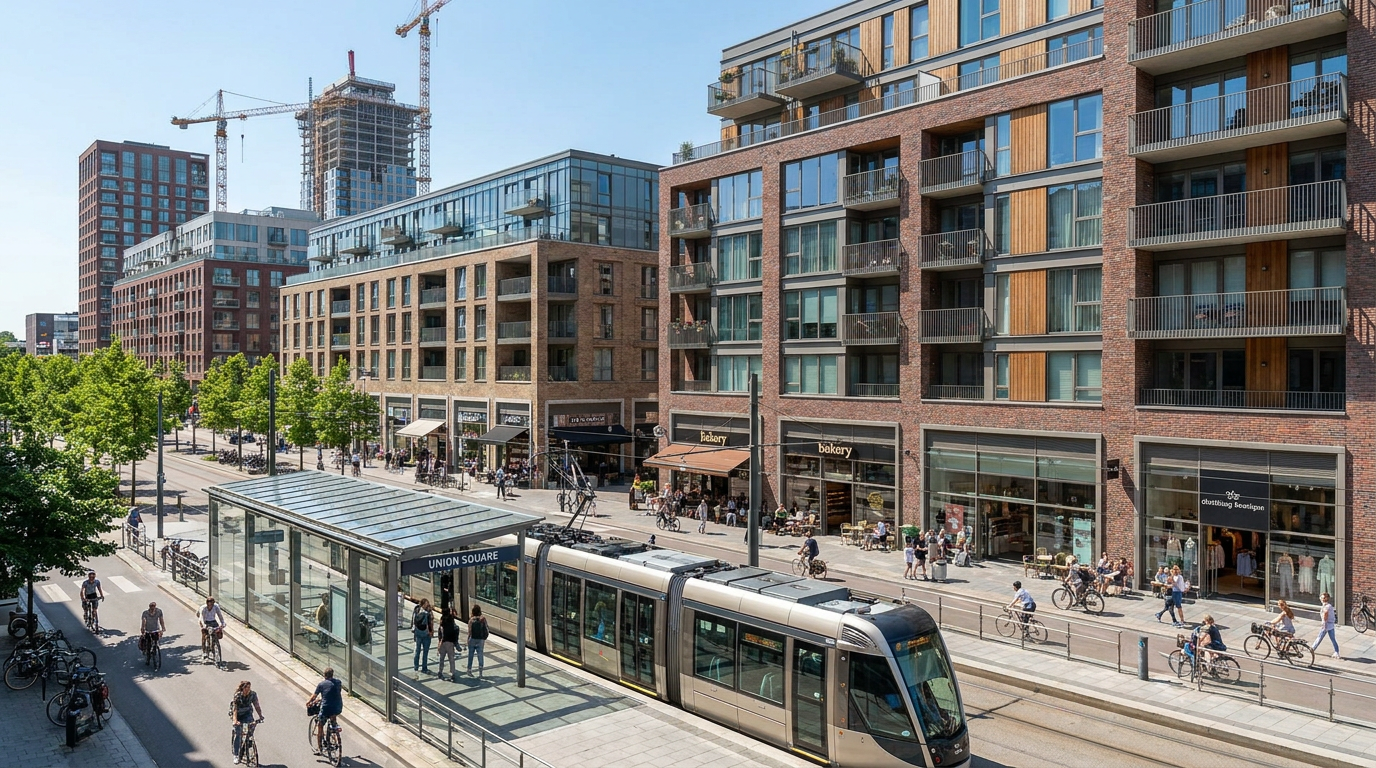
Transit connectivity is one of the most undervalued indicators in urban investing. Transit-oriented development remains a major theme because mobility links labor to housing and broadens the appeal of surrounding neighborhoods. Properties near commuter rail, subway extensions, light rail stations, and major bus corridors often benefit from stronger tenant retention, better future redevelopment potential, and greater resilience during affordability-driven shifts in housing preferences.
Institutional investment also offers a useful signal. When pension funds, large developers, and professional operators commit capital to a corridor, they often validate a market’s depth, financing attractiveness, and long term relevance. This should not replace independent underwriting, but it can support the case that a neighborhood has entered a more durable phase of transformation. Policy support matters as well. Municipalities that encourage density, expedite approvals, or align infrastructure planning with housing delivery often attract more sustained investment over time.
Think in Layers of Opportunity
A useful way to analyze urban growth markets is by layers of opportunity. Not every investment objective belongs in the same part of the metro. Core downtowns, inner-ring neighborhoods, and fast-growing suburban municipalities each offer different return profiles, risk levels, and operational challenges. Sophisticated investors match strategy to location rather than treating an entire city as a single market.
Core downtowns
Core downtown assets generally appeal to investors seeking liquidity, prestige, and resilience. These locations often feature strong transit, deep employment density, and long term land scarcity. Yields may be lower, and entry pricing may be more demanding, but prime assets in major urban cores can provide durable occupancy and stronger defensive characteristics across cycles. For wealth preservation and institutional-grade income, this layer remains relevant.
The tradeoff is that downtown pricing often reflects the market’s strongest narrative. Cap rate compression, operational intensity, and evolving office patterns can reduce upside if the asset is acquired too aggressively. In today’s environment, investors need to assess whether premium urban assets still offer enough income growth to justify compressed yields. In some cases they do, especially in locations with diverse job engines and limited replacement opportunities. In others, the better value may sit just outside the core.
Inner-ring neighborhoods
Inner-ring neighborhoods are often where value-add strategies become attractive. These areas sit close enough to the core to benefit from employment access, but they may still trade at more moderate entry prices. Investors can find opportunities in repositioning older multifamily stock, improving operations, upgrading unit finishes, or assembling land near future transit investment. This layer tends to reward investors who understand neighborhood change before it is fully priced in.
Transit-oriented repositioning can be particularly effective here. As households seek a balance between affordability and convenience, neighborhoods connected to rail, rapid bus routes, and employment nodes can gain demand faster than broader averages suggest. Investors should study permit activity, local retail improvement, school enrollment trends, and public realm upgrades, since these signals often indicate where inner-ring growth is accelerating.
Suburban municipalities and secondary nodes
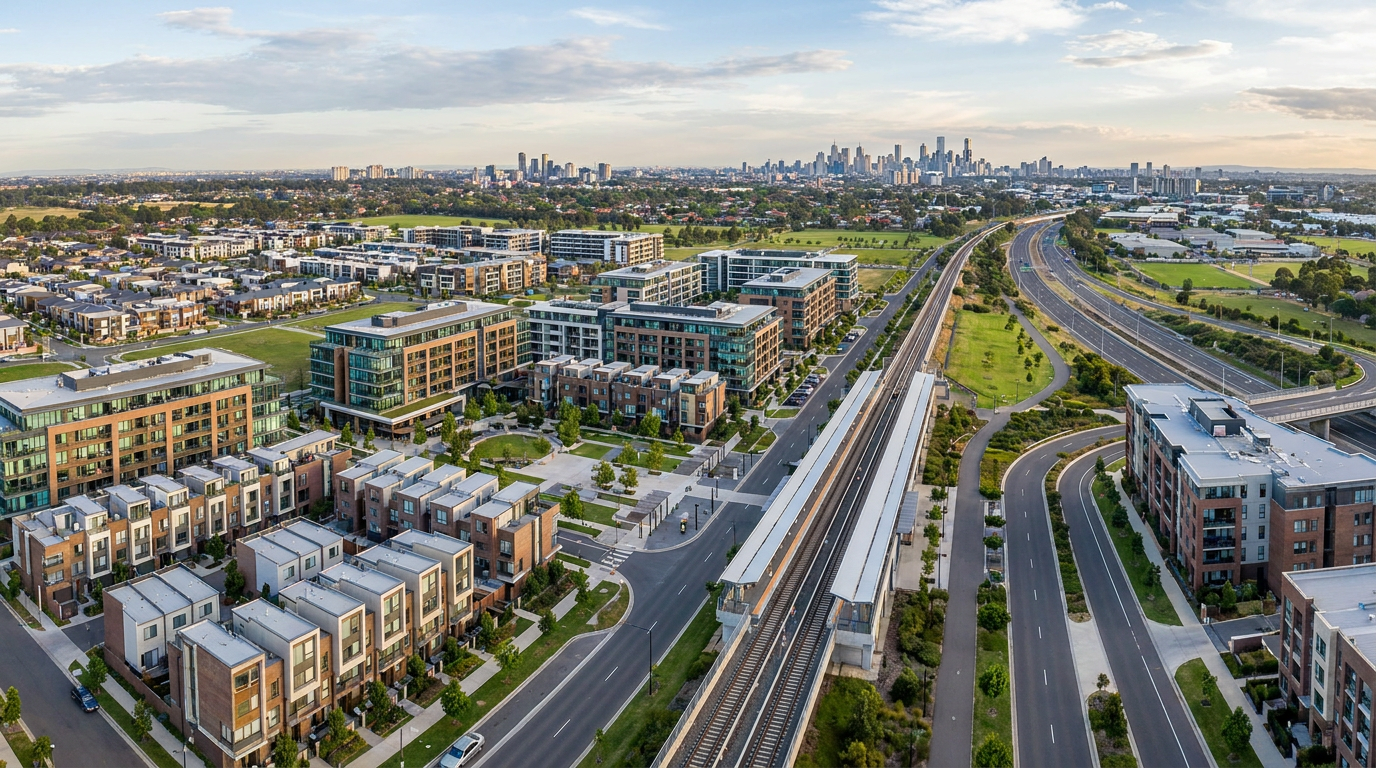
Fast-growing suburban municipalities and secondary urban nodes can offer some of the strongest long term upside, especially where population spillover meets infrastructure expansion. Canada’s fastest-growing municipalities between 2016 and 2021 often sat on the urban fringe, which confirms that growth frequently extends beyond the central city. These locations can be attractive for townhouse communities, mid-rise rentals, mixed-use projects, and land banking tied to transit and highway upgrades.
That said, suburban growth should never be viewed as automatic outperformance. Some nodes benefit from genuine job creation and connectivity, while others rely too heavily on long commutes and speculative future demand. The best suburban plays usually combine relative affordability, improving transportation links, local services, and enough employment access to support durable household formation.
Why Submarket Analysis Matters More Than City-Wide Averages
One of the most common investor mistakes is relying too heavily on city-wide averages. A metro may show positive population growth, healthy rents, and manageable vacancy, yet still contain submarkets where supply is overwhelming demand or where tenant affordability is stretched. The reverse is also true. A metro facing a softer broad cycle may still contain neighborhoods with strong occupancy, rising effective rents, and low competitive supply.
This is why submarket analysis is essential. Investors should track permit issuance, completions, absorption, pipeline deliveries, commute patterns, rent growth by unit type, school enrollment, household income shifts, and vacancy by age of product. A new luxury rental corridor may look very different from an older transit-connected neighborhood with limited land and steady workforce demand. Without this level of granularity, underwriting can become overly dependent on averages that hide real risk.
Submarket analysis also helps investors understand the timing of opportunity. Some neighborhoods are early in the growth cycle, where infrastructure and zoning changes are setting up future demand but current rents have not fully moved. Others are late-cycle story markets, where the narrative is already strong, competition is intense, and future appreciation may be more limited. Wealth is often built by entering just before broad market recognition, not after every investor has identified the same theme.
For long term investors, this approach creates a more durable edge than trying to predict every macroeconomic move. Interest rates, migration shifts, and short term sentiment can all affect transaction volume and pricing, but deeply understanding a neighborhood’s supply-demand structure provides clearer conviction. If the submarket remains aligned on jobs, transit, and scarcity, temporary softness can become a buying window rather than a reason to retreat.
Common Misconceptions About Urban Growth Investing
Urban growth markets are widely discussed, but they are also widely misunderstood. One misconception is that a growing city guarantees strong performance across every neighborhood and asset class. This is rarely true. A downtown high-rise, a student rental near a university, and a suburban townhouse development may all sit within the same metro, yet produce very different outcomes based on local supply, transportation access, and target tenant demand.
Another misconception is that population growth alone is enough. Population matters, but investors also need job growth, absorption capacity, and affordability support. A market can add residents and still struggle if incomes are weak, supply is excessive, or local infrastructure lags behind expansion. Sustainable rental and resale performance usually require a broader economic base than simple headline migration.
There is also a tendency to assume that new construction is always the best expression of growth. Current Canadian rental data shows why that assumption can fail. Newly built units posted the highest vacancy rates nationally in 2025, which suggests that fresh supply can face lease-up pressure even in otherwise healthy metros. Existing well-located assets often provide better in-place cash flow and lower execution risk, especially when they can be improved incrementally.
Finally, many investors still overlook suburban nodes and inner-ring neighborhoods because they remain focused on iconic downtown districts. Yet some of the strongest long term gains occur where urban demand meets affordability and transit expansion. The market does not always reward the most visible address. It often rewards the most strategic one.
Actionable Strategies for Investing in Urban Growth Markets
To capitalize on urban growth markets effectively, investors need a repeatable process rather than a loose narrative. A disciplined framework allows buyers to compare opportunities across metros and property types while staying focused on long term wealth creation. The following strategies can improve decision quality and risk-adjusted returns.
- Start with metro selection, then narrow aggressively. Identify metros with diversified employment, steady in-migration, infrastructure investment, and supportive housing policy. Then narrow into submarkets where transit access, supply constraints, and affordability align. Avoid making the city-level thesis the full thesis.
- Underwrite demand against supply timing. Compare population and job growth to the scale and delivery schedule of new housing. A great market can still deliver weak near-term returns if too much premium product is arriving at once. Focus on where demand is likely to absorb supply efficiently.
- Prioritize transit and mobility. Properties connected to employment clusters through rail, rapid bus, highways, or walkable urban design tend to hold demand better across cycles. Transit infrastructure also creates optionality for future redevelopment and tenant retention.
- Look for functional durability. Assets with efficient layouts, practical unit sizes, solid construction, and low obsolescence often outperform trend-driven properties over the long run. Tenants ultimately pay for convenience, livability, and access.
- Be careful with story markets. If future growth is already fully reflected in pricing, upside may be limited. Investors should distinguish between markets with improving fundamentals and markets where optimism has outrun economic reality.
- Use conservative financing assumptions. In a world of elevated rates and softer near-term conditions, debt structure matters. Stress test occupancy, refinance rates, and lease-up assumptions. Strong deals often fail because financing was too aggressive, not because the market thesis was wrong.
- Consider value-add over brand-new supply. Existing assets in strong locations can offer better yields and easier stabilization than newly delivered premium product. Selective renovations, amenity upgrades, and operational improvements can unlock meaningful returns without taking full development risk.

Key Metrics Every Investor Should Review
While every strategy differs, there are several core metrics that should guide urban growth market analysis. Population growth and migration trends are the starting point, but they should be paired with employment growth, wage trends, and industry diversity. These indicators help determine whether demand is broad and durable rather than temporary and sentiment-driven.
On the housing side, investors should track vacancy, effective rent growth, concessions, absorption, and the development pipeline. It is also useful to separate newly delivered luxury stock from older stabilized inventory, since the two can perform very differently during supply-heavy periods. In ownership-oriented strategies, months of inventory, resale velocity, and price-to-income relationships add important context.
Infrastructure and policy indicators are equally important. Transit expansions, road improvements, university investments, hospital developments, and municipal density policies can all alter long term demand. Investors who monitor these drivers early often gain an advantage before pricing fully reflects the future impact. This is one reason why strategic real estate investing often feels closer to regional planning analysis than simple property buying.
Finally, investors should review cap rates and replacement costs through a comparative lens. If acquisition pricing is not meaningfully below replacement cost in a market facing new supply pressure, upside may be limited. On the other hand, if a well-located asset can be acquired at a reasonable basis relative to replacement and stabilized rents remain supportable, the long term return profile may be compelling.
Risk Management in a Changing Growth Cycle
Even the strongest urban growth markets carry risk. Supply surges can pressure rents. Interest rates can alter affordability and investment spreads. Policy changes can affect zoning, taxes, development economics, and rent regulation. Economic concentration can amplify volatility if a major employer weakens or relocates. Effective investing therefore requires both conviction and restraint.
Risk management begins with disciplined entry pricing. Investors should avoid paying peak-cycle premiums simply because a market has a compelling story. Growth narratives are powerful, but they can hide thin yields, optimistic lease-up assumptions, and low margin for error. A premium market can still be a poor investment if acquired at the wrong price.
Operational risk matters too. Properties in urban growth corridors often require stronger management because tenant expectations, regulatory environments, and competitive sets evolve quickly. The ability to price units correctly, manage expenses, retain tenants, and phase capital improvements can materially affect outcomes. In many cases, the difference between an average and exceptional return is execution rather than location alone.
Long term investors should also be ready for uneven performance within otherwise strong markets. A few quarters of softer rents or elevated vacancy do not invalidate a sound thesis if the submarket remains supported by jobs, infrastructure, and population depth. Patience is often rewarded in urban investing, provided the original underwriting was conservative and the asset remains fundamentally relevant.
Canada and the U.S.: Similar Themes, Different Timing
Canada and the United States share several urban growth themes, yet timing and market structure differ. In Canada, immigration remains a central force behind metropolitan expansion, and major urban regions continue to capture a large share of national demand. At the same time, higher rental completions and affordability pressure have loosened some rental conditions, especially in newly built stock. This creates a more selective but still opportunity-rich landscape for investors willing to study local supply and neighborhood demand.
In the U.S., metro areas continue to outpace national growth overall, but the post-pandemic rebound has become more differentiated. Some formerly weakening large metros have regained population, while others are cooling from temporary migration surges. Investors need to be especially careful in separating structural growth markets from normalization stories. Markets with diversified job engines, ownership affordability constraints, and consistent household formation still stand out.
Across both countries, the central investment lesson is remarkably similar. Urban growth is real, but it is no longer enough to rely on macro enthusiasm. The strongest opportunities are found where demographic demand, economic utility, and housing scarcity intersect at the submarket level. That is where income durability improves, pricing power becomes more defensible, and long term wealth can compound more predictably.
Final Takeaway: Buy Growth, but Buy It Precisely
Urban growth markets deserve a place in every serious real estate investor’s framework because they concentrate the forces that support long term housing demand. Population gains, migration, employment density, infrastructure expansion, and affordability pressures all continue to make metropolitan regions critical arenas for investment capital. Yet the current cycle is proving that not all growth is equal, and not every part of a strong city will produce strong returns.
The most effective investors understand this and respond with greater precision. They analyze demand at the neighborhood level, compare growth to supply timing, prioritize transit-linked accessibility, and avoid overpaying for market narratives that are already fully priced in. They are willing to consider downtowns for resilience, inner-ring areas for value-add, and suburban nodes for expansion, but only when the local fundamentals support the strategy.
Long term wealth building in real estate rarely comes from chasing the loudest story. It comes from selecting assets that remain relevant as cities grow, households evolve, and infrastructure reshapes where people want to live. In that sense, exploring urban growth markets is not just about finding appreciation. It is about identifying the exact places where demand is likely to remain durable, income is likely to remain dependable, and time can do the heaviest lifting in the investment equation.
For investors willing to do that work, urban growth markets still offer one of the clearest paths to strategic, disciplined, and compounding real estate returns.



No Comment! Be the first one.