

Designing From the Inside Out: What Toronto’s Reina Condominium Teaches Us About Space and Belonging
There is a particular kind of confidence that comes from designing for people rather than for photographs. At Reina, the new condominium complex on The Queensway in Toronto, that confidence is everywhere, in the curve of the courtyard, in the gym that opens onto a children’s play area, in the quiet generosity of a stroller room. It is architecture that has chosen empathy over ego, and the result is quietly radiant.
Reina began, as the best design stories often do, with a provocation. Developer Taya Cook of Urban Capital read a magazine profile celebrating the men reshaping Toronto’s skyline and decided the narrative needed rewriting. Alongside Sherry Larjani of Spotlight Development, she assembled a team led entirely by women, with Heather Rolleston of BDP Quadrangle as lead architect. What emerged was not a gesture, but a genuinely different way of working through a building’s problems.
What strikes me most as a student of interiors and atmosphere is the sequencing of priorities. Efficiency and affordability were never abandoned, they were simply no longer the ceiling of ambition. Rolleston’s team conducted community brainstorming sessions before drafting a single wall, listening for the small frustrations that rarely make it into a developer’s brief. A place to leave a stroller without dragging it through a lobby. A shared library where a rarely used kitchen appliance can be borrowed rather than owned. A sightline from the gym to the play area, so that a parent’s workout and a child’s afternoon can occupy the same moment.
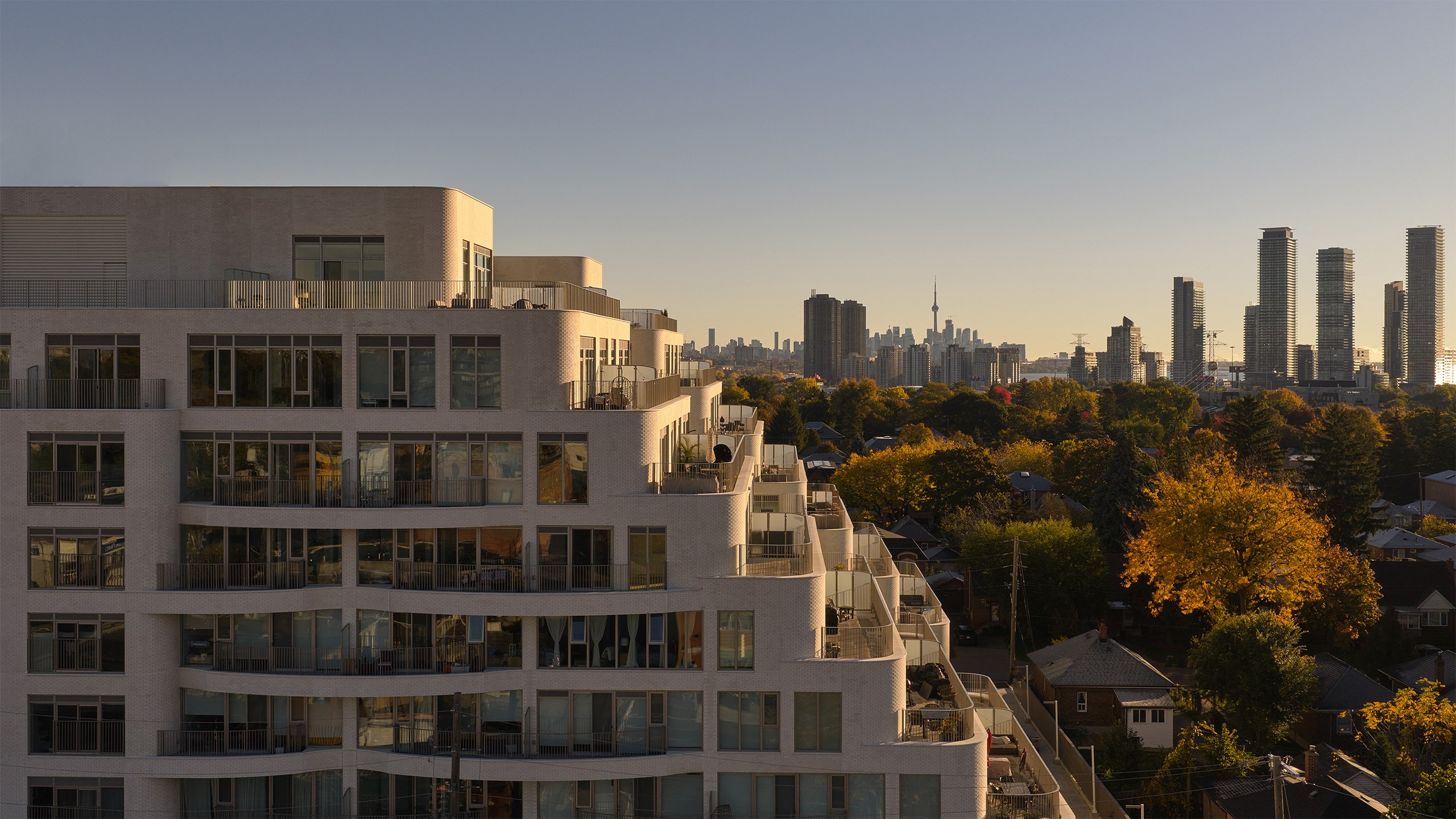
These are not extravagant gestures. They are the product of time spent listening, and of a design process willing to slow down before it speeds up. The building itself gently terraces toward the low-rise neighbourhood it sits within, a U-shaped courtyard that softens rather than dominates its street. Intergenerational units on the ground floor accommodate aging parents living alongside their adult children, a quiet acknowledgment that households no longer fit a single template.
It was about designing from the inside out, which is something that has fallen out of favour recently. We didn’t sacrifice any of the beauty in that process.
That last point matters enormously to me. There is a persistent myth in architecture that empathy and beauty compete for the same square footage, that a building tuned to human need must forfeit visual ambition. Reina argues otherwise. Its courtyard massing, its material restraint, its careful proportions all read as considered design first and social statement second, which is precisely why the statement lands so convincingly.
What Reina ultimately offers the design world is not a formula but a demonstration. When a team is given permission to ask different questions, informed by different lived experience, the resulting spaces reveal needs the industry has simply overlooked for decades. Community is not an amenity to be bolted onto a building. It is a design decision, made early, made deliberately, and made visible in every corridor and courtyard that follows.
Source: Monocle, “How Toronto’s all-women-designed building prioritises community”.