

Inside a $25 Million Waterfront Estate, the Real Story Is the Intelligence Layer
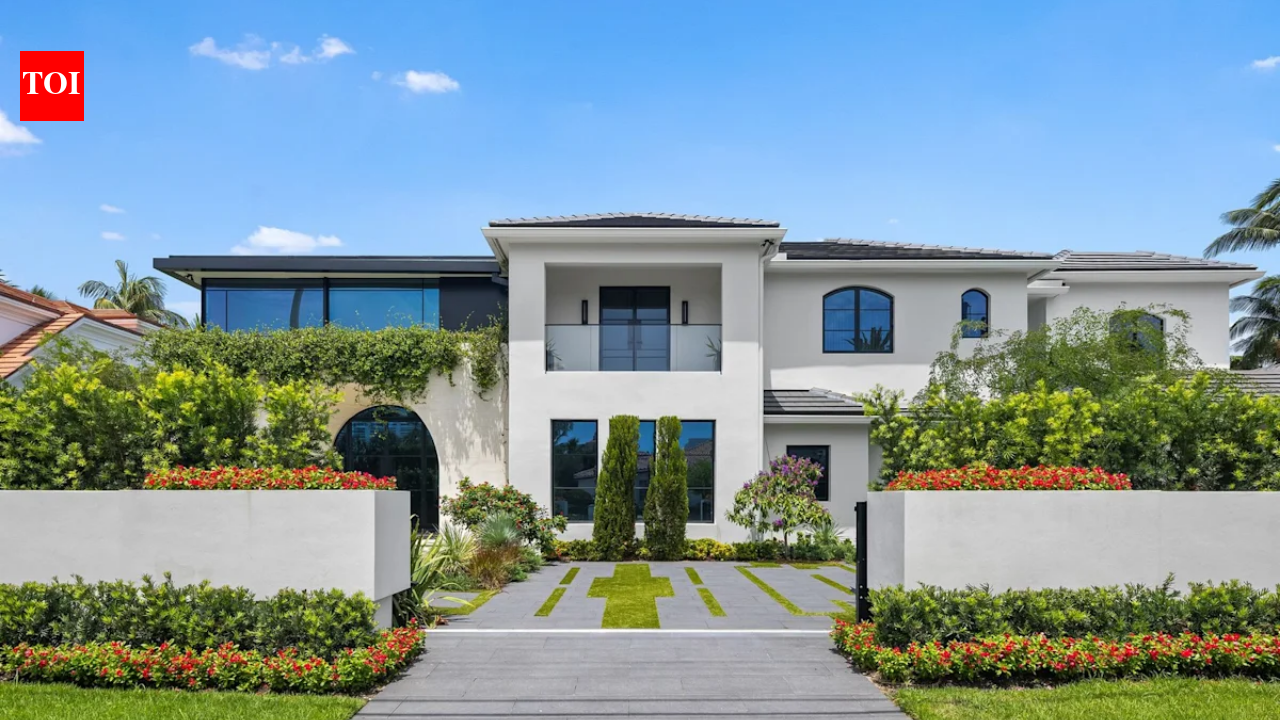
A newly listed Boca Raton mansion, priced at $24.995 million, is being talked about for its 150 feet of Intracoastal Waterway frontage and its resort-grade finishes. But what caught my attention is quieter than the marble and the pool deck. It is the system running underneath all of it.
The 10,814 square foot home, with six bedrooms and 6.5 bathrooms, uses Josh AI as its control layer, working alongside Lutron, Sonos and Crestron to manage lighting, window shades, sound and climate through voice command. Six security cameras feed into the same connected environment, monitored remotely. None of these technologies are new on their own. What is worth noticing is how they have been unified into a single, coherent intelligence layer that residents interact with almost invisibly.
That is the pattern I keep tracking across the luxury segment. A voice-activated shade is not a novelty anymore. It is a data point. Every command, every automated adjustment to lighting or temperature, is a small signal about how a home is actually used, not just how it was designed to be used. Homes like this one, built and redesigned in 2024 under Umber Architecture with interiors by Eric Dyer, are effectively generating a behavioral dataset in real time, even if that was never the primary intent.
What makes this listing a useful case study is the layering itself. Josh AI sits as the orchestration point, but it is coordinating discrete systems, Lutron for lighting and shades, Sonos for audio, Crestron for broader automation, rather than replacing them. This is the architecture I expect to see more of across high-value properties, not one monolithic platform, but an integration layer that lets separate smart systems act as one. For buyers and developers thinking about property intelligence, that distinction matters. The value is not in any single device. It is in how well the layer connecting them can be trusted to run quietly and reliably in the background.
The technology here is not meant to be noticed. Its success is measured by how little residents have to think about it.
There is also a signal here for valuation. Remote-accessible security across six cameras, integrated climate and lighting control, and voice-based automation are becoming embedded expectations at the top of the market, not add-ons. As more listings at this price point are built or retrofitted this way, the data infrastructure of a home, its sensors, its automation logic, its connectivity, starts to function as a measurable feature, one that future appraisals and buyer comparisons may need to account for alongside square footage and waterfront access.
The instinct to call this a smart home undersells what is actually happening. It is closer to a small, private intelligence system, tuned to one household, quietly organizing information most homeowners never think to ask for. That is worth watching well beyond this one property on Spanish River Road.