



Energy infrastructure development has become one of the defining planning challenges of our time. For growing cities, the question is no longer simply where electricity comes from. The real issue is how an urban region builds an energy system that can support housing growth, transit expansion, industrial activity, digital demand, and public services while also reducing emissions and adapting to climate risk. In practical terms, energy infrastructure now shapes the pace, cost, and feasibility of urban development just as much as roads, water systems, and zoning policy do.
Table Of Content
- Why Energy Infrastructure Has Become a Core Urban Planning Issue
- Understanding the Full Scope of Energy Infrastructure
- Canada’s Advantage and Its Emerging Challenge
- Clean Energy Is More Than Clean Generation
- Grid Modernization and the Rise of Intelligent Infrastructure
- Battery Storage, Microgrids, and Flexibility as Urban Assets
- Climate Resilience Must Be Built into the System
- Transportation Electrification Is Now Energy Infrastructure
- Regional Strategy Matters More Than Ever
- Infrastructure Investment, Feasibility, and the Cost of Delay
- What Effective Urban Energy Planning Looks Like
- Common Misconceptions About Energy Infrastructure Development
- The Strategic Path Forward
- Conclusion
Energy infrastructure development is the planning and construction of the full system that generates, moves, stores, and manages electricity for a city or region, including power plants, transmission lines, substations, local distribution networks, battery storage, smart grid technology, and electric vehicle charging infrastructure. It matters for urban growth because it determines how quickly a city can build housing, expand transit, and support new industry: if substations are constrained or distribution lines are overloaded, development stalls regardless of how much clean electricity is available elsewhere on the grid. In Canada, where 79.4% of electricity already comes from renewable and non-emitting sources, the priority has shifted from simply generating clean power to building the transmission, storage, and resilience capacity needed to deliver that power reliably as cities electrify. Effective energy infrastructure development therefore combines generation, network capacity, digital controls, and climate resilience into one coordinated system rather than treating each as a separate project.
Across Canada and North America, this issue is gaining urgency because growth and electrification are happening at the same time. More people are moving into cities, more buildings are shifting from fossil fuel systems to electric heating, more transit fleets are electrifying, and more economic activity depends on reliable digital infrastructure. At the same time, governments, utilities, and private developers are under pressure to cut emissions and increase resilience against severe weather. That combination is changing the role of energy planning from a back end technical function into a central pillar of long term urban strategy.
Canada offers a useful lens for understanding this transition. The country produced 623 terawatt hours of electricity in 2024, and 79.4% of that electricity came from renewable and non greenhouse gas emitting sources. Those are strong numbers in comparative terms, but they do not tell the whole story. Clean electricity share has declined from 82.3% in 2020, partly because drought affected hydroelectric output. That single trend reveals an important truth: a lower carbon system is not automatically a fully resilient one, and future energy infrastructure must be designed around both sustainability and adaptability.
This article explores what modern energy infrastructure development really means. It explains why clean generation is only one piece of the puzzle, why transmission and distribution upgrades matter for city growth, how storage and digital tools are changing the economics of the grid, and why climate resilience and regional strategy can no longer be treated as optional. For anyone involved in urban planning, real estate, public policy, or infrastructure investment, understanding this landscape is essential to building cities that are both competitive and livable.
The future of urban growth depends not just on producing cleaner power, but on building a smarter, more flexible, and more resilient energy system from end to end.
Why Energy Infrastructure Has Become a Core Urban Planning Issue
In the past, cities could often treat energy as a background utility. Demand would rise gradually, utilities would add capacity, and land use planning could proceed with limited coordination. That model is breaking down. Today, electricity demand is being reshaped by electrification, climate policy, technology adoption, and population growth all at once. A new residential district may need far more electrical capacity than a similar development would have required twenty years ago, especially if it includes electric heat pumps, electric vehicle charging, battery systems, and high performance building standards.
From a strategic perspective, energy infrastructure now directly affects housing delivery and economic development. If substations are constrained, if feeder lines are overloaded, or if interconnection timelines are too long, projects can be delayed or redesigned at higher cost. That becomes a planning issue, not just a utility issue. Cities that want to intensify, add transit oriented communities, or attract advanced industry need confidence that their energy systems can absorb new demand reliably and affordably.
There is also a competitiveness dimension. Businesses, institutions, and investors increasingly evaluate locations based on energy reliability, power quality, emissions profile, and long term operating costs. Data centers, advanced manufacturing, hospitals, universities, and logistics networks all rely on resilient electricity. In an economy where digital infrastructure and decarbonization are becoming more important, energy capacity is effectively a form of development readiness.
For municipal leaders, this creates a clear imperative. Energy infrastructure must be coordinated with land use, transportation, housing policy, and climate planning. The cities that do this well will be better positioned to absorb growth without sacrificing affordability, resilience, or environmental performance.
Understanding the Full Scope of Energy Infrastructure
One of the most common misconceptions is that energy infrastructure means power plants alone. In reality, generation is only the front end of a much larger system. A city can add renewable electricity to its grid mix, but if it lacks transmission capacity, local distribution upgrades, storage, digital controls, and flexible demand management, it may still struggle to serve growth effectively. Modern infrastructure planning has to address the entire chain that moves electricity from source to user and increasingly back again in a more interactive network.
At the highest level, energy infrastructure includes generation assets such as hydroelectric facilities, wind farms, solar installations, nuclear stations, natural gas plants, and low carbon fuel systems where appropriate. It also includes the transmission network that moves bulk power across long distances, the substations that step voltage up or down, and the local distribution system that serves homes, businesses, and institutions. In urban areas, these downstream systems often determine whether development can proceed on schedule.
New layers are now being added to that traditional framework. Battery storage, smart meters, demand response systems, distributed energy resources, microgrids, digital monitoring platforms, and EV charging networks are all part of today’s infrastructure landscape. These assets help the grid become more responsive and efficient, which is crucial when renewable generation is variable and load growth is less predictable than before. They also make it possible to support critical services during outages and reduce the need for expensive peak capacity investments.
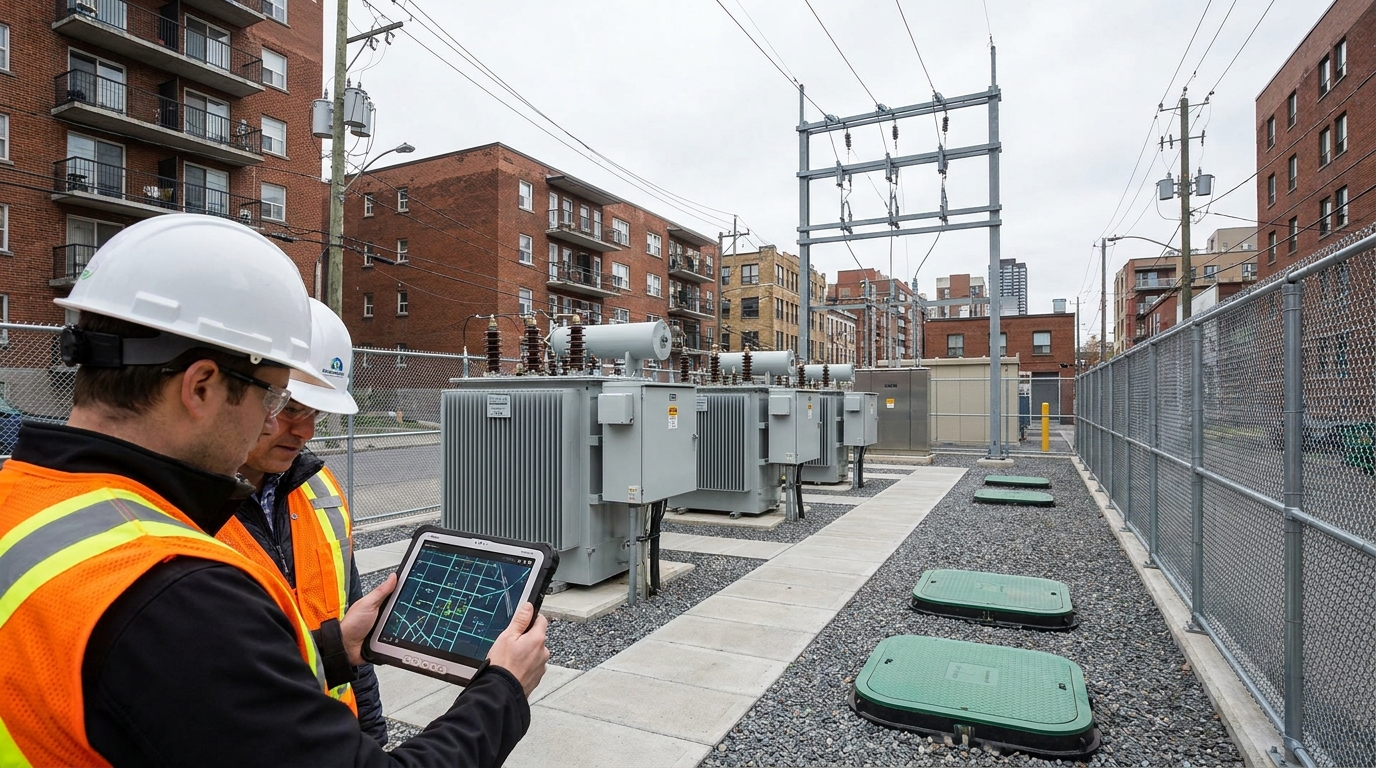
For the general public, the key takeaway is simple. The future grid is not just bigger. It is more distributed, more digital, and more interconnected with daily urban life. That means infrastructure decisions are increasingly tied to how cities grow, how neighbourhoods densify, and how communities prepare for a changing climate.
Canada’s Advantage and Its Emerging Challenge
Canada begins this transition with important strengths. Federal reporting shows that nearly four fifths of the country’s electricity comes from renewable and non greenhouse gas emitting sources, giving Canada a relatively low carbon grid compared with many peers. Moving water remains Canada’s largest renewable electricity source, supplying 61.7% of electricity generation in 2022. Wind and solar are also among the fastest growing electricity sources, and the Canada Energy Regulator has reported that from 2010 to 2023, total electricity generation capacity grew by 19% while renewable capacity increased by 30%.
These numbers matter because they show that the country already has a strong base for electrification. Cleaner electricity makes it easier to reduce emissions from buildings, transportation, and some industrial uses. In theory, this creates a path toward urban growth that is less carbon intensive than older development models. In practice, however, it also creates pressure to scale infrastructure quickly and intelligently.
The challenge is that Canada’s electricity story is highly regional. Provinces have very different generation mixes, resource endowments, climate risks, regulatory systems, and demand profiles. A hydro rich province has different planning options than a jurisdiction relying more heavily on natural gas, nuclear, or imported power. A fast growing metropolitan region facing substation constraints requires a different investment strategy than a smaller city with spare transmission capacity. As a result, energy infrastructure planning cannot be uniform across the country.
This regional diversity is not a weakness. It is a planning reality. Strategic infrastructure development must reflect local conditions, including load growth, land availability, existing grid assets, industrial base, and climate exposure. The broader lesson is that good energy planning is not ideological or one size fits all. It is grounded in feasibility, timing, and the specific needs of the region it serves.
Clean Energy Is More Than Clean Generation
A second major misconception is that adding renewable generation alone solves the energy transition. It does not. Wind and solar are central to a lower carbon future, but a cleaner urban energy system also needs the wires, storage, flexibility, and controls that allow those resources to perform reliably at scale. This is especially important in cities, where peak demand can be concentrated and the cost of outages is extremely high.
Hydro variability offers a practical example. Canada’s clean electricity share declined from 82.3% in 2020 to 79.4% in 2024, in part because drought conditions reduced hydro output. That does not undermine the value of hydroelectricity. It demonstrates why diversified supply matters. A resilient system needs multiple forms of clean generation, stronger interconnections between regions, storage to shift energy across time, and demand side tools that reduce stress during peak periods.
Transmission and distribution are often the least visible parts of this equation, but they are among the most important. A city may have access to new renewable generation in theory, yet still face local reliability issues if substations, feeders, or transformers are undersized. Similarly, a province may produce abundant clean power overall, but struggle to connect new housing, industrial loads, or charging infrastructure in fast growing urban corridors. This is why infrastructure strategy must focus on the entire network rather than only on generation announcements.
In that sense, clean energy development is really a system design challenge. It requires coordinated investment in generation, transmission, local distribution, digital visibility, storage, and customer flexibility. Without that broader framework, the transition becomes slower, more expensive, and more vulnerable to disruption.
Grid Modernization and the Rise of Intelligent Infrastructure
Grid modernization is the process of turning a largely one way electricity network into a more dynamic and responsive system. Historically, power flowed from centralized plants through transmission and distribution lines to customers who consumed energy passively. The modern grid works differently. Consumers can now produce energy through rooftop solar, store it in batteries, charge vehicles at home or at work, and even shift consumption in response to price or reliability signals. This creates complexity, but it also creates new tools for managing growth.
Smart meters are one of the most visible pieces of this shift. They provide more detailed information about when and how electricity is used, which helps utilities understand demand patterns and improve operational planning. Digital monitoring and control systems extend this visibility deeper into the network, allowing utilities to identify faults faster, optimize equipment performance, and respond more effectively during outages. For cities, these improvements translate into better service reliability and a stronger foundation for electrification.
Demand response is another important innovation. Instead of meeting every spike in load by building more generation or network capacity, utilities and system operators can encourage users to reduce or shift electricity use during critical periods. Large buildings, industrial facilities, and even aggregated residential loads can become flexible assets. That reduces pressure on the grid and can delay or avoid costly infrastructure expansion, which is valuable in dense urban settings where new capacity is expensive to build.
Distributed energy resources add another layer of flexibility. These include rooftop solar, community solar, small scale batteries, thermal storage, controllable building systems, and other localized assets. When integrated properly, they can improve resilience, reduce peak demand, and support neighbourhood scale energy strategies. They are not a replacement for the main grid, but they can complement it and make urban systems more adaptable.
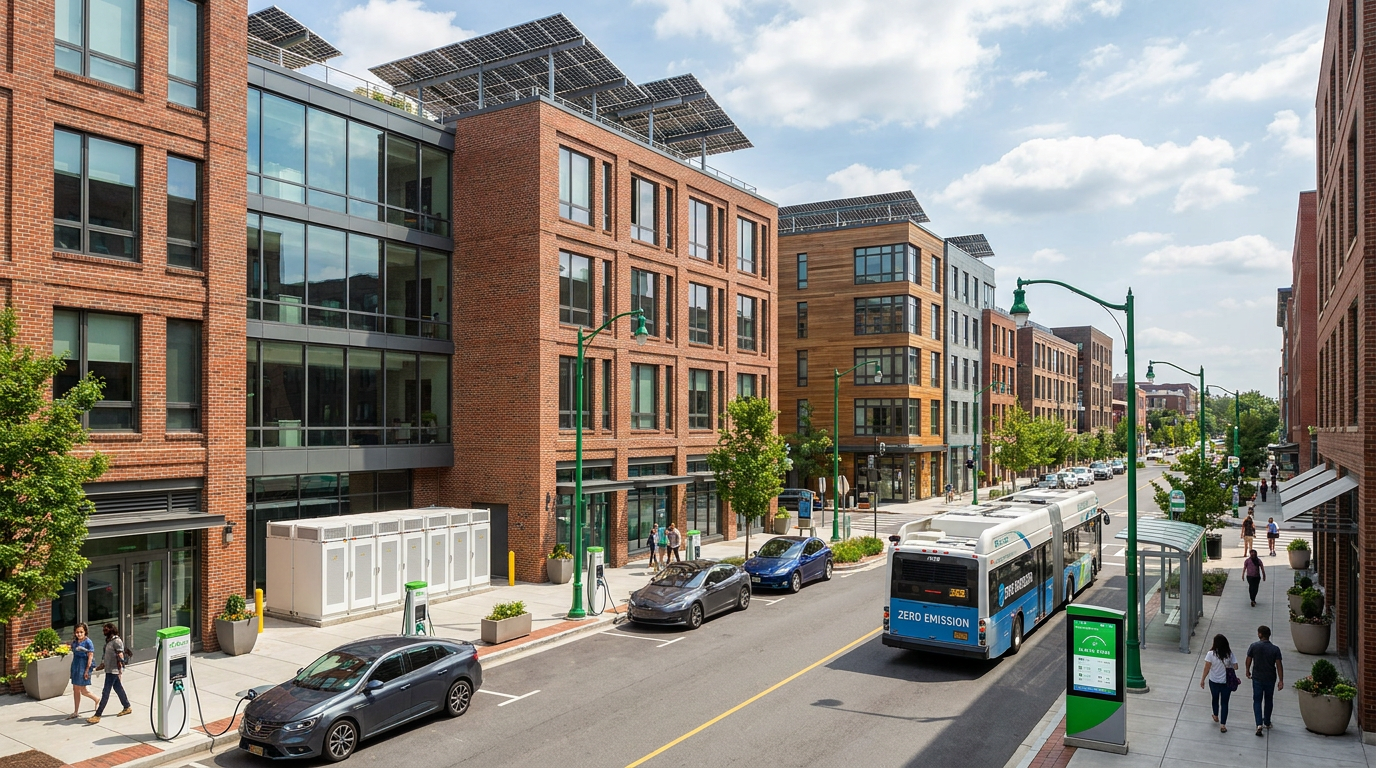
For urban planners and developers, the strategic point is clear. Intelligent infrastructure can help cities accommodate growth without relying only on large centralized plants or endless network expansion. In an era of capital constraints and climate pressure, that is a major advantage.
Battery Storage, Microgrids, and Flexibility as Urban Assets
Battery energy storage has moved from a niche concept to a core infrastructure tool. Its value lies in flexibility. Batteries can absorb excess electricity when supply is strong and release it when demand rises or generation falls. This helps integrate variable renewables such as wind and solar, improves reliability, and supports better use of existing network assets. In urban systems, storage can also relieve local congestion and improve performance during periods of high stress.
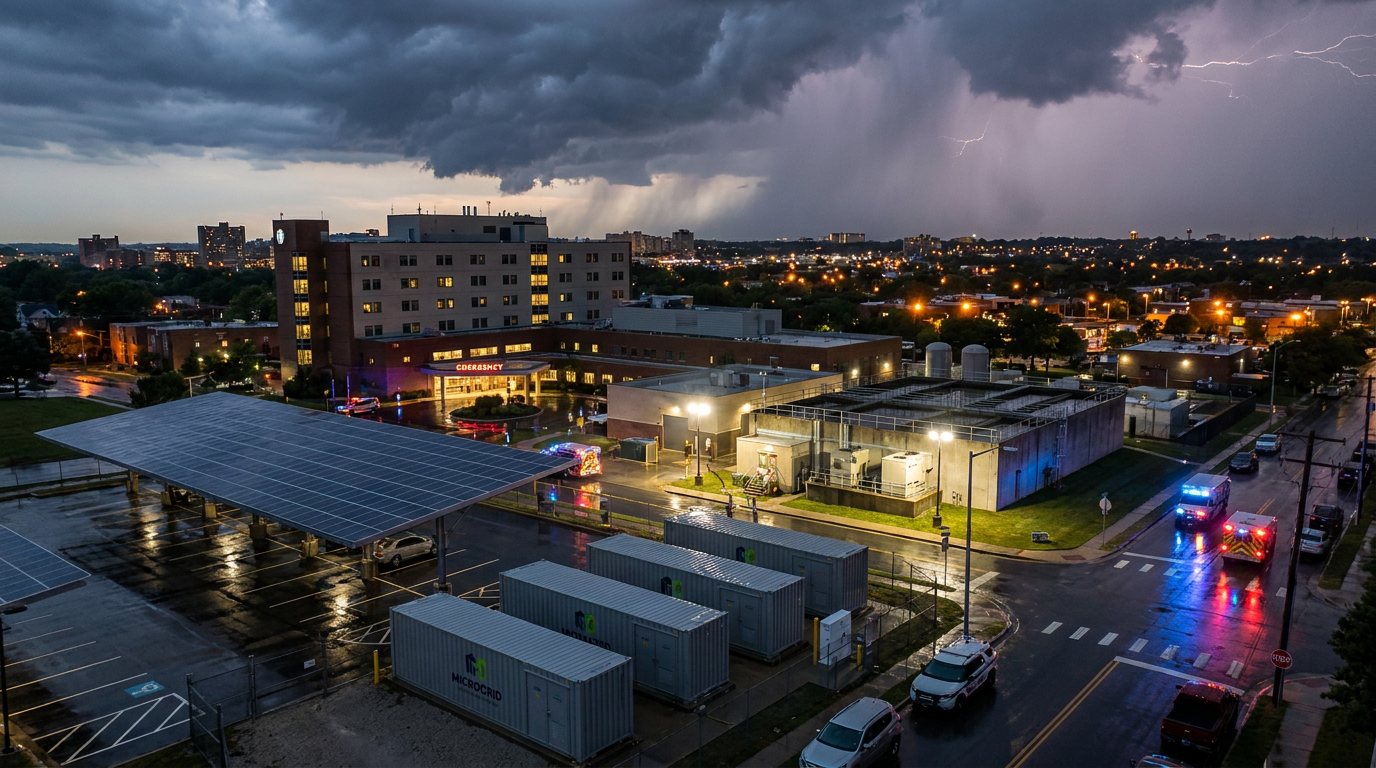
Microgrids are another powerful concept, particularly for critical infrastructure. A microgrid is a localized energy system that can operate in coordination with the larger grid or separate from it during an outage. Hospitals, water systems, transit facilities, campuses, and emergency services can all benefit from this kind of design. In a climate risk environment defined by ice storms, floods, heat waves, wildfire impacts, and extreme wind, the ability to maintain service continuity is no longer a premium feature. It is a resilience requirement.
Neighbourhood scale resilience planning is likely to become more important over time. As cities intensify, the consequences of prolonged outages grow. High rise residential buildings depend on electricity for elevators, water pressure systems, cooling, communications, and often heating. Transit systems rely on power for operations and signals. Water treatment and pumping facilities require continuous energy. This means that local backup and islanding capacity can have broad public safety implications.
Storage and microgrids also create strategic opportunities for phased development. In areas where major grid upgrades will take time, temporary or hybrid solutions can support interim growth if designed carefully and regulated appropriately. That does not eliminate the need for long term network investment, but it can create flexibility in delivery and sequencing.
Climate Resilience Must Be Built into the System
The International Energy Agency has made the issue plain: climate change affects every part of the energy system, including fuel supply, generation efficiency, and infrastructure resilience. That insight has major implications for urban development. It means that the energy systems supporting cities must be designed not only for average conditions, but also for more frequent and more severe disruptions. The planning baseline has shifted.
In Canada and across North America, climate risks vary by region, but the pattern is clear. Heat waves increase cooling demand and strain equipment. Ice storms damage wires and structures. Wildfire smoke and fire events can threaten transmission corridors and substations. Flooding can damage underground and surface assets. Drought can reduce hydroelectric generation. High winds can interrupt both centralized and distributed energy systems. In short, resilience is not a separate agenda from clean energy. It is part of the same infrastructure challenge.
For project teams, resilience begins with risk assessment. Assets should be sited, designed, and upgraded based on realistic exposure to current and future hazards. That may include elevated equipment, improved drainage, fire resistant corridors, redundancy in key feeders, backup supply for critical loads, and stronger emergency operations planning. It may also involve diversifying the generation portfolio so a single climate impact does not destabilize the broader system.
There is a financial dimension here as well. Infrastructure that is not designed for climate stress becomes more expensive over time through outages, repairs, insurance costs, emergency response, and reduced investor confidence. By contrast, resilient infrastructure protects economic continuity. For cities trying to grow responsibly, that makes resilience a strategic investment, not just a defensive one.
Transportation Electrification Is Now Energy Infrastructure
Electric vehicles are often framed as a transportation topic, but from a planning perspective they are also a major electricity issue. Charging networks create new load patterns across neighbourhoods, employment zones, logistics corridors, and public facilities. Fast charging stations can place substantial demand on local grids, especially if they are clustered or added in areas with existing constraints. That means EV infrastructure cannot be planned in isolation from broader energy system capacity.
This becomes even more important when cities electrify multiple transportation modes at once. Private vehicles are only part of the picture. Electric buses, delivery fleets, municipal service vehicles, ride share fleets, school transportation, and commercial freight all add demand. Their charging behaviour can differ significantly, with some requiring depot charging, others using public fast charging, and still others operating on highly time sensitive schedules. Each model has different implications for local substations, feeders, and system peaks.
Strategic load management can help. Smart charging systems can shift demand to lower stress periods, coordinate charging across fleets, and integrate with building management platforms or storage assets. Vehicle to grid technologies may also create future opportunities, though they will depend on regulation, standards, and economics. What matters today is recognizing that charging deployment affects both transportation access and grid planning.
Cybersecurity is also becoming more important as charging systems and other infrastructure become more digital and interconnected. A modern urban energy system will depend on data, automation, and communications across many devices and platforms. That creates efficiency and visibility, but it also introduces risk. Resilient infrastructure in the digital age must be physically robust and cyber secure at the same time.
Regional Strategy Matters More Than Ever
Canada’s provincial diversity is one of the strongest reasons to reject simplistic energy narratives. Some regions have extensive hydroelectric systems. Others rely more on nuclear, natural gas, wind, solar, or imported power. Climate conditions, geography, and market structure vary widely. A city in British Columbia, Alberta, Ontario, Quebec, or Atlantic Canada is not solving the same infrastructure problem, even if all are pursuing cleaner growth.
This matters because urban energy planning is ultimately about fit. The right strategy depends on local demand trends, current supply mix, industrial load, interconnection potential, land constraints, and political context. In one region, the highest priority may be transmission expansion to unlock renewable supply. In another, it may be local distribution reinforcement to support housing and EV adoption. Elsewhere, storage and demand response may offer the best near term value while larger generation projects proceed through approvals.
Policy can shape these transitions powerfully. Ontario’s coal phaseout, completed in 2014, shows how regulation and infrastructure investment can change a generation mix relatively quickly when objectives are clear and execution is sustained. But policy alone is not enough. The success of any transition depends on physical delivery, financing, utility readiness, and public acceptance.
For that reason, regional planning should combine ambition with realism. It should identify where new load will appear, what assets are needed first, how resilience standards will be embedded, and how projects will be financed over time. The more integrated this process is, the better the outcomes for housing supply, economic growth, and climate performance.
Infrastructure Investment, Feasibility, and the Cost of Delay
Energy infrastructure is capital intensive, but delay is costly too. When cities fail to invest ahead of demand, growth slows, project costs rise, and system risk increases. Developers may face interconnection bottlenecks, municipalities may struggle to advance major housing plans, and businesses may hesitate to expand where energy capacity is uncertain. In practical terms, inadequate infrastructure acts like a hidden growth boundary.
Good investment strategy starts with forecasting. Utilities, municipalities, and regional planners need a realistic view of where electrification will occur and at what pace. That includes not only residential growth, but also changes in commercial buildings, industry, transit, logistics, and digital infrastructure such as data centers. These sectors can reshape load faster than legacy planning models assume.
Financing models matter as well. Some infrastructure will remain utility led and rate based. Some will be supported through public funding, particularly where resilience and public benefit are clear. Some will involve private participation through district energy, storage, charging networks, or behind the meter systems. The key is to align capital with long term system value rather than making fragmented decisions one project at a time.
There is also a sequencing challenge. Not every asset can be built at once, and not every community has the same urgency. Strategic planning should identify which investments unlock the greatest amount of housing, emissions reduction, reliability improvement, or economic activity. In my view, the strongest cities will be the ones that treat infrastructure phasing as a growth strategy rather than merely a technical schedule.
What Effective Urban Energy Planning Looks Like
So what does success actually look like? It looks like a city where land use planning and utility planning speak to each other early, not after approvals are already in motion. It looks like zoning and intensification strategies that are tested against grid capacity. It looks like regional growth plans that consider substation needs, corridor protection, and interconnection timing in the same conversation as housing targets and employment lands.
It also looks like diversification. A strong urban energy strategy does not depend on a single technology or a single source of supply. It combines clean generation, robust transmission, modernized distribution, storage, flexible demand, and critical infrastructure resilience. It uses data well and invests in digital systems that improve visibility and control. It treats EV charging, building electrification, and district scale energy solutions as connected parts of one development framework.
Equity should also be part of the discussion. Infrastructure decisions affect affordability, service reliability, neighbourhood investment, and long term opportunity. If some communities face slower upgrades, weaker resilience, or higher energy burdens, the benefits of urban growth become unevenly distributed. Good planning should therefore consider not only system efficiency, but also how infrastructure investment supports fair access to safe, reliable, and sustainable energy.
Most importantly, effective planning recognizes time. Energy infrastructure has long lead times, and urban growth does not pause while systems catch up. That is why today’s decisions are so consequential. The network being planned now will shape the form, cost, and resilience of cities for decades.
Common Misconceptions About Energy Infrastructure Development
Several misconceptions continue to distort public understanding of this field. The first is that renewable electricity by itself solves the urban energy challenge. In reality, renewables are essential, but they must be supported by transmission, storage, distribution upgrades, and flexible demand. Without those supporting systems, even abundant clean generation may not translate into reliable urban service.
The second misconception is that a low carbon grid is automatically resilient. Climate change has shown otherwise. Drought can affect hydro output, heat can strain equipment, and extreme weather can damage network assets across every technology type. Resilience must be designed intentionally through redundancy, diversification, adaptation, and emergency planning.
A third misconception is that energy infrastructure is only about utilities and large industrial players. In fact, it increasingly shapes everyday urban life, from whether a new apartment building can be delivered on schedule to whether a hospital can maintain operations during an outage. It influences mobility, housing, public health, and economic productivity. That makes it a mainstream planning issue with broad public consequences.
Finally, many people still treat EV charging as a side issue. It is not. Charging infrastructure is becoming one of the clearest examples of how transportation, land use, and electricity planning are converging. The cities that understand this convergence early will be better prepared for future load growth and better able to integrate clean mobility at scale.
The Strategic Path Forward
Looking ahead, the most important shift is conceptual. Energy infrastructure should be viewed as a platform for urban growth, not simply a utility expense. When designed well, it enables housing, supports clean industry, strengthens resilience, and improves quality of life. When neglected, it becomes a bottleneck that raises costs and limits opportunity.
For decision makers, the path forward is based on integration. Clean generation must be paired with network upgrades. Electrification policy must be paired with load planning. Climate targets must be paired with resilience standards. Technology adoption must be paired with cybersecurity and operational readiness. These are not separate agendas. They are parts of one infrastructure system that will define the next era of city building.
Canada is well positioned to lead in this space because it already has a relatively clean electricity base, growing renewable capacity, and deep planning expertise across many regions. But leadership will depend on execution. The decline in clean electricity share from 2020 to 2024 due in part to hydro variability is a timely reminder that momentum alone is not enough. Future systems must be scalable, diversified, and climate ready.
Building the future means thinking beyond the power plant. It means understanding substations, corridors, batteries, charging networks, digital controls, and microgrids as essential city building tools. It means planning regionally, investing strategically, and acting early. In a changing climate and an electrifying economy, the strength of our cities will depend on the strength of the energy systems beneath them.
Conclusion
Energy infrastructure development has become one of the most important foundations of sustainable urban growth. It sits at the intersection of housing, mobility, economic development, climate action, and public safety. The question facing cities is no longer whether they need cleaner energy, but whether they can build a complete and resilient system that delivers that energy where and when it is needed.
The answer will depend on strategic coordination. Cities need clean generation, but they also need stronger transmission, modernized local distribution, battery storage, demand response, digital intelligence, and climate adaptation. They need to plan for EV charging, building electrification, and critical infrastructure resilience as part of the same long term framework. They need region specific solutions grounded in real capacity, real risk, and real growth patterns.
From an urban strategy perspective, the message is straightforward. Energy infrastructure is no longer a background condition of development. It is a decisive factor in whether cities can grow sustainably, competitively, and resiliently. If we are serious about building the future, then we have to build the grid, the flexibility, and the resilience that future requires.



No Comment! Be the first one.