



Rezoning is often described as a planning approval, but in practice it is much more than that. It is a strategic exercise in city building, land economics, political alignment, public trust, and long term risk management. When a site no longer fits the ambitions of a growing city, or when an existing zoning framework limits the type of housing and mixed-use development the market and community actually need, rezoning becomes the mechanism that can unlock change. For developers, planners, landowners, and municipalities, the challenge is not simply getting an application filed. The real challenge is structuring a rezoning strategy that is credible, supportable, and implementable.
Table Of Content
- Why Rezoning Has Become Central to Urban Growth
- The First Principle: Start with Official Plan Conformity
- Site Selection Should Be Based on Rezoning Probability, Not Just Land Cost
- Build the Public Interest Case Early
- Community Engagement Is a Strategic Tool, Not a Formality
- Use Urban Design to Solve Political Problems
- Make Infrastructure Capacity Part of the Story
- Link Rezoning to Housing Delivery, Not Just Entitlements
- Tailor the Rezoning Ask to the Local Political Environment
- Transit-Oriented Development Is One of the Strongest Rezoning Narratives
- Use Data, but Do Not Hide Behind It
- Common Mistakes That Undermine Rezoning Success
- A Practical Framework for Successful Rezoning
- The Strategic Opportunity Ahead
That challenge matters more than ever in Canada. Across major urban regions, housing demand continues to outpace supply, affordability remains under pressure, and public policy is increasingly focused on densification, faster approvals, and transit-oriented growth. Federal and municipal governments are now more directly linking funding and housing targets to land use reform. That shift means rezoning is no longer a niche technical process for unusual projects. It is now central to how cities will add housing, intensify responsibly, and manage growth over the next decade.
In Toronto and other major Canadian cities, a proposal that exceeds existing zoning permissions on height, density, setbacks, or use typically requires a zoning by-law amendment. That process involves planning staff review, public consultation, political scrutiny, and a final approval, modification, or refusal by council. In other words, rezoning is not won by drawings alone. It succeeds when the proposal aligns with the official plan, addresses infrastructure realities, responds to neighborhood concerns, and gives decision-makers confidence that the development will create net public value.
This article explores effective rezoning strategies for urban growth and development from that practical perspective. The goal is to show how urban developers can advocate for successful rezoning initiatives while addressing sustainability, community concerns, and long term feasibility. In a market where housing targets are rising and public tolerance for poorly integrated projects is falling, the strongest rezoning strategy is one that treats planning, politics, and delivery as a single integrated problem.
Rezoning works best when it is framed not as an exception to the city, but as a logical extension of the city’s adopted growth vision.
Why Rezoning Has Become Central to Urban Growth
Canada’s housing and planning environment has changed significantly in recent years. The federal Housing Accelerator Fund was launched with billions in funding to help municipalities remove zoning barriers, speed approvals, and support complete communities. By late 2024 and into 2025, federal reporting indicated that agreements had scaled substantially and were expected to fast-track hundreds of thousands of housing units over the next decade. That policy direction sends a clear signal to local governments and the development industry alike. Land use regulation is no longer being treated as a local issue only. It is now understood as a national housing supply issue.
The pressure behind that policy shift is substantial. CMHC has reported that Canada needs roughly 430,000 to 480,000 new housing units per year for a decade to return to affordability levels seen in 2019. Those are not marginal adjustments. They represent structural supply requirements that cannot be met if major urban areas continue to rely on low-density land use patterns, restrictive zoning, and slow approval pathways. Rezoning therefore becomes one of the principal tools for converting urban land into more productive and housing-supportive use.
Research from organizations such as the OECD and CMHC reinforces the same conclusion. Restrictive zoning, density limits, and lengthy permitting procedures reduce the responsiveness of housing supply and make affordability improvements harder to achieve. At the same time, public resistance to change remains real, especially where intensification raises concerns around shadowing, traffic, school capacity, neighborhood identity, infrastructure strain, and affordability. Effective rezoning strategy sits precisely at that intersection. It must support additional supply while proving that growth can be integrated responsibly.
For developers, this means the most valuable sites are not simply those with the highest possible theoretical density. They are the sites where additional density can be justified within a broader planning narrative, serviced by infrastructure, supported by transit, and translated into an economically viable project. Rezoning is where that case gets built.
The First Principle: Start with Official Plan Conformity
The strongest rezoning applications begin with policy alignment, not architecture. A site may have obvious redevelopment potential, but if the proposal cannot be linked to the municipality’s official plan, growth framework, housing objectives, and urban structure policies, it begins from a defensive position. Planning staff and council members are more likely to support change when they can connect it directly to previously adopted public policy. That is why serious rezoning strategy starts with a full review of the official plan, secondary plans, avenue studies, transit plans, housing action plans, heritage policies, and infrastructure strategies that apply to the site.
This policy foundation does two things. First, it gives the applicant a coherent rationale for why more height, more density, or a different mix of uses is appropriate. Second, it narrows the perception that the proposal is opportunistic or speculative. When a developer demonstrates that a project supports intensification in a designated growth area, strengthens a transit corridor, adds family housing, activates a main street, or helps meet municipal housing targets, the conversation changes. The rezoning becomes less about asking for an exception and more about helping the city implement its own stated priorities.
That does not mean every application must mirror policy language in a simplistic way. Good strategy requires interpretation. Sometimes a site sits between competing designations or within an area where policy is evolving faster than zoning. Sometimes the official plan supports growth conceptually while the existing by-law remains outdated. In those cases, the rezoning case should explain clearly how the proposal advances the spirit and purpose of the plan even where the zoning map has not yet caught up.
Developers who skip this policy work often make the process harder than it needs to be. They lead with unit counts, project economics, or high level architectural aspirations, then try to fit planning justification around them later. That approach rarely performs well in a contested rezoning environment. The better path is to build the planning logic first, then shape the development concept around it.
Site Selection Should Be Based on Rezoning Probability, Not Just Land Cost
One of the most common strategic errors in land development is treating acquisition value as the primary variable and rezoning success as a secondary assumption. In reality, the feasibility of a site depends heavily on whether zoning change is politically, technically, and financially realistic. A parcel may appear inexpensive relative to its location, but if it faces severe servicing limits, entrenched neighborhood opposition, heritage constraints, or weak policy support for intensification, the discount may reflect actual entitlement risk rather than untapped upside.
A sophisticated rezoning strategy therefore begins before acquisition with a probability-based lens. The right question is not simply how much density a site could support in an ideal scenario. The better question is what level of density can reasonably be approved within the municipality’s policy framework, servicing capacity, and political environment. That assessment should include not only planning analysis but also transportation access, stormwater implications, school and park pressures, shadow impacts, urban design fit, and local council dynamics.
When viewed through that lens, the best sites often share common characteristics. They are near higher-order transit, along corridors already identified for growth, adjacent to underutilized commercial land, or located within areas where the city has publicly signaled a desire for intensification. They also tend to be places where the surrounding urban form is already changing, which reduces the perception that a rezoning application is destabilizing a static neighborhood. These factors increase not just approval odds but also timeline predictability, which is essential to carrying costs and capital planning.

Site selection should also consider whether the end use fits current housing demand and policy direction. In many municipalities, missing-middle housing, rental housing, transit-oriented mixed-use projects, and family-oriented apartment forms now receive more policy support than isolated luxury product in car-dependent areas. As-of-right permissions are expanding in some markets, parking minimums are being reduced, and public funding is increasingly directed toward complete communities. In that context, land value is strongest where a rezoning strategy aligns with broader housing and mobility trends rather than fighting them.
Build the Public Interest Case Early
Rezoning decisions are not made on private value creation alone. They are made through a public interest test, whether explicit or informal. That means a successful application must answer a simple civic question: why is this change good for the city, the local area, and the people who live there now as well as those who will live there in the future? If that answer is vague, technical, or purely financial, the application will struggle. If the answer is specific, measurable, and rooted in public benefit, support becomes easier to build.
The public interest case should be developed at the front end of the process, not added after opposition emerges. It should identify how the rezoning contributes to housing supply, rental tenure, family-sized units, affordable housing where feasible, public realm improvements, active transportation, transit ridership, local retail vitality, and climate performance. Not every project can deliver all of these outcomes to the same degree, but every project should demonstrate why its form of intensification produces benefits beyond the site line.
In practical terms, this means translating density into outcomes people understand. Additional floor area may support a childcare space, a widened sidewalk, a new mid-block connection, a more viable grocery anchor, or the housing needed to sustain better transit service. When public benefit is framed in these terms, the rezoning discussion becomes more tangible. Residents and council members can then weigh tradeoffs against visible gains, rather than reacting only to abstract numbers on height and floor space index.
Developers should also be realistic about the limits of the public interest narrative. Upzoning does not automatically produce housing quickly. Financing conditions, absorption rates, labour constraints, infrastructure timing, and construction costs all influence whether approved density becomes completed units. The strongest rezoning strategies acknowledge this reality and demonstrate deliverability. Decision-makers are more persuaded by projects that look likely to proceed than by ambitious concepts that may never move beyond approval.
Community Engagement Is a Strategic Tool, Not a Formality
One of the biggest misconceptions in rezoning is that community consultation is simply a box to check before council. In reality, engagement is a strategic tool that can materially affect approval timelines, political support, and even project economics. Community opposition is often dismissed too casually within the industry, yet many concerns raised by residents are rooted in genuine issues such as infrastructure strain, traffic safety, school crowding, overlook, shadow, tenant displacement, and loss of local character. If these issues are ignored, opposition hardens. If they are addressed seriously, many concerns can be mitigated or at least narrowed.
Effective engagement starts before the application is fully locked. When communities feel that every key decision has already been made, consultation appears performative and trust deteriorates quickly. A better approach is to engage early enough that elements such as massing transitions, public realm design, access points, community-serving uses, landscaping, or mobility plans can still be adjusted. This does not mean outsourcing land use planning to the loudest voices in the room. It means giving stakeholders evidence that input can shape outcomes within reasonable parameters.
The quality of communication also matters. Technical planning language rarely persuades a general audience. Residents are more likely to respond constructively when developers explain the proposal in terms of how it will affect daily life. That includes sunlight conditions, pedestrian comfort, transit access, tree retention, family housing, retail animation, and construction management. Visual tools, accurate shadow studies, and honest discussion of tradeoffs help establish credibility. Overpromising does the opposite.
There is also value in segmenting engagement rather than treating the entire community as a single audience. Neighbors immediately adjacent to the site may have different concerns from local businesses, tenants, ratepayer groups, school boards, housing advocates, or transit users. An effective rezoning strategy recognizes this and tailors discussions accordingly. The goal is not universal enthusiasm. The goal is a fair, transparent process that reduces uncertainty and demonstrates responsiveness.
Use Urban Design to Solve Political Problems
In many contested rezonings, the real issue is not density itself but how density is expressed. Poor transitions, weak streetscape design, blank podiums, overlook onto stable neighborhoods, excessive curb cuts, and tall buildings without adequate separation all create understandable resistance. By contrast, well-composed urban design can make a denser proposal feel coherent, respectful, and beneficial. This is where architecture and planning stop being aesthetic layers and become core approval strategy.
Good urban design starts with context. A proposal near low-rise neighborhoods may need stepbacks, angular plane compliance, carefully positioned towers, or a podium that reflects prevailing streetwall conditions. A main street location may require fine-grained retail frontages, active uses at grade, and a massing approach that reinforces walkability. Sites near transit may justify more height, but they still need thoughtful interfaces, public realm improvements, and strong pedestrian connections. Design is how policy objectives become visible and legible.
Developers should be especially attentive to the edges of a project. The parts of a proposal that people experience most directly are often not the tower top but the sidewalk condition, the amenity spaces, the loading strategy, the transitions to neighboring homes, and the quality of landscaping. These are often the areas where local concerns are concentrated, and they are also areas where design revisions can materially improve support without destroying project viability. In many cases, a carefully managed reduction in perceived impact is more valuable than maximizing every possible square foot.
Urban design quality also strengthens the sustainability argument. Denser development does not inherently produce worse environmental outcomes. In fact, when paired with transit access, active transportation, mixed-use programming, and efficient building form, it can reduce per-capita transportation emissions and energy consumption. A rezoning strategy should make that connection explicit through design choices that support complete communities rather than isolated vertical growth.
Make Infrastructure Capacity Part of the Story
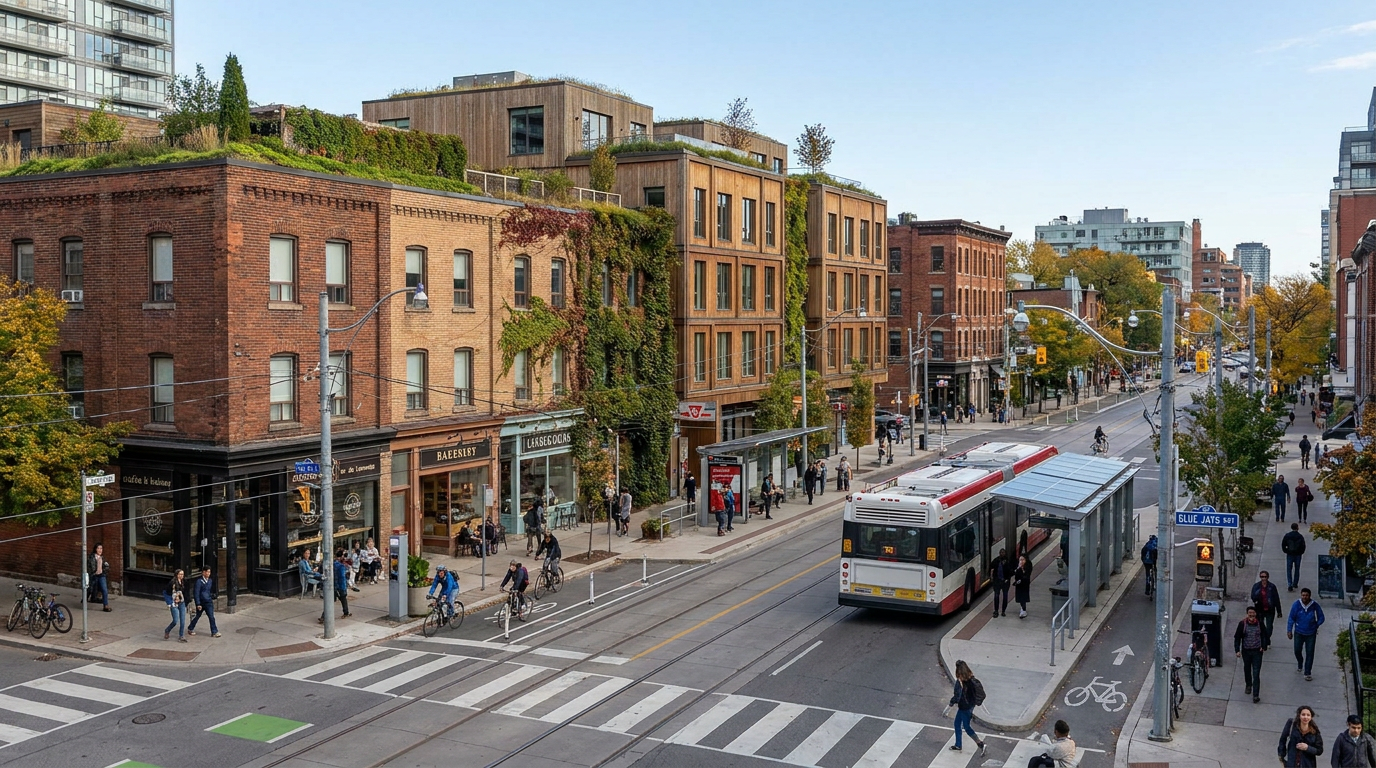
One of the fastest ways to lose support for a rezoning application is to appear indifferent to infrastructure capacity. Residents and staff often ask valid questions about water, wastewater, stormwater, roads, schools, parks, and transit crowding. If the project team treats these concerns as obstacles rather than planning fundamentals, the application begins to look incomplete. The best rezoning strategies integrate infrastructure analysis from the start and show how growth can be serviced responsibly.
This does not mean every application must solve every municipal infrastructure challenge. It does mean the application should clearly identify impacts, required upgrades, phasing implications, and opportunities for coordination. In some cases, a site can support significant growth immediately because existing systems are robust. In other cases, the project may need to be phased, redesigned, or linked to broader capital improvements. Transparency here matters. Decision-makers are more willing to support density when they can see a realistic path to servicing it.
Developers should also understand the political weight of infrastructure. Objections framed around traffic, sewer capacity, school spaces, or flood resilience often carry more influence than generalized dislike of height. That is because they are easier for elected officials to defend publicly. A strong technical package, backed by credible consultants and clear mitigation measures, can therefore reduce the risk that infrastructure becomes the rationale for refusal or prolonged delay.
The growing emphasis on climate resilience makes this even more important. Complete communities today are expected to account for stormwater management, urban heat, tree canopy, energy efficiency, and mobility options. Rezoning strategies that address these issues are more aligned with current policy direction and more defensible in public debate. Sustainability should not be presented as a decorative feature. It should be presented as operational resilience that supports long term urban growth.
Link Rezoning to Housing Delivery, Not Just Entitlements
Entitlement without delivery does little to solve a housing shortage. As governments place more attention on supply outcomes, successful rezoning strategies need to show not only that a project deserves approval but that it is capable of becoming built housing within a reasonable timeframe. This is where financial feasibility, phasing, product mix, and construction practicality enter the rezoning conversation in a more direct way.
Developers should be candid about how the proposed density supports project viability. In some cases, increased height or floor area is necessary to absorb land costs, inclusionary requirements, public realm contributions, and rising construction expenses. Municipalities do not need a private pro forma in every instance, but planning teams should be prepared to explain why a seemingly modest reduction in density could undermine delivery. When this is articulated credibly, it helps staff and council understand the economic logic behind the built form.
This is also the point at which community benefits, affordability measures, and land value capture mechanisms must be calibrated carefully. Inclusionary zoning, density bonusing, or negotiated benefits can help make rezoning politically feasible and socially beneficial. However, if these obligations are stacked without regard to market conditions, they can suppress the very housing supply they are intended to support. Effective strategy therefore requires balance. A project must generate enough public value to earn support, while preserving enough feasibility to move into construction.
Where possible, developers should also show implementation readiness. Site control, pre-application coordination, consultant alignment, construction staging logic, and financing pathway all signal seriousness. In a market where many approvals remain unbuilt, municipalities increasingly pay attention to which applicants appear most capable of execution. Delivery confidence can become a hidden advantage in a rezoning process.
Tailor the Rezoning Ask to the Local Political Environment
Every municipality has a formal planning framework, but every municipality also has an informal political culture. Some councils are strongly pro-housing but cautious on tower forms. Others support intensification near transit but remain highly sensitive to local streetscape change. Some wards are deeply consultation-driven, while others focus heavily on affordable housing, infrastructure commitments, or heritage outcomes. Effective rezoning strategy recognizes these local dynamics without becoming purely political in the negative sense. The aim is to understand how planning decisions are actually made.
This requires more than reading policy documents. It requires studying recent approvals and refusals, understanding staff reports, identifying recurring concerns at community council or planning committee, and learning how similar built forms have been received in comparable contexts. A proposal that is technically supportable may still underperform if it is framed poorly for the local decision-making environment. Conversely, a project with some complexity may succeed if it clearly addresses the priorities that matter most to local leaders and stakeholders.
Framing is especially important when the rezoning proposal is ambitious. If the ask is for significantly more density than existing permissions allow, the application should not rely on a maximalist opening position unless there is a clear tactical reason. In many cases, a calibrated proposal that shows restraint, context sensitivity, and a thoughtful public benefits package can achieve a better overall result than an aggressive scheme that triggers immediate resistance. Negotiation is part of rezoning, and strong strategy leaves room for it without undermining core feasibility.
Developers should also be aware that timing matters. A rezoning filed into a period of active policy review, election cycle sensitivity, or infrastructure uncertainty may face additional friction. Sometimes the best tactical move is not to rush the application but to sequence it around clearer policy direction, improved consultation groundwork, or completion of related municipal studies. Strategy is as much about timing as content.
Transit-Oriented Development Is One of the Strongest Rezoning Narratives
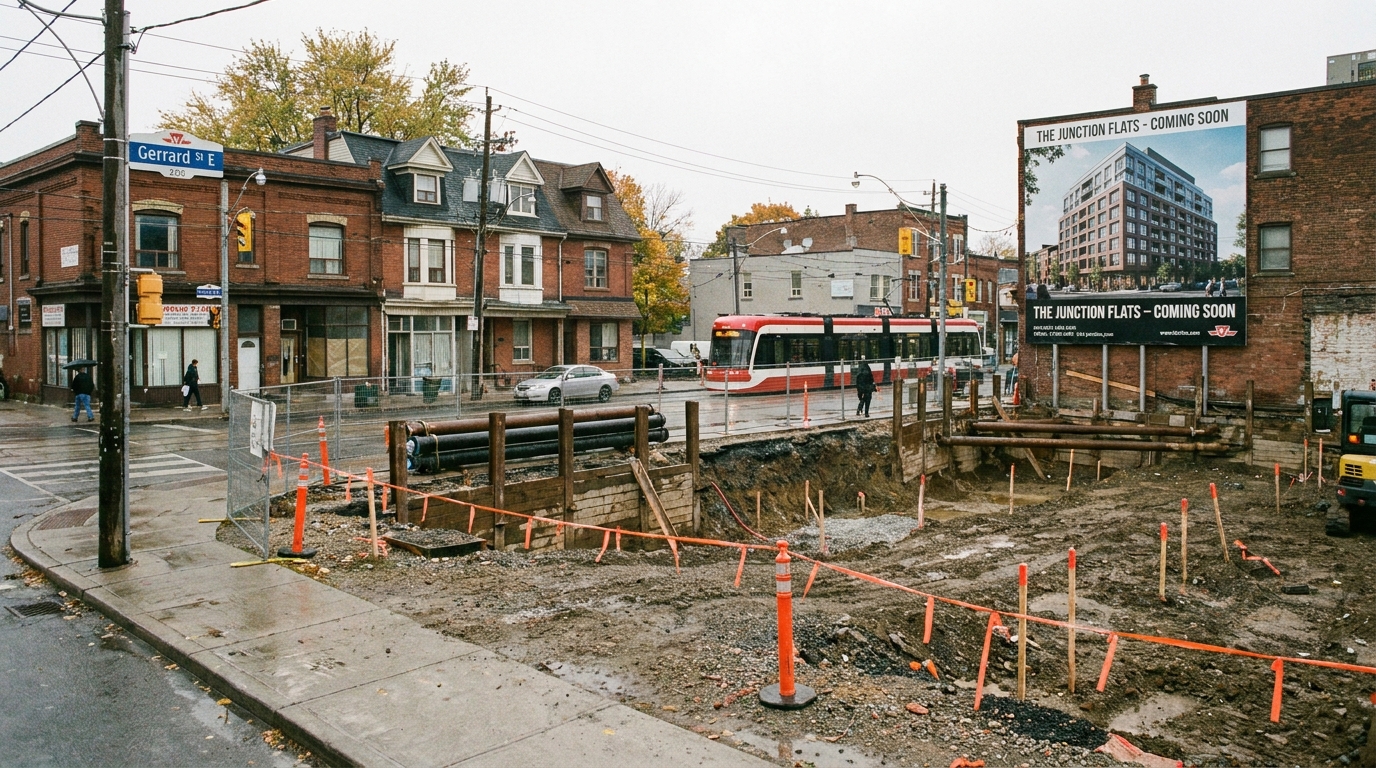
Among the most compelling forms of rezoning in today’s planning environment is transit-oriented development. Municipalities and senior governments increasingly support concentrating housing and mixed-use intensity near higher-order transit because it aligns land use with infrastructure investment. It also supports mode shift, lowers transportation emissions, and creates a stronger case for complete communities with shops, services, employment, and public amenities within walking distance.
For developers, this makes transit proximity a major strategic asset, but only if it is translated into a coherent planning case. Simply being near a station is not enough. The rezoning application should show how the project strengthens ridership, improves pedestrian access, reduces car dependence, manages parking appropriately, and contributes to a walkable urban form. It should also explain how the built form responds to the scale and opportunity of the transit context. Transit-oriented density works best when it is integrated with high-quality public realm and active mobility infrastructure.
Municipal trends support this direction. More cities are moving toward reduced parking minimums, broader permissions near transit corridors, and as-of-right housing reforms for missing-middle forms. Federal messaging has similarly emphasized using infrastructure funding, public lands, and financing tools to reinforce local rezoning reforms. In that environment, applications that intensify strategically around transit are often better positioned than proposals that seek similar density in disconnected auto-oriented settings.
Transit-oriented rezoning also gives developers a broader long term value proposition. These sites are often more resilient across market cycles because they support multiple housing tenures, appeal to a wider demographic range, and fit evolving consumer preferences around mobility and convenience. In other words, transit-oriented rezoning is not just easier to defend in policy terms. It can also be stronger urban business strategy.
Use Data, but Do Not Hide Behind It
Professional reports are essential in any rezoning process, but data alone does not win approvals. Traffic studies, servicing reports, shadow analyses, urban design briefs, planning rationales, and housing need evidence all matter. They build the technical foundation for a supportable application. Yet too many proponents assume that a stack of credible documents will speak for itself. In reality, evidence must be interpreted and communicated in a way that helps non-specialists understand what the proposal means and why the tradeoffs are acceptable.
The best applications use data to reduce uncertainty, not to overwhelm dissent. If a transportation study shows manageable impacts due to transit access and reduced parking, that finding should be explained clearly. If a shadow study reveals limited incremental impact at key public spaces, that should be illustrated plainly. If housing supply analysis shows the local need for rental or family housing, the rezoning narrative should connect that need directly to the project’s unit mix. The technical case and the public case should reinforce each other.
Developers should also avoid selective use of data that appears self-serving. Credibility is critical in rezoning, and credibility can erode quickly when stakeholders feel the analysis has been framed to minimize legitimate impacts. It is better to acknowledge areas where tradeoffs exist, then show how design responses, conditions, or improvements help manage them. Transparency tends to produce more durable approvals than overconfident certainty.
Common Mistakes That Undermine Rezoning Success
Many rezoning failures are not caused by bad sites alone. They are caused by avoidable strategic mistakes. The first is treating rezoning as a technical paperwork exercise instead of a planning and political process. The second is overestimating the speed at which approved density converts into built housing. The third is underestimating neighborhood concerns or dismissing them as irrational. The fourth is asking for a scale of change that is unsupported by policy, context, or infrastructure. The fifth is failing to reconcile public benefits expectations with project feasibility.
Another frequent mistake is designing the proposal in isolation from implementation realities. If construction access is impossible, servicing assumptions are weak, or the unit mix does not match market demand and policy priorities, approval alone will not create value. Similarly, a project that relies too heavily on future negotiation without a clear planning framework may spend years in uncertainty. A better approach is to identify the core approval logic, define the negotiable elements, and build a disciplined strategy around both.
Developers also sometimes assume that every additional square foot of density creates value. In entitlement strategy, that is not always true. Excessive ambition can lead to longer timelines, more opposition, and greater carrying costs, ultimately eroding returns. Smart rezoning is not about maximizing paper density at any cost. It is about securing approvable, financeable, buildable density that fits the city’s direction and can move to delivery.
A Practical Framework for Successful Rezoning
For teams looking to improve rezoning performance, a practical framework can help organize the process. The first stage is site and policy diagnosis. This includes official plan conformity, local context, infrastructure review, comparable approvals, and political landscape assessment. The second stage is concept shaping, where built form, use mix, unit strategy, and public benefits are calibrated to the site’s most supportable planning story.
The third stage is pre-application alignment. This includes early discussions with staff, technical consultants, and key stakeholders, as well as identifying likely pressure points before they harden into opposition. The fourth stage is narrative development, where technical evidence is translated into a coherent case for why the rezoning serves the public interest and can be delivered. The fifth stage is responsive refinement, which means adjusting aspects of the proposal based on legitimate feedback without losing the project’s economic and planning integrity.
- Diagnose the site honestly by assessing not just potential density, but approval probability, infrastructure readiness, and local context.
- Anchor the proposal in policy through official plan conformity, housing targets, transit objectives, and complete community principles.
- Define the public interest clearly with specific benefits tied to housing supply, urban design, mobility, public realm, and resilience.
- Engage early and credibly so community feedback can inform refinements before positions become entrenched.
- Protect feasibility by ensuring that public benefits expectations and built form decisions still support delivery.
This framework is simple in structure but demanding in execution. It requires collaboration across planning, design, legal, technical, financial, and communications disciplines. In today’s environment, that kind of integration is not optional. Rezoning is where fragmented thinking gets exposed very quickly.
The Strategic Opportunity Ahead
Canadian cities are entering a period where rezoning will shape not only individual projects but the broader trajectory of urban growth. Housing shortages, infrastructure investment, climate resilience, and affordability challenges are converging in ways that make land use decisions more consequential than ever. Municipalities are under pressure to enable more supply. Communities want growth that is well designed and well serviced. Developers need approval pathways that are predictable enough to support delivery. Effective rezoning strategy is what brings those interests into workable alignment.
The opportunity is significant. Well-executed rezoning can unlock underused land, support transit, add missing-middle and apartment housing, improve retail streets, strengthen tax bases, and make more efficient use of existing infrastructure. It can also create stronger land value where permissions better reflect the realities of a growing city. But none of that happens automatically. Rezoning works when it is approached with realism, discipline, and a city-building mindset.
For developers in particular, the next era of success will belong to teams that understand rezoning not as a confrontation with planning systems but as a sophisticated form of urban problem solving. That means grounding every application in policy, proving public value, respecting community concerns, accounting for infrastructure, and maintaining feasibility. In practical terms, the best rezoning strategy is the one that can survive scrutiny from staff, council, neighbors, capital partners, and the market all at once.
Urban growth is not simply about building more. It is about building more in the right places, in the right forms, and with the right long term logic. Rezoning is the gateway to that outcome. Done strategically, it can help cities grow with greater supply, stronger resilience, and better alignment between land use and public purpose. That is the standard the industry should be working toward, and it is increasingly the standard that successful projects will need to meet.



No Comment! Be the first one.