



Site acquisition is one of the most consequential decisions in land development because it sets the direction for everything that follows. Before design is refined, before approvals are advanced, and long before construction begins, the quality of the site decision determines the project’s cost structure, risk profile, timing, and long term value. In a market shaped by rapid population growth, housing pressure, infrastructure constraints, and evolving public policy, acquiring land successfully requires far more than simply finding a parcel at an attractive price.
Table Of Content
- Why Site Acquisition Matters More Than Ever
- Start with the Macro View: Read the City Before Reading the Parcel
- Key macro indicators to examine before targeting a site
- Cheap Land Is Not Always Good Land
- Due Diligence Is Where Good Acquisitions Are Won or Lost
- Core due diligence items before acquisition
- Understand Entitlement Risk Before You Price the Land
- Align Acquisition with Infrastructure Reality
- Sustainability Has Become a Site Selection Variable, Not a Marketing Feature
- Why Transit-Oriented and Infill Sites Are Gaining Strategic Importance
- Use Deal Structure to Protect Against Uncertainty
- Common Pitfalls in Site Acquisition
- A Strategic Framework for Better Site Acquisition Decisions
- Questions every acquisition team should ask
- Conclusion: The Best Site Acquisitions Build More Than Projects
Across Canada and North America, the most effective acquisition strategies increasingly reflect a broader understanding of how cities grow. Municipalities are planning for compact development, transit access, housing supply, and infrastructure efficiency. Federal and municipal policy are also placing greater emphasis on sustainability, affordability, and land activation. That means the best sites are often not the cheapest or the largest. They are the ones that fit a city’s growth logic, align with servicing capacity, and offer a realistic path to entitlement and execution.
Developers, planners, and investors who approach site acquisition strategically tend to outperform those who treat it as a simple real estate transaction. The winning mindset is to see acquisition as a planning and policy exercise, a market analysis exercise, and a risk management exercise all at once. When these disciplines are integrated early, the result is a better chance of securing land that can actually deliver housing, employment, and long term urban value.
This article explores the strategic approaches that matter most in modern site acquisition. It explains how to evaluate location through the lens of urban growth, how to test feasibility before committing capital, how to structure deals to preserve flexibility, and how sustainability and infrastructure now shape site value. For anyone involved in large scale land development, this is where disciplined city building begins.

Why Site Acquisition Matters More Than Ever
There has always been a direct relationship between land and development outcomes, but that relationship has become more complex in recent years. Canada’s large urban centres continue to absorb a significant share of population growth, which increases pressure on housing supply, transportation systems, utilities, and community infrastructure. Statistics Canada data and municipal planning frameworks consistently point to the same reality: growth is concentrating in major metropolitan areas, and land decisions inside those growth regions now carry greater economic and social consequences.
As cities intensify, suitable development sites become harder to find and more expensive to secure. At the same time, governments are increasingly linking approvals, infrastructure funding, and housing programs to development patterns that support affordability and efficient service delivery. A poorly chosen site may face years of delay because of servicing deficiencies, access limitations, incompatible land use designations, or political resistance. A well chosen site, by contrast, can move more quickly because it already sits within the path of planned growth.
This shift is changing what it means to acquire land intelligently. Historically, some developers could create value primarily by buying raw or underpriced land and waiting for the market to catch up. That strategy still exists, but it now carries more uncertainty where long term servicing, policy support, and climate resilience are not clearly in place. In many urban markets, value is increasingly created through precision rather than speculation. The most successful acquisitions are often the ones that can unlock more units, reduce infrastructure burden, and fit the city’s stated priorities.
Strategic site acquisition is not about buying land cheaply. It is about buying land that can be transformed efficiently, approved credibly, and integrated into the city’s future growth pattern.
Start with the Macro View: Read the City Before Reading the Parcel
A disciplined acquisition strategy begins at the metropolitan scale. Before evaluating a specific property, developers need to understand the direction of urban growth, the pressure points in housing demand, and the infrastructure systems that shape expansion. This means looking at population trends, employment distribution, transit investment, land-use conversion patterns, and municipal intensification objectives. A parcel does not exist in isolation. Its future is tied to larger decisions about where the city wants growth to go.
In Canada, planning agencies rely heavily on census and demographic data to guide long term service and infrastructure decisions. Large urban centres with populations above 100,000 continue to attract growth, and that growth must be accommodated somewhere. Sites near employment clusters, established transit corridors, and existing servicing networks generally benefit from stronger policy support and more predictable market demand. These locations are often better positioned for housing delivery because they reduce the cost of extending infrastructure while supporting broader planning goals.
Environment and Climate Change Canada has also noted that land-use conversion to settlement is concentrated in provinces experiencing significant urban expansion, particularly Ontario and Quebec. That matters because not all conversion is equally efficient or equally supportable. Land at the urban edge may appear abundant, but if it lacks water, wastewater, transportation capacity, or a supportive policy framework, its apparent affordability can be misleading. Land value must always be viewed in relation to the cost and timing of making a site truly developable.
The macro question is simple but decisive: Is this site located where growth is actually being enabled? If the answer is unclear, every downstream assumption becomes weaker. If the answer is yes, the acquisition starts from a position of strategic strength.
Key macro indicators to examine before targeting a site
- Population growth and household formation in the surrounding region
- Municipal growth plans and official plan directions
- Transit investment and transportation network expansion
- Existing and planned water, wastewater, and utility capacity
- Employment nodes, institutional anchors, and service corridors
- Housing supply shortages by type, tenure, and affordability band
- Climate risk factors such as flooding, heat exposure, and environmental constraints
Cheap Land Is Not Always Good Land
One of the most persistent misconceptions in land development is that a low purchase price creates a built in advantage. In reality, cheap land can become very expensive once full development costs are understood. Servicing gaps, contamination, entitlement complexity, poor access, off-site improvements, legal complications, and extended carrying periods can quickly erase any discount secured at acquisition. This is why experienced developers do not evaluate land on price alone. They evaluate it on total project economics.
Vacant land is a good example. Many assume that a vacant parcel is a clean slate and therefore easier to develop. In practice, vacant land can conceal major issues such as wetlands, unstable soils, floodplain exposure, fragmented ownership history, utility deficits, easements, or road access limitations. Even where no building demolition is required, the cost of making the land usable may be substantial. A site that appears simple on the surface may actually carry deep structural disadvantages.
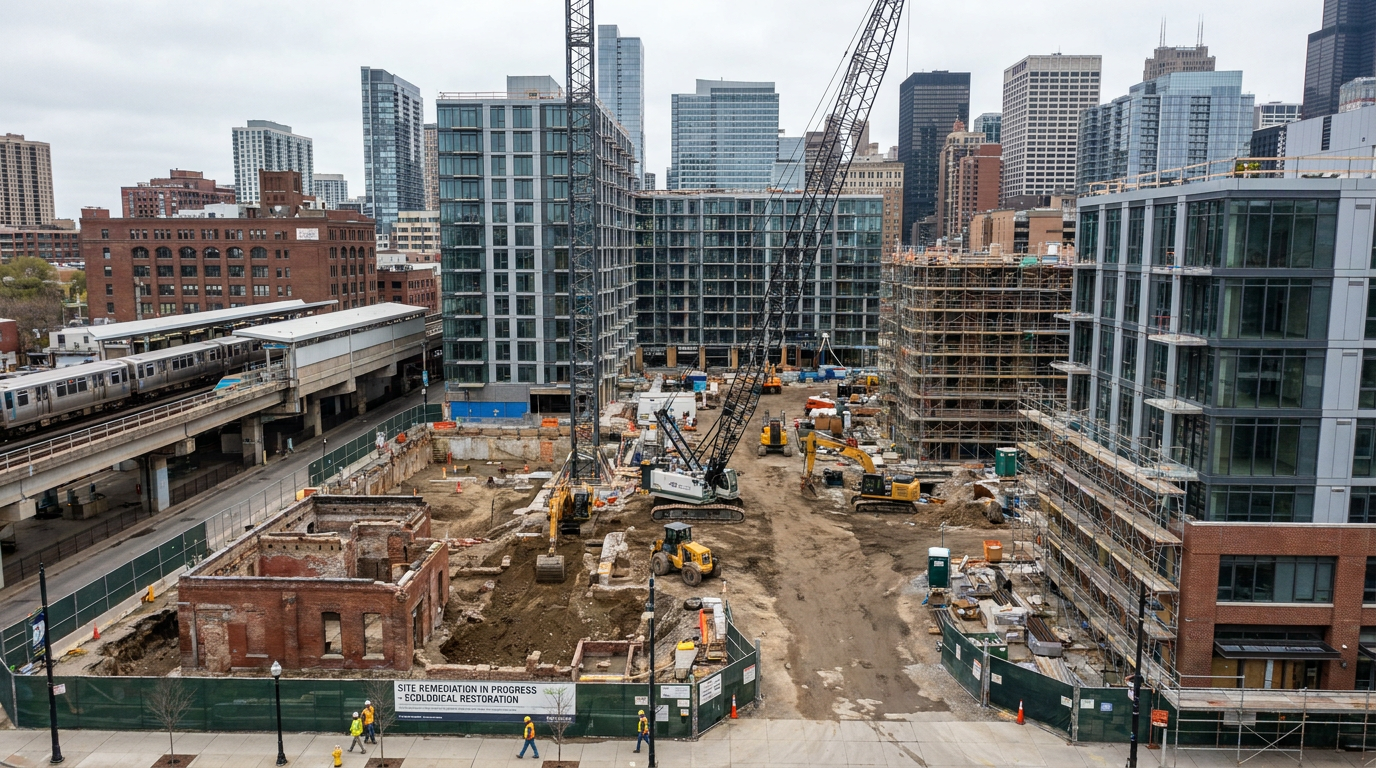
Brownfield sites are often misunderstood in the opposite direction. Some buyers avoid them entirely because of perceived environmental risk. Yet with rigorous diligence, realistic remediation planning, and the right incentive environment, brownfields can become some of the strongest infill opportunities in supply constrained urban markets. They are frequently well located near transit, jobs, and existing infrastructure, which means the underlying urban logic may be superior to that of cleaner but more remote greenfield sites.
The right question is not whether a site is cheap, vacant, or previously used. The right question is whether the site can deliver its intended highest and best use with acceptable risk, timing, and cost. That is the standard that matters.
Due Diligence Is Where Good Acquisitions Are Won or Lost
Pre-acquisition due diligence is the core discipline that separates informed development from avoidable speculation. Once a site is acquired, many risks become the buyer’s problem. That is why diligence must happen before capital is fully committed, not after. In both public and private acquisition practice across North America, environmental condition analysis, infrastructure assessment, title review, market study, and opportunities and constraints analysis are considered foundational tasks. They are not optional boxes to check. They are the basis for underwriting reality.
Environmental site assessments are especially important where contamination liability is possible. A Phase I environmental review can identify historical uses and potential concerns, while further testing may be required depending on findings. This is standard risk management and should be treated as a routine part of acquisition, particularly for industrial, commercial, or long-held sites where legacy conditions may exist. Environmental uncertainty does not always kill a deal, but unmeasured environmental uncertainty often weakens one.
Title and legal diligence are equally critical. Developers must understand ownership structure, encumbrances, easements, rights of way, restrictive covenants, lease interests, and any pending disputes or claims. A site with perfect planning metrics can still become problematic if legal access is constrained or if title complications delay closing or redevelopment. These issues must be identified early because they affect value, deal structure, and schedule.
Servicing diligence is another major determinant of feasibility. Water, wastewater, stormwater, power, road access, and transportation capacity all influence development yield and cost. In some cases, the issue is not whether servicing exists, but whether the existing system has enough capacity for the intended density. A site close to urban amenities can still face major delays if upgrades are required and municipal timing is uncertain. Understanding these constraints before acquisition is essential.
Core due diligence items before acquisition
- Confirm title, ownership, easements, encumbrances, and legal access.
- Review zoning, official plan designation, and the likely approval pathway.
- Undertake environmental site assessment and contamination screening.
- Test geotechnical conditions, topography, and physical development constraints.
- Assess water, wastewater, stormwater, transportation, and utility servicing capacity.
- Study market demand, absorption, unit mix, and competitive supply.
- Estimate development charges, off-site costs, remediation costs, and timing risk.
- Evaluate flood risk, climate exposure, and long term resilience considerations.
When diligence is done properly, acquisition decisions become more strategic and less emotional. A developer gains clarity not only on whether a site is possible, but on what conditions are necessary to make it perform. That insight supports better negotiation, better pricing discipline, and better project planning from the outset.
Understand Entitlement Risk Before You Price the Land
Entitlement risk is one of the most underestimated variables in site acquisition. Many deals are modeled on an assumed density, use, or approval timeline that has not been tested against actual municipal policy or local political conditions. This can lead to overpaying for land based on a future that may never materialize. A site’s paper potential is not the same as its actionable potential. Developers must understand what can be built by right, what requires rezoning, what may trigger community opposition, and what infrastructure or policy conditions may limit approvals.
Municipal planning is increasingly shaped by housing targets, intensification mandates, and transit-supportive development goals, but that does not mean every site automatically benefits. Planning support depends on context. A parcel near higher order transit may justify greater density, while a similar parcel with poor access or unresolved servicing may struggle despite a supportive market. The approval path must be understood in detail, including expected studies, consultation requirements, timing, and decision makers.
Developers should also distinguish between strategic optimism and unsupported assumptions. There is nothing wrong with pursuing density uplift if there is a credible rationale grounded in policy and urban design. In fact, acquiring sites with excess density potential has become more common as costs rise and urban land becomes scarcer. CMHC-related research suggests developers are placing increasing emphasis on intensification opportunities and sites that can unlock more units through planning strategy. The key is to underwrite that upside cautiously, not treat it as guaranteed value on day one.
Entitlement discipline means paying for what is supportable today while structuring the deal to benefit from what may be supportable tomorrow. That approach preserves upside without overexposing the project to policy uncertainty.
Align Acquisition with Infrastructure Reality
Infrastructure capacity is one of the defining filters in modern site acquisition. A site can appear perfectly located from a market perspective and still fail economically if the infrastructure required to support development is unavailable, delayed, or prohibitively expensive. Housing supply goals across Canada are increasingly linked to housing-enabling infrastructure, which means water, wastewater, transportation, and utilities are not background issues. They are central to whether land can be activated at all.
In practical terms, this means developers need to ask not only whether infrastructure exists, but whether the local system can absorb the scale and timing of the proposed development. Some municipalities have strong growth objectives but limited near term servicing capacity. Others may have transportation constraints that affect access, circulation, or acceptable density. In still other cases, major off-site works may be required before development can proceed, shifting risk back onto the proponent.
Sites that leverage existing infrastructure generally have an advantage because they support efficient city building. This is one reason infill and transit-oriented development continue to attract attention from both developers and public policy makers. These sites may be more expensive at acquisition, but they often reduce the total burden of service extension and align more closely with compact growth objectives. In a constrained market, that alignment can translate into stronger approvals and more resilient economics.
Infrastructure also affects phasing. A large site may be developable in principle but only in stages as servicing expands. That is not necessarily a weakness. If understood early, phasing can become a strategic tool that matches capital deployment to infrastructure timing and market demand. The danger is when phasing is not planned and becomes a forced response to overlooked servicing limits.
Sustainability Has Become a Site Selection Variable, Not a Marketing Feature
Sustainability is often discussed in relation to building design, but it now belongs much earlier in the development process. Site acquisition itself is increasingly shaped by environmental, social, and economic considerations. Canada’s Federal Sustainable Development Act requires environmental, economic, and social factors to be integrated into decision making, and federal housing and infrastructure policy has moved in the same direction. The implication for developers is clear: sustainability is not a layer added after acquisition. It can influence whether a site is attractive, financeable, approvable, and durable over time.
This policy direction favors land that supports efficient use of existing infrastructure, lowers transportation dependency, and contributes to housing supply in established or strategically growing areas. It also increases interest in underused public land, surplus institutional sites, infill parcels, and brownfield opportunities where land activation can happen without pushing growth further into areas that are costly to service. These are not just environmental preferences. They are increasingly part of the economic logic of modern development.
Climate resilience is a related and essential consideration. Floodplain exposure, stormwater limitations, extreme heat, slope instability, and ecological constraints can all shape site viability. A parcel that can technically be developed may still face elevated insurance costs, design complexity, or future operating risk if climate issues are not fully understood. The acquisition process should therefore include a realistic assessment of how a site will perform not only at approval, but over decades of ownership and use.
In other words, sustainable site acquisition is about choosing land that works with the city and with the environment rather than against them. That is increasingly where long term value lies.
Why Transit-Oriented and Infill Sites Are Gaining Strategic Importance
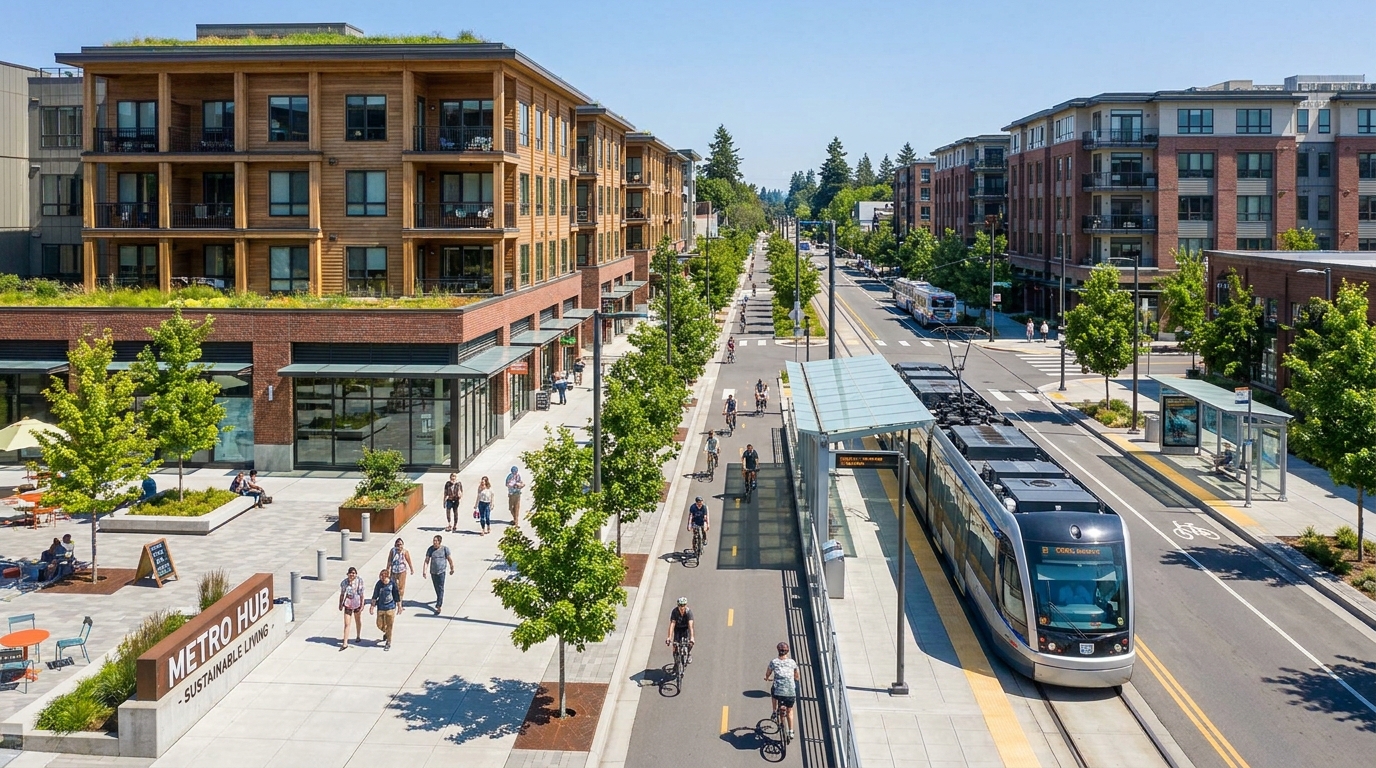
Transit-oriented development has become a defining acquisition theme because it sits at the intersection of market demand, public policy, infrastructure efficiency, and sustainability. Sites near higher order transit often support higher densities, reduced parking dependence, stronger access to employment, and more efficient service delivery. In regions facing housing shortages, these locations are increasingly central to growth strategies because they can add homes where mobility options already exist.
Infill sites share many of the same advantages. They tend to be located within established urban areas with existing roads, utilities, schools, and commercial services. This can shorten the path to delivery compared with peripheral expansion, particularly where municipalities are prioritizing compact growth. Infill is not always easy. Parcel fragmentation, surrounding uses, and political sensitivity can complicate redevelopment. Still, when these sites are well chosen, they often create more strategic value than edge-of-city acquisitions that require substantial new infrastructure.
Underused commercial plazas, aging industrial lands, obsolete low-density properties, and surplus public holdings are all examples of urban land that may hold redevelopment potential. The critical task is to distinguish between theoretical potential and realistic execution. Developers should assess not only whether intensification is conceptually desirable, but whether site geometry, servicing, access, and policy support make that intensification practical.
What is changing in the market is that more developers are actively seeking density and optionality rather than just acreage. As land and construction costs rise, the ability to produce more units on a strategically located site becomes increasingly valuable. That is one reason land with excess density potential is attracting stronger interest. The site itself is no longer judged purely by area, but by how effectively it can translate location and policy alignment into built form.
Use Deal Structure to Protect Against Uncertainty
Not every attractive site should be purchased on a simple unconditional basis. In a market defined by policy shifts, servicing uncertainty, and cost volatility, deal structure has become a strategic tool in its own right. The goal is to secure control of land while preserving flexibility as entitlement, infrastructure, and market conditions evolve. This approach is especially relevant for large scale developments where timing and risk can change substantially between initial negotiations and final approvals.
Option agreements, conditional offers, phased closings, vendor take-back financing, and land assemblies are all tools that can improve acquisition discipline. An option agreement can allow a developer to control a site while undertaking studies and testing the planning path. A phased closing can align land takedown with servicing delivery or staged approvals. Vendor take-back structures can reduce near term capital pressure and create room for value to be unlocked through planning progress. Assemblies around future transit or infrastructure investments can create longer term strategic positions without requiring immediate full exposure.
These structures are not just financial engineering. They reflect a mature understanding that land value often changes as certainty increases. The less certainty a site has at the time of acquisition, the more important it is to avoid overcommitting. Skilled developers negotiate for time, conditions, and flexibility because they understand that downside protection is part of value creation.
Optionality is particularly important where density uplift is being pursued. If the business case depends on a rezoning or policy change, the acquisition should reflect that reality. Structuring the deal so that consideration increases as approvals are achieved can align interests between buyer and seller while reducing avoidable risk. In a complex market, a smart structure can be as important as a smart location.
Common Pitfalls in Site Acquisition
Even experienced teams can make costly acquisition mistakes when market pressure is high. One common pitfall is relying too heavily on precedent. Just because a nearby site achieved a certain density or approval outcome does not mean the same result will follow elsewhere. Every parcel has its own constraints, context, and political conditions. Good acquisitions are based on current evidence, not borrowed assumptions.
Another pitfall is treating planning support as equivalent to project readiness. A municipality may welcome growth in principle while lacking near term infrastructure capacity or internal approval bandwidth to process complex applications quickly. Similarly, a site may be designated for intensification but still face major implementation barriers related to access, flood risk, or parcel configuration. Strategic intent matters, but execution conditions matter more.
Developers also run into trouble when they underestimate carrying costs and time. A site that takes years longer than expected to entitle or service can suffer a major erosion of returns, even if the eventual project is approved. This is why acquisition discipline should always include timing sensitivity analysis. Value is not created by the number of units on paper alone. It is created by the relationship between yield, time, cost, and certainty.
Finally, some buyers still treat sustainability and community fit as secondary concerns. In today’s environment, that is a strategic mistake. Projects that align with public goals around housing supply, compact growth, and efficient infrastructure are often better positioned to move through the system. A site acquisition strategy that ignores this broader context risks selecting land that is technically available but politically and practically difficult to activate.
A Strategic Framework for Better Site Acquisition Decisions
The best acquisition decisions tend to follow a clear sequence. First, identify where growth is being directed and where infrastructure can support that growth. Second, target sites that align with those structural conditions rather than chasing nominal land discounts. Third, conduct rigorous diligence across planning, legal, environmental, physical, and market dimensions. Fourth, structure the deal in a way that protects the downside while preserving access to upside. Finally, evaluate the site not only for initial feasibility, but for how well it contributes to long term urban value.
This framework is especially important in a market where development is under pressure to deliver more housing more efficiently. Governments are increasingly focused on unlocking supply, leveraging public land, streamlining approvals, and coordinating infrastructure with growth. Developers who understand that context can position themselves more effectively. They can identify opportunities others miss, particularly in underused urban areas where policy support is strengthening.
There is also an institutional advantage to strategic acquisition. Lenders, capital partners, and public agencies are more confident when a project is rooted in a clear understanding of policy alignment, infrastructure capacity, and risk mitigation. A site acquired through discipline sends a different signal than one acquired through momentum. It demonstrates that the development team understands not just real estate, but city building.
Questions every acquisition team should ask
- Does this site align with current and future municipal growth priorities?
- Can existing or planned infrastructure support the intended density and timeline?
- What approval path is required, and how much entitlement risk is being assumed?
- What hidden costs could undermine apparent land value?
- How resilient is the site to environmental and climate-related risk?
- Can the deal be structured to reduce exposure while certainty is created?
- Will this acquisition still make sense if approvals, servicing, or market timing shift?
Conclusion: The Best Site Acquisitions Build More Than Projects
Mastering site acquisition means understanding that land is not just a commodity. It is the foundation of future neighborhoods, housing supply, infrastructure efficiency, and long term urban performance. In a complex market, the strongest acquisitions are those that align with how cities are actually growing and how policy is increasingly shaping development outcomes. That requires a broader lens than price alone.
For developers and planners, the practical takeaway is clear. Start with the city, not the parcel. Read growth patterns, policy direction, infrastructure timing, and demographic demand before moving into negotiation. Then apply rigorous due diligence to test whether a site can perform under real conditions, not idealized assumptions. Where uncertainty exists, use structure and phasing to protect capital while preserving upside.
The market is rewarding strategic precision. Infill, transit-oriented development, brownfield reuse, underused public land, and sites with realistic density upside are becoming more important because they support housing delivery in places where infrastructure and policy can work together. At the same time, raw land without clear servicing or entitlement signals is carrying more risk than many buyers assume. The difference between success and disappointment often comes down to whether acquisition decisions were made with a full understanding of the urban system.
Ultimately, successful site acquisition is about more than securing land. It is about securing possibility. The best sites are the ones that can move from idea to approval to built form in a way that creates durable value for developers, municipalities, and communities alike. In the years ahead, that strategic alignment will define who builds well and who merely buys land.


No Comment! Be the first one.