



The idea of the smart city has matured. It is no longer credible to describe urban innovation as a collection of sensors, apps, and dashboards layered onto an existing city. The real challenge is much larger and much more consequential. A smart city is a long term urban strategy that aligns technology, physical infrastructure, land use, governance, and public priorities to improve how a city functions and how people live within it.
Table Of Content
- What a Smart City Actually Means
- Start with Urban Goals, Not Technology
- Technology Must Be Integrated with Physical Infrastructure
- Data Governance, Privacy, and Cybersecurity Are Foundational
- Sustainability and Resilience Must Be Built into the Model
- Community Engagement Determines Whether Smart City Plans Endure
- The Role of AI, Automation, and Responsible Oversight
- Financing, Procurement, and Delivery Strategy Matter as Much as Vision
- A Practical Framework for Developing Smart Cities
- Why Smart City Strategy Matters for the Next Era of Urban Growth
That distinction matters because cities are not software platforms. They are living systems shaped by housing demand, transit capacity, utility networks, public trust, political leadership, climate pressure, and economic opportunity. If technology is deployed without a clear urban purpose, it often produces fragmented projects, duplicated costs, and limited public value. When it is deployed with discipline, however, it can help cities become more resilient, more efficient, more inclusive, and better prepared for growth.
In Canada, this more strategic understanding has already shaped policy. The federal Smart Cities Challenge was backed by $300 million over 11 years, and the first competition awarded $75 million in prizes to four winners in 2019. More important than the funding itself was the framing. The program emphasized resident outcomes, measurable goals, connected technology, and meaningful public participation. That is a significant signal to planners, developers, municipalities, and infrastructure leaders: success is not measured by the amount of technology installed, but by whether cities actually work better for the people who live in them.
This is where smart city development becomes especially relevant to the future of North American growth. As cities face population increases, infrastructure deficits, housing pressure, extreme weather, and fiscal constraints, they need better ways to plan, prioritize, and manage investment. Smart city tools can support that effort, but only if they are integrated into a broader development strategy. The cities that lead in this space will not be the ones that buy the most devices. They will be the ones that make the best long term decisions about land, mobility, energy, data, and governance.
This guide looks at what it really takes to develop a smart city. It explores how clear goals, integrated infrastructure, cybersecurity, sustainability, community trust, and responsible innovation must work together. The objective is not to romanticize technology. It is to understand how technology can be harmonized with urban systems so that growth is stronger, service delivery is better, and quality of life improves over time.
What a Smart City Actually Means
The term smart city is often misunderstood because it sounds like a technology category. In practice, it is much closer to a planning framework. Canadian federal materials define a smart city approach as one that uses data and connected technology to achieve meaningful outcomes for residents. That wording is important. It places the outcome first and the technology second, which is exactly how city building should work.
UN Habitat has reinforced this global shift in thinking. Its 2024 smart city work emphasizes people centered development, sustainability, inclusion, resilience, digital rights, and governance capacity. In other words, the smart city is not just digital. It is civic. It must respond to how people move, where they live, how infrastructure performs, how services are delivered, and how rights are protected in an increasingly connected environment.
That broader perspective also helps correct several common misconceptions. Smart cities are not just for major global capitals. Communities of different sizes can adopt smart city principles if they are focused on solving real local challenges. A small municipality dealing with water loss, winter road safety, or emergency response can benefit just as much from a strategic digital approach as a large metropolitan region managing rapid growth and congestion.
Another misconception is that more data automatically leads to better cities. It does not. Data only becomes valuable when it is interoperable, well governed, secure, and tied to decisions that improve services or reduce risk. Cities can collect enormous volumes of information and still remain poorly coordinated if departments, systems, and capital programs do not align.
Smart cities succeed when they define success in human terms. Better mobility. Safer streets. Lower emissions. More resilient infrastructure. Faster service delivery. Stronger trust between institutions and residents.
Once the concept is properly framed, the planning task becomes clearer. A smart city strategy must identify the outcomes that matter most and then design an implementation model that connects technology to physical investment, governance reform, and community expectations.
Start with Urban Goals, Not Technology
The first step in building a smart city is setting clear goals. Cities should be explicit about what they are trying to improve and why. Typical priorities include mobility, housing access, safety, public health, climate resilience, environmental performance, and operational efficiency. These objectives create the strategic lens through which every technology investment should be evaluated.
For example, a city dealing with severe congestion may focus on intelligent transportation systems, real time transit information, curb management, and multimodal coordination. A city facing flood risk may prioritize stormwater monitoring, vulnerability mapping, emergency response data, and climate modeling. A fast growing suburban municipality may need better digital tools for growth management, utility planning, and public consultation as new communities are built.
The point is not to treat every city the same. Smart city development must be grounded in local conditions, fiscal reality, and long term growth patterns. A strong plan starts by asking practical questions. Where are services underperforming. Which infrastructure systems are under pressure. What risks are becoming more severe. Which investments can improve both efficiency and quality of life. These are development questions as much as they are technology questions.
They are also land use questions. If a city approves growth in places that infrastructure cannot support, no amount of digital sophistication will solve the underlying problem. If housing, transit, and utilities are planned in isolation, service gaps become structural. Smart city strategy therefore needs to be integrated with official plans, zoning, capital budgets, transportation master plans, housing policies, and utility forecasts.
That level of coordination is what separates a serious smart city program from a collection of pilot projects. Pilot programs can be useful, but they should never replace strategic planning. The city of the future is not built through scattered innovation. It is built through disciplined alignment across systems that were too often managed separately in the past.
Technology Must Be Integrated with Physical Infrastructure
One of the biggest mistakes in smart city planning is assuming the digital layer can be treated separately from the physical city. In reality, connected technology only creates lasting value when it is integrated into infrastructure systems that cities already depend on every day. Roads, transit, water networks, electricity systems, buildings, public spaces, and waste services all become better when data, connectivity, and operational intelligence are embedded thoughtfully within them.
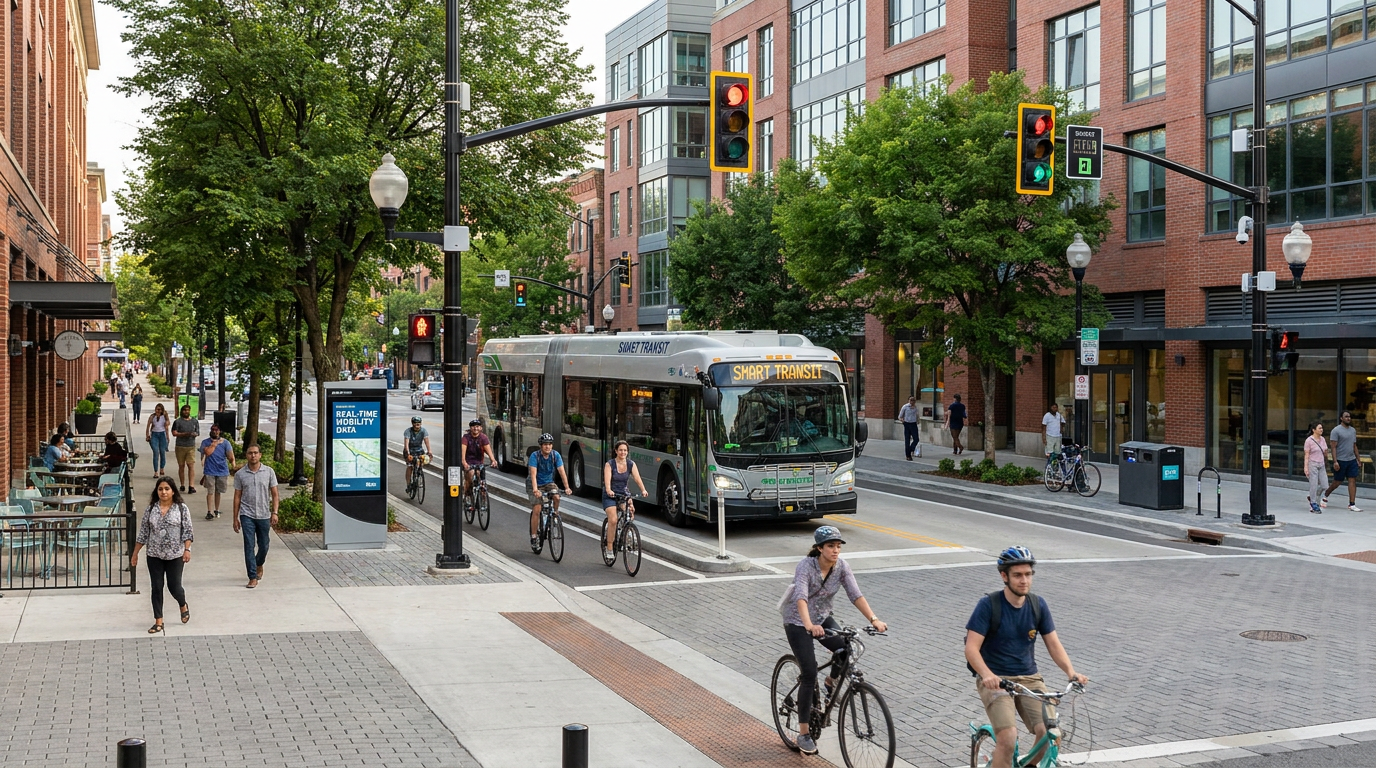
Consider transportation. A smart mobility system is not just an app that shows bus arrivals. It is an integrated network that links transit operations, traffic signals, curb management, pedestrian safety, cycling infrastructure, fare systems, and land use decisions. If a city adds real time information but fails to align housing density and transit capacity, the mobility outcome will remain limited. Technology can improve system performance, but it cannot compensate for poor urban structure.
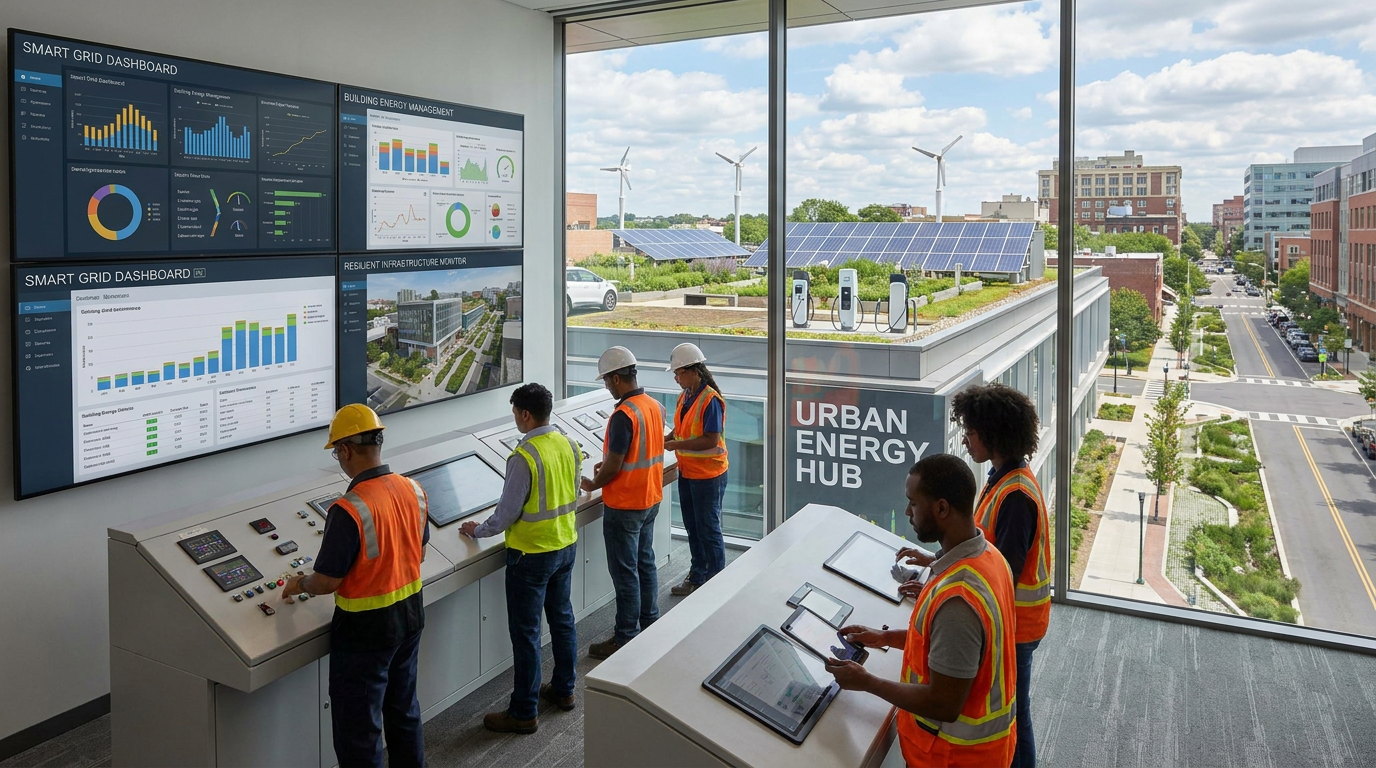
The same logic applies to buildings and utilities. Smart grids, advanced metering, building energy management systems, and connected district infrastructure can help reduce energy waste and improve resilience. Yet those gains depend on whether capital planning, regulatory frameworks, and building standards support adoption at scale. Technology becomes transformative when it is designed into the infrastructure lifecycle, not added as an afterthought.
For developers, this has major implications. Large projects increasingly need to think beyond parcel level delivery and consider how digital systems connect to district wide services. Mixed use communities, transit oriented developments, and major regeneration sites are especially well positioned to incorporate smart energy systems, mobility hubs, public Wi Fi, adaptive lighting, integrated waste systems, and shared data platforms. Done well, these features enhance both asset value and community performance over the long term.
Municipalities also need interoperability standards. Without them, different systems cannot communicate effectively and procurement becomes fragmented. One department may purchase one platform, another department may select a different vendor, and over time the city inherits a patchwork of incompatible technologies. The result is rising cost, operational friction, and a city that appears innovative on paper but lacks coordinated functionality in practice.
This is why smart city planning belongs in the same conversation as infrastructure renewal. It is not just about innovation budgets. It is about how a city modernizes core systems while making sure each new investment contributes to a more connected and more adaptable urban fabric.
Data Governance, Privacy, and Cybersecurity Are Foundational
No smart city strategy is credible without a serious approach to data governance, privacy, and cybersecurity. These are not supporting considerations. They are foundational requirements. When cities deploy connected systems across transit, public facilities, utilities, traffic management, emergency services, and digital platforms, they are expanding the number of assets that could be compromised, misused, or misunderstood if governance is weak.
NIST has emphasized designed in security and privacy principles for smart cities, along with standards based risk management and secure architecture. That approach is the right one. Security cannot be patched in later after systems are deployed. It must be embedded from the beginning in procurement, vendor selection, technical design, data storage, access controls, and operational oversight.
Canadian security assessments have made a similar point by warning that smart city vendors and supply chains should be evaluated carefully to protect safety, privacy, data integrity, and national security. That is a critical message for public authorities and private partners alike. Connected infrastructure procurement should be treated with the same seriousness as any other critical infrastructure decision. The question is not only whether a system works. It is whether the city can trust how it works, who manages it, where data flows, and how vulnerabilities will be addressed over time.
Public trust depends on this discipline. Residents may support innovation in principle, but support can erode quickly if people believe surveillance is expanding without clear safeguards or if data collection lacks transparency. Cities need plain language policies that explain what information is being collected, for what purpose, how long it will be retained, who can access it, and how misuse is prevented. Rights based governance is not an abstract ideal. It is essential to maintaining legitimacy.
There is also a practical operational issue. If city departments do not have internal capacity to govern digital systems, they become overly dependent on vendors. That creates strategic risk. Municipal governments need skilled staff, governance frameworks, escalation protocols, and ongoing audit mechanisms so that public institutions remain in control of systems that affect public life.
In the years ahead, the strongest smart city strategies will be the ones that treat data stewardship as a core public service responsibility. In a connected city, trust is infrastructure.
Sustainability and Resilience Must Be Built into the Model
Smart city development is often associated with efficiency, but efficiency alone is too narrow a goal for the decade ahead. Cities now face intensifying climate risk, aging infrastructure, rising energy demand, and greater pressure to reduce emissions. The strategic opportunity is to use digital systems to support sustainability and resilience at the same time.
UN Habitat’s World Cities Report 2024 argues that closing urban exposure and vulnerability data gaps is essential for climate preparedness. That insight is highly relevant to smart city planning. Cities cannot respond effectively to heat, flooding, power disruption, or infrastructure stress if they do not have a clear picture of where risk is concentrated and how systems perform under pressure. Connected sensors, geospatial data, and integrated monitoring can help fill those gaps when used appropriately.
In practical terms, this means smart city investment should target applications that improve environmental performance and strengthen the city’s ability to absorb shocks. Smart grids can optimize electricity use and support cleaner energy integration. Building energy management systems can reduce waste across both public and private assets. Intelligent transportation systems can reduce delays, improve mode shift, and lower emissions. Advanced water and stormwater monitoring can help municipalities detect failures, manage capacity, and respond faster during extreme events.
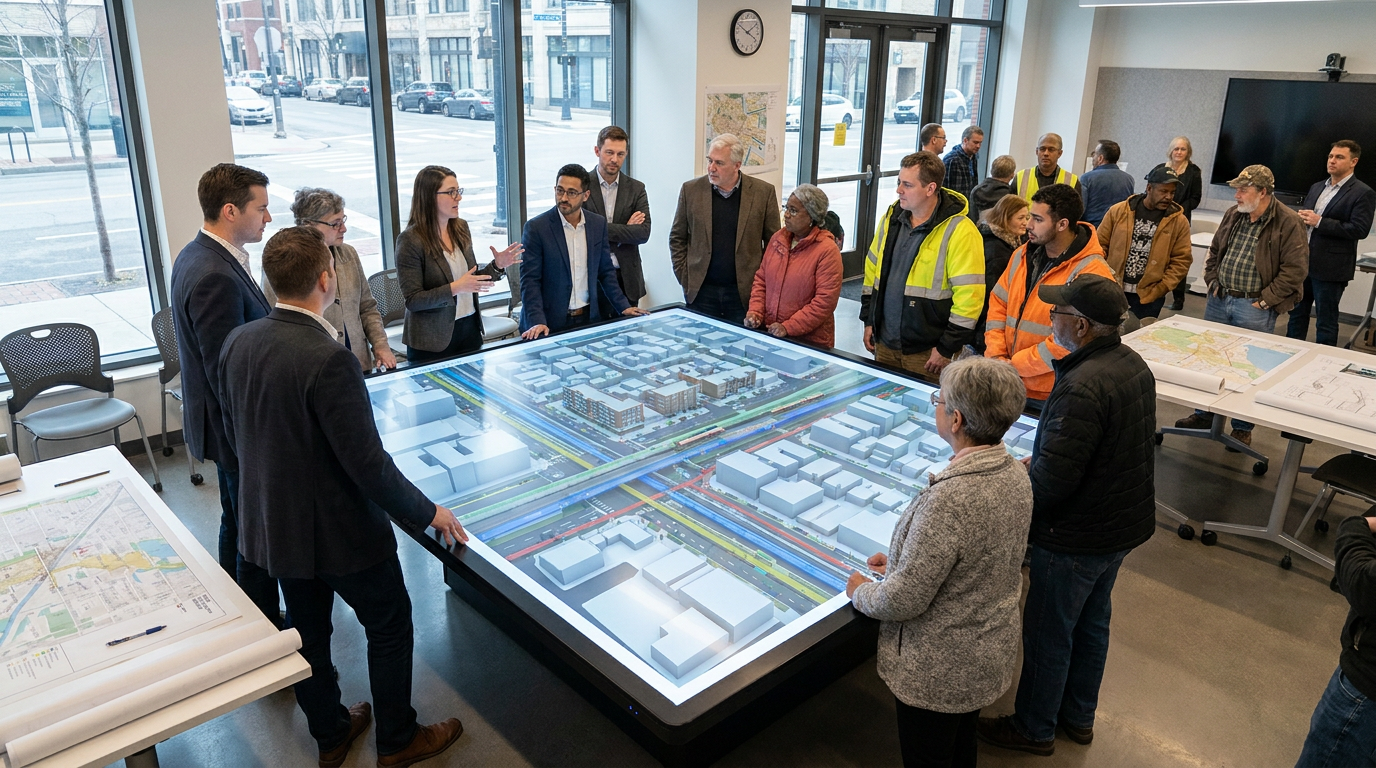
Another increasingly important tool is the digital twin. A digital twin allows planners and infrastructure teams to model a city, district, corridor, or major asset in a dynamic and visual way. This can be used to test redevelopment scenarios, understand utility constraints, simulate emergency events, evaluate climate vulnerabilities, and communicate future plans more clearly to decision makers and the public. OECD research has highlighted the role of digital twins in visualizing redevelopment and supporting resilience focused planning, which reflects a broader shift toward more predictive and integrated urban management.
Still, sustainability cannot be assumed simply because technology is present. Digital infrastructure consumes energy, relies on hardware supply chains, and can create e waste if systems are replaced too quickly or deployed without lifecycle planning. That is why smart city sustainability must include procurement standards, maintenance planning, energy sourcing, and long term asset management. The objective is not digital expansion for its own sake. It is better urban performance with lower environmental cost.
From a strategic perspective, the most valuable smart city investments are often those that improve multiple outcomes at once. A transit corridor that combines electrified service, adaptive traffic management, safer pedestrian infrastructure, and transit supportive development can reduce emissions, improve access, and support housing growth. A district energy system linked with efficient buildings and real time monitoring can strengthen resilience while lowering operating costs. These are the kinds of integrated gains that define mature smart city thinking.
Community Engagement Determines Whether Smart City Plans Endure
Technology can be purchased. Public trust must be earned. That is why community engagement is not a communications exercise on the edge of smart city development. It is central to whether a strategy will endure politically, operationally, and socially.
Canadian federal materials on smart cities repeatedly stressed resident driven ideas, transparency, and measurable outcomes. This reflects an important lesson from past urban innovation efforts. A plan that is imposed from the top down, without listening carefully to community concerns and aspirations, may face resistance even if the technical case is strong. Residents care about whether services improve, but they also care about how decisions are made, who benefits first, and whether their rights are respected in the process.
Meaningful engagement starts with honesty about tradeoffs. Cities should not present every project as universally positive or frictionless. A new mobility management system may improve traffic flow while raising questions about enforcement or curb allocation. Expanded data collection may support better service delivery while prompting concerns about privacy. Responsible engagement acknowledges these tensions and invites real discussion instead of trying to manage perception.
It also requires accessibility. If smart city consultation only reaches digitally connected, highly engaged, or professionally fluent residents, the resulting plan will reflect a narrow slice of urban experience. Cities need multiple participation methods, including in person dialogue, multilingual outreach, neighborhood level engagement, and reporting formats that are easy to understand. Inclusive governance is not optional if the objective is a people centered city.
There is another reason engagement matters. Residents often have the clearest understanding of how infrastructure performs in lived reality. They know where bus service fails, where flooding recurs, where sidewalks become unsafe, and where public services feel disconnected. That local knowledge is valuable intelligence for any smart city strategy. Data should inform public decisions, but so should lived experience.
The strongest plans therefore combine participatory planning, open reporting, clear metrics, and ongoing feedback loops. Instead of asking the public to trust innovation blindly, they show where improvements are happening and where performance still needs work. Over time, this builds legitimacy and makes future innovation easier to implement.
The Role of AI, Automation, and Responsible Oversight
Artificial intelligence is becoming a prominent feature in discussions about smart cities, but it should be approached with discipline. AI can help analyze patterns, forecast demand, optimize maintenance schedules, improve service routing, and support decision making across large and complex urban systems. Yet its value depends entirely on the quality of governance around it.
UN Habitat’s 2024 work on AI in cities identifies responsible AI governance as a major emerging issue. That is the correct framing. AI should not be treated as a substitute for planning, policy judgment, or democratic accountability. It is a tool that can enhance public administration when rules are clear, oversight is strong, and human decision makers remain responsible for outcomes.
For cities, this means developing frameworks that address transparency, bias, accountability, procurement standards, explainability, and appeal mechanisms where algorithmic decisions affect residents. If AI is used in traffic enforcement, service prioritization, housing administration, inspections, or public safety contexts, the threshold for governance should be high. The more consequential the use case, the greater the need for scrutiny.
There are strong applications when cities are careful. Predictive maintenance can help utilities identify problems before failures occur. Transit agencies can use analytics to improve scheduling and reliability. Emergency management teams can model risk scenarios more quickly. Planning departments can process data more effectively when studying growth patterns, infrastructure demand, and corridor performance. In these contexts, AI can support better decisions rather than replace them.
The underlying principle should be simple. Use automation where it strengthens public value, but govern it as seriously as any other critical public system. A city that becomes more intelligent but less accountable is not smarter in any meaningful civic sense.
Financing, Procurement, and Delivery Strategy Matter as Much as Vision
Many smart city conversations fail because they remain too conceptual. Vision matters, but implementation depends on financing, procurement, institutional capacity, and long term maintenance planning. Cities need a delivery model that is realistic, phased, and aligned with capital constraints.
That begins with identifying which investments belong in core infrastructure budgets and which are better suited to partnerships, pilots, grants, or district scale deployment. Not every smart city component needs to be citywide on day one. In fact, phased implementation is often the stronger approach. It allows cities to test interoperability, refine governance, measure outcomes, and build internal capacity before expanding further.
Procurement also needs to evolve. If municipalities buy isolated systems one project at a time, they risk creating expensive silos. Strategic procurement should define standards for integration, cybersecurity, ownership of data, ongoing service expectations, and exit options if vendors underperform. This is especially important because smart city assets often remain operational for many years and interact with mission critical public systems.
Public private partnerships can play a constructive role, particularly in large developments, utility modernization, broadband expansion, energy systems, and district scale innovation. But partnerships need clarity of public purpose. Cities should know what outcomes they are seeking, what risks they are transferring, and what public safeguards must remain in place. A partnership model is only as good as the governance behind it.
From a development standpoint, there is a compelling opportunity to link smart city strategy with major growth areas. Transit oriented communities, waterfront regeneration districts, innovation corridors, institutional campuses, and large master planned neighborhoods can serve as living platforms for integrated delivery. These settings allow infrastructure, land use, building systems, and digital services to be designed together instead of being retrofitted later at higher cost.
That said, retrofitting existing urban areas remains essential. Most cities will not be rebuilt from scratch. The future of smart city development lies in upgrading real streets, real utility systems, real public buildings, and real neighborhoods that already carry decades of investment and social history. A successful strategy respects that complexity rather than pretending every city can start clean.
A Practical Framework for Developing Smart Cities
For municipalities, developers, and infrastructure leaders looking to move from concept to execution, a practical framework is essential. While every city will differ, the strongest smart city plans generally follow a similar sequence that ties strategy to delivery.
- Define resident outcomes. Establish measurable goals tied to mobility, affordability, safety, resilience, sustainability, health, and service quality. These goals should be specific enough to guide investment decisions and broad enough to support cross departmental collaboration.
- Map systems and constraints. Understand existing infrastructure conditions, data assets, service gaps, governance capacity, and growth pressures. This step identifies where digital tools can create genuine leverage instead of superficial activity.
- Prioritize high value use cases. Focus first on applications that solve clear urban problems, improve measurable performance, and integrate well with broader planning objectives. Early wins should build trust and inform scale up.
- Establish governance early. Create policies for privacy, cybersecurity, interoperability, procurement, public reporting, and vendor accountability before deployment expands. Governance should not trail implementation.
- Design for integration. Ensure that mobility systems, buildings, utilities, public spaces, and data platforms reinforce one another. This is where city planning and smart technology become one conversation rather than two.
- Engage the public continuously. Consultation should not end once a strategy is approved. Resident feedback, transparent metrics, and visible accountability are necessary throughout implementation.
- Measure outcomes and adapt. The city should track whether investments are actually improving travel times, energy use, resilience, service delivery, emissions, or user experience. Smart cities need continuous learning, not one time deployment.
This framework may sound straightforward, but it requires institutional discipline. Departments must work together. Capital planning must become more integrated. Political leadership must support long term priorities. Technology teams must collaborate with planners, engineers, utilities, transit agencies, and community stakeholders. The future city is built through coordination.
Why Smart City Strategy Matters for the Next Era of Urban Growth
North American cities are entering a period in which growth, affordability, infrastructure renewal, and climate adaptation can no longer be managed as separate files. Housing targets will fail if transit and utilities are not expanded intelligently. Emissions goals will fail if transportation systems remain fragmented. Resilience goals will fail if cities do not understand their own vulnerabilities in real time. Public trust will weaken if digital systems expand faster than governance can keep up.
Smart city strategy matters because it offers a framework for bringing these challenges into one coordinated model. It encourages cities to think across silos and to use digital capability in service of physical, social, and environmental outcomes. That is the kind of integrated thinking that modern urban development requires.
It also changes how we think about value. The value of a smart city is not limited to cost savings or operational convenience, though both matter. Its deeper value lies in enabling better growth decisions, improving quality of life, and helping cities remain functional under stress. When a city can model redevelopment more accurately, manage congestion more intelligently, detect infrastructure failures earlier, reduce energy waste, and respond to residents more transparently, it becomes a stronger place to live, invest, and build.
For Canada, this conversation is especially timely. Population growth, regional inequality, infrastructure backlogs, and climate risk are reshaping the urban agenda. The country’s policy direction has already signaled that resident outcomes and public value should define the smart city approach. The next step is execution at scale, with stronger connections between planning, procurement, development, and governance.
The cities that succeed will be the ones that remain grounded. They will not chase novelty for its own sake. They will focus on housing, mobility, resilience, infrastructure performance, and trust. They will treat cybersecurity and privacy as core infrastructure issues. They will engage communities early and often. They will use digital tools to support better city building, not to distract from it.
Building the future requires more than ambition. It requires a coherent strategy that understands how technology, land, infrastructure, and public institutions shape one another over time. Smart cities are not built by installing intelligence into isolated systems. They are built by planning cities intelligently from the start.


No Comment! Be the first one.