Why Modular Construction Deserves a Second Look on the Job Site
Every builder knows the real cost of a project isn’t just materials and labour. It’s time. Every extra week on site is another week of financing, another week of coordinating trades, another week of weather and logistics working against you. That’s why a recent case out of Prince Rupert, BC caught my attention. It’s a plain reminder that how you build matters just as much as what you build.
NorthStar Development recently completed a 40-home rental building called Estrella using off-site modular construction instead of a conventional build. The units were manufactured in a controlled factory environment while site prep happened at the same time on the ground in Prince Rupert. That overlap is the whole point of modular. You’re not waiting for one phase to finish before starting the next.
The numbers back it up. Estrella was completed in roughly 14 months, about six months faster than a comparable conventional build would have taken in that market. Six months doesn’t sound like much until you price out interest carrying costs, skilled trades travel and lodging, and the compounding risk of scheduling delays in a remote location. In this case, the modular approach saved more than 1.7 million dollars. That’s not a rounding error. That’s the difference between a project penciling out or not.
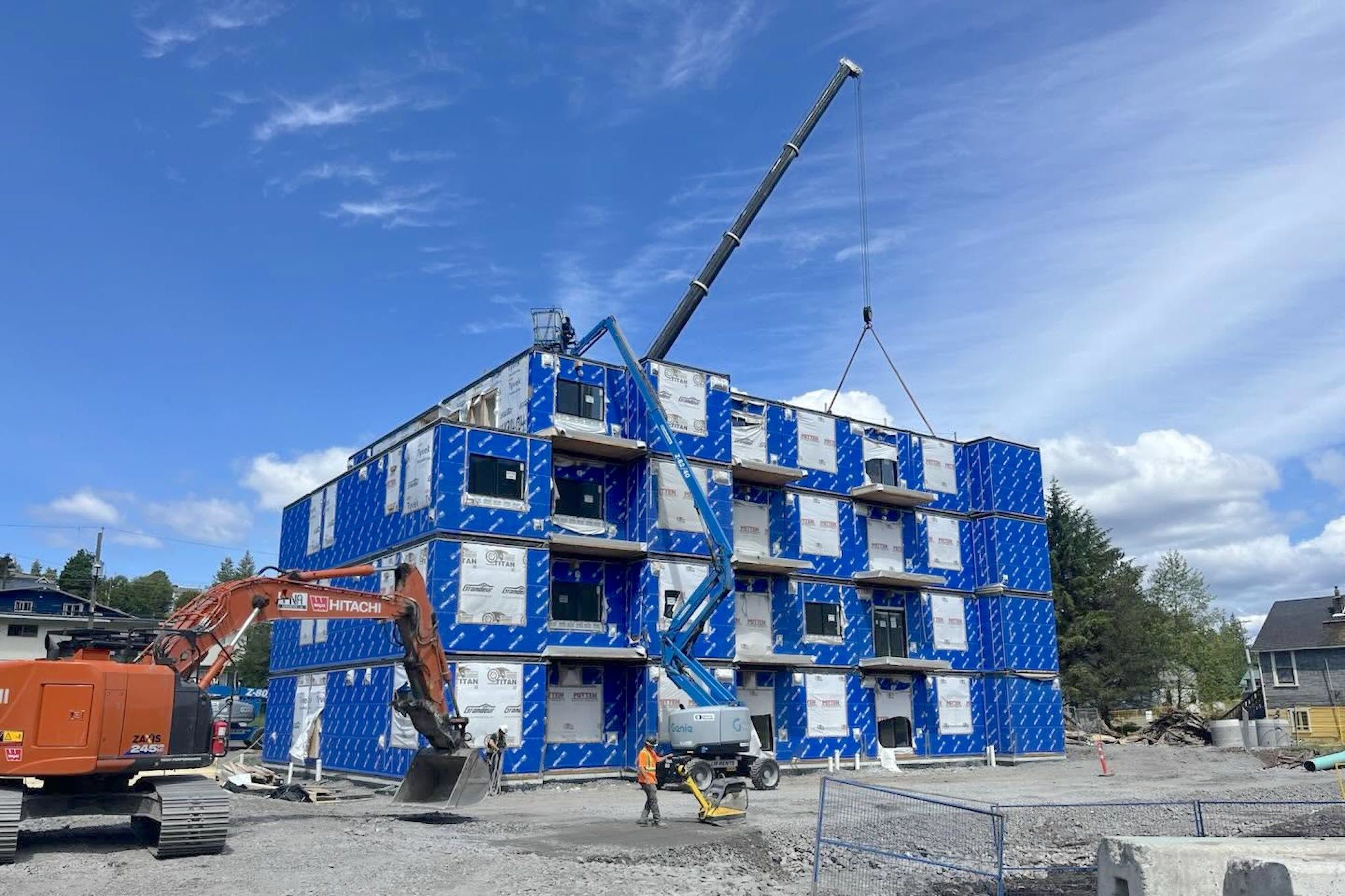
Remote and labour-constrained markets are where modular earns its keep the most. Recruiting skilled trades, transporting materials, and housing workers in a place like Prince Rupert adds cost and uncertainty that builders in major urban centres rarely have to think about. Building the shell in a factory where crews, tools, and materials never have to leave removes a lot of that variability from the equation.
Modular delivers savings because a factory can build the same design the same way, over and over. That repetition is the whole point.
That’s the part worth sitting with. Standardization is what makes any manufacturing process efficient, and construction is no different. But right now, building codes and permitting requirements shift from province to province and even city to city, which means a design approved in one municipality often needs re-engineering for the next. On top of that, moving modules over public roads means dealing with a patchwork of width, height, and routing rules, in one documented case restricting transport to three-hour overnight windows. Every one of those inconsistencies chips away at the cost and schedule advantages that make modular worth choosing in the first place.
None of this means modular is the right call for every project. Dense urban sites with established trade pools may still be better served by conventional methods. But for remote communities and labour-tight regions trying to add housing stock, it’s a technique that deserves serious consideration rather than a passing mention. If the industry and regulators can align on more consistent codes and transport rules, the schedule and cost gains seen at Estrella could become the norm rather than the exception. Good building, like good craftsmanship, comes down to matching the method to the job.
Source: Daily Hive Urbanized