What Park Lawn GO Teaches Us About Betting Infrastructure on the Market Cycle
Toronto’s Humber Bay neighbourhood is proof that density alone does not build a functional community. The towers along the lakeshore have become some of the most recognizable in South Etobicoke, yet the transit connecting that density to the rest of the city has never caught up. That gap is the real story behind the stalled Park Lawn GO station, and it is a lesson every developer, planner, and city builder should be paying attention to right now.
The plan was sound on paper. The 2150 Lake Shore project, rising on the former Christie’s Biscuits site, was meant to deliver thousands of new housing units alongside a new streetcar loop, pedestrian focused streets, and a GO station on the busy Lakeshore West line. That station would have given Humber Bay something it has never had: fast, frequent, seven day a week transit that actually connects residents to downtown, rather than the slow streetcar and circuitous bus routes they rely on today. It was also structured as a public-private partnership, one of the first of its kind on the GO network and a template Metrolinx clearly hoped to replicate across future Major Transit Station Areas.
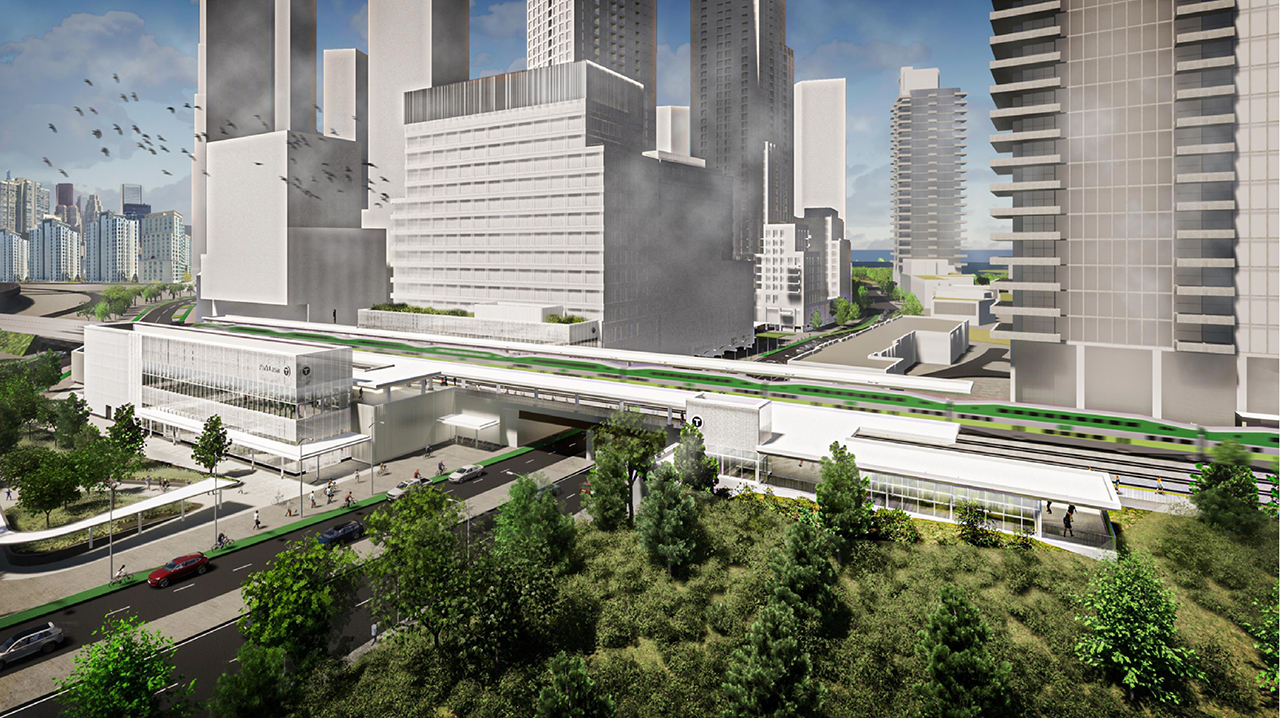
Then the condo market softened, demand cooled, and 2150 Lake Shore was shelved. Park Lawn GO went with it. A similar story is playing out at Mimico GO, where a cancelled residential project has taken a promised station upgrade down with it. Two separate sites, two separate developers, the same underlying failure: infrastructure that depends entirely on a private project’s financial success has no independent path forward when that project stalls.
This is the part of the MTSA conversation that deserves more scrutiny. The policy itself is sound. Concentrating density and housing supply around transit hubs is exactly the kind of long term city building Toronto needs, and it remains one of the more credible tools for tackling the region’s supply crunch. But a strategy is only as strong as its execution, and tying essential public infrastructure to the fortunes of a single private balance sheet introduces a level of market risk that residents should not be absorbing.
Private capital should accelerate infrastructure, not become the only path to delivering it.
The uncomfortable truth is that Humber Bay’s need for better transit was never speculative. It reflects existing demand from residents already living there, not just the population a future tower might bring. When infrastructure funding is contingent on new construction proceeding on schedule, cities end up designing for growth they haven’t secured while leaving current residents to wait indefinitely for improvements they already need.
For developers and planners watching this unfold, the takeaway is not that public-private partnerships should be abandoned. They remain a useful mechanism for moving projects forward faster than public budgets alone could manage. The takeaway is that critical transit infrastructure needs a funding path that survives a downturn, one that does not evaporate the moment a condo market corrects. Land value capture, dedicated capital pools, or phased public funding commitments that trigger regardless of a private partner’s timeline would all reduce this exposure. As MTSA zoning expands across the Greater Toronto Area, getting that structure right in the next generation of projects matters more than getting any single station built on schedule.
Source: UrbanToronto