



Smart infrastructure has become one of the most important topics in infrastructure development because cities are under pressure from every direction at once. Population growth is intensifying demand for housing, transportation, water, energy, and public services, while climate change is increasing the cost of failure across every major urban system. In Canada, that pressure is no longer abstract. Statistics Canada reported that the country’s population reached 41,288,599 on July 1, 2024, with particularly strong growth in large urban areas and census metropolitan areas. That reality forces planners, developers, and public agencies to think beyond conventional capital projects and toward integrated systems that can perform better over time.
Table Of Content
- Why Smart Infrastructure Must Start with Urban Systems Thinking
- The Growth and Climate Context Urban Planners Cannot Ignore
- Strategy 1: Treat Data as Core Infrastructure, Not a Side Function
- Strategy 2: Link Land Use Planning to Energy, Water, and Mobility Capacity
- Strategy 3: Prioritize Multi Benefit Projects Over Single Purpose Upgrades
- Strategy 4: Embed Climate Resilience and Nature Based Solutions from the Start
- Strategy 5: Build Governance, Interoperability, and Procurement for Scale
- Strategy 6: Put Equity, Accessibility, and Public Trust at the Centre
- Strategy 7: Invest in Workforce Capacity and Lifecycle Operations
- Key Risks to Manage Before Smart Infrastructure Scales
- How to Measure Whether Smart Infrastructure Is Actually Working
- A Practical Playbook for Urban Planners and Developers
- Conclusion: Smart Infrastructure Should Support Better City Building
What matters now is not whether cities should adopt smart infrastructure, but how they should do it. The strongest current guidance from UN Habitat and related global institutions makes an important point: smart infrastructure is not simply a technology layer that gets added onto old assets. It is a planning and operating model that combines physical infrastructure, digital systems, governance, maintenance capacity, climate resilience, and public outcomes. When it is done well, smart infrastructure can improve service quality, reduce emissions, strengthen resilience, and make cities more equitable. When it is done poorly, it can create data silos, waste public money, deepen the digital divide, and lock municipalities into systems they cannot manage.
For urban planners in Canada and North America, the practical challenge is to move from vision statements to implementation. That means making better decisions at the beginning of the planning process, setting clearer outcome targets, and connecting land use, infrastructure, and operations in a disciplined way. It also means recognizing that technology is only one tool within a broader development strategy. Smart grids, digital twins, advanced metering, AI assisted operations, and connected mobility platforms can be powerful, but only if they support sustainable urban form, resilient infrastructure design, and inclusive service delivery.
This article offers a practical playbook for integrating smart infrastructure into urban planning. It focuses on strategies that city planners and developers can actually use, from project scoping and data governance to procurement, resilience planning, and performance measurement. The goal is to keep the discussion grounded in measurable urban outcomes rather than hype. In the current environment, the cities that succeed will be those that use smart infrastructure to support long term growth, improve quality of life, and strengthen confidence in public investment.
Why Smart Infrastructure Must Start with Urban Systems Thinking
A common misconception is that smart infrastructure begins with sensors, apps, or control systems. In reality, it begins with a clear understanding of how a city functions as an interconnected set of systems. Housing growth affects transit demand. Transit planning affects land value and energy use. Stormwater design influences road durability, flood risk, and public health. Grid capacity shapes how quickly a city can electrify buildings and transportation. If each system is planned separately, cities may invest heavily and still produce fragmented, inefficient outcomes.
UN Habitat’s World Smart Cities Outlook 2024 reinforces this systems approach by framing smart infrastructure around sustainability, resilience, inclusion, and service quality, not just efficiency. That is a crucial distinction for urban planning. Efficiency matters, but efficient systems can still be inequitable, carbon intensive, or fragile under climate stress. The real objective is to design infrastructure that performs across multiple priorities at the same time. That requires planners to look at urban growth through a whole of system lens from the start of project scoping.
In practical terms, systems thinking changes the questions planners ask. Instead of asking whether a corridor needs a smart traffic system, planners should ask how that corridor can support transit reliability, pedestrian safety, emissions reduction, freight movement, accessibility, and future density. Instead of asking whether a district needs advanced metering, planners should ask how that district’s growth pattern will affect peak electricity demand, backup power needs, water consumption, and long term asset renewal costs. These are not technology questions first. They are city building questions first.
This shift also improves investment discipline. Smart infrastructure often attracts attention because it sounds innovative, but innovation without systems alignment usually leads to isolated pilots that cannot scale. A pilot can demonstrate a tool, but it does not replace a citywide operating model. The most effective municipalities use pilots to test assumptions within a broader architecture of standards, governance, interoperability, and measurable outcomes. That is what turns innovation into institutional capability.
The Growth and Climate Context Urban Planners Cannot Ignore
Urban growth is accelerating the need for smarter infrastructure planning. Canada’s major metropolitan areas continue to absorb population, investment, and development pressure, which means every infrastructure network is being asked to do more. Roads carry more trips. Transit systems face rising demand and shifting travel patterns. Water and wastewater systems must support intensification while meeting stricter environmental expectations. Electric grids are under pressure from building electrification, electric vehicles, and changing load profiles. Public space must support greater density while also handling heat, stormwater, and community needs.
At the same time, climate risk is reshaping infrastructure priorities. UN Habitat’s World Cities Report 2024 states that urban infrastructure is a major determinant of risk and vulnerability under climate change. This has direct planning implications. Smart infrastructure cannot be judged only by how well it optimizes current operations. It must also be judged by whether it can function under more intense rainfall, higher temperatures, wildfire smoke, power disruptions, and changing mobility demands. Climate resilience is not a separate policy stream anymore. It is central to infrastructure performance.
This is especially relevant in North America, where many infrastructure networks were built for a different era of climate assumptions and a different urban form. Low density growth patterns often increase infrastructure costs per resident, raise transport emissions, and make public service coordination more difficult. A city can add digital layers to outdated systems, but if underlying urban form remains inefficient and vulnerable, technology alone will not solve the problem. Smart infrastructure works best when it is paired with compact growth, transit oriented development, complete streets, and nature based solutions.
Planners should therefore connect smart infrastructure policy directly to growth management. Areas planned for significant housing and employment growth should also be prioritized for integrated investments in transit, energy capacity, water resilience, public realm quality, and digital infrastructure. That improves service reliability while reducing the risk that new development outpaces the systems required to support it. Long term growth is more sustainable when infrastructure and land use move together rather than in separate timelines.
Strategy 1: Treat Data as Core Infrastructure, Not a Side Function
One of the most actionable strategies in smart infrastructure planning is to treat data as infrastructure in its own right. Cities already manage roads, pipes, substations, parks, and buildings as essential assets. They should manage geospatial data, interoperability standards, sensor networks, asset condition records, and performance dashboards with the same seriousness. Without a strong data foundation, decision makers cannot understand system interactions, forecast demand effectively, or prioritize maintenance and capital upgrades based on real evidence.
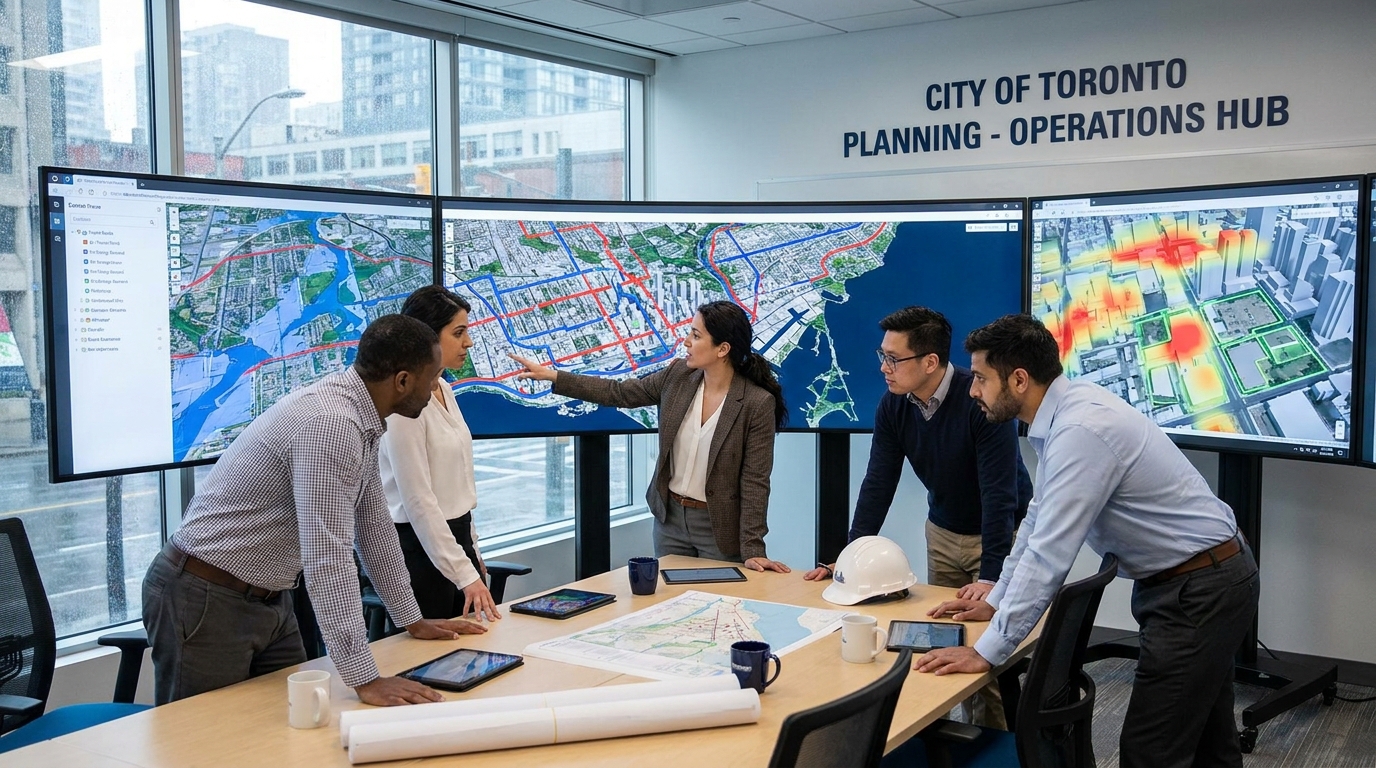
Data infrastructure should begin with interoperable geospatial platforms that allow agencies to see growth, infrastructure capacity, climate exposure, and service performance in one place. That means planning departments, transit agencies, utilities, public works teams, and emergency management units need compatible systems and governance protocols. Too often, each department holds its own data in its own format, which makes coordinated planning difficult. The result is delayed decisions, duplicated spending, and blind spots in how projects affect one another.
Digital twins are increasingly useful in this context because they create a dynamic model of the built environment that can link land use, infrastructure, and operations. A digital twin can help planners understand how a new development area will affect traffic patterns, flood pathways, building energy demand, and public service requirements before construction proceeds. It can also support lifecycle asset management by identifying where maintenance should be prioritized based on condition, exposure, and service criticality. The value of a digital twin is not the model itself. The value is the better decisions it enables.
To implement this strategy well, municipalities need a clear data architecture and governance framework. That includes ownership rules, privacy protections, cybersecurity standards, interoperability requirements, update schedules, and accountability for data quality. It also requires a realistic operating plan. Collecting data is easy compared with maintaining clean datasets and translating them into practical decisions. Cities should build internal capability so that data supports operations, budgeting, and planning rather than becoming an underused technical repository.
Strategy 2: Link Land Use Planning to Energy, Water, and Mobility Capacity
One of the biggest failures in conventional planning is the separation of land use decisions from infrastructure capacity planning. In fast growing urban regions, zoning and approvals often move ahead of detailed coordination with electricity providers, water systems, transit operations, and stormwater capacity. The result is predictable: bottlenecks, delays, expensive retrofits, and public frustration. Smart infrastructure integration requires planners to align growth decisions with the systems that will support them from day one.
This is where integrated planning becomes especially valuable. The International Energy Agency has emphasized that G7 cities can accelerate energy transitions through integrated planning, data sharing, pilot projects, and electricity system modernization. For urban planners, that means every major growth area should be evaluated not only for development yield and transportation access, but also for grid readiness, district energy potential, heat risk, stormwater management constraints, and opportunities for demand response. Electrification targets are not meaningful unless infrastructure capacity can support them.
Smart grids and advanced metering infrastructure are particularly important as cities move toward all electric buildings and electric mobility. A neighbourhood planned for major residential intensification may create significant new peak electricity demand if planners do not coordinate with utilities on load management, building performance standards, storage, and charging infrastructure. Demand response programs can reduce pressure on the grid, but they must be built into planning and building strategies early. This is one reason smart infrastructure must be addressed before detailed design is complete.
Water planning deserves the same level of integration. Smart water systems can use sensors, predictive maintenance, and consumption analytics to improve performance, but the larger planning question is whether growth is occurring in places where water and wastewater systems can be expanded efficiently and resiliently. In many cities, intensification near existing infrastructure is more sustainable than extending networks outward into low density areas. Data helps validate these decisions, but strategic land use policy is what makes them possible.
Strategy 3: Prioritize Multi Benefit Projects Over Single Purpose Upgrades
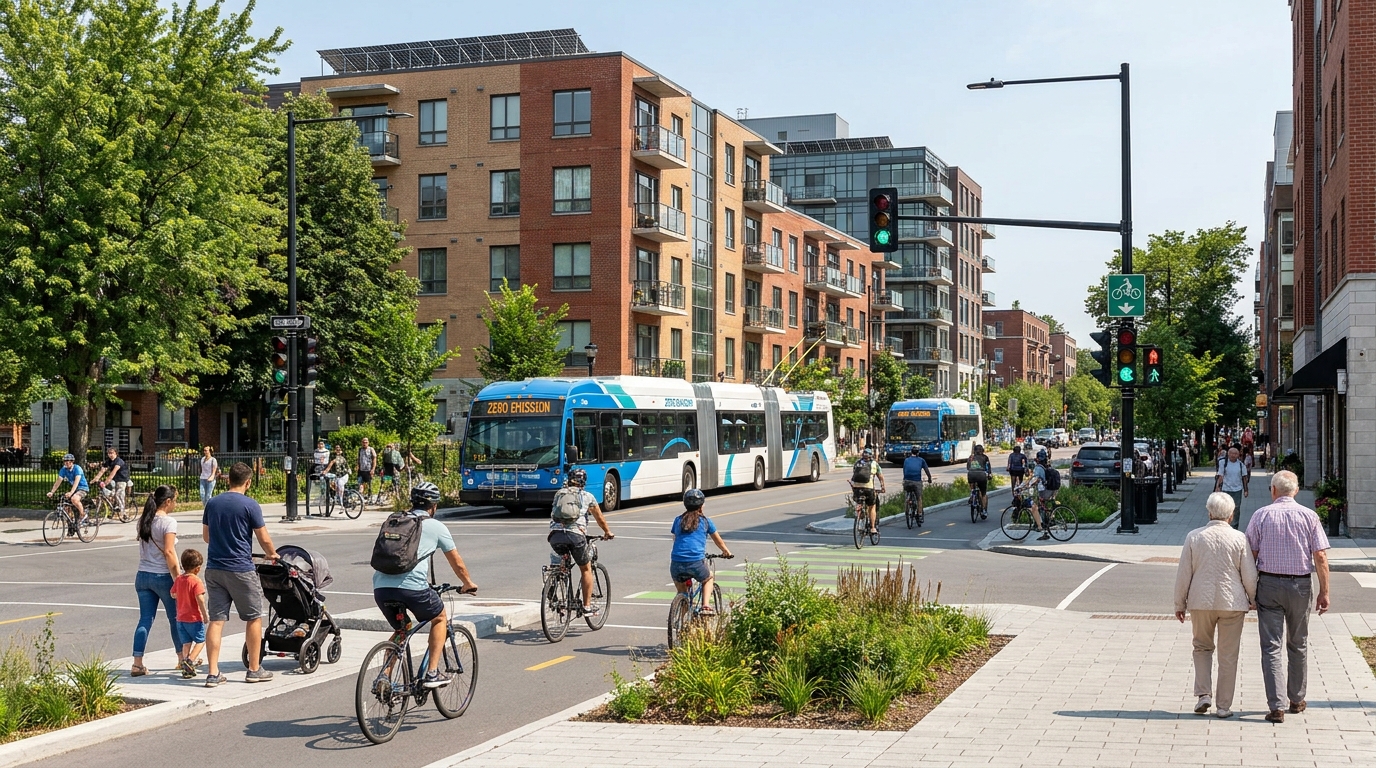
One of the clearest ways to improve smart infrastructure outcomes is to prioritize projects that deliver multiple public benefits at once. A city that upgrades a corridor only to improve vehicle flow may miss larger opportunities around transit priority, pedestrian safety, accessibility, urban cooling, emissions reduction, and development readiness. By contrast, a corridor redesigned as a complete street with smart signals, electric bus support, safe cycling, stormwater features, and better public space creates a much stronger return on public investment.
Multi benefit thinking is especially important because capital budgets are limited and public expectations are rising. Municipalities need projects that solve more than one problem at a time. A smart water investment should not just detect leaks. It should also improve resilience, reduce operating costs, and support growth planning. A smart building strategy should not just optimize energy use. It should also improve indoor comfort, reduce emissions, strengthen demand response capability, and create a more reliable district energy profile. When planners evaluate projects through this lens, they make stronger business cases and more defensible capital decisions.
This approach also helps move smart infrastructure away from novelty and toward performance. The federal evaluation of Canada’s Smart Cities Challenge is instructive here. The program, backed by $300 million over 11 years, was designed to address complex economic, environmental, and social problems through innovation, data, and connected technology. The key lesson is that cities perform better when smart investments are tied to measurable community outcomes. Procurement of devices is not a strategy. Improvement in public outcomes is the strategy.
Urban planners can operationalize this by using project screening criteria that score proposals based on multiple dimensions. Those dimensions might include emissions reduction, service reliability, resilience, accessibility, operating savings, implementation readiness, and ability to support planned growth. Such a framework encourages cross departmental collaboration because teams must build projects that perform across several priorities instead of optimizing only for one department’s mandate.
Strategy 4: Embed Climate Resilience and Nature Based Solutions from the Start
Smart infrastructure is often discussed in digital terms, but sustainable urban growth also depends on physical resilience and ecological performance. Technology can improve forecasting, monitoring, and operations, but it cannot eliminate the need for stronger flood protection, urban heat mitigation, and more adaptable public space. In fact, the most effective smart infrastructure strategies are often those that combine digital tools with nature based solutions and low carbon urban design.
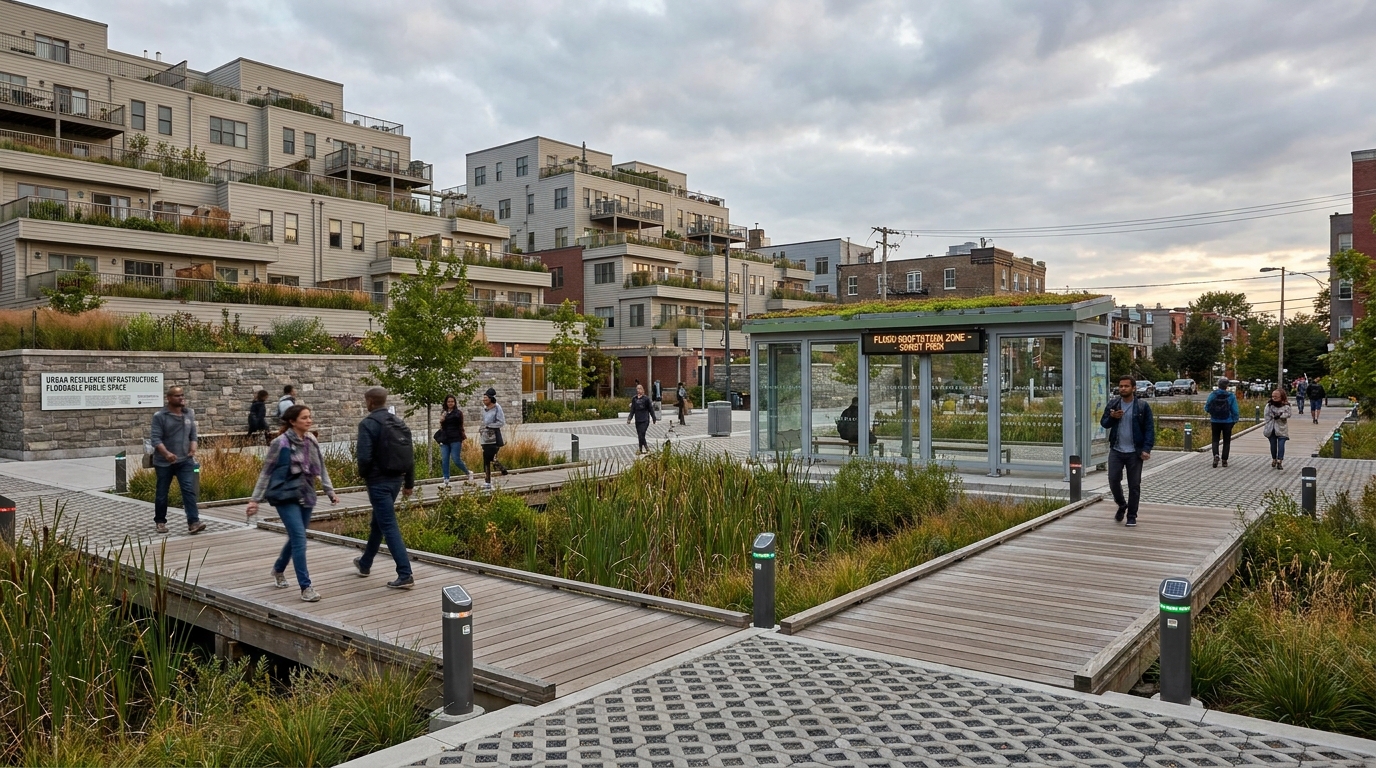
Consider stormwater management. Sensors, geospatial data, and predictive models can help cities understand flood risk and optimize drainage operations. But those tools are most useful when paired with infrastructure that can actually absorb, retain, and slow water. Bioswales, permeable surfaces, retention landscapes, restored waterways, and floodable parks can significantly reduce pressure on conventional systems. If these elements are integrated with smart monitoring tools, planners gain both physical resilience and better situational awareness.
The same principle applies to extreme heat. Temperature sensors and urban analytics can identify hotspots and guide intervention, but the real value comes from using that data to shape tree canopy, building massing, reflective materials, shading, and public realm design. A smart city without climate adaptive form is not truly smart. In growing communities, planners should ensure that development approvals, secondary plans, and infrastructure designs include climate resilience targets that are measurable and enforceable.
Nature based solutions also deliver co benefits that digital infrastructure alone cannot. They improve biodiversity, public health, neighbourhood amenity, and in some cases property value stability. From a long term strategic perspective, that matters because infrastructure is not only about utility. It is also about shaping the quality, safety, and attractiveness of urban life. Smart planning should support all of those outcomes together.
Strategy 5: Build Governance, Interoperability, and Procurement for Scale
Many cities have already tested smart infrastructure tools in pilot form, but relatively few have translated those pilots into citywide systems. The reason is often not a lack of interest or innovation. It is a lack of governance and procurement discipline. A successful pilot may demonstrate that a technology works, but if it relies on proprietary platforms, weak internal capacity, or isolated funding, it can remain trapped as a demonstration project rather than becoming part of the city’s operating model.
To avoid this outcome, planners and infrastructure leaders should insist on open standards and interoperability early in the project lifecycle. Systems that cannot exchange data or integrate with future tools create vendor lock in and increase long term costs. That is especially risky for municipalities, where budgets are constrained and assets must perform over decades. Open architecture gives cities more flexibility to adapt as technology changes and operational needs evolve.
Procurement should also move from one off technology purchases to pilot to scale models. In a pilot to scale approach, the city clearly defines the path from initial test to broader deployment if performance targets are met. Contracts specify data ownership, integration requirements, cybersecurity expectations, service levels, and expansion terms. This gives municipalities a framework for learning without losing control. It also sends a stronger signal to the market that the city is serious about long term value rather than one time experimentation.
Governance is equally important. Smart infrastructure often cuts across departmental boundaries, which means no single unit can manage it effectively on its own. Cities need cross functional teams that include planning, IT, engineering, finance, legal, operations, and community engagement. They also need clear decision rights so that digital systems, capital planning, and service outcomes remain aligned. Without this structure, even good projects can stall under fragmented accountability.
Strategy 6: Put Equity, Accessibility, and Public Trust at the Centre
One of the most important shifts in smart city thinking is the move toward people centred and inclusive frameworks. UN Habitat’s recent work, including its smart inclusive transition perspective, underscores that infrastructure, governance, social justice, and digital innovation must be addressed together. This matters because smart infrastructure can improve urban life, but it can also reinforce inequity if access, affordability, and representation are not built into the planning process.
The digital divide remains a serious implementation risk. A city may deploy digital service platforms, smart mobility tools, or connected utility programs that work well for highly connected households while leaving low income residents, seniors, newcomers, or people with disabilities behind. In that scenario, the infrastructure may look advanced on paper while failing the test of equitable service delivery. Planners should therefore assess who benefits, who bears risk, and who may be excluded at each stage of project design.
Accessibility should be treated as a design baseline, not an add on. Smart transit systems should improve wayfinding, reliability, and safety for people with different mobility and communication needs. Smart public realm investments should support universal design principles. Smart energy and building systems should consider affordability, tenant protections, and indoor environmental quality. These decisions shape whether innovation strengthens community resilience or simply creates a more sophisticated version of uneven service distribution.
Public trust is another essential factor. Data collection, AI assisted decision support, and connected infrastructure can trigger understandable concerns about privacy, surveillance, and accountability. Cities should respond with transparency, privacy by design, clear governance, and public reporting on how data is used and protected. Trust is not a communications issue alone. It is an operational issue that affects adoption, legitimacy, and long term success.
Smart infrastructure succeeds when people experience it as better service, greater safety, lower risk, and fairer access, not just as more technology in the background.
Strategy 7: Invest in Workforce Capacity and Lifecycle Operations
Technology does not run itself, and this is where many smart infrastructure programs lose momentum. Municipal agencies may succeed in securing capital funding for new systems, but struggle to support operations, maintenance, analytics, cybersecurity, and ongoing staff training. UN Habitat has pointed to data gaps, digital divides, and skills shortages as recurring barriers, and those barriers are very real in local government settings. A city can buy sophisticated tools and still fail to improve outcomes if it lacks the workforce capacity to manage them.
Urban planners should therefore advocate for lifecycle planning from the beginning. Every major smart infrastructure investment should include a realistic operating model that addresses staffing, software updates, maintenance schedules, procurement support, and performance review processes. The business case should not stop at installation. It should cover the full life of the asset and clarify how the city will sustain capability after launch.
Training is not only a technical issue. It is also a change management issue. Staff across planning, public works, transit, utilities, and emergency management need to understand how digital systems affect their work and how cross sector decision making should function. Strong organizations create common operating language across departments so that information becomes actionable. This is particularly important when cities begin using AI assisted decision support or integrated command systems that pull information from multiple domains.
Developers and private partners also benefit from stronger public sector capacity. When municipalities know what standards they require, how systems should integrate, and what outcomes they intend to measure, project delivery becomes more efficient. Clarity reduces friction. In complex growth environments, good public capacity is a major enabler of private sector confidence and better built outcomes.
Key Risks to Manage Before Smart Infrastructure Scales
Despite its promise, smart infrastructure is not automatically sustainable or effective. There are several implementation risks that urban planners should address early rather than after problems emerge. The first is vendor lock in, which can occur when cities buy proprietary systems that do not integrate well with other platforms or that are expensive to expand. This limits flexibility and can make future upgrades unnecessarily costly.
The second major risk is cybersecurity. As more urban systems become connected, the attack surface expands across transportation controls, utility networks, building systems, and municipal databases. Cybersecurity should be embedded in specifications, procurement, operations, and staff training. It should not be treated as a technical afterthought. Critical infrastructure needs baseline standards, regular testing, and incident response protocols that are realistic for public agencies.
A third risk is shallow implementation. Some cities collect large volumes of data without a clear plan for using it to make decisions. Others launch pilots with no scaling pathway or no connection to broader infrastructure strategy. In both cases, the city incurs cost and complexity without generating lasting value. The remedy is disciplined governance, measurable outcomes, and integration with budgeting and capital planning.
A fourth risk is overreliance on technology to solve structural problems. Smart tools can optimize systems, but they cannot compensate for sprawl, underinvestment, fragmented governance, or inequitable land use policy. If urban form remains inefficient and vulnerable, digital infrastructure will have limited impact. Sustainable growth still depends on sound planning fundamentals such as compact development, transit supportive densities, mixed use communities, and resilient public realm design.
How to Measure Whether Smart Infrastructure Is Actually Working
One of the most useful ways to keep smart infrastructure practical is to define performance indicators before projects are launched. Outcome measurement turns abstract ambition into operational accountability. It also helps build support among elected officials, funding partners, and the public because the value proposition becomes visible over time. A smart infrastructure strategy should be able to answer a simple question: what improved because of this investment?
Performance indicators should be tied to clear service goals. In transportation, that may include reduced congestion, improved transit reliability, shorter emergency response times, fewer serious collisions, and better accessibility for vulnerable users. In energy systems, indicators may include lower peak demand, reduced emissions, improved outage response, and higher participation in demand response programs. In water systems, relevant measures may include fewer flood losses, lower leakage rates, better water quality performance, and faster repair cycles.
Planning outcomes are just as important as operational metrics. Cities should track whether smart infrastructure is supporting housing delivery in appropriate locations, enabling transit oriented development, improving development approval coordination, or reducing lifecycle infrastructure costs per resident. These are strategic indicators that speak directly to long term urban growth. They help ensure that smart infrastructure remains connected to city building objectives rather than becoming a standalone technology program.
Good measurement also requires a reporting culture. Dashboards, annual reviews, and public performance updates can keep projects grounded in evidence and improve internal learning. Not every metric needs to be public facing, but enough should be visible to demonstrate accountability and maintain trust. A city that measures well can adapt faster, invest more confidently, and scale what works.
A Practical Playbook for Urban Planners and Developers
For planners and developers looking for a concise implementation framework, the most effective approach is to sequence smart infrastructure decisions across the project lifecycle. Start by identifying the urban outcomes that matter most in a given growth area, such as housing delivery, emissions reduction, flood resilience, mobility access, or service reliability. Then map the systems that influence those outcomes, including land use, transit, grid capacity, stormwater, public realm, and social infrastructure. This helps establish whether the challenge is local, district scale, or citywide.
Next, define the shared data architecture required to support decision making and operations. That includes geospatial standards, asset information, interoperability protocols, privacy rules, and ownership responsibilities. Once the data foundation is in place, evaluate potential projects based on multi benefit criteria rather than narrow departmental goals. Prioritize investments that can support growth, resilience, and inclusion at the same time.
After priorities are identified, structure procurement so that pilots have a path to scale if they perform well. Set open standards, cybersecurity baselines, maintenance expectations, and outcome metrics at the beginning. Build internal operating capacity in parallel with capital investment so that staff can manage systems effectively after deployment. Finally, establish continuous measurement and reporting so that the city can learn, adapt, and refine its strategy as conditions change.
This playbook is practical because it reflects the real complexity of urban development. It recognizes that infrastructure decisions affect land value, development feasibility, public trust, environmental performance, and long term operating costs. It also reflects a broader truth about city growth. The strongest infrastructure strategies are not those that chase every new tool. They are the ones that combine disciplined planning, resilient design, digital capability, and institutional capacity into a clear long term vision.
Conclusion: Smart Infrastructure Should Support Better City Building
Smart infrastructure is most valuable when it is understood as an enabler of better city building rather than a category of technology procurement. In a high growth, climate exposed, fiscally constrained environment, cities need infrastructure that can do more than function efficiently in the present. They need systems that support housing growth in the right places, improve resilience, reduce emissions, strengthen inclusion, and deliver reliable service at a sustainable lifecycle cost.
That is why the integration question matters so much. Urban planners are in a unique position to connect long term growth strategy with the physical and digital systems that make growth possible. By treating data as infrastructure, aligning land use with service capacity, prioritizing multi benefit projects, embedding climate resilience, insisting on interoperability, and measuring outcomes continuously, planners can turn smart infrastructure into a practical tool for sustainable development.
The opportunity is significant, especially in Canada and across North America where major urban regions continue to intensify and modernize. But the opportunity will only be realized if cities remain disciplined about governance, equity, and operational capacity. Smart infrastructure should make places more livable, more resilient, and more future ready. If it does not improve the fundamentals of urban life, it is not smart enough. The real test is whether it helps cities grow with greater confidence, competence, and long term value.



No Comment! Be the first one.