Halifax’s Housing Math Problem: Permits Are Up, Completions Are Not
Every growing city eventually confronts the gap between what gets approved and what actually gets built. Halifax is living that gap right now. A new affordable housing strategy moved through council committee this week, and buried inside the policy language is a much bigger story about how long it really takes to convert federal money and zoning reform into finished homes.
The proposed strategy itself is modest in scope. It keeps the city’s existing grant programs alive, preserves permit fee waivers and tax relief for non-profit housing developers, and creates two new staff positions once federal support tied to the Housing Accelerator Fund runs out. Council heard the annual cost would run about $242,950 over the next decade. That is a rounding error against the $80 million in federal HAF dollars Halifax has received since 2023, but it signals something development-minded readers should watch closely: municipalities are quietly absorbing the operating costs of programs that were originally federally funded, a pattern likely to repeat across Canada as HAF wind-down dates approach.
The more instructive number is the supply pipeline itself. Aaron Murnaghan, who manages the HAF program for the municipality, told councillors Halifax is on pace to exceed its target of 2,600 incremental housing starts by October, pushing the total past 15,460 units across three years. From 2021 through the end of 2025, municipal and federal Rapid Housing Initiative funding helped create 1,400 units of non-market or deeply affordable housing. Those are real numbers for a mid-sized Canadian city.
But Murnaghan was candid that permit counts overstate momentum, because “completions are lagging behind.” That lag is a feasibility story, not a policy failure. Construction financing costs, materials, and labour shortages are squeezing every Canadian development pipeline right now. Halifax adds a wrinkle few other markets face at this scale: its bedrock geography. Blasting and safely disposing of excavated rock adds real time and cost to projects, stretching what should be straightforward mid-rise builds into three- or four-year undertakings.
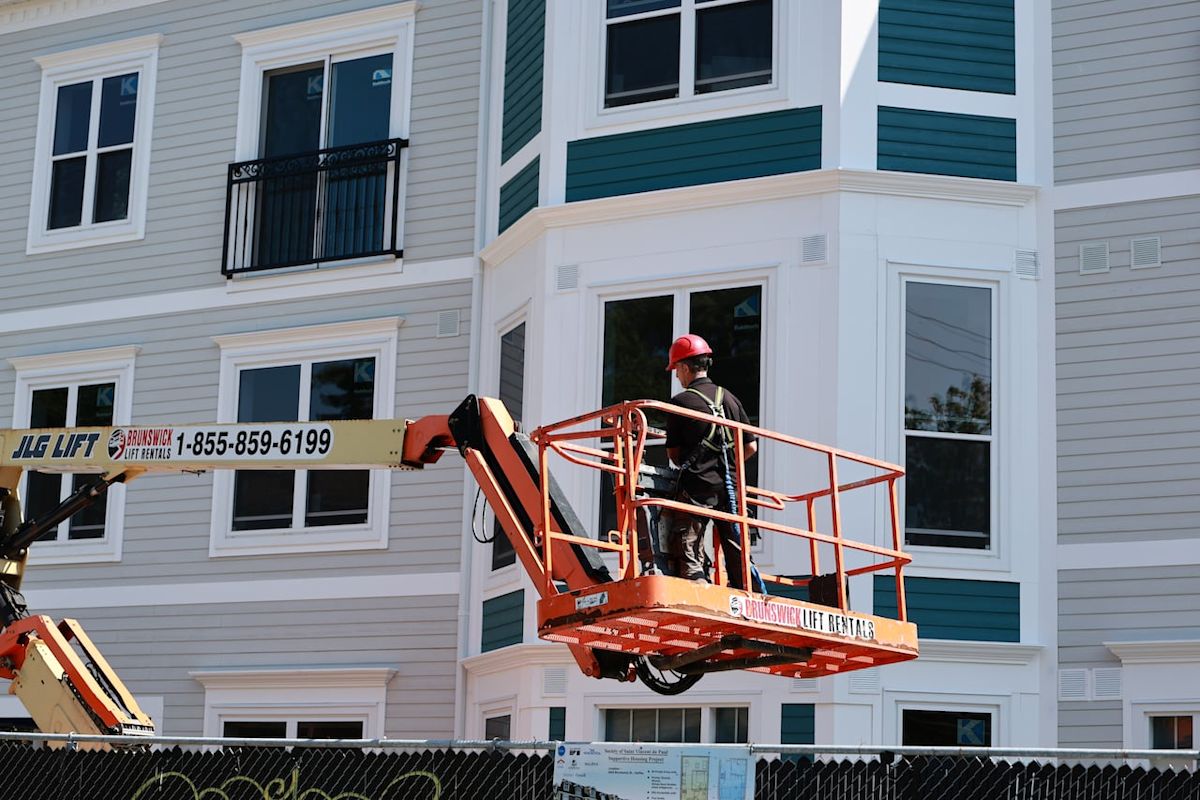
It may take several years for that supply to catch up with demand and for affordability to start to come back to a balanced level.
That timeline is the real headline for anyone tracking large scale housing strategy. Some councillors, including Trish Purdy, voiced frustration that the Housing Accelerator Fund has not yet produced tangible relief for middle-income residents facing rising rents and assessments. That frustration is understandable, but it also misreads the mechanics of development. Zoning reform and permitting speed only unlock capacity. They do not build buildings. Staff are now eyeing longer horizon tools, a possible vacant land tax, waived water development charges, adjusted deed transfer taxes, and even siting affordable units inside future fire stations and transit terminals. None of that changes the near term math: Halifax’s affordability correction is a multi-year build, not a policy announcement.
For anyone evaluating Atlantic Canada as a growth market, the signal is clear. The entitlement environment is loosening, and the unit count is real, but execution risk sits squarely in construction timelines and site conditions, not in politics. That is where the next phase of this story will actually be decided.
Source: Yahoo News / CBC