A $1.1 Million Lesson: What the GTA’s Price Correction Really Means for Owners and Buyers
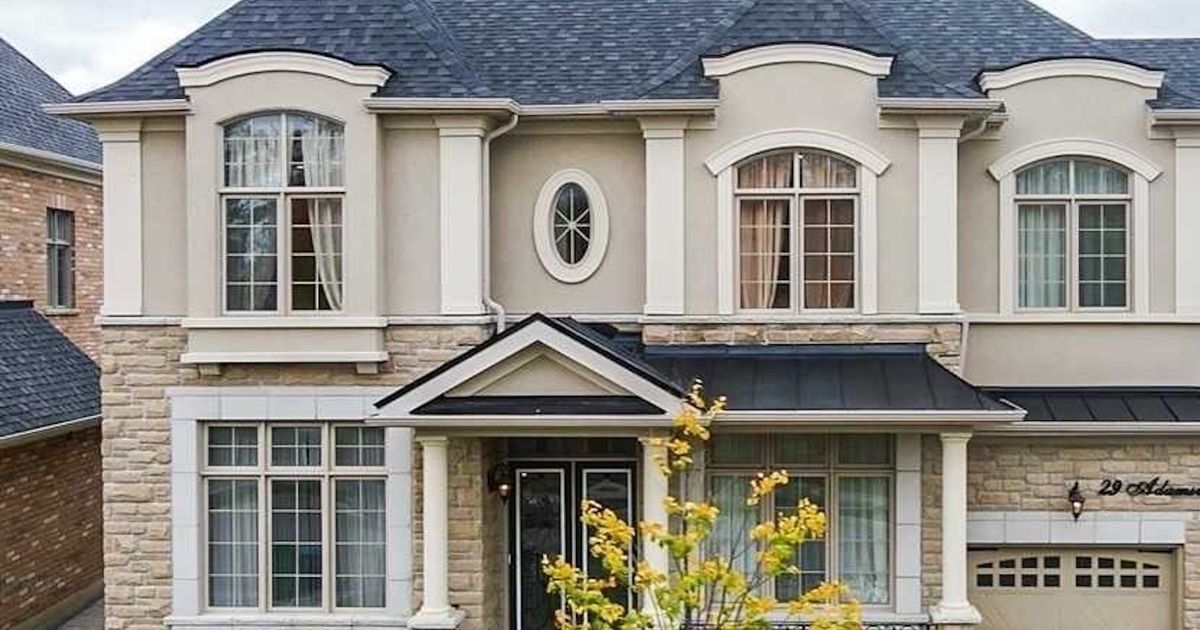
A Brampton property just delivered one of the clearest reminders yet that real estate is a cycle, not a straight line. The four-bedroom, six-bathroom home, built less than a decade ago and spanning over 5,000 square feet with three garages and an upgraded kitchen, sold this week for $1,699,000. Back in January 2022, at the height of pandemic-era demand and rock-bottom borrowing costs, that same home traded hands for $2.8 million. The difference, exactly $1,101,000, is not a rounding error. It is a case study in what happens when peak-cycle pricing meets a normalized rate environment.
For readers focused on wealth building through property, the instinct is to treat a headline like this as a warning sign. I would push back on that framing. What it actually reflects is timing risk, the single most underappreciated variable in real estate decision-making. The buyer who purchased in January 2022 was transacting at the top of an unusually compressed demand curve, driven by cheap credit rather than sustainable fundamentals. That is a different risk profile than buying into a market that is already showing signs of stabilizing.
And the data suggests we may be closer to that stabilization than the loss headline implies. According to TRREB’s latest Market Watch report, GTA listings fell 17.8 per cent year-over-year in July, while sales dipped only 0.9 per cent. That is a meaningful tightening of supply relative to demand. TRREB President Daniel Steinfeld noted that with sales taking a larger share of listings, buyers may find less room to negotiate going forward, and that home prices could begin to level off if the trend holds. The average selling price across the region, $1,003,956, was down 4.5 per cent year-over-year, but the underlying supply-demand mechanics are shifting in a direction that should matter more to investors than the trailing price figure itself.
With sales accounting for a larger share of listings, buyers may find there is less room to negotiate moving forward. If current trends continue, home prices could start to level off compared to last year.
TRREB Chief Information Officer Jason Mercer added that recent economic and employment data has surprised to the upside, which could bolster consumer confidence and prompt more purchase activity as we move through the fall. Nationally, the Canadian Real Estate Association reported home sales edging up 0.5 per cent month-over-month in July, with the MLS Home Price Index rising a modest 0.1 per cent, further evidence that the correction phase may be nearing its floor rather than accelerating.
This Brampton sale is not an isolated story. It joins a growing list this year, including a Mississauga home that sold at a comparable $1.1 million loss against its 2021 price, and another Brampton property that closed hundreds of thousands below its 2022 valuation. For investors, the pattern across these transactions is instructive: the largest losses are concentrated among properties purchased at the absolute peak of the 2021 to 2022 cycle, particularly in the upper-detached segment where price appreciation had outrun rental yield and local income fundamentals.
The lesson for anyone deploying capital into the GTA market today is not to fear a repeat, but to respect the mechanics behind it. Entry price discipline, an honest read of carrying costs against realistic rental or resale scenarios, and a willingness to let tightening listings and stabilizing sales data guide timing will matter far more than trying to call a bottom. Sellers who bought at the peak are now the ones absorbing the correction. Buyers entering in this tighter, more balanced phase of the market are positioned to be on the other side of that equation.
Source: blogTO, “Ontario home sold for $1.1 million loss compared to peak 2022 price”.