When Buildings Join the Grid: Inside Canada’s Push for Net-Zero Smart Buildings
For most of us, a building is a fixed thing. Walls, a roof, systems that quietly hum along in the background. But researchers at Concordia University are asking a more interesting question: what happens when a building stops being a passive shell and becomes an active partner to the electrical grid, generating power, storing it, and releasing it exactly when the system needs it most.
That question sits at the heart of one of the Volt-Age Impact Projects, led by Andreas Athienitis, a professor who has spent decades studying smart buildings and solar systems. His project, focused on net-zero smart resilient buildings and infrastructure, brings together ten researchers and a wide network of partners around one core idea: net-zero only works when solar, thermal storage, batteries, heat pumps, electric vehicles, and smart controls are designed and operated as a single coordinated system, not a collection of separate upgrades.
I find this framing refreshing because it moves past the retrofit-by-retrofit mindset that so often shapes green building conversations. Instead of asking “which single upgrade saves the most energy,” the team is modelling buildings as dynamic systems that respond hour by hour to weather, occupancy, and grid demand. Digital twins let researchers test strategies for shifting demand and improving resilience before anything is built or retrofitted in the real world, which reduces risk and cost for everyone involved.
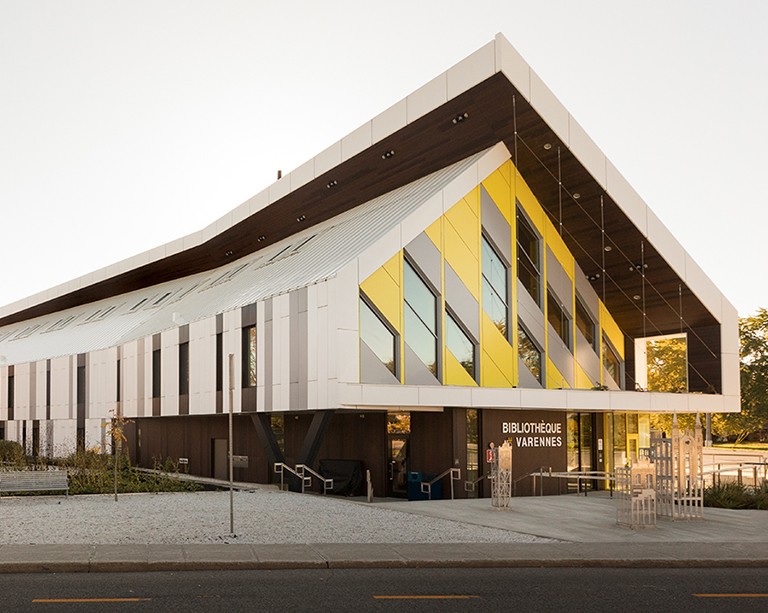
What makes this project credible rather than theoretical is that it is already grounded in real test beds. The team helped deliver a solar-integrated facade system that generates electricity while preheating incoming ventilation air, and it continues to use the Varennes Library, Canada’s first net-zero institutional building, as a living lab for ongoing optimization. A large-scale environmental chamber and solar simulator on campus allow full-scale systems to be validated under controlled conditions before facing real weather and real occupants.
What I appreciate most is that the human experience is not treated as secondary to the engineering. Athienitis is direct about this connection.
We are aiming for buildings that are efficient but also comfortable and pleasant to be in.
That balance matters. Sustainable housing decisions succeed long term when they improve daily comfort rather than asking people to sacrifice it. Better passive solar design brings in natural light. Smarter controls reduce overheating in summer and keep temperatures stable without constant manual adjustment. These are not abstract engineering wins, they are lived improvements.
Of course, the technology is only part of the story. Athienitis points to policy and regulatory frameworks as real barriers to adoption. Many current building codes do not fully account for systems that include energy storage or two-way energy flows with the grid, and in some provinces, rules separating architectural and engineering work can limit the integrated design these buildings need. This is a reminder that sustainable building progress depends as much on updated policy as it does on better technology.
The project’s reach extends beyond individual buildings too. Athienitis was lead author on a national roadmap for decarbonized buildings and communities developed with the Canadian Academy of Engineering, and case studies like the Varennes Library and Ontario’s West 5 community show how these ideas can scale to neighbourhood level. The long term goal, as he puts it, is to shift how buildings are designed and operated so they can actively support a low-carbon grid while remaining resilient to extreme weather events such as ice storms.
For homeowners and developers thinking about long term value, this points to a clear direction: buildings that give back to the grid, store their own resilience, and stay comfortable through it all are no longer a distant concept. They are being tested, refined, and lived in right now.
Source: Mirage News