Why Broccolini’s Pivot to Purpose-Built Rentals Signals the Next Phase of Downtown East Growth
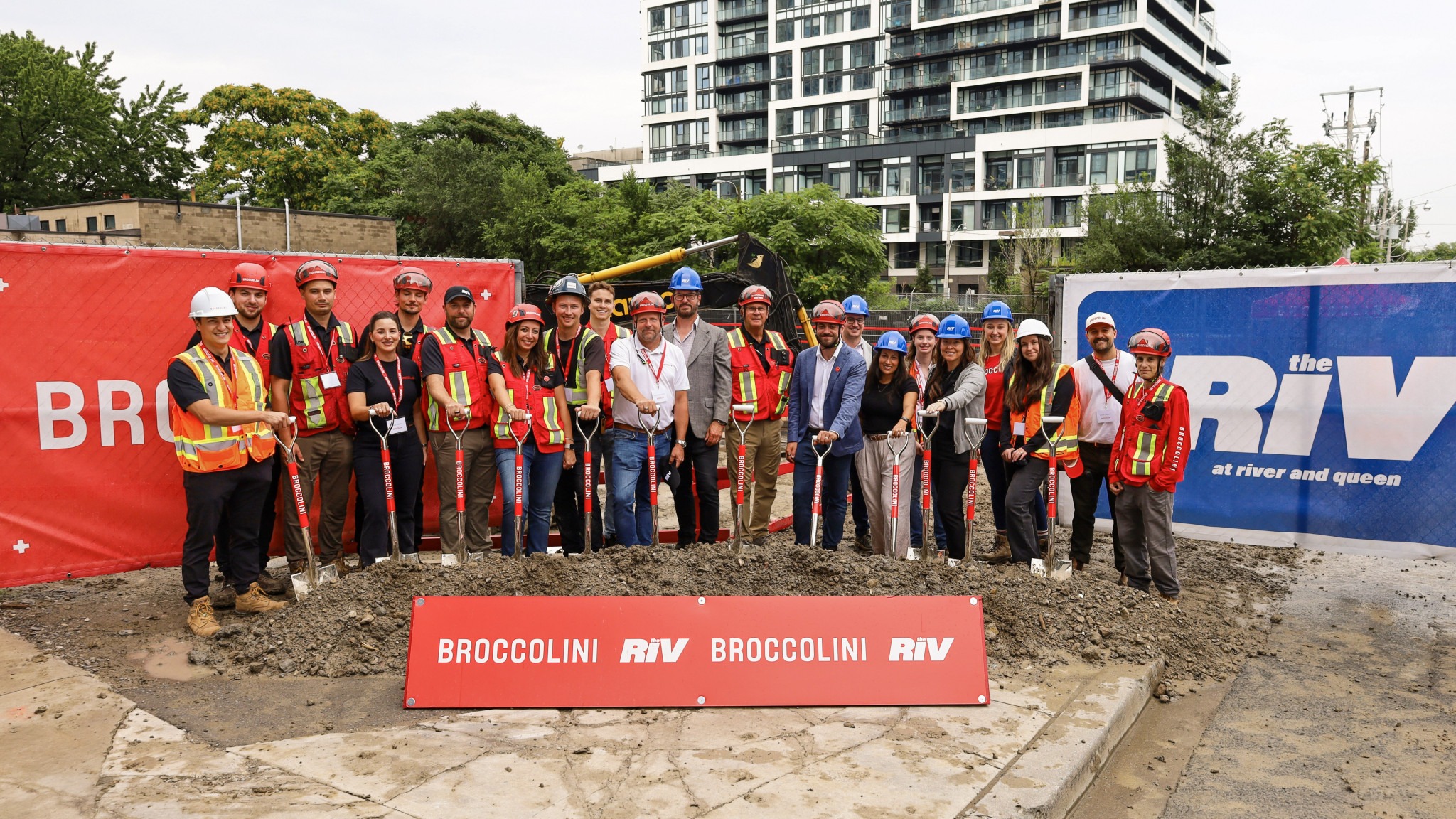
Ground has broken at River and Queen streets on a 37-storey tower that tells us more about where Toronto’s housing strategy is heading than any single condo launch could. Broccolini’s decision to convert The Riv from a planned condominium into a purpose-built rental building is the kind of mid-project pivot that developers rarely make lightly, and it deserves to be read as a signal, not a footnote.
Land decisions are never made in isolation. They respond to financing conditions, absorption rates, construction costs, and a read on where demand is actually heading five years out. When a developer reworks a fully entitled condo site into more than 350 purpose-built rental units, it tells you the feasibility math shifted hard enough to justify redesigning the product entirely. That is a meaningful data point for anyone tracking how Toronto’s downtown east is repositioning itself.
Location is doing a lot of the work here. The Riv sits within walking distance of the future Ontario Line and near the planned East Harbour transit hub, two infrastructure investments that are still years from completion but already shaping how developers plan land use around them. This is the pattern that defines strong long term development strategy: build ahead of the infrastructure curve, not behind it. Sites that will have strong transit access tomorrow are being valued and designed for that reality today, and The Riv is a clear example of a project positioned to capture that upside once the Ontario Line opens.
The inclusion of a geothermal energy system and a new privately owned public space also reflects where large scale approvals are heading in this city. Municipalities increasingly expect community benefit and lower carbon operations as the price of density, and developers who build that in from the start avoid renegotiating it later. It is a strategic choice as much as an environmental one.
Strong projects are built from a wider understanding of timing, access, infrastructure, and demand, not from land value alone.
What matters most for readers watching Toronto’s housing supply is the underlying shift this project represents. Purpose-built rental has re-emerged as the more durable asset class in a city where long term rental demand has consistently outpaced new supply, and developers who can pivot their pipeline toward it are reading the market correctly. Broccolini’s willingness to redesign a fully planned condominium into a rental building, rather than push the original product to market, is a bet on where value will actually land by 2029, when the developer expects to welcome its first residents.
Projects like The Riv are worth tracking closely over the next few years, not just as individual buildings but as indicators of how developers are repricing land near future transit infrastructure. The decisions being made now at sites like River and Queen will shape what downtown east looks like, and who can afford to live there, long after the cranes come down.
Source: Construction Canada