



Luxury real estate has always been shaped by a simple principle: premium buyers pay for a better experience. In previous generations, that experience was defined by square footage, architectural pedigree, location, privacy, and craftsmanship. Those fundamentals still matter deeply, but today they are increasingly paired with another layer of value that is harder to see and impossible to ignore. Smart technology has become part of the modern luxury proposition, not as a novelty, but as an expectation tied to convenience, security, energy efficiency, and seamless daily living.
Table Of Content
- Why Smart Technology Now Matters in Luxury Real Estate
- The Investment Thesis: Technology as a Driver of Resale Appeal
- Market Signals Supporting the Smart Luxury Home Trend
- Which Smart Features Matter Most to High End Buyers
- Integrated Security and Access Control
- Climate Control and Energy Management
- Lighting, Shades, and Ambience
- Whole Home Audio Visual and Entertainment
- Water Monitoring and Preventive Protection
- Integration Matters More Than Device Count
- How Smart Technology Enhances the Living Experience
- The Sustainability Angle: Efficiency as Luxury
- What Can Hurt Value: The Risks of Poorly Executed Smart Homes
- Best Practices for Investors Building a Smart Luxury Home Strategy
- A Practical Evaluation Framework
- How to Market a Smart Luxury Home at Resale
- Smart Luxury Homes in Canada and North America: The Forward View
- Final Thoughts
For investors, this shift is especially important because it changes how high end properties are evaluated at acquisition, positioned during ownership, and marketed at resale. A luxury residence with a coherent technology strategy can feel more current, more efficient, and more aligned with the lifestyles of affluent buyers. By contrast, an expensive home with outdated, fragmented, or poorly integrated systems may appear behind the market, even when its finishes and location remain strong. In that sense, smart home technology is no longer simply a consumer upgrade. It is increasingly part of the asset narrative.
Smart luxury homes are high-end residences where technology platforms integrate lighting, climate, security, entertainment, and access into one unified living experience rather than a collection of standalone gadgets. For investors, this matters because integration directly affects resale appeal: a coherent smart ecosystem makes a luxury property feel current, efficient, and turnkey, which strengthens buyer confidence and supports stronger pricing power. The market data backs up this trajectory. Grand View Research estimated the U.S. smart home market at USD 23.72 billion in 2024, with strong growth projected through 2030, while the broader North American smart home market is expected to keep expanding rapidly through 2033. In Canada, the adoption base is already meaningful: Statistics Canada found that 47.4% of Canadians used at least one internet-connected smart home device in 2022, showing that familiarity with connected living is no longer limited to early adopters or technophiles. For investors, the priority is integration, not device count.
That broad familiarity matters for luxury real estate. When buyers already use smart speakers, connected cameras, and app based climate controls in their current homes, they arrive in the luxury segment with higher expectations. They are not simply looking for a mansion with gadgets. They want a residence that feels intelligently designed, easy to control, secure, efficient, and elegant. This is where investors can gain an advantage by understanding not just which technologies are popular, but which technologies genuinely improve marketability, operating performance, and resale appeal.
This guide looks at smart luxury homes through an investor lens. The objective is not to celebrate technology for its own sake, but to explain how the right systems can support pricing power, buyer confidence, and long term competitiveness in high end real estate. The most attractive opportunities are not homes with the most devices. They are homes where technology is integrated with architecture, lifestyle, and ownership practicality.
Why Smart Technology Now Matters in Luxury Real Estate
The most important shift in the luxury market is that buyers increasingly evaluate homes as complete living systems rather than collections of rooms. They want arrival to feel effortless, lighting to adapt intuitively, privacy to be protected, and climate to remain comfortable across seasons and zones. They expect entertainment, shading, access control, and security to work together in a refined way. This expectation elevates smart technology from optional feature to strategic differentiator.
It is worth noting that this does not mean every luxury buyer is obsessed with apps or automation dashboards. In fact, many high net worth purchasers are less interested in technology itself than in what it removes from their day. They value frictionless living. They appreciate doors that unlock securely without coordination, climate systems that adjust before arrival, lighting scenes that enhance mood and architecture, and monitoring systems that protect second homes when they are away. The appeal is practical, not theatrical.
Industry research reflects this priority. The National Association of Realtors has highlighted that luxury homeowners prioritize ease, efficiency, and design. In many premium homes, integrated platforms such as Crestron or Josh.ai act as the central control layer that ties together lighting, shades, climate, security, and entertainment. That integrated approach matters far more than the presence of isolated consumer devices, because affluent buyers tend to value consistency, discretion, and reliability over novelty.
For investors, the implication is clear. Technology creates the most value when it supports the luxury standard already implied by the property. If a home presents itself as sophisticated and turnkey, the technology must reinforce that promise. A well executed smart ecosystem can help justify premium positioning by making the ownership experience feel current and considered. A cluttered mix of mismatched devices can do the opposite, introducing questions about maintenance, usability, and future replacement costs.
The Investment Thesis: Technology as a Driver of Resale Appeal
Investors should be careful not to frame smart home features as an automatic line item that boosts value by a fixed percentage. Real estate does not work that way, particularly in the luxury tier where emotional fit, presentation quality, and buyer expectations vary by market. The real investment thesis is more nuanced. Smart technology improves the marketability of a luxury asset, strengthens the perception of quality, and enhances the ease of ownership, all of which can support stronger resale outcomes.
In practice, this often means a technology rich luxury home may attract more serious buyer attention, photograph and show better, and compete more effectively against similarly priced inventory. Buyers who walk into a residence and see integrated control, discreetly installed equipment, premium security, and efficient systems are more likely to view the home as complete. That perception can translate into better engagement, less resistance during due diligence, and more confidence in the asking price.
The reverse is equally important. Homes with obsolete, proprietary, or poorly documented systems can lose appeal quickly. If a purchaser senses that the home relies on an installer who is no longer available, software that may not be supported, or interfaces that are difficult to learn, the technology stops being an asset and starts becoming a risk. In the luxury segment, that risk can undermine the otherwise premium nature of the property because affluent buyers generally expect polished execution, not operational headaches.
Viewed through a portfolio lens, smart home investments should therefore be judged on how they influence durability of demand and efficiency of resale. The goal is not to install every new product entering the market. The goal is to choose systems that age well, integrate cleanly, and remain intuitive to future owners. That is where technology moves from trend to investment strategy.
Market Signals Supporting the Smart Luxury Home Trend
The North American market offers several strong signals for investors tracking luxury housing trends. One of the most important is simple adoption. Statistics Canada reported that 47.4% of Canadians used at least one internet connected smart home device in 2022. That level of use indicates that buyers are already comfortable interacting with connected devices in daily life. For luxury homes, this familiarity lowers the barrier to appreciating more advanced, integrated systems.
Looking closer, Statistics Canada reported that 30.0% of Canadians used a smart speaker or smart home assistant in 2022. This matters because voice and centralized control ecosystems are often the bridge between basic consumer tech and whole home automation. Once a buyer is accustomed to controlling music, lighting, temperature, or routines through a simple voice interface, they are more likely to appreciate a professionally designed control platform in a luxury residence.
Security is another highly relevant signal. Statistics Canada found that 19.8% of Canadians used an internet connected video camera in their primary residence in 2022. At the same time, Grand View Research identified security and access controls as the largest North American smart home segment in 2024. This aligns closely with what premium buyers value in luxury properties: privacy, controlled entry, remote visibility, and the ability to manage homes even when traveling extensively or dividing time across multiple residences.
Energy management also deserves attention. Statistics Canada reported that 12.7% of Canadians used a smart thermostat in 2022, and that 91% of Canadian households had at least one thermostat in 2023. This illustrates how climate control is a natural entry point for smarter residential infrastructure. In luxury real estate, sophisticated climate zoning, occupancy sensitive controls, automated shading, and advanced HVAC management can improve comfort while also reducing unnecessary operating costs. For high value homes with large footprints, guest wings, and specialized rooms, that combination is increasingly attractive.
Which Smart Features Matter Most to High End Buyers
Not every smart feature carries equal weight in a luxury transaction. Some technologies create strong emotional and practical value at first impression, while others are appreciated only after extended ownership. Investors should focus on categories that influence both daily experience and buyer perception during showings.
Integrated Security and Access Control
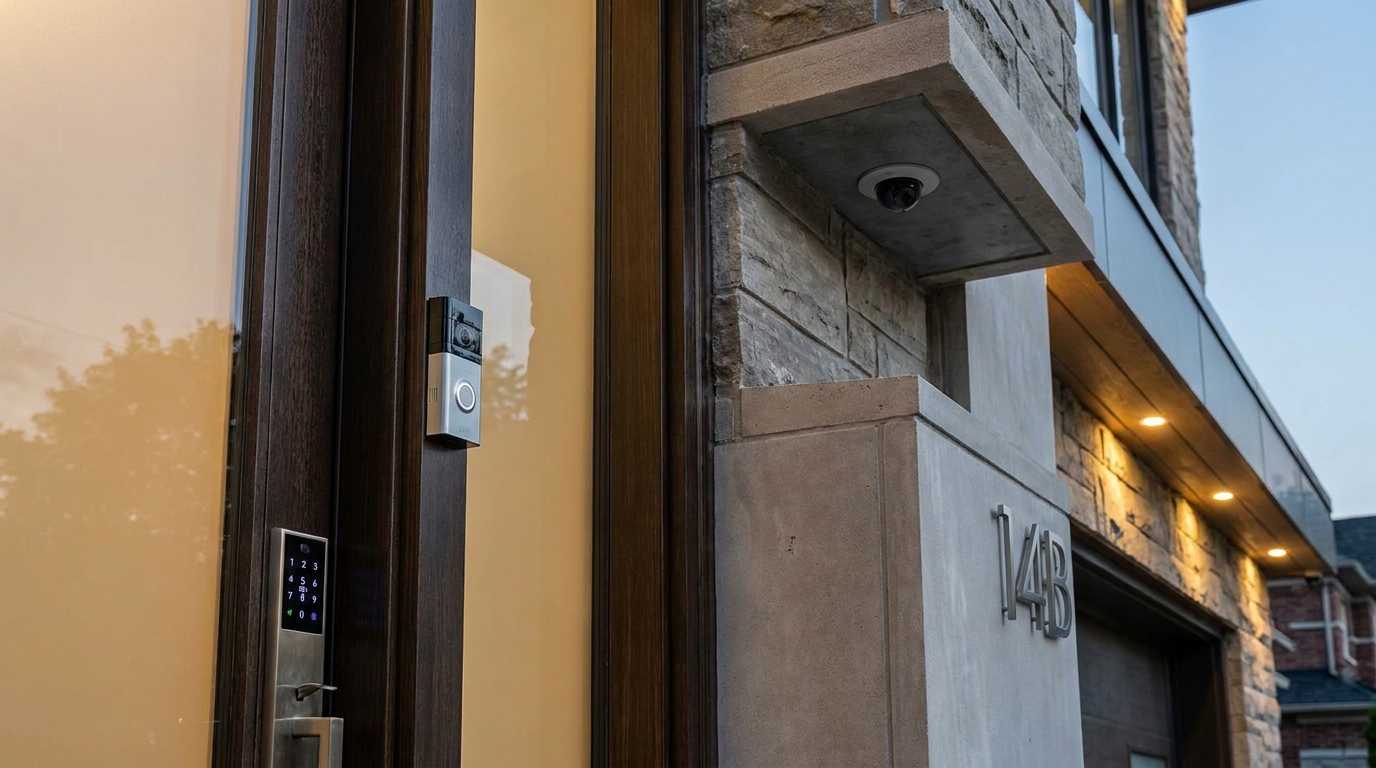
Security remains one of the most persuasive smart home categories in luxury real estate. High end buyers often prioritize gated access, smart locks, monitored entry points, discreet surveillance, package management, and remote alerts. These features support privacy and peace of mind, particularly for owners who travel often, maintain multiple residences, or house staff and service providers. In many cases, security is the technology layer buyers ask about first because it connects directly to asset protection and personal safety.
The key is execution. A premium property benefits from systems that are visually discreet, easy to manage remotely, and integrated into a broader control environment. Buyers are rarely impressed by visible clutter, exposed wiring, or a confusing mix of consumer grade hardware. They respond more favorably to clean entry experiences, elegant hardware finishes, and systems that feel designed into the home rather than added after the fact.
Climate Control and Energy Management
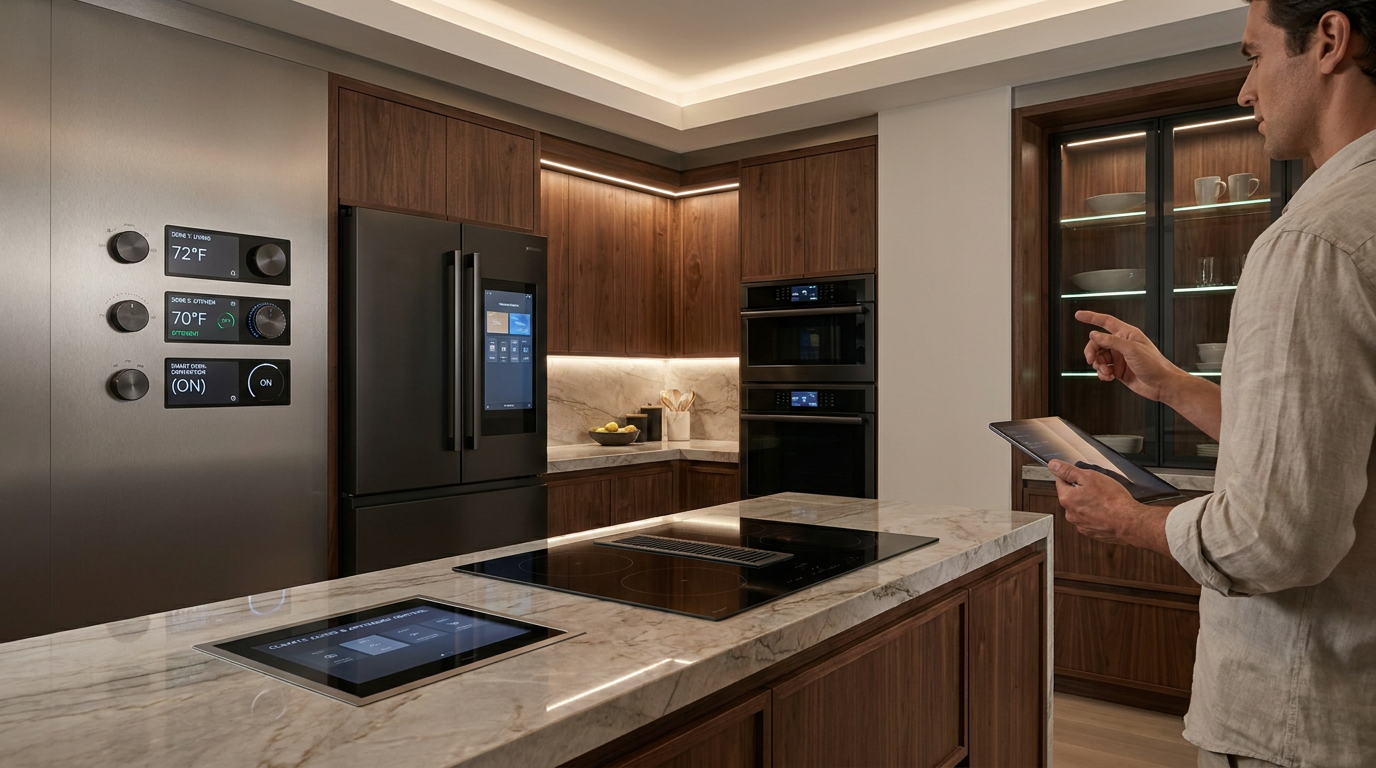
Climate management is one of the most practical and investable smart home categories because it delivers benefits that buyers understand immediately. Zoned HVAC, smart thermostats, occupancy based adjustments, motorized blinds, and air quality monitoring can all improve comfort in meaningful ways. In larger homes, the ability to manage different areas independently is especially valuable because usage patterns vary across primary suites, guest rooms, entertainment spaces, home offices, and wellness areas.
There is also a strong operating efficiency argument. Luxury homes can carry substantial utility costs, and smart controls can reduce waste without compromising comfort. This is increasingly relevant as affluent buyers become more conscious of sustainability and operating discipline. Technology that lowers excess heating, cooling, or lighting usage while maintaining a refined environment can be positioned as both a lifestyle enhancement and a smarter ownership model.
Lighting, Shades, and Ambience
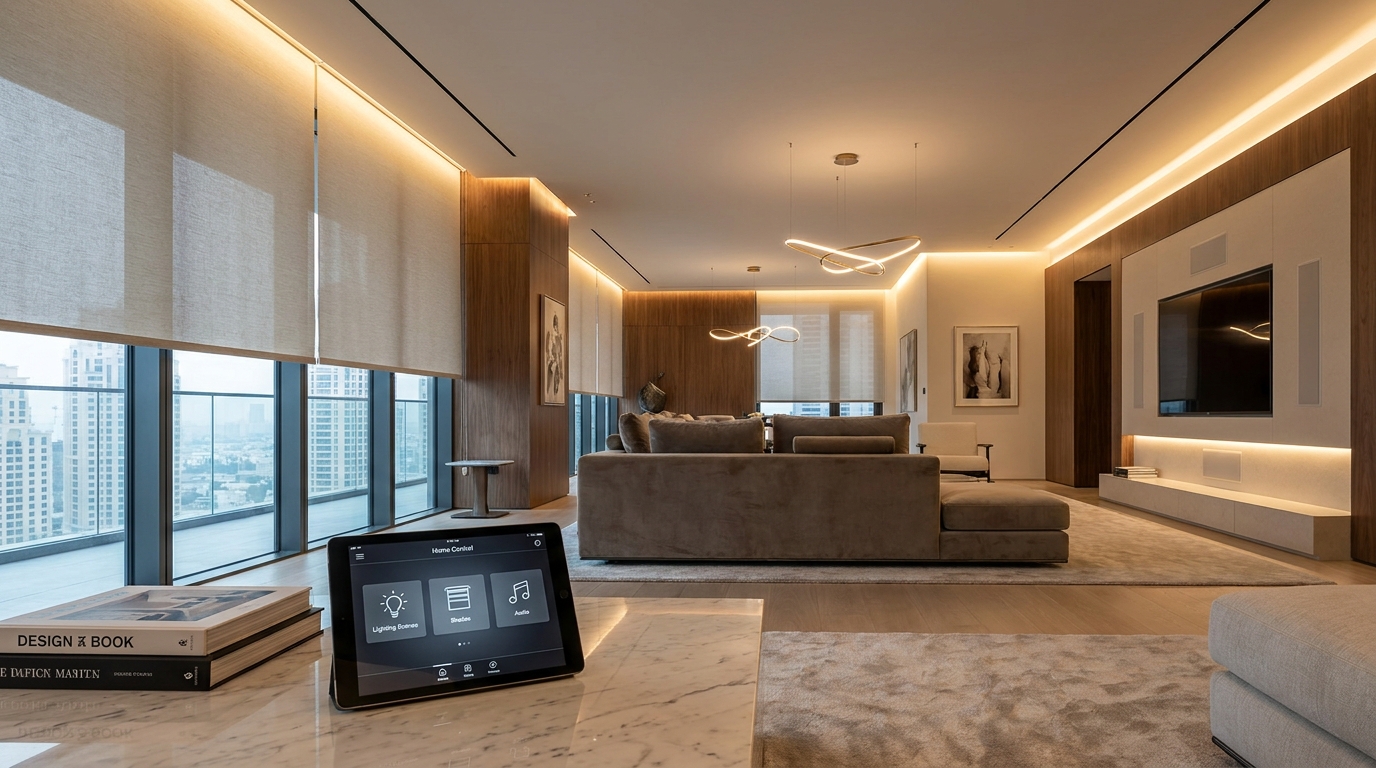
Lighting control often has an outsized impact on how a luxury home feels. Well programmed scenes can elevate architecture, art, entertaining, and evening transitions in a way that static switches cannot. When paired with motorized shades, lighting automation can also support privacy, glare reduction, and energy performance. These systems contribute to the intangible sense that a home is curated rather than merely equipped.
For investors, this matters because lighting influences both photography and showings. A residence that presents beautifully from day to night can create stronger emotional engagement with buyers. The technology itself may remain largely invisible, but the atmosphere it creates can materially improve perceived value.
Whole Home Audio Visual and Entertainment
Entertainment systems remain part of the luxury smart home equation, but they work best when treated as an integrated amenity rather than a feature overload. High end buyers appreciate distributed audio, media rooms, hidden speakers, outdoor entertaining zones, and simple source control. They do not necessarily want to troubleshoot remotes, navigate multiple apps, or inherit outdated custom installations that are difficult to update.
The investment takeaway is straightforward. AV should feel effortless. When entertainment systems disappear into the design and operate through a central platform, they strengthen the impression of a turnkey luxury property. When they dominate the space or feel technically dated, they can limit appeal.
Water Monitoring and Preventive Protection
One of the most underrated smart home categories for investors is water monitoring. Leak detection and automatic shutoff systems may not be glamorous, but they protect high value finishes, custom millwork, art collections, wine storage, and mechanical systems. In seasonal, waterfront, or secondary residences, this capability can be particularly important because problems may otherwise go unnoticed for extended periods.
Preventive technology tends to resonate with disciplined buyers because it reflects thoughtful ownership. It also supports the broader premium narrative that the home has been managed with care. From an investment perspective, risk mitigation features can be just as valuable as visible lifestyle upgrades.
Integration Matters More Than Device Count
A common misconception in this space is that more smart devices automatically create more value. In reality, luxury buyers usually prefer fewer systems that are better integrated. The difference is critical. A property with dozens of disconnected apps, overlapping hubs, and inconsistent interfaces can feel chaotic. A property with a unified ecosystem that coordinates lighting, shades, climate, security, and entertainment feels considered and easy to own.
This is why centralized control platforms are so relevant in luxury homes. Rather than asking an owner to manage separate software environments for each subsystem, a central platform creates one operating layer. That improves convenience, but it also supports training, maintenance, troubleshooting, and transfer to the next owner. At resale, simplicity has real value because it reduces uncertainty.
Investors should also consider the design side of integration. Premium buyers care about aesthetics. They generally prefer hidden wiring, flush mounted controls, minimal visible hardware, and technology that complements the architecture rather than competing with it. The best smart luxury homes do not advertise themselves through gadgets everywhere. They feel quiet, refined, and capable.
Kingsgate has brought this same integrated approach to life in its own custom builds, weaving centralized smart-home automation seamlessly into the architecture rather than layering it on afterward — see it here: Inside 1 Silvergrove Rd.
In luxury real estate, the highest value technology is rarely the most visible. It is the technology that makes the home feel effortless, secure, and complete.
How Smart Technology Enhances the Living Experience
Resale value begins with lived value. Technology becomes persuasive at sale because it improves ownership in ways that buyers can imagine themselves enjoying. Arriving home to a preconditioned interior after travel, setting guest access remotely, adjusting the entire house for an evening event with one scene, or receiving an alert before a small leak becomes a major repair all contribute to a more controlled living environment.
For luxury owners, time and simplicity are premium assets. A smart home that reduces small frictions every day has genuine appeal because it protects both. This is especially true for households with demanding schedules, frequent travel, staff coordination needs, or multiple properties. The residence becomes not just beautiful, but operationally intelligent.
The emotional component should not be underestimated either. Luxury buyers often seek homes that feel current and aligned with the way they live now, not how owners lived a decade ago. A residence that responds intuitively to occupancy, mood, routines, and security concerns can create a subtle but powerful sense of modernity. That feeling often supports stronger engagement than a long list of specifications ever could.
The Sustainability Angle: Efficiency as Luxury
There has been a meaningful evolution in how buyers interpret sustainability in the luxury segment. It is no longer viewed only through the lens of restraint or reduction. Increasingly, it is associated with intelligent performance. Buyers want homes that maintain superior comfort while operating more efficiently, using data and automation to reduce waste where possible. Smart technology helps bridge that gap.
Automated climate control, occupancy responsive lighting, smart irrigation, water monitoring, and motorized shading can all support a more efficient property without diminishing the experience of abundance. In fact, they often enhance it. A comfortable interior environment, lower operating waste, and better system visibility can make a large home feel more responsibly managed and more future aligned.
This matters to investors because efficiency can strengthen the narrative around ownership costs and long term competitiveness. While utility savings alone may not justify an acquisition in the luxury tier, a more efficient residence can still appeal to buyers who value discipline, resilience, and environmental awareness. It also reduces the risk that a home feels outdated in a market that is steadily moving toward smarter resource management.
What Can Hurt Value: The Risks of Poorly Executed Smart Homes
Investors should approach smart home upgrades with the same rigor they apply to structural renovations or financing decisions. Poor execution can reduce appeal rather than increase it. The biggest risks tend to fall into a few predictable categories: obsolete systems, proprietary platforms with limited support, poor documentation, visible installation clutter, weak cybersecurity practices, and interfaces that are hard for a new owner to understand.
These issues are particularly damaging in luxury real estate because buyers expect premium execution. If a home presents itself as high end but requires a lengthy technical orientation just to operate basic functions, confidence can erode quickly. Buyers may begin to wonder what happens when something fails, how expensive maintenance will be, and whether future upgrades will require tearing into finished walls or replacing entire systems.
There is also the transferability question. A smart luxury home should be easy to hand off at closing, ideally with documentation, service contacts, warranties, network maps, and user training. If the seller cannot clearly explain what the systems do or how they are supported, the technology becomes a friction point in due diligence. That friction may not kill a deal outright, but it can weaken leverage and invite discounting.
Best Practices for Investors Building a Smart Luxury Home Strategy
For investors considering acquisitions, renovations, or development projects in the luxury segment, a disciplined technology strategy can create a meaningful edge. The most successful approach begins with the market, not the equipment. Understand the expectations of likely buyers in that location, price tier, and property type. Urban penthouses, waterfront estates, mountain retreats, and executive family homes may all require different emphases in security, automation, climate management, and remote monitoring.
From there, focus on interoperability and long term serviceability. Select systems that can work together cleanly and that have strong support ecosystems. Ask practical questions about updates, maintenance, user handoff, and future expansion. Technology that is technically impressive but difficult to maintain is rarely a wise investment in a home intended for resale.
Investors should also involve the right specialists early. Smart home infrastructure is most effective when planned alongside architecture, interior design, lighting design, mechanical systems, and security strategy. Retrofitting at the end often leads to compromises in aesthetics and performance. Early coordination produces better concealment, cleaner control points, and a more coherent final product.
A Practical Evaluation Framework
When reviewing a smart home upgrade or acquisition, it helps to assess the opportunity through a simple framework built around functionality, elegance, transferability, and relevance to target buyers. The following questions can guide decision making:
- Does the technology solve an ownership problem or improve daily ease in a meaningful way?
- Is the system integrated into a centralized control environment rather than scattered across multiple apps?
- Does the installation preserve the luxury aesthetic through discreet, high quality execution?
- Can a future owner operate, service, and update the system without unusual difficulty?
- Does the feature set align with the expectations of buyers in this market and price point?
If the answer to several of these questions is no, the technology may be better understood as expense rather than value creation. In luxury real estate, restraint and clarity often outperform feature accumulation.
How to Market a Smart Luxury Home at Resale
When it comes time to sell, technology should be presented as part of the broader luxury living narrative, not as a technical checklist alone. Buyers respond better when they understand how the home performs in real life. Instead of saying that the property includes automated shades, explain that the shades preserve privacy, reduce glare, and adjust with daylight patterns. Instead of listing climate controls, show how zoning keeps the primary suite, guest areas, and wellness spaces comfortable with less waste.
Demonstration also matters. During showings, the technology should be staged to create atmosphere and confidence. Lighting scenes, audio zones, entry experiences, and security features should work flawlessly. If a system is difficult to demonstrate or requires multiple workarounds, that is a sign it may not be supporting value effectively.
Documentation is equally important. Luxury buyers and their advisors appreciate organized information. A clear package that outlines the control platform, installed systems, service providers, warranties, and transfer process can reduce uncertainty and reinforce the impression that the home has been professionally maintained. In competitive negotiations, this type of preparedness can help preserve pricing strength.
Smart Luxury Homes in Canada and North America: The Forward View
The smart luxury home trend is not a passing phase. It sits at the intersection of several durable forces: growing consumer familiarity with connected devices, rising expectations around convenience and security, broader interest in sustainability, and continued innovation in control platforms and AI assisted home management. Canada is projected to be a high growth market within the broader North American outlook, which suggests that investor attention to this category is well placed.
What is changing most is the definition of smart. The market is moving away from stand alone novelty devices and toward integrated ecosystems that support everyday performance. Security and access control remain especially compelling, but they now sit alongside climate intelligence, energy management, preventive monitoring, and voice enabled orchestration. In the coming years, buyers are likely to expect these systems to be more intuitive, more discreet, and more deeply embedded into the design and operations of the home.
For investors, the opportunity lies in selective sophistication. It is not necessary to overbuild every property with the most expensive or experimental technology available. It is necessary to understand which systems add confidence, simplify ownership, and future proof the asset in the eyes of likely buyers. In premium real estate, thoughtful integration often delivers stronger returns than sheer specification volume.
Final Thoughts
Smart luxury homes represent a meaningful evolution in high end real estate. They combine design, comfort, security, and efficiency into a more intelligent ownership experience that increasingly resonates with affluent buyers. For investors, the value proposition is not based on gadgets or trend chasing. It is based on stronger market alignment, better buyer perception, and improved resale readiness.
The strongest smart luxury investments are those that treat technology as infrastructure for better living. They prioritize integrated systems over scattered devices, reliable performance over novelty, and discreet elegance over visible complexity. They also recognize that premium buyers want homes that feel easy to own from the first showing through long term occupancy.
As the North American market continues to expand and buyer expectations continue to mature, smart technology is likely to become even more central to the luxury housing conversation. Investors who approach it strategically, with attention to usability, interoperability, serviceability, and design, will be better positioned to protect value and capture demand. In a competitive market, that edge matters.
For modern investors, the question is no longer whether technology belongs in luxury homes. The question is how intelligently it is deployed, and whether it strengthens the asset where it counts most: experience, confidence, and resale appeal.



No Comment! Be the first one.