
What Toronto’s “100-Year Storm” Cleanup Teaches Us About Climate-Ready Homes
Nearly a week after a storm that Toronto is calling the largest weather event it has ever responded to, crews are still working through almost 5,700 service requests. More than 3,000 of those involve downed or damaged trees, and city officials say it is still unclear when the cleanup will be finished. For a lot of us, storms like this feel like isolated bad luck. I read them differently. They are a stress test, and they tell us a great deal about how ready our homes and neighbourhoods actually are for a warming climate.
The numbers from this event are worth sitting with. Some parts of the Greater Toronto Area saw more than 100 millimetres of rainfall in a single system, along with destructive winds and hail large enough to damage a stadium roof. Power went out for thousands of homes, and floodwater swallowed major roads including the Don Valley Parkway. None of that is abstract. It is trees through roofs, basements taking on water, families without electricity for days, and city crews pulling extended shifts just to restore access to critical infrastructure.
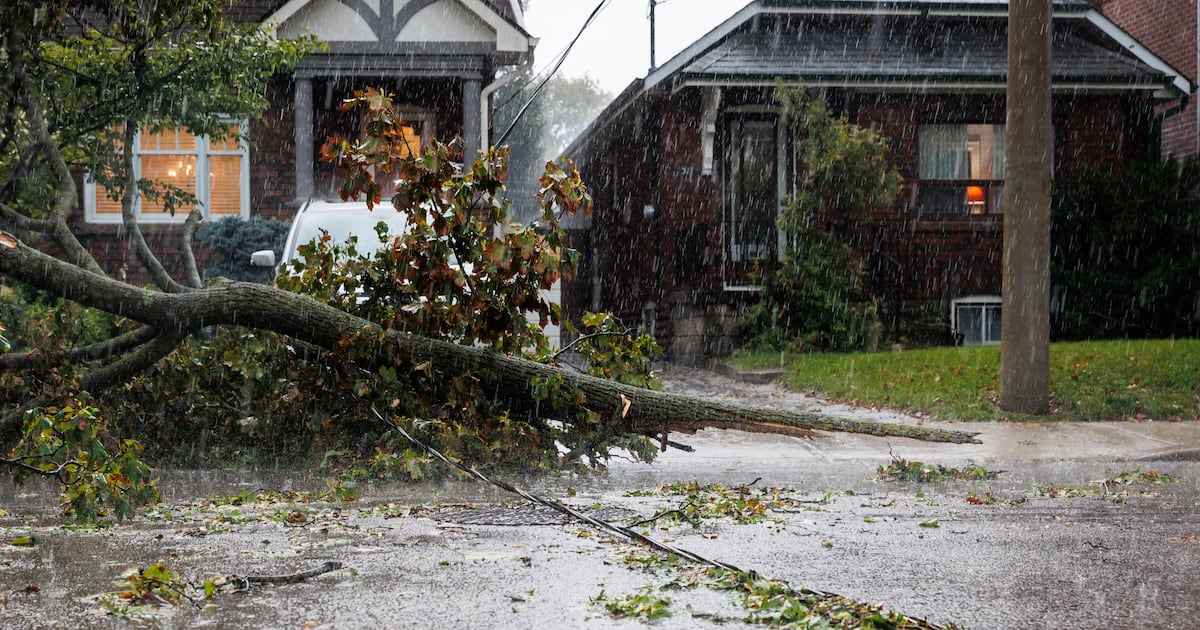
What strikes me most is how much of the recovery burden fell on urban forestry and tree crews. Mature tree canopy is one of the quiet workhorses of a sustainable city. It cools neighbourhoods, slows stormwater before it hits the sewer system, and improves air quality every ordinary day. But when a canopy is stressed by wind and saturated soil all at once, it becomes one of the biggest points of failure in a storm. That is not an argument against trees. It is an argument for planting and maintaining them with resilience in mind, choosing species suited to more volatile weather, and pairing green infrastructure with the kind of grading and drainage that keeps water away from foundations in the first place.
A resilient home is not a bunker. It is a home built with the next storm already in mind.
For homeowners, the practical takeaway is not complicated, even if it is easy to postpone. Sump pumps and backwater valves matter more than they used to. Backup power, even a modest battery system paired with solar, turns a multi-day outage into an inconvenience instead of a crisis. Regular tree pruning and root health checks are cheaper than storm cleanup after the fact. None of this requires a dramatic renovation. It requires treating extreme weather as a recurring part of homeownership rather than a rare exception.
Cities will keep improving their emergency response, and Toronto’s crews clearing thousands of requests in a matter of days is genuinely impressive work. But the more resilient our individual homes and local green infrastructure are, the smaller that emergency workload needs to be next time. Storms like this one are becoming less like anomalies and more like a preview of the baseline. Building for that now is simply good, practical sense.
Source: CP24, “Toronto still responding to thousands of service requests in wake of ‘100-year storm'”