
After the Bank of Canada’s Hike, Variable Rates Still Make the Smarter Bet for Many Borrowers
Every rate decision from the Bank of Canada sends a ripple through the mortgage market, and last week’s move from 2.25 per cent to 2.5 per cent was no exception. For borrowers who had piled into variable-rate mortgages over the past year, the headline alone was enough to trigger second-guessing. But a closer look at the numbers tells a more interesting story for anyone thinking like an investor rather than reacting like a headline reader.
Nearly half of Canadians taking out or renewing a mortgage in 2026 chose a variable rate, up from less than 10 per cent in 2024, according to National Bank of Canada data. That is not a minor shift in sentiment. It reflects a calculated read on where borrowing costs were heading relative to the premium charged on fixed terms. The question now is whether that calculation still holds after the hike, and the evidence suggests it largely does.
The spread is the detail that matters most to anyone running the numbers. Mortgage broker David Larock of Integrated Mortgage Planners points out that a decent variable rate can still be secured in the high 3 per cent range, while most fixed rates sit in the high 4 per cent range. That gap did not close with the hike. Fixed rates are priced off bond yields, which already reflect investor anxiety about inflation, oil prices tied to conflicts in Iran and Ukraine, and global trade friction. In other words, the fixed-rate premium already assumes a rougher road ahead. Variable-rate holders are being compensated for taking on near-term uncertainty, and that compensation is currently generous.
Locking into a fixed rate today is, as Toronto broker Ron Butler frames it, essentially a wager that the central bank’s rate will stay above that locked-in level for the full term. That is a real bet, not a safe default. Desjardins senior economist Kari Norman expects one more 25-basis-point increase in December followed by a pause, while Larock estimates the bond market is already pricing in three to four more hikes by the end of next year. If those additional hikes do not materialize in full, fixed-rate borrowers will have overpaid for certainty they did not need.
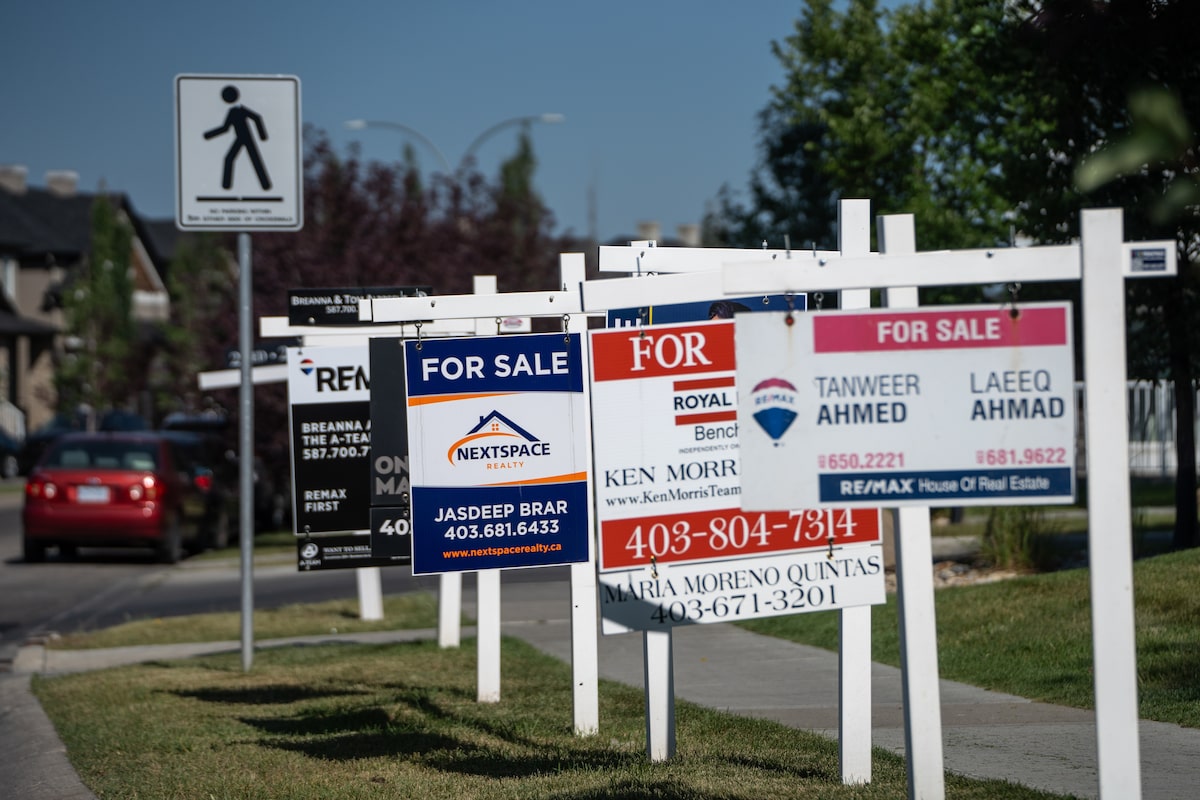
Over a long-term horizon, variable rates do tend to save more money.
For investment-minded borrowers with longer horizons, particularly those considering five-year terms, this is the kind of asymmetry worth paying attention to. The downside risk of a variable rate is a handful of additional quarter-point increases that may or may not fully arrive. The downside risk of a fixed rate is locking in a near one-point premium for years, regardless of how the inflation picture resolves. A faster-than-expected easing of the oil-driven cost pressures Norman describes could just as easily open the door to rate cuts, which would only widen the variable-rate advantage.
That said, disciplined investors know that the right structure depends on the balance sheet behind it. Borrowers with thin financial buffers, or those for whom a one-point payment shock would genuinely strain the budget, are not well served by chasing the lower rate. Peace of mind has value, particularly for first-time buyers already absorbing unpredictable costs. But for homeowners with the cash flow to absorb short-term volatility, the current spread between variable and fixed rates still favours patience over certainty, and that is a position worth holding rather than abandoning after a single hike.
Source: The Globe and Mail