

Why New Tariffs on Building Materials Are About to Make Every Project Harder to Budget
I have spent enough time on job sites to know that the biggest threat to a build is rarely the work itself. It is the unknown. Right now, the unknown has a name: tariffs. Canada’s new countertariffs on roughly $28 billion in U.S. goods just took effect, and a long list of homebuilding materials, from stainless steel sinks to plywood to heating and air-conditioning parts, is caught in the middle.
Some of these levies run as high as 50 per cent. According to the Canadian Construction Association, which flagged 53 products most relevant to construction supply chains, the majority of those items fall into that highest bracket, including laminated veneer lumber, steel doors, window frames and thresholds, steel nuts, and aluminum wire, bars and rods. Stainless steel sinks and air heaters face a 25-per-cent tariff, while items like bulldozer blades are looking at 15 per cent.
None of this happens in a vacuum. Residential building costs across major Canadian metro areas are already 73 per cent higher than they were in 2019, per Statistics Canada. Add volatile material pricing on top of labour costs that never really settled after the pandemic, and you get a build environment where the numbers on a spreadsheet can go stale before the ink dries.
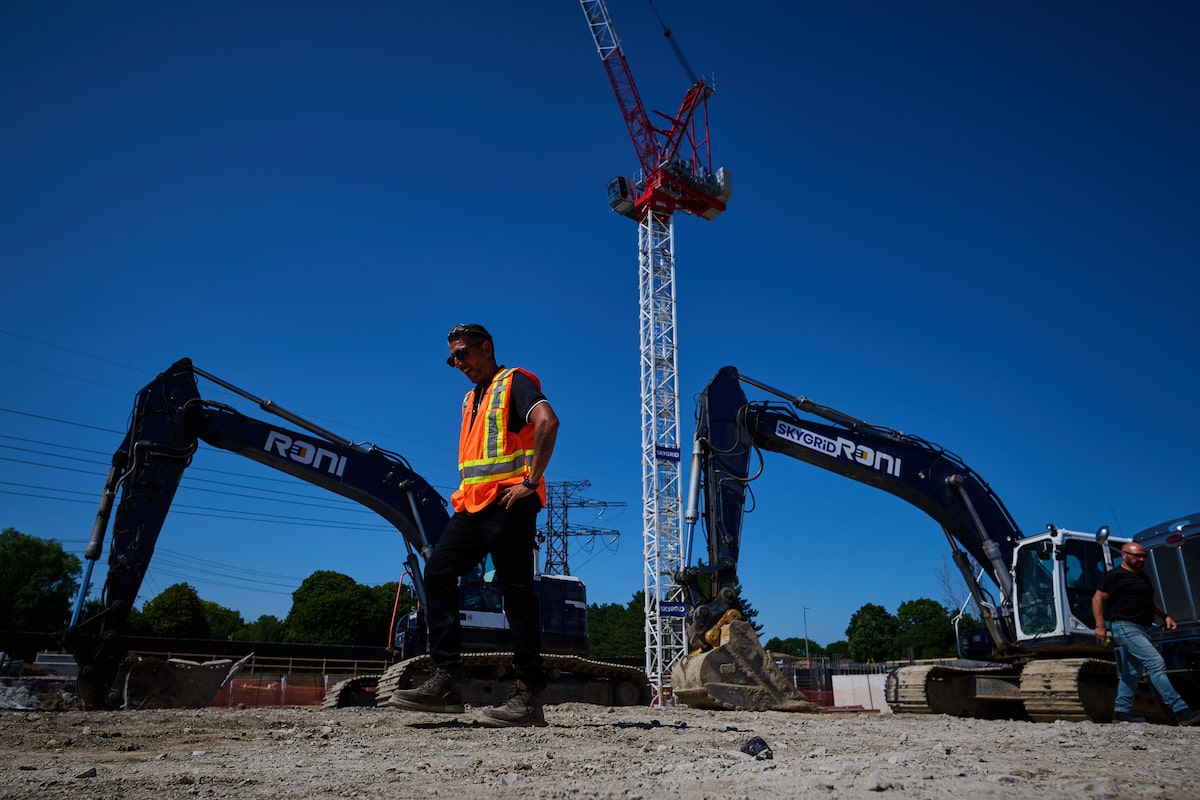
What strikes me most is a comment from Scott McLellan, chief operating officer at Toronto homebuilder Plazacorp, who pointed out that builders cannot simply stockpile materials against future price swings. That is the reality of construction. You order what you need, when the schedule calls for it. If the price of windows or drywall can move overnight, your budget is not a plan anymore, it is a guess.
You cannot just swap that product out without it impacting something else.
That line, from Wesgroup Properties CEO Beau Jarvis, gets at something I see constantly on real projects. Substituting materials sounds simple on paper. In practice, structural steel framing and metal fabrication are specified, engineered, and coordinated together. Wesgroup has already seen structural steel framing costs rise 8.5 per cent and metal fabrication climb about 10 per cent. Swap one component and you can trigger changes to fasteners, tolerances, and installation methods down the line.
Some builders are responding by leaning harder on Canadian suppliers, a shift the Federation of Rental-Housing Providers of Ontario says its members are already pursuing. That is a sound instinct, but Desjardins economist Florence Jean-Jacobs makes a fair point too: some of these materials come from highly specialized manufacturers, and finding a like-for-like domestic substitute is not always realistic.
For anyone planning a build or renovation right now, the practical takeaway is this: lock in material pricing and supplier commitments as early as you can, build contingency into your budget beyond the usual buffer, and ask your contractor directly which components on your project are exposed to U.S. sourcing. Good workmanship still matters, but right now, so does knowing exactly what is behind the price tag before you break ground.
Source: The Globe and Mail.