

Why Smart Capital Is Rotating Into ASEAN’s Data Center Corridor
Every so often a property class shifts from niche to essential almost overnight. That is what is happening to data centers across Southeast Asia right now, and the investors paying attention are already repositioning. Real Estate Indonesia, the country’s leading developer federation, has spent September crossing Hong Kong, Taichung, and Manila with one pitch: ASEAN is no longer a secondary market for digital infrastructure. It is becoming the region’s next core allocation.
The numbers behind that pitch are hard to ignore. Global greenfield foreign direct investment into data centers topped $131 billion in the first half of 2026 alone, close to a quarter of all cross-border capital expenditure worldwide. That is not speculative enthusiasm. That is institutional money making a structural bet on where computing demand goes next, and a meaningful share of it is landing in Southeast Asia.
For readers who track where capital moves before headlines catch up, the interesting story is not Singapore, which has long anchored the region with roughly 1.4 gigawatts of operational capacity but is now constrained by land and resource limits. The interesting story is where that overflow is going. Malaysia is on pace for 2,055 megawatts of capacity by year end, driven by campus-scale builds in Johor and the Klang Valley. Thailand has assembled 944 megawatts, the Philippines is running a 500-megawatt pipeline around Metro Manila, and Indonesia is sitting on 580 megawatts with a genuinely compelling angle in Batam, an island positioned less than two milliseconds in latency from Singapore and backed by special economic zone incentives.
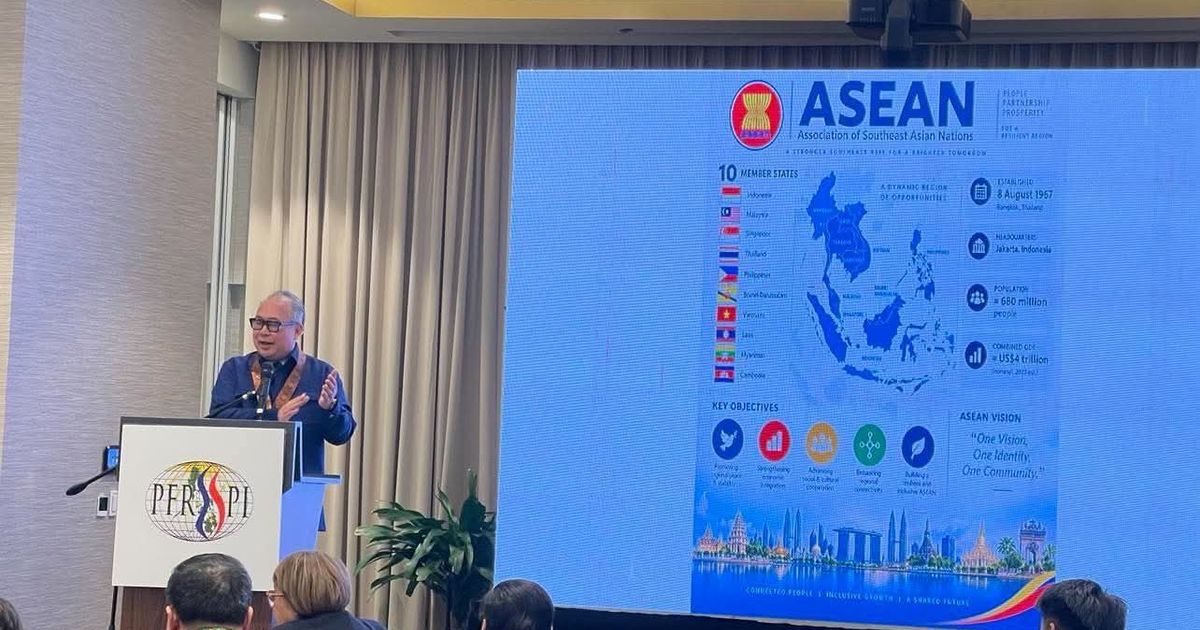
What should catch an investor’s eye is REI’s framing of the underlying shift in what actually creates value on these sites. Rusmin Lawin, REI’s Vice President for Foreign Affairs and President of FIABCI Asia-Pacific, put it plainly at these summits: growth will not be determined by land and buildings alone. It will be defined by power reliability, connectivity, AI-ready infrastructure, sustainability, and speed to market.
The next phase of growth will not be determined simply by availability of land and buildings. It will be defined by the ability to combine reliable power, high-capacity connectivity, AI-ready infrastructure, sustainability, and speed-to-market.
That is a meaningful repricing of risk and reward. Legacy server racks pulled 5 to 10 kilowatts. AI-grade GPU racks now demand 30 to 40 kilowatts, and liquid-cooled environments push past 100. Developers who can secure grid headroom, subsea fiber access, and closed-loop cooling are commanding a different tier of return than those simply holding land. That is the kind of bottleneck that rewards early, well-informed positioning.
Zoom out and the macro case strengthens further. ASEAN is already the world’s fifth-largest economy, with GDP approaching $4 trillion and a young population of roughly 700 million, larger than the EU or the US. Analysts project it climbs to fourth-largest by 2030. Against an estimated $31.6 trillion in cumulative global AI infrastructure spending through 2050, the region’s property sector is positioning itself as more than a landlord. For investors building long-horizon exposure to real assets tied to the AI economy, that is a corridor worth watching closely rather than discovering late.
Source: Investor Trust ID