What Toronto’s Fall From the World’s Hottest Market Means for Investors Now
Four years ago, Toronto was the hottest housing market UBS tracked anywhere on earth. Today, the same annual Global Real Estate Bubble Index places it among the weakest. That kind of reversal does not happen quietly, and for anyone weighing capital into Canadian residential property, it is a signal worth reading carefully rather than reacting to emotionally.
The numbers tell a clear story. Prices in Toronto have fallen roughly 30 per cent from their February 2022 peak of $1,334,544, with the average now sitting at $993,410, a 4.5 per cent year-over-year decline in the benchmark price alone. UBS clocks the past twelve months as one of the steepest single-year drops of any city in its 23-market survey, matched only by Vancouver, where prices are down about 20 per cent from peak and sales sit at a 25-year low. This is not a soft correction. It is a structural repricing driven by a convergence of factors: Ottawa’s foreign buyer ban, a supply glut, and higher borrowing costs.
For an investor, the interesting part is not the decline itself but what it reveals about where value now sits. UBS still rates Toronto’s bubble risk as only “moderate,” and the affordability metrics tell a more nuanced story than the headline suggests. A skilled service worker here needs under five years of average income to afford a 650-square-foot apartment, compared with 15 years in Hong Kong and 11 in London. The price-to-rent ratio, a metric that matters far more to income-focused investors than headline price alone, puts Toronto at roughly 20 years to rent-to-buy parity, well below Zurich’s 46 years or Geneva’s 40. That gap between global extremes and local reality is exactly where disciplined capital tends to find its openings.
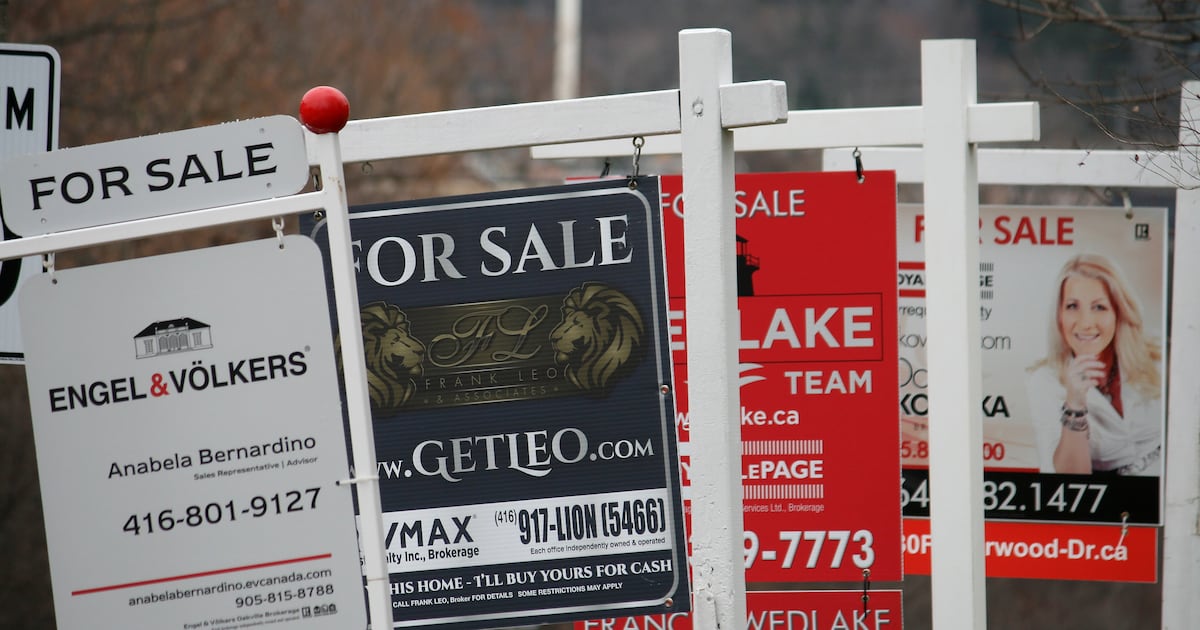
Rental data reinforces the picture. Average one- and two-bedroom rents across the GTA sit at $2,273 and $3,013 respectively, down about two per cent year-over-year, with TRREB describing “substantial choice” for tenants. Softer rents compress near-term yield, and that is precisely why Marco Pedri, a broker with Shoreline Realty, notes the current environment favours renters and end-user buyers more than pure investors. His read is worth sitting with: even if Ottawa lets the foreign buyer ban lapse when it expires on January 1, 2027, he does not expect it to reignite the kind of investor demand that once drove the market, given today’s compressed returns and tighter rental regulation.
Even if the foreign buyer ban was lifted, I don’t necessarily think that we’re going to see a magical uplift in the market.
That is the discipline this moment calls for. A market down 30 per cent from peak, with falling listings and softening rents, is not automatically a buying signal, nor is it a reason to walk away. It is a repricing event, and repricing events reward investors who separate short-term sentiment from long-term fundamentals: population growth, construction pipeline, policy direction, and the price-to-rent math that ultimately determines whether a hold generates real returns. Toronto’s fundamentals have not disappeared. They have simply been forced to reset against a decade of unsustainable appreciation. For patient capital, that reset, not the headline ranking, is the actual opportunity.
Source: CP24