Why Ottawa’s $1.5 Billion Rental Protection Fund Is a Development Strategy, Not Just a Subsidy
Housing supply conversations tend to fixate on cranes and groundbreakings. The federal government’s newly launched $1.5 billion Canada Rental Protection Fund is a reminder that preserving what already exists is just as much a development decision as building what comes next. Delivered through Build Canada Homes and administered by the independent Canadian Housing Acquisition Fund (CHAF), the program is structured to give community housing organizations the capital to acquire vulnerable rental buildings before private investors do, with a target of protecting at least 7,000 affordable units nationwide over five years.
From a planning and feasibility standpoint, this is a smart allocation of public capital. Building new affordable supply from the ground up is slow, expensive, and subject to financing, zoning, and construction timelines that can stretch past a decade. Acquisition strategies move faster. They lock in affordability on units that already exist, in neighbourhoods where infrastructure, transit, and community services are already built out. That is a meaningfully different risk profile than greenfield or even infill development, and it deserves to be understood as its own category of housing strategy rather than an afterthought to new construction.
Toronto’s Regent Park revitalization offers the clearest working model of why this matters at the project level. The master plan deliberately blends three tenure types on the same streets: Rent-Geared-to-Income units operated by Toronto Community Housing, affordable rentals run alongside non-profit partners, and market-rate condominiums whose land value helps fund shared community infrastructure. That layered structure only holds together long term if the affordable components stay affordable, which is precisely the gap this federal fund is built to close.

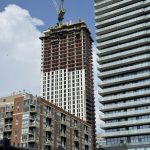
The acquisition at 500 Dundas Street East is a useful case study for developers watching how these deals get structured. Fred Victor, a long-standing community agency, was selected through a competitive process involving The Daniels Corporation and Toronto Community Housing to operate roughly 65 affordable rental homes embedded directly in the podium of a new condominium tower. That is not a separate affordable building tucked away from the market-rate product. It is one integrated asset, with a non-profit operator secured into the capital stack from the outset. As Phases 4 and 5 move forward with Tridel and TCHC, replacing and expanding RGI and affordable units, this acquisition layer becomes part of the financing logic of the whole site, not a side program.
Every home acquired becomes part of Canada’s community housing stock for the long term, creating lasting affordability and a stronger foundation for communities across the country.
For developers and planners, the signal here is strategic as much as financial. Sector-led acquisition models, backed by a dedicated federal fund and operated by organizations with local community infrastructure already in place, give large-scale redevelopment projects a credible path to preserving affordability without stalling market-rate delivery. As more cities face the same aging rental stock pressures Toronto has navigated through Regent Park, expect acquisition financing to become a standard line item in how mixed-income master plans get structured, not a policy footnote attached after the fact.
Source: Frequency News.