


Why Canada’s Housing Supply Problem Demands Permanent Policy, Not Temporary Fixes
Every large scale housing strategy eventually runs into the same wall: short term relief does not build long term capacity. That is the lesson emerging from Ontario’s recent HST rebate on new homes, a policy that produced a real and immediate lift, sector wide sales in the province climbed sharply through the second quarter, but one that is already scheduled to expire in March 2027. For anyone who studies how cities actually get built, that expiry date should be treated as a planning problem, not a footnote.
I have spent my career looking at housing through the lens of land, timing, and policy, and what stands out here is how familiar this pattern is. A stimulus arrives, activity responds, and then the underlying structural costs reassert themselves the moment support is withdrawn. National home sales fell 7 per cent year over year in August even with the rebate still active, and housing starts softened alongside it. That is not a sign the policy failed. It is a sign that one tool, applied temporarily, cannot carry the full weight of a supply crisis that has been building for decades.
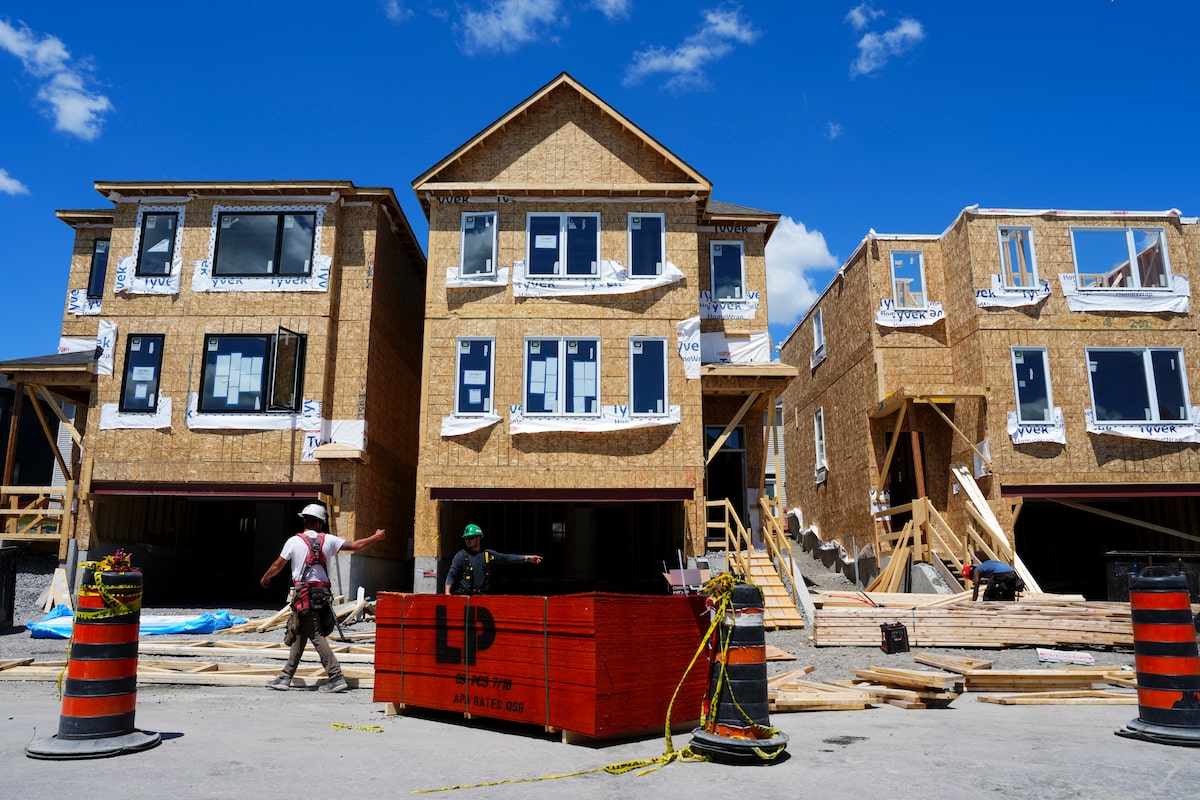
The detail that matters most for anyone in development is the GST rebate threshold itself. It was set between $350,000 and $450,000 back in 1991 and has never been adjusted since. Run that 1991 figure through the Bank of Canada’s inflation calculator and a $450,000 home then costs roughly $972,000 today. That is not a rounding error, it is a policy that quietly stopped doing its job years ago while nobody revisited the math. When the enhanced rebate lapses in 2027, projects across this country revert to a threshold built for a completely different housing market.
Strong development policy is never a single lever. It is tax treatment, infrastructure financing, and ownership incentives moving together, built to last past one political cycle.
What I find most relevant to large scale project feasibility is the proposal to restructure how housing enabling infrastructure gets financed. Roads, sewers, parks, and bridges are the unglamorous backbone of every new community, and development charges attached to them have become a hidden tax baked into every unit’s price. Bringing institutional capital, pension plans, and private investors into that infrastructure conversation is exactly the kind of long horizon thinking large projects need. It shifts financing away from one time fees loaded onto homebuyers and toward structures built for decades of growth, which is how infrastructure should be funded in the first place.
The mortgage interest deduction idea, tied to the existing capital gains exemption on a primary residence, also deserves attention from a supply perspective. It does not just help buyers, it signals to builders and investors that demand has a more durable floor, which affects how confidently a developer commits land and capital to a project years before it delivers units. Home building supports roughly 880,000 jobs nationally, rising to 1.2 million with the repair sector included, generating an estimated $213 billion in economic activity. That scale is exactly why this cannot be treated as a seasonal policy question.
Cities do not grow on temporary measures. They grow on predictable rules that developers, lenders, and municipalities can plan against for years, not quarters. A permanent, inflation indexed rebate threshold paired with modernized infrastructure financing would give the development sector something far more valuable than a short term sales bump, it would give it certainty. That is the foundation every large scale housing vision actually needs.
Source: The Globe and Mail