

Toronto’s Condo Glut Is Becoming an Institutional Buying Opportunity
Every market dislocation eventually produces a buyer who understands value better than the crowd. In Toronto’s new-build condo market right now, that buyer is not the individual purchaser hunting for a deal online. It is the bulk investor, moving quietly and decisively while everyone else hesitates.
New research from Urbanation Inc. puts a number on what sophisticated capital has already figured out. Large investors bought unsold newly built Toronto-region condos at an average of $763 per square foot in the third quarter, roughly a 40 per cent discount to original selling prices. Individual buyers, by contrast, paid an average of $1,033 per square foot for comparable new units in the same period. That gap is not noise. It is the clearest signal in this cycle of who has pricing power.
Six bulk buyers acquired 339 units in the quarter, accounting for 45 per cent of all 760 new condo purchases in the region. These are not scattered opportunistic trades. They are structured, large-scale acquisitions, often dozens of units at a time, negotiated directly with developers who need to clear inventory off their books. One standout transaction came from High Art Capital, an Ontario government-backed fund, which paid $22.3 million for 43 units in a midtown Toronto development called Line 5, working out to roughly $518,000 per unit. That price is close to typical resale levels in the region, which is notable given that new-build units almost always command a premium over resale. High Art intends to convert a portion of those units into affordable rentals, which adds a policy dimension to an otherwise straightforward value play.
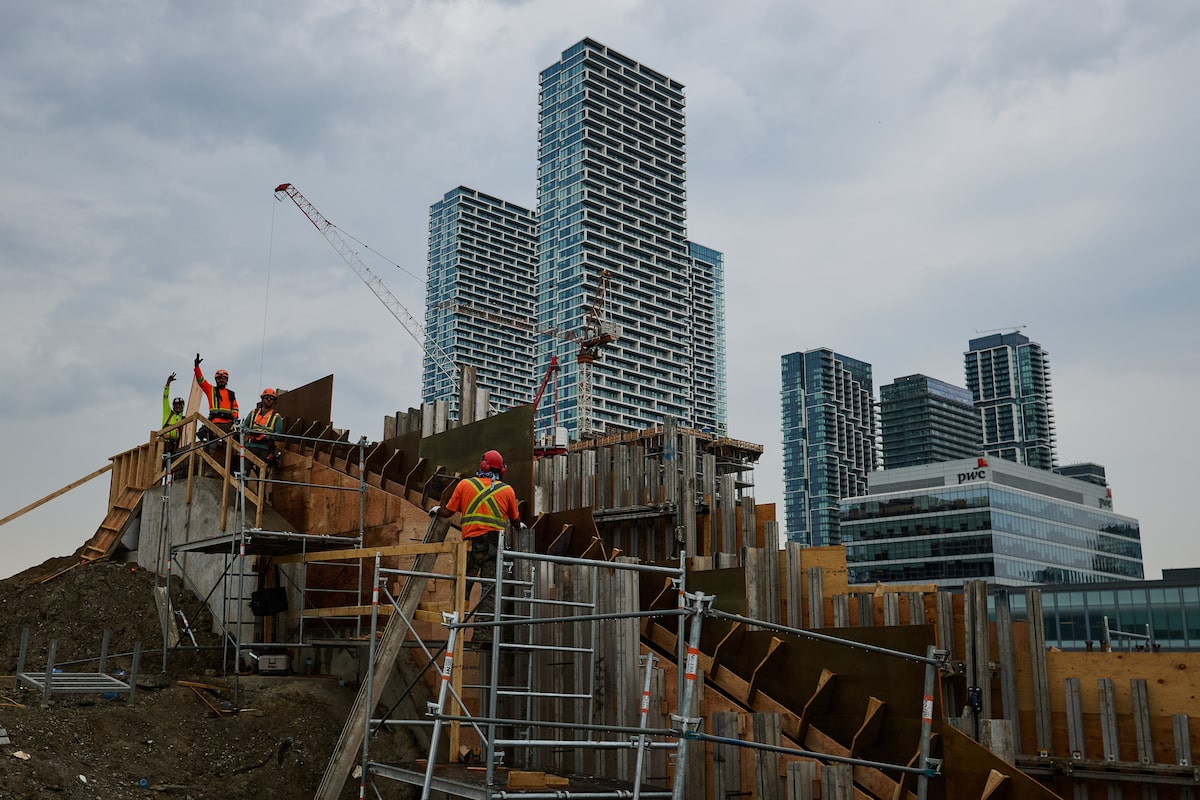
For KG Invest readers, the strategic question is not whether this is a good time to buy Toronto condos. It is who is positioned to buy them correctly. Individual investors who purchased at the top of the market four years ago are discovering that rents often do not cover mortgage payments and condo fees, and many cannot close at all if lenders will not finance at the original contract price. That is forced selling pressure, and forced sellers rarely negotiate from strength. Institutional buyers with cash, patience, and scale are stepping into that gap and extracting a discount that individual buyers, competing unit by unit, simply cannot access.
Two straight quarters of higher sales show that buyers will step in at the right price. Bulk investors are acquiring completed units at heavily discounted prices.
There is a timing element worth watching closely. The federal and Ontario HST rebate on new homes, worth up to $130,000 and available until the end of March 2027, has helped lift sales for two consecutive quarters and is clearly part of what is drawing bulk capital back into the market. At the same time, preconstruction sales have essentially stalled, with only 60 units sold in the quarter across the Toronto and Hamilton region. Urbanation’s Shaun Hildebrand called that segment dormant, and a dormant preconstruction pipeline today means meaningfully fewer completed condos three to five years from now. For investors thinking beyond the current discount window, that supply gap is itself a forward-looking signal worth underwriting into any long-term thesis.
The lesson here is not that every discounted unit is a bargain. Unsold inventory still sat at 5,127 units at the end of September, down only modestly from June, and the fundamentals that pushed individual investors underwater have not disappeared. But the structural advantage now clearly belongs to buyers who can transact in scale, negotiate directly with distressed sellers, and hold through a cycle that smaller investors are being forced out of. That is the kind of positioning real wealth in real estate has always rewarded.
Source: The Globe and Mail